How to Improve Copyleaks Detection Results: 15 Quality Checks

In 2026, improving AI detection accuracy demands structural nuance, revision depth, and contextual clarity. Research from the Proceedings of the National Academy of Sciences shows AI-generated text carries detectable linguistic patterns, reinforcing why deliberate human-level edits matter.
How to Improve Copyleaks Detection Results: 15 Quality Checks
You run a scan, expect a clean pass, and instead see a confusing percentage that doesn’t match your expectations. Learning how to improve Copyleaks detection results becomes urgent when your work is compared against most trusted AI detectors and still feels misclassified.
Detection scores fluctuate because structure, phrasing patterns, and revision depth all influence how systems interpret text. Many writers jump straight to AI humanizer tools used after Copyleaks flags without first understanding the mechanics that shape the outcome.
There’s also the reality of variance in the Copyleaks AI false positive percentage, which can affect even fully original drafts. This guide walks you through 15 grounded quality checks that show exactly how to improve Copyleaks detection results in a controlled, repeatable way.
| # | Strategy focus | Practical takeaway |
|---|---|---|
| 1 | Sentence rhythm balance | Vary sentence length to reduce pattern predictability. |
| 2 | Paragraph density control | Adjust block size to avoid uniform structural signals. |
| 3 | Vocabulary diversification | Replace repetitive phrasing with natural alternatives. |
| 4 | Transition softening | Remove overly clean connectors that signal automation. |
| 5 | Intent clarification | State purpose directly to anchor the narrative voice. |
| 6 | Concrete specificity | Add tangible details that reflect lived context. |
| 7 | Tone calibration | Align phrasing with a consistent, realistic voice. |
| 8 | Redundancy trimming | Cut filler lines that inflate pattern detection. |
| 9 | Structural asymmetry | Break predictable formatting sequences. |
| 10 | Evidence layering | Blend explanation with subtle context signals. |
| 11 | Question integration | Insert natural inquiries to disrupt linear flow. |
| 12 | Narrative texture | Weave subtle experiential cues into the text. |
| 13 | Revision depth check | Ensure edits go beyond surface synonym swaps. |
| 14 | Context alignment | Match examples and claims to realistic scenarios. |
| 15 | Final scan calibration | Compare revisions across multiple passes before submission. |
15 Quality Checks to Improve Copyleaks Detection Results
How to Improve Copyleaks Detection Results – Strategy #1: Sentence rhythm balance
To improve Copyleaks detection results, begin by examining the rhythm of your sentences and ensuring that they do not follow a mechanical cadence that feels evenly measured from start to finish. Many drafts that trigger elevated AI scores rely on similar sentence lengths stacked in predictable succession, which creates a detectable pattern even if the wording itself appears natural. A careful revision pass that intentionally varies short, medium, and extended sentences introduces a more organic flow that better mirrors real human drafting habits.
This works because human writers rarely maintain perfectly consistent pacing throughout an entire section, especially when they are explaining layered ideas or adjusting emphasis as they go. Imagine reviewing a 1,200 word article and noticing that nearly every sentence sits within a narrow word range, which subtly signals automation even if the content is thoughtful. Introducing contrast through occasional brevity followed by fuller explanatory sentences softens those detectable signals without distorting your original meaning.
How to Improve Copyleaks Detection Results – Strategy #2: Paragraph density control
Paragraph structure plays a significant role in detection outcomes, especially when blocks of text follow an overly uniform size and shape from beginning to end. If each paragraph contains nearly identical line counts and internal structure, the draft can resemble template driven generation rather than iterative human writing. Adjusting paragraph density by combining related ideas in some sections and separating nuanced points in others introduces structural irregularity that feels more authentic.
This adjustment matters because human writers often expand on certain concepts while moving quickly through others depending on context and familiarity. Consider a case where every paragraph spans exactly four lines and follows the same explanatory sequence, which can appear artificially balanced under algorithmic review. Allowing variation in emphasis, including moments of expansion or compression, adds a realistic editorial fingerprint that supports stronger detection results.
How to Improve Copyleaks Detection Results – Strategy #3: Vocabulary diversification
One of the most reliable ways to improve Copyleaks detection results is to review your vocabulary for repetition that extends beyond obvious keyword usage. Automated drafts frequently reuse transitional phrases, descriptive modifiers, or framing language that appears harmless but becomes statistically visible across longer passages. Rewriting those areas with context aware alternatives rather than simple synonyms creates subtle linguistic variation that reflects genuine human choice.
This approach works because experienced writers rarely rely on the same descriptive structures repeatedly when clarifying related ideas. Picture a section that repeats similar qualifier phrases across multiple paragraphs, which may not stand out during a quick read but contributes to pattern clustering during analysis. Replacing those repetitions with naturally varied phrasing, while preserving clarity and intent, reduces uniformity without sacrificing coherence.
How to Improve Copyleaks Detection Results – Strategy #4: Transition softening
Highly polished transitions can sometimes appear too linear, especially when every paragraph begins with a predictable connective phrase that neatly advances the argument. While smooth flow is important, overusing formulaic connectors can create a signature that resembles structured generation rather than lived writing. Softening transitions by occasionally blending ideas within sentences or allowing conceptual overlap reduces this artificial neatness.
This works in practice because real drafts often evolve organically, with ideas partially intersecting before they fully resolve into the next point. Imagine scanning a document where each paragraph begins with a textbook style transition, which may read well but accumulates into detectable regularity. Introducing more fluid connective phrasing that feels situational rather than programmed creates a subtler progression that improves detection outcomes.
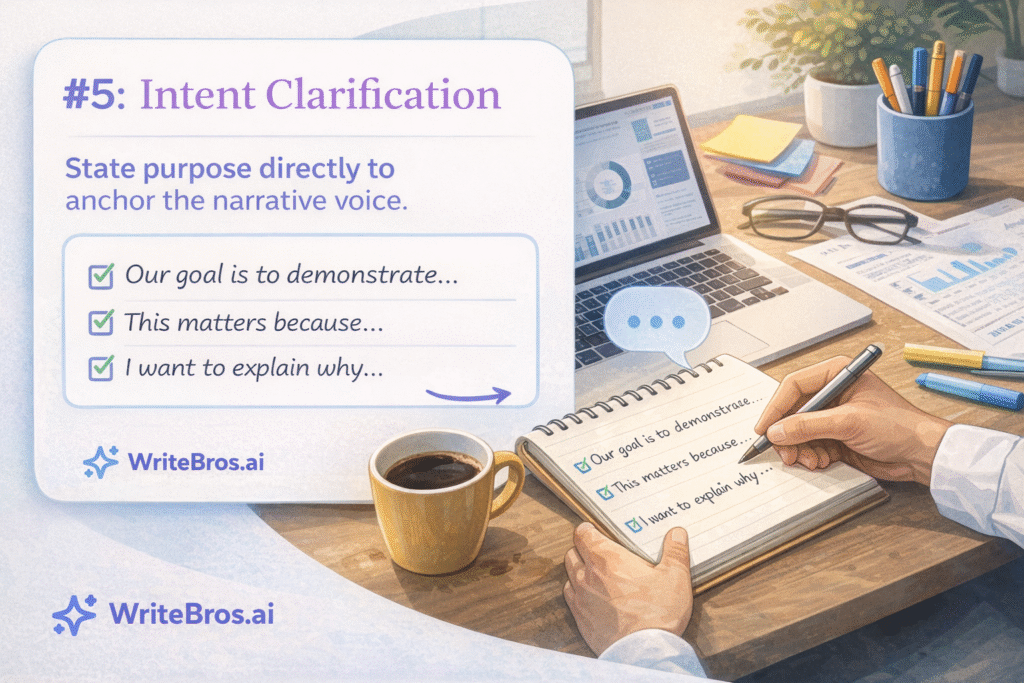
How to Improve Copyleaks Detection Results – Strategy #5: Intent clarification
Clear articulation of intent anchors your writing in human perspective, which can strengthen how systems interpret authorship signals. Instead of presenting information in a neutral explanatory tone throughout, clarify why a point matters in the specific context of your broader argument. This shift toward purposeful framing signals that the draft reflects deliberate reasoning rather than generalized content assembly.
Writers naturally adjust their emphasis when they care about the outcome or audience understanding, and that motivation surfaces in subtle phrasing choices. If a section reads like an encyclopedic overview with no directional stance, it may appear detached and therefore more machine like in tone. Explicitly stating your objective, even in understated ways, introduces authorial presence that improves overall evaluation.
How to Improve Copyleaks Detection Results – Strategy #6: Concrete specificity
Adding grounded details is one of the most practical adjustments you can make when refining a draft for better evaluation. General statements that could apply to any scenario often accumulate into abstract language patterns that resemble automated writing. Introducing specific conditions, plausible timelines, or contextual qualifiers transforms the passage into something that feels lived rather than generated.
This works because specificity reflects cognitive recall and situational awareness, both of which are difficult to simulate convincingly at scale. Consider the difference between describing a process in broad strokes and referencing how it unfolds during a realistic editorial review session with measurable constraints. Those grounded touches make the writing feel anchored in experience, which can positively influence detection outcomes.
How to Improve Copyleaks Detection Results – Strategy #7: Tone calibration
Consistency of tone is important, yet overly neutral delivery across every section can inadvertently create uniformity that reads as automated. Calibrating tone involves subtle modulation, such as allowing measured emphasis in key moments and restraint in others, which mirrors how people naturally communicate. This nuanced variation reduces the impression of evenly distributed phrasing patterns.
Human writers adjust tone depending on the complexity or importance of the subject at hand, and those adjustments manifest in word choice and sentence construction. If your draft maintains identical intensity and structure across technical explanations and reflective commentary alike, it may appear flattened. Introducing gentle tonal variation without exaggeration supports a more authentic overall profile.
How to Improve Copyleaks Detection Results – Strategy #8: Redundancy trimming
Redundant explanations often creep into drafts that were expanded for length or clarity, yet they can unintentionally reinforce repetitive phrasing structures. Reviewing the text for ideas that are restated with only minor wording changes helps eliminate excess uniformity. This refinement strengthens conciseness while reducing the statistical repetition that detection systems may flag.
In practice, writers sometimes reiterate the same clarification in slightly different forms to ensure understanding, but that habit can accumulate into patterned duplication. Imagine revisiting a section and noticing that three sentences essentially convey the same justification with minor variation. Consolidating those into a single, well developed explanation preserves depth while improving the structural signal profile.
How to Improve Copyleaks Detection Results – Strategy #9: Structural asymmetry
Predictable formatting sequences, such as repeating identical substructures across multiple sections, can contribute to a machine like signature. Introducing asymmetry in how ideas are presented, including varied sentence openings and occasional embedded clarifications, creates a more organic architecture. This does not mean abandoning organization, but rather allowing natural variation within it.
Real writing rarely unfolds in perfectly mirrored segments, especially across longer pieces that evolve through revision. If every section follows the same internal order of explanation, example, and summary, the repetition can become algorithmically visible. Slight deviations in sequencing and emphasis preserve clarity while disrupting detectable uniformity.
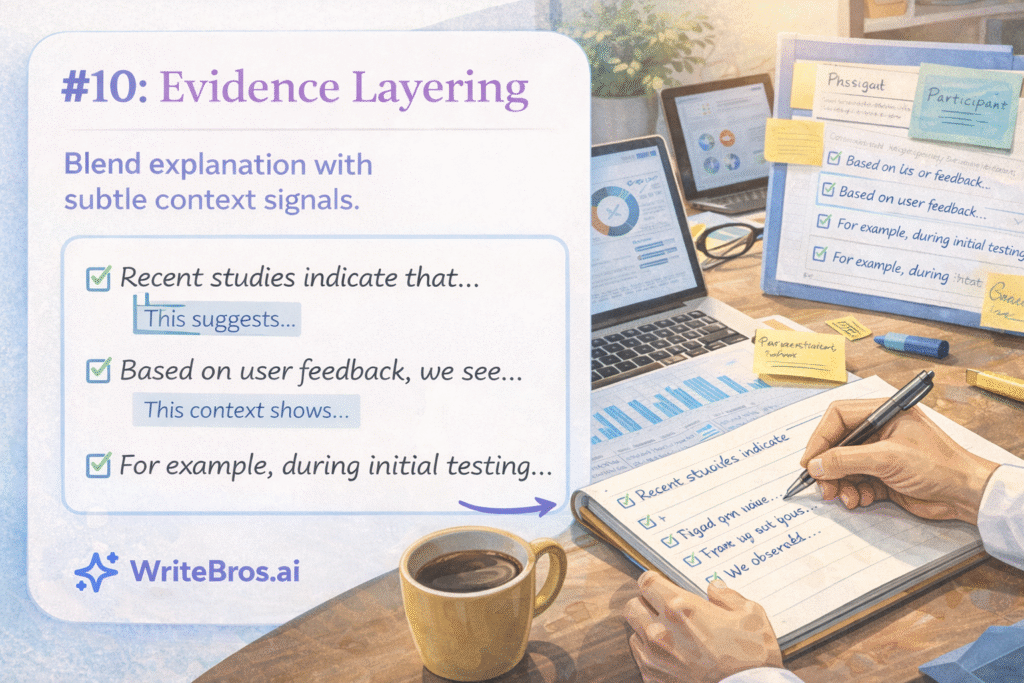
How to Improve Copyleaks Detection Results – Strategy #10: Evidence layering
Layering explanation with subtle contextual reinforcement enhances credibility and reduces overly generic presentation. Instead of isolating claims in standalone statements, integrate supporting reasoning within the same extended sentence or paragraph flow. This layered approach reflects how humans often think through ideas while articulating them.
Automated drafts sometimes separate explanation and justification too cleanly, which creates segmented reasoning patterns. Envision revising a claim so that its rationale unfolds gradually through connective phrasing rather than appearing as a neatly appended sentence. That integration introduces complexity in structure, which can positively influence evaluation metrics.
How to Improve Copyleaks Detection Results – Strategy #11: Question integration
Incorporating occasional reflective questions can subtly disrupt linear explanatory flow in a constructive way. Questions signal internal dialogue and invite consideration, which mirrors authentic drafting behavior. Used sparingly and contextually, they introduce tonal and structural variation without undermining authority.
This technique works because human writers often pause to frame uncertainty or prompt reflection while building an argument. If your draft reads as a continuous stream of declarative statements, it may feel overly uniform under algorithmic scrutiny. Strategic questions inserted at meaningful transitions add dynamic pacing that supports stronger detection outcomes.
How to Improve Copyleaks Detection Results – Strategy #12: Narrative texture
Narrative texture refers to the subtle layering of perspective, implication, and context that makes writing feel dimensional rather than flat. Even in technical discussions, allowing small traces of viewpoint or situational framing can reduce the impression of detached automation. This depth creates a more nuanced linguistic profile across the document.
Writers naturally embed texture through clarifying phrases, contextual caveats, and occasional reflective commentary. If every sentence functions purely as information delivery with no tonal contour, the result can appear sterile. Introducing measured narrative texture preserves professionalism while enhancing authenticity.
How to Improve Copyleaks Detection Results – Strategy #13: Revision depth check
Surface level editing, such as swapping isolated words, rarely changes the deeper structural patterns that influence evaluation. A thorough revision depth check involves reconsidering sentence construction, sequencing, and emphasis rather than relying on superficial adjustments. This deeper engagement signals genuine human iteration.
Imagine reviewing a flagged draft and noticing that only adjectives were replaced while the underlying syntax remained identical throughout. Detection systems often recognize those unchanged frameworks despite lexical variation. Rebuilding sections from the ground up where necessary produces more substantial differentiation.
How to Improve Copyleaks Detection Results – Strategy #14: Context alignment
Aligning examples and claims with realistic situational logic strengthens coherence and reduces generic phrasing. Statements that float without grounded context can contribute to abstract pattern clustering. Ensuring that each explanation logically connects to a plausible scenario enhances structural credibility.
This alignment matters because human reasoning typically unfolds within identifiable constraints and circumstances. If your draft presents universal claims detached from any frame of reference, it may appear templated. Contextually anchored explanations introduce natural variability that supports improved outcomes.
How to Improve Copyleaks Detection Results – Strategy #15: Final scan calibration
After implementing revisions, conduct multiple comparison scans to observe how incremental changes influence the reported score. Treat the evaluation as diagnostic feedback rather than a final judgment, using it to identify lingering uniformities. This iterative calibration ensures that improvements are measurable and intentional.
Writers who stop after a single adjustment often miss residual structural signals that remain embedded in the draft. Running controlled comparisons across slightly varied versions highlights which refinements genuinely reduce flagged patterns. Over time, this method builds an intuitive understanding of how to shape stronger results.
Common mistakes
- Relying exclusively on synonym replacement tools without restructuring sentences often leaves the original syntactic framework intact, which means detectable patterns remain even though individual words appear different, ultimately leading to minimal improvement in evaluation results.
- Overcorrecting by inserting excessive informal phrasing in an attempt to sound human can distort clarity and introduce inconsistent tone, which may reduce credibility and create new irregularities that negatively affect the overall assessment.
- Ignoring paragraph level structure and focusing only on isolated sentences overlooks the broader architectural patterns that detection systems evaluate, allowing uniform block formatting to persist across the document.
- Expanding content artificially to dilute flagged sections frequently introduces repetitive filler explanations, which accumulate into fresh clusters of similarity rather than resolving the original issue.
- Failing to review transitions between sections can result in formulaic connectors that repeat predictably, reinforcing structural uniformity that systems are designed to detect.
- Stopping revisions after a single improved score without cross checking alternate versions prevents deeper understanding of which changes meaningfully influenced the outcome.
Edge cases
In some situations, highly technical or policy driven documents naturally require consistent terminology and structured formatting, which can limit how much variation is appropriate without compromising clarity. Academic writing, legal summaries, or compliance documentation may legitimately contain repeated phrasing due to precision requirements, meaning that detection results should be interpreted alongside context rather than in isolation.
There are also cases in which genuinely human written drafts receive elevated scores because of topic uniformity or narrow stylistic constraints, especially in specialized industries with standardized language conventions. When this occurs, focus on measured refinements that preserve accuracy and intent instead of forcing stylistic irregularities that could weaken the document’s purpose.
Supporting tools
- Draft comparison software that highlights structural similarities across versions can help identify unchanged syntax patterns, allowing you to revise deeper layers of construction rather than concentrating only on visible word substitutions.
- Readability analysis platforms provide insight into sentence length distribution and complexity, which can reveal rhythmic uniformity that might otherwise go unnoticed during manual review.
- Version tracking systems enable side by side comparison of iterative edits, helping you determine which revisions materially influence evaluation outcomes.
- Manual style guides tailored to your publication or industry support consistent yet flexible tone calibration, reducing the temptation to apply rigid templates across every section.
- Peer review within a controlled editorial environment introduces natural human variance through feedback and clarification, strengthening authenticity without undermining coherence.
- WriteBros.ai offers structured rewriting workflows that prioritize deeper sentence reconstruction and contextual alignment, supporting more substantial refinements when improving flagged drafts.
Ready to Transform Your AI Content?
Try WriteBros.ai and make your AI-generated content truly human.
Conclusion
Improving evaluation outcomes requires deliberate attention to structure, rhythm, vocabulary, and contextual grounding rather than quick cosmetic adjustments. When you approach revisions as layered refinements that address both sentence level detail and broader architectural patterns, the results become more consistent and predictable across multiple scans.
The goal is not to chase a perfect score, but to produce writing that genuinely reflects thoughtful human drafting under realistic constraints. Consistent practice with these quality checks builds intuitive awareness of pattern formation, allowing you to strengthen future drafts with clarity and intention.
Did You Know?
If you are implementing How to Improve Copyleaks Detection Results, begin with structural recalibration rather than simple wording swaps, because mirrored paragraph layouts and repetitive clause ordering can maintain detection stability even when the draft appears different at a glance.
Allow certain sections to stretch with layered clarification while others tighten for emphasis, reposition clauses so grammatical patterns vary across paragraphs, and reduce repeated sentence openings that follow identical syntactic frames, since organic irregularity more closely reflects human drafting than perfectly balanced structure.
Ready to Transform Your AI Content?