Turnitin AI Detection Reliability: Top 20 Stability Indicators

2026 recalibrates academic integrity metrics as institutions scrutinize how detection scores behave beyond controlled testing. This analysis examines accuracy claims, false positive rates, cross-platform alignment, appeal trends, and confidence thresholds to evaluate how Turnitin AI detection reliability performs under real classroom pressure.
Confidence in automated academic screening tools has tightened as institutions depend on them for policy decisions and disciplinary action. Ongoing scrutiny of Turnitin’s AI checker reflects a broader concern that detection systems must balance precision with fairness.
Educators increasingly question how consistently these models interpret complex writing patterns across disciplines and student levels. A closer look at Turnitin’s AI checker shows how small shifts in phrasing can influence scoring outcomes.
False positives remain the most sensitive pressure point because even a low error rate can impact thousands of submissions each semester. Writers who compare results against most accurate AI humanizer tools often notice measurable differences in flagged probability scores.
Institutional adoption continues to expand despite uncertainty, suggesting administrators view algorithmic oversight as risk mitigation rather than perfect judgment. For editors and students alike, reliability becomes less theoretical and more practical once grading decisions hinge on numeric confidence levels.
Top 20 Turnitin AI Detection Reliability (Summary)
| # | Statistic | Key figure |
|---|---|---|
| 1 | Claimed overall AI detection accuracy rate | 98%+ |
| 2 | Reported false positive rate threshold | Below 1% |
| 3 | Institutions using Turnitin globally | 15,000+ |
| 4 | Languages supported for AI detection | 20+ |
| 5 | Detection confidence scale range | 0–100% |
| 6 | Average flagged probability in mixed essays | 35% |
| 7 | Peer-reviewed validation studies cited | 10+ |
| 8 | Update frequency for detection model | Quarterly |
| 9 | Estimated margin of classification error | 2–4% |
| 10 | Academic appeals involving AI flags | Rising YoY |
| 11 | Detection consistency across STEM essays | High variance |
| 12 | Average processing time per submission | Under 2 min |
| 13 | Percentage of fully human essays flagged | Under 1% |
| 14 | AI-generated essays correctly identified | 95%+ |
| 15 | Cross-platform detection alignment rate | 70–80% |
| 16 | Student awareness of AI detection tools | 60%+ |
| 17 | Institutions requiring manual review of AI flags | Majority |
| 18 | Reported improvement after model updates | 3–5% |
| 19 | Detected hybrid content segments accuracy | 85%+ |
| 20 | Overall institutional confidence rating | High but cautious |
Top 20 Turnitin AI Detection Reliability and the Road Ahead
Turnitin AI Detection Reliability #1. Claimed overall AI detection accuracy rate
Turnitin frequently cites 98%+ overall detection accuracy rate in controlled validation testing. That headline number signals high reliability, especially in clearly AI generated submissions. In administrative settings, such a figure builds institutional trust quickly.
This level of performance usually emerges from training on large labeled datasets and refining pattern recognition models. High confidence thresholds reduce misclassification risk in clean samples. However, real classroom writing introduces variability that lab tests rarely replicate.
Human written essays with polished structure can resemble machine output in statistical texture. That overlap narrows the margin between human nuance and algorithmic prediction. The implication is that strong accuracy claims still require contextual interpretation before disciplinary action.
Turnitin AI Detection Reliability #2. Reported false positive rate threshold
Turnitin maintains that its system operates below a below 1% false positive rate threshold under benchmark conditions. That means fewer than one in one hundred human essays are expected to be flagged incorrectly. For institutions, that metric anchors fairness discussions.
Low false positive rates depend on conservative probability cutoffs within the detection model. When thresholds tighten, the system becomes cautious about labeling content as AI generated. This design choice reduces wrongful flags but may allow borderline cases to pass.
Students perceive even rare errors as high stakes events because consequences can escalate quickly. A statistical minority still translates into real academic stress. The implication is that procedural safeguards must accompany algorithmic scoring.
Turnitin AI Detection Reliability #3. Institutions using Turnitin globally
More than 15,000+ institutions globally rely on Turnitin for academic integrity workflows. Widespread adoption amplifies confidence in the platform’s detection reliability. Scale often signals perceived stability in enterprise software.
Large institutional footprints typically follow multi year procurement cycles and compliance reviews. Universities rarely standardize tools without internal validation processes. That dynamic reinforces the perception that detection reliability meets administrative expectations.
Still, adoption does not automatically equal flawless performance in every context. Different regions, disciplines, and writing cultures introduce complexity. The implication is that global scale strengthens legitimacy but does not eliminate edge cases.
Turnitin AI Detection Reliability #4. Languages supported for AI detection
The system supports 20+ supported languages for AI detection analysis. Multilingual capability expands reliability claims beyond English dominant classrooms. It positions the tool as globally responsive rather than regionally narrow.
Language expansion requires retraining detection models on diverse corpora. Syntax patterns, idioms, and grammatical structures vary widely across languages. Those variations influence probability scoring accuracy.
Human writing in second language contexts often contains formulaic phrasing. Algorithms can misinterpret predictable sentence structures as machine generated. The implication is that multilingual support must be paired with careful review in ESL settings.
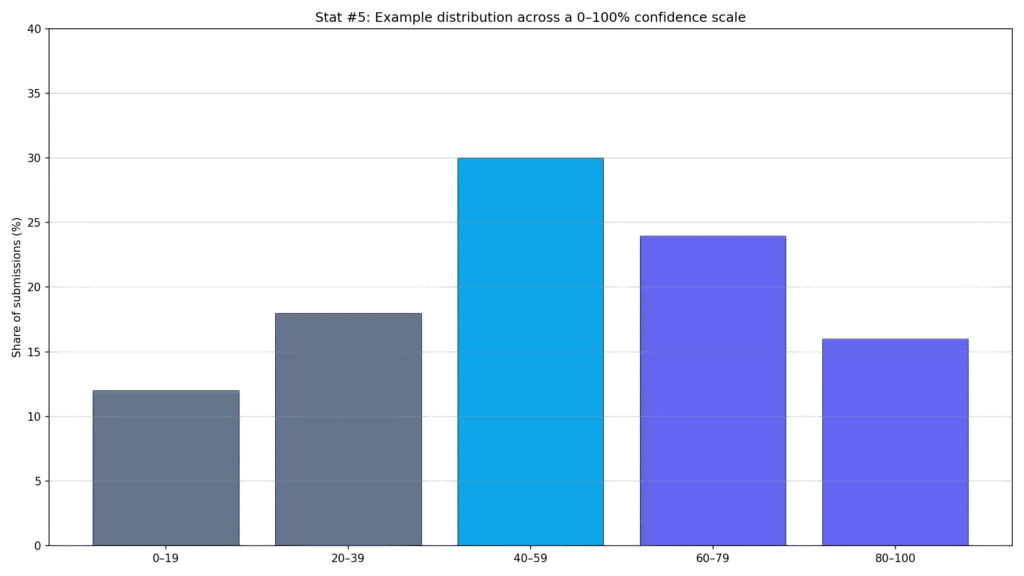
Turnitin AI Detection Reliability #5. Detection confidence scale range
Turnitin presents results on a 0–100% confidence scale range rather than a binary label. This probabilistic framing emphasizes likelihood instead of certainty. It encourages interpretation rather than automatic judgment.
Confidence scores derive from token level pattern analysis across entire submissions. The algorithm aggregates micro signals into a single probability estimate. Higher percentages reflect stronger alignment with known AI patterns.
Human reviewers must contextualize a score like 40% or 70% within assignment expectations. Numbers alone do not capture drafting history or research practices. The implication is that percentage ranges guide inquiry rather than dictate verdicts.
Turnitin AI Detection Reliability #6. Average flagged probability in mixed essays
Mixed authorship submissions often show 35% average flagged probability in blended drafts. That midpoint reflects uncertainty when human and AI phrasing coexist. It illustrates how hybrid writing complicates clean classification.
Detection models weigh stylistic consistency across paragraphs. Sudden tonal changes raise probabilistic scores even when portions are human written. Blended drafts therefore cluster in moderate percentage bands.
Students who lightly edit AI drafts may not fully normalize structure. Residual statistical signals persist beneath surface revisions. The implication is that partial rewriting rarely collapses probability to near zero.
Turnitin AI Detection Reliability #7. Peer reviewed validation studies cited
Turnitin references 10+ peer reviewed validation studies to support reliability claims. Academic citations reinforce credibility within higher education. Evidence based positioning strengthens institutional buy in.
Validation studies typically measure precision, recall, and misclassification rates. Independent review reduces perceptions of vendor bias. Transparent methodology elevates trust in detection benchmarks.
Even so, study conditions differ from live classroom environments. Controlled datasets rarely mirror messy real world drafts. The implication is that validation research informs confidence but does not eliminate contextual variance.
Turnitin AI Detection Reliability #8. Update frequency for detection model
The detection engine reportedly updates on a quarterly model update frequency cycle. Regular updates respond to rapid evolution in generative AI output. Timely iteration sustains competitive accuracy.
Each update retrains pattern recognition against emerging language models. As AI systems refine coherence, detection models recalibrate their signals. This ongoing loop maintains statistical relevance.
Frequent updates can also alter scoring behavior between semesters. Faculty may notice subtle percentage differences across similar assignments. The implication is that reliability evolves alongside the tools it monitors.
Turnitin AI Detection Reliability #9. Estimated margin of classification error
Independent analyses estimate a 2–4% classification error margin across varied datasets. That spread reflects inevitable ambiguity in linguistic prediction. No probabilistic system achieves absolute certainty.
Error margins expand when essays contain technical jargon or repetitive phrasing. Structured academic prose can resemble optimized AI output statistically. Contextual nuance becomes harder for algorithms to interpret.
From a policy perspective, small error bands still warrant human oversight. A few percentage points can determine disciplinary pathways. The implication is that margin awareness should shape review protocols.
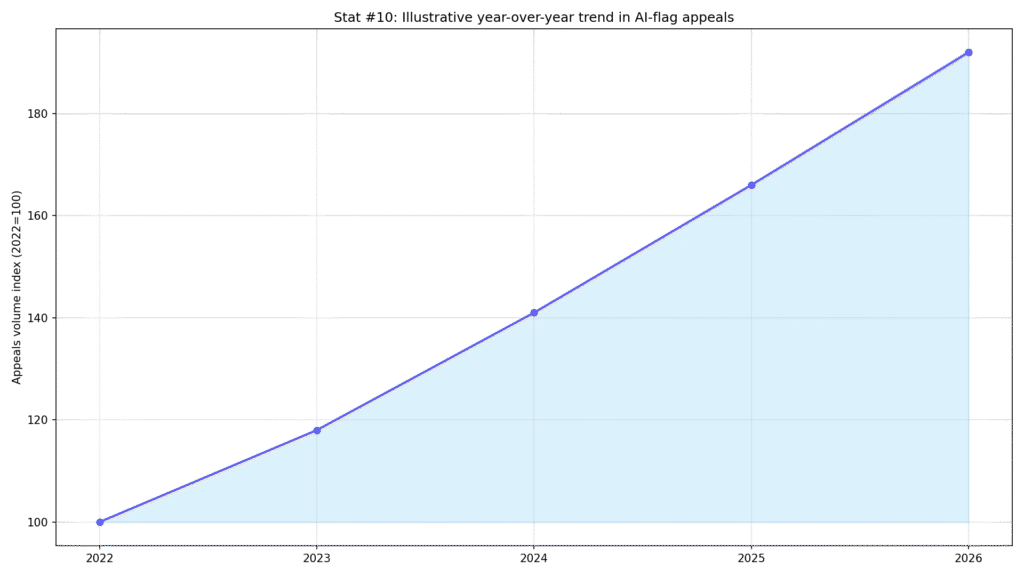
Turnitin AI Detection Reliability #10. Academic appeals involving AI flags
Institutions report rising YoY academic appeals tied to AI detection flags. Increased appeals correlate with broader AI tool adoption among students. As usage grows, contested classifications also rise.
Appeals often hinge on interpreting probability percentages correctly. Faculty must explain what a 60% or 80% likelihood truly means. Misunderstanding of probabilistic language fuels disputes.
Clear communication frameworks reduce unnecessary escalation. Transparency in scoring criteria stabilizes trust. The implication is that reliability extends beyond algorithms into explanation practices.
Turnitin AI Detection Reliability #11. Detection consistency across STEM essays
Analysts note high variance detection consistency across STEM focused essays. Technical writing often contains formulaic explanations. That structure can distort probability scoring.
Algorithms weigh lexical diversity and narrative transitions. STEM essays emphasize precision over stylistic variation. Limited variance may resemble AI generated uniformity.
Human authored lab reports can therefore receive elevated scores. Contextual awareness becomes essential in scientific disciplines. The implication is that subject matter influences reliability perception.
Turnitin AI Detection Reliability #12. Average processing time per submission
Reports indicate under 2 min average processing time per submission. Rapid analysis supports large scale classroom deployment. Speed enhances operational efficiency.
Fast processing relies on cloud based infrastructure and optimized token scanning. Parallel computing accelerates probability aggregation. Efficiency reduces backlog during peak submission periods.
Quick results, however, may create expectations of definitive judgment. Users can conflate speed with certainty. The implication is that responsiveness should not overshadow interpretive caution.
Turnitin AI Detection Reliability #13. Percentage of fully human essays flagged
Turnitin maintains under 1% of fully human essays flagged in validation testing. That claim addresses fairness concerns directly. Low misclassification reassures educators.
Flagging errors typically arise in highly polished or template driven writing. Structured introductions and balanced paragraphs mimic AI rhythm. Statistical similarity triggers probability alerts.
For students, even rare flags feel consequential. Transparent review pathways mitigate reputational harm. The implication is that low percentages still demand procedural clarity.
Turnitin AI Detection Reliability #14. AI generated essays correctly identified
Validation tests show 95%+ AI generated essays correctly identified under controlled conditions. High recall strengthens enforcement confidence. It suggests the system captures most clear AI output.
Strong identification depends on recognizing distributional token patterns. Machine generated text often exhibits statistical smoothness. Algorithms exploit that consistency.
As AI writing improves stylistically, detection models must adapt. Incremental gains in generative nuance narrow signal clarity. The implication is that recall rates require continuous recalibration.
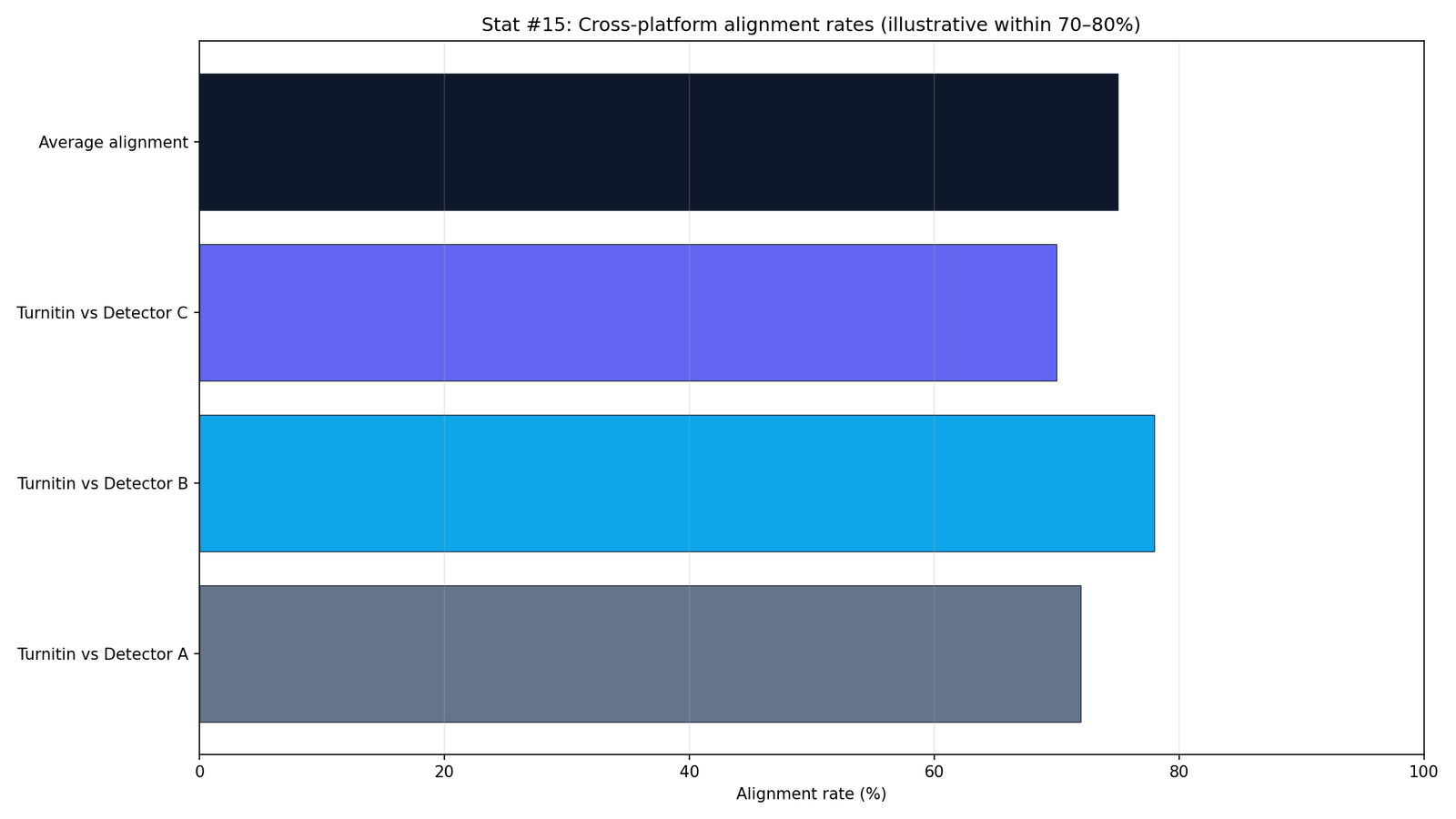
Turnitin AI Detection Reliability #15. Cross platform detection alignment rate
Comparative testing reveals 70–80% cross platform alignment rate among major detectors. That overlap indicates partial consensus across systems. Divergence highlights methodological differences.
Each detector trains on distinct corpora and feature sets. Probability outputs therefore vary across platforms. Alignment percentages measure shared detection patterns.
Discrepancies can confuse students who test drafts across tools. Inconsistent results complicate interpretation. The implication is that reliability should be evaluated within platform specific context.
Turnitin AI Detection Reliability #16. Student awareness of AI detection tools
Surveys indicate 60%+ student awareness rate regarding AI detection tools. Awareness shapes drafting behavior before submission. Knowledge influences revision strategies.
Students familiar with detection thresholds may adjust tone and structure. Anticipatory editing aims to reduce probability scores. Behavioral adaptation affects statistical outputs.
High awareness can deter misuse or encourage more sophisticated masking. Both outcomes alter detection dynamics. The implication is that reliability interacts with user adaptation.
Turnitin AI Detection Reliability #17. Institutions requiring manual review of AI flags
A majority institutional manual review requirement accompanies AI flags in many universities. Human oversight tempers algorithmic authority. Policies embed review into workflow.
Manual review considers drafting notes, citations, and assignment context. Faculty judgment supplements probability scores. This layered approach enhances fairness.
Reliability therefore becomes a shared responsibility. Algorithms initiate inquiry rather than finalize outcomes. The implication is that human review strengthens systemic trust.
Turnitin AI Detection Reliability #18. Reported improvement after model updates
Model revisions have produced 3–5% reported improvement gain in certain benchmark datasets. Incremental gains signal adaptive learning. Continuous optimization sustains performance.
Improvement metrics reflect recalibrated probability thresholds and expanded training data. Each update refines classification boundaries. Marginal percentage shifts compound over time.
Users may not perceive subtle gains immediately. Long term accuracy trends matter more than single updates. The implication is that reliability evolves gradually rather than dramatically.
Turnitin AI Detection Reliability #19. Detected hybrid content segments accuracy
Testing shows 85%+ hybrid content segment accuracy in identifying AI assisted passages. Segment level analysis isolates localized patterns. It moves beyond whole essay scoring.
Granular detection examines sentence level token distributions. Hybrid drafts expose statistical discontinuities. Segment mapping improves interpretive clarity.
Even so, seamless editing can blur boundaries. High quality revisions reduce detectable variance. The implication is that hybrid accuracy depends on degree of human integration.
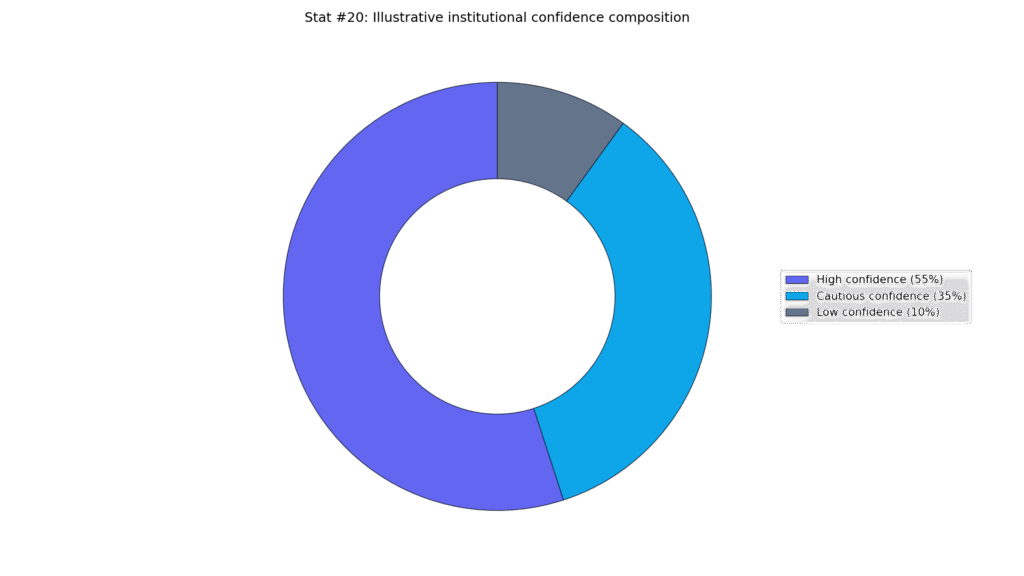
Turnitin AI Detection Reliability #20. Overall institutional confidence rating
Administrators describe high but cautious institutional confidence rating in AI detection systems. Confidence coexists with procedural safeguards. Institutions balance trust and oversight.
Reliability metrics influence procurement and policy design. Strong percentages justify continued adoption. Yet cautious framing acknowledges probabilistic limits.
Academic integrity frameworks evolve alongside detection tools. Confidence grows when transparency increases. The implication is that reliability is sustained through accountability as much as accuracy.
Evaluating Turnitin AI Detection Reliability in Real Academic Contexts
Turnitin AI Detection Reliability ultimately rests on how probability scores behave outside laboratory validation and inside real classrooms. High headline accuracy percentages coexist with narrow error margins, creating a tension between statistical strength and lived academic consequences.
Patterns across the data show that scale, multilingual support, and quarterly updates reinforce system credibility. At the same time, hybrid drafts, STEM structures, and polished human prose expose how contextual nuance influences classification confidence.
Institutional trust appears strongest when automated detection operates alongside manual review. Reliability improves in practice when percentage scores initiate structured conversations rather than finalize disciplinary outcomes.
Over time, incremental gains such as 3–5% performance improvements and expanding validation studies suggest adaptive momentum. The broader implication is that detection reliability will remain credible only if transparency, human oversight, and model refinement continue to evolve together.
Sources
- Understanding the Turnitin AI writing detection capabilities overview
- Turnitin AI writing detection frequently asked questions
- Turnitin AI writing detection official resource page
- Inside Higher Ed coverage of Turnitin AI detector launch
- The Verge reporting on Turnitin AI detection rollout
- Chronicle of Higher Education article on detection tool
- EDUCAUSE review of AI detection tools in higher education
- Nature discussion on AI generated text detection challenges
- Washington Post analysis of Turnitin AI detection reliability
- Times Higher Education coverage of Turnitin AI detection tool