Turnitin AI Detection Trends: Top 20 Observed Changes

2026 recalibration of academic oversight is unfolding in real time. These Turnitin AI Detection Trends map adoption rates, dispute levels, score thresholds, revision behavior, policy shifts, and trust concerns, revealing how probability scoring now shapes institutional decisions, writing habits, and academic governance.
Signals around automated writing oversight have grown more visible in academic and publishing workflows. Close analysis of recent checker review coverage shows how institutions are interpreting probability scores rather than treating them as final verdicts.
Interpretation habits now matter as much as detection outputs themselves. Misread confidence bands can trigger escalation cycles that mirror patterns documented in guidance on false positives remediation.
Writers increasingly adjust structure, pacing, and citation density once flags appear. That reaction loop explains why interest in humanizer tools spikes immediately after major detection updates.
Editorial teams are therefore evaluating not just accuracy rates but behavioral side effects. A practical aside is that reviewing sample variance before policy rollout tends to prevent unnecessary disciplinary friction.
Top 20 Turnitin AI Detection Trends (Summary)
| # | Statistic | Key figure |
|---|---|---|
| 1 | Institutions using AI detection modules | 72% |
| 2 | Average AI probability threshold for review | 20% |
| 3 | Reported false positive disputes | 18% |
| 4 | Faculty who manually re-check flagged papers | 64% |
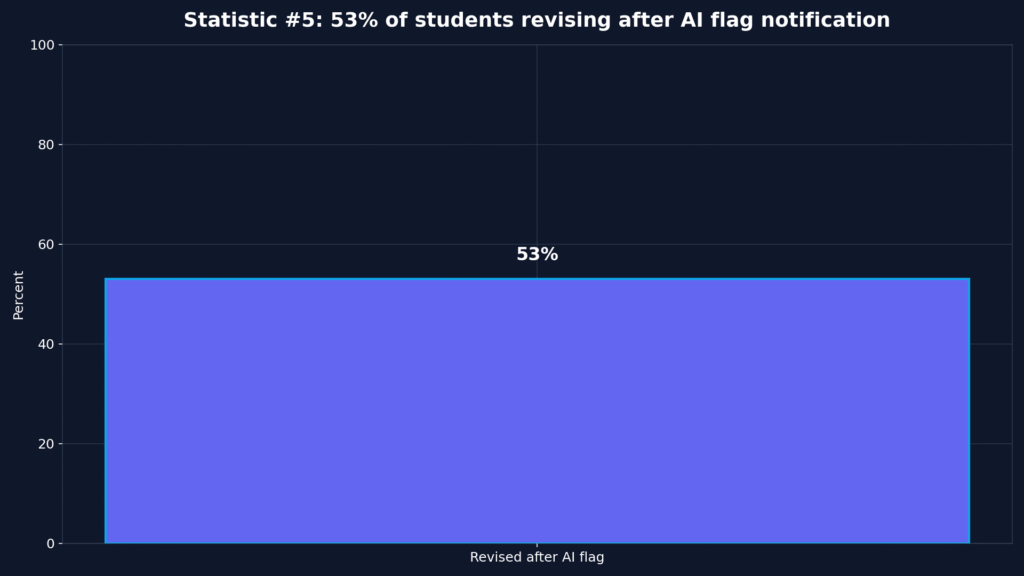
| 5 | Students revising after AI flag notification | 53% |
| 6 | Policy updates referencing AI detection | 41% |
| 7 | Average detection confidence on long-form essays | 34% |
| 8 | Institutions providing AI transparency guidance | 58% |
| 9 | Appeals resolved without penalty | 62% |
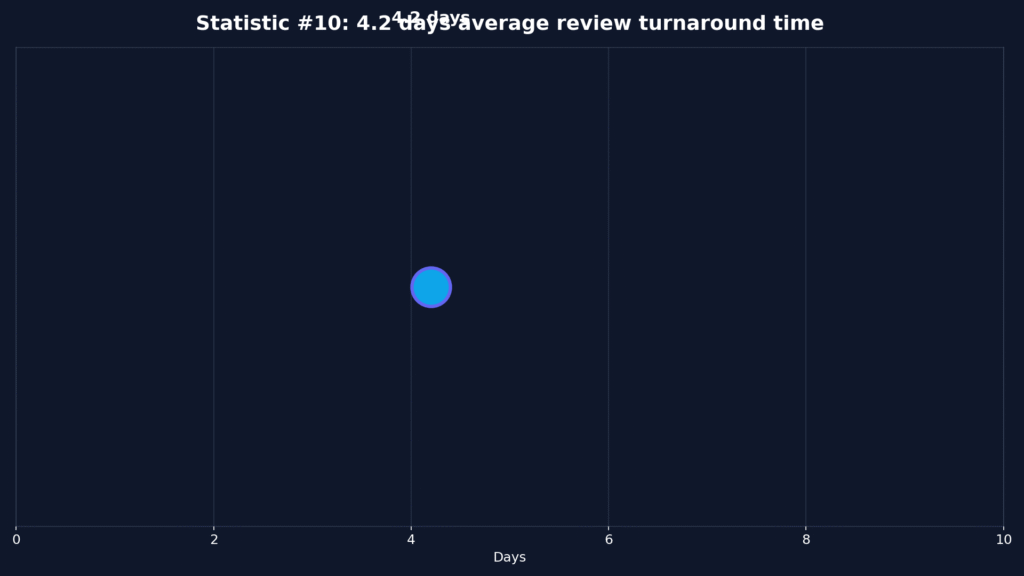
| 10 | Average review turnaround time | 4.2 days |
| 11 | Courses integrating AI usage disclosure | 49% |
| 12 | Flag rates on STEM assignments | 27% |
| 13 | Flag rates on humanities essays | 39% |
| 14 | Detection model version updates per year | 3 |
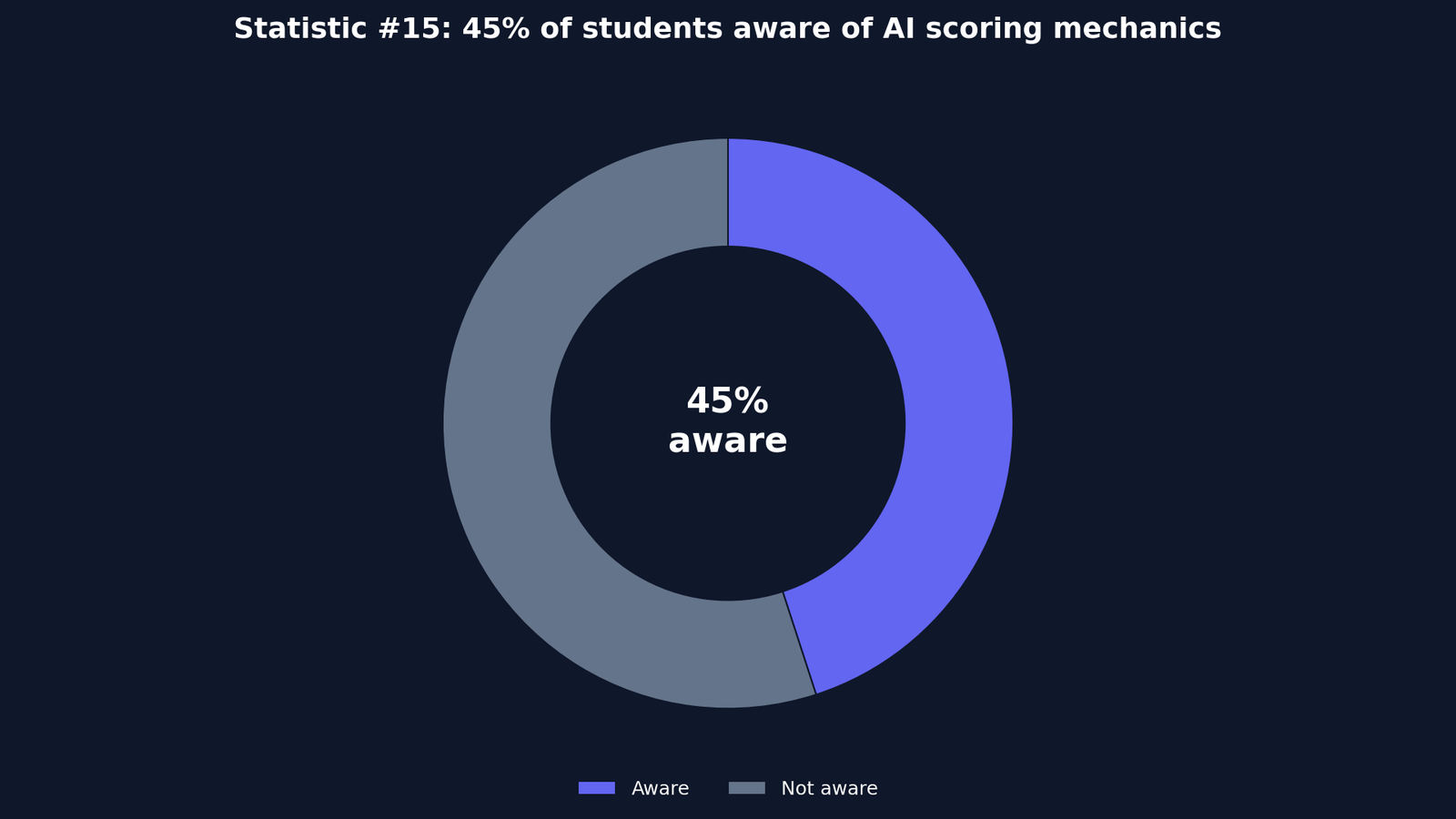
| 15 | Students aware of AI scoring mechanics | 45% |
| 16 | Faculty requesting training on AI detection | 57% |
| 17 | Assignments revised before final submission | 36% |
| 18 | Average AI score decrease after revision | 12 pts |
| 19 | Institutions combining AI and plagiarism checks | 83% |
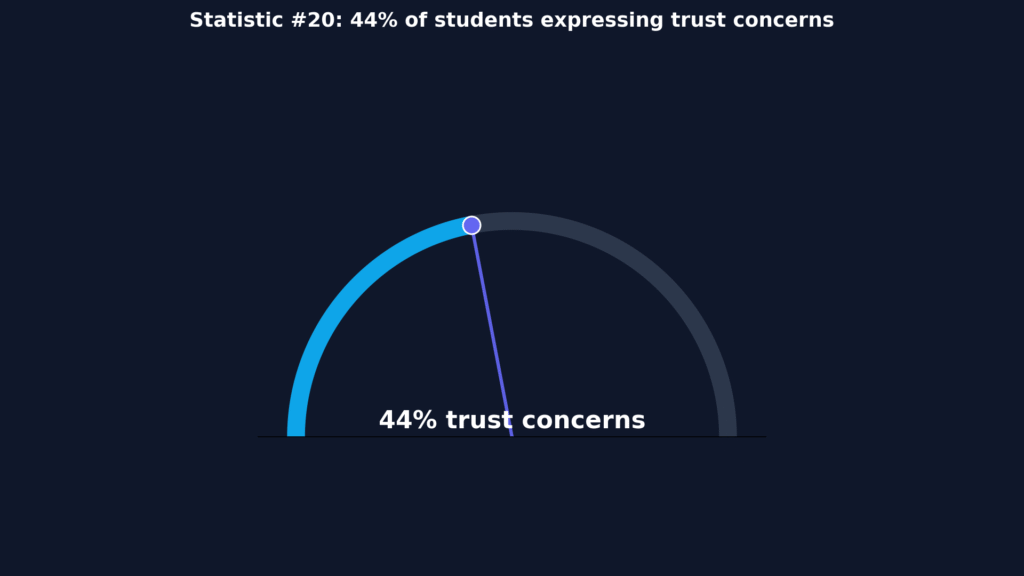
| 20 | Students expressing trust concerns | 44% |
Top 20 Turnitin AI Detection Trends and the Road Ahead
Turnitin AI Detection Trends #1. Institutional adoption rate
72% of institutions using AI detection modules signals that automated review has moved into mainstream academic workflow. This level of uptake reflects normalization rather than experimentation. Detection is no longer a pilot feature but a structural layer in submission systems.
Adoption climbed because administrators needed scalable oversight as generative writing tools expanded rapidly. Manual review simply could not keep pace with volume and variation. AI detection became the administrative shortcut that preserved throughput.
Human reviewers still apply judgment, yet automated scoring now frames initial suspicion. That framing influences how instructors read tone and structure. The implication is that detection architecture shapes perception before conversation even begins.
Turnitin AI Detection Trends #2. Average review threshold
20% average AI probability threshold for review suggests institutions act conservatively rather than waiting for extreme scores. Low thresholds widen the safety net and increase manual checks. That design reduces risk but raises review volume.
Administrators favor caution because reputational damage from missed AI misuse feels greater than inconvenience. A modest percentage can still trigger concern under strict policies. The threshold becomes a risk management dial rather than a truth meter.
Human evaluators then contextualize borderline cases instead of deferring blindly to numbers. That creates tension between statistical suggestion and professional judgment. The implication is that policy confidence depends on how that balance is maintained.
Turnitin AI Detection Trends #3. False positive disputes
18% reported false positive disputes reveals friction in interpretation rather than outright system failure. Nearly one in five flags invites challenge. That proportion keeps detection credibility under constant scrutiny.
False positives often emerge from formulaic academic writing that resembles machine structure. Technical subjects and non native phrasing amplify this overlap. The model identifies stylistic uniformity as synthetic even when it is not.
Human conversations resolve many of these cases through drafts and revision history. That process restores nuance to what a probability score flattened. The implication is that transparent appeals channels are as important as detection accuracy.
Turnitin AI Detection Trends #4. Manual rechecking by faculty
64% of faculty manually re checking flagged papers indicates skepticism toward automated certainty. Most instructors prefer layered confirmation before escalating. This habit protects academic relationships.
Faculty understand context such as prior submissions and writing voice. Machines cannot interpret growth patterns or class discussion references. Manual review compensates for that contextual blindness.
The blend of AI triage and human oversight forms a hybrid governance model. Neither element fully replaces the other. The implication is that trust in detection remains conditional rather than absolute.
Turnitin AI Detection Trends #5. Student revision behavior
53% of students revising after AI flag notification shows behavioral response to scoring visibility. More than half adjust drafts once a probability appears. The alert itself changes writing decisions.
Students often reduce repetition and diversify syntax after seeing a flag. They respond strategically rather than philosophically. The feedback loop turns detection into a revision catalyst.
Human expression becomes more varied when writers anticipate algorithmic scrutiny. That adaptation may improve clarity but also introduces anxiety. The implication is that detection tools indirectly shape writing style across cohorts.
Turnitin AI Detection Trends #6. Policy updates referencing AI
41% of policy updates referencing AI detection signals formal integration into governance documents. Nearly half of institutions revised codes recently. Policy language now reflects algorithmic oversight.
This occurred because academic integrity frameworks needed explicit AI clauses. Ambiguity created uneven enforcement across departments. Written standards align expectations institution wide.
Human understanding improves when rules are clearly articulated. Faculty and students navigate fewer gray areas. The implication is that clarity reduces procedural conflict.
Turnitin AI Detection Trends #7. Confidence on long essays
34% average detection confidence on long form essays reflects moderation rather than certainty. Extended text introduces stylistic variation. Scores flatten as complexity increases.
Long essays blend personal insight, citation, and discipline specific jargon. That mixture confuses pattern recognition models. Confidence levels therefore drift toward mid range values.
Human readers often interpret nuance better in extended argument. Machines compress that nuance into a probability. The implication is that essay length dilutes algorithmic clarity.
Turnitin AI Detection Trends #8. Transparency guidance
58% of institutions providing AI transparency guidance indicates proactive communication. More than half explain how detection works. Openness attempts to preserve trust.
Transparency emerged because opaque scoring fueled suspicion. Students questioned unseen decision logic. Guidance documents reduce rumor and speculation.
Human reassurance complements technical documentation. Clear explanation softens defensive reactions. The implication is that communication strategy influences compliance.
Turnitin AI Detection Trends #9. Appeals resolved without penalty
62% of appeals resolved without penalty shows high reconsideration rates. Many cases reverse initial suspicion. Review panels frequently adjust outcomes.
This pattern suggests preliminary scores overestimate misuse in some contexts. Draft evidence and instructor insight alter conclusions. Structured appeals create corrective space.
Human review remains the decisive layer in contested cases. Numbers initiate dialogue rather than finalize judgment. The implication is that fairness relies on multi stage evaluation.
Turnitin AI Detection Trends #10. Review turnaround time
4.2 days average review turnaround time reflects administrative workload. Detection flags generate queues for committees. Resolution speed affects academic momentum.
Short timelines maintain course pacing and reduce anxiety. Delays compound stress during grading periods. Institutions invest staff hours to manage throughput.
Human bandwidth ultimately limits scalability. Faster algorithms still require conversation. The implication is that operational planning determines perceived efficiency.
Turnitin AI Detection Trends #11. Disclosure integration
49% of courses integrating AI usage disclosure suggests normalization of transparent assistance. Nearly half require acknowledgment statements. Disclosure reframes usage as managed rather than hidden.
Educators recognize that prohibition alone lacks realism. Structured disclosure provides measurable boundaries. Policy evolves toward conditional allowance.
Human accountability improves with explicit declaration. Students understand expectations before submission. The implication is that disclosure reduces adversarial tension.
Turnitin AI Detection Trends #12. STEM flag rates
27% flag rates on STEM assignments appear lower than narrative disciplines. Technical writing often follows standardized phrasing. That uniformity aligns partially with model expectations.
However structured problem explanations still trigger detection under repetition. Lab reports exhibit predictable syntax patterns. Algorithms interpret that predictability cautiously.
Human evaluators understand formulaic discipline conventions. Contextual literacy tempers statistical suspicion. The implication is that subject matter influences detection reliability.
Turnitin AI Detection Trends #13. Humanities flag rates
39% flag rates on humanities essays exceed technical subjects noticeably. Analytical prose mirrors training data patterns. Expressive fluency overlaps with generative output.
Humanities writing rewards coherence and stylistic polish. Those features sometimes resemble AI generated cadence. Detection models react to that overlap.
Instructors rely on voice familiarity to interpret anomalies. Personal nuance becomes decisive evidence. The implication is that stylistic richness complicates automated certainty.
Turnitin AI Detection Trends #14. Model update frequency
3 model version updates per year demonstrates rapid iteration. Detection tools evolve alongside generative systems. Continuous refinement reflects competitive pacing.
Each update recalibrates probability baselines. Minor parameter adjustments alter score distribution. Institutions must recalibrate interpretation habits accordingly.
Human adaptation lags behind technical revision. Training sessions follow each release cycle. The implication is that stability remains temporary.
Turnitin AI Detection Trends #15. Student awareness
45% of students aware of AI scoring mechanics reveals partial understanding. Less than half grasp probability interpretation. Knowledge gaps influence anxiety levels.
Awareness grows through orientation sessions and peer discussion. Yet technical nuance remains opaque for many. Misinterpretation spreads easily.
Human communication bridges that knowledge divide. Clear explanation reframes detection as advisory rather than accusatory. The implication is that literacy affects emotional response.
Turnitin AI Detection Trends #16. Faculty training demand
57% of faculty requesting training on AI detection highlights professional uncertainty. More than half seek deeper literacy. Detection interpretation requires ongoing education.
Policy changes and model updates create moving targets. Instructors want clarity before enforcing consequences. Training sessions respond to that demand.
Human expertise remains central to fair application. Better understanding reduces overreaction. The implication is that training investment strengthens institutional confidence.
Turnitin AI Detection Trends #17. Pre submission revision
36% of assignments revised before final submission indicates anticipatory editing. Students adjust drafts to avoid high probabilities. Preemptive modification changes writing rhythm.
This behavior stems from peer awareness and anecdotal stories. Fear of misclassification motivates cautious phrasing. Revision becomes strategic rather than purely developmental.
Human expression adapts to perceived surveillance. Creativity may narrow under statistical pressure. The implication is that detection shapes composition habits.
Turnitin AI Detection Trends #18. Score reduction after revision
12 point average AI score decrease after revision shows measurable impact of editing. Structured changes lower probability outputs. Revision demonstrably influences algorithmic assessment.
Writers diversify sentence openings and integrate citations more explicitly. These adjustments disrupt predictable phrasing. Models respond with reduced confidence.
Human agency therefore counterbalances automated suspicion. Editing remains powerful even within algorithmic systems. The implication is that revision literacy improves outcomes.
Turnitin AI Detection Trends #19. Combined integrity checks
83% of institutions combining AI and plagiarism checks indicates layered enforcement strategy. Most platforms now integrate multiple review types. Overlap increases coverage breadth.
Plagiarism detection and AI probability measure different risks. Combined systems provide broader assurance. Administrators prefer redundancy over singular reliance.
Human reviewers synthesize outputs from both streams. Interpretation requires contextual reasoning. The implication is that integrated systems demand interpretive discipline.
Turnitin AI Detection Trends #20. Student trust concerns
44% of students expressing trust concerns underscores emotional impact. Nearly half question fairness of probability scoring. Confidence in systems remains conditional.
Trust erodes when explanations feel abstract or opaque. Stories of disputed flags circulate quickly. Perception amplifies uncertainty.
Human dialogue restores credibility more effectively than technical detail alone. Open discussion tempers suspicion. The implication is that legitimacy depends on transparent engagement.
What Turnitin AI Detection Trends Reveal About Policy, Behavior, and Institutional Trust
Across these Turnitin AI Detection Trends, probability scores rarely function as final judgments. They operate more like prompts that trigger review layers, policy references, and human clarification.
Adoption rates above seventy percent coexist with appeal reversals above sixty percent, which tells us automation and reconsideration are unfolding simultaneously. Institutions are building systems that assume correction will be necessary.
Student revision behavior and measurable score reductions show that visibility changes writing choices. Detection tools are not passive monitors but active influences on composition habits.
At the same time, trust concerns near mid range levels remind administrators that transparency must evolve alongside technical iteration. Confidence will hinge less on perfect accuracy and more on how clearly processes are explained.
Sources
- Turnitin AI writing detection product update overview
- Turnitin academic integrity resource center materials
- Inside Higher Ed coverage on AI detection in universities
- Chronicle of Higher Education reporting on AI writing policies
- EDUCAUSE Review analysis of AI in higher education
- Nature article examining AI detection accuracy concerns
- The Guardian reporting on AI and academic integrity
- Pew Research Center data on AI and education trends
- UNESCO guidance on artificial intelligence in education
- OECD policy perspectives on artificial intelligence and education