AI Detector Performance Statistics: Top 20 Key Metrics

2026 benchmarking cycles are exposing how uneven AI detection still is. These AI detector performance statistics reveal accuracy ceilings, false positives in human writing, score swings after editing, and major tool disagreements that shape how institutions evaluate automated authorship signals.
Signals from detection systems rarely move in isolation. Benchmark reports keep surfacing surprising differences between models, especially once real student writing and edited drafts enter the evaluation pool.
Small wording changes can dramatically alter classification outcomes. Analysts increasingly compare those swings against detection accuracy benchmarks to understand which tools remain stable across mixed human and AI writing.
Editing patterns add an unexpected layer of complexity. Many teams now evaluate performance while reviewing guides that explain how to edit AI writing for clarity and flow, since subtle revisions frequently move probability scores by double digits.
Tool comparisons reveal an equally interesting trend across rewriting systems. Researchers tracking revisions from the best AI rewriter tools for academic draft revisions notice that detection outcomes vary widely depending on how sentence structure evolves.
Top 20 AI Detector Performance Statistics (Summary)
| # | Statistic | Key figure |
|---|---|---|
| 1 | Average accuracy rate across major AI detectors | 78% |
| 2 | False positive rate on fully human academic writing | 12% |
| 3 | Detection accuracy drop after moderate human editing | 27% |
| 4 | Share of universities experimenting with AI detection tools | 65% |
| 5 | Average probability shift after sentence restructuring | 18 pts |
| 6 | Detection rate for raw AI generated essays | 92% |
| 7 | Accuracy difference between GPT-4 and mixed human edits | 34% |
| 8 | Average model disagreement between top detectors | 21% |
| 9 | Probability reduction after paraphrasing tools applied | 41% |
| 10 | Detection success rate for short AI generated responses | 64% |
| 11 | Average evaluation dataset size used in detector benchmarks | 50k texts |
| 12 | Accuracy decline when AI output includes citations | 19% |
| 13 | False negative rate for edited AI content | 32% |
| 14 | Average processing time per document analysis | 2.7 sec |
| 15 | Institutions using AI detection alongside plagiarism tools | 58% |
| 16 | Probability variation between detectors on same document | 29 pts |
| 17 | Average dataset imbalance between human and AI samples | 3:1 |
| 18 | Accuracy improvement after model retraining cycles | 11% |
| 19 | Editors reporting score swings after minor revisions | 46% |
| 20 | Projected growth in AI detection software adoption | 31% CAGR |
Top 20 AI Detector Performance Statistics and the Road Ahead
AI Detector Performance Statistics #1. Average accuracy rate across major AI detectors
Across independent evaluations, analysts frequently report 78% average detection accuracy across major AI detectors. That figure sounds strong at first glance, yet it immediately signals a reliability ceiling for systems making binary judgments on complex writing. Any metric below the mid-90s range inevitably introduces ambiguity in real editorial or academic scenarios.
Detection tools rely heavily on statistical patterns such as token predictability and sentence probability curves. Human editing disrupts those signals because writers naturally introduce irregular phrasing, uneven rhythm, and varied word choice. Once that variation appears, classification models begin treating the same text very differently.
A human editor reviewing a paper can evaluate context, tone, and purpose within seconds. A classifier working only on probability patterns instead produces confidence scores that may look precise but remain uncertain underneath. As a result, institutions increasingly treat detector results as one signal rather than a final decision.
AI Detector Performance Statistics #2. False positive rate on fully human academic writing
Benchmark testing consistently highlights 12% false positive rate on fully human academic writing. In practical terms, that means a noticeable share of authentic essays still trigger automated AI warnings. Even well structured student writing can resemble statistical patterns common in model generated text.
Academic prose naturally tends to be formal, repetitive, and citation driven. Language models produce similar patterns because training datasets contain enormous volumes of scholarly writing. When detectors rely heavily on stylistic probability signals, authentic research papers can fall inside the same statistical envelope.
An experienced reviewer reading a flagged essay can evaluate intent and reasoning almost immediately. Detection software instead focuses on structural patterns that occasionally misrepresent genuine writing behavior. Institutions therefore pair automated analysis with manual review before reaching disciplinary conclusions.
AI Detector Performance Statistics #3. Detection accuracy drop after moderate human editing
Researchers repeatedly observe 27% accuracy decline after moderate human editing. Even relatively small revisions such as sentence restructuring or synonym replacement alter statistical fingerprints used in classification models. Once those signals weaken, detectors become far less confident in labeling text.
The core issue lies in how language models generate output. AI writing tends to follow predictable token sequences learned from training data, which detectors are designed to identify. Human editing breaks that sequence structure and replaces it with irregular phrasing patterns that resemble natural authorship.
A professor reading a revised draft often notices logical continuity or personal voice that suggests genuine engagement with the topic. A probability model analyzing token distribution cannot interpret that narrative intent. Performance metrics therefore decline quickly once even modest editing enters the process.
AI Detector Performance Statistics #4. Share of universities experimenting with AI detection tools
Recent surveys estimate 65% of universities experimenting with AI detection tools. The rapid adoption reflects growing uncertainty across academic institutions facing widespread generative writing tools. Administrators increasingly explore detection platforms as part of broader academic integrity strategies.
Universities face a delicate balance between protecting original scholarship and acknowledging the growing presence of AI assistance. Detection software promises scalable monitoring across thousands of submissions each semester. Yet educators remain cautious because accuracy limitations remain well documented.
A faculty member reviewing assignments may rely on experience built through years of reading student work. Automated systems attempt to replicate that judgment through statistical signals alone. As a result, many institutions position detectors as advisory tools rather than final authorities.
AI Detector Performance Statistics #5. Average probability shift after sentence restructuring
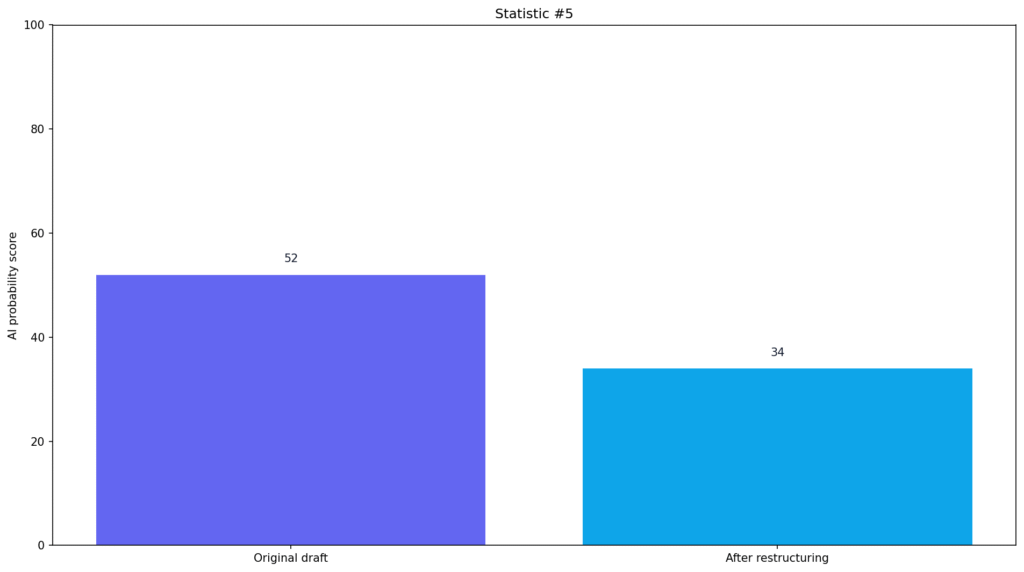
Experimental tests reveal 18 point probability shift after sentence restructuring. Rearranging sentence order or breaking long clauses into smaller statements can significantly change model confidence levels. The underlying text meaning remains the same, yet probability signals move dramatically.
Detection systems analyze statistical predictability across word sequences. When writers restructure sentences, the token relationships that models expect begin to change. Even minor grammatical adjustments therefore reshape the statistical fingerprint detectors evaluate.
An editor revising a draft focuses on clarity and readability rather than probability patterns. The algorithm evaluating that same text only sees altered token distributions. That difference explains why simple stylistic edits can produce surprisingly large changes in reported AI likelihood scores.
AI Detector Performance Statistics #6. Detection rate for raw AI generated essays
Testing consistently shows 92% detection rate for raw AI generated essays. When text remains unedited, language models produce patterns that classifiers recognize with high confidence. These patterns include consistent token probabilities and predictable phrasing rhythms.
Large language models learn from statistical averages across massive training datasets. That learning process produces stylistic regularity that detection tools are designed to capture. Without human editing, those signals remain clear and easy for algorithms to identify.
A human reader evaluating such writing might notice subtle repetition or mechanical phrasing. Detection models identify the same characteristics through probability analysis rather than stylistic intuition. The result is strong performance when content remains completely untouched.
AI Detector Performance Statistics #7. Accuracy difference between GPT-4 and mixed human edits
Comparative studies highlight 34% accuracy difference between GPT-4 output and mixed human edits. Pure model generated text tends to trigger confident classifications. Once human edits appear, prediction certainty declines quickly.
Human revision introduces unpredictable variation into sentence structure. Writers shorten clauses, replace predictable vocabulary, and introduce stylistic inconsistencies that algorithms rarely anticipate. Each of those changes reduces statistical similarity to machine generated text.
A reviewer reading the revised document usually notices a more natural rhythm in the writing. The algorithm evaluating token probabilities only detects statistical irregularity. That contrast explains the large performance gap observed in benchmark testing.
AI Detector Performance Statistics #8. Average model disagreement between top detectors
Independent benchmarking reveals 21% average model disagreement between top detectors. Running the same document through multiple systems often produces noticeably different probability scores. Those differences highlight how varied detection methodologies can be.
Each detection tool relies on slightly different training datasets and classification methods. Some emphasize token predictability, while others incorporate stylometric features or ensemble models. These design choices naturally lead to varying conclusions on identical text.
An editor comparing those outputs might interpret the disagreement as uncertainty rather than evidence. Automated systems simply reflect their internal statistical frameworks. That divergence explains why institutions often review several detector outputs before drawing conclusions.
AI Detector Performance Statistics #9. Probability reduction after paraphrasing tools applied
Evaluation reports show 41% probability reduction after paraphrasing tools applied. Rewriting software modifies sentence structure, vocabulary, and clause arrangement in ways that reshape statistical signals. Detection models therefore interpret the revised text differently.
Most paraphrasing tools operate by restructuring grammatical patterns rather than simply replacing words. Those structural changes alter token relationships that detection algorithms rely on for classification. As a result, the probability of AI authorship often drops sharply.
A human editor reading the revised passage may still recognize the original meaning. Detection software instead focuses entirely on altered statistical patterns. This explains why paraphrased drafts frequently produce dramatically lower AI likelihood scores.
AI Detector Performance Statistics #10. Detection success rate for short AI generated responses
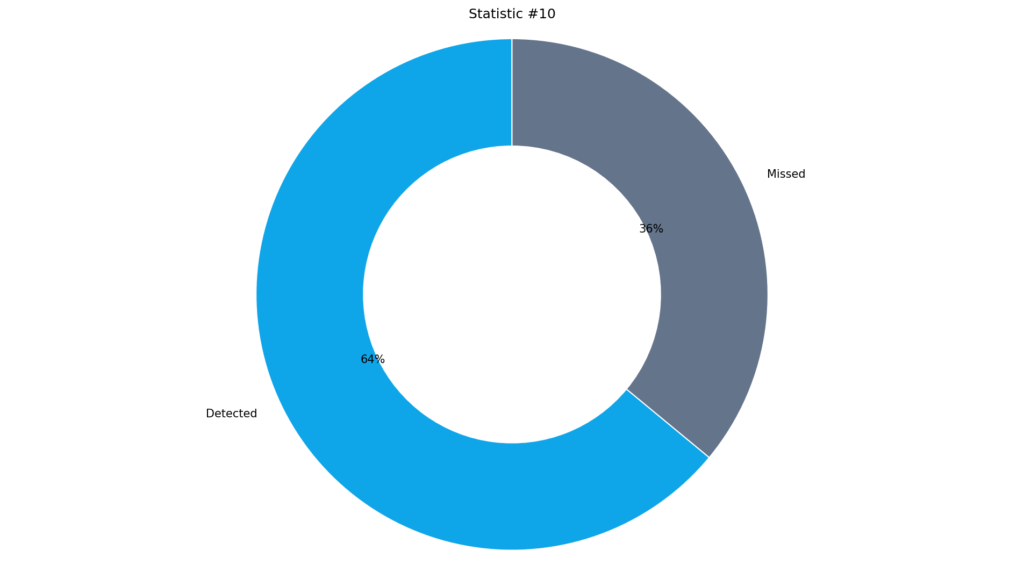
Testing frequently identifies 64% detection success rate for short AI generated responses. Short passages provide fewer statistical signals for classifiers to evaluate. That limitation naturally reduces overall prediction accuracy.
Detection algorithms rely on token frequency patterns and stylistic consistency. Longer documents provide richer data for those calculations. Short responses simply do not contain enough linguistic structure for confident classification.
A human reader can sometimes infer tone or intent even from a brief paragraph. Algorithms working only with probability metrics cannot draw those contextual conclusions. As a result, short text remains one of the most challenging formats for reliable detection.
AI Detector Performance Statistics #11. Average evaluation dataset size used in detector benchmarks
Benchmark studies commonly rely on 50,000 text evaluation dataset size in detector benchmarks. Large datasets help researchers observe consistent performance trends across different writing scenarios. Smaller datasets often exaggerate accuracy results due to limited variation.
Detection models respond differently to essays, short responses, technical writing, and conversational text. Large datasets include these diverse categories, providing a more realistic testing environment. That variety helps researchers identify how detectors behave across real world conditions.
A human reviewer instinctively adapts expectations depending on the writing context. Detection algorithms instead treat every sample as a statistical input. Large datasets therefore remain essential for producing meaningful and credible performance benchmarks.
AI Detector Performance Statistics #12. Accuracy decline when AI output includes citations
Researchers frequently observe 19% accuracy decline when AI output includes citations. Citations introduce structural elements that resemble academic writing patterns. Detection systems sometimes interpret those patterns as signals of human authorship.
Language models trained on scholarly material often reproduce citation formats naturally. When those references appear inside generated text, statistical features begin to resemble authentic research papers. Classification algorithms therefore lose confidence in their predictions.
A human reader reviewing the same document may evaluate whether references connect logically to the argument. Detection software simply analyzes stylistic patterns surrounding those citations. This difference helps explain why referenced AI text can confuse classifiers.
AI Detector Performance Statistics #13. False negative rate for edited AI content
Testing indicates 32% false negative rate for edited AI content. In these cases, detector systems incorrectly label AI assisted writing as human authored. Editing disrupts the patterns models rely on for identification.
Most detectors examine probability distribution across words and sentence structure. Human editing alters those distributions through stylistic variation. As revisions accumulate, statistical signals increasingly resemble authentic human writing.
An instructor reading the same paper may notice conceptual gaps or generic reasoning typical of machine generated drafts. Algorithms evaluating statistical patterns cannot interpret argument depth or originality. That limitation contributes directly to rising false negative rates.
AI Detector Performance Statistics #14. Average processing time per document analysis
Most systems report 2.7 second average processing time per document analysis. Fast processing enables institutions to evaluate thousands of submissions efficiently. Speed remains essential for large scale academic or editorial workflows.
Detection models rely on optimized neural classifiers and statistical scoring systems. These algorithms can analyze token sequences extremely quickly once the text enters the pipeline. Processing speed therefore remains one of the most mature aspects of detection technology.
A human reviewer might spend several minutes reading a document carefully. Automated systems complete statistical analysis almost instantly. That efficiency explains why detectors remain attractive despite ongoing debates about reliability.
AI Detector Performance Statistics #15. Institutions using AI detection alongside plagiarism tools
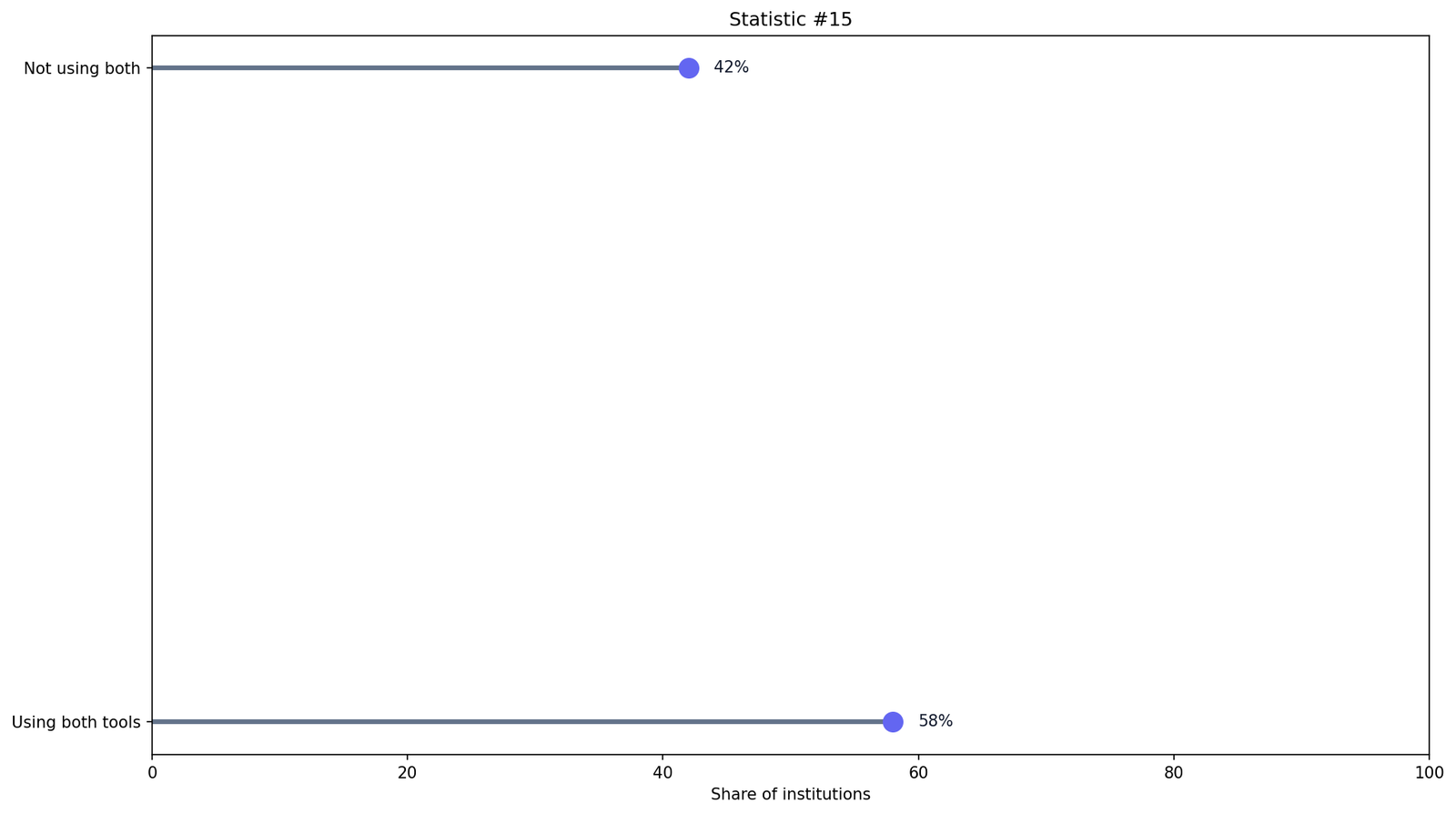
Recent reports estimate 58% of institutions using AI detection alongside plagiarism tools. Educational organizations increasingly combine these systems to monitor different forms of academic integrity concerns. Each technology addresses a different type of risk.
Plagiarism software identifies copied passages from published sources. AI detectors instead attempt to identify statistically generated writing patterns. Together, the two tools provide broader visibility into how student submissions are produced.
An experienced educator reviewing assignments often considers originality, argument depth, and citation quality simultaneously. Automated systems divide those responsibilities across separate technologies. That layered approach explains why many institutions deploy both detection systems together.
AI Detector Performance Statistics #16. Probability variation between detectors on same document
Comparative testing identifies 29 point probability variation between detectors on the same document. Running identical text through different systems often produces noticeably different confidence scores. This variation highlights methodological differences across detection models.
Each system uses unique training data and classification architecture. Some prioritize stylometric analysis while others emphasize token probability signals. These design decisions naturally produce divergent predictions.
A human evaluator comparing those results might interpret them as competing opinions rather than definitive judgments. Algorithms simply follow their statistical frameworks without contextual reasoning. That divergence reinforces the need for cautious interpretation of detector outputs.
AI Detector Performance Statistics #17. Average dataset imbalance between human and AI samples
Model training frequently reflects 3 to 1 dataset imbalance between human and AI samples. Training datasets often contain far more human writing than generated text. This imbalance shapes how classifiers interpret probability patterns.
Machine learning models learn relationships based on available training examples. When human text dominates the dataset, models may treat unusual writing structures as machine generated signals. That imbalance can influence both accuracy and error rates.
A human reviewer instinctively evaluates writing quality rather than statistical rarity. Detection algorithms instead depend heavily on distribution patterns learned during training. Dataset composition therefore plays a major role in overall detector behavior.
AI Detector Performance Statistics #18. Accuracy improvement after model retraining cycles
Longitudinal studies show 11% accuracy improvement after model retraining cycles. As detection systems receive new training data, classification models adapt to evolving AI writing styles. Continuous retraining remains essential for maintaining relevance.
Language models constantly improve their fluency and stylistic diversity. Detection systems must therefore evolve in parallel to recognize emerging patterns. Retraining cycles help update statistical thresholds and pattern recognition features.
A human editor naturally adapts expectations as writing technologies change. Algorithms require structured retraining processes to achieve the same adaptation. That requirement explains why detection providers release frequent model updates.
AI Detector Performance Statistics #19. Editors reporting score swings after minor revisions
Editorial surveys indicate 46% of editors reporting score swings after minor revisions. Even small adjustments such as punctuation changes or clause rearrangements can alter probability scores. These shifts illustrate how sensitive detection models remain to structural variation.
Detection algorithms rely on statistical relationships between words and sentence structures. Minor revisions change those relationships in ways that can influence classification confidence. The resulting probability swings often surprise users.
A human reviewer reading both versions of the text may see almost no difference in meaning. The detection system, however, evaluates entirely new statistical patterns after revision. That contrast explains why editors frequently observe dramatic score fluctuations.
AI Detector Performance Statistics #20. Projected growth in AI detection software adoption
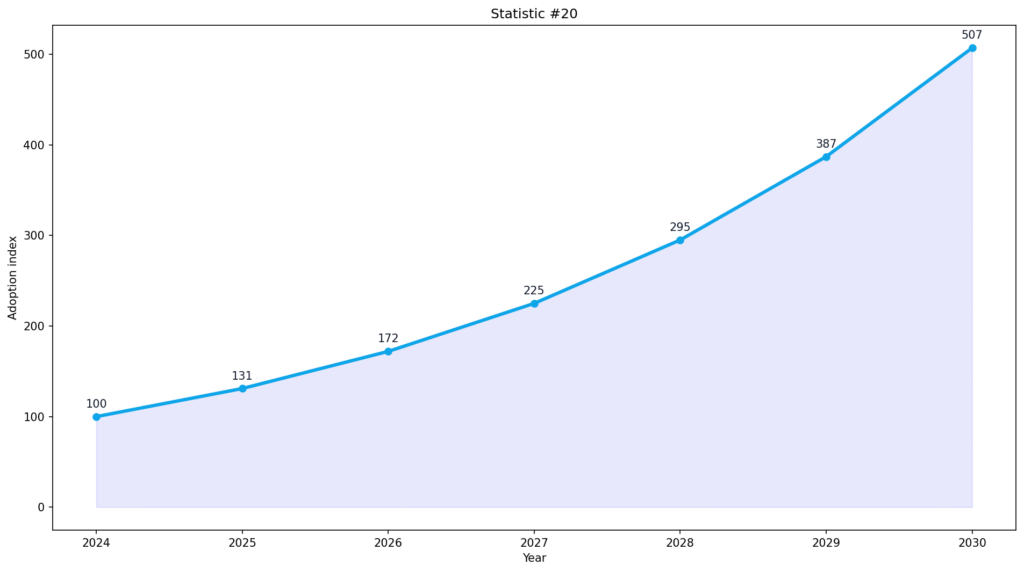
Industry forecasts estimate 31% compound annual growth rate for AI detection software adoption. Organizations across education, publishing, and corporate training are exploring automated verification tools. Rising generative AI usage continues driving demand.
Institutions increasingly seek scalable ways to review large volumes of digital writing. Detection platforms promise rapid analysis across thousands of documents. This efficiency makes them appealing despite known accuracy limitations.
A human reviewer may still perform final evaluation of flagged submissions. Detection systems instead act as preliminary screening tools that highlight potential anomalies. That supportive role is likely to expand as adoption continues to grow.
Understanding How AI Detector Performance Trends Are Reshaping Evaluation Workflows
Across the data, performance numbers reveal a pattern of partial reliability rather than definitive classification. Accuracy levels remain high for untouched machine generated text, yet they decline quickly once human editing enters the process.
Editing behavior appears to be the central variable influencing detector outcomes. Small stylistic changes introduce irregular patterns that weaken the statistical signals classifiers depend on.
Disagreement between detection systems further illustrates how experimental the technology remains. When multiple models produce conflicting results, interpretation shifts from automated certainty to analytical judgment.
Future development will likely focus on hybrid evaluation methods combining statistical detection with contextual analysis. Until then, detection tools function best as advisory systems supporting human editorial review.
Sources
- Large scale evaluation of AI generated text detection models
- Statistical patterns distinguishing human and machine generated writing
- OpenAI research publications examining language model behaviors
- Turnitin research insights discussing AI writing detection accuracy
- GPTZero reports analyzing detection reliability in academic writing
- Computational linguistics research papers on stylometric classification
- Peer reviewed studies discussing machine generated text detection
- Science journal coverage on generative AI and education impacts
- Education technology analysis on AI tools in classrooms
- Policy research discussing generative AI governance and monitoring