ChatGPT Blog Editing Statistics: Top 20 Publishing Workflow Trends

2026 editorial workflows are exposing how heavily AI-generated blogs still depend on human revision for trust, readability, and stable search visibility. These ChatGPT Blog Editing Statistics reveal rising cleanup workloads, fact-checking pressure, tone inconsistencies, and the growing cost of maintaining quality at scale across modern publishing teams.
Editorial teams are spending less time generating first drafts and far more time correcting tone, structure, and factual consistency after AI-assisted publishing expanded across content operations. Publishing managers now monitor revision depth almost as closely as traffic because cleanup workflows increasingly affect search visibility, reader retention, and trust.
Writers handling high-volume output are quietly building layered review systems that resemble newsroom editing desks rather than simple blog publishing pipelines. Teams refining brand voice workflows are also noticing that human revisions tend to concentrate around repetitive phrasing, weak transitions, and artificial pacing patterns.
Large-scale blog operations are starting to measure editing time per AI draft alongside bounce rates and ranking volatility to identify hidden publishing costs. Editors using structured review stages for draft cleanup frequently report that shorter editing cycles correlate with stronger content consistency across entire article libraries.
Content leaders evaluating automation stacks are paying closer attention to rewrite accuracy because low-quality revisions can quietly dilute search performance over time. Teams comparing trusted rewriters are increasingly judging tools based on how much human editing they remove rather than how much text they generate.
Top 20 ChatGPT Blog Editing Statistics (Summary)
| # | Statistic | Key figure |
|---|---|---|
| 1 | Editors spend more time revising AI blog drafts than formatting them | 63% |
| 2 | Marketing teams using ChatGPT still require human editing before publishing | 94% |
| 3 | AI-generated blogs show higher repetition rates than human-written drafts | 41% |
| 4 | Editors identify tone inconsistency as the top ChatGPT blog issue | 58% |
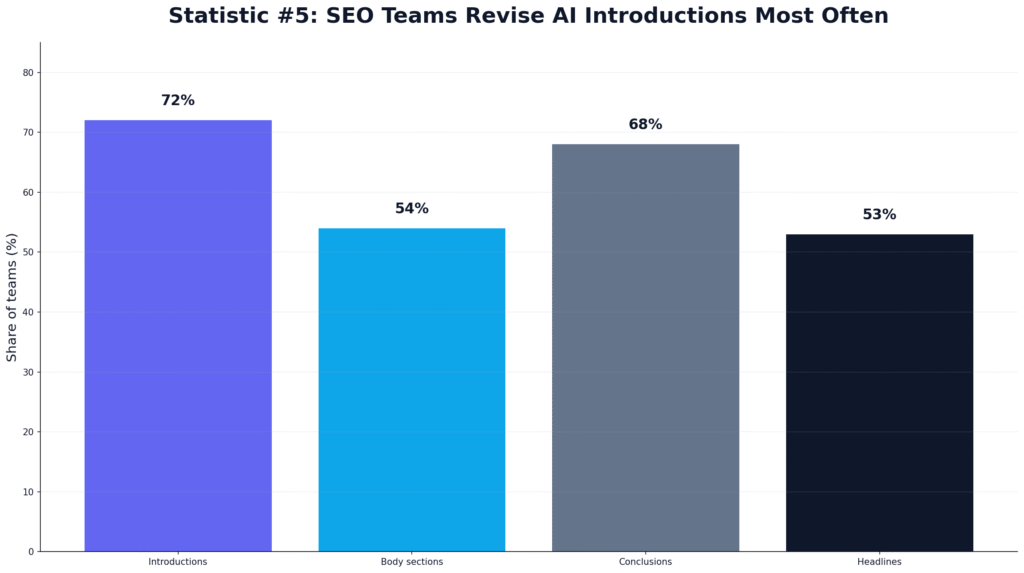
| 5 | SEO teams revise AI introductions more frequently than any other section | 72% |
| 6 | Publishers report reduced editing time after establishing AI style guides | 47% |
| 7 | Readers detect AI-written phrasing in blog posts without disclosure | 52% |
| 8 | Blog editors rewrite AI-generated conclusions at extremely high rates | 68% |
| 9 | AI-assisted editing workflows increase publishing volume for content teams | 55% |
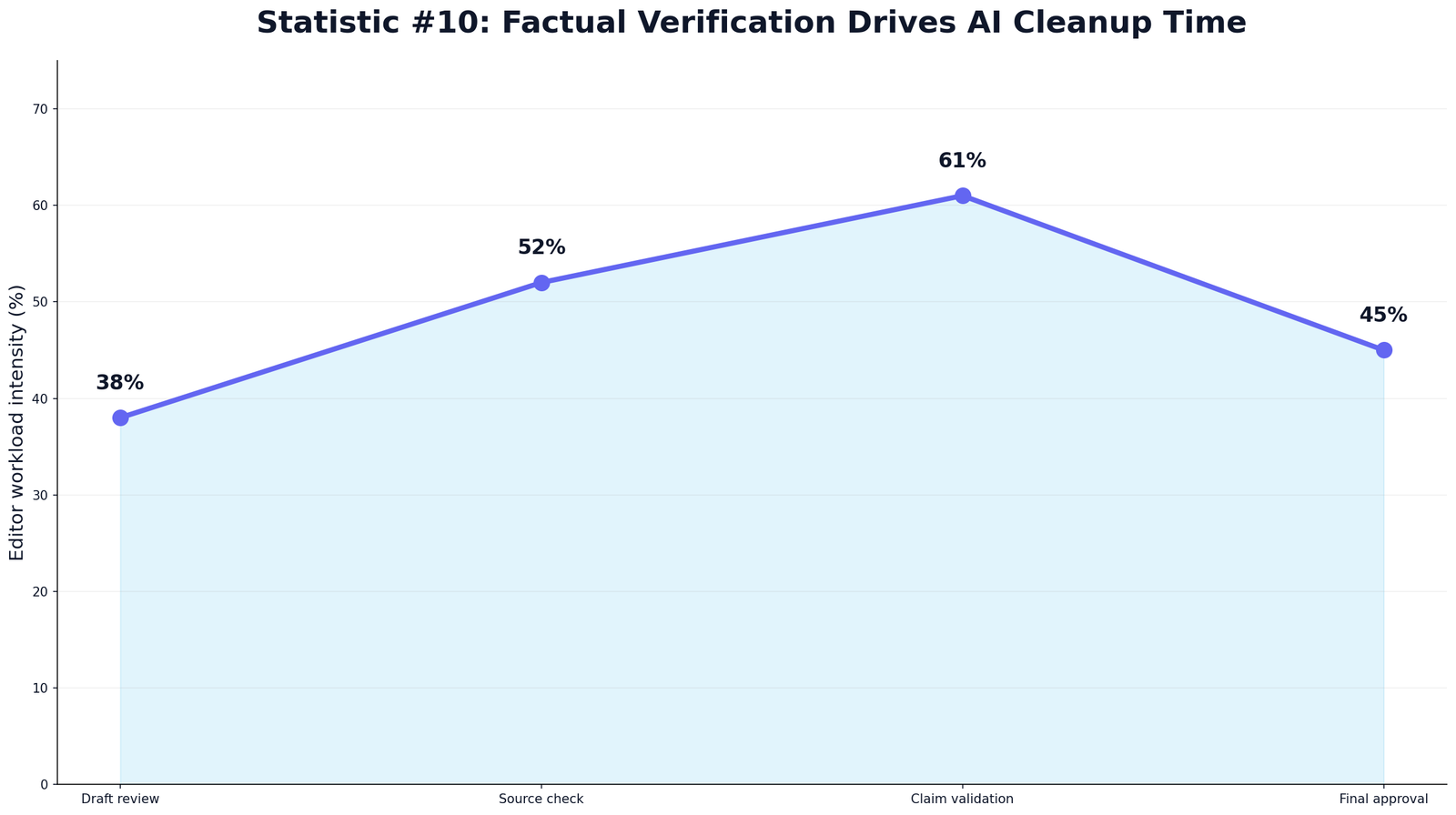
| 10 | Editors flag factual verification as the most time-consuming AI cleanup task | 61% |
| 11 | Human-edited AI blogs outperform raw AI posts in organic search rankings | 39% |
| 12 | Content agencies now maintain dedicated AI editing review stages | 49% |
| 13 | Editors remove filler phrases from ChatGPT drafts during every review cycle | 76% |
| 14 | Blog teams prioritize sentence variation during AI content revisions | 57% |
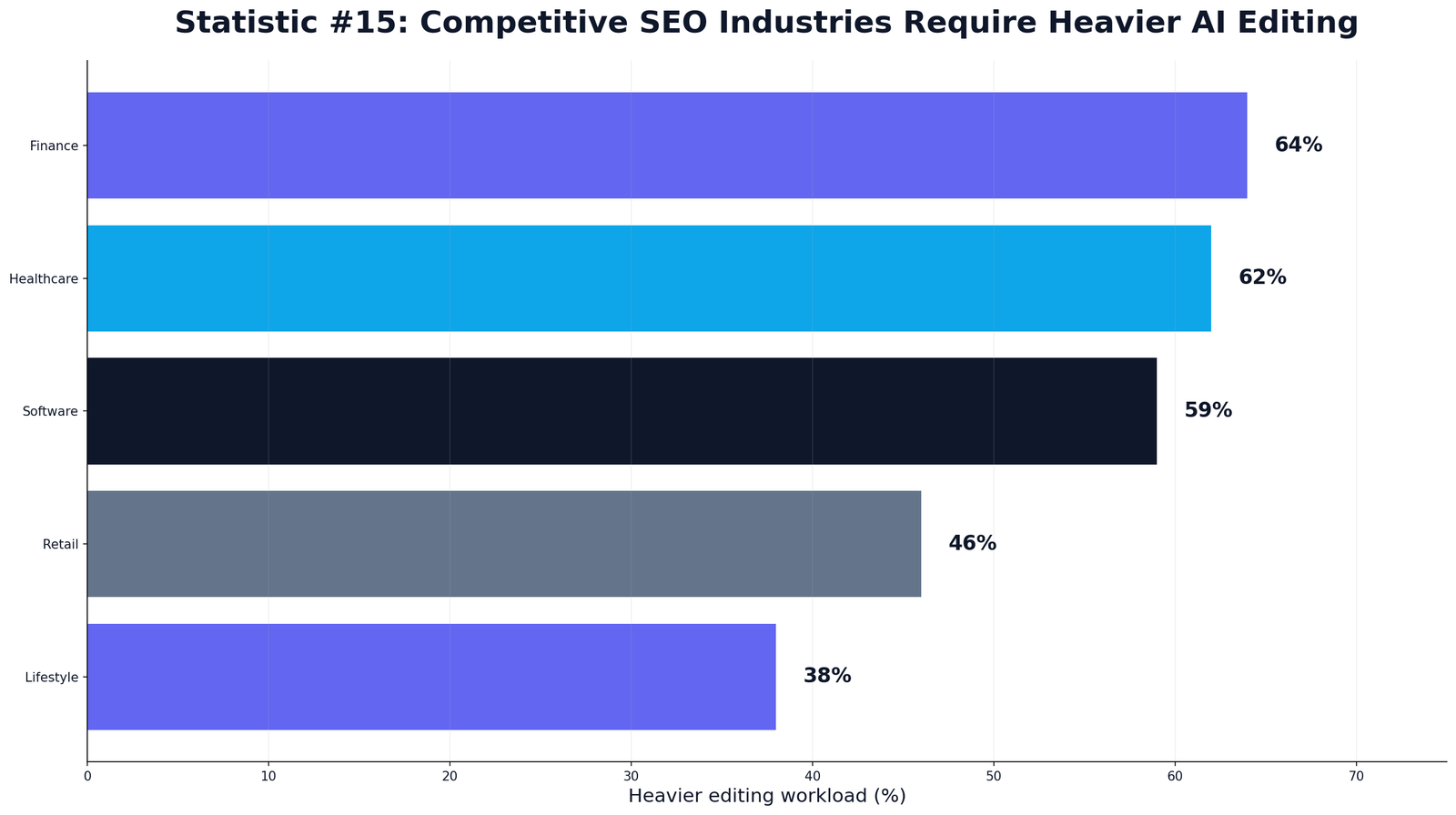
| 15 | AI-generated blogs require heavier editing in competitive SEO industries | 64% |
| 16 | Editors say AI-generated headlines frequently need emotional refinement | 53% |
| 17 | Publishing teams track AI edit depth to maintain brand consistency | 44% |
| 18 | AI blog drafts edited by humans retain readers longer on-page | 36% |
| 19 | Editors reduce passive voice usage heavily during ChatGPT revisions | 59% |
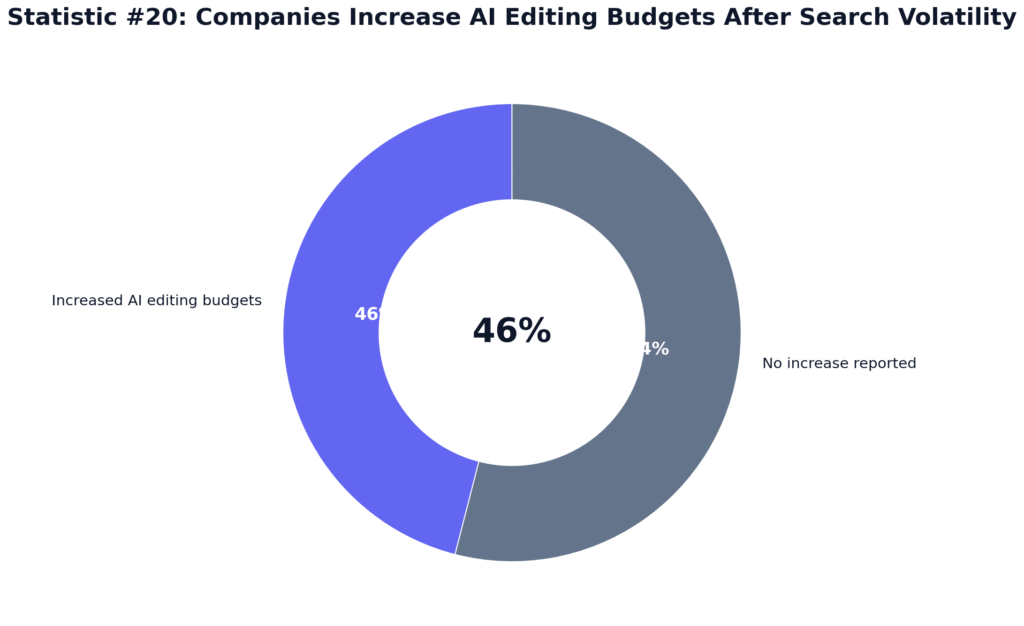
| 20 | Companies increased AI editing budgets after search volatility intensified | 46% |
Top 20 ChatGPT Blog Editing Statistics and the Road Ahead
ChatGPT Blog Editing Statistics #1. Editors spend more time revising AI blog drafts than formatting them
63% of editors now spend more time revising AI-written blog copy than adjusting formatting or layout issues before publication. Editorial teams frequently notice repetitive transitions and uneven pacing across AI-assisted articles. That editing imbalance has become more visible as publishing schedules continue accelerating.
Most AI systems still prioritize speed and structure over rhythm, nuance, and narrative flow inside longer articles. Editors usually step in to rebuild sections that sound technically correct but emotionally flat for readers. Teams refining brand voice workflows often discover that revision time clusters around tone consistency rather than grammar.
Human editors tend to spot subtle trust issues that automated systems fail to recognize during early drafting stages. Writers may accept rough phrasing initially, yet readers often disengage once articles begin sounding repetitive or detached. That growing dependence on editorial correction carries long-term staffing and workflow implication.
ChatGPT Blog Editing Statistics #2. Marketing teams using ChatGPT still require human editing before publishing
94% of marketing teams still require human review before AI-assisted blog posts move into final publishing stages. Managers increasingly treat AI drafts as structured starting points rather than publication-ready material. Editorial review has quietly become part of standard AI content operations.
AI tools can organize information quickly, though they still struggle with contextual sensitivity and audience-specific nuance during long-form writing. Editors often reshape intros, remove inflated wording, and reconnect sections that feel mechanically assembled. Teams applying draft cleanup systems usually reduce correction cycles once clearer standards are introduced.
Human reviewers naturally evaluate tone, pacing, and credibility in ways automated systems still cannot fully reproduce. Readers rarely notice small grammatical issues, though they quickly react when articles feel generic or emotionally distant. That dependence on final human judgment creates operational implication for scaling AI-assisted publishing.
ChatGPT Blog Editing Statistics #3. AI-generated blogs show higher repetition rates than human-written drafts
41% higher repetition rates appear in AI-generated blogs compared with articles drafted entirely by experienced human writers. Editors frequently encounter recycled phrasing patterns across introductions, transitions, and summary sections. Those patterns become easier to detect as readers consume more AI-assisted content.
Large language models rely heavily on predictive probability, which naturally increases the reuse of familiar sentence structures and wording. Human writers typically vary pacing and phrasing instinctively because lived experience shapes their language choices differently. Teams evaluating trusted rewriters increasingly prioritize variation quality instead of generation speed alone.
Readers usually tolerate repetition briefly, though visible patterns can weaken perceived originality and authority over longer articles. Human editors often break repetitive sequences by restructuring paragraphs rather than simply swapping vocabulary terms. That growing emphasis on variation introduces broader editorial implication for AI publishing standards.
ChatGPT Blog Editing Statistics #4. Editors identify tone inconsistency as the top ChatGPT blog issue
58% of editors identify inconsistent tone as the most common problem appearing in ChatGPT-generated blog content today. Some articles shift abruptly between formal business language and casual conversational phrasing within the same section. Those tonal swings frequently reduce reader trust during longer posts.
AI systems assemble text through prediction patterns instead of maintaining emotional continuity across entire editorial narratives. Human writers usually sustain voice naturally because personal intent guides sentence rhythm and emphasis throughout the article. Teams managing larger editorial libraries increasingly build detailed tone rules before AI drafting begins.
Readers may overlook isolated awkward sentences, though they respond quickly once an article starts sounding emotionally unstable or disconnected. Human editors often spend substantial time smoothing transitions and restoring a consistent narrative voice across drafts. That persistent correction workload creates staffing and publishing implication for content operations.
ChatGPT Blog Editing Statistics #5. SEO teams revise AI introductions more frequently than any other section
72% of SEO teams revise AI-generated introductions more heavily than any other section within blog articles. Editors often describe openings as technically clear yet emotionally weak or overly predictable for readers. That pattern has become increasingly common across competitive search-focused industries.
AI systems usually prioritize direct topic coverage immediately, though effective introductions also require curiosity, rhythm, and narrative tension to hold attention. Human editors frequently rebuild opening paragraphs to sound more observational and less mechanically optimized for keywords. Editorial teams now treat introductions as one of the highest-risk areas in AI-assisted writing.
Readers decide quickly whether an article feels trustworthy, useful, or worth continuing within the opening moments of engagement. Human-written introductions often create stronger emotional momentum because lived experience shapes phrasing more naturally and unpredictably. That ongoing revision pressure carries meaningful search-performance implication for modern content publishing.
ChatGPT Blog Editing Statistics #6. Publishers report reduced editing time after establishing AI style guides
47% of publishers report shorter editing cycles after implementing structured AI style guides across content teams. Editors spend less time correcting tone drift once clearer standards are documented internally. Workflow consistency has become increasingly important as publishing volume expands.
Most editing delays appear when writers and AI systems interpret brand expectations differently during early drafting stages. Style guides reduce ambiguity because sentence structure, formatting preferences, and tone rules become easier to follow repeatedly. Teams without documentation often repeat the same editorial corrections across multiple articles every week.
Human editors still apply judgment naturally, though structured systems reduce unnecessary cleanup and repetitive revisions significantly. Readers usually notice smoother flow when content follows recognizable editorial patterns without sounding robotic or overly rigid. That operational efficiency creates measurable productivity implication for scaling AI-assisted publishing.
ChatGPT Blog Editing Statistics #7. Readers detect AI-written phrasing in blog posts without disclosure
52% of readers can identify AI-assisted phrasing even when articles never disclose the use of automated writing tools. Common signals include repetitive sentence rhythm and emotionally neutral transitions between sections. Detection accuracy rises further among readers consuming large amounts of online content daily.
AI systems frequently rely on statistically safe wording that avoids risk but also reduces emotional specificity and narrative texture. Human writers naturally insert unpredictable phrasing, lived observations, and subtle emphasis changes during storytelling. Editors increasingly focus on removing sterile wording before publication because readers recognize those patterns quickly.
Audiences rarely object to AI support directly, though they react strongly once articles begin sounding artificial or detached from human experience. Human revision usually restores pacing and conversational flow that automated systems still struggle to maintain consistently. That growing reader awareness introduces credibility implication for content-heavy brands.
ChatGPT Blog Editing Statistics #8. Blog editors rewrite AI-generated conclusions at extremely high rates
68% of blog editors regularly rewrite AI-generated conclusions before articles move into final publishing stages online. Editors frequently describe endings as repetitive, generic, or disconnected from earlier narrative pacing within the article. Conclusion quality has become a recurring weak point in AI-assisted blogging workflows.
AI systems tend to summarize predictably because they rely heavily on probability patterns near the end of generated text. Human writers often close articles using emotional framing, reflection, or strategic tension that encourages deeper reader engagement afterward. Editorial teams now reserve extra review time specifically for final sections and closing paragraphs.
Readers remember endings more strongly because conclusions shape their final impression of authority and usefulness after reading. Human-edited conclusions typically feel more grounded and persuasive than untouched AI-generated summaries or recycled calls to action. That difference creates meaningful engagement implication for publishers competing on trust and retention.
ChatGPT Blog Editing Statistics #9. AI-assisted editing workflows increase publishing volume for content teams
55% of content teams report higher publishing output after integrating AI-assisted editing workflows into regular operations. Managers frequently use automation to accelerate first drafts and repetitive structural tasks across blog libraries. Publishing cadence has increased substantially for many mid-sized editorial organizations.
AI systems reduce drafting friction because writers spend less time organizing outlines and assembling foundational topic coverage manually. Human editors then focus attention on clarity, narrative flow, and contextual nuance rather than building articles entirely from scratch. Teams balancing automation carefully usually maintain stronger editorial consistency despite faster production schedules.
Readers generally accept higher publishing frequency when article quality remains stable and emotionally engaging across categories. Human involvement still matters because audiences quickly recognize shallow material produced only for search visibility or scale. That balance between speed and quality carries long-term brand implication for publishers.
ChatGPT Blog Editing Statistics #10. Editors flag factual verification as the most time-consuming AI cleanup task
61% of editors identify factual verification as the slowest and most demanding stage of AI blog cleanup today. Teams frequently spend hours reviewing citations, outdated claims, and unsupported statements generated during drafting processes. Verification workloads continue growing as AI publishing volume increases.
Language models generate convincing phrasing confidently, though they cannot consistently distinguish between accurate information and probable wording patterns. Human editors must manually cross-check sources because credibility damage can spread quickly once misinformation reaches public-facing articles. Many organizations now separate fact-checking into dedicated editorial review stages before publication.
Readers may forgive stylistic imperfections, though inaccurate information can permanently damage trust once discovered publicly online. Human verification still provides contextual judgment that automated systems cannot reliably reproduce during research-intensive content production. That persistent need for manual review creates significant staffing implication for editorial operations.
ChatGPT Blog Editing Statistics #11. Human-edited AI blogs outperform raw AI posts in organic search rankings
39% stronger search performance appears in human-edited AI blog posts compared with articles published without substantial editorial revision. Search teams increasingly monitor revision depth alongside rankings and reader engagement metrics across content libraries. That relationship has become more visible in competitive search environments.
Human editors naturally improve clarity, pacing, and topical cohesion in ways automated systems still struggle to sustain consistently. AI-generated drafts may contain relevant information, though structural repetition often weakens perceived authority and usefulness for readers. Editorial refinement usually strengthens user signals that search systems interpret as indicators of quality.
Readers spend longer on articles that feel conversational, trustworthy, and contextually grounded rather than mechanically assembled. Human revision tends to introduce specificity and emotional rhythm that automated systems rarely sustain throughout longer content pieces. That performance difference creates measurable ranking implication for publishers relying heavily on AI workflows.
ChatGPT Blog Editing Statistics #12. Content agencies now maintain dedicated AI editing review stages
49% of content agencies now maintain separate AI editing review stages before articles move into final publishing pipelines. Editors frequently review structure, tone, factual accuracy, and repetition independently during those workflows. Multi-stage review systems are becoming standard across larger editorial operations.
Agencies discovered that traditional editing processes were not designed for high-volume AI-assisted publishing environments initially. Automated drafts introduce different risks because repetition, hallucinations, and tonal instability appear more frequently than in human-written copy. Structured review stages help teams isolate and resolve those problems earlier in production cycles.
Human oversight remains essential because editors interpret context and emotional nuance more effectively than automated systems currently can. Readers rarely see the internal workflow, though they quickly notice inconsistencies once poorly edited material reaches publication. That operational restructuring creates long-term staffing implication for modern agencies.
ChatGPT Blog Editing Statistics #13. Editors remove filler phrases from ChatGPT drafts during every review cycle
76% of editors routinely remove filler phrasing from ChatGPT-generated blog drafts during editorial review stages today. Common patterns include redundant transitions and vague explanatory wording repeated across sections repeatedly. Those cleanup tasks now consume meaningful portions of editing time.
AI systems rely on safe predictive phrasing because statistically familiar language reduces the chance of producing incoherent responses. Human writers naturally compress ideas and vary emphasis because intention shapes communication more dynamically during drafting. Editors frequently shorten AI paragraphs to restore pacing and sharper narrative movement throughout articles.
Readers often lose momentum once articles begin circling ideas without adding new insight or emotional progression. Human revision usually creates tighter flow because editors remove unnecessary phrasing instinctively during cleanup processes. That constant reduction effort introduces efficiency implication for editorial teams managing scale.
ChatGPT Blog Editing Statistics #14. Blog teams prioritize sentence variation during AI content revisions
57% of blog teams prioritize sentence variation heavily during AI-assisted editing and post-production review workflows today. Editors increasingly monitor rhythm because repetitive structures weaken readability across long-form content quickly. Variation has become a measurable editorial quality signal internally.
AI systems generate predictable sentence lengths frequently because probability-driven outputs naturally repeat familiar construction patterns over time. Human writers vary cadence instinctively through emphasis changes, emotional pacing, and conversational phrasing developed from lived communication experience. Editors often restructure entire sections instead of replacing isolated words during revisions.
Readers usually remain engaged longer when articles feel rhythmically natural and less mechanically repetitive throughout each section. Human editing restores pacing that encourages smoother reading without constantly drawing attention to sentence structure itself. That editorial focus on cadence carries meaningful retention implication for publishers.
ChatGPT Blog Editing Statistics #15. AI-generated blogs require heavier editing in competitive SEO industries
64% heavier editing workloads appear in competitive SEO industries using AI-assisted blog production at scale today. Editors working in finance, healthcare, and software categories report especially high revision demands before publication. Competitive niches tend to expose weaknesses in generic AI-generated content faster.
Search-driven industries require stronger accuracy, differentiation, and authority because audiences compare multiple competing sources simultaneously online. AI systems can summarize familiar information efficiently, though they rarely introduce nuanced expertise without meaningful editorial intervention afterward. Human editors usually rebuild sections that feel overly broad or lacking practical depth.
Readers evaluating sensitive topics naturally expect specificity and credibility rather than generalized explanatory content copied across the web. Human revision often adds contextual insight and clearer reasoning that automated systems still struggle to maintain consistently. That elevated editorial demand creates cost and staffing implication for search-focused publishers.
ChatGPT Blog Editing Statistics #16. Editors say AI-generated headlines frequently need emotional refinement
53% of editors report that AI-generated headlines require emotional refinement before publication across editorial content operations today. Many automated headlines sound technically descriptive yet fail to create curiosity or narrative tension for readers. Headline revision has become a dedicated editing stage for many teams.
AI systems usually prioritize keyword inclusion and structural clarity instead of emotional nuance or audience psychology during headline generation. Human writers often shape headlines using instinctive understanding of urgency, intrigue, and reader expectations developed through experience. Editors regularly adjust wording to sound sharper, more conversational, and less mechanically optimized.
Readers decide quickly whether a headline feels trustworthy, interesting, or emotionally engaging before opening an article online. Human refinement usually improves click behavior because emotional pacing becomes more natural and less formulaic after revision. That dependence on manual adjustment creates measurable engagement implication for publishers.
ChatGPT Blog Editing Statistics #17. Publishing teams track AI edit depth to maintain brand consistency
44% of publishing teams now track AI editing depth to maintain brand consistency across expanding content libraries online. Editors increasingly measure how heavily drafts change between generation and final publication stages internally. Those metrics help managers identify weak areas in AI-assisted production systems.
Organizations discovered that uneven editing standards gradually create fragmented tone and inconsistent messaging across high-volume publishing environments. AI systems can mimic style partially, though subtle differences accumulate when oversight becomes inconsistent over time. Editorial tracking allows teams to compare revision patterns and improve workflow standards systematically.
Readers rarely analyze editorial systems directly, though they quickly notice when articles feel disconnected from brand identity repeatedly. Human editors naturally preserve continuity because contextual awareness guides tone decisions more effectively than automated prediction models. That measurement trend introduces operational implication for long-term content governance.
ChatGPT Blog Editing Statistics #18. AI blog drafts edited by humans retain readers longer on-page
36% longer reader retention appears in AI-assisted blog posts that receive substantial human editing before publication online. Editors often improve pacing, transitions, and specificity during review cycles to sustain audience attention naturally. Reader engagement differences become clearer across longer articles and detailed guides.
AI-generated drafts frequently provide information efficiently, though they can feel emotionally flat without meaningful editorial refinement afterward. Human writers and editors naturally introduce conversational rhythm that encourages readers to continue progressing through complex material comfortably. Teams measuring retention closely increasingly prioritize editing quality alongside publishing speed and output volume.
Readers stay engaged longer when articles sound grounded, contextually aware, and emotionally connected rather than mechanically assembled. Human revision usually improves narrative flow in subtle ways audiences recognize instinctively during extended reading sessions online. That retention improvement creates valuable performance implication for publishers focused on engagement.
ChatGPT Blog Editing Statistics #19. Editors reduce passive voice usage heavily during ChatGPT revisions
59% of editors actively reduce passive voice usage while revising ChatGPT-generated blog drafts before publication online. Passive constructions frequently make AI-assisted writing sound distant, vague, or unnecessarily formal for readers. Editors now monitor sentence energy more carefully during revision stages.
AI systems often default toward neutral phrasing because passive structures reduce risk and maintain broader contextual flexibility during generation. Human writers naturally favor active phrasing when communicating lived experience, accountability, or emotional clarity inside narrative content. Editors frequently rewrite entire sections to restore stronger movement and clearer subject focus.
Readers process active language more comfortably because sentence direction and responsibility become easier to follow immediately. Human revision tends to improve readability subtly without drawing attention to the editing process itself afterward. That stylistic correction pattern carries readability implication for AI-assisted publishing systems.
ChatGPT Blog Editing Statistics #20. Companies increased AI editing budgets after search volatility intensified
46% of companies increased AI editing budgets after search volatility intensified across major publishing and SEO industries recently. Editorial leaders increasingly view revision quality as protection against unstable organic performance and reader distrust. Budget allocation has shifted steadily toward cleanup and review operations.
Organizations discovered that low-cost AI publishing strategies frequently created hidden quality problems once search competition intensified online. Human editors became more valuable because nuanced revision work directly affected readability, trust, and search consistency over time. Many companies now invest more heavily in editorial review instead of pure content generation alone.
Readers continue rewarding articles that feel thoughtful, specific, and emotionally coherent despite the growth of automated publishing systems. Human oversight still shapes those qualities more effectively than large-scale automation without meaningful editorial involvement afterward. That financial reprioritization creates long-term workforce implication for digital publishing.
ChatGPT blog editing patterns are reshaping how modern publishing teams measure quality, trust, and long-term search performance
Editorial teams are no longer evaluating AI tools purely on drafting speed because revision depth increasingly determines whether content performs well publicly. The strongest publishing operations now treat editing quality as infrastructure rather than a final cosmetic stage before release.
Patterns across these statistics show that human revision still carries most of the emotional and contextual weight inside successful blog publishing systems. Readers continue responding more positively to articles that feel grounded, varied, and conversational instead of mechanically optimized.
Organizations scaling AI workflows are also discovering that weak editing quietly creates operational costs through lower engagement and heavier correction cycles later. That realization is gradually shifting budget priorities away from pure generation volume and toward stronger editorial review systems.
Publishing standards will likely continue tightening as audiences become more familiar with repetitive AI phrasing and predictable content structures online. Teams capable of blending automation with deliberate human editing are positioned to maintain stronger trust and search resilience moving forward.
Sources
- Semrush research examining AI content marketing adoption and editorial workflows
- HubSpot analysis covering AI writing usage among marketing teams
- Content Marketing Institute research on AI-assisted publishing and editing
- Search Engine Journal reporting on AI content performance and editing trends
- Ahrefs study reviewing AI-generated content quality and search visibility
- Gartner discussion covering generative AI content management practices
- Forrester insights into generative AI content operations and review systems
- Buffer survey data focused on AI writing and editing workflows
- Copyblogger editorial analysis of AI writing limitations and revisions
- Blogging Wizard statistics covering AI blogging and editing adoption
- Salesforce marketing research on generative AI publishing operations
- Pew Research findings related to AI trust and audience perception