Educator Editing of AI Content Statistics: Top 20 Editing Patterns

2026 reveals a quiet editorial reality: AI speeds drafting, yet educators spend nearly equal energy reshaping tone, structure, and accuracy. These statistics trace how editing, not generation, determines classroom readiness and why human judgment still defines instructional quality.
Editing layers now sit at the center of how teaching materials are evaluated, especially as AI-generated drafts become the default starting point. Educators are no longer just reviewing content, they are recalibrating tone, accuracy, and intent against evolving expectations.
The gap between raw AI output and classroom-ready material keeps widening, which explains why structured revision workflows are gaining attention in non-negotiables for assisted writing. Small edits compound quickly, and the difference between minimal review and deep editing often determines whether content feels credible or mechanical.
Patterns emerging across schools show that time spent editing is becoming a proxy for trust, not just quality control. This is why teams quietly invest in tools and processes that align with humanizer tools rather than relying on raw outputs alone.
A subtle but important shift is happening as educators begin to treat AI drafts less like finished work and more like structured inputs. That perspective changes how editing effort is distributed, and it hints at where instructional design is heading next.
Top 20 Educator Editing of AI Content Statistics (Summary)
| # | Statistic | Key figure |
|---|---|---|
| 1 | Educators who edit AI-generated content before use | 82% |
| 2 | Average time spent editing AI lesson drafts | 27 mins |
| 3 | Teachers reporting major revisions needed in AI outputs | 64% |
| 4 | AI-generated content used without editing | 11% |
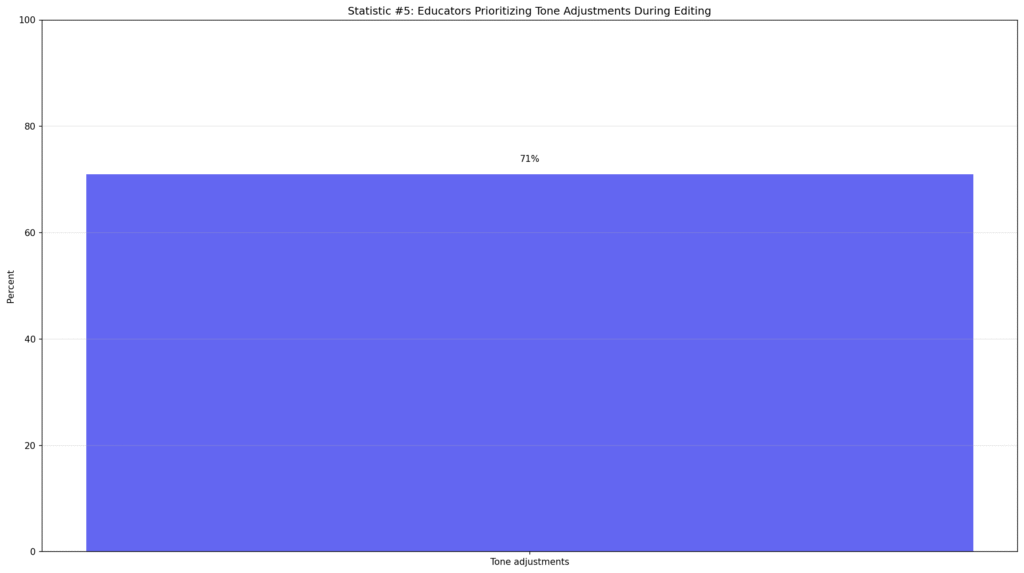
| 5 | Educators prioritizing tone adjustments during editing | 71% |
| 6 | Teachers correcting factual inaccuracies in AI drafts | 58% |
| 7 | Content flagged as too generic before editing | 69% |
| 8 | Educators adding examples after AI generation | 74% |
| 9 | Teachers modifying structure of AI content | 61% |
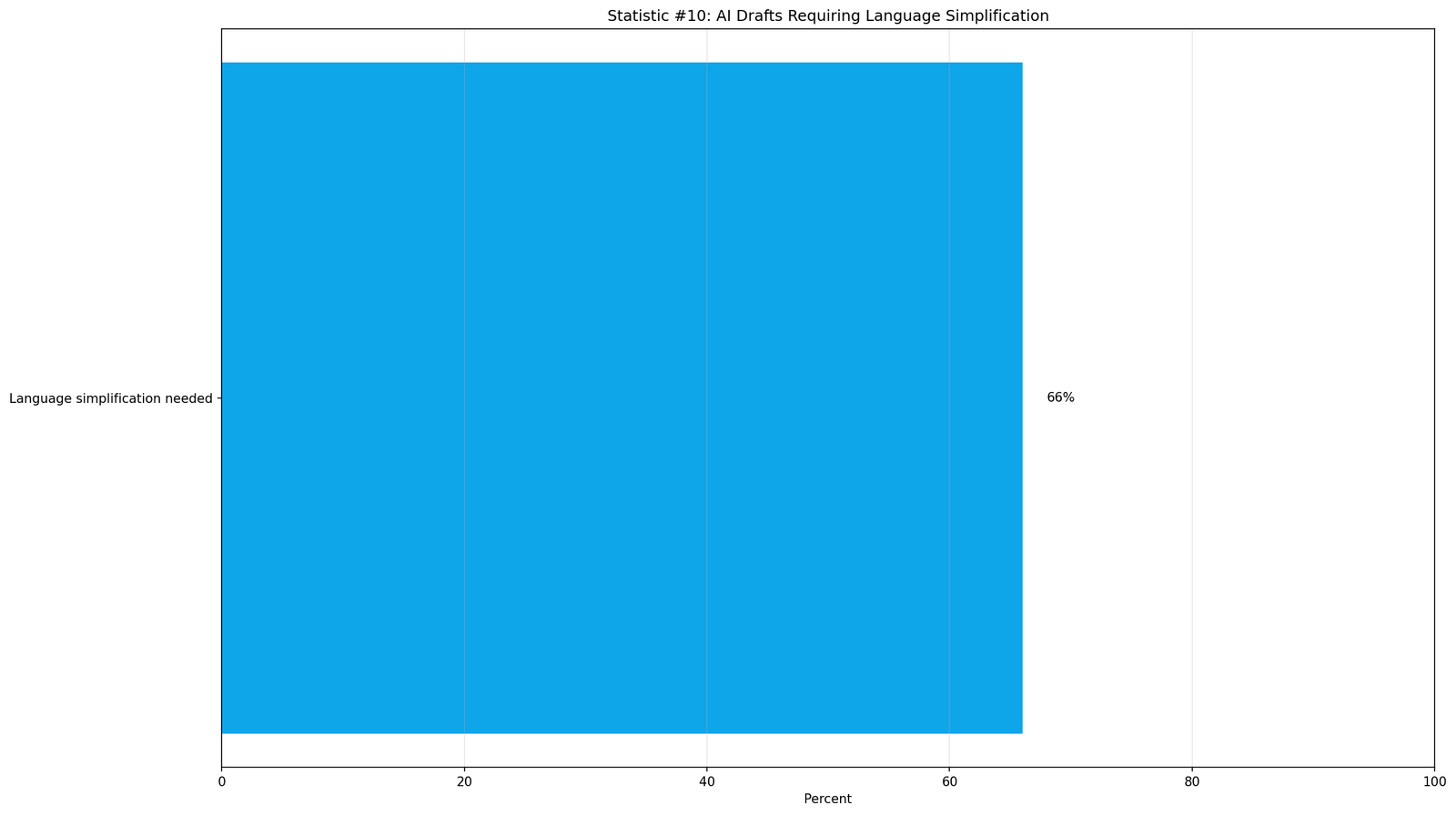
| 10 | AI drafts requiring language simplification | 66% |
| 11 | Educators rewriting AI introductions entirely | 53% |
| 12 | Teachers adjusting cultural relevance in AI content | 47% |
| 13 | Educators using AI as first draft only | 76% |
| 14 | Teachers reporting improved efficiency after editing workflows | 68% |
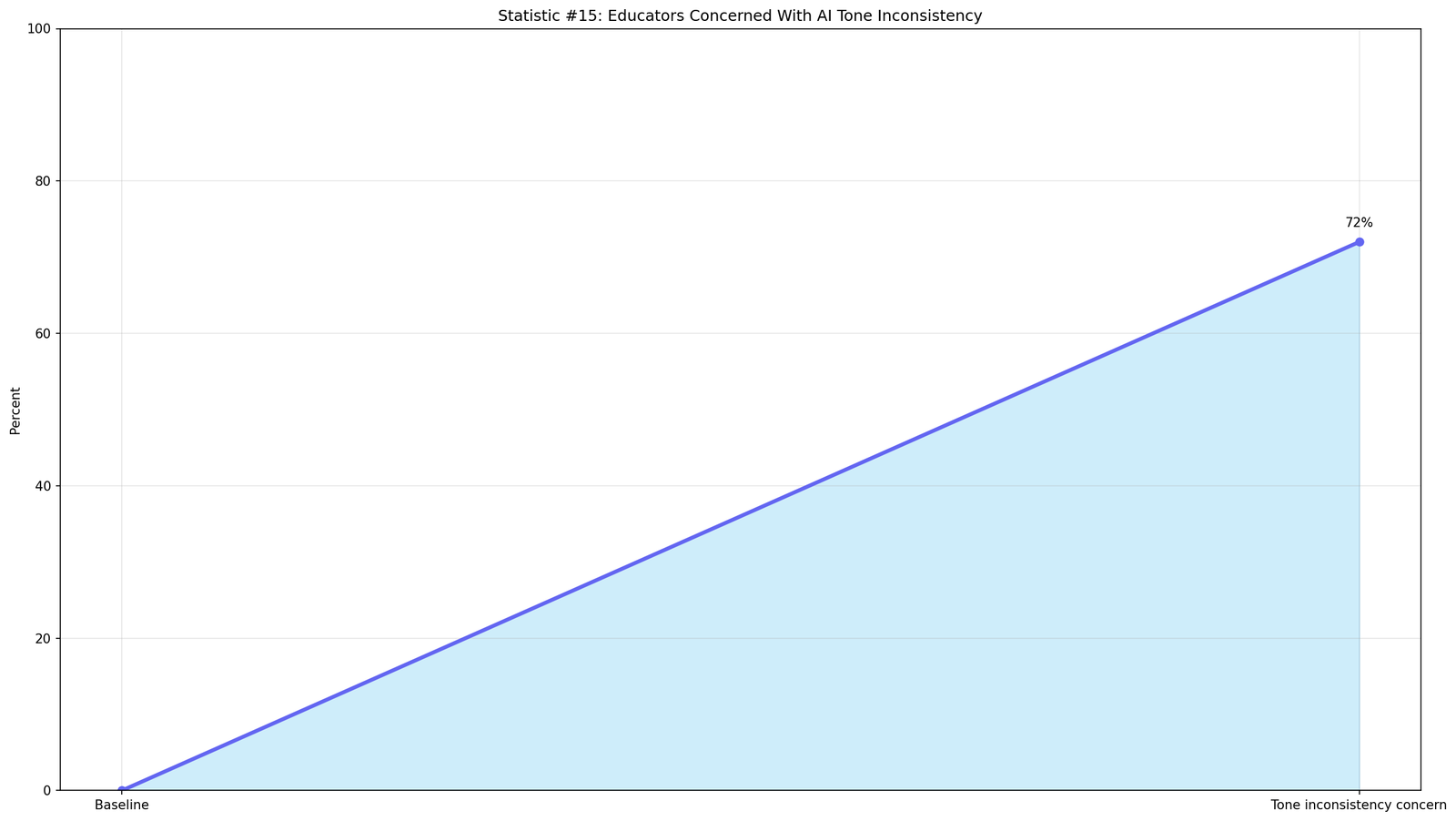
| 15 | Educators concerned with AI tone inconsistency | 72% |
| 16 | Teachers editing AI content for student engagement | 79% |
| 17 | Educators combining AI drafts with original writing | 63% |
| 18 | Teachers removing repetitive phrasing from AI content | 67% |
| 19 | Educators reviewing AI outputs for bias | 55% |
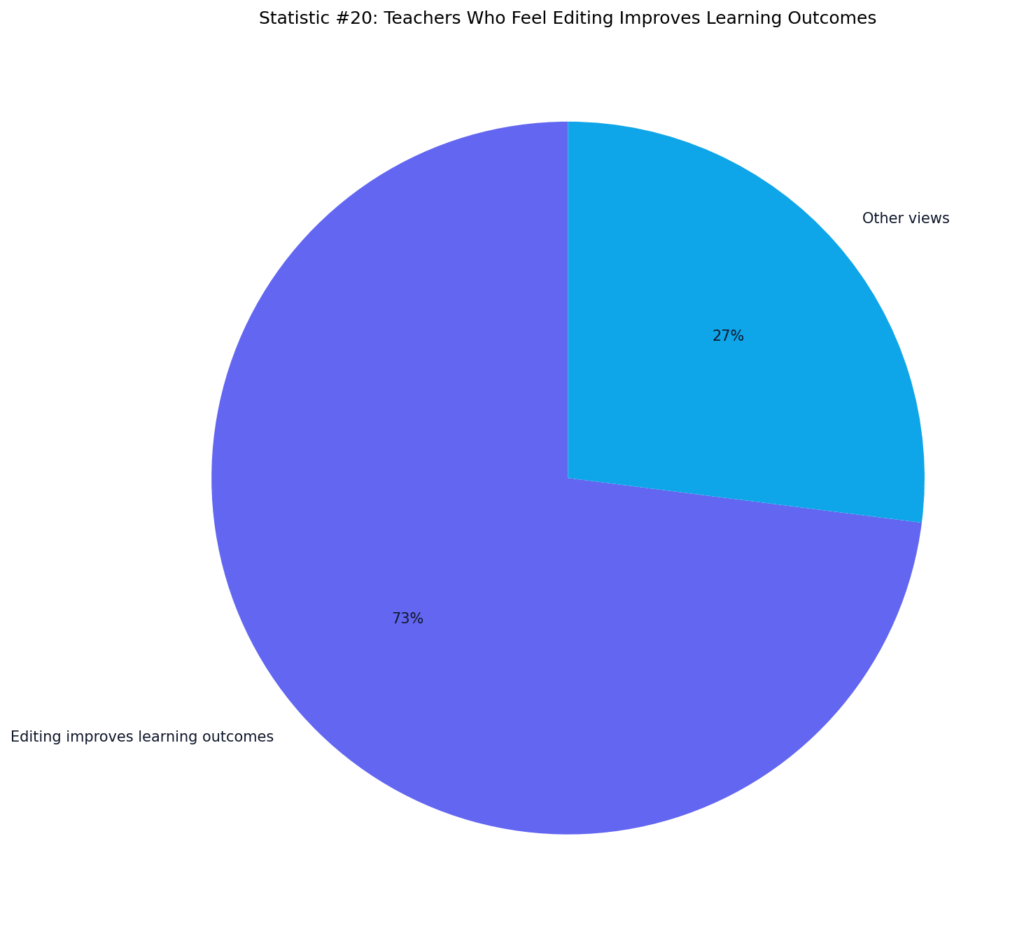
| 20 | Teachers who feel editing improves learning outcomes | 73% |
Top 20 Educator Editing of AI Content Statistics and the Road Ahead
Educator Editing of AI Content Statistics #1. Most educators revise AI drafts before use
82% of educators editing AI-generated content before use shows that AI still functions more like a draft engine than a final author in schools. The pattern suggests teachers value speed, but they do not trust unreviewed material in a real classroom context. That distinction matters because adoption can look high on paper even when revision remains built into the workflow.
The cause is not hard to trace. AI can organize ideas quickly, yet it misses classroom nuance, age-appropriate language, and the lived examples that make lessons feel grounded. When those gaps appear, educators step in to correct tone, trim vagueness, and restore instructional intent before students encounter the material.
A person reading with teaching experience catches weak transitions and odd phrasing that software leaves behind. Raw AI provides momentum, but human editing adds judgment, which is why this number points to review as the real source of quality and the lasting implication.
Educator Editing of AI Content Statistics #2. Editing time remains substantial after AI drafting
27 mins per draft shows editing is not a quick polish added to the end of an automated process. That amount of time suggests educators are doing developmental work, not just fixing commas or swapping words. In many cases, the time savings from AI are being redistributed rather than fully captured.
School content explains the reason. A lesson plan or activity sheet has to align with standards, pacing, and what students can absorb in one sitting. When AI produces a broad answer, the teacher still has to narrow, adapt, and sequence it so the material feels teachable instead of merely complete.
Human editors spend those minutes checking whether ideas flow naturally and whether examples belong in the room they know. Raw AI shortens drafting time, but it does not remove editorial labor, so the deeper implication is that efficiency now depends on better revision systems, not just faster generation.
Educator Editing of AI Content Statistics #3. Major revisions are still common
64% of teachers reporting major revisions needed in AI outputs tells a story about reliability. The content may arrive well formed on the surface, yet a large share still requires intervention before it can support instruction. That gap between polished appearance and actual usefulness is where many evaluation mistakes begin.
The underlying cause is that AI writes toward plausibility more than context. It can generate complete paragraphs with smooth transitions, but it does not consistently judge whether the framing matches the class objective, the reading level, or the standard being taught. Once those mismatches stack up, teachers are forced into heavier rewriting than early enthusiasm around automation suggested.
A human editor sees when a lesson drifts off target even if the prose sounds confident. Raw AI offers structure and speed, yet experienced educators restore purpose and fit, which means this statistic points to oversight as the real safeguard and the practical implication.
Educator Editing of AI Content Statistics #4. Unedited AI use stays rare
11% of AI-generated content used without editing is a small share, and that is exactly what makes it revealing. The low figure suggests most educators have already learned that convenience alone is not enough once material touches actual students. In other words, direct publication appears to be the exception rather than the norm.
That pattern makes sense because classroom material carries more risk than casual internal writing. A weak explanation, a dated example, or a misleading fact can confuse learners quickly, and teachers are the ones who must handle the fallout in real time. Editing becomes a preventative step, protecting clarity before confusion spreads through the lesson.
Human review inserts caution where automated output tends to assume its own adequacy. Raw AI may feel finished at a glance, but educators know that finished-looking content is not always ready content, which is why this small percentage quietly reinforces the same broader implication.
Educator Editing of AI Content Statistics #5. Tone adjustment is a top editing task
71% of educators prioritizing tone adjustments during editing shows that voice is one thing AI gets almost right but not fully right. The wording may be clear enough, yet it can sound flat, formal, or detached from the classroom. That makes tone a quality issue, not just a stylistic preference.
The cause sits in how general models write. They lean toward averaged language that works across many prompts, but teaching materials need warmth, authority, and rhythm that match a specific age group and learning moment. Educators end up softening robotic phrasing, tightening vague language, and making the material feel like it came from someone who knows the room.
Human editors hear whether a sentence sounds supportive or distant in a way raw AI cannot reliably judge. That is why tone work carries weight far beyond wording, and the implication is that educational content will keep depending on distinctly human voice control.
Educator Editing of AI Content Statistics #6. Factual correction remains routine
58% of teachers correcting factual inaccuracies in AI drafts shows that fluency and accuracy still travel on separate tracks. A response can sound confident, yet still contain claims that are incomplete, outdated, or wrong. That disconnect is why factual review remains central to educator editing.
The cause comes from prediction rather than understanding. AI stitches together likely language patterns from training data, which helps it produce smooth explanations, but it does not verify each statement against current curriculum needs or trusted source material. Teachers therefore spend time checking definitions, dates, examples, and subject detail that students might otherwise accept without question.
A human editor brings subject awareness and skepticism that raw generation does not naturally include. AI gives the shell of an answer quickly, but educators protect the truth value inside it, which means this statistic points to verification as a permanent part of the workflow and the practical implication.
Educator Editing of AI Content Statistics #7. Generic output is frequently flagged
69% of content flagged as too generic before editing suggests sameness is still one AI weak spot in teaching. The material may be serviceable, yet it often lacks the specificity that helps lessons feel memorable or useful. That creates a problem because generic content rarely holds attention for long.
The reason is that broad models are built to produce broadly acceptable text. They tend to avoid sharp context, local references, and unusual detail unless the prompt supplies those elements clearly from the start. Educators then step in to add concrete examples, subject texture, and class-specific framing that turns bland copy into something students can connect with.
Human editing makes room for personality, relevance, and the details that signal thought. Raw AI can provide a scaffold, but teachers give it educational texture, so the larger implication is that distinctiveness will remain a human advantage in classroom content.
Educator Editing of AI Content Statistics #8. Teachers often add examples after generation
74% of educators adding examples after AI generation shows how often the first draft stops short. Concepts may be explained in abstract terms, yet students usually need a concrete illustration before the idea fully lands. That makes examples less like decoration and more like the bridge between output and understanding.
The cause is familiar. AI tends to produce general explanations that look complete on the page, but it cannot reliably predict which example will fit a teacher’s subject, region, age group, or student experience. Educators close that gap by inserting stories, comparisons, and scenarios that feel immediate enough for learners to picture and discuss.
A human editor knows when an explanation still floats above the class instead of meeting it. Raw AI offers the skeleton of instruction, but people supply the lived reference points, which is why this number suggests learning still depends on human specificity and the implication.
Educator Editing of AI Content Statistics #9. Structural changes are still common
61% of teachers modifying the structure of AI content shows organization remains a human task. AI can produce neat paragraphs and logical headings, yet the arrangement does not always match how teachers introduce, practice, and reinforce ideas. The result is content that reads fine alone but feels off in a lesson sequence.
The cause comes from differing goals. Generative tools aim to complete the prompt coherently, while educators shape material around pacing, cognitive load, and the order in which students can absorb information without losing the thread. That is why teachers often reorder sections, shorten openings, move examples earlier, or split dense passages into smaller instructional steps.
Human editing reflects an understanding of how learning unfolds over time, not just how text looks on screen. Raw AI can draft a usable framework, but educators rebuild the flow for comprehension, and that makes structure a site of human value and the broader implication.
Educator Editing of AI Content Statistics #10. Simplifying language is still necessary
66% of AI drafts requiring language simplification points to a mismatch between fluent writing and teachable writing. AI often produces sentences that sound polished to adults but still strain students processing new ideas. That matters because readability is not just a style preference in education, it shapes access.
The underlying reason is that models often default to dense phrasing and abstract vocabulary when they try to sound complete. Teachers then have to shorten clauses, replace formal wording, and break layered explanations into language that students can move through without losing confidence. The editing work is really a translation from general-purpose prose into usable instructional language.
A human editor can feel when a sentence asks too much from the learner in front of it. Raw AI delivers surface fluency, but teachers rebuild clarity at the level students need, which means simplified language remains a human intervention with direct classroom implication.
Educator Editing of AI Content Statistics #11. Introductions often get rewritten from scratch
53% of educators rewriting AI introductions entirely shows how important the opening is in teaching content. The first lines set trust, frame relevance, and tell students what attention the lesson is asking for. When introductions miss that mark, educators often decide it is faster to start over than to patch them.
The reason is that AI openings frequently sound balanced and tidy but not very alive. They can circle the topic without creating urgency, context, or a natural entry point that feels right for a real class. Teachers respond by rebuilding the start so it reflects purpose, audience, and the tone needed to begin well.
Human editors know that a strong introduction does more than summarize what follows. Raw AI can announce a subject, but educators create an opening that earns attention, and that makes this statistic a reminder that engagement begins earlier than many automated drafts recognize and the implication.
Educator Editing of AI Content Statistics #12. Cultural relevance still needs human adjustment
47% of teachers adjusting cultural relevance in AI content shows that fit matters even when writing is technically correct. A lesson can be clean and organized while still feeling distant from the students meant to learn from it. That kind of distance weakens attention, recall, and trust.
The cause is that AI draws from broad patterns that do not automatically reflect local references, familiar experiences, or the social context of one classroom. Educators often need to swap examples, update references, and remove language that feels out of place so the material speaks to students rather than past them. This editing is about whether learning feels reachable.
A human editor recognizes when content sounds universal but lands as culturally thin. Raw AI can generalize at speed, yet teachers restore relevance and belonging, which means this figure points to context work as a meaningful editorial layer and the practical implication.
Educator Editing of AI Content Statistics #13. AI is mostly used as a first draft
76% of educators using AI as a first draft only clarifies the workflow. For most teachers, AI functions as a starting mechanism, not a substitute for professional judgment or authorship. That distinction matters because it reframes adoption as assisted production rather than hands-off automation.
The cause lies in what educators need from the tool. Generating a rough outline, a short activity, or a bank of prompts can save energy at the blank-page stage, but the material still needs tailoring before it reflects the teacher’s objectives and standards. Editing therefore becomes the phase where ownership returns and the draft becomes instruction rather than output.
Human editors decide what stays, what goes, and what needs to be rebuilt from scratch. Raw AI reduces the friction of starting, but teachers determine educational value, so this statistic suggests the future belongs less to automatic completion and more to first-draft support with clear implication.
Educator Editing of AI Content Statistics #14. Workflow improvements raise efficiency
68% of teachers reporting improved efficiency after editing workflows shows that the benefit of AI does not come from generation alone. Efficiency seems to rise when schools develop repeatable review habits that make revision quicker and more predictable over time. That is a different story from simple one-click productivity claims.
The reason is practical. Once educators know what they usually need to fix, such as tone, examples, structure, and factual checks, they can build prompts, checklists, and routines that reduce wasted passes through the text. Editing then becomes more deliberate and less frustrating, which is where the time savings start to feel real.
A human workflow can learn from repeated friction in a way raw AI cannot organize for itself. The tool may speed initial drafting, but people create the system that captures value, so this figure points to process maturity as the true driver of efficiency and the lasting implication.
Educator Editing of AI Content Statistics #15. Tone inconsistency keeps raising concern
72% of educators concerned with AI tone inconsistency highlights a trust issue deeper than wording alone. When tone moves between warm, formal, stiff, or overly promotional, the material feels unstable even if the facts remain intact. That instability is hard to ignore in teaching environments where consistency supports credibility.
The cause is that AI responds to prompt signals unevenly and can blend patterns from many writing contexts into one output. A lesson may begin with calm clarity, then drift into generic corporate phrasing or inflated encouragement that feels out of step with the teacher’s voice. Educators then have to smooth those tonal jumps so the content sounds like one coherent speaker throughout.
Human editors hear continuity at a level models still struggle to maintain. Raw AI can mimic style in fragments, but teachers create a stable instructional voice, and that makes tone consistency an editorial responsibility with a clear classroom implication.
Educator Editing of AI Content Statistics #16. Engagement edits are a major priority
79% of teachers editing AI content for student engagement shows that attention is now an editorial metric. The material may already be accurate and organized, yet teachers still adjust it because engagement depends on rhythm, relevance, and pacing. That tells us usefulness in education is measured partly by whether students stay with it.
The cause is that AI tends to produce even, balanced prose, which can read smoothly but fail to create curiosity or momentum. Educators strengthen hooks, vary sentence movement, and add examples or prompts that invite participation instead of passive reading. Those choices make the content feel less like generated information and more like a lesson with a pulse.
A human editor senses when students are likely to drift, hesitate, or tune out. Raw AI supplies workable material, but teachers shape it for attention and uptake, which means engagement editing remains a human layer with strong instructional implication.
Educator Editing of AI Content Statistics #17. Blended authorship is becoming normal
63% of educators combining AI drafts with original writing suggests a blended authorship model is becoming normal. Rather than choosing between all-human and all-AI content, many teachers appear to be stitching speed and expertise together in the same document. That mixed approach says a lot about how the technology is actually being absorbed in practice.
The reason is straightforward. AI can quickly provide structure, prompt ideas, or a rough explanation, while original writing carries the teacher’s nuance, subject judgment, and familiarity with what has already worked with students. Combining the two allows educators to keep momentum without giving up control over the final learning experience.
Human editors act less like cleaners of machine text and more like active co-authors shaping what deserves to remain. Raw AI contributes fragments and scaffolds, but the teacher integrates them into something purposeful, and that makes hybrid composition a lasting workflow implication.
Educator Editing of AI Content Statistics #18. Repetition still needs manual cleanup
67% of teachers removing repetitive phrasing from AI content reveals a weakness that quickly affects readability. Repetition can make material feel padded, mechanical, and strangely circular even when the points are technically correct. In classroom use, that kind of texture problem matters because students notice monotony faster than writers expect.
The cause comes from how language models maintain coherence. They often reuse sentence patterns, restate ideas with slight variation, and lean on familiar transitions because those moves statistically preserve flow. Teachers then trim duplicates, merge overlapping thoughts, and rewrite recurring phrases so the content sounds intentional rather than auto-extended.
A human editor can hear when repetition turns from reinforcement into drag. Raw AI keeps the page full, but educators restore freshness and forward motion, which means this statistic points to stylistic cleanup as a recurring editorial task with a clear implication for student attention.
Educator Editing of AI Content Statistics #19. Bias review is now part of editing
55% of educators reviewing AI outputs for bias shows that content evaluation includes ethical scrutiny alongside readability and accuracy. Teachers are not only asking whether the material sounds right, but also whether it frames people, cultures, or ideas fairly and responsibly. That marks an important expansion of the editing role.
The reason is that AI reflects patterns in data, and those patterns can reproduce imbalance, stereotypes, or subtle exclusions without announcing themselves clearly. Educators therefore read for what is centered, what is missing, and what assumptions are carried into examples or explanations. Bias review becomes part of making content safe, credible, and appropriate for diverse classrooms.
A human editor can question framing in a way raw output cannot self-correct consistently. AI generates language from precedent, but teachers interrupt harmful defaults with judgment, which means this figure points to editorial review as a line of protection and the practical implication.
Educator Editing of AI Content Statistics #20. Teachers connect editing with stronger outcomes
73% of teachers who feel editing improves learning outcomes ties the whole pattern back to classroom impact. Educators are not revising AI content merely to make it sound nicer, they believe the changes materially affect what students understand and retain. That belief turns editing from a background task into a meaningful instructional intervention.
The cause is cumulative. Better tone improves trust, clearer language reduces friction, stronger examples increase comprehension, and careful fact checks prevent confusion before it spreads. Each edit may look small alone, yet together they change how the material lands and how confidently students can work with it.
A human editor connects text decisions to learner outcomes in ways raw AI still cannot evaluate for itself. The tool can accelerate drafting, but teachers shape the version that actually teaches, which is why this final statistic points to editing as the bridge between generation and real educational value.
What these educator editing patterns suggest for AI use in classrooms
Across these figures, AI looks less like an autonomous teaching solution and more like a fast-moving draft layer that still depends on professional intervention. The strongest pattern is not simple adoption, but the amount of judgment educators continue to apply after the text is generated.
Editing demand clusters around the same pressure points every time, namely tone, structure, specificity, accuracy, and relevance. That consistency suggests the next gains will come from stronger review workflows and better prompt discipline, not from assuming the draft is already close enough.
What stands out most is how often human changes protect classroom fit rather than cosmetic polish. Teachers are reshaping content so it can actually teach, which is a different kind of labor than merely correcting surface errors.
The long-term signal is fairly clear. Educational teams that treat AI as assisted drafting and keep editing standards high are likely to produce more usable material than teams chasing automation for its own sake.
Sources
- UNESCO guidance on generative AI and education policy
- RAND research on teachers and AI use in schools
- Education Week reporting on AI classroom adoption trends
- OECD teaching and learning resources for classroom practice
- EdSurge coverage of educator workflows with AI tools
- Common Sense Education resources on responsible AI use
- Hechinger Report coverage of artificial intelligence in education
- National Education Association resources on teaching and technology
- eSchool News reporting on AI use in K-12 settings
- International Baccalaureate research resources on learning design