10 Most Reliable AI Humanizer Tools for Content Teams in 2026

2026 is quietly redefining how content teams judge AI writing, not by detection scores but by how naturally a draft holds up under editorial review. This guide compares humanizer tools that balance clarity, tone control, and consistency across scaled workflows.
Content teams are starting to notice that AI-generated drafts, while efficient, tend to flatten tone and reduce subtlety across long-form work. That’s partly why interest in best AI text rewriter tools has grown, as teams look for ways to restore nuance without rewriting everything manually.
There’s also a growing awareness that detection systems and reader expectations don’t always align, which creates a quiet tension in how content gets reviewed. Data from teacher use of AI writing tools statistics shows that even structured environments are adjusting their standards around what “authentic” writing looks like.
Humanizer tools sit in that middle space, where the goal isn’t just to pass detection but to make text feel considered and intentional again. The whole thing tends to work best when paired with clear editing frameworks, like those outlined in guides on how to humanize AI marketing copy, rather than relying on automation alone.
Some tools lean toward aggressive rewriting, which can distort meaning, while others stay closer to the original structure but risk sounding mechanical. The difference between them becomes more noticeable at scale, especially for teams managing tone consistency across multiple writers.
10 Most Reliable AI Humanizer Tools for Content Teams
| # | Brand | TL;DR |
|---|---|---|
| 1 | WriteBros.ai | Balanced rewriting that keeps intent intact for team workflows |
| 2 | Undetectable AI | Strong detection-focused edits with noticeable stylistic shifts |
| 3 | StealthGPT | Aggressive humanization suited for high-risk detection scenarios |
| 4 | Grammarly AI Humanizer | Subtle tone polishing integrated into editing workflows |
| 5 | AISEO AI Humanizer | SEO-aware rewriting with moderate stylistic adjustments |
| 6 | Humanizer.Pro | Fast rewrites with lighter structural changes |
| 7 | Uncheck AI | Detection bypass focus with minimal tone refinement |
| 8 | GPTInf | Sentence-level variation with uneven consistency |
| 9 | Clever AI Humanizer | Light edits that preserve readability but limit depth |
| 10 | AI Undetect | Detection-oriented rewriting with mixed tone results |
On this page
10 Most Reliable AI Humanizer Tools for Content Teams Worth Noting
Most Reliable AI Humanizer Tools for Content Teams #1. WriteBros.ai
WriteBros.ai feels built for teams that need a draft to stay recognizable after rewriting, which matters more than people admit when multiple editors touch the same piece. The output usually keeps the original point intact, and that makes handoff easier for content leads who are checking voice, structure, and factual accuracy at the same time. It also tends to avoid the strange overcorrections that can make AI text sound less human instead of more. That said, the whole thing works best when the input already has a clear argument, because no humanizer can fully rescue vague thinking. Teams expecting a complete substitute for editing will probably find that it still needs a final human pass, exactly because the strongest results come from controlled refinement rather than total reinvention.
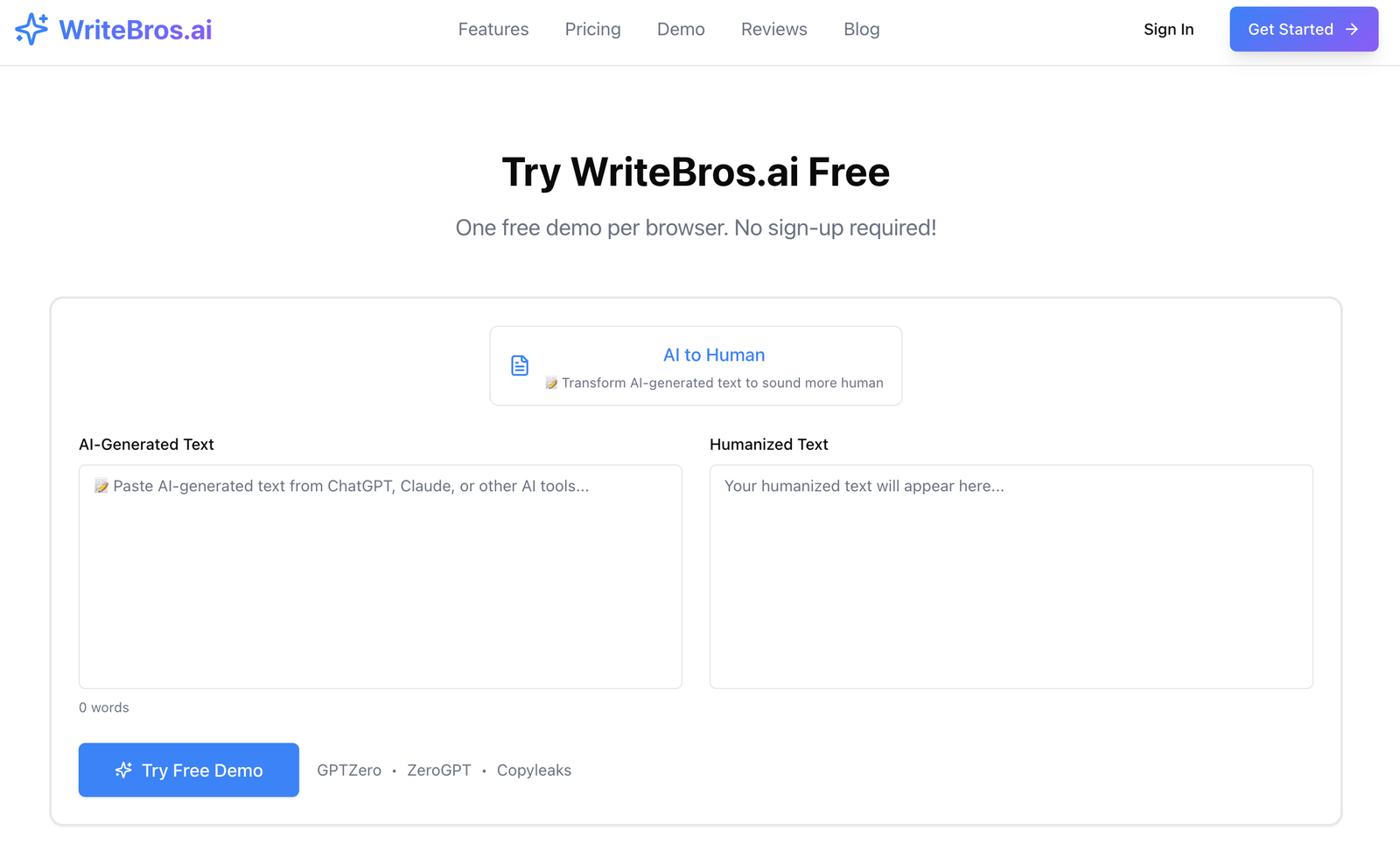
Best use case: Editorial teams that need cleaner, more natural rewrites without losing the original messaging.
What it does well: It preserves intent and keeps workflow friction low when several people are reviewing the same copy.
Where it falls short: It is not a magic fix for weak source material or pieces that still lack judgment and specificity.
Who should skip it: Anyone looking for a one-click replacement for editing rather than a controlled rewriting layer.
Most Reliable AI Humanizer Tools for Content Teams #2. Undetectable AI
Undetectable AI is one of the names that comes up early because it is very clearly framed around detection concerns, and that focus shapes how the output reads. For content teams, that can be useful when internal review is sensitive to predictability, formula, or repetitive syntax across batches of AI-assisted articles. It generally rewrites more assertively than lighter polish tools, which can help when a draft feels obviously machine-shaped from the first paragraph. The tradeoff is that stronger rewriting also increases the risk of tonal drift, and some teams will notice that a brand voice starts to blur if they rely on it too heavily. Honestly, it is better suited to situations where variability matters more than precision, rather than tightly managed editorial environments where every sentence needs to stay close to the original brief.
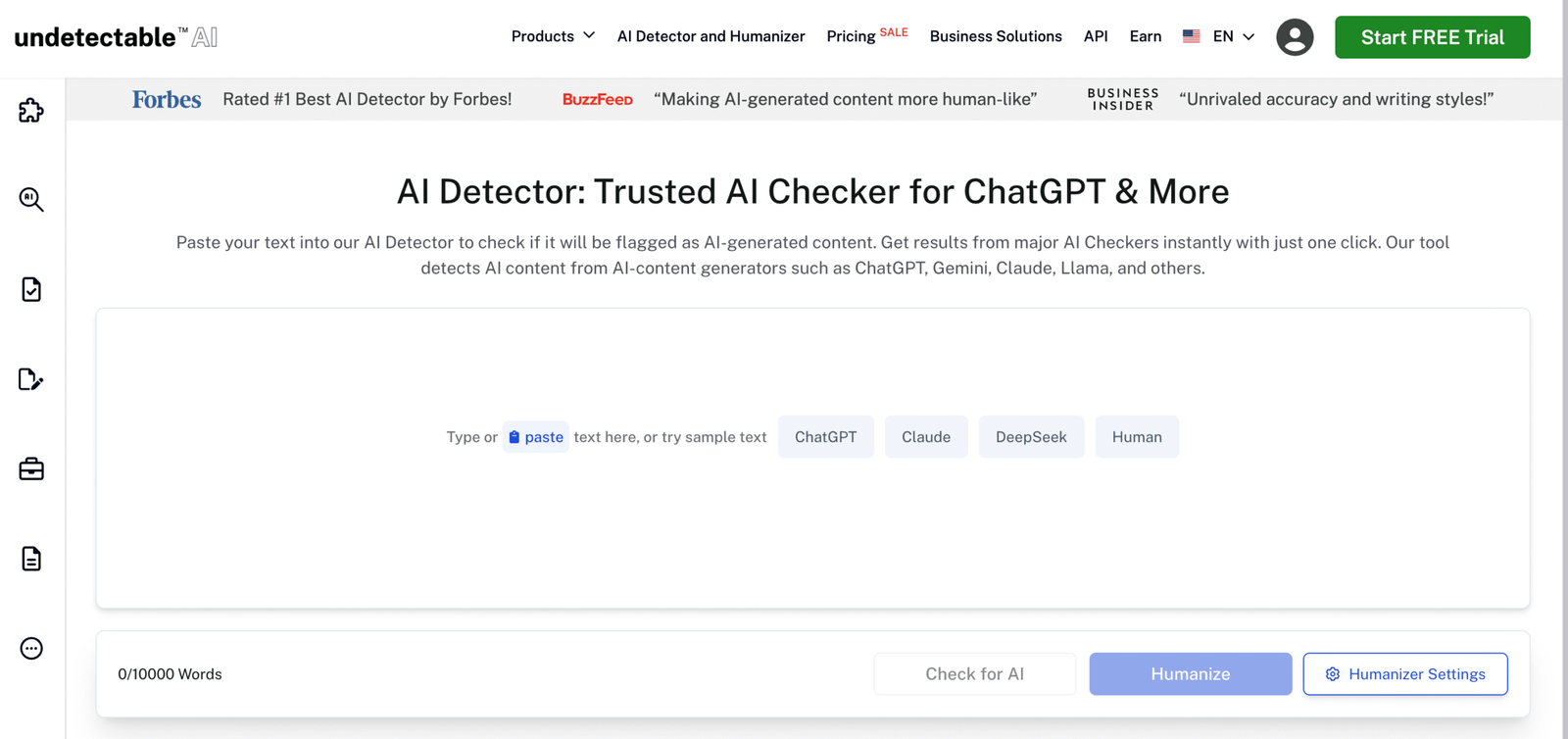
Best use case: Teams that want more aggressive rewriting for drafts that still read too obviously AI-assisted.
What it does well: It introduces stronger variation in syntax and phrasing, which can make repetitive text feel less uniform.
Where it falls short: The output can move away from the original tone and needs closer editorial checking.
Who should skip it: Brand teams that need tight voice consistency across landing pages, thought leadership, and client-facing copy.
Most Reliable AI Humanizer Tools for Content Teams #3. StealthGPT
StealthGPT sits closer to the aggressive end of the category, which makes it interesting for teams dealing with large volumes of draft content that all start sounding the same. It often rewrites with enough force that the sentence rhythm changes substantially, and in some cases that is exactly what a team wants when raw AI output feels too polished and too even. Still, aggressive intervention has a cost, because brand nuance can flatten or bend when the tool is trying hard to avoid obvious patterns. There is also the practical issue of review time, since stronger rewrites sometimes need more line editing afterward to restore precision. Basically, it can be effective for roughing up overly clean AI prose, but it is less reassuring when accuracy, tone control, and fine distinctions matter as much as the humanized texture.
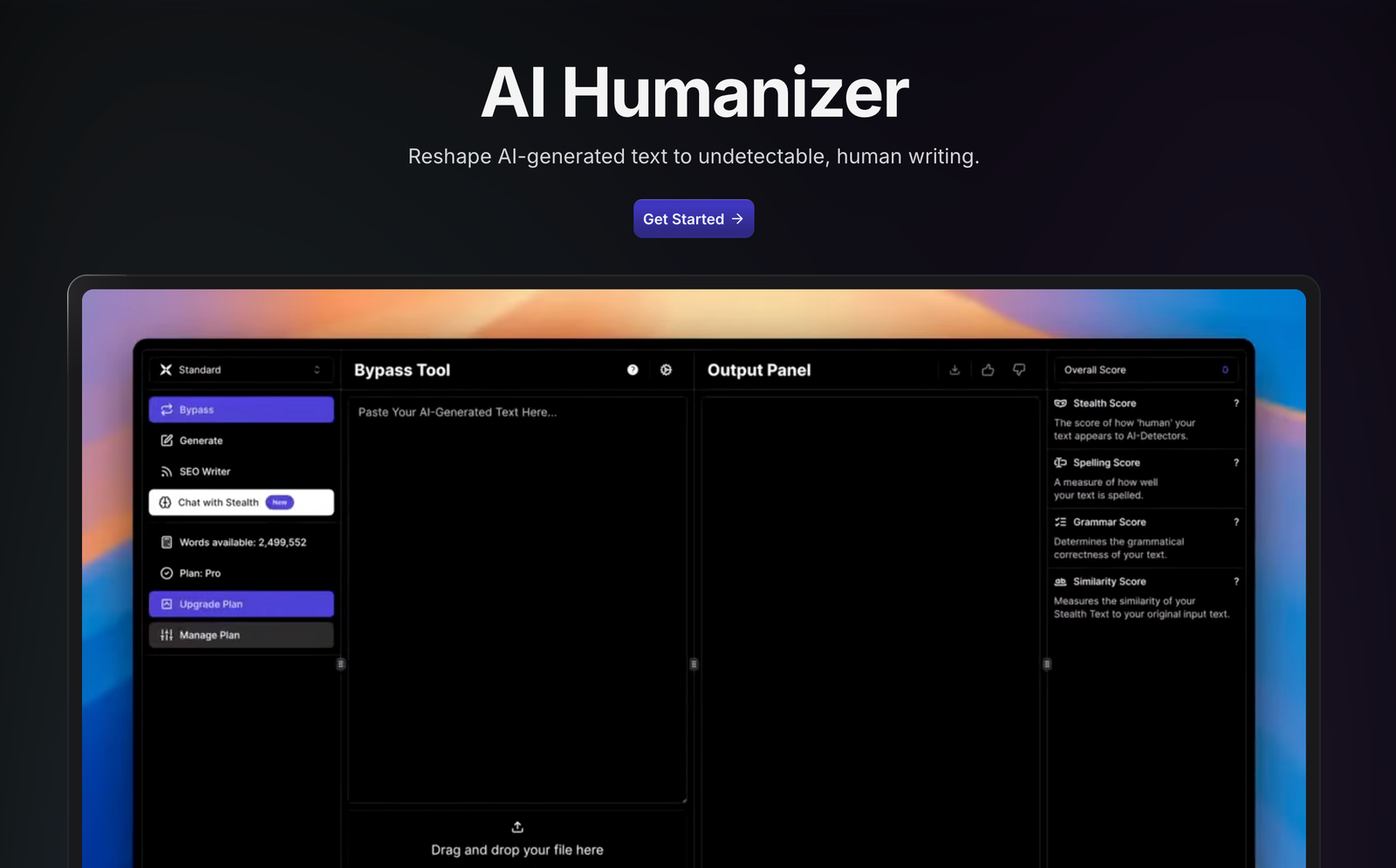
Best use case: High-volume environments where drafts need heavier restructuring to avoid sounding formulaic.
What it does well: It changes cadence and wording enough to break up the polished sameness of standard AI copy.
Where it falls short: The heavier touch can introduce drift, which means more review work for teams that care about nuance.
Who should skip it: Editors working on technical, brand-sensitive, or high-accuracy material where subtle phrasing matters.
Most Reliable AI Humanizer Tools for Content Teams #4. Grammarly AI Humanizer
Grammarly AI Humanizer makes sense for teams already living inside Grammarly because it keeps the workflow relatively tidy and familiar. Instead of behaving like a dramatic rewrite engine, it leans more toward refinement, which means the output tends to stay readable and close to the source draft. That can be a strength when teams need a light pass before editorial review rather than a full transformation. The limitation, though, is that lighter polishing does not always solve the deeper problem of AI sameness, especially in pieces that begin with generic structure or empty phrasing. Sort of predictably, it works best as part of a broader editing stack, not as the single tool that is expected to make machine-written copy suddenly feel observant and human.
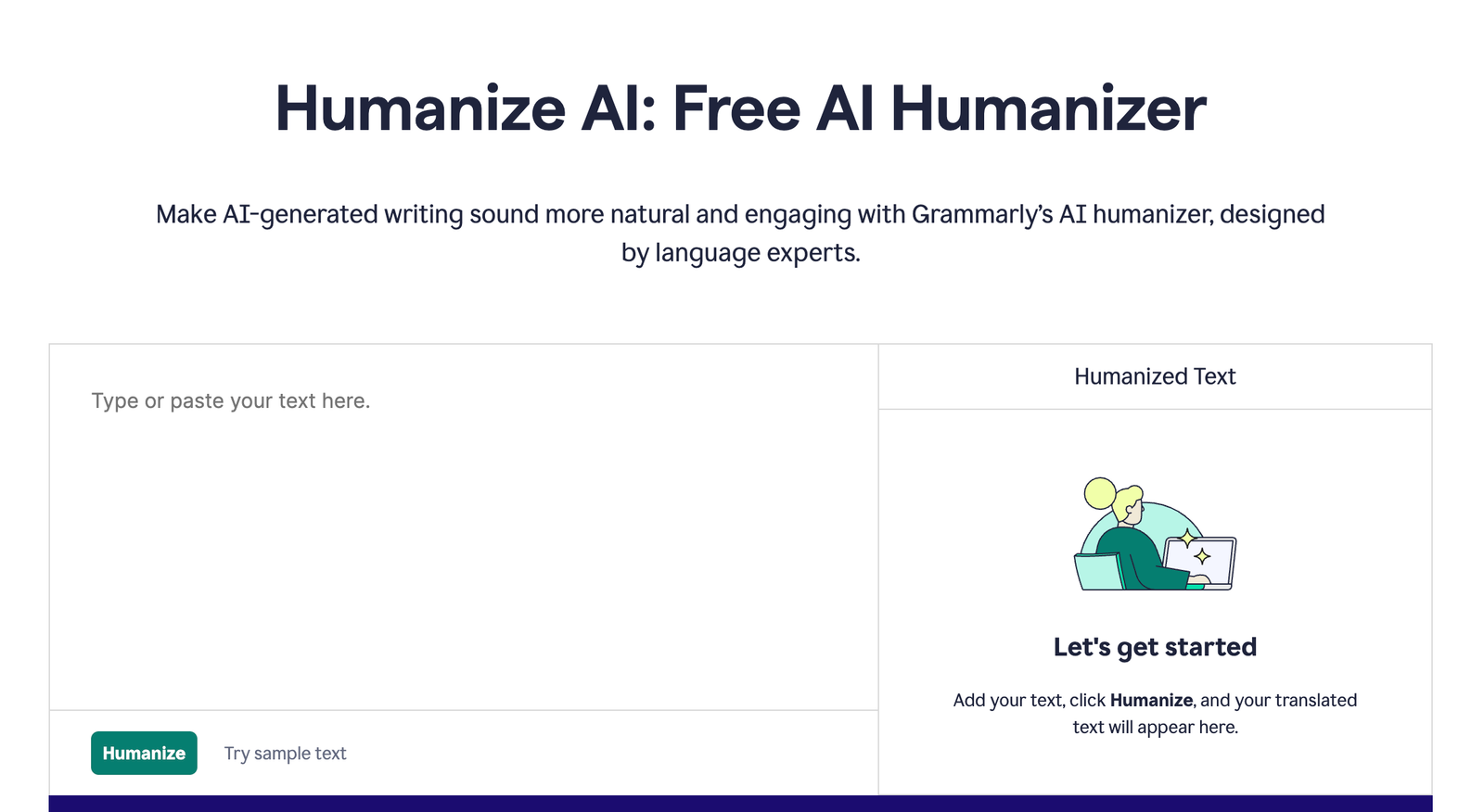
Best use case: Teams that want a light humanizing layer inside an editing environment they already use every day.
What it does well: It keeps drafts readable and familiar, which makes collaborative review easier.
Where it falls short: It may not do enough for copy that still sounds flat, generic, or structurally over-optimized.
Who should skip it: Teams searching for deep rewriting rather than surface-level polish and cleanup.
Most Reliable AI Humanizer Tools for Content Teams #5. AISEO AI Humanizer
AISEO AI Humanizer is easy to understand in context because it feels aimed at users balancing search visibility with readability, and content teams will recognize that tension straight away. It generally tries to soften robotic phrasing without fully undoing the SEO-oriented structure that many article drafts start with. That is useful when a team wants to keep headings, subtopic order, and keyword signals relatively stable while making the body copy sound less templated. The catch is that structure-first writing can still show through, so the end result may feel cleaned up rather than truly natural. For teams producing commercial content at scale, that compromise may be perfectly acceptable, though editorial teams working on voice-driven pieces may find the polish a bit too functional.
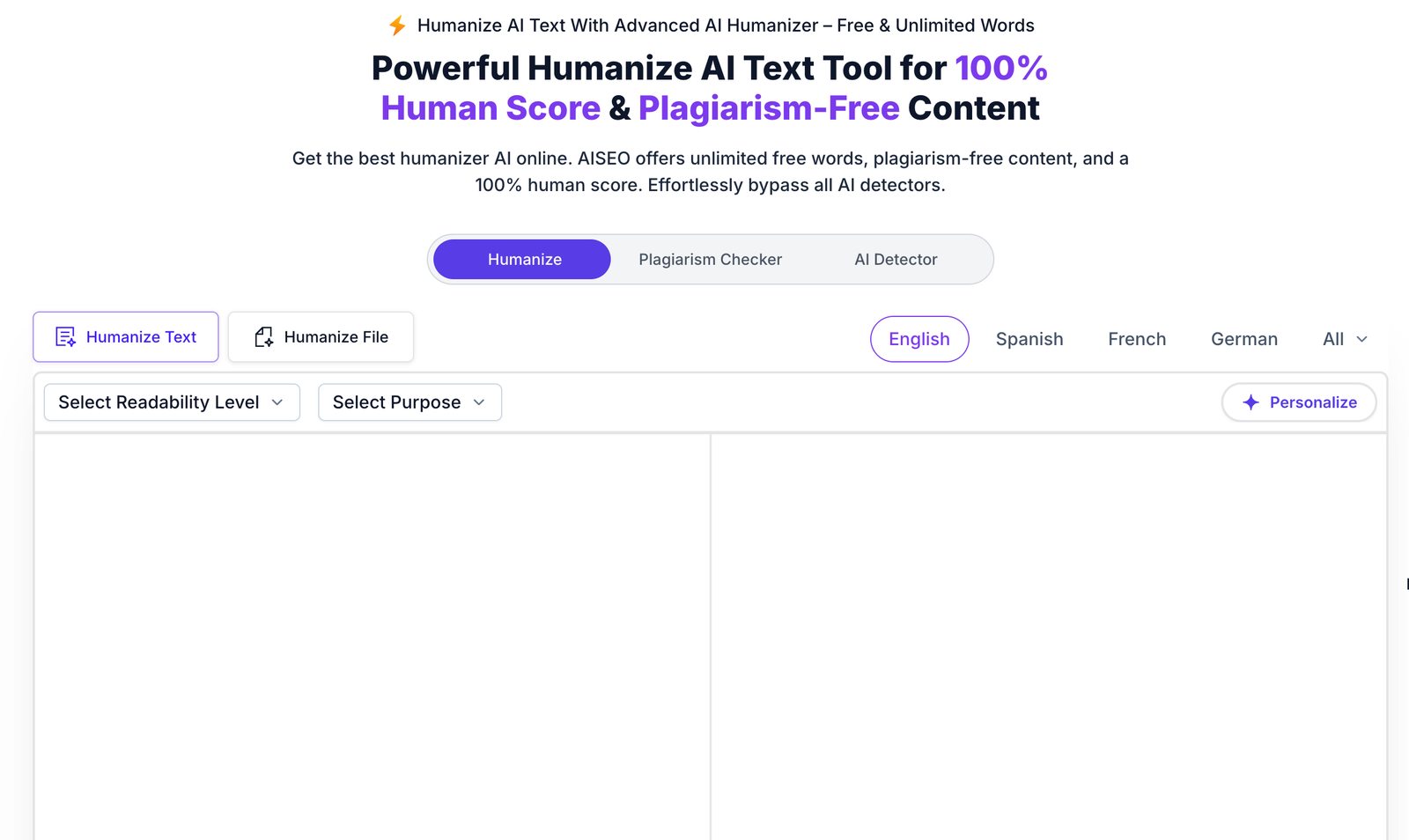
Best use case: SEO content teams that need more natural phrasing without dismantling the original article structure.
What it does well: It balances readability with search-oriented formatting better than tools that rewrite too freely.
Where it falls short: The final copy can still feel engineered when the source draft is heavily optimized from the start.
Who should skip it: Teams focused on voice-led brand publishing rather than scalable search content production.
Most Reliable AI Humanizer Tools for Content Teams #6. Humanizer.Pro
Humanizer.Pro tends to appeal to teams that want speed more than a layered editing experience, and there is a practical place for that. The output usually changes enough to smooth out the most obvious machine patterns, which can save time on first-pass cleanup for internal drafts, product descriptions, or short blog sections. It is also relatively straightforward to drop into a production routine when the goal is throughput. Still, faster tools often make narrower choices, and the result can feel somewhat shallow when a piece needs stronger tonal judgment or more precise rhetorical control. Exactly because of that, it works better as a utility tool for quick refinement than as the central system a team would rely on for flagship content.
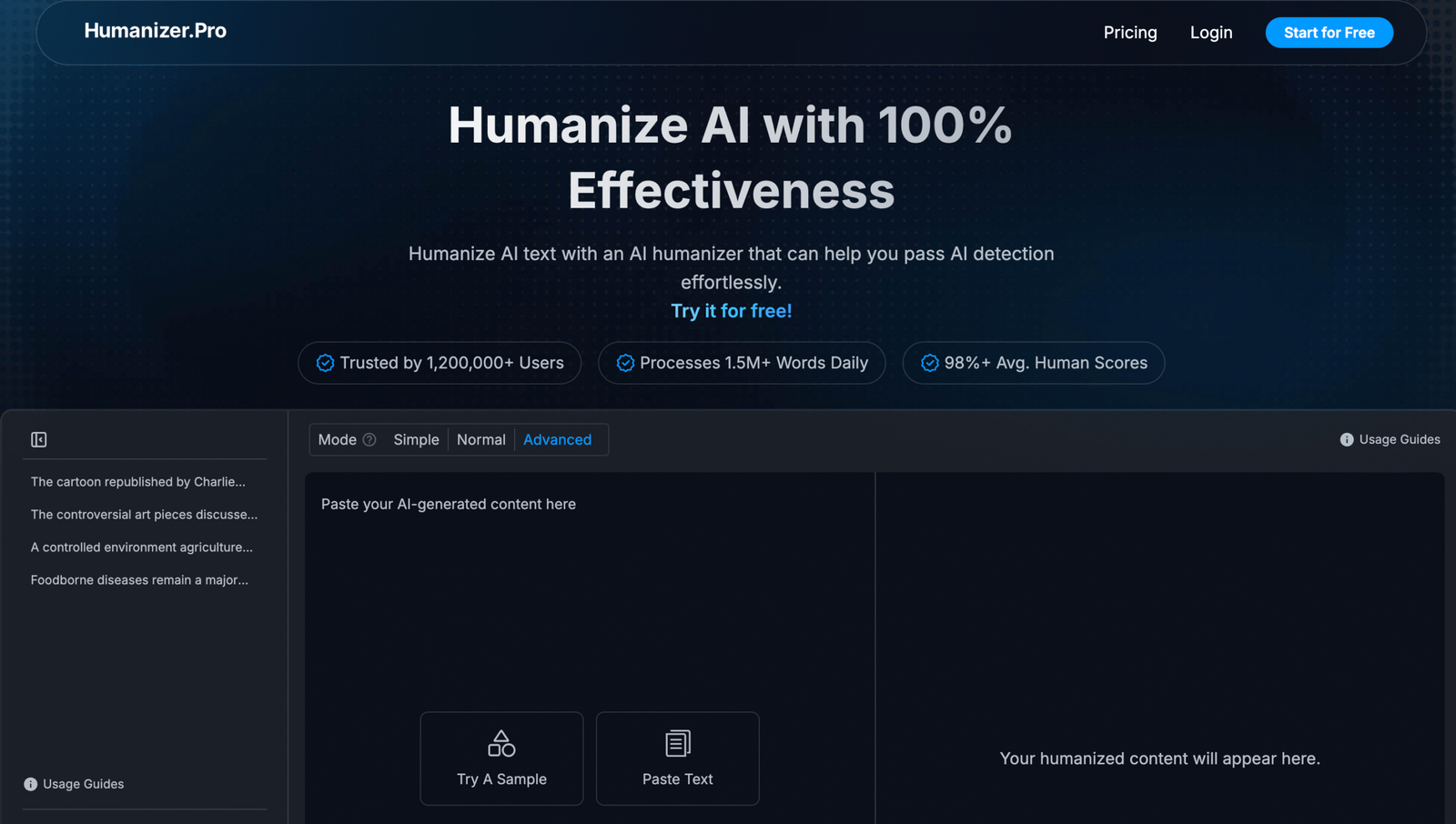
Best use case: Fast-moving teams that want quick cleanup on shorter drafts without adding much process overhead.
What it does well: It removes obvious machine texture quickly and fits easily into high-throughput workflows.
Where it falls short: It offers less depth when a piece needs stronger tonal judgment or more careful sentence-level control.
Who should skip it: Teams producing premium editorial pieces where subtle brand voice matters more than raw speed.
Most Reliable AI Humanizer Tools for Content Teams #7. Uncheck AI
Uncheck AI feels more detection-oriented than editorial, and that distinction matters because content teams are rarely served well by a tool that treats language only as a pattern to be disguised. It can help break up uniform syntax and predictable phrasing, which gives it some practical value when a draft is too visibly machine-produced. But the writing it returns does not always feel fully considered, and there are times when the text becomes less clear even as it becomes less formulaic. That tradeoff may be acceptable in narrow use cases, though it is a harder sell for teams trying to build trust, authority, or a consistent brand sensibility over time. Honestly, it makes more sense as a tactical option than as a dependable editorial layer for polished content operations.
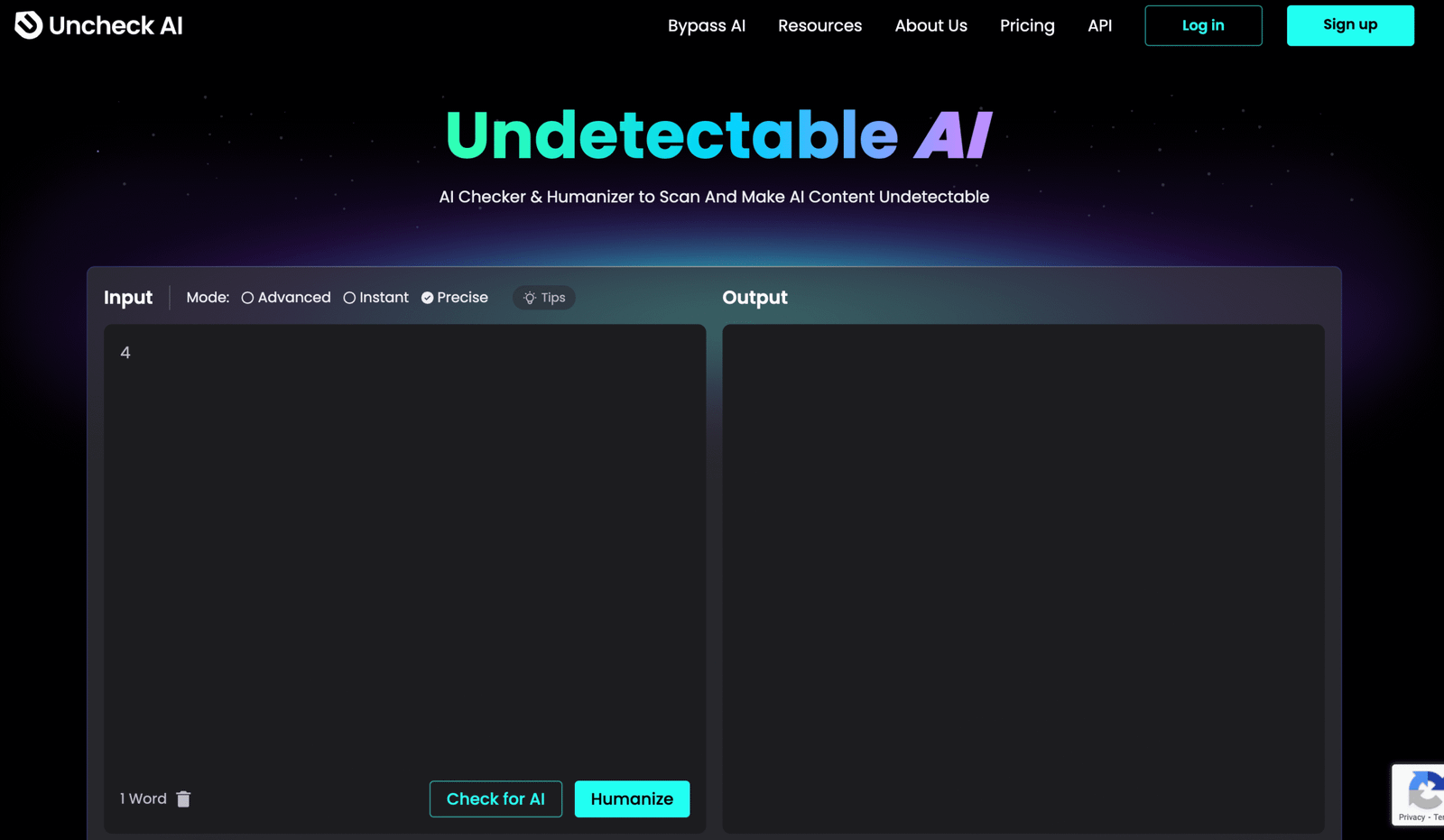
Best use case: Tactical rewrites for drafts that need less predictable language patterns fast.
What it does well: It disrupts repetitive syntax and can make obviously machine-shaped copy feel less uniform.
Where it falls short: The output is not always as clear, deliberate, or editorially polished as teams may want.
Who should skip it: Brands building authority through thoughtful voice, precision, and long-term consistency.
Most Reliable AI Humanizer Tools for Content Teams #8. GPTInf
GPTInf is interesting because it often works at the sentence level in ways that create noticeable variation, which can initially make a piece feel more human. For content teams, that variability can be useful when batches of AI drafts all share the same rhythm and paragraph logic. The issue is consistency, since one section may land cleanly and the next may feel slightly awkward or overhandled. That means editors still need to read with attention instead of assuming the tool has stabilized the whole piece. In practice, it can help roughen the edges of overly even prose, but it is less dependable when a team needs predictable quality across many pages, exactly the condition most serious content operations care about.
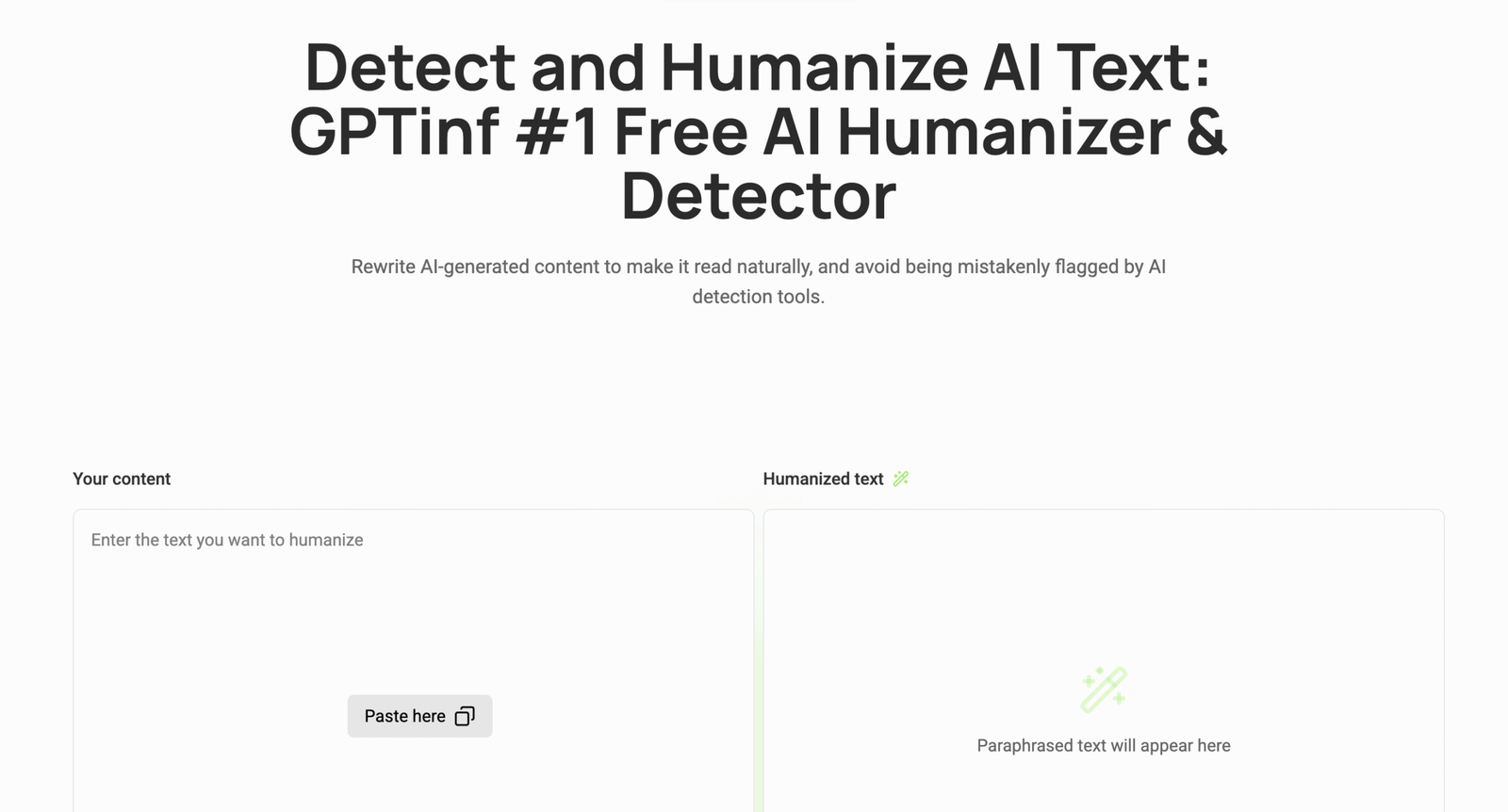
Best use case: Teams that want more sentence-level variation in drafts that feel too even and predictable.
What it does well: It introduces rhythm changes that can make flat AI prose feel less mechanically balanced.
Where it falls short: Results can vary across sections, which reduces trust in it as a consistent batch-processing option.
Who should skip it: Large content teams that need stable output quality and minimal cleanup across many assets.
Most Reliable AI Humanizer Tools for Content Teams #9. Clever AI Humanizer
Clever AI Humanizer is closer to a light edit pass than a full rewrite engine, which gives it a clearer role than some tools in this category. It can make copy more readable and slightly less stiff without dramatically rearranging the structure, and that will appeal to teams that prefer to stay close to the original draft. The upside is control, since editors are less likely to discover a changed meaning halfway through review. The downside is that subtle treatment does not always go far enough, especially when the source text is full of generic transitions or bland abstraction. Sort of inevitably, it is best treated as a softener for decent drafts rather than a rescue tool for writing that never had enough personality to begin with.
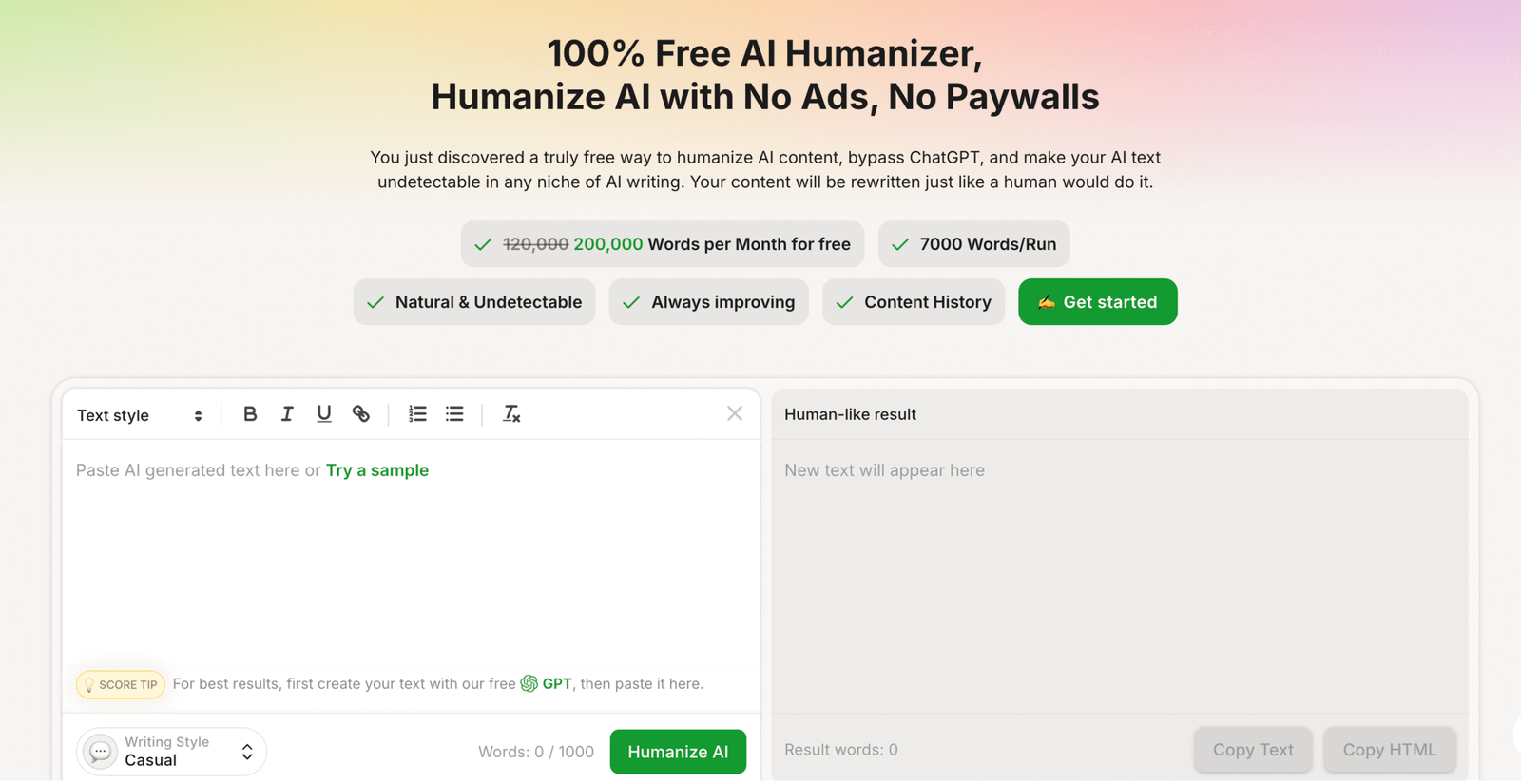
Best use case: Teams that want gentle cleanup on usable drafts without losing control of the original structure.
What it does well: It preserves meaning and readability while reducing some of the stiffness in AI-assisted writing.
Where it falls short: It may not be strong enough to transform copy that still feels generic or emotionally flat.
Who should skip it: Teams that need a stronger rewrite engine to overhaul rough, repetitive, or obviously synthetic drafts.
Most Reliable AI Humanizer Tools for Content Teams #10. AI Undetect
AI Undetect rounds out the list as a tool that appears to prioritize detection-related concerns more than editorial craft, and content teams should probably keep that distinction in view. It can alter phrasing enough to reduce obvious patterning, which may help when teams are pressure-testing raw AI drafts before they move into production. But there is a recurring tradeoff with tools in this lane, because writing that becomes less predictable does not automatically become more thoughtful, more persuasive, or more distinctly branded. Editors may still need to rebuild parts of the copy so it sounds intentional rather than merely altered. The whole thing makes sense for narrow operational use, though it is not the easiest pick for teams that care as much about tone, trust, and reader feel as they do about surface-level humanization.
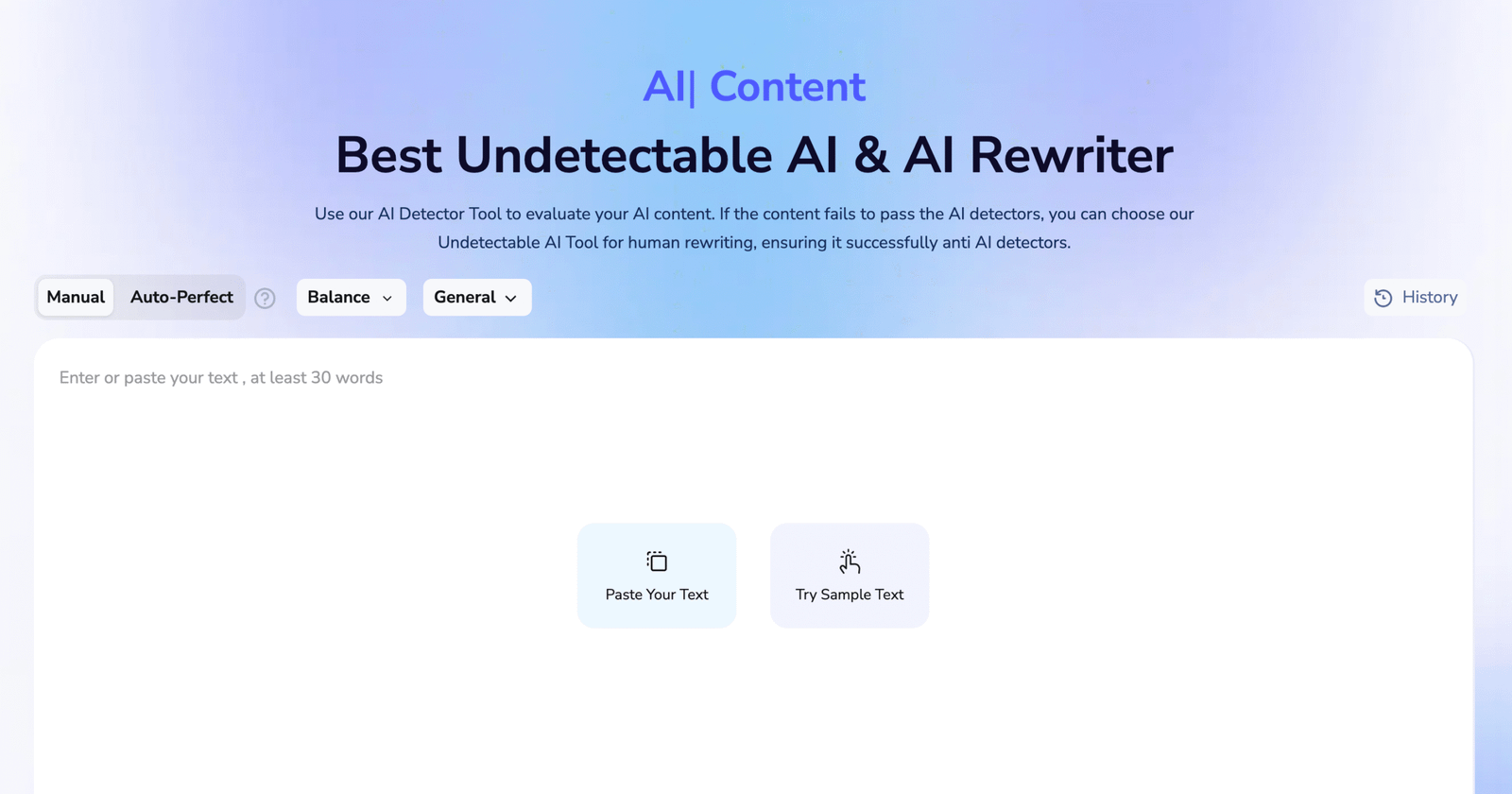
Best use case: Teams testing drafts that need reduced predictability before deeper editorial work begins.
What it does well: It changes wording enough to break some of the obvious machine patterns in raw AI text.
Where it falls short: The copy can still lack judgment, texture, and brand intent even after rewriting.
Who should skip it: Editorial teams that want humanization to improve reader experience, not just pattern avoidance.
Tool Selection Guide for Most Reliable AI Humanizer Tools for Content Teams
Precise refinement
WriteBros.ai and Grammarly AI Humanizer tend to work best when a draft already feels close but still slightly controlled or uniform. These tools adjust tone and phrasing without shifting meaning, which helps teams maintain consistency across multiple writers. The output generally stays aligned with the original structure.
Light smoothing
Humanizer.Pro and Clever AI Humanizer are more useful when the text reads clearly but carries a faint mechanical edge. They soften transitions and improve readability without making noticeable structural changes. This makes them easier to integrate into fast editorial workflows.
Heavy rewriting
StealthGPT, Undetectable AI, and AI Undetect are more suitable when drafts feel overly polished or repetitive and need stronger variation. These tools introduce noticeable shifts in phrasing and sentence rhythm. The tradeoff is that tone often needs to be reviewed more carefully afterward.
SEO articles
AISEO AI Humanizer and WriteBros.ai tend to fit SEO-driven content where structure needs to stay intact while improving readability. They keep headings and flow stable while softening templated language. This balance works well for scaled content production.
Editorial pieces
WriteBros.ai and Grammarly AI Humanizer are more reliable for editorial work where voice and nuance matter. They refine tone without flattening perspective, which helps maintain a consistent style across long-form content. The result usually feels more considered than reworked.
Product copy
Humanizer.Pro and Undetectable AI can help when product descriptions or short-form copy feel repetitive across listings. They introduce enough variation to reduce uniformity while keeping messaging direct. Some light editing is still needed to ensure clarity.
Line editing
WriteBros.ai and Grammarly AI Humanizer are often used for adjusting specific sections like headlines or calls to action. This allows teams to refine tone without changing the entire piece. It keeps the process controlled and predictable.
Full rewrites
StealthGPT and AI Undetect are more effective when a draft needs broader restructuring rather than minor edits. They rewrite entire sections to introduce variation and improve flow. Afterward, teams usually refine tone to match brand voice.
Batch processing
GPTInf and Uncheck AI tend to support workflows where multiple drafts are processed at once. They break up predictable phrasing patterns across large volumes of content. Consistency can vary, so editorial review still plays an important role.
What makes these tools reliable for content teams in practice
Reliability, in this context, tends to come down to how well a tool respects the original draft rather than how aggressively it rewrites it. Content teams usually notice quite quickly when a system introduces variation at the expense of clarity or intent, which then creates more work during review.
There is also a quieter distinction between tools that smooth language and those that actually improve how a piece reads as a whole. The difference becomes more obvious over time, especially when multiple writers are working within the same voice guidelines.
Most teams end up treating these tools as part of a layered process rather than a single solution, which feels more realistic once the limits are clear. Humanization, in practice, works best when it supports editing rather than trying to replace it entirely.
What stands out across these options is that each one reflects a slightly different idea of what “human” writing should feel like. That means the right choice is less about rankings and more about how closely a tool aligns with the way a team already writes, reviews, and refines its content.
Disclaimer: The tools referenced are included for editorial and informational purposes only and are selected based on observable product behavior and relevance rather than sponsorship or paid placement. Screenshots are shown solely for identification, commentary, and illustrative reference in line with standard editorial and fair use practices, and may not reflect the most current version of each product. All trademarks, logos, and interface elements remain the property of their respective owners. For update, correction, or removal requests, please refer to the Editorial Policy.