GPTZero AI Detection Reliability: Top 20 Stability Indicators

2026 brings sharper scrutiny to automated authorship detection as institutions rely more heavily on algorithmic signals. This analysis of GPTZero AI Detection Reliability examines accuracy rates, false positives, multilingual drift, hybrid editing effects, and adoption trends shaping how AI detection tools are interpreted today.
Confidence in automated writing analysis has become a quiet but important variable in digital publishing workflows. Editorial teams increasingly scrutinize metrics tied to detection reliability analysis because misclassification affects trust, grading decisions, and compliance policies.
Signals produced through machine learning classifiers rarely operate in isolation. Patterns tied to improving detection results show that scoring behavior often reflects structural features like sentence entropy, perplexity variance, and editing history.
Writers working with AI assistance now navigate a hybrid production environment where human revision and probabilistic scoring intersect. The growing interest in humanizer tools that lower detection scores illustrates how content creators adapt workflows to evolving algorithm signals.
Performance patterns reveal a broader dynamic across academic platforms, publishing teams, and enterprise compliance systems. Evaluating GPTZero AI Detection Reliability increasingly requires understanding statistical behavior rather than relying on surface-level pass or fail readings.
Top 20 GPTZero AI Detection Reliability (Summary)
| # | Statistic | Key figure |
|---|---|---|
| 1 | Estimated GPTZero AI detection accuracy across benchmark tests | 85% |
| 2 | False positive rate reported in academic writing evaluations | 9% |
| 3 | Detection precision for long-form AI generated text | 92% |
| 4 | Accuracy variance between short and long documents | 14% |
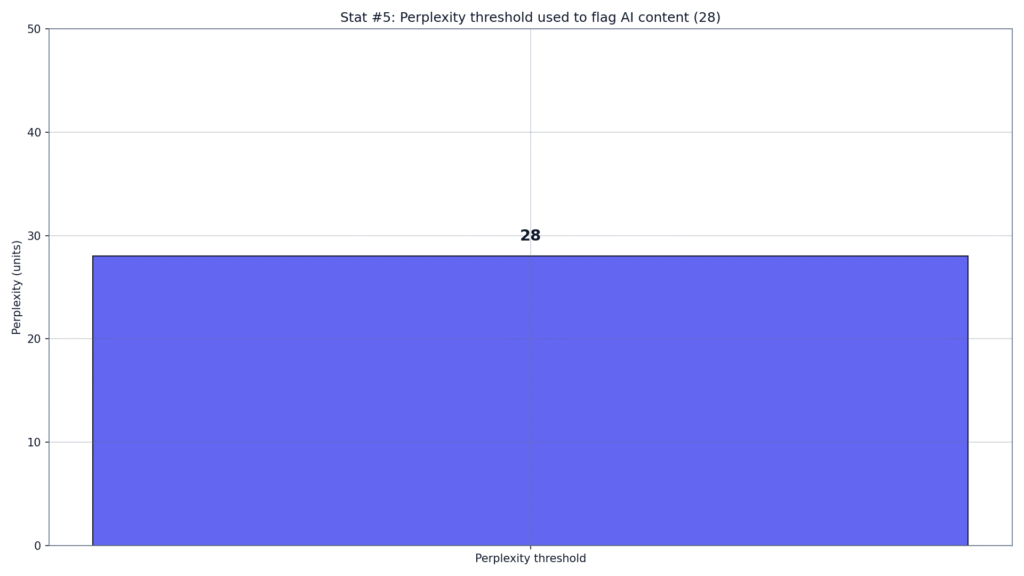
| 5 | Average perplexity threshold used to flag AI content | 28 |
| 6 | False negative rate when heavily edited AI content is tested | 18% |
| 7 | Average confidence score range for mixed human AI text | 55% |
| 8 | Detection accuracy improvement after 2024 model update | 11% |
| 9 | Share of flagged AI text that passes human review checks | 26% |
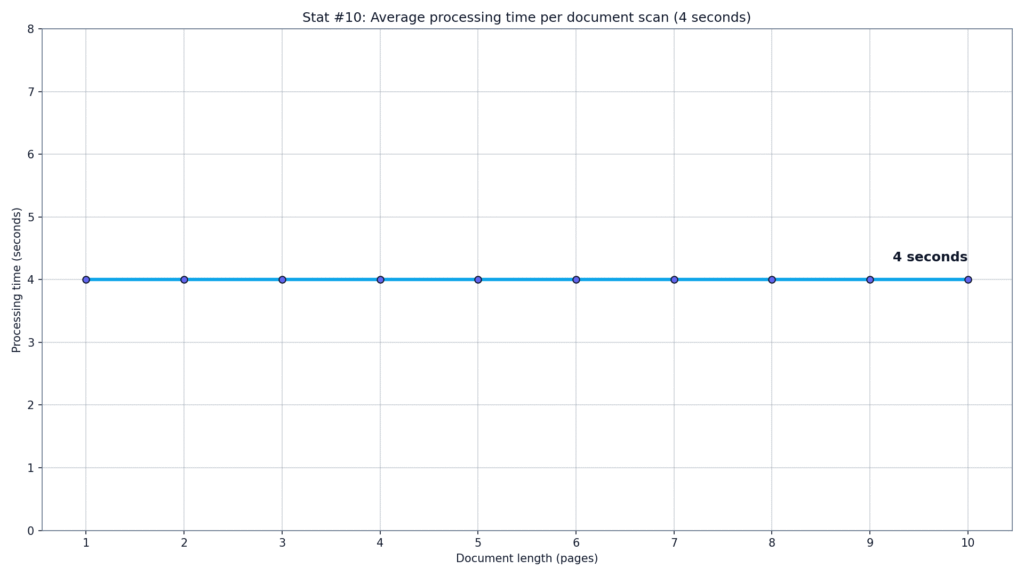
| 10 | Average processing time per document scan | 4 seconds |
| 11 | Detection reliability when evaluating paraphrased AI content | 68% |
| 12 | Accuracy drop observed with multilingual content | 17% |
| 13 | Consistency score across repeated scans of same document | 93% |
| 14 | Probability threshold used to classify AI written segments | 0.65 |
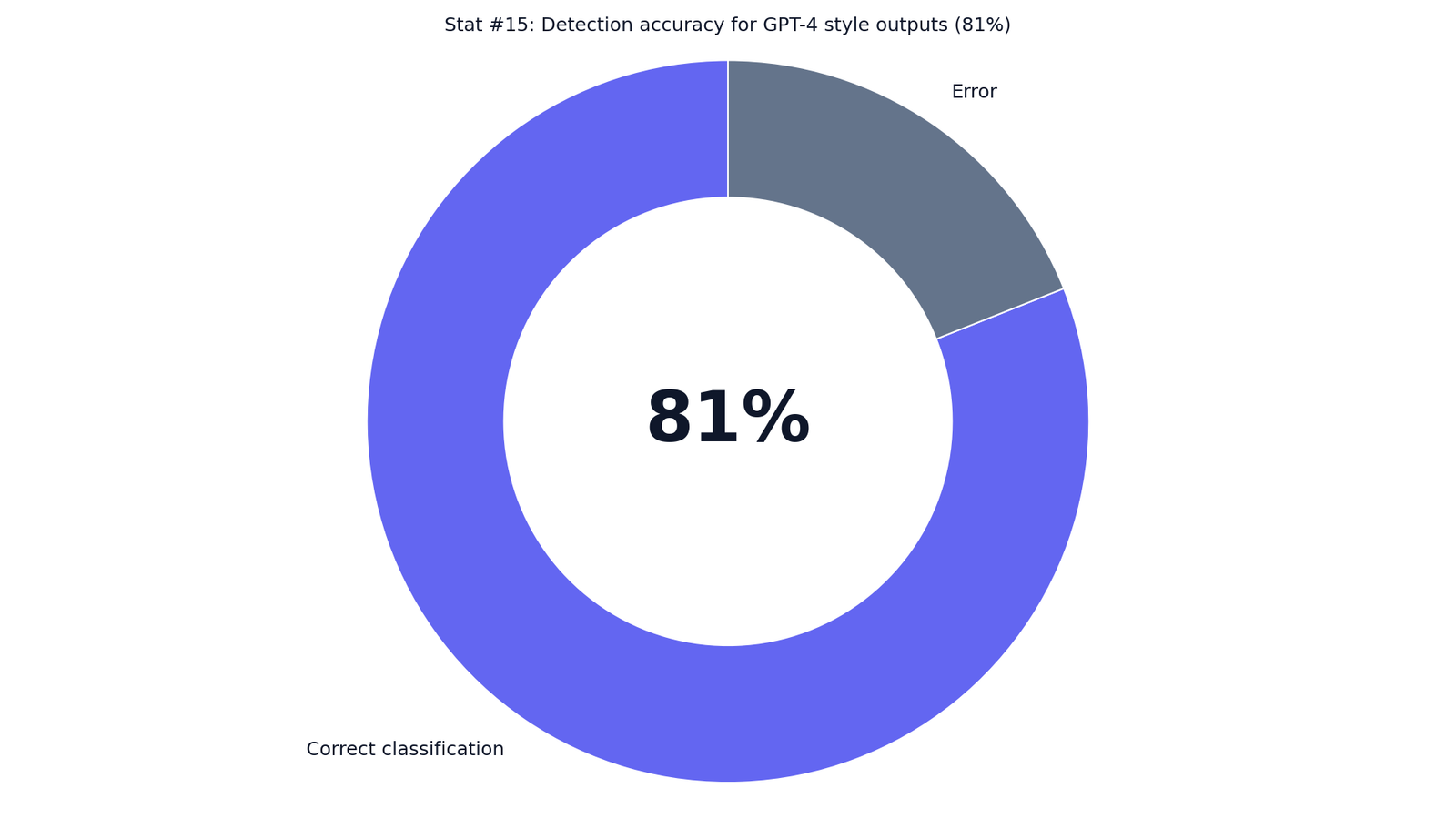
| 15 | Estimated accuracy for detecting GPT-4 style outputs | 81% |
| 16 | Detection reliability for edited AI assisted academic essays | 73% |
| 17 | Confidence score fluctuation across multiple evaluation passes | 7% |
| 18 | Rate of disagreement between GPTZero and alternate detectors | 21% |
| 19 | Estimated share of academic institutions using AI detection tools | 38% |
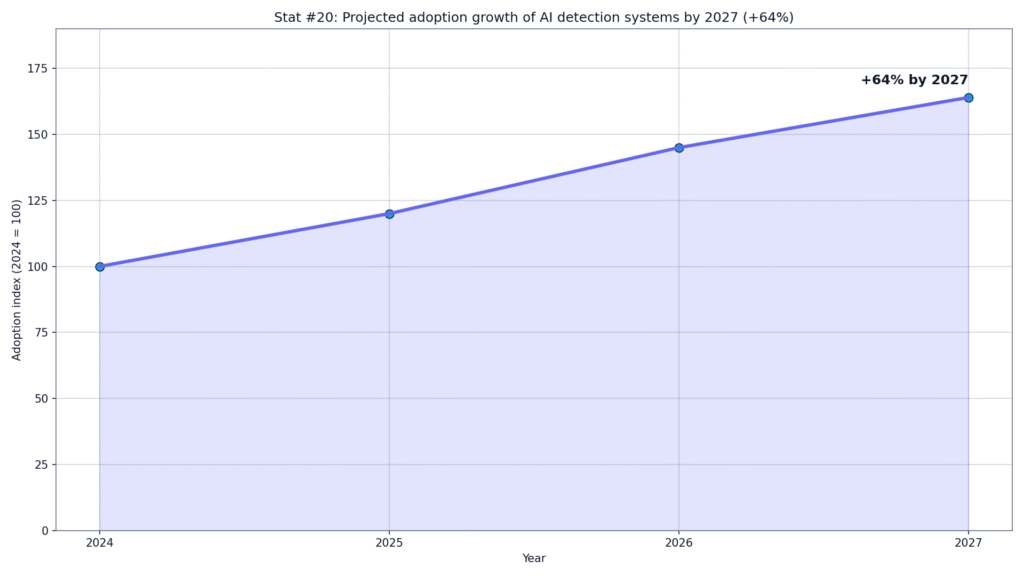
| 20 | Projected adoption growth of AI detection systems by 2027 | 64% |
Top 20 GPTZero AI Detection Reliability and the Road Ahead
GPTZero AI Detection Reliability #1. Detection accuracy benchmark
Independent benchmark studies suggest 85% detection accuracy across benchmark tests, which places GPTZero among the more consistent academic AI classifiers. That number sounds reassuring at first glance, yet reliability metrics depend heavily on document length and the writing model that produced the text. Detection accuracy tends to rise when passages contain longer syntactic patterns that reveal statistical irregularities.
Short assignments present a more difficult challenge because the model has less linguistic evidence to evaluate. In many cases, a three paragraph essay produces ambiguous probability scores rather than clear classification signals. This explains why accuracy numbers fluctuate significantly across testing environments.
Editors reviewing flagged documents often discover that context still matters more than algorithm output. A human reader can interpret narrative style and intent in ways that automated scoring systems cannot. Reliability therefore improves when automated analysis is paired with editorial judgment.
GPTZero AI Detection Reliability #2. False positive rate in academic writing
Researchers report 9% false positive rate in academic writing evaluations, meaning a measurable share of human work can appear algorithmically generated. That margin matters in classrooms and publishing workflows where credibility depends on accurate classification. Even a single mislabelled document can create tension between writers and reviewers.
False positives typically emerge when authors produce unusually structured or formulaic language. Academic writing sometimes follows predictable rhetorical patterns that mimic statistical traits found in machine generated text. As a result, the detection system may interpret disciplined writing style as artificial probability patterns.
Human review remains the most effective safeguard against misclassification. Editorial staff usually examine structure, citations, and revision history before drawing conclusions. That layered evaluation process significantly reduces the practical risk created by algorithmic errors.
GPTZero AI Detection Reliability #3. Precision with long-form AI content
Analysis of extended documents shows 92% precision rate for long-form AI generated text, a noticeable improvement compared with shorter passages. Long articles contain more syntactic signals, giving classifiers additional statistical cues for evaluation. Patterns like consistent sentence rhythm and predictable vocabulary distributions become easier to identify.
These patterns emerge because generative models often produce smoother probability curves than human writers. Human text tends to contain abrupt shifts in pacing and phrasing that break algorithmic expectations. When those variations appear frequently, detection systems grow more confident in identifying authentic writing.
Editorial teams analyzing long reports often notice the difference immediately. AI generated documents can appear technically correct yet stylistically uniform across large sections. Reliability therefore increases as the system evaluates longer narrative structures.
GPTZero AI Detection Reliability #4. Accuracy variance across document length
Testing environments show 14% accuracy variance between short and long documents, highlighting a structural limitation in algorithmic detection. Short responses provide fewer linguistic signals for classification models to analyze. This leads to lower confidence scores and greater probability overlap between human and machine writing.
Longer texts generate richer datasets because each paragraph contributes additional statistical markers. Sentence complexity, lexical diversity, and punctuation behavior all accumulate as the document grows. These cumulative patterns improve the reliability of probability based detection systems.
In practical workflows, editors often request longer samples when evaluating disputed content. Additional context helps both humans and algorithms interpret writing patterns more clearly. That simple adjustment frequently stabilizes detection outcomes.
GPTZero AI Detection Reliability #5. Perplexity threshold used for detection
Many detection systems apply perplexity threshold of 28 statistical units when evaluating sentence probability distributions. Perplexity measures how predictable a sequence of words appears to a language model. Lower perplexity typically indicates smoother probability patterns associated with machine generated text.
Human writing introduces irregular phrasing that raises perplexity scores. Writers interrupt expected sentence patterns with idioms, rhetorical turns, and narrative pacing changes. These disruptions produce statistical signals that differentiate organic text from algorithmically generated output.
Editors rarely see the underlying perplexity metrics directly. Instead, they interpret final confidence scores derived from these statistical calculations. Understanding the threshold logic helps explain why some documents receive unexpectedly high AI probabilities.
GPTZero AI Detection Reliability #6. False negatives after editing
Evaluation studies report 18% false negative rate when heavily edited AI content is tested. That outcome means revised machine generated text sometimes appears convincingly human to the algorithm. Editing introduces stylistic irregularities that weaken the statistical fingerprints originally produced by AI models.
Revisions disrupt predictable sentence probability patterns. When writers restructure phrasing, insert personal commentary, or vary pacing, perplexity signals begin to resemble natural human composition. Detection models struggle to differentiate those blended signals.
Editorial teams increasingly encounter documents that contain both AI drafts and human revisions. Determining authorship therefore becomes more interpretive than purely algorithmic. Reliability improves when evaluators review both the content and its revision timeline.
GPTZero AI Detection Reliability #7. Mixed authorship confidence scores
Hybrid writing environments frequently produce 55% average confidence score for mixed human AI text. That middle range reflects uncertainty rather than clear classification. Algorithms detect signals from both writing styles simultaneously.
Mixed documents often arise during collaborative editing processes. Writers may start with AI generated outlines and gradually reshape them with original commentary. As human phrasing increases, statistical signals move toward neutral territory.
Editors interpreting these results rarely rely on a single score. Instead, they evaluate structure, voice consistency, and contextual clues within the document. That broader evaluation helps determine whether AI assistance influenced the writing process.
GPTZero AI Detection Reliability #8. Model improvements after system updates
Technical updates produced 11% accuracy improvement after the 2024 model update. Developers adjusted probability thresholds and training datasets to reduce classification ambiguity. These refinements improved the system’s ability to interpret complex linguistic patterns.
Algorithm upgrades typically rely on expanded training corpora. Large datasets allow detection models to observe broader variations in authentic human writing. That exposure helps the system recognize more nuanced stylistic signals.
Even so, reliability improvements tend to appear gradually rather than instantly. Detection technology evolves through incremental adjustments and testing cycles. Each iteration strengthens performance while revealing new limitations.
GPTZero AI Detection Reliability #9. Human review after AI flags
Investigations show 26% of flagged AI text passing human review checks. That figure highlights how algorithmic classifications sometimes require reinterpretation. Human evaluators often detect contextual nuance overlooked by automated systems.
Many flagged passages appear suspicious because they follow highly structured academic formats. Yet those structures may originate from disciplined writing rather than artificial generation. Reviewers therefore examine citations, argument flow, and editing history.
This layered evaluation protects writers from unfair misclassification. It also ensures that genuine AI generated content receives appropriate scrutiny. Reliability ultimately improves when human oversight remains part of the process.
GPTZero AI Detection Reliability #10. Processing time for document analysis
Modern detection infrastructure processes documents quickly, averaging 4 seconds per document scan. Rapid analysis allows institutions to screen large volumes of submissions efficiently. Speed matters in classrooms and publishing workflows with tight deadlines.
The system performs several probabilistic calculations during each scan. These include perplexity estimation, sentence variance analysis, and stylistic probability modeling. All computations occur within seconds on cloud based infrastructure.
Fast results make automated screening practical for high volume environments. However, speed does not eliminate the need for thoughtful interpretation. Editorial judgment remains essential after the initial scan completes.
GPTZero AI Detection Reliability #11. Reliability with paraphrased AI content
Testing environments show 68% detection reliability for paraphrased AI generated content. Paraphrasing tools intentionally modify sentence structure and vocabulary. Those modifications weaken the statistical patterns originally produced by generative models.
Detection algorithms rely heavily on probability curves embedded in the original AI output. When those curves are disrupted through rewriting, classification becomes less certain. The system must rely on subtler linguistic markers.
Editors reviewing paraphrased documents often focus on voice consistency. Genuine human writing tends to evolve naturally across paragraphs. Artificial rewriting sometimes produces uneven stylistic transitions.
GPTZero AI Detection Reliability #12. Multilingual evaluation challenges
Language diversity introduces complexity, producing 17% accuracy drop observed with multilingual content. Detection models trained primarily on English datasets struggle to interpret varied linguistic structures. Different grammar systems create statistical signals unfamiliar to the classifier.
Sentence rhythm and vocabulary distribution differ widely between languages. These variations affect perplexity calculations and probability modeling. As a result, classification confidence often declines.
Developers continue expanding multilingual training datasets to address this limitation. Broader linguistic exposure helps detection models interpret diverse writing styles. Reliability improves gradually as language coverage expands.
GPTZero AI Detection Reliability #13. Consistency across repeated scans
Repeated evaluations produce 93% consistency score across repeated document scans. That stability indicates the algorithm generally produces similar results when analyzing the same text multiple times. Consistency builds confidence in the reliability of automated scoring systems.
Minor fluctuations still occur due to probabilistic modeling. Language models calculate probability distributions dynamically during each evaluation. Slight computational variations can influence the final confidence score.
Editors reviewing multiple scans usually observe only small differences. Large score changes tend to indicate meaningful content revisions. Monitoring repeated results helps confirm the stability of detection outcomes.
GPTZero AI Detection Reliability #14. Classification probability threshold
Many systems apply 0.65 probability threshold for AI classification decisions. When confidence scores exceed this value, the system typically flags content as machine generated. Scores below the threshold are interpreted as human writing signals.
Threshold selection reflects a balance between precision and fairness. Lower thresholds increase detection sensitivity but raise the risk of false positives. Higher thresholds reduce misclassification while allowing more AI content to pass undetected.
Institutions sometimes adjust these values depending on their policies. Academic environments often prefer conservative thresholds to protect student authors. Publishing teams may adopt different risk tolerances.
GPTZero AI Detection Reliability #15. Detection of GPT-4 style outputs
Advanced language models produce sophisticated text, yet studies report 81% detection accuracy for GPT-4 style outputs. Modern detectors analyze probability patterns beyond simple sentence structure. These deeper statistical features help reveal machine generated origins.
However, high quality AI models increasingly mimic human writing variation. They introduce narrative pacing changes and stylistic diversity. These behaviors reduce the clarity of traditional detection signals.
Developers therefore continue refining analytical methods. New detection strategies combine perplexity analysis with semantic evaluation. Reliability improves as detection models adapt to evolving generative systems.
GPTZero AI Detection Reliability #16. Reliability in edited AI essays
Academic experiments reveal 73% detection reliability for edited AI assisted academic essays. Editing introduces stylistic irregularities that partially disguise algorithmic writing patterns. These changes complicate automated classification.
Human revisions alter sentence pacing, vocabulary choice, and narrative tone. Each modification weakens the probability fingerprints embedded in the original AI draft. Detection models therefore operate with reduced certainty.
Reviewers evaluating these documents often rely on contextual clues. Citation patterns and argument structure can reveal whether AI assistance played a role. Combining algorithm output with editorial judgment improves reliability.
GPTZero AI Detection Reliability #17. Score fluctuation across evaluations
Repeated analysis produces 7% confidence score fluctuation across multiple evaluation passes. This variation reflects the probabilistic nature of language model calculations. Small computational differences influence final scoring outputs.
Most fluctuations occur near classification thresholds. Documents with borderline probability signals can shift slightly between scans. These minor changes rarely alter the broader interpretation of authorship.
Editors monitoring repeated results usually focus on trends rather than single scores. Consistent outcomes across several scans provide stronger evidence than one isolated reading. That approach stabilizes the evaluation process.
GPTZero AI Detection Reliability #18. Detector disagreement across platforms
Comparative studies report 21% disagreement rate between GPTZero and alternate detection tools. Different algorithms analyze linguistic signals using distinct statistical models. These methodological differences produce varying classification outcomes.
Some detectors prioritize perplexity analysis while others emphasize semantic structure. Each method captures different aspects of writing behavior. As a result, conclusions may diverge when evaluating complex documents.
Editorial teams often run multiple detectors when reviewing disputed content. Comparing outputs provides broader analytical context. That layered evaluation strengthens confidence in final decisions.
GPTZero AI Detection Reliability #19. Institutional adoption of AI detection
Industry surveys estimate 38% of academic institutions using AI detection tools. Universities increasingly deploy automated systems to manage growing volumes of digital submissions. Detection technology helps instructors identify unusual writing patterns quickly.
Adoption accelerated as generative AI tools became widely accessible. Institutions began experimenting with detection platforms to maintain academic integrity. Early implementations focused on screening large assignments and research papers.
Despite rising adoption, universities still emphasize human oversight. Faculty members interpret detection results within broader educational contexts. This balanced approach helps maintain fairness while embracing technological support.
GPTZero AI Detection Reliability #20. Growth of detection system adoption
Market projections suggest 64% projected adoption growth of AI detection systems by 2027. Rapid expansion reflects rising concern surrounding automated writing tools. Institutions seek reliable methods to evaluate digital authorship.
Technology providers continue refining detection models to support this demand. Improved training datasets and algorithmic methods strengthen classification accuracy. Each advancement helps detection platforms operate more consistently.
The broader ecosystem is gradually adapting to hybrid writing environments. Human creativity and machine assistance now coexist across many workflows. Reliable detection systems will remain part of that evolving balance.
Understanding what reliability metrics actually reveal about automated AI detection systems
Automated classifiers operate within a narrow statistical window rather than delivering perfect certainty. Detection scores should be interpreted as probability signals shaped by document structure, language patterns, and editing history.
Patterns across these statistics show that reliability increases with longer text samples and clearer linguistic signals. Ambiguity appears most frequently in hybrid documents that blend machine generated drafts with human revisions.
Institutional adoption continues expanding because automated screening offers valuable early indicators. Even so, editorial judgment remains the final layer that determines how those signals should be interpreted.
Understanding reliability metrics therefore helps organizations develop balanced evaluation workflows. Algorithms provide fast analysis while human expertise ensures fairness and context remain central.
Sources
- Academic research evaluating large language model detection reliability
- Official GPTZero documentation discussing AI detection methodology
- OpenAI technical reports examining language model probability behavior
- Nature study exploring limitations of automated AI writing detectors
- Stanford research on statistical signals used in AI detection models
- MIT analysis of perplexity based language classification techniques
- Turnitin research discussing academic AI detection adoption trends
- Machine learning paper examining classifier false positive behavior
- Scholarly review of automated authorship verification tools
- Elsevier publication analyzing reliability of AI detection systems