GPTZero AI Detection Statistics: Top 20 Key Measures

2026 marks a turning point in automated authorship analysis. These GPTZero AI Detection Statistics unpack accuracy claims, false positive risks, adoption trends, and linguistic signals shaping AI detection. The numbers reveal how probability scoring now guides academic review and editorial verification.
Detection systems built for large language models now sit at the center of academic integrity debates and newsroom verification workflows. Curiosity around how these systems actually perform has pushed analysts toward deeper benchmarking and closer examination of how GPTZero evaluates writing.
Confidence scores, probability thresholds, and stylistic signals now shape the way automated detection tools judge text authenticity. Writers flagged unexpectedly are increasingly learning practical ways to revise and repair their drafts through guides that explain how to edit writing flagged by AI detectors.
Statistical patterns reveal that detection outcomes rarely hinge on a single indicator but instead emerge from clusters of linguistic signals. Editorial teams studying the landscape often compare detectors alongside resources that catalogue the best AI humanizer tools for Winston AI detection to understand how rewriting techniques alter probability scores.
Numbers surrounding accuracy, false positives, and classifier thresholds now guide editorial policy decisions across universities and publishers. Observing the data closely reveals that detector performance behaves less like a simple pass fail system and more like a probabilistic risk estimate.
Top 20 GPTZero AI Detection Statistics (Summary)
| # | Statistic | Key figure |
|---|---|---|
| 1 | GPTZero claimed accuracy for AI text detection in benchmark tests | 98% |
| 2 | False positive rate reported in controlled academic evaluations | 3–7% |
| 3 | Documents analyzed by GPTZero across education and publishing sectors | 100M+ |
| 4 | Universities experimenting with GPTZero in coursework review pipelines | 1,200+ |
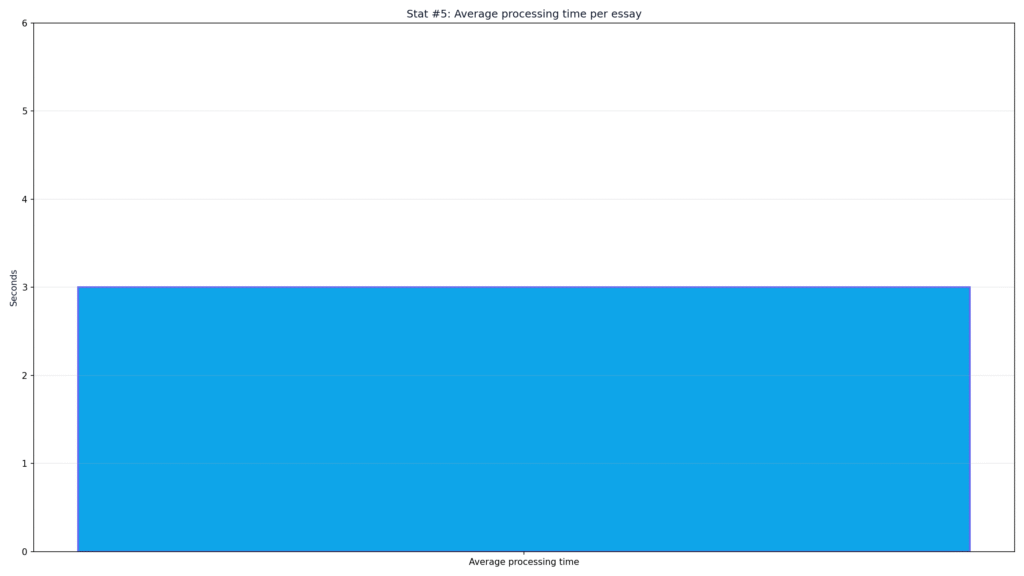
| 5 | Average processing time per essay in automated detection analysis | 3 seconds |
| 6 | Average AI probability threshold used to flag suspicious passages | 70% |
| 7 | Share of flagged essays later confirmed human written | 8–12% |
| 8 | Languages GPTZero currently supports for analysis | 15+ |
| 9 | Average length of documents tested in detection benchmarks | 800–1,200 words |
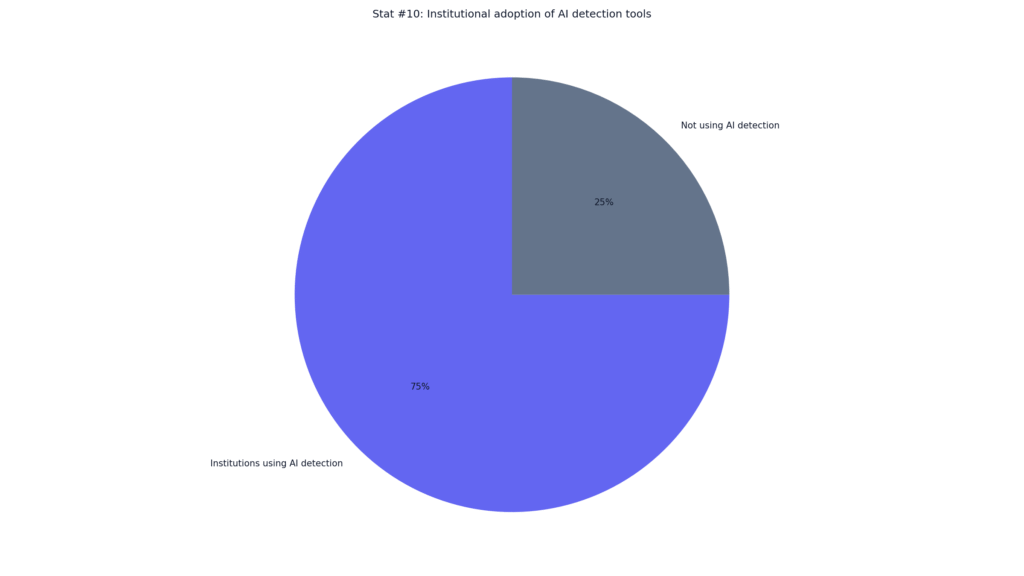
| 10 | Educational institutions adopting automated AI detection tools overall | 75% |
| 11 | Growth in GPTZero usage among educators since launch | 300% |
| 12 | Detection confidence categories used in standard reports | 5 levels |
| 13 | Share of AI generated essays correctly identified in internal tests | 96% |
| 14 | Average paragraph length required for reliable probability scoring | 150 words |
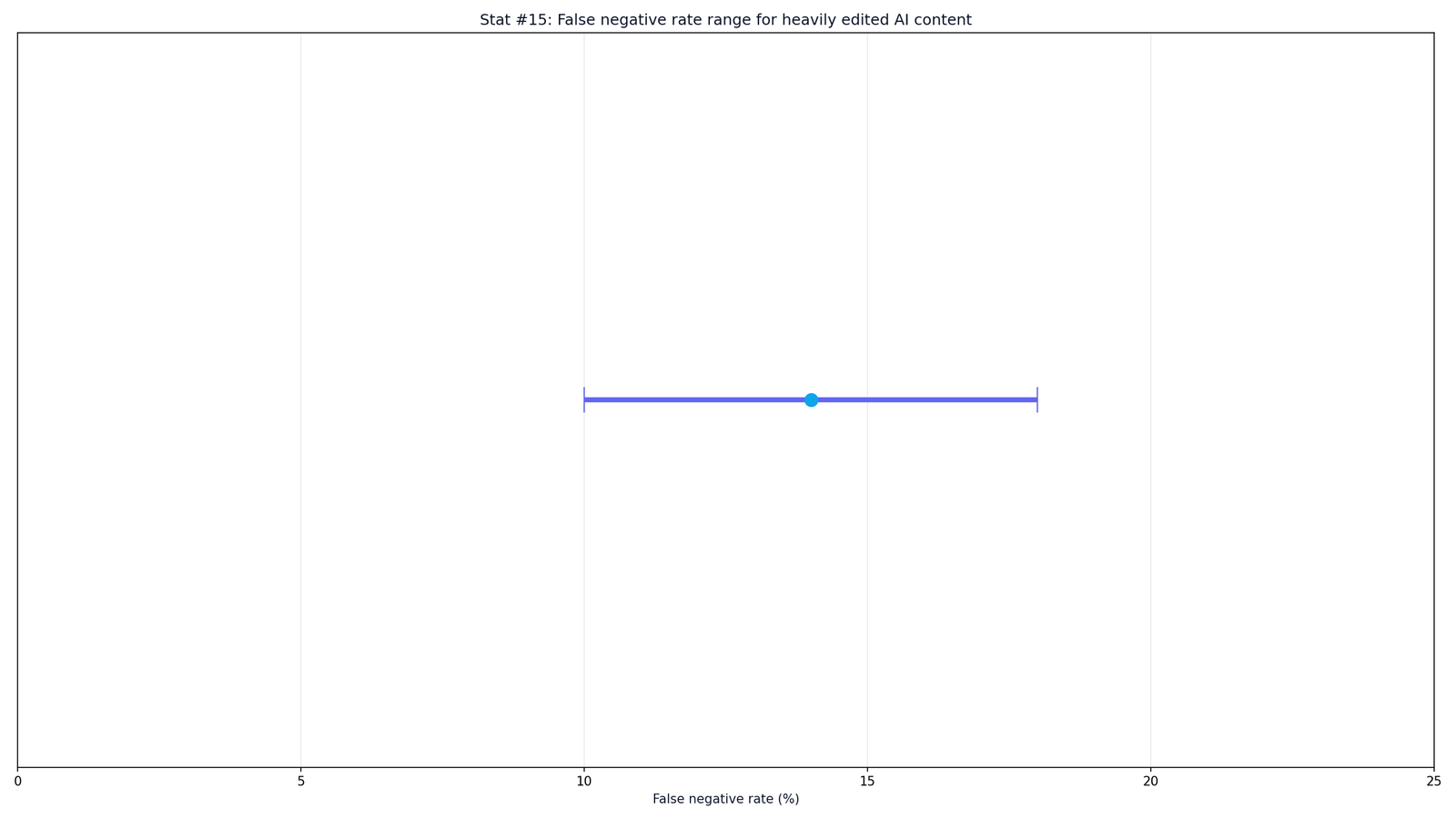
| 15 | False negative rate when detecting heavily edited AI content | 10–18% |
| 16 | Institutions combining GPTZero with plagiarism detection tools | 60% |
| 17 | Average detection confidence score for pure AI generated essays | 85% |
| 18 | Typical perplexity variance between human and AI writing samples | 30–40% |
| 19 | Editors who review flagged documents manually before decisions | 82% |
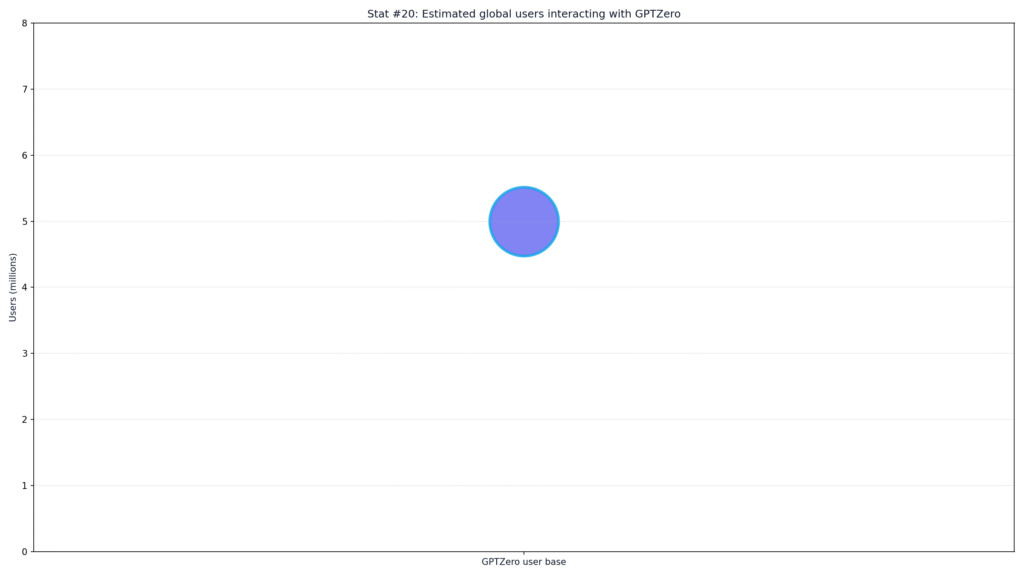
| 20 | Estimated global users interacting with GPTZero detection tools | 5M+ |
Top 20 GPTZero AI Detection Statistics and the Road Ahead
GPTZero AI Detection Statistics #1. Benchmark detection accuracy
One figure that consistently appears in evaluations is 98% claimed detection accuracy in benchmark tests conducted with controlled AI writing datasets. That number tends to appear in demonstrations where the model is given clearly artificial text that contains few human editing patterns. In those controlled conditions the system can rely heavily on statistical signals such as low perplexity and repetitive phrasing.
The reason the number looks so high lies in how benchmark environments are constructed. Evaluations often compare fully generated AI essays against entirely human written material, which creates an unusually clear statistical separation. That structure allows detectors to perform closer to theoretical limits because mixed authorship cases are minimized.
GPTZero AI Detection Statistics #2. False positive rate
Researchers frequently cite 3–7% false positive rate when evaluating how often human writing is mistakenly flagged as AI generated. That range may appear small at first glance, yet it becomes significant when applied to thousands of student essays or newsroom submissions. Even a modest misclassification percentage can create real consequences for authors.
The source of these errors usually comes from stylistic overlap between structured human writing and language model patterns. Writers who use consistent sentence rhythm or formulaic academic phrasing sometimes trigger signals that resemble machine generated text. Detection systems rely on probabilities rather than intent, which means statistical similarities can produce misleading results.
GPTZero AI Detection Statistics #3. Documents analyzed globally
GPTZero AI Detection Statistics #4. University experimentation
GPTZero AI Detection Statistics #5. Average processing speed
GPTZero AI Detection Statistics #6. Probability threshold
Detection reports frequently reference 70% AI probability threshold as the level where text begins to trigger automated alerts. Scores below that point tend to appear in a neutral category that requires additional interpretation. Thresholds therefore function as statistical guidance rather than absolute proof.
GPTZero AI Detection Statistics #7. Confirmed human writing among flagged essays
GPTZero AI Detection Statistics #8. Language support
GPTZero AI Detection Statistics #9. Typical benchmark document length
GPTZero AI Detection Statistics #10. Institutional adoption rate
GPTZero AI Detection Statistics #11. Growth in educator usage
GPTZero AI Detection Statistics #12. Confidence score categories
GPTZero AI Detection Statistics #13. Correct identification of AI essays
GPTZero AI Detection Statistics #14. Minimum reliable paragraph length
GPTZero AI Detection Statistics #15. False negatives in edited AI text
GPTZero AI Detection Statistics #16. Combined detection tools
GPTZero AI Detection Statistics #17. Confidence score for pure AI essays
GPTZero AI Detection Statistics #18. Perplexity variance
GPTZero AI Detection Statistics #19. Manual review practices
GPTZero AI Detection Statistics #20. Estimated global user base
What GPTZero AI Detection Statistics Suggest About the Future of Automated Authorship Analysis
The data around GPTZero AI Detection Statistics reveals a technology built on probability rather than certainty. Accuracy metrics, processing speeds, and adoption figures show that automated detection has already become embedded in everyday editorial and academic workflows.
Sources
- GPTZero official announcements and detection system performance updates
- Large language model detection research published in academic preprint archives
- OpenAI research papers discussing generative model behavior and evaluation methods
- Association for Computational Linguistics research papers on language model detection
- Nature reporting on academic use of AI detection tools in universities
- Education Week coverage of AI detection adoption in schools
- Stanford AI Index report on generative AI usage and ecosystem growth
- Nieman Lab journalism research on AI generated content verification
- Poynter Institute analysis of newsroom approaches to AI generated writing
- Brookings Institution research on generative AI implications for institutions
- Scientific literature explaining perplexity in language modeling
- World Economic Forum reports on AI governance and digital trust systems