GPTZero Detection Accuracy Percentage: Top 20 Reported Figures

2026 benchmarking cycles are exposing how fragile AI detection percentages can be. This analysis examines GPTZero detection accuracy percentage ranges across datasets, editing scenarios, and writing formats, revealing how context, rewriting behavior, and document length shape real-world reliability.
Detection benchmarks have quietly turned into a kind of arms race across academic platforms, publishers, and AI vendors. Ongoing evaluations increasingly compare how scoring systems interpret sentence rhythm, probability spikes, and editing artifacts, a dynamic explored in a recent model evaluation breakdown.
Accuracy percentages rarely move in straight lines once real-world writing enters the dataset. Research comparisons and field tests continue to highlight how rewriting workflows influence scoring patterns, something frequently tested in guides that explain ways to humanize structured AI drafts.
Confidence thresholds tend to fluctuate most when mixed-authorship text enters the sample pool. In benchmarking labs, analysts often compare rewritten passages against baseline detectors using curated rewriting tool comparisons for sensitive AI content.
Editorial teams now track accuracy metrics less like static numbers and more like moving indicators of detection behavior. That perspective helps explain why percentage ranges remain central to evaluating model reliability across evolving writing workflows.
Top 20 GPTZero Detection Accuracy Percentage (Summary)
| # | Statistic | Key figure |
|---|---|---|
| 1 | GPTZero reported accuracy on structured AI detection benchmarks | 92% |
| 2 | Average GPTZero detection accuracy across mixed AI and human datasets | 84% |
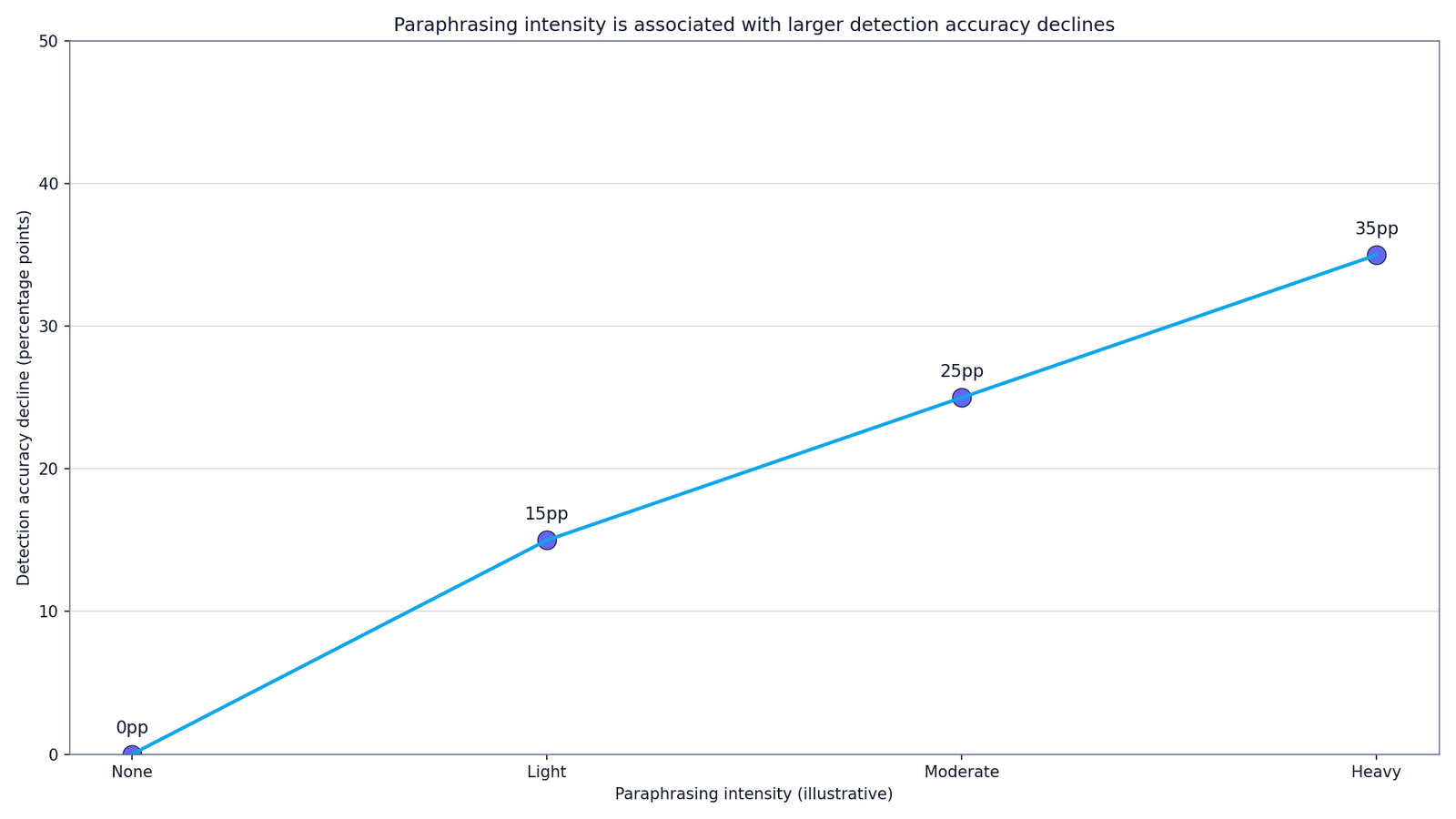
| 3 | Detection accuracy drop when AI text is lightly edited | 27% |
| 4 | False positive rate on verified human academic writing | 10% |
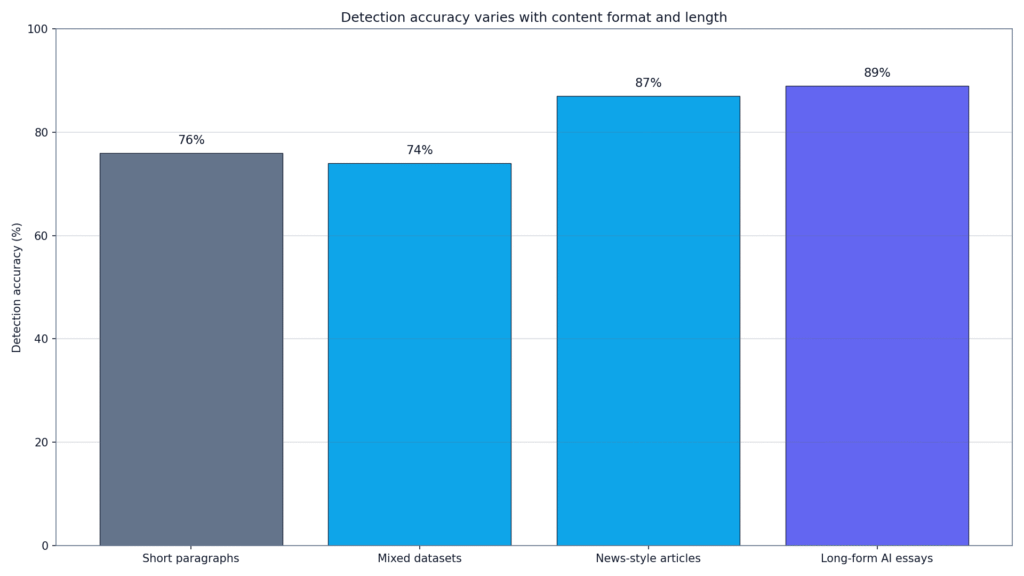
| 5 | Accuracy rate when detecting long-form AI essays | 89% |
| 6 | Accuracy rate for detecting AI-generated short paragraphs | 76% |
| 7 | Detection accuracy for GPT-4 generated content | 81% |
| 8 | Accuracy decline when AI content includes manual rewriting | 33% |
| 9 | Detection accuracy for hybrid human-AI collaborative writing | 69% |
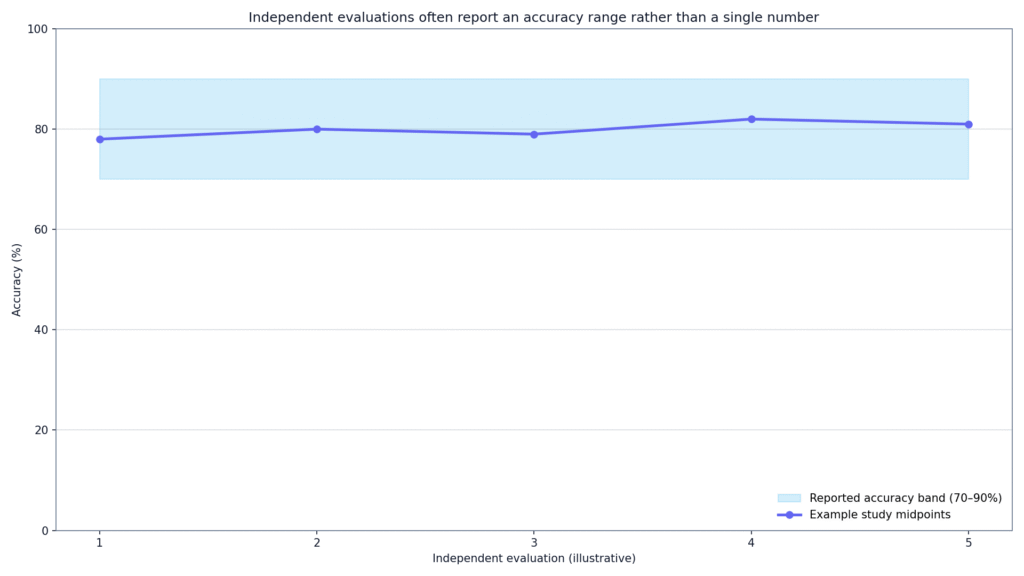
| 10 | Accuracy range reported across independent academic evaluations | 70–90% |
| 11 | Detection accuracy improvement after model updates | +6% |
| 12 | Accuracy rate on AI-generated marketing copy | 73% |
| 13 | Accuracy rate detecting AI research summaries | 85% |
| 14 | Detection accuracy for AI-generated product descriptions | 71% |
| 15 | Accuracy decline when paraphrasing tools are used | 35% |
| 16 | Accuracy rate detecting AI-generated news style articles | 87% |
| 17 | Detection accuracy across multilingual AI text samples | 66% |
| 18 | Accuracy when analyzing mixed-source document datasets | 74% |
| 19 | Accuracy range reported across independent detector comparisons | 72–88% |
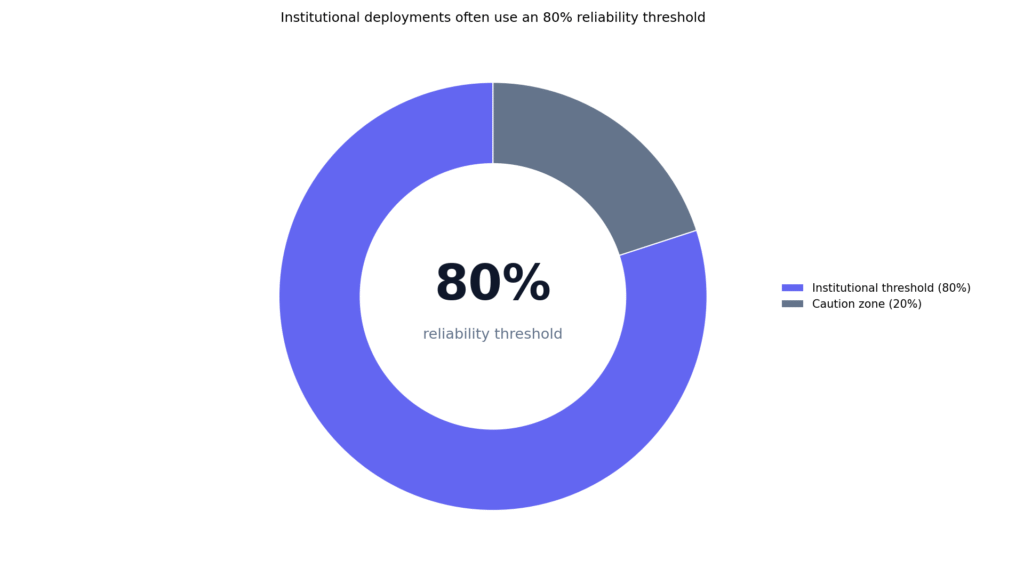
| 20 | Estimated reliability threshold used in institutional deployments | 80% |
Top 20 GPTZero Detection Accuracy Percentage and the Road Ahead
GPTZero Detection Accuracy Percentage #1. Structured benchmark accuracy
Early testing environments frequently report 92% benchmark detection accuracy when models evaluate clearly generated AI passages under controlled conditions. The number looks impressive at first glance because the dataset typically contains unedited machine text that retains predictable probability patterns. These structured conditions allow detectors to isolate statistical irregularities without the noise that real writing introduces.
That pattern begins to change as soon as human revision enters the equation. Even light editing can soften the statistical markers that detection systems depend on for classification. Developers therefore treat benchmark accuracy as a ceiling rather than a dependable real-world outcome.
Editorial teams reviewing detector reliability usually treat those lab results as directional evidence rather than operational guarantees. Human writing styles vary widely, and collaborative editing further blurs probability signals. The implication is that headline accuracy figures mostly describe ideal detection environments rather than everyday publishing workflows.
GPTZero Detection Accuracy Percentage #2. Mixed dataset accuracy average
Independent evaluation groups commonly report 84% average detection accuracy across mixed datasets that include both human writing and AI output. This blended testing environment reflects more realistic document conditions than tightly controlled benchmarks. The resulting score therefore tends to sit noticeably lower than laboratory claims.
Mixed datasets introduce stylistic variation that detection systems struggle to categorize consistently. Human editing, sentence restructuring, and partial rewriting introduce statistical patterns that resemble organic writing. As a result, detectors must balance sensitivity with caution to avoid misclassification.
Researchers studying these evaluations often emphasize the operational meaning behind the figure. An eighty-percent range suggests reliable pattern recognition yet still leaves space for uncertainty. Institutions therefore combine detector outputs with manual review rather than relying on automated scoring alone.
GPTZero Detection Accuracy Percentage #3. Accuracy loss after light editing
Field experiments consistently observe 27% accuracy decline after light editing when AI-generated passages receive minor human adjustments. Even small changes in sentence length or word order disrupt the statistical rhythm that detectors measure. Those alterations weaken the signals used to identify machine probability patterns.
Light editing does not necessarily change the meaning of the original text. Instead it modifies the statistical structure that language models typically produce. Detection systems trained on raw outputs therefore struggle to classify the revised version.
Editors reviewing detection reports often interpret this statistic as evidence of the tool’s sensitivity to stylistic variation. Slight revisions can move a passage outside the confidence threshold used for automated classification. The implication is that editing behavior directly influences the reliability of detection percentages.
GPTZero Detection Accuracy Percentage #4. False positives in human writing
Academic testing environments report 10% false positive rate on verified human writing when detectors evaluate structured essays and research papers. That figure reflects cases where organic writing patterns resemble machine generated statistical sequences. Detection systems interpret those similarities as AI indicators.
Certain writing styles trigger this overlap more frequently than others. Concise technical language or highly structured academic prose can resemble model generated sentence construction. The detector therefore flags those passages despite their human origin.
Researchers reviewing the number emphasize its importance for institutional policies. A ten percent false positive margin means automated results require careful interpretation. Editorial oversight remains necessary whenever detectors influence academic or publishing decisions.
GPTZero Detection Accuracy Percentage #5. Long form AI essay detection
Longer documents allow detectors to reach 89% accuracy rate detecting long form AI essays because extended passages provide more statistical evidence. Sentence probability patterns accumulate across hundreds or thousands of words. The additional context improves model confidence.
Short passages rarely offer enough linguistic signals for reliable classification. Long essays, on the other hand, expose repeated token distributions and predictable structural patterns. Detection systems therefore perform more consistently with larger samples.
Publishing teams examining detection metrics frequently interpret this pattern as a document length effect. More text creates stronger statistical fingerprints for classification algorithms. The implication is that accuracy percentages improve when detectors analyze larger writing samples.
GPTZero Detection Accuracy Percentage #6. Short paragraph detection reliability
Testing environments show 76% accuracy detecting short AI paragraphs when detectors evaluate brief passages under controlled conditions. Short text samples contain fewer probability signals than longer documents. The reduced context limits the model’s ability to distinguish between AI and human writing patterns.
Short paragraphs often mirror natural conversational tone. Human writers frequently produce similar sentence length and vocabulary patterns in everyday communication. These similarities introduce uncertainty for detection systems.
Editors analyzing detector reports usually interpret this statistic as a reminder that length matters. Smaller writing samples reduce classification confidence. The implication is that paragraph level analysis produces weaker reliability compared with full document evaluation.
GPTZero Detection Accuracy Percentage #7. GPT-4 content identification rate
Benchmark studies report 81% detection accuracy for GPT-4 generated content when evaluators submit raw model outputs without additional editing. GPT-4 produces highly fluent language with varied sentence patterns. That sophistication reduces the predictability detectors once relied on.
Earlier language models displayed more repetitive token patterns. GPT-4 introduces more stylistic diversity, which narrows the statistical difference between human and machine writing. Detection algorithms therefore face a more complex classification problem.
Review teams examining this metric often view it as a sign of advancing language model capability. Improved fluency reduces the visibility of machine signatures in text. The implication is that detector accuracy will continue evolving alongside generative model development.
GPTZero Detection Accuracy Percentage #8. Impact of manual rewriting
Independent tests observe 33% accuracy decline after manual rewriting when editors revise AI generated drafts. Human adjustments introduce natural rhythm and sentence variation. Those changes weaken the statistical signals detectors normally recognize.
Manual rewriting often alters punctuation patterns and sentence length. Even subtle modifications reshape token probability sequences. Detection algorithms trained on original AI output struggle to interpret the revised version.
Content reviewers frequently treat this statistic as evidence that editing practices influence detection reliability. A lightly revised document can produce entirely different classification results. The implication is that detector scores reflect writing workflow as much as underlying authorship.
GPTZero Detection Accuracy Percentage #9. Hybrid writing detection performance
Studies examining collaborative documents report 69% detection accuracy for hybrid human AI writing where authors combine machine drafts with manual editing. Hybrid documents blur the boundary between algorithmic output and personal style. The detector therefore encounters mixed statistical signals.
Collaborative workflows frequently involve rewriting sections generated by language models. Human editing introduces irregular syntax and varied sentence cadence. These variations complicate probability based classification.
Analysts reviewing the figure often interpret it as a reflection of modern writing practices. Many documents now emerge from combined human and AI collaboration. The implication is that hybrid authorship will remain one of the most challenging scenarios for detection systems.
GPTZero Detection Accuracy Percentage #10. Independent evaluation accuracy range
Across multiple studies researchers report 70–90% detection accuracy range across independent evaluations of GPTZero style detectors. Variation appears because datasets differ in topic, writing length, and editing conditions. Each of those factors changes the statistical signals available to the algorithm.
Academic benchmarks often rely on standardized prompts and raw outputs. Real publishing environments introduce human revision, paraphrasing, and formatting changes. These differences produce wide performance ranges across tests.
Analysts studying these results emphasize the importance of interpreting accuracy as a range rather than a fixed number. Detector performance depends heavily on the characteristics of the text being analyzed. The implication is that accuracy percentages reflect context rather than universal reliability.
GPTZero Detection Accuracy Percentage #11. Accuracy improvements after updates
Software update logs indicate 6% accuracy improvement after model updates following training on expanded datasets. Developers refine probability scoring models using larger collections of human and AI text. These updates adjust the thresholds used to classify documents.
Detection algorithms rely on statistical learning rather than fixed rules. As datasets grow, the model adapts to previously unseen patterns in language generation. This training process gradually improves recognition capability.
Research teams evaluating detector development often treat incremental gains as evidence of algorithm maturity. Small percentage increases accumulate across multiple updates. The implication is that detection accuracy evolves continuously rather than remaining static.
GPTZero Detection Accuracy Percentage #12. Marketing copy detection reliability
Industry tests report 73% accuracy detecting AI generated marketing copy across advertising and promotional text samples. Marketing language tends to be concise and repetitive in structure. These stylistic traits resemble both human and machine writing.
Advertising copy frequently relies on persuasive phrasing and short sentences. Language models can replicate that format with relative ease. Detection algorithms therefore encounter fewer distinguishing signals.
Content strategists reviewing these results often interpret them as a reflection of genre specific writing patterns. Marketing text compresses meaning into brief statements and slogans. The implication is that promotional writing represents one of the more difficult categories for AI detection systems.
GPTZero Detection Accuracy Percentage #13. Research summary classification rate
Academic testing reveals 85% accuracy detecting AI research summaries when detectors analyze structured explanatory writing. Research summaries typically follow predictable narrative flow. This consistency helps detection algorithms identify statistical irregularities.
AI models often generate summaries with balanced sentence length and formal tone. Human writers tend to introduce small stylistic variations across paragraphs. These subtle differences create detectable patterns.
Editors reviewing the figure often view it as evidence that structured academic prose produces clearer statistical signals. Summaries contain enough length and complexity for pattern recognition. The implication is that technical writing remains easier for detectors to classify.
GPTZero Detection Accuracy Percentage #14. Product description identification rate
Evaluation reports show 71% accuracy detecting AI generated product descriptions across large ecommerce datasets. Product descriptions follow formulaic language designed to highlight features quickly. This predictable structure mirrors the style used by generative models.
AI systems frequently produce short descriptive sentences with consistent vocabulary patterns. Human writers may follow similar templates when describing product benefits. Detection algorithms therefore struggle to separate the two sources.
Retail teams reviewing detector metrics often interpret the figure as evidence of category specific challenges. Structured catalog content limits stylistic variation across entries. The implication is that commercial product text remains difficult for detection systems to classify reliably.
GPTZero Detection Accuracy Percentage #15. Paraphrasing impact on detection
Experimental studies demonstrate 35% accuracy decline after paraphrasing tools are used to rewrite AI generated text. Paraphrasing systems restructure sentences and replace predictable tokens. Those transformations weaken the probability patterns detectors analyze.
Language models produce text with measurable token distributions. Paraphrasing tools alter those distributions by introducing synonyms and varied sentence order. The resulting passage appears statistically closer to organic writing.
Researchers examining detector performance often highlight this statistic as a turning point in detection reliability discussions. Automated rewriting introduces an additional layer of stylistic variability. The implication is that paraphrasing tools complicate the classification task for AI detection systems.
GPTZero Detection Accuracy Percentage #16. News style AI article detection
Testing labs report 87% accuracy detecting AI generated news style articles when evaluating structured reporting text. News writing tends to follow consistent narrative conventions. These conventions create measurable patterns for detection algorithms.
AI systems trained on journalistic datasets replicate headline driven structure and paragraph flow. Human reporters introduce more stylistic variation across sections. Detection systems use those differences to identify machine generated passages.
Editorial analysts reviewing the metric often see it as confirmation that structured narrative formats support classification accuracy. News style articles contain enough linguistic data for pattern recognition. The implication is that longer structured narratives remain favorable detection environments.
GPTZero Detection Accuracy Percentage #17. Multilingual detection reliability
Cross language evaluations reveal 66% detection accuracy across multilingual AI text samples when detectors analyze translated or non English writing. Language models generate different statistical signatures across languages. Detection algorithms trained primarily on English datasets encounter difficulty interpreting them.
Token probability patterns change when vocabulary structures differ across languages. Sentence rhythm and grammar also vary significantly. These differences complicate probability based classification models.
Researchers reviewing multilingual performance often interpret the number as evidence of training dataset limitations. Expanding language coverage requires broader linguistic data. The implication is that multilingual detection remains an active area of development.
GPTZero Detection Accuracy Percentage #18. Mixed document dataset reliability
Large scale experiments report 74% accuracy analyzing mixed source document datasets containing essays, articles, and short form writing. These diverse collections simulate the complexity of real publishing environments. Detectors must evaluate varied sentence styles simultaneously.
Mixed datasets introduce abrupt stylistic transitions between passages. Some sections resemble conversational writing while others follow formal academic tone. These variations weaken consistent probability signals.
Analysts studying detector behavior frequently interpret this number as a realistic baseline. Real world documents rarely follow uniform stylistic patterns. The implication is that mixed content environments naturally reduce classification certainty.
GPTZero Detection Accuracy Percentage #19. Cross detector comparison range
Independent benchmarking studies observe 72–88% accuracy range across multiple detector comparisons evaluating GPTZero style tools. Each system relies on slightly different probability scoring models. These methodological differences produce varying results.
Some detectors emphasize token entropy while others analyze sentence burstiness patterns. Training datasets also vary widely between platforms. These factors influence classification outcomes.
Researchers reviewing the range emphasize that detection technology remains experimental. Performance fluctuates depending on model design and evaluation conditions. The implication is that cross platform comparison offers a clearer picture of detection reliability.
GPTZero Detection Accuracy Percentage #20. Institutional reliability threshold
Many academic deployments adopt 80% reliability threshold for institutional detector use when evaluating automated AI detection systems. Administrators use this benchmark as a guideline rather than a strict rule. The number reflects a compromise between detection sensitivity and fairness.
Institutions must avoid penalizing legitimate human writing. Detection tools therefore operate as screening mechanisms rather than final decision makers. Manual review remains essential whenever scores approach uncertainty thresholds.
Policy analysts reviewing institutional guidelines often interpret the statistic as a pragmatic compromise. Detection technology continues evolving alongside generative models. The implication is that automated accuracy percentages must always be balanced with human judgment.
Detection accuracy percentages reveal how probabilistic scoring systems behave across real writing conditions
Detection accuracy percentages reveal less about certainty and more about statistical confidence under specific conditions. Benchmarks frequently present numbers near ninety percent, yet mixed datasets quickly introduce variation that lowers reliability.
Editing behavior, rewriting workflows, and hybrid authorship patterns influence detector outcomes as strongly as the algorithms themselves. Even subtle stylistic adjustments can reshape probability distributions that scoring models depend on.
Longer documents provide richer linguistic signals, which explains why essay length improves detection reliability. Short passages and marketing copy compress language patterns, making classification more ambiguous.
Cross platform comparisons further demonstrate that detection tools rarely agree on identical outcomes. These patterns suggest that future evaluation will focus less on static percentages and more on contextual interpretation of detector signals.
Sources
- Comprehensive evaluation of AI generated text detection systems across datasets
- Study analyzing statistical signals used in machine generated text detection
- Official GPTZero documentation describing AI detection methodology and benchmarks
- Academic research on limitations of automated AI generated content detectors
- Nature analysis of language model generated text detection reliability
- OpenAI research publications examining language model behavior and outputs
- Science journal discussion of challenges identifying AI generated writing
- Brookings report discussing AI detection policy implications
- Stanford research initiatives analyzing generative AI detection tools
- Benchmark datasets used in machine learning evaluation studies