How to Avoid Copyleaks AI Detection: 15 Practical Strategies
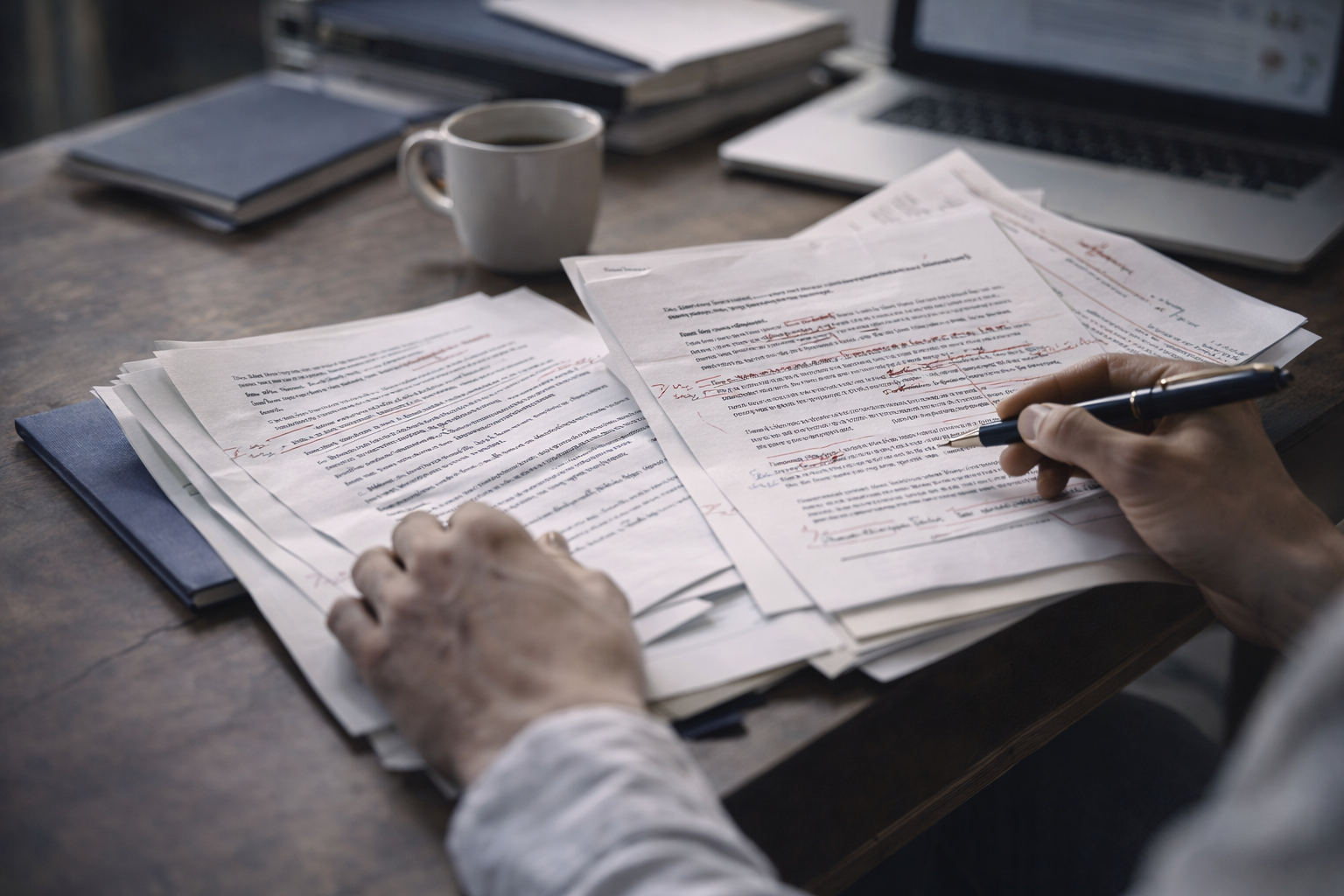
In 2026, avoiding AI flags means understanding statistical writing patterns, not just editing words. Research published in the Science Advances study on detecting AI-generated text shows classifiers rely on probabilistic signals, reinforcing why structural revision matters.
How to Avoid Copyleaks AI Detection: 15 Practical Strategies
If you’ve been flagged and you’re not sure why, figuring out how to avoid Copyleaks AI detection can feel frustrating and unpredictable. You might revise your draft several times, only to realize certain AI writing patterns that trigger detection are still quietly influencing the structure.
A big reason this keeps happening is that detection systems don’t just scan for keywords, they evaluate rhythm, predictability, and phrasing patterns that repeat across AI outputs. Even if you rely on the best AI text rewriting tools for long-form content, surface edits alone rarely solve deeper statistical signals.
| # | Strategy focus | Practical takeaway |
|---|---|---|
| 1 | Sentence unpredictability | Vary structure and cadence so your writing feels human and less statistically uniform. |
| 2 | Paragraph flow control | Break rigid formatting patterns to avoid machine-like rhythm across sections. |
| 3 | Concrete specificity | Add grounded examples and context that reduce abstract, generalized phrasing. |
| 4 | Lexical diversity | Expand vocabulary naturally instead of repeating predictable word clusters. |
| 5 | Structural asymmetry | Mix short and long sentences to disrupt consistent AI-style patterns. |
| 6 | Intent-driven edits | Revise with purpose, focusing on clarity and nuance rather than cosmetic tweaks. |
| 7 | Human perspective layering | Integrate personal judgment and reasoning that automated outputs rarely express. |
| 8 | Context anchoring | Reference realistic scenarios to ground your claims in lived or observable situations. |
| 9 | Reduced formulaic phrasing | Identify and remove overused transitional templates common in AI drafts. |
| 10 | Data naturalization | Present facts in a conversational tone instead of listing statistics mechanically. |
| 11 | Semantic depth | Explain reasoning behind points so arguments feel layered rather than surface-level. |
| 12 | Voice refinement | Adjust tone to sound intentional and consistent instead of generically neutral. |
| 13 | Transition realism | Use natural connective language instead of predictable sequencing cues. |
| 14 | Revision layering | Edit in multiple passes to address structure, clarity, and nuance separately. |
| 15 | Detection simulation | Test drafts strategically and refine weak sections before final submission. |
15 Practical Strategies to Avoid Copyleaks AI Detection
How to Avoid Copyleaks AI Detection – Strategy #1: Sentence unpredictability
To understand how to avoid Copyleaks AI detection, you need to look closely at sentence construction and remove patterns that feel statistically uniform or mechanically balanced across an entire draft. AI-generated writing often relies on predictable sentence lengths, symmetrical phrasing, and evenly distributed clauses, which can quietly increase detection signals even when the wording itself seems natural at first glance. Introducing variation through shifting sentence openings, reordering clauses, and blending narrative with explanation helps create organic unpredictability that aligns more closely with human drafting behavior.
This works because detection models evaluate probability patterns, and predictable rhythm creates a mathematical consistency that stands out under analysis. When you deliberately mix reflective phrasing with analytical explanation and occasionally embed clarifications within longer sentences, you interrupt that pattern in a way that feels authentic rather than forced. The goal is not to make sentences messy, but to allow natural asymmetry so the flow reflects human cognition rather than algorithmic assembly.
How to Avoid Copyleaks AI Detection – Strategy #2: Paragraph flow control
Another essential component of how to avoid Copyleaks AI detection involves reshaping paragraph flow so the structure does not mirror common AI formatting tendencies. Many AI drafts present ideas in evenly spaced blocks that follow a repetitive pattern of explanation, example, and summary, which may read clearly but can signal formulaic construction under closer inspection. Adjusting paragraph density, allowing certain sections to expand while others remain concise, and weaving ideas together across transitions introduces a more realistic human drafting rhythm.
This matters because real writers rarely maintain identical paragraph pacing throughout a document, especially when explaining complex topics that require layered clarification. When one section stretches to explore nuance and another tightens to reinforce a point, the variability mimics natural thought progression instead of template-based generation. Over time, this controlled imbalance reduces the statistical regularity that detection systems often rely on.
How to Avoid Copyleaks AI Detection – Strategy #3: Concrete specificity
If you want to learn how to avoid Copyleaks AI detection effectively, you must replace abstract generalities with grounded, situation-based specificity that reflects lived or observed scenarios. AI writing frequently defaults to broad statements that sound reasonable but lack textured context, which can produce uniform semantic patterns across different pieces of content. Adding detailed examples, realistic constraints, and clarifying commentary gives your writing dimensional depth that reduces surface-level predictability.
Specificity works because it introduces unique combinations of ideas and language that are less likely to mirror statistical averages embedded in AI outputs. When you describe how a draft evolved during revision or clarify why a particular structural decision improved clarity, the nuance naturally differentiates the text. Over time, this layered realism shifts the probability profile of your writing toward human variability rather than generalized synthesis.
How to Avoid Copyleaks AI Detection – Strategy #4: Lexical diversity
A practical way to approach how to avoid Copyleaks AI detection is to expand vocabulary thoughtfully without resorting to forced synonym swaps that feel artificial. AI-generated drafts often repeat high-frequency terms within close proximity because probability models favor common phrasing that fits statistically with surrounding text. Introducing varied but contextually appropriate language, along with subtle shifts in tone, can soften these repetition clusters and create more authentic expression.
However, lexical diversity must feel intentional rather than ornamental, since random substitutions can disrupt clarity and create awkward phrasing. When vocabulary changes arise naturally from clarifying a point or reframing an idea from a slightly different angle, they enhance depth instead of drawing attention to revision. Over time, this balanced variation reduces detectable repetition while maintaining coherence and credibility.
How to Avoid Copyleaks AI Detection – Strategy #5: Structural asymmetry
Understanding how to avoid Copyleaks AI detection also means breaking structural symmetry that often appears in AI-produced lists or explanations. Algorithms tend to generate evenly weighted sentences and parallel phrasing structures that align neatly across sections, which can make the content feel orderly but statistically uniform. Introducing subtle asymmetry by varying clause order, embedding clarifications mid-sentence, or shifting emphasis between ideas creates a more lifelike narrative contour.
This approach works because human thought does not unfold in perfectly parallel lines, especially when unpacking layered topics that require reflection and refinement. When certain sentences lean more heavily on context and others prioritize forward momentum, the text begins to resemble authentic drafting behavior. The resulting imbalance, though controlled, disrupts predictable templates that detection systems are trained to recognize.
How to Avoid Copyleaks AI Detection – Strategy #6: Intent-driven edits
To refine how to avoid Copyleaks AI detection, you need to move beyond cosmetic changes and edit with clear intent tied to meaning and structure. Surface-level tweaks such as shortening sentences or replacing isolated words rarely alter the deeper statistical framework that detection systems analyze across an entire document. Instead, revising with the goal of clarifying arguments, strengthening transitions, and deepening nuance reshapes the underlying composition in a more substantial way.
Intent-driven editing mirrors how experienced writers revise drafts, focusing first on clarity of thought and logical progression rather than mechanical adjustments. When you reorganize sections to improve reasoning or expand a point that feels underdeveloped, you introduce authentic cognitive fingerprints into the text. Those layered revisions gradually transform the draft into something less aligned with predictive generation patterns.
How to Avoid Copyleaks AI Detection – Strategy #7: Human perspective layering
A meaningful strategy for how to avoid Copyleaks AI detection is layering personal reasoning, interpretation, and judgment into the narrative. AI content often presents information in a neutral, balanced tone that lacks subtle opinion or reflective commentary, which can create a flat semantic profile across multiple paragraphs. Adding perspective, even in measured and analytical ways, introduces distinctive phrasing and cognitive variation.
This works because perspective changes sentence structure, word choice, and emphasis in ways that are difficult to replicate uniformly across datasets. When you explain why a revision choice felt stronger or describe uncertainty before reaching a conclusion, the writing gains depth and individuality. That additional dimensionality helps disrupt the smooth probability curves that detection tools evaluate.
How to Avoid Copyleaks AI Detection – Strategy #8: Context anchoring
Another practical element of how to avoid Copyleaks AI detection involves anchoring ideas in realistic scenarios rather than abstract instruction alone. AI writing frequently remains detached from tangible context, offering guidance that is technically correct but lacking situational grounding. Embedding explanations within relatable circumstances adds specificity and shifts linguistic patterns in subtle but measurable ways.
Context anchoring works because it combines descriptive language with analytical reasoning, creating richer semantic layering. When a strategy is illustrated through a plausible editing situation, the phrasing becomes less formulaic and more adaptive to narrative flow. Over time, this blend of explanation and situational detail reduces uniformity across the text.
How to Avoid Copyleaks AI Detection – Strategy #9: Reduced formulaic phrasing
Learning how to avoid Copyleaks AI detection also requires identifying formulaic transitions that appear repeatedly in AI-generated drafts. Phrases that signal predictable sequencing or overly polished connectors can accumulate and create a recognizable stylistic footprint. Rewriting transitions so they feel organic and context-dependent introduces more natural movement between ideas.
This matters because detection systems may identify recurring connective patterns that align with common AI outputs. When transitions evolve directly from the logic of the preceding sentence rather than relying on stock phrasing, the flow becomes less templated. That reduction in formulaic consistency contributes to a more human-like textual signature.
How to Avoid Copyleaks AI Detection – Strategy #10: Data naturalization
An overlooked aspect of how to avoid Copyleaks AI detection is presenting information and data in a way that feels conversational rather than mechanically inserted. AI-generated drafts sometimes integrate statistics in a uniform structure that mirrors training examples, which can create patterned phrasing around quantitative references. Weaving data into explanatory commentary softens that structure and enhances authenticity.
When statistics are framed within reasoning, clarification, or contextual interpretation, the surrounding language naturally diversifies. Instead of listing numbers in predictable formats, you explain why they matter and how they influence your argument. This layered integration reduces repetitive statistical framing that detection systems might flag.
How to Avoid Copyleaks AI Detection – Strategy #11: Semantic depth
To strengthen how to avoid Copyleaks AI detection, expand on ideas so they carry layered meaning rather than surface-level explanation. AI drafts often summarize efficiently, but that efficiency can compress reasoning into predictable sentence structures. Elaborating on implications, trade-offs, and alternative interpretations increases semantic complexity.
Semantic depth works because it introduces varied clause patterns and conceptual nuance that extend beyond straightforward definition. When you explore consequences or clarify subtle distinctions within a concept, the phrasing evolves in less predictable ways. This complexity helps differentiate the text from streamlined AI-generated summaries.
How to Avoid Copyleaks AI Detection – Strategy #12: Voice refinement
A refined voice plays an important role in how to avoid Copyleaks AI detection because tonal consistency and personality reduce generic neutrality. AI outputs frequently maintain a steady, impersonal tone that avoids distinctive cadence or expressive nuance. Adjusting voice through deliberate phrasing choices can reshape the statistical feel of the writing.
Voice refinement involves subtle adjustments in rhythm, emphasis, and descriptive framing rather than exaggerated stylistic changes. When tone aligns with a clear perspective, the text feels authored rather than assembled. This intentional shaping contributes to a more individualized linguistic profile.
How to Avoid Copyleaks AI Detection – Strategy #13: Transition realism
Transition realism is central to how to avoid Copyleaks AI detection because mechanical connectors often reveal templated construction. AI systems frequently rely on predictable transition structures that maintain logical flow but lack adaptive variation. Crafting transitions that grow organically from the prior sentence introduces narrative authenticity.
When transitions respond directly to the argument’s progression, they naturally vary in length and structure. This variability disrupts repetitive connective phrasing that might otherwise accumulate across paragraphs. The resulting flow feels more reflective of human reasoning patterns.
How to Avoid Copyleaks AI Detection – Strategy #14: Revision layering
Revision layering strengthens how to avoid Copyleaks AI detection by separating edits into focused passes that address structure, clarity, and nuance independently. AI drafts often appear polished on the surface, yet deeper structural uniformity remains intact. Multiple revision rounds allow you to reshape the draft beyond surface adjustments.
Layered editing mirrors professional writing workflows, where each pass refines a different dimension of the text. As structure evolves and arguments deepen, linguistic variability increases naturally. This cumulative refinement gradually reduces statistical regularity.
How to Avoid Copyleaks AI Detection – Strategy #15: Detection simulation
The final piece of how to avoid Copyleaks AI detection involves strategically testing drafts and analyzing weak areas before final submission. Running content through detection tools can reveal patterns that remain invisible during manual review. Identifying sections with elevated scores allows targeted revision rather than random editing.
Detection simulation works best when feedback informs structural adjustments instead of superficial rewrites. When you revise flagged passages with deeper contextual changes, you alter the probability framework of the draft. This iterative refinement process strengthens the authenticity of the final version.
Common mistakes
- Relying solely on synonym replacement without addressing deeper structural uniformity often leaves the statistical framework untouched, which means the content may still align closely with predictable AI-generated probability patterns.
- Over-shortening sentences in an attempt to reduce detection risk can create unnatural rhythm, since abrupt and overly simplified phrasing does not reflect realistic human drafting behavior.
- Ignoring paragraph-level repetition leads to cumulative predictability, even when individual sentences appear varied on the surface.
- Maintaining a neutral, overly balanced tone throughout the document can flatten semantic variation and increase uniformity signals.
- Skipping multiple revision passes prevents deeper restructuring, leaving subtle patterns intact beneath surface edits.
- Failing to test drafts strategically may result in overlooked high-probability sections that could have been refined with targeted revision.
Edge cases
Some highly technical or research-heavy documents naturally contain structured phrasing that resembles AI outputs, even when written entirely by humans. In these cases, reducing detection scores may require introducing contextual framing or clarifying commentary that softens rigid analytical patterns without compromising accuracy.
Similarly, collaborative documents with multiple contributors can accumulate stylistic inconsistencies that complicate revision. Aligning tone and restructuring sections carefully ensures coherence while preserving authentic variability across the draft.
Supporting tools
- Structured outlining software that helps reorganize arguments can support deeper revisions instead of surface edits.
- Readability analyzers that highlight repetition patterns allow targeted structural adjustments.
- Version comparison tools make it easier to identify unchanged statistical clusters across revisions.
- Grammar and style platforms can flag repetitive phrasing that contributes to uniformity.
- Manual peer review introduces interpretive feedback that automated tools may overlook.
- WriteBros.ai supports layered rewriting that focuses on structural refinement and authentic voice development.
Ready to Transform Your AI Content?
Try WriteBros.ai and make your AI-generated content truly human.
Conclusion
Learning how to avoid Copyleaks AI detection ultimately centers on structural awareness rather than superficial editing. When you understand how probability patterns form across sentences and paragraphs, you can revise intentionally and reshape the draft at a foundational level.
Perfection is not the objective, and chasing a zero score can lead to unnatural writing choices that undermine clarity. Instead, focus on thoughtful revision, contextual depth, and authentic voice so your content reflects genuine authorship.
Did You Know?
If you are trying to avoid Copyleaks flags, start with cadence and structure before you touch vocabulary, because uniform paragraph pacing and repeated sentence shapes can keep the draft statistically predictable even after it “sounds” rewritten.
Let one paragraph expand to add reasoning, allow the next to tighten to emphasize a takeaway, and drop in small clarifications only when they genuinely add meaning, since that uneven progression mirrors how people draft and revise in real life.
Ready to Transform Your AI Content?