How to Make Text Pass Sapling AI Detector: 15 Content Adjustments

Sapling AI flags writing based on predictable linguistic patterns, not intent, which means structural edits can change outcomes. Research like the Stanford analysis of language model detectability published in Nature Machine Intelligence .
How to Make Text Pass Sapling AI Detector: 15 Content Adjustments
Writers frequently run into frustration when a perfectly normal draft still gets flagged by automated tools. Understanding why AI detectors disagree can explain why the same paragraph may pass one system but fail Sapling.
Most detection systems rely on statistical language patterns rather than intent or accuracy. That is why many editors experiment with best AI humanizer tools when preparing drafts that must remain detection-safe.
False positives also appear because detection models evaluate predictability, rhythm, and sentence uniformity rather than meaning. Research on GPTZero reliability shows that small structural edits can dramatically change how detectors interpret the same content.
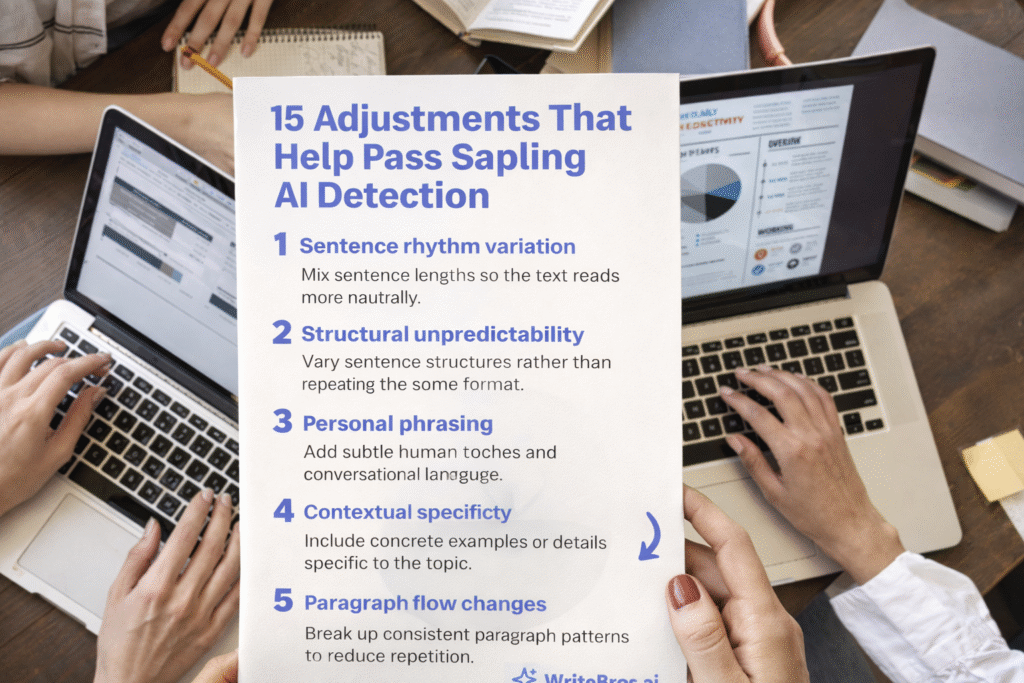
| # | Strategy focus | Practical takeaway |
|---|---|---|
| 1 | Sentence rhythm variation | Mix short and long sentences so the writing reads with a more natural cadence. |
| 2 | Structural unpredictability | Break repetitive sentence patterns that detection systems tend to classify as machine generated. |
| 3 | Personal phrasing | Add small stylistic quirks or conversational wording that reflects human tone. |
| 4 | Contextual specificity | Insert concrete details or examples that make the content feel situational rather than generic. |
| 5 | Paragraph flow changes | Adjust paragraph structure so sections do not follow identical formatting. |
| 6 | Vocabulary diversity | Replace repeated words with natural alternatives to reduce statistical repetition. |
| 7 | Natural transitions | Use subtle connectors between ideas so the text moves more organically. |
| 8 | Opinion and nuance | Introduce mild judgment or interpretation instead of purely neutral phrasing. |
| 9 | Sentence fragmentation | Occasionally allow incomplete or punchy sentences that reflect real human writing habits. |
| 10 | Editing rather than rewriting | Focus on targeted adjustments instead of regenerating entire sections. |
| 11 | Paragraph length variation | Mix compact paragraphs with longer explanations to avoid uniform blocks. |
| 12 | Subtle redundancy removal | Trim repeated phrasing that algorithms often identify as pattern output. |
| 13 | Idea ordering changes | Rearrange supporting points so the progression feels less formulaic. |
| 14 | Realistic imperfection | Allow minor stylistic inconsistency that reflects authentic writing behavior. |
| 15 | Human review pass | Run a final manual edit focused on flow, clarity, and natural voice. |
15 Content Adjustments to Make Text Pass Sapling AI Detector
How to Make Text Pass Sapling AI Detector – Strategy #1: Sentence rhythm variation
Writers attempting to make text pass Sapling AI Detector often discover that detection models react strongly to uniform sentence rhythms, which means paragraphs that maintain the same length and pacing repeatedly begin to resemble statistically generated writing. Introducing varied sentence structures changes how the content flows and interrupts the predictable cadence that detection systems often associate with algorithmic text generation. Thoughtful rhythm adjustments encourage a more natural reading experience because real writing rarely maintains a perfectly balanced pattern across an entire section.
Editors frequently revise drafts by alternating extended explanations with shorter reflective sentences that redirect the reader’s attention and subtly shift pacing throughout the paragraph. This technique works because detection systems analyze sentence uniformity and linguistic predictability, which means varied rhythms weaken the statistical signals used to classify content as machine generated. Writers who deliberately reshape pacing throughout their paragraphs typically see detection scores drop because the language begins to resemble genuine human composition patterns.
How to Make Text Pass Sapling AI Detector – Strategy #2: Structural unpredictability
Anyone attempting to make text pass Sapling AI Detector should examine whether each sentence begins with the same grammatical structure, because repeated constructions signal predictable patterns that detection models easily recognize. Rearranging clauses, shifting subject placement, and varying introductory phrasing introduces structural unpredictability that breaks those recognizable signals. These adjustments transform the way the paragraph unfolds, which allows the content to appear less algorithmic and more aligned with the irregular patterns typical of human writing.
Writers often review drafts specifically searching for repeated openings, such as sentences that repeatedly begin with the same word or phrasing pattern. Rearranging these sentences changes the linguistic fingerprint of the paragraph, which weakens the signals detection models rely upon during evaluation. Once the structure becomes less formulaic, Sapling and similar detectors tend to interpret the text as more natural because the progression of ideas resembles the unpredictable rhythm found in authentic writing.
How to Make Text Pass Sapling AI Detector – Strategy #3: Personal phrasing
Content creators who want to make text pass Sapling AI Detector often add subtle personal phrasing to shift the tone away from neutral algorithmic language and toward something that feels conversational. Human writers naturally insert small observations, clarifications, and conversational transitions that rarely appear in perfectly optimized machine outputs. These subtle linguistic fingerprints reshape how the paragraph reads and introduce the stylistic irregularities that detection systems struggle to classify.
Editors frequently integrate small commentary phrases or reflective wording that expands on an idea rather than presenting it in a purely factual structure. Detection systems analyze statistical predictability in sentence phrasing, which means introducing individualized language disrupts those predictable patterns. Once a paragraph carries traces of personality, interpretation, and nuance, the structure begins to resemble authentic writing rather than standardized generated text.
How to Make Text Pass Sapling AI Detector – Strategy #4: Contextual specificity
One reliable method to make text pass Sapling AI Detector involves expanding vague statements into specific contextual explanations that anchor the idea within a realistic situation. Machine generated text frequently relies on generalized language that can apply almost anywhere, which is exactly the pattern detection tools are trained to identify. Introducing concrete context transforms the sentence structure because the explanation now reflects a particular scenario rather than a generic statement.
Writers frequently revise broad claims by adding clarifying details that demonstrate how an idea unfolds in practice rather than leaving it as an abstract observation. Detection systems analyze how frequently generalized phrasing appears in a paragraph, which means contextual detail reduces the statistical probability that the text resembles machine generated language. When the writing begins referencing concrete situations or realistic editing decisions, the linguistic signature shifts toward authentic authorship.
How to Make Text Pass Sapling AI Detector – Strategy #5: Paragraph flow changes
Anyone attempting to make text pass Sapling AI Detector should also evaluate whether every paragraph follows the same structural pattern, since uniform formatting often signals algorithmic generation. Many AI drafts present ideas in nearly identical paragraph lengths and structures, which makes the content statistically predictable. Adjusting the flow by expanding some sections while condensing others introduces variation that better reflects human editing habits.
Editors frequently restructure paragraphs so that ideas unfold differently across sections, sometimes opening with context before presenting the claim or reversing that order entirely. Detection systems analyze paragraph uniformity across entire documents, which means consistent structures can increase the probability of an AI classification. Once the document contains varied paragraph progressions and shifting emphasis points, the structure appears less mechanical and more representative of natural writing.
How to Make Text Pass Sapling AI Detector – Strategy #6: Vocabulary diversity
Writers who attempt to make text pass Sapling AI Detector often discover that repetitive vocabulary creates a statistical pattern that detection tools quickly recognize. AI systems frequently repeat certain phrases because they optimize for clarity and probability rather than stylistic diversity. Expanding the vocabulary across a paragraph weakens that repetition and introduces the subtle variation that typically appears in natural writing.
Editors commonly review drafts with the specific goal of replacing duplicated terms with contextually appropriate alternatives that maintain meaning while altering the linguistic profile. Detection systems measure how frequently certain terms repeat across sentences, which means varied word choices reduce the probability that the writing matches known AI patterns. Over time these changes create a more dynamic paragraph structure that reflects authentic human language habits.
How to Make Text Pass Sapling AI Detector – Strategy #7: Natural transitions
One method to make text pass Sapling AI Detector involves weaving more natural transitions between ideas so the paragraph unfolds gradually rather than presenting abrupt informational statements. AI generated drafts frequently move directly from point to point without the connective language humans often include while explaining an idea. Adding these transitions introduces subtle complexity that changes the rhythm and logic of the writing.
Writers often revise sections by inserting phrases that guide the reader through the reasoning process and explain how one observation connects to the next. Detection systems examine logical flow and sentence predictability, which means these connective phrases alter how the algorithm interprets the structure. The result is writing that feels more reflective and analytical rather than purely informational.
How to Make Text Pass Sapling AI Detector – Strategy #8: Opinion and nuance
Another strategy to make text pass Sapling AI Detector involves adding mild opinion or interpretive nuance to sections that otherwise read as neutral summaries. AI generated text tends to remain balanced and informational because its goal is to present clear explanations rather than subjective interpretation. Introducing small judgments or reflections changes the tone of the paragraph and reduces the statistical similarity to automated writing.
Editors frequently add commentary that clarifies why an observation matters or how it relates to broader writing practices. Detection systems analyze whether sentences follow predictable explanatory structures, which means interpretive language interrupts those patterns. As the paragraph becomes more reflective and nuanced, the writing begins to resemble genuine editorial thinking rather than algorithmic summarization.
How to Make Text Pass Sapling AI Detector – Strategy #9: Sentence fragmentation
Writers trying to make text pass Sapling AI Detector sometimes incorporate occasional sentence fragments that mirror the irregular style common in real writing. Human authors often use fragments for emphasis or pacing, especially when clarifying an idea or adding a reflective pause. These irregular structures disrupt the balanced grammar patterns typical of machine generated text.
Editors carefully introduce fragments within otherwise structured paragraphs so the overall explanation remains clear while the stylistic pattern becomes less predictable. Detection systems often expect well balanced sentence structures from algorithmic text, which means fragments break those expectations. When used sparingly and naturally, they help the paragraph resemble authentic editorial writing.
How to Make Text Pass Sapling AI Detector – Strategy #10: Editing rather than rewriting
Many writers attempting to make text pass Sapling AI Detector mistakenly regenerate entire sections instead of applying targeted edits that refine the original draft. Regeneration frequently produces text that still carries similar linguistic patterns, which means the detection result may remain unchanged. Focused editing allows the writer to modify specific signals that detection tools evaluate.
Editors often analyze flagged sections and then adjust sentence flow, word choice, and structure within those paragraphs rather than discarding the entire draft. Detection systems respond to subtle structural signals rather than the overall topic, which means targeted revisions often produce better results than complete rewrites. This method preserves the original meaning while altering the statistical patterns detectors evaluate.
How to Make Text Pass Sapling AI Detector – Strategy #11: Paragraph length variation
Anyone trying to make text pass Sapling AI Detector should review the document for paragraphs that appear nearly identical in length, because consistent formatting creates predictable patterns across the page. Machine generated content often produces evenly sized blocks of text since language models balance explanations automatically. Varying paragraph length introduces irregular structure that resembles human editing behavior.
Writers frequently expand certain sections with clarifying commentary while trimming others that repeat ideas unnecessarily. Detection systems analyze how consistently paragraphs maintain similar structures throughout a document, which means varied formatting weakens the signals used for classification. Once the document contains different paragraph lengths, the content appears less mechanically generated.
How to Make Text Pass Sapling AI Detector – Strategy #12: Subtle redundancy removal
To make text pass Sapling AI Detector effectively, writers often review drafts for repeated explanations that unintentionally reinforce statistical patterns across multiple sentences. AI generated content sometimes repeats similar phrasing because it emphasizes clarity through reinforcement. Removing these subtle redundancies reduces repetition and changes the overall linguistic profile of the paragraph.
Editors commonly condense sections that repeat the same idea using slightly different wording, transforming several sentences into a more concise explanation. Detection systems evaluate repetition frequency across paragraphs, which means trimming redundant phrasing reduces the signals associated with automated writing. The result is content that reads more efficiently and appears more natural to detection models.
How to Make Text Pass Sapling AI Detector – Strategy #13: Idea ordering changes
Writers who want to make text pass Sapling AI Detector sometimes reorganize the order of ideas within paragraphs so the progression feels less formulaic. AI drafts frequently follow a predictable pattern in which each sentence builds logically in a perfectly structured sequence. Rearranging supporting ideas introduces the irregular logic that often appears in authentic writing.
Editors may place an illustrative explanation before the main claim or introduce context after the explanation rather than before it. Detection systems examine how consistently paragraphs follow common explanatory patterns, which means varied sequencing alters the statistical structure of the text. As the order becomes less predictable, the writing begins to resemble genuine human reasoning.
How to Make Text Pass Sapling AI Detector – Strategy #14: Realistic imperfection
Another technique to make text pass Sapling AI Detector involves allowing mild stylistic imperfections that reflect the natural inconsistencies found in authentic writing. Human drafts rarely maintain perfectly balanced tone, rhythm, or phrasing throughout an entire document. These slight variations change the linguistic profile and reduce the statistical precision associated with algorithmic text.
Editors sometimes leave small stylistic quirks intact rather than smoothing every sentence into uniform clarity. Detection systems are trained on the predictable outputs of language models, which means realistic inconsistency helps differentiate human writing patterns. Over time the document begins to feel less engineered and more reflective of organic writing behavior.
How to Make Text Pass Sapling AI Detector – Strategy #15: Human review pass
The final step to make text pass Sapling AI Detector is conducting a dedicated human review pass that focuses on reading the content as a cohesive narrative rather than a collection of optimized sentences. Writers often detect subtle structural signals during this review that automated tools overlook. Adjusting the flow during this stage helps reshape the document into a more natural reading experience.
Editors typically read the draft aloud or review it slowly to identify sections that sound overly structured or repetitive. Detection systems interpret statistical signals within the text, which means even small refinements can alter the final classification. A careful human review ensures the writing carries the natural variation and nuance that detectors struggle to categorize as machine generated.
Common mistakes
- Many writers assume that simply replacing a few words will make text pass detection systems, yet superficial changes rarely alter the statistical signals that Sapling evaluates. Detection models examine deeper structural patterns such as sentence rhythm, repetition frequency, and predictability, which means minimal edits often leave the underlying pattern unchanged.
- Another common mistake occurs when writers regenerate the entire paragraph using an AI tool, expecting a different output to automatically pass detection. Regeneration frequently produces language with similar statistical characteristics, so the new version may trigger the same classification signals even though the wording appears different on the surface.
- Some editors focus entirely on vocabulary changes without adjusting sentence structure or paragraph flow. Detection systems rely heavily on syntactic patterns and structural consistency, so concentrating only on word substitution fails to address the deeper patterns that cause automated tools to classify the text as generated.
- Writers sometimes remove too much personality from their drafts in an attempt to sound more formal or neutral. This tendency often produces paragraphs that resemble generic explanatory language, which ironically increases the likelihood of detection because the text begins to mirror the predictable style of machine generated content.
- Another frequent error appears when paragraphs follow identical formatting throughout the entire document. Uniform paragraph length and identical structural progression create statistical signals that detection models easily recognize, which means a document may be flagged simply because its structure appears mechanically consistent.
- Some writers rely entirely on automated rewriting tools without performing a final manual review. Although automated tools can introduce variation, they sometimes preserve subtle linguistic patterns that detection systems still recognize, which means the document may require human editing to fully disrupt those signals.
Edge cases
Certain edge cases appear when highly technical writing must maintain consistent terminology or precise sentence structures, because these constraints limit how much variation can realistically be introduced into the text. In these situations writers often balance clarity with subtle stylistic adjustments such as varying transitions, altering paragraph flow, or integrating contextual explanations that introduce variation without compromising technical accuracy.
Another scenario arises when large sections of a document originate from research summaries or structured reporting formats. These formats sometimes require predictable language patterns, which means detection tools may misinterpret the consistency as algorithmic output. Careful editing that introduces narrative context or explanatory nuance often helps maintain accuracy while reducing the statistical signals associated with generated writing.
Supporting tools
- Content editors frequently rely on grammar analysis platforms to examine sentence rhythm, readability patterns, and structural repetition across paragraphs. These tools highlight repeated constructions and pacing issues, allowing writers to identify sections that may produce statistical signals similar to those found in machine generated content.
- Advanced rewriting utilities can help restructure paragraphs by introducing alternative phrasing, varied clause placement, and more conversational transitions. Writers often use these tools during early revisions to quickly explore different structural possibilities before applying manual edits that refine the tone and meaning.
- Readability analysis software assists writers in identifying sections where sentence complexity remains unusually consistent across an entire document. Adjusting those sections to include varied pacing and structural diversity often helps the text resemble authentic human writing patterns.
- Language editing platforms with style feedback features allow editors to identify repetitive vocabulary, predictable phrasing, and uniform paragraph patterns. Addressing those signals gradually reshapes the linguistic fingerprint of the document.
- Document comparison tools help writers evaluate multiple revisions side by side so they can observe how structural adjustments change the flow of the content. This comparison process often reveals subtle improvements that make the writing feel more natural.
- WriteBros.ai can assist writers who need to refine AI generated drafts into more natural sounding content by introducing stylistic variation, contextual phrasing, and structural diversity that more closely resembles authentic human writing patterns.
Ready to Transform Your AI Content?
Try WriteBros.ai and make your AI-generated content truly human.
Conclusion
Learning how to make text pass Sapling AI Detector rarely depends on a single trick or shortcut. The process usually comes down to understanding how detection systems interpret structure, rhythm, and predictability, then reshaping those signals through thoughtful editing that introduces natural variation.
Writers do not need perfect sentences to produce effective detection-safe content. What matters more is creating writing that reflects the uneven rhythms, contextual detail, and subtle imperfection that appear in authentic human communication.
Did You Know?
When people try to make text pass Sapling AI Detector, they often focus on swapping words or running the paragraph through a rewriting tool, yet detectors usually evaluate patterns across the entire article rather than isolated sentences. If each section follows the same sentence rhythm, repeats similar transition phrases, and delivers ideas in nearly identical structures, the page can appear mathematically consistent even if the language sounds human.
Edits that change how ideas unfold typically help more because they mimic the uneven pace of real writing. Let one paragraph explain a concept briefly while the next expands with clarification or a realistic constraint, rather than giving every point the same amount of space and the same sentence flow. Once the reasoning inside the text becomes less symmetrical, Sapling’s pattern analysis often interprets the writing as more natural.
Ready to Transform Your AI Content?