How to Polish AI-Generated Grading Comments: 15 Professional Enhancements

In 2026 classrooms, AI-generated grading comments still need thoughtful editing to feel authentic and instructive. Research from the Computers & Education study on generative AI in academic writing feedback highlights why human refinement remains essential for meaningful student guidance.
How to Polish AI-Generated Grading Comments: 15 Professional Enhancements
AI-generated grading comments can sound polished at first glance, yet they often feel distant or overly formulaic once students read them closely. Many instructors run into this problem after relying on AI for efficiency while still wanting feedback that respects the AI-assisted writing non-negotiables that guide responsible academic use.
The issue usually comes from how AI structures language, leaning toward generalized praise or vague suggestions instead of meaningful guidance. Even strong systems can produce feedback that misses tone, context, or specificity, which is why educators increasingly explore the most accurate AI humanizer tools for education content when refining grading notes.
Students also recognize when comments feel mechanical, and that perception can shape how seriously they take feedback. Research on student attitudes toward AI-generated writing shows that clarity and authenticity still matter more than speed.
| # | Strategy focus | Practical takeaway |
|---|---|---|
| 1 | Clarify the main takeaway | Rewrite opening lines so the student immediately understands the most important feedback. |
| 2 | Replace vague praise | Turn generic compliments into specific observations tied to the student’s work. |
| 3 | Anchor comments to evidence | Reference a sentence, paragraph, or argument so feedback feels grounded in the assignment. |
| 4 | Adjust the tone | Refine language to sound supportive and instructional instead of mechanical. |
| 5 | Shorten overbuilt sentences | Break long AI-style phrasing into clear, direct feedback students can scan quickly. |
| 6 | Highlight improvement paths | Turn abstract advice into clear next steps students can realistically apply. |
| 7 | Use conversational phrasing | Rewrite robotic language so comments sound closer to a real instructor’s voice. |
| 8 | Remove repetitive wording | Edit duplicate phrases that often appear in AI feedback across multiple assignments. |
| 9 | Balance praise and critique | Pair positive observations with constructive suggestions in the same comment. |
| 10 | Focus on learning outcomes | Frame feedback around what the student should strengthen for future assignments. |
| 11 | Connect comments to rubric criteria | Align suggestions directly with grading categories to improve transparency. |
| 12 | Eliminate filler language | Remove generic phrasing that adds length without improving clarity. |
| 13 | Add concrete examples | Show what a stronger revision might look like rather than describing it abstractly. |
| 14 | Personalize key lines | Include brief references to the student’s topic or argument to make feedback feel tailored. |
| 15 | Close with forward guidance | End comments with a clear suggestion that helps the student improve the next submission. |
15 Professional Enhancements to Polish AI-Generated Grading Comments
How to Polish AI-Generated Grading Comments – Strategy #1: Clarify the main takeaway
Many AI-generated grading comments begin with pleasant but vague language that does not immediately communicate the most important point of feedback. Polishing these comments starts with rewriting the opening line so the student instantly understands the core message of the feedback and why it matters in the context of the assignment. Instead of allowing the comment to wander through generalized observations, the instructor can reshape the opening sentence so it clearly signals the primary strength or the most meaningful area for improvement.
This adjustment works because students typically read feedback quickly, often scanning for the single insight that explains their grade or guides their revision priorities. When the opening line highlights the central takeaway, the remainder of the comment becomes easier to interpret because the student already understands what the instructor wants them to notice. Over time this habit also improves consistency across feedback, because each comment begins with a deliberate, clearly framed observation rather than a template-like introduction generated automatically.
How to Polish AI-Generated Grading Comments – Strategy #2: Replace vague praise
AI feedback frequently relies on phrases such as “good work,” “strong effort,” or “clear ideas,” which sound encouraging but rarely explain what the student actually did well. Polishing these comments requires transforming generic praise into concrete observations that point to specific aspects of the student’s writing, argument, structure, or analysis. When instructors replace abstract approval with a short explanation of what made the work effective, the comment begins to function as meaningful feedback rather than decorative encouragement.
This approach matters because students learn more from descriptive praise than from general compliments that could apply to almost any submission. A comment that explains why an argument was persuasive or why a paragraph structure worked well gives the student a pattern they can repeat in future assignments. Over time these precise affirmations help students recognize their own strengths, which makes the feedback feel more personal and more instructive even when it originally came from an AI-generated draft.
How to Polish AI-Generated Grading Comments – Strategy #3: Anchor comments to evidence
One of the most noticeable traits of AI-generated feedback is that it often describes the paper in broad terms without referring to any specific sentence, idea, or section of the student’s work. Polishing these comments means anchoring the observation to a recognizable example, such as a paragraph where the argument becomes particularly strong or a section where clarity begins to weaken. Referencing evidence from the assignment immediately signals that the instructor has engaged with the student’s work rather than delivering automated feedback.
This strategy strengthens trust because students can clearly see how the feedback connects to their writing. A reference to a particular paragraph or claim gives the student a concrete location in the paper where the feedback applies, which makes revision guidance much easier to interpret. Over time these anchored comments also reduce the perception that grading feedback is generic, because each comment highlights something that exists only in that specific student submission.
How to Polish AI-Generated Grading Comments – Strategy #4: Adjust the tone
AI-generated grading comments sometimes sound overly formal, mechanical, or distant because language models default to structured and neutral phrasing. Polishing these comments involves softening that tone so the feedback feels like guidance from a real instructor who understands the student’s learning process. Small adjustments to phrasing, such as replacing rigid language with more conversational explanations, can make the comment feel supportive while still maintaining academic professionalism.
Students tend to respond more thoughtfully to feedback that sounds human and approachable rather than strictly evaluative. When the tone communicates encouragement alongside critique, the student is more likely to read the comment carefully and reflect on the suggestions instead of viewing the feedback as impersonal grading language. Over time a consistent tone across comments helps establish the instructor’s voice, which makes AI-assisted feedback feel integrated rather than artificial.
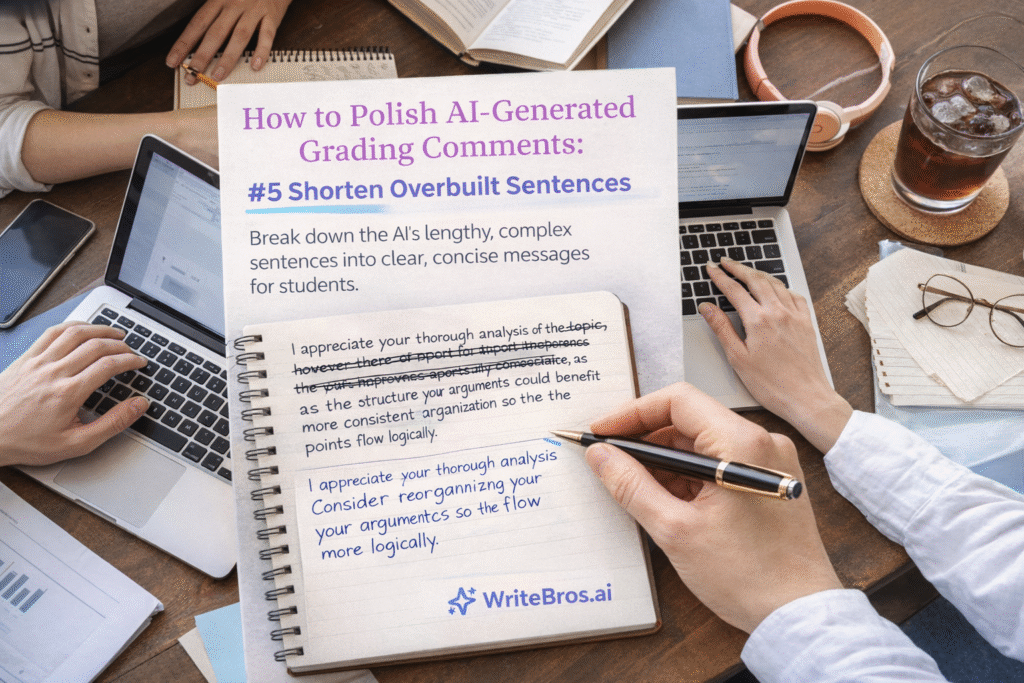
How to Polish AI-Generated Grading Comments – Strategy #5: Shorten overbuilt sentences
AI systems frequently generate long sentences filled with layered clauses that attempt to summarize several observations at once. While these sentences may appear sophisticated, they often slow down comprehension because the student must untangle multiple ideas before understanding the actual suggestion. Polishing the comment involves separating those ideas into clearer statements that communicate the feedback in a more direct and readable structure.
This adjustment improves readability because students often review comments quickly while comparing them to their paper. When sentences become clearer and slightly more structured, the student can immediately understand what needs attention instead of rereading the feedback several times. Over time simplifying these sentences creates a feedback style that feels thoughtful and deliberate rather than dense and algorithmic.
How to Polish AI-Generated Grading Comments – Strategy #6: Highlight improvement paths
AI-generated grading comments frequently identify weaknesses but do not always explain what a stronger version of the work might look like. Polishing these comments involves transforming general critique into actionable guidance that describes how the student could improve the assignment in practical terms. When the comment explains the next step clearly, the feedback becomes a roadmap rather than a simple evaluation.
Students benefit from feedback that connects critique to a specific path forward. Instead of merely pointing out that an argument needs stronger support, the comment can explain that adding evidence from a particular source or clarifying a transition would strengthen the reasoning. Over time this kind of guidance helps students develop revision habits because the feedback shows them exactly how improvement might unfold.
How to Polish AI-Generated Grading Comments – Strategy #7: Use conversational phrasing
Language generated by AI models often sounds symmetrical and carefully balanced, which can unintentionally create a tone that feels distant from natural classroom conversation. Polishing the comment means rewriting certain phrases so they resemble the way an instructor might speak when discussing the assignment during office hours. Conversational phrasing does not reduce professionalism, but instead makes the explanation easier for students to understand.
This technique works because students process conversational language more comfortably than abstract academic phrasing. When the feedback feels like a continuation of classroom dialogue, the student is more likely to engage with the comment rather than skim it quickly. Over time this style reinforces the idea that feedback exists as part of the learning process rather than simply serving as a formal evaluation.
How to Polish AI-Generated Grading Comments – Strategy #8: Remove repetitive wording
AI systems often rely on repeating familiar sentence patterns across multiple comments, especially when they are generating feedback for several assignments in sequence. Polishing the comments involves reviewing the language carefully and removing repeated phrases that may appear throughout the grading set. This editing step ensures that each comment feels distinct and attentive rather than automatically generated.
Students sometimes notice when identical wording appears in different pieces of feedback, which can make the grading process feel impersonal. Eliminating repetition allows each comment to reflect the unique strengths and weaknesses of the individual submission. Over time this simple editing habit helps instructors maintain authenticity even when they begin with AI-assisted drafts.
How to Polish AI-Generated Grading Comments – Strategy #9: Balance praise and critique
AI-generated comments occasionally lean too heavily toward either positive language or corrective critique, which can create feedback that feels unbalanced. Polishing the comment involves pairing recognition of what worked well with a thoughtful explanation of what could be improved. This balance helps students interpret feedback as guidance rather than purely evaluative judgment.
When praise and critique appear together, students can see that the instructor recognizes both effort and opportunities for growth. A comment that acknowledges a well-developed introduction while suggesting improvements for the conclusion gives the student a clearer sense of the overall performance. Over time balanced comments reinforce motivation because students see that improvement builds on strengths rather than replacing them.
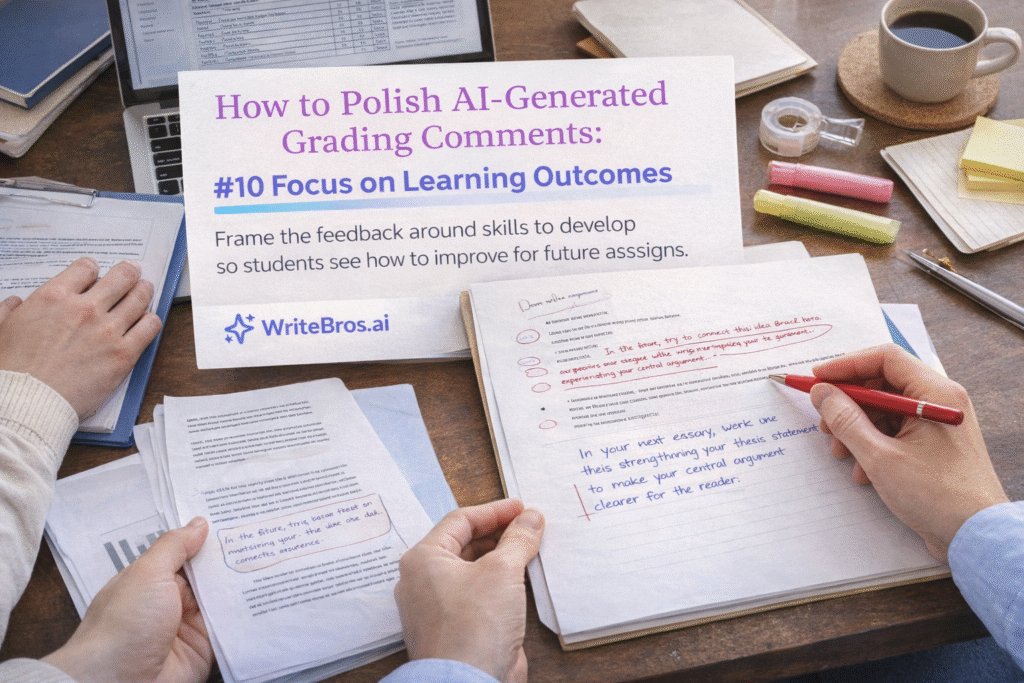
How to Polish AI-Generated Grading Comments – Strategy #10: Focus on learning outcomes
AI-generated feedback sometimes concentrates on surface observations rather than connecting the comment to the broader goals of the assignment. Polishing the comment means framing the feedback around the skills or learning outcomes that the assignment was designed to develop. When the comment links critique to the course objective, the feedback becomes part of a larger educational narrative.
Students gain more value from feedback when they understand how their performance relates to the learning goals of the course. A suggestion to strengthen evidence, for example, can be framed as a way to develop analytical reasoning rather than simply correcting a flaw in the paper. Over time this perspective helps students interpret grading comments as part of their academic growth rather than isolated remarks.
How to Polish AI-Generated Grading Comments – Strategy #11: Connect comments to rubric criteria
AI-generated grading comments often summarize the paper but do not always align directly with the categories that appear in the grading rubric. Polishing these comments involves explicitly connecting observations to the criteria used to evaluate the assignment. When the feedback references the rubric categories, students can clearly understand how their performance influenced the final grade.
This alignment improves transparency because students see how specific elements of their work correspond to evaluation standards. A comment that references organization, argument clarity, or evidence use within the rubric framework makes grading decisions easier to interpret. Over time this habit also helps instructors maintain consistency because the feedback language naturally reflects the evaluation structure.
How to Polish AI-Generated Grading Comments – Strategy #12: Eliminate filler language
AI-generated comments sometimes include introductory phrases that lengthen the feedback without adding meaningful information. Polishing the comment requires identifying those filler expressions and removing them so the message becomes clearer and more focused. This editing step helps ensure that every sentence contributes directly to the student’s understanding of the feedback.
Students appreciate comments that respect their attention and communicate guidance efficiently. When unnecessary language disappears, the remaining feedback becomes more precise and easier to apply during revision. Over time concise comments feel more thoughtful because they prioritize clarity over decorative phrasing.
How to Polish AI-Generated Grading Comments – Strategy #13: Add concrete examples
General advice such as “strengthen the analysis” or “clarify the argument” can leave students uncertain about how to improve their work. Polishing the comment involves providing a brief illustration of what a stronger revision might look like, either through a short example or a description of the change. Concrete examples transform abstract feedback into a practical learning moment.
This strategy works because examples bridge the gap between critique and application. When a comment explains how a claim could connect more clearly to evidence or suggests a way to restructure a paragraph, the student gains a clear picture of the revision process. Over time examples help students internalize effective writing patterns that extend beyond a single assignment.
How to Polish AI-Generated Grading Comments – Strategy #14: Personalize key lines
AI-generated grading comments sometimes read as though they could apply to any student submission. Polishing these comments involves inserting brief references to the student’s topic, argument, or research focus so the feedback feels tailored. Even a small personalized detail can transform the tone of the comment and demonstrate attention to the student’s work.
This personalization helps students feel recognized as individuals rather than as entries in a grading system. When the comment mentions a specific example from the student’s discussion or acknowledges an original idea, the feedback becomes more engaging. Over time personalized lines reinforce the sense that feedback reflects real engagement with the student’s thinking.
How to Polish AI-Generated Grading Comments – Strategy #15: Close with forward guidance
AI-generated comments sometimes end abruptly after delivering critique or praise. Polishing the closing line means adding a brief suggestion that encourages the student to apply the feedback in future assignments. This final sentence helps frame the comment as part of an ongoing learning process rather than a completed evaluation.
A forward-looking closing statement gives students a clear direction for improvement. Instead of leaving the feedback open-ended, the comment can suggest what the student should focus on in the next paper or project. Over time these closing lines reinforce a growth mindset because the feedback consistently emphasizes progress rather than final judgment.
Common mistakes
- Leaving AI-generated comments unchanged after generation is a frequent mistake because the feedback may sound polished but still lack specificity. When instructors skip the editing step, students often receive comments that appear thoughtful yet fail to connect directly to their work, which weakens the educational value of the feedback.
- Using the same generic praise across multiple assignments can unintentionally signal that the feedback was produced automatically. Students sometimes notice repeated language across comments, and this repetition can reduce the perceived authenticity of the grading process even if the instructor carefully reviewed each paper.
- Allowing overly formal AI language to remain unchanged can make feedback feel distant and mechanical. When comments sound excessively structured or abstract, students may struggle to interpret the advice clearly or may assume the instructor relied entirely on automated grading assistance.
- Providing critique without explaining how the student could improve is another common issue in AI-generated comments. Without actionable guidance, the feedback may identify weaknesses but fail to support meaningful revision, leaving students uncertain about how to address the suggestions.
- Writing extremely long comments without organizing the ideas can overwhelm students who are trying to interpret feedback quickly. Dense paragraphs filled with multiple suggestions may cause the most important insight to disappear within the surrounding explanation.
- Ignoring the course rubric when refining AI-generated comments can create confusion about how grades were determined. When feedback does not clearly connect to evaluation criteria, students may struggle to understand the reasoning behind their score.
Edge cases
There are situations where AI-generated grading comments require a slightly different editing approach, particularly when assignments vary widely in format or structure. Creative projects, reflective essays, or multimedia submissions often demand feedback that focuses more on interpretation and originality than on technical writing structure. In these cases the instructor may need to expand the AI-generated comment more extensively so the feedback reflects the unique qualities of the assignment rather than relying on standardized evaluation language.
Another edge case appears in large courses where instructors must review dozens or even hundreds of assignments within a short grading window. AI-generated drafts can still serve as a useful starting point, but the polishing process may focus on a few strategic edits rather than complete rewriting. Even brief adjustments such as adding a specific reference to the student’s argument or clarifying the main suggestion can significantly improve the authenticity of the comment.
Supporting tools
- Text comparison editors allow instructors to review AI-generated comments side by side with their edited versions, which helps identify repetitive phrasing or vague feedback patterns that often appear across multiple grading comments generated in the same batch.
- Grammar and clarity assistants can support the polishing process by highlighting overly long sentences, ambiguous wording, or structural issues that make feedback harder for students to interpret when they review their assignment comments.
- Rubric management systems help instructors align feedback with evaluation categories so that comments clearly explain how performance connects to grading criteria rather than appearing as disconnected observations.
- Annotation tools within learning management systems allow instructors to reference specific sections of a student’s submission directly inside the feedback, which helps anchor comments to real examples within the assignment.
- Revision tracking software enables instructors to review how grading comments evolve from AI-generated drafts to polished feedback, which helps maintain consistency and improve the editing process over time.
- WriteBros.ai can assist instructors who want to refine AI-generated drafts so they sound more natural and personalized while preserving the original intent of the feedback.
Ready to Transform Your AI Content?
Try WriteBros.ai and make your AI-generated content truly human.
Conclusion
Polishing AI-generated grading comments ensures that feedback remains meaningful, clear, and supportive even when instructors rely on AI assistance to manage heavy workloads. Thoughtful editing transforms automated language into feedback that reflects real engagement with student work and reinforces the educational purpose behind grading.
Consistency in tone, specificity, and guidance helps students understand their strengths while recognizing the steps needed to improve future assignments. When instructors treat AI-generated comments as drafts rather than final feedback, the result is a balanced workflow that combines efficiency with genuine instructional value.
Did You Know?
AI-generated grading comments often appear instructor-ready because they follow familiar academic feedback patterns such as praise, critique, and revision suggestions. Even so, the wording can feel generic because the system does not automatically reference the specific ideas or examples in the student’s work.
Feedback usually becomes much more helpful once instructors polish the AI-generated draft with small contextual edits. Adding references to a student’s argument, pointing to a specific paragraph, or explaining the reasoning behind a suggestion can quickly turn the comment into clearer and more meaningful guidance.
Ready to Transform Your AI Content?