Student Adoption of AI Writing Tools Statistics: Top 20 Measured Patterns

2026 marks the moment AI writing tools moved from curiosity to routine academic infrastructure. These Student Adoption of AI Writing Tools Statistics track how quickly usage spread, how students apply AI in graded work, and why the gap between access, policy, and real writing practice keeps widening.
Campus use has moved past casual experimentation and into routine academic workflow, which makes this topic less speculative and much more operational. The bigger concern now is not access alone but whether students are over-relying on AI in ways that quietly flatten thinking, drafting, and revision habits.
Recent surveys show the strongest growth around support tasks that sit close to writing, like explaining concepts, summarising readings, structuring ideas, and starting drafts. That matters because the line between support and substitution gets blurrier once students also try to humanize AI study notes before handing work in.
What stands out most is how quickly adoption is spreading even where policy still feels vague, uneven, or late. A practical read here is that educators comparing tools need less hype and more judgment around the best AI humanizer tools for classroom content and the study behaviors they actually reinforce.
The numbers below point to a student market that already treats AI writing support as part of normal coursework rather than a fringe shortcut. Evaluation in 2026 has to focus on how students use these systems, what they delegate to them, and which patterns are likely to reshape writing standards next.
Top 20 Student Adoption of AI Writing Tools Statistics (Summary)
| # | Statistic | Key figure |
|---|---|---|
| 1 | Students using AI in at least one way in HEPI’s 2026 survey | 95% |
| 2 | Students using generative AI to help with assessed work in 2026 | 94% |
| 3 | Students using any AI tool in HEPI’s 2025 survey | 92% |
| 4 | Students using generative AI for assessments in HEPI’s 2025 survey | 88% |
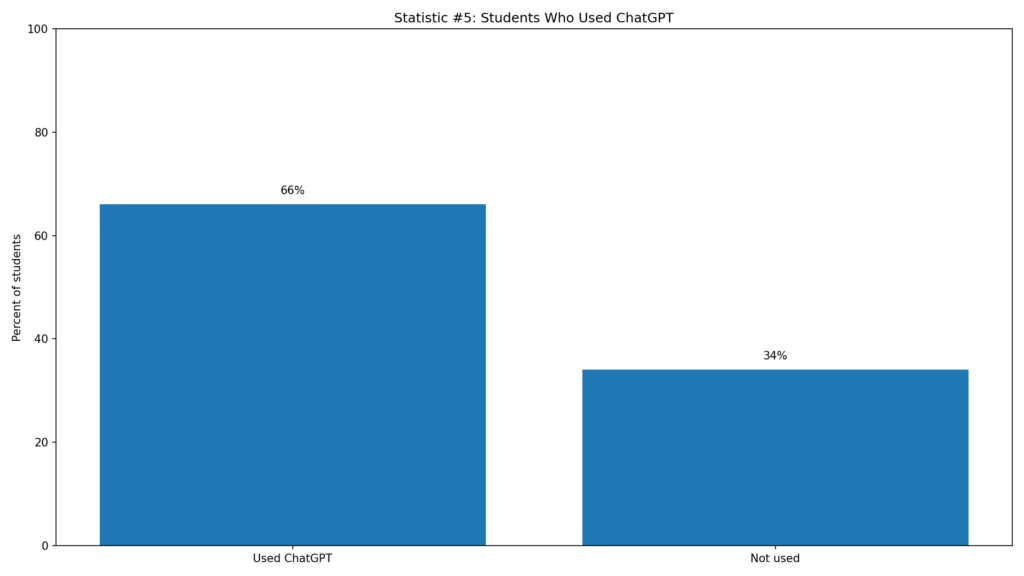
| 5 | Students in the DEC global survey who had used ChatGPT | 66% |
| 6 | College students in BestColleges’ 2025 report who used AI for assignments or exams | 60% |
| 7 | Students lacking sufficient AI knowledge and skills in the DEC survey | 58% |
| 8 | Students generating text with AI in HEPI’s 2026 survey | 56% |
| 9 | Students saying AI improved their student experience in 2026 | 49% |
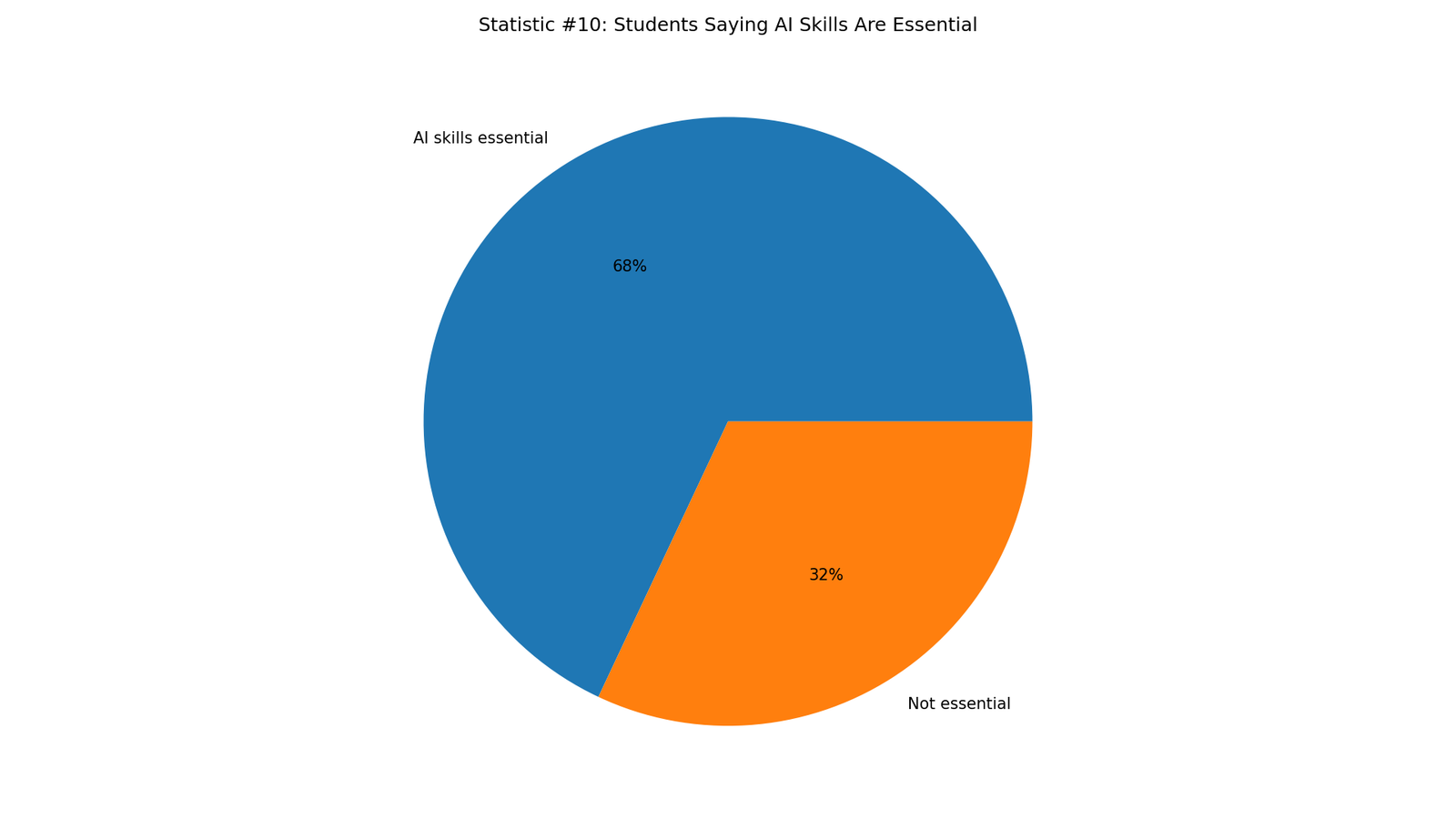
| 10 | Students who believe AI skills are essential to thrive today | 68% |
| 11 | Students who do not feel adequately prepared for an AI-enabled workplace | 48% |
| 12 | Students saying instructors generally allow AI for assignments or exams | 44% |
| 13 | Students saying AI affects their loneliness in HEPI’s 2026 survey | 40% |
| 14 | College students currently using ChatGPT in Intelligent.com’s 2024 survey | 37% |
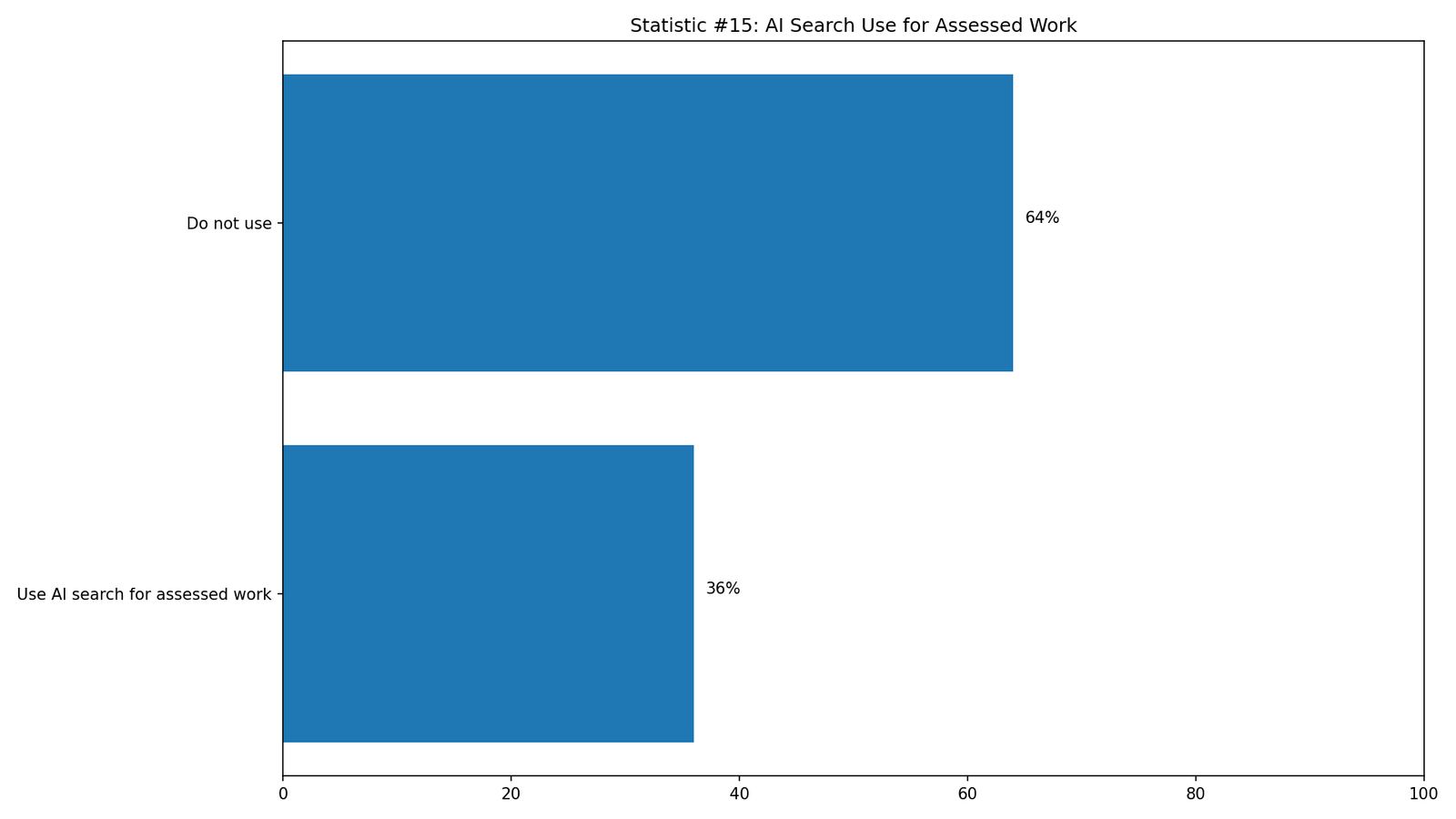
| 15 | Students using AI to search the internet for assessed work in 2026 | 36% |
| 16 | College-age young adults in the U.S. who use ChatGPT | 33% |
| 17 | Current ChatGPT users using it for writing assignments in Intelligent.com’s survey | 69% |
| 18 | Students in 2025 who said they had already used AI at school | 45% |
| 19 | Students in 2026 who used AI-generated text directly in assessed work | 12% |
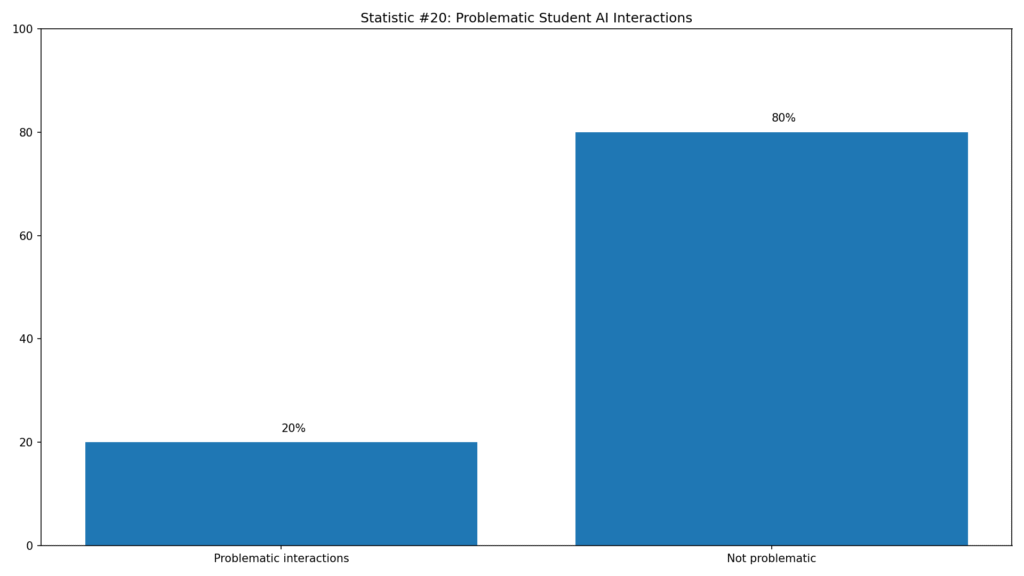
| 20 | Student-AI interactions flagged as problematic in EdWeek’s 2026 Securly coverage | 20% |
Top 20 Student Adoption of AI Writing Tools Statistics and the Road Ahead
Student Adoption of AI Writing Tools Statistics #1. AI use now feels routine for nearly everyone
95% of students using AI in at least one way shows how normal these tools now feel in everyday study. What looked experimental two years ago now sits inside routine planning, drafting, checking, and revision. That makes adoption less a trend story and more a habits story unfolding across campuses for teachers right now.
The pull is simple. Students face crowded workloads and fast deadlines, so a tool that turns uncertainty into a starting point gets repeated quickly. Once enough classmates use it, the behavior spreads through ordinary academic imitation and quiet peer normalization.
A human draft still reveals pauses, uneven turns, and personal judgment, while AI support can smooth those edges much earlier. With 95% of students already using some form of AI, the issue is no longer use versus non-use. The real question is whether the tool supports learning or quietly replaces it, which carries clear implication.
Student Adoption of AI Writing Tools Statistics #2. Assessed work has become the main adoption zone
94% of students using generative AI to help with assessed work signals that classroom adoption has moved right into graded tasks. That matters because assessment is where norms harden fastest and where institutional trust gets tested most. Once AI becomes common in marked work, policy gaps stop being abstract.
The reason is partly strategic. Students do not just want answers faster, they want cleaner structure, quicker phrasing help, and a more confident first version under pressure. Tools that reduce blank-page friction become especially attractive when marks, deadlines, and public evaluation all sit in the same moment.
A human writer typically works through uncertainty before clarity appears, while AI can produce that clarity upfront and make the process look finished too soon. With 94% of students bringing AI into assessed work, educators need to inspect process as much as output. That pushes assessment design toward drafts, reflection, and visible reasoning, with strong implication.
Student Adoption of AI Writing Tools Statistics #3. 2025 already showed near-universal use
92% of students using any AI tool in 2025 already told us the adoption curve had largely flattened at a very high level. In practical terms, the market was no longer waiting for permission. It was already behaving like AI support belonged inside the ordinary academic toolkit.
That pace came from a mix of access and visibility. Free or low-cost tools became easy to find, universities were openly debating policy, and students could see peers getting immediate help with summaries, research prompts, and starting drafts. Once AI becomes visible in everyday study talk, hesitation tends to shrink.
A human-only workflow usually takes longer to gather momentum because the first draft has to be built from scratch, often with false starts. AI compresses that messy opening stage and makes confidence appear earlier than it naturally would. With 92% of students already engaged in 2025, institutions were clearly dealing with normalization, not edge-case experimentation, with lasting implication.
Student Adoption of AI Writing Tools Statistics #4. Graded use surged sharply in one year
88% of students using generative AI for assessments in 2025 marked a sharp jump from the year before. That kind of movement is rarely random. It usually means students have decided the risk of not using the tool now feels higher than the risk of using it poorly.
The behavior makes sense once assignment pressure enters the picture. Students are rewarded for fluency, structure, and speed, and generative tools can improve all three at the earliest stage of work. Even when policies remain fuzzy, the payoff feels immediate and concrete to the person facing the deadline.
A human draft often shows the slow assembly of thought, with detours that reveal learning in progress, while AI can skip to a polished surface. When 88% of students are already using AI for assessments, that surface polish becomes harder to read as proof of understanding. That raises the value of process evidence and oral defense, with direct implication.
Student Adoption of AI Writing Tools Statistics #5. ChatGPT still anchors mainstream student awareness
66% of students in the DEC survey having used ChatGPT shows how one product became the reference point for AI in education. Students may try multiple tools later, but awareness often starts with the one they hear named most often. That makes ChatGPT less a single platform and more a gateway habit.
Familiarity drives the number upward. Once students see classmates paste prompts, share outputs, or mention quick wins, the barrier to trying the tool drops sharply. A product does not need perfect trust to spread when it is simple, visible, and already part of peer conversation.
A human writing process usually begins with private uncertainty and gradual refinement, while ChatGPT offers instant language and structure before reflection fully catches up. When 66% of students have already tried that shortcut, expectations around drafting speed begin to move with it. That is why support around humanize AI study notes and spotting over-relying on AI becomes more practical than moral panic, with clear implication.
Student Adoption of AI Writing Tools Statistics #6. AI help for assignments is already mainstream in college
60% of college students using AI for assignments or exams means the tool has crossed into majority behavior in surveyed college settings. Once a majority adopts a workflow aid, it starts influencing what students think normal preparation should look like. That can reshape effort, pace, and even what feels like an acceptable starting point.
The number rises because AI solves immediate academic pain points. It helps students outline faster, clarify confusing readings, and reduce the time needed to get a first version on the page. In a deadline-driven environment, small reductions in friction accumulate into strong repeat use.
A human-only approach usually keeps more visible struggle inside the drafting process, and that struggle is often where understanding forms. AI can reduce that visible struggle before a student has actually internalized the material. When 60% of college students already bring AI into assignments or exams, educators have to decide which parts of effort still matter most, with practical implication.
Student Adoption of AI Writing Tools Statistics #7. Skill confidence still trails actual usage
58% of students saying they lack sufficient AI knowledge and skills creates a revealing tension in the data. Students are using the tools heavily, yet many still feel underprepared to use them well. That gap usually leads to shallow prompting, weak verification, and overconfidence in polished output.
The cause is straightforward. Adoption has moved faster than training, so students learn through experimentation, peer copying, and scattered online advice rather than structured instruction. A tool can feel easy to access while still being difficult to use responsibly or strategically.
A human writer can usually explain where an argument came from, what changed during revision, and why a phrase stayed or went. A student leaning too heavily on AI may accept smooth wording without really owning the reasoning underneath it. When 58% of students still feel under-skilled, the pressing need is not mere access but usable literacy, with strong implication.
Student Adoption of AI Writing Tools Statistics #8. Text generation remains the central writing behavior
56% of students generating text with AI in the 2026 HEPI survey points to the most sensitive part of academic writing. Brainstorming and research support are one thing, but direct text generation reaches into voice, structure, and authorship. That is why this number matters more than generic usage figures.
Students gravitate here because wording is hard. Explaining a point clearly, building transitions, and finding an academic tone all take time, especially under stress. AI promises instant phrasing, so it becomes tempting not only as a helper but as a substitute for verbal struggle.
A human draft often shows sentence-level hesitations that signal real thinking in progress, even when the prose is imperfect. AI-generated text can remove those clues and create competence on the page before competence exists in the writer. With 56% of students already generating text this way, institutions need clearer boundaries around assistance versus authorship, with direct implication.
Student Adoption of AI Writing Tools Statistics #9. Students still report a better overall experience with AI
49% of students saying AI improved their student experience shows why adoption keeps expanding even amid constant debate. A tool spreads fastest when it feels useful in lived daily terms, not just in theory. If students feel less stuck, more efficient, or less isolated, they keep returning to it.
This positive reading comes from relief as much as performance. AI can lower the stress of getting started, help explain material in simpler language, and offer immediate support at odd hours when no instructor is available. The effect is not always deeper learning, but it can feel like better coping.
A human support system is slower and richer, because teachers and peers can challenge ideas instead of merely generating options. AI often delivers speed and reassurance without the fuller back-and-forth that builds stronger judgment. When 49% of students say the experience improved, institutions need to separate comfort gains from learning gains, with useful implication.
Student Adoption of AI Writing Tools Statistics #10. AI literacy is already treated as a survival skill
68% of students believing AI skills are essential to thrive today tells you the mindset has moved beyond curiosity. Students increasingly see AI literacy the way earlier cohorts saw search literacy or presentation software. Once a technology gets framed as necessary rather than optional, adoption becomes self-reinforcing.
The cause is economic as much as academic. Students are hearing that future jobs will expect AI familiarity, so classroom use starts to feel like training for employability rather than just assignment support. That belief encourages experimentation even among students who remain unsure of the rules.
A human-only writer may still develop stronger patience and deeper retrieval skills, yet that path can look slower in a culture obsessed with productivity. AI use promises speed and workplace relevance, which makes restraint feel old-fashioned to some students. When 68% of students already view AI skills as essential, universities have to teach judgment with the tool, not pretend it will disappear, with broad implication.
Student Adoption of AI Writing Tools Statistics #11. Readiness for AI work still lags behind belief in AI
48% of students not feeling adequately prepared for an AI-enabled workplace shows a second confidence gap beneath the usage boom. Students may believe the tools matter, yet still feel unsure how to use them well in professional settings. That is an uncomfortable mix of urgency and insecurity.
The reason is that casual use does not automatically build transfer-ready skill. Prompting a chatbot for help on coursework is not the same as evaluating outputs, documenting process, or applying AI inside a real workflow with risk and accountability attached. Exposure creates familiarity, but not always capability.
A human worker still needs to judge tone, truthfulness, context, and consequences in ways no generic prompt can settle cleanly. AI can accelerate output, yet it does not remove the burden of judgment from the person using it. When 48% of students still feel unprepared, institutions need to teach discernment and oversight, with workforce implication.
Student Adoption of AI Writing Tools Statistics #12. Classroom permission remains weaker than classroom usage
44% of students saying instructors generally allow AI for assignments or exams shows how policy is still trailing practice. Use is widespread, but explicit permission is far less settled. That leaves students navigating a messy middle zone where behavior is common even when rules feel patchy.
This happens because institutional responses are uneven. Some faculty encourage guided use, some tolerate limited use, and others restrict it sharply, often within the same department. Students then default to local interpretation, shared assumptions, and whatever seems least likely to cause trouble.
A human writing culture depends on visible norms, because people work better when expectations are clear and consistently reinforced. Ambiguity invites quiet boundary testing, especially when the tool offers immediate academic benefit. With 44% of students perceiving general instructor permission, universities need clearer rule language at assignment level, with strong implication.
Student Adoption of AI Writing Tools Statistics #13. AI is starting to touch social life, not just coursework
40% of students saying AI affects their loneliness widens the story beyond writing support. Once a study tool starts affecting emotional life, adoption becomes more complex than simple productivity. It suggests students are turning to AI not only for answers but for a form of presence.
The cause is not hard to understand. Students often work alone, keep irregular hours, and face stress when human support is unavailable, so an always-on tool can feel responsive in moments of isolation. That convenience can soften discomfort without actually solving the social condition behind it.
A human conversation can challenge, comfort, and misunderstand in ways that feel alive, while AI tends to provide steadier but thinner responsiveness. The difference matters because emotional reliance can grow quietly under academic pressure. When 40% of students report some effect on loneliness, institutions need to notice the pastoral side of AI adoption, with wider implication.
Student Adoption of AI Writing Tools Statistics #14. Regular ChatGPT use in college is still substantial on its own
37% of college students currently using ChatGPT in the Intelligent.com survey is a strong adoption figure even before counting other tools. It shows sustained product-level usage, not just abstract awareness of AI. That matters because recurring tool habits are more revealing than one-time experimentation.
Students keep returning to a tool when it feels reliable enough for ordinary academic friction. ChatGPT meets that need with conversational access, fast responses, and a low barrier to trying simple prompts for writing help. In crowded semesters, ease often matters more than perfection.
A human draft begins with self-generated language, which can be slower but reveals real command over structure and argument. ChatGPT can supply that early structure instantly and make students feel they are progressing faster than they truly are. When 37% of college students already use one flagship tool regularly, the monitoring question becomes routine rather than occasional, with direct implication.
Student Adoption of AI Writing Tools Statistics #15. Search itself is being rewritten through AI assistance
36% of students using AI to search the internet for assessed work shows that even information gathering is changing shape. Students are not only asking AI to phrase ideas, they are asking it to mediate discovery itself. That subtly shifts how evidence, relevance, and curiosity get filtered.
The attraction is obvious. AI search can summarize sources, suggest directions, and compress the messy work of deciding what to read first. For a student under time pressure, that feels more efficient than wandering through tabs and stitching the path together alone.
A human research process often includes dead ends, awkward comparisons, and side reading that unexpectedly strengthens understanding. AI-mediated search can streamline that mess, yet it may also narrow the path too early and hide what was skipped. When 36% of students already use AI for assessed-work search, source evaluation becomes a more fragile skill, with real implication.
Student Adoption of AI Writing Tools Statistics #16. Young adults are driving general ChatGPT penetration
33% of college-age young adults in the U.S. using ChatGPT shows how strongly adoption is concentrated in the age group closest to formal study. That is not surprising, but it is still important. It means educational norms and product norms are now shaping each other at the same time.
Younger users have a built-in reason to experiment. They are writing often, researching constantly, and already accustomed to software that shortens routine tasks, so AI fits into an existing expectation of digital assistance. Repetition then turns convenience into normal behavior much faster than policy can respond.
A human-only learning path still builds stamina through slower searching, drafting, and revision, which can feel inefficient in a speed-first environment. ChatGPT offers immediate help and meets students where digital reflexes already are. When 33% of college-age young adults use the tool, higher education is dealing with a generational baseline, with broad implication.
Student Adoption of AI Writing Tools Statistics #17. Writing help dominates among current ChatGPT users
69% of current ChatGPT users using it for writing assignments shows where student need is most acute. Writing is slow, exposed, and highly judged, so students naturally apply AI where the personal stakes feel highest. That makes writing support the clearest window into adoption motives.
The reason is less mystery than pressure. Students need topic framing, structure, transitions, phrasing, and tone, and a chatbot can supply all of those in seconds. Even modest help feels powerful when it arrives at the exact point a student might otherwise stall.
A human draft usually carries the writer’s uncertainty on the surface, and that surface struggle is often where voice develops. AI can erase much of that struggle and deliver a more finished sound before the writer has made the same decisions alone. When 69% of current ChatGPT users lean on it for writing assignments, authorship standards need sharper definition, with lasting implication.
Student Adoption of AI Writing Tools Statistics #18. School exposure begins before higher education
45% of students saying they had already used AI at school in 2025 suggests universities are inheriting behaviors rather than creating them from zero. Students arrive with baseline familiarity, informal habits, and assumptions shaped before college policy ever reaches them. That makes first-year guidance much more important than many institutions may expect.
Earlier exposure accelerates normalization. Once students discover that AI can explain concepts, tidy notes, or offer wording help, the tool becomes part of study identity before academic standards are fully discussed. Habits formed early tend to travel forward unless something deliberately interrupts them.
A human learning path usually develops through trial, feedback, and gradual independence across school years, which can feel messy but durable. AI support can make that path smoother while also reducing the productive friction that builds confidence from within. When 45% of students have already used AI at school, colleges need onboarding that assumes prior use, with policy implication.
Student Adoption of AI Writing Tools Statistics #19. Direct copy use remains a smaller but rising slice
12% of students using AI-generated text directly in assessed work in 2026 is smaller than overall adoption, yet it still matters a great deal. This number points to the narrow part of the funnel where assistance becomes substitution. Even if it is not the majority behavior, it is the behavior most likely to force institutional response.
The rise happens because direct insertion is the shortest route to a finished-looking result. Students under intense time pressure may rationalize it when the surrounding culture already treats AI help as normal. Once the boundary blurs, convenience can steadily push use closer to copying.
A human draft leaves a trail of development that usually reflects the writer’s own choices, even when the work is imperfect. Directly inserted AI text can preserve polish while bypassing that developmental trail almost entirely. When 12% of students are already doing this in assessed work, verification and process visibility become much more important, with disciplinary implication.
Student Adoption of AI Writing Tools Statistics #20. Problematic use is already visible in live school systems
20% of student interactions with AI on school technology being flagged as problematic shows the downside is no longer hypothetical. The issue is visible in operational data, not just in teacher anxiety or opinion pieces. That makes governance a live systems challenge rather than a future debate.
The underlying cause is that high adoption always expands edge-case behavior. Once students use AI at scale, some will test boundaries around cheating, bullying, self-harm content, or unsafe reliance simply because the tools are available at moments of stress. Volume changes the nature of risk.
A human classroom can catch troubling patterns through tone, behavior, and relational context, while AI systems often expose the pattern only after the interaction has happened. That difference means response has to include monitoring, support, and judgment, not just access controls. When 20% of student interactions are already problematic in observed school settings, institutions need much stronger guardrails, with urgent implication.
Student adoption of AI writing tools now reflects a mature behavior pattern with uneven literacy, uneven rules, and rising pressure on assessment design
Across the full set of numbers, the biggest pattern is not simple growth but consolidation. Student use is spreading at the same time that writing, research, emotional support, and assessment all become entangled in the same tool layer.
That is why the story feels more operational than futuristic. The strongest figures point to routine use, while the most revealing figures point to confusion, substitution risk, and a widening gap between access and sound judgment.
There is also a quiet shift in what counts as writing skill. When students can outsource structure, phrasing, search, and tone on demand, educators need stronger ways to evaluate process, ownership, and reasoning instead of surface fluency alone.
Student adoption of AI writing tools statistics now point to a campus environment where restraint will not come from bans by themselves. The next phase will be shaped by literacy, policy clarity, and better assignment design, with lasting implication.
Sources
- HEPI student generative artificial intelligence survey 2026 report page
- HEPI report 199 student generative AI survey 2026 PDF
- HEPI student generative AI survey 2025 report page
- HEPI Kortext student generative AI survey 2025 PDF
- Digital Education Council key results from global AI student survey
- Digital Education Council global AI student survey overview
- BestColleges college student attitudes on AI survey findings
- Intelligent.com college students using ChatGPT on assignments survey
- OpenAI report on college students and ChatGPT adoption
- Education Week reporting on student AI use in school technology