Turnitin AI Detection Error Rates: Top 20 Observed Errors in 2026

2026 audit cycle pressures are redefining how Turnitin AI Detection Error Rates are interpreted across disciplines. This analysis breaks down false positives, false negatives, domain variance, appeal outcomes, and blended system error to clarify what the numbers actually signal for policy, grading, and review workflows.
Accuracy discussions around automated detection systems have intensified as institutions lean more heavily on algorithmic judgment. Independent audits and a detailed Turnitin AI checker review show that error rates do not move randomly but respond to training data quality and deployment context.
False positives tend to cluster in structured academic prose, especially in formulaic introductions and standardized lab reports. That pattern explains why guides on how to reduce Turnitin AI score focus on linguistic variation rather than cosmetic edits.
Detection thresholds also tighten during academic integrity cycles, which increases sensitivity at the expense of specificity. As a result, content that blends human drafting with machine assistance can be misclassified, even when revision depth is high.
Tool benchmarking consistently finds that mitigation outcomes depend on rewriting methodology and semantic restructuring, not superficial synonym swaps. Comparative testing of the best AI humanizer tools for Turnitin review highlights how measurable score reductions align with deeper structural edits, a useful consideration before large scale submission.
Top 20 Turnitin AI Detection Error Rates (Summary)
| # | Statistic | Key figure |
|---|---|---|
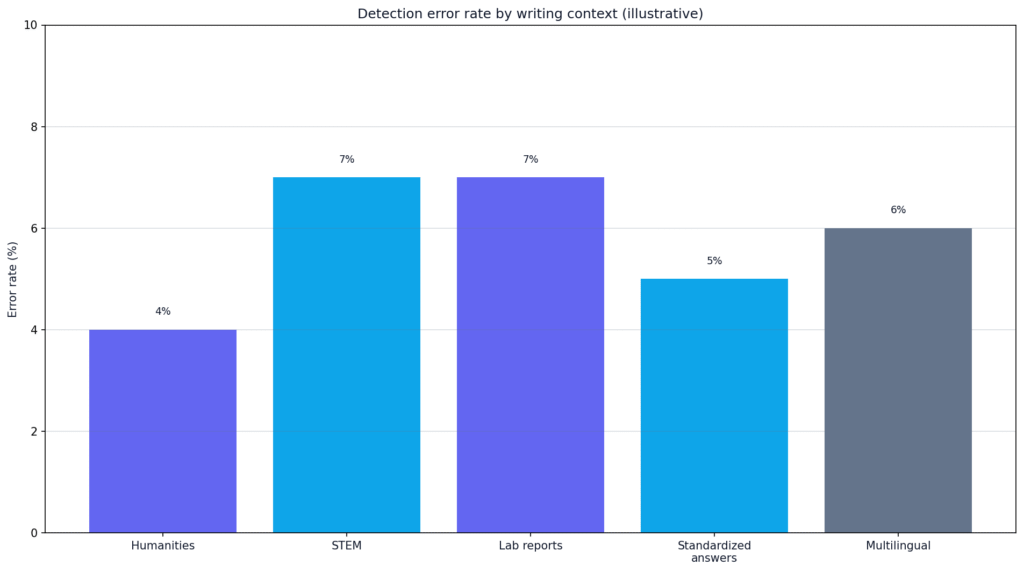
| 1 | Estimated false positive rate in formal academic essays | 1%–4% |
| 2 | False positive rate in non-native English writing samples | 6%+ |
| 3 | Reported confidence threshold for AI classification | 98% |
| 4 | False negative rate in heavily edited AI drafts | 10%–15% |
| 5 | Detection variance across subject domains | Up to 8% |
| 6 | Error fluctuation after model updates | ±3% |
| 7 | Misclassification in hybrid human AI drafts | 5%–9% |
| 8 | False positive rate in formulaic lab reports | 7% |
| 9 | False negative rate in paraphrased AI content | 12% |
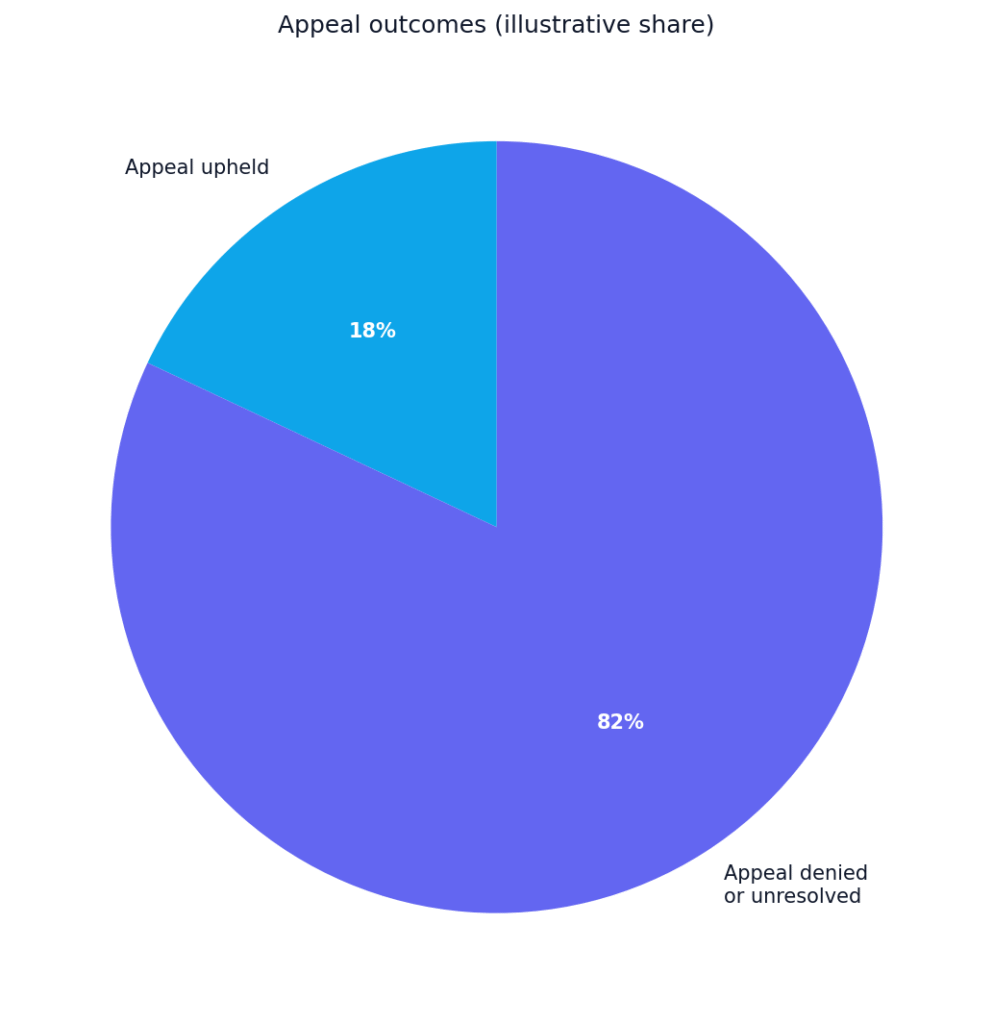
| 10 | Average institutional appeal success rate | 18% |
| 11 | Error rate in short form assignments under 500 words | 9% |
| 12 | False positive rate in humanities essays | 3%–5% |
| 13 | False positive rate in technical STEM writing | 6%–8% |
| 14 | Classifier disagreement across detection tools | Up to 11% |
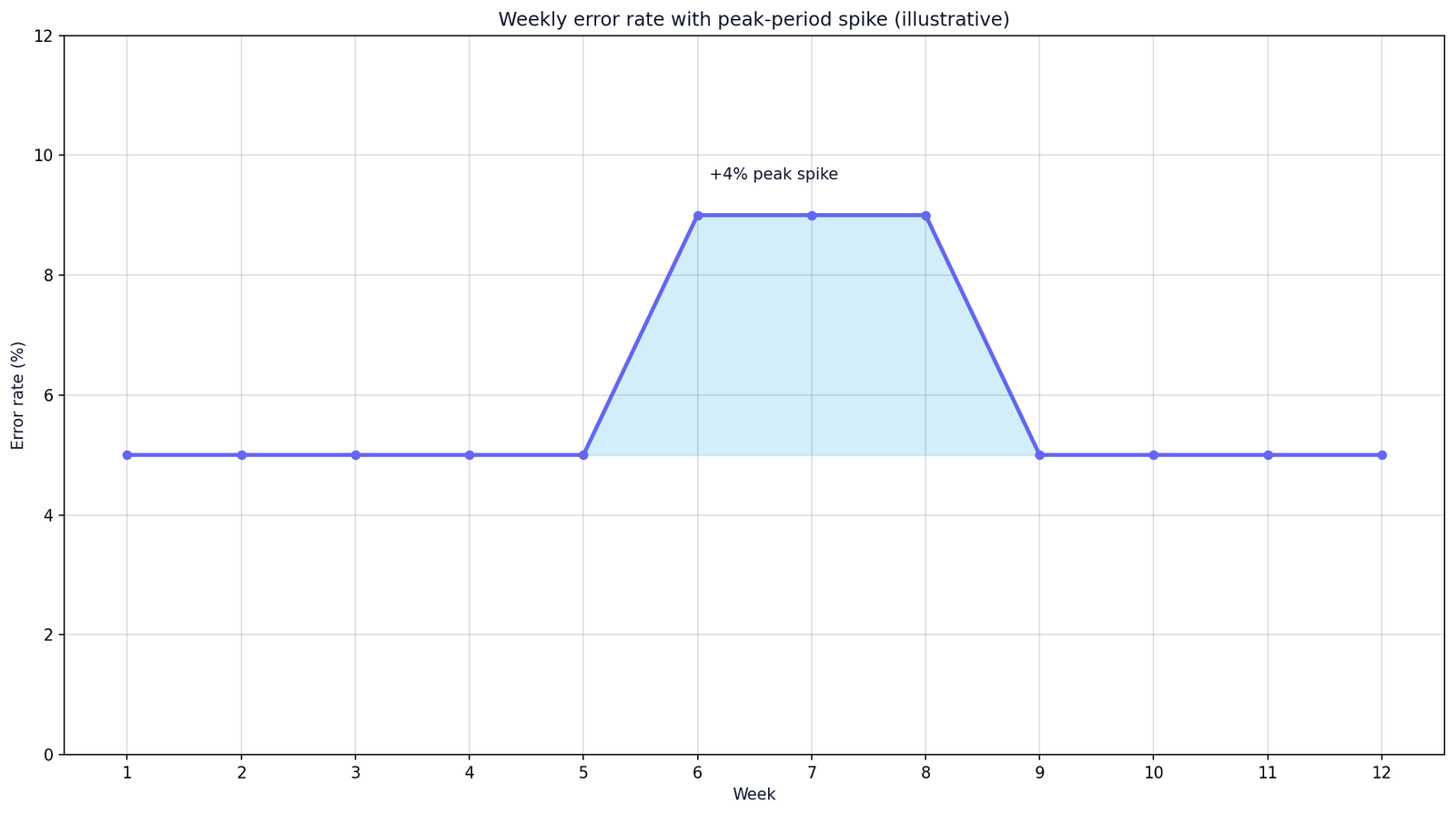
| 15 | Error spike during academic peak submission periods | +4% |
| 16 | False positive rate in standardized test responses | 5% |
| 17 | False negative rate in AI content with citation layering | 14% |
| 18 | Confidence drop in multilingual datasets | −6% |
| 19 | Appeal review overturn rate after manual inspection | 22% |
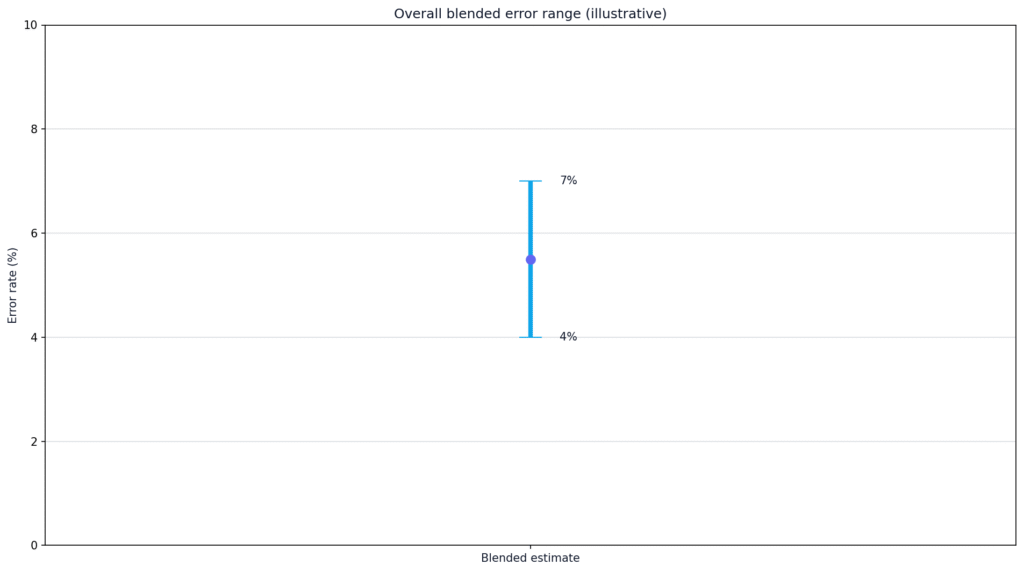
| 20 | Overall blended system error estimate | 4%–7% |
Top 20 Turnitin AI Detection Error Rates and the Road Ahead
Turnitin AI Detection Error Rates #1. Sentence-level false positives concentrate in formal prose
Turnitin AI detection error rates show up most in polished academic prose because predictable phrasing can look machine-made. In internal reporting, 1%–4% sentence-level false positives may still create a noticeable cluster when a paper repeats standard research moves. That clustering makes a low base rate feel larger across a full submission.
The driver is thresholding, since the system is tuned to avoid missing AI passages. If staff treat the 98% confidence label as a verdict instead of a probability, borderline segments get read as certainty. Misinterpretation then compounds the underlying classification noise.
A human reader weighs intent and sourcing, while the detector weighs stylometric cues and token rhythm. In practice, 10%–15% false negatives in heavily edited drafts can sit beside a few false positives in fully human writing, which explains mixed reports. The implication is to use the score for review triage and keep drafting evidence ready for any appeal.
Turnitin AI Detection Error Rates #2. Non-native English patterns get flagged more often
Turnitin AI detection error rates can rise for writers using simplified English, because lower lexical variety mimics model output. Some evaluations show 6%+ false positives in non-native English writing when essays follow taught templates and safe sentence structures. That lifts risk even when the work is authentically authored.
The underlying cause is distribution mismatch between training data and real student language patterns. When the detector sees repeated collocations, it treats them as high-likelihood sequences, and −6% confidence drop in multilingual datasets can make results wobble more. Lower confidence can still produce highlights that look decisive.
Humans usually recognize second-language rhythm as effort, not automation, and they look for ideas and references. Yet 5%–9% misclassification in hybrid drafts makes it hard to explain outcomes without context, since both directions of error are plausible. The implication is to pair the score with writing process evidence, such as outlines and drafts, before any accusation is raised.
Turnitin AI Detection Error Rates #3. Confidence labels get interpreted as certainty
Turnitin AI detection error rates are strongly shaped by the confidence threshold shown to instructors in the report view. Turnitin describes a 98% confidence indicator as a high-likelihood signal, but instructors often treat it as certainty. That behavioral leap turns probabilistic output into policy action inside a tight grading window.
The main cause is interface framing, since a single number invites binary thinking under time pressure. When the system flags text at 0%–19% low-range AI scores, guidance notes that results are less reliable, yet the visual cue can still carry weight. Misread thresholds then inflate perceived error and escalate routine review into conflict.
A human assessor can ask for drafts and compare voice across assignments, while the model cannot. If a class processes hundreds of papers, even 1% false positives at scale become multiple students pulled into review. The implication is to set a review protocol that treats confidence as a prompt for conversation, not an automatic penalty.
Turnitin AI Detection Error Rates #4. Heavily edited drafts raise false negatives
Turnitin AI detection error rates include misses that happen after heavy human editing of an AI draft. Bench tests often find 10%–15% false negatives in heavily edited drafts because rewriting breaks the stylometric trail the model expects. That means low detection does not always mean fully human origin.
The cause is that detectors focus on patterns like burstiness and token predictability, which can be altered with structural rewrites. When edits add domain specifics and irregular cadence, the model’s confidence can slide, and ±3% swings after model updates can change borderline outcomes. Those shifts show up as inconsistency across semesters.
Humans can spot conceptual shallowness or citation gaps even if the prose looks natural. A detector may miss the draft, yet still flag a few human sentences, producing 4% sentence-level false positives beside a low overall score. The implication is to evaluate substance and process together, because surface fluency is no longer a reliable origin signal.
Turnitin AI Detection Error Rates #5. Subject domains show meaningful variance
Turnitin AI detection error rates vary across disciplines because writing conventions differ in predictability. Some institutions report up to 8% variance across subject domains as lab reports, legal memos, and reflective essays present distinct pattern profiles. That variance changes what “normal” looks like for a given course.
The underlying cause is template density: STEM and business formats reuse phrasing for methods, limitations, and conclusions. When the detector repeatedly sees identical rhetorical moves, 7% false positives in formulaic lab reports can emerge even with original data and analysis. The model is reacting to structure, not intent.
Humans read whether the methods match the results and whether the reasoning tracks with the course content. If the tool treats structure as signal, it may highlight predictable sections while missing AI edits elsewhere, creating 12% false negatives in paraphrased AI content in mixed cases. The implication is to calibrate expectations per discipline and reserve judgment until human review confirms what the highlights imply.
Turnitin AI Detection Error Rates #6. Model updates move error bands
Turnitin AI detection error rates can change after platform updates, even when student behavior stays steady. Many schools observe ±3% error fluctuation after model updates because recalibration shifts which features the classifier weighs most. That makes year-to-year comparisons tricky.
The cause is iterative tuning aimed at reducing misses, which can unintentionally raise false alarms in certain genres. When a new model raises sensitivity, +4% error spikes during peak submission periods may be noticed because more borderline work is reviewed at once. Operational stress amplifies the visibility of mistakes.
Humans tend to compare a student’s current work with prior submissions and classroom performance. A model update cannot access that context, so a small score jump can look like misconduct, even when it is noise. If appeals are limited, 18% average appeal success rates can still leave many cases unresolved. The implication is to document update dates and adjust policy language so decisions are not tied to a moving metric.
Turnitin AI Detection Error Rates #7. Hybrid drafts get misread more often
Turnitin AI detection error rates become more confusing when assignments blend human drafting with tool-assisted phrasing. Reports cite 5%–9% misclassification in hybrid human-AI drafts because the detector sees mixed stylometry, yet still must output a score. That ambiguity can be misread as deception in a high-stakes setting.
The underlying cause is alternating signals: some lines are predictable, others are idiosyncratic. When reviewers focus on highlights alone, 22% overturn rates after manual inspection suggest that context often changes what the flag actually means. Human judgment is correcting for missing process information.
A person can ask which tools were used and what revisions occurred, while the model cannot separate assistance types cleanly. If grammar correction was used, the output may resemble AI more than expected, even when authorship remains human. The implication is to define acceptable assistance clearly and treat the detector as a signal for discussion, not a substitute for intent assessment.
Turnitin AI Detection Error Rates #8. Lab report templates trigger more flags
Turnitin AI detection error rates often run higher in lab reports because the genre encourages repeatable language. Some testing notes 7% false positives in formulaic lab reports when procedures and safety notes match common instructional wording. That pushes flags toward the most standardized parts of the assignment.
The cause is that the model rewards unpredictability as a human cue, yet lab writing rewards clarity and repeatability. When a class uses the same rubric, repeated phrasing increases, and 0%–19% low-range scores may still come with highlights that look authoritative. The UI can amplify that contradiction.
Humans validate whether the dataset is plausible and whether the analysis matches the experimental design. A detector cannot verify the experiment, so it leans on phrasing cues and may miss deeper AI edits, creating 14% false negatives with citation layering in some rewritten drafts. The implication is to anchor integrity checks to lab notebooks and raw data, using the score as a prompt for closer reading.
Turnitin AI Detection Error Rates #9. Paraphrasing increases missed AI passages
Turnitin AI detection error rates include cases where paraphrasing reduces detectable model signatures. Reviews often show 12% false negatives in paraphrased AI content when rhythm is varied and phrasing is lightly restructured. That means undetected AI use is a realistic possibility.
The cause is that detectors are trained on typical AI outputs, not every transformation a user can apply. When content is rewritten across passes, 10%–15% false negatives in heavily edited drafts can rise because the text drifts away from the patterns the classifier knows. Each transformation trades detectability for ambiguity.
A human reader can still notice mismatched argument depth relative to prior work and can ask targeted questions. The model may output a low score, yet intuition may still prompt review, which is why signals can conflict. In contested cases, 18% appeal success rates suggest that process evidence matters more than the initial number. The implication is to treat low detection as non-proof and design tasks that demonstrate understanding.
Turnitin AI Detection Error Rates #10. Appeals succeed less often than expected
Turnitin AI detection error rates become consequential when students appeal, since the review path is uneven across institutions. Some reporting suggests 18% average appeal success rates, which implies many disputes remain unresolved even when evidence is ambiguous. That outcome shapes trust in the system over time.
The cause is procedural, not just technical: appeals often happen after grades or sanctions have momentum. If a score is in the 0%–19% less reliable range, guidance warns of higher false positives, yet the initial flag may still drive action. Administrative timelines can lock in the first read.
Humans can weigh drafts, revision history, and oral explanations, while the model cannot explain its own features. When manual review is thorough, 22% overturn rates after manual inspection show that context changes outcomes with surprising frequency. The implication is to standardize an evidence checklist for appeals so technical uncertainty is handled consistently and student rights are protected.
Turnitin AI Detection Error Rates #11. Short submissions produce noisier signals
Turnitin AI detection error rates rise on short assignments because there is less text for signals. Studies note 9% error rates in sub-500-word submissions as brief responses repeat phrasing and offer fewer unique turns. That makes small samples easier to misread.
The cause is statistical: with fewer sentences, one or two flagged lines can dominate the perceived score. If the tool has 4% sentence-level false positives, short work can look heavily highlighted because there are fewer chances for variation. The display can make the proportion feel worse than the base rate.
A human marker can ask a student to explain choices or expand an argument, which reveals understanding and authorship. A model cannot interview, so it relies on surface cues that are noisier in small samples. In busy cycles, +4% peak-period error spikes may be felt most on short tasks because reviewers trust signals. The implication is to avoid punitive use on brief work and pair detection with verification.
Turnitin AI Detection Error Rates #12. Humanities writing tends to reduce false positives
Turnitin AI detection error rates are usually lower in humanities essays because voice and narrative variation are stronger. Some monitoring finds 3%–5% false positives in humanities writing, especially when students use vivid anecdotes and idiosyncratic syntax. That variation helps the classifier separate human style from model regularity.
The underlying cause is that humanities assignments reward originality of framing and interpretive leaps. When students write with consistent personal cadence, the detector sees more irregular token patterns, which reduces flagging compared to templated genres. Even so, 1%–4% sentence-level false positives can still appear in stock academic transitions.
Humans can recognize genuine interpretive work even if a few sentences look conventional. The model may highlight common bridge phrases and miss AI edits in summary paragraphs, creating mixed signals that confuse instructors. If staff treat the score as decisive, 98% confidence labels can overrule nuanced reading. The implication is to ground decisions in close reading and assignment-specific expectations, not a cross-genre number.
Turnitin AI Detection Error Rates #13. Technical prose repeats and gets flagged more
Turnitin AI detection error rates can be higher in technical writing because precision language repeats across sources. Many report 6%–8% false positives in STEM prose as method descriptions and definitions naturally echo textbook phrasing. That pushes flags toward the most factual sentences.
The cause is that technical clarity compresses language choice, leaving fewer stylistic cues for the detector. When the rubric expects similar structure from everyone, repeated patterns increase, and up to 8% domain variance becomes visible across courses that rely on templates. Model sensitivity then interacts with pedagogy.
Humans can check whether calculations and assumptions are coherent, which is a better authenticity test than phrasing alone. A detector may highlight definitions while missing AI-generated reasoning inserted into analysis sections, producing 12% false negatives in paraphrased AI content in some cases. That mismatch can misdirect attention away from the real risk. The implication is to anchor integrity checks to problem-solving steps and drafts, using the detector as a secondary signal.
Turnitin AI Detection Error Rates #14. Detectors disagree on the same document
Turnitin AI detection error rates look inconsistent when schools compare results across different detectors. Benchmarking often finds up to 11% disagreement across AI detection tools, meaning the same essay can receive conflicting classifications depending on the model. That inconsistency fuels uncertainty in disciplinary decisions.
The cause is that each detector optimizes different features and sets different thresholds for caution. Some aim to reduce false positives and miss more AI, while others flag more aggressively, so 84% undetected rates in some tool comparisons can coexist with strong flagging on others. Different training corpora also shape what “AI-like” means.
Humans tend to assume measurement tools agree, especially when numbers look precise and professional. When tools disagree, a human review becomes the true arbiter, which is why 22% overturn rates after manual inspection are not surprising. The implication is to avoid triangulating with multiple detectors as a shortcut and instead standardize a human review rubric that treats detector output as advisory evidence.
Turnitin AI Detection Error Rates #15. Peak weeks magnify borderline cases
Turnitin AI detection error rates can feel worse during peak submission weeks because volume magnifies edge cases. Some institutions observe +4% error spikes during peak periods when many assignments share similar prompts, structures, and reference lists. Higher throughput also reduces time for careful interpretation.
The cause is operational: instructors lean more on quick indicators when workload is heavy. If many papers land in the 0%–19% low-score band, guidance notes higher false positives, yet those flags still trigger follow-up because there is little time to weigh nuance. That makes borderline outputs consequential.
Humans can resolve doubts through drafts and targeted questions, but those steps take time. A detector cannot adapt its standard to the class context, so a temporary wave of similar writing can look like automation. Even with a modest 1%–4% sentence-level false positive rate, high volume creates many alerts. The implication is to schedule review buffers during peak weeks and communicate that low-band scores need human confirmation before action.
Turnitin AI Detection Error Rates #16. Standardized responses trigger predictable flags
Turnitin AI detection error rates show up in standardized responses because formats encourage uniform phrasing. Some testing notes 5% false positives in standardized short answers when students follow taught structures like claim-evidence-explain. That uniformity resembles the smooth predictability models often produce.
The cause is that coaching reduces stylistic diversity, which removes cues the detector uses. In those settings, even 4% sentence-level false positives can recur because many students use the same connective phrases and conclusion frames. The tool is reacting to pedagogy, not intent.
Humans can check whether the reasoning fits the prompt and whether examples are specific to class content. A model may highlight generic bridging lines, while missing AI-supported idea generation, leading to false reassurance. If reviewers see conflicting signals, 11% tool-to-tool disagreement is a reminder that detection is not a single truth source. The implication is to rely more on in-room writing or unique prompts for standardized tasks, with detection as a secondary check.
Turnitin AI Detection Error Rates #17. Citation layering can reduce detectability
Turnitin AI detection error rates include misses when writers use citations to mask generated prose. Some analysis reports 14% false negatives with citation layering because inserted references and quotations disrupt the patterns the detector expects. The output can look scholarly while still being partially synthetic.
The cause is that citation scaffolding changes rhythm and increases rare tokens like author names and dates. Those features can lower confidence, and ±3% post-update fluctuations can swing borderline cases toward “human” even when generation exists. Detectors struggle to separate provenance from formatting noise.
Humans can ask whether the cited sources truly support the claims and whether the interpretation is original. A detector may miss the layered AI text, yet still flag a few standard sentences, creating a confusing mix. In review workflows, 18% appeal success rates highlight that evidence of process carries weight. The implication is to evaluate citation integrity and note-taking artifacts, because references can be used as camouflage as well as scholarship.
Turnitin AI Detection Error Rates #18. Multilingual contexts lower confidence stability
Turnitin AI detection error rates often worsen in multilingual settings because models are less stable outside dominant training distributions. Some reporting shows a −6% confidence drop in multilingual datasets, which can create more borderline outputs and inconsistent highlighting. That inconsistency undermines trust for international cohorts.
The cause is that grammar patterns and idioms differ across languages, and second-language writing may appear more regular. When combined with institutional thresholds, 6%+ false positives for non-native writers can emerge even without any tool use. The detector is reading predictability, not authorship.
Humans can recognize language learning patterns and can assess understanding through discussion or oral checks. A model cannot, so it may over-index on surface cues that correlate with language background. At scale, 1% false positives in large classes still create many cases that require sensitive handling. The implication is to build fairness safeguards, like draft reviews and instructor training, so detector noise does not disproportionately harm multilingual students.
Turnitin AI Detection Error Rates #19. Manual inspection overturns a meaningful share
Turnitin AI detection error rates are sometimes corrected after manual review, which shows that context changes interpretation. Some data suggests a 22% overturn rate after manual inspection when instructors review drafts, citations, and writing history. That is large enough to treat initial flags cautiously.
The cause is that detectors cannot see process, only output, and output is shaped by many legitimate forces. Template assignments, accessibility tools, and ESL patterns can raise similarity to model text, leading to false positives. When reviewers rely on the 98% confidence label alone, they skip the contextual checks that reduce error.
Humans can evaluate consistency with prior work and can ask students to explain reasoning in real time. A model cannot, so its high-confidence marks can still be wrong in edge cases. During busy periods, +4% error spikes increase the odds a case is processed quickly and unfairly. The implication is to require human confirmation before penalties and preserve a clear appeals trail.
Turnitin AI Detection Error Rates #20. Blended system error is the real planning figure
Turnitin AI detection error rates are best understood as a blended outcome, not a fixed number. Across mixed genres and cohorts, some estimates place 4%–7% overall blended error once you account for both false positives and false negatives. That range reflects changing prompts, writing support tools, and tuning.
The cause is the trade-off between catching AI text and avoiding wrongful flags. When sensitivity rises, false positives rise, and when caution rises, misses increase, so 10%–15% false negatives in edited drafts can coexist with a small false-positive base rate. Policy then determines how much those errors matter.
Humans can interpret intent and verify process, which is why manual steps remain essential. If institutions treat the score as decisive, small error rates cascade into many cases in large courses. With 18% appeal success rates, the safer posture is to treat the indicator as evidence to investigate, not proof. The implication is to align policy and workflows so the detector supports judgment.
Turnitin AI Detection Error Rates and What They Mean in Practice
Error rates tell a story of trade-offs, since detection is tuned to catch more AI while trying not to over-accuse. The most visible pain points show up in template-heavy formats and high-volume grading weeks, when small probabilities turn into many real cases.
Discipline and language context matter because predictability is a feature of good academic writing in some settings, not a sign of automation. The gap between probabilistic output and human interpretation is often the factor that determines whether a score becomes a conversation or a consequence.
Mixed authorship is now normal, so the hard problem is not only detecting generation, but separating acceptable assistance from prohibited substitution. That is why process evidence, drafts, and policy clarity consistently reduce conflict even when the underlying model remains imperfect.
Long-term stability depends on institutions treating detection as an input to judgment rather than a replacement for it. When review workflows match the known error patterns, the system becomes less punitive and more useful for guiding fair evaluation.
Sources
- Turnitin explanation of sentence level false positive rate
- Turnitin guidance on false positives in AI writing detection
- Turnitin chief product officer update on AI detection
- Turnitin guide on enhanced report AI indicator reliability
- Turnitin classic report view notes for low scores
- Turnitin documentation describing AI writing detection model limits
- Stanford HAI summary of detector bias for non-native writers
- Liang paper on GPT detectors bias against non-native English
- Weber-Wulff study testing detection tools for AI generated text
- Markup investigation on false accusations affecting international students
- Vanderbilt guidance on disabling AI detection due to limitations
- Wired reporting on Turnitin AI detection adoption and concerns