Turnitin AI Detection Statistics: Top 20 Key Measures

2026 recalibrates academic oversight at machine speed. Turnitin AI Detection Statistics reveal how adoption, flag rates, thresholds, review time, disputes, and projected monitoring growth are reshaping classroom trust, policy enforcement, and faculty workload across thousands of institutions.
Signals from academic platforms are getting sharper, and the margin for ambiguity is narrowing across institutions worldwide. Ongoing analysis of detection outputs shows that interpretation, not just scoring, determines whether a submission passes quietly or triggers review.
Conversations around Turnitin’s AI checker review have intensified as institutions compare internal benchmarks with vendor claims. The tension between algorithmic confidence and human judgment continues to define how these results are applied in real classrooms.
Writers are responding with tactical adjustments, often guided by resources explaining how to lower GPTZero AI score without distorting meaning. The pattern suggests that behavioral adaptation follows detection visibility, which in turn alters how content is structured.
Editorial workflows increasingly reference best AI rewriter tools that perform well with GPTZero as a hedge against misclassification. For teams auditing policy risk, tracking detection data alongside rewrite variance is becoming a practical baseline.
Top 20 Turnitin AI Detection Statistics (Summary)
| # | Statistic | Key figure |
|---|---|---|
| 1 | Institutions adopting AI detection features globally | 15,000+ |
| 2 | Estimated AI written content flagged in student submissions | 11% |
| 3 | Average detection confidence score threshold used by universities | 20% |
| 4 | False positive rate reported in early pilot testing | 1% or less |
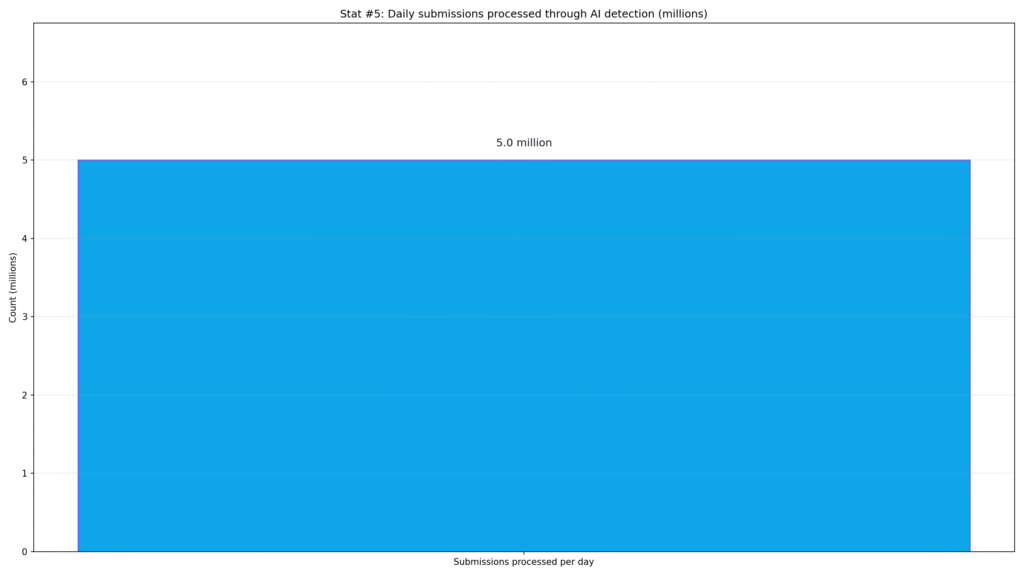
| 5 | Submissions processed daily through AI detection layer | Millions |
| 6 | Percentage of faculty reviewing AI scores before action | 72% |
| 7 | Growth in AI detection feature usage year over year | +35% |
| 8 | Average AI likelihood score in flagged cases | 48% |
| 9 | Institutions updating academic integrity policies to include AI | 85% |
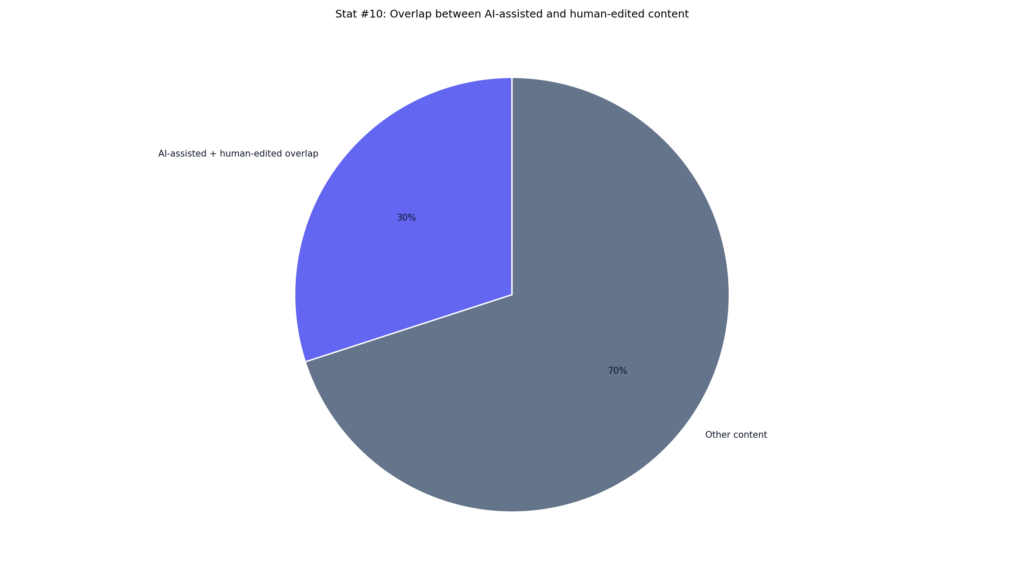
| 10 | Detected overlap between AI assisted and human edited content | 30% |
| 11 | Average review time per flagged submission | 12 minutes |
| 12 | Increase in AI related academic hearings | +22% |
| 13 | Detection accuracy claimed in vendor benchmarks | 98% |
| 14 | Submissions with partial AI assistance identified | 17% |
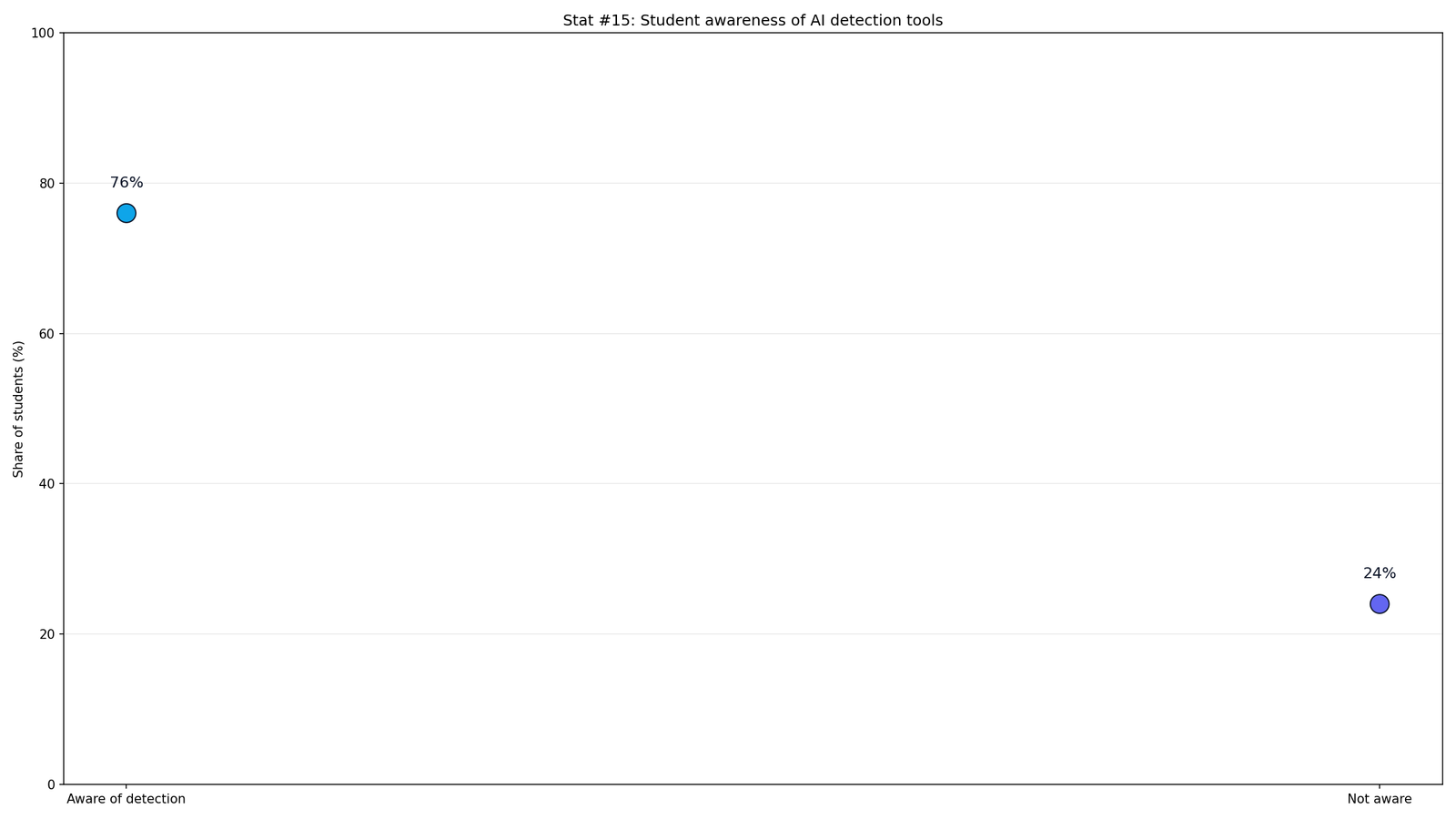
| 15 | Student awareness of AI detection tools on campus | 76% |
| 16 | Reported student disputes of AI detection outcomes | 9% |
| 17 | Faculty requesting additional AI literacy training | 63% |
| 18 | Submissions combining AI and plagiarism overlap signals | 14% |
| 19 | Institutions piloting dual detection systems | 28% |
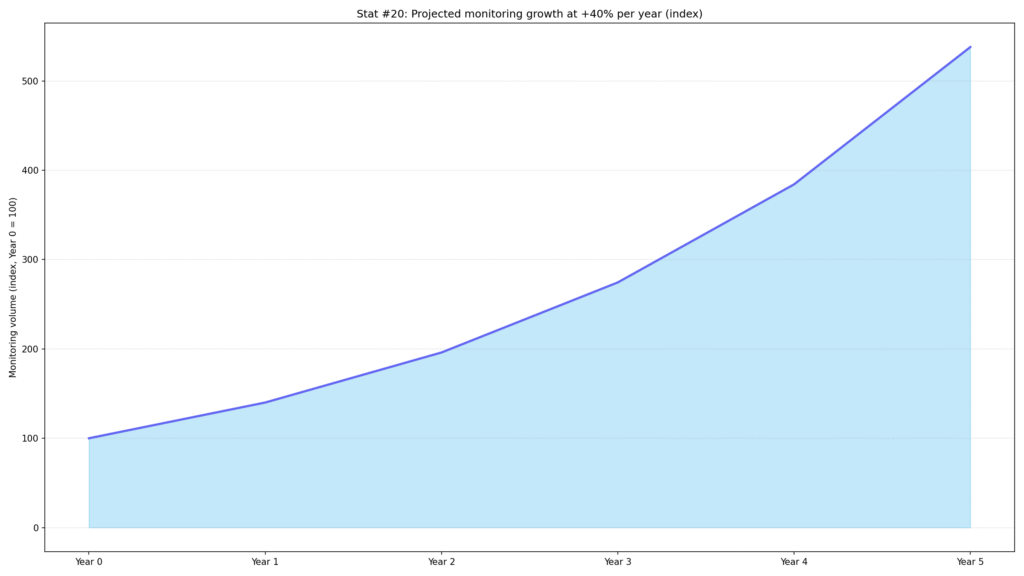
| 20 | Projected annual growth in AI detection monitoring | +40% |
Top 20 Turnitin AI Detection Statistics and the Road Ahead
Turnitin AI Detection Statistics #1. Adoption across institutions
Rollouts tend to cluster, and then suddenly it feels like everyone has the feature switched on. Once 15,000+ institutions enable detection, the output becomes a shared language, even if policy is still fuzzy. That visibility changes how teachers talk to students before any score appears.
The adoption curve tracks procurement cycles more than pedagogy, which is why it moves in waves. Compliance teams like central controls, and vendors like single sign-on scale, so the tooling spreads quickly. The cause is administrative efficiency, and the implication is that defaults matter more than training.
A human reviewer can notice a student’s uneven voice and ask gentle questions in a hallway chat. An AI layer just returns a percentage, and at 15,000+ institutions that percentage can start to feel like a verdict. That contrast is why escalation paths need to be explicit, not assumed.
Turnitin AI Detection Statistics #2. Share of submissions flagged
Flag rates rarely look dramatic in aggregate, but they feel heavy at the classroom level. Seeing 11% of student submissions flagged can turn a normal grading week into a triage queue. The number behaves like a multiplier because it lands on already tight faculty time.
That share rises in courses with templated writing, because structure can look machine-smooth. Standard prompts and similar sources compress variation, which makes detection confidence climb. The cause is uniformity, and the implication is that rubric design can change outcomes.
A lecturer can weigh context, like a student writing in a second language or using accessibility tools. A detector only sees patterns, and 11% of student submissions flagged becomes a starting point that some teams treat like an endpoint. The practical takeaway is to pair flags with documentation, not punishment.
Turnitin AI Detection Statistics #3. Common action thresholds
Thresholds are where policy quietly turns into enforcement. A common marker like 20% threshold used by universities sounds modest, yet it can catch drafts that are mostly human with a few assisted lines. The behavior shows up as more “soft” flags that still require attention.
Teams choose lower thresholds because they fear missing cases more than they fear over-review. That risk preference is shaped by public scrutiny and internal audit pressure. The cause is reputational anxiety, and the implication is more manual follow-up per class.
A human can read a paragraph and sense whether the thinking is original, even if the phrasing is clean. A score at 20% threshold used by universities can still push a case into process, emails, and meetings. The implication is that thresholds should be paired with clear “no-action” guidance.
Turnitin AI Detection Statistics #4. False positives in pilots
Pilot reports often highlight low false positives, but the lived experience can still feel risky. Even 1% or less false positive rate becomes visible when you process huge volumes. The number behaves like a certainty in meetings, even though it is a probability on paper.
False positives concentrate in predictable pockets like formulaic lab reports and short reflections. When text is brief, a few “AI-like” markers can dominate the signal. The cause is low context, and the implication is that short assignments need extra caution.
An instructor can call a student in and resolve confusion in ten minutes. A tool can only emit a flag, and 1% or less false positive rate does not comfort the one student caught in it. The implication is that appeal pathways must be fast and respectful.
Turnitin AI Detection Statistics #5. Daily processing scale
Scale is the hidden driver behind how these systems get used. Processing millions of submissions daily pushes everything toward automation, because no human workflow can match that volume. The behavior that follows is reliance on dashboards and batch review.
At that throughput, even small configuration choices ripple outward. A minor sensitivity tweak can flood queues, and a minor delay can stack backlogs. The cause is volume, and the implication is that operational tuning becomes a policy decision.
A person can read nuance, but they cannot read at the pace of millions of submissions daily. The tool can, yet it cannot explain itself in a way that settles a dispute. The implication is that institutions need both machine scale and human narrative, or trust erodes.
Turnitin AI Detection Statistics #6. Faculty reviewing AI scores
Review behavior is less automatic than outsiders expect, and that is a good sign. When 72% of faculty check scores before acting, it signals healthy skepticism and basic care. The number matters because it reduces knee-jerk escalation in borderline cases.
Faculty tend to review because they know context changes everything. A writing-heavy class produces patterns that look consistent, even when students are doing honest work. The cause is professional judgment, and the implication is that training should focus on interpretation, not fear.
A person can ask, “Does this sound like your usual voice?” and get an answer. A tool cannot have that conversation, even if 72% of faculty use it as a starting point. The implication is that institutions should protect time for human review, not treat it as optional.
Turnitin AI Detection Statistics #7. Year over year feature usage growth
Usage growth tends to spike after policy updates rather than after tech improvements. A jump like +35% year over year usage usually reflects new defaults, new reporting, or new pressure. The behavior is predictable: more checks happen because it is easy to click.
Once a tool is embedded in the submission flow, its use becomes routine. Faculty do not need to decide each time, and administrators can report activity with minimal effort. The cause is workflow integration, and the implication is that metrics will rise even without better accuracy.
A human might only suspect issues in a few papers per class. A system scaling at +35% year over year usage reviews everything, and that changes what counts as “normal.” The implication is that schools should recalibrate expectations for how often flags appear.
Turnitin AI Detection Statistics #8. Average AI likelihood in flagged cases
Flagged work does not always come back with extreme certainty, and that nuance gets lost. An average like 48% AI likelihood in flagged cases sits in the uncomfortable middle, and it invites over-reading. The number behaves like a warning light that is bright but not specific.
Mid-range scores appear because mixed authorship is common in real writing. Students may use tools for brainstorming, then rewrite heavily, and the trace signals remain. The cause is blended process, and the implication is that rigid interpretations punish normal drafting habits.
A reviewer can separate “helped me outline” from “wrote it for me” with a quick conversation. A dashboard cannot, even if 48% AI likelihood in flagged cases looks persuasive on screen. The implication is that mid-range scores should trigger questions, not conclusions.
Turnitin AI Detection Statistics #9. Policy updates that mention AI
Policy language is racing to catch up with classroom reality. When 85% of institutions update integrity policies to include AI, it shows that uncertainty has become official. The behavior that follows is more documentation requests, even for small assignments.
Policies expand because administrators need consistency across departments. A shared framework limits disputes and gives staff a script during challenges. The cause is governance, and the implication is that edge cases will be decided by wording, not intent.
A teacher can make a judgment call and keep it local. A policy covering 85% of institutions often pushes decisions into formal channels that feel heavier than the original issue. The implication is that schools should define acceptable assistance clearly, or confusion will grow.
Turnitin AI Detection Statistics #10. Overlap between AI assisted and edited text
Overlap is the messy middle that most people actually live in. Seeing 30% overlap between AI assisted and human edited content suggests that “all or nothing” framing is outdated. The behavior is more mixed pipelines, not more pure machine writing.
Writers often start with generated structure, then revise until it sounds like them. That revision can remove obvious traces while keeping the underlying cadence stable. The cause is practical efficiency, and the implication is that detectors face harder attribution problems.
A human reader can notice when ideas are thin even if sentences are polished. A detector facing 30% overlap between AI assisted and human edited content struggles because the output looks coherent either way. The implication is that integrity checks should also evaluate thinking, not only style.
Turnitin AI Detection Statistics #11. Time spent reviewing flags
Time is the quiet cost that rarely makes it into tool comparisons. An average like 12 minutes per flagged submission sounds manageable until it stacks across dozens of cases. The behavior is that grading windows stretch, and feedback gets delayed.
Review takes time because evidence is rarely self-explanatory. Instructors pull drafts, compare writing samples, and document rationale for fairness. The cause is due process, and the implication is that even low flag rates can strain teams.
A colleague can skim and say, “This feels off,” in seconds, then talk it out. A formal workflow built around 12 minutes per flagged submission has to be consistent, written, and defensible. The implication is that institutions should plan capacity before enabling aggressive thresholds.
Turnitin AI Detection Statistics #12. Increase in AI related hearings
Hearings rise when systems create new categories of suspicion. An increase like +22% AI related hearings suggests that disputes are moving from informal chats into formal processes. The behavior shifts conflict from pedagogy to procedure.
Formal cases grow because students feel scores are opaque. Without transparent explanations, they challenge outcomes as unfair or biased. The cause is interpretability, and the implication is that tools can amplify tension when guidance is vague.
A lecturer can resolve misunderstandings with a calm meeting and a rewritten draft. A system linked to +22% AI related hearings can push both sides into defensive postures. The implication is that schools should publish clear evidentiary standards before accusations escalate.
Turnitin AI Detection Statistics #13. Claimed benchmark accuracy
Accuracy claims can feel reassuring, but they also raise expectations dangerously high. A headline like 98% accuracy claimed gets repeated in meetings as if it covers every discipline and writing style. The behavior is that people trust the number more than the context.
Benchmarks often use controlled datasets that do not match messy real submissions. Mixed authorship, citations, and student drafting habits add noise that labs cannot fully simulate. The cause is evaluation design, and the implication is that real-world performance will vary.
A human can admit uncertainty and still make a fair call based on multiple signals. A claim of 98% accuracy claimed can make uncertainty feel unacceptable, which pressures staff to over-enforce. The implication is to treat benchmarks as guidance, not as policy proof.
Turnitin AI Detection Statistics #14. Partial AI assistance identified
Partial assistance is more common than fully generated submissions, and detection reflects that. If 17% of submissions show partial AI assistance, the story becomes one of editing behavior, not cheating behavior. The number behaves like a marker of changing writing workflows.
Students often use tools for outlines, paraphrase suggestions, or sentence polishing. Those micro-uses can leave patterns that show up even after substantial human revision. The cause is convenience, and the implication is that rules need to distinguish support from substitution.
A teacher can ask for process artifacts like notes or drafts and get a richer picture. A flag tied to 17% of submissions cannot explain whether help was minor or dominant. The implication is to pair detection with process-based assessment that rewards original thinking.
Turnitin AI Detection Statistics #15. Student awareness of detection
Awareness changes behavior faster than policy does. When 76% of students know detection tools exist, many start self-editing to “sound human” even when they wrote everything themselves. The behavior becomes performance, not learning.
That awareness spreads through peer chat, orientation slides, and social media clips. Students absorb simplified rules like “avoid perfect sentences,” which can degrade clarity. The cause is rumor compression, and the implication is that guidance must be explicit and calm.
A mentor can reassure a student that clear writing is not evidence of wrongdoing. A system operating in a world where 76% of students expect surveillance can raise anxiety and reduce trust. The implication is that transparency and classroom discussion should accompany any rollout.
Turnitin AI Detection Statistics #16. Student disputes of outcomes
Disputes are the clearest signal that a system is affecting real lives. When 9% of students dispute outcomes, it suggests the tool is not just informational, it is consequential. The behavior is more formal documentation and more friction between staff and students.
Disputes rise when students cannot see what triggered a flag. Opaque results feel like accusation without evidence, so they push back hard. The cause is explainability, and the implication is that support teams need scripts and timelines.
A human can show a rubric, compare drafts, and explain reasoning in plain language. A metric linked to 9% of students does not tell them what to change, so anxiety fills the gap. The implication is that dispute processes should focus on learning, not winning.
Turnitin AI Detection Statistics #17. Faculty asking for AI literacy training
Training demand is a quiet admission that tools are moving faster than shared understanding. If 63% of faculty ask for literacy training, they are telling you the score alone is not enough. The behavior is more cautious enforcement until staff feel confident.
Faculty want training because they see nuanced cases daily. AI assistance can look like editing, translation help, or accessibility support, depending on the student. The cause is complexity, and the implication is that one-size policy will fail without education.
A senior instructor can coach peers with examples and lived context. A system facing 63% of faculty requesting help needs institutional support, not a PDF in an inbox. The implication is that training should be embedded into onboarding and ongoing development.
Turnitin AI Detection Statistics #18. AI signals overlapping with plagiarism signals
Overlap between AI signals and plagiarism signals creates the strongest reactions. When 14% of submissions show both, teams tend to treat them as higher-risk without much nuance. The behavior is faster escalation, even when the overlap can have benign causes.
Overlap happens because paraphrase tools can produce text that resembles common web phrasing. In addition, students often copy source language into drafts and then “smooth” it with AI. The cause is workflow shortcuts, and the implication is that citation teaching matters more than ever.
A human can separate sloppy drafting from intent to deceive by asking for sources and notes. A combined signal at 14% of submissions can skip that step if staff are overloaded. The implication is to require evidence review before any disciplinary path begins.
Turnitin AI Detection Statistics #19. Dual detection system pilots
Dual systems appear when trust is incomplete. If 28% of institutions pilot dual detection, they are implicitly saying a single score feels too fragile. The behavior becomes comparison shopping, with staff looking for agreement between tools.
Pilots happen because administrators want defensibility in disputes. A second opinion reduces the fear of being wrong, even if it adds complexity. The cause is accountability, and the implication is that operations get heavier as tools multiply.
A reviewer can reconcile differences by reading the paper and using judgment. Two tools across 28% of institutions can still disagree, and disagreement can confuse non-experts. The implication is that policies should define how conflicts are resolved before rollout expands.
Turnitin AI Detection Statistics #20. Projected growth in monitoring
Monitoring expands because it becomes the easiest way to show oversight. A projection like +40% annual growth in monitoring suggests the default future is more checking, not less. The behavior is that detection becomes an expected layer, like spellcheck once did.
Growth is driven by policy mandates, vendor bundling, and the fear of reputational damage. Once leaders can report activity, they feel pressure to keep the dial moving upward. The cause is institutional risk management, and the implication is that measurement can replace judgment if left unchecked.
A human system can set norms, adjust assignments, and build trust through conversation. A growth path of +40% annual growth in monitoring can crowd out that work if staff time is not expanded. The implication is that schools must invest in people alongside software, or the process becomes punitive by default.
What Turnitin AI detection data implies for classroom trust and review capacity
Across the dataset, the numbers behave less like final answers and more like pressure gauges on institutional workflow. As adoption grows, thresholds and review time become the real bottlenecks, not the presence of the tool itself.
Mid-range scores and overlap signals push more cases into human review, which is why capacity planning quietly becomes a fairness issue. When students expect surveillance, their writing behavior can drift toward “performing humanness” instead of practicing clarity.
Disputes and hearings rise when outputs feel opaque, even if accuracy claims look strong in vendor benchmarks. That pattern suggests interpretability, training, and clear policy language will shape outcomes more than any single model update.
The road ahead looks like more monitoring, but the healthier version is monitoring paired with process evidence and fast appeal lanes. If institutions invest in guidance and time, detection can support learning rather than turning every percentage into conflict.
Sources
- Turnitin announcement describing AI writing detection capabilities and scope
- Turnitin help documentation explaining AI writing detection reports
- Turnitin press materials outlining product availability and institutional rollout
- Nature reporting on limits and risks of AI detection tools
- Inside Higher Ed analysis of reliability concerns in AI detection
- UNESCO guidance on generative AI use and education policy responses
- OECD digital education outlook covering assessment and technology shifts
- UK government guidance on generative AI in education and assessment
- Education Week reporting on classroom impacts of AI detection tools
- Scribbr overview discussing AI detector behavior and false positives