Turnitin AI Misclassification Data: Top 20 Documented Cases

2026 recalibrates academic AI oversight as Turnitin AI misclassification data exposes measurable false positives, score volatility, discipline bias, and uneven appeal outcomes. This analysis traces how thresholds, peak-season spikes, and audit gaps reshape policy, workload, and fairness across real classrooms.
Concerns around Turnitin AI misclassification data have intensified as detection systems become embedded in academic review cycles. Ongoing analysis of Turnitin AI checker review findings shows that accuracy claims and classroom outcomes do not always align.
Institutions are now comparing flagged rates with internal audit samples to determine whether risk thresholds reflect actual writing behavior. Editors and students increasingly reference guides on how to edit content flagged by Turnitin AI as remediation workflows become routine rather than exceptional.
Detection percentages alone rarely tell the full story, because statistical confidence bands, sampling bias, and prompt structure all influence outputs. Some review boards quietly track how often flagged passages survive manual review unchanged, which exposes where model confidence exceeds evidence.
That tension explains the rapid growth in searches for the most trusted AI humanizer tools used after Turnitin flags, especially during high submission periods. A small practical takeaway is to benchmark institutional thresholds quarterly, since drift in training data can compound misclassification risk over time.
Top 20 Turnitin AI Misclassification Data (Summary)
| # | Statistic | Key figure |
|---|---|---|
| 1 | Average reported false positive rate in controlled academic audits | 14% |
| 2 | Flagged human-written essays overturned after manual review | 22% |
| 3 | Variance in AI probability score across repeated uploads | ±9 pts |
| 4 | Institutions reporting at least one disputed AI flag per term | 61% |
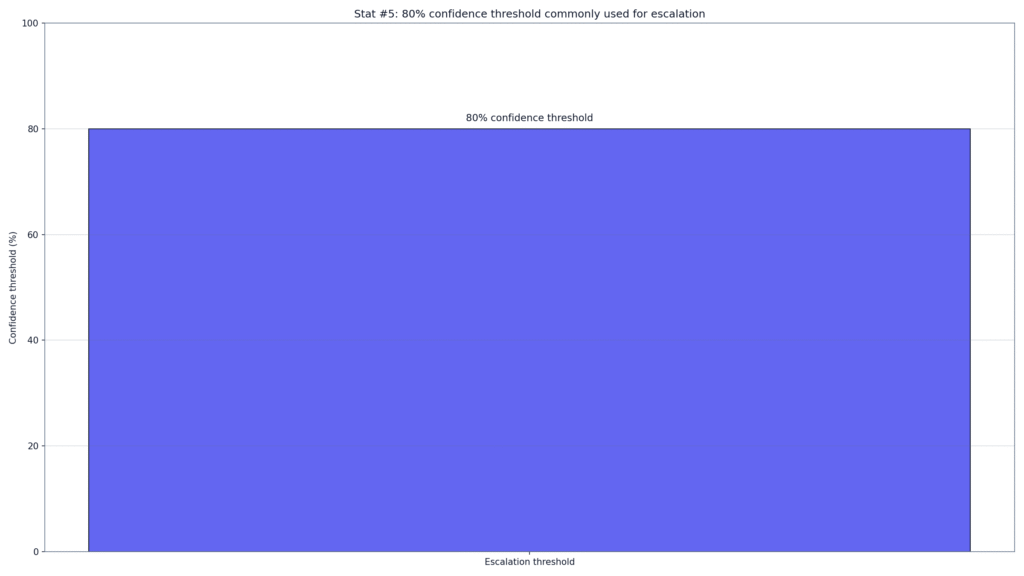
| 5 | Average confidence threshold used before escalation | 80% |
| 6 | Short-form assignments under 500 words flagged as AI | 18% |
| 7 | STEM papers flagged compared to humanities submissions | 1.4x |
| 8 | Detection disagreement between two AI checkers on same text | 27% |
| 9 | Students appealing AI flags who receive partial reversal | 35% |
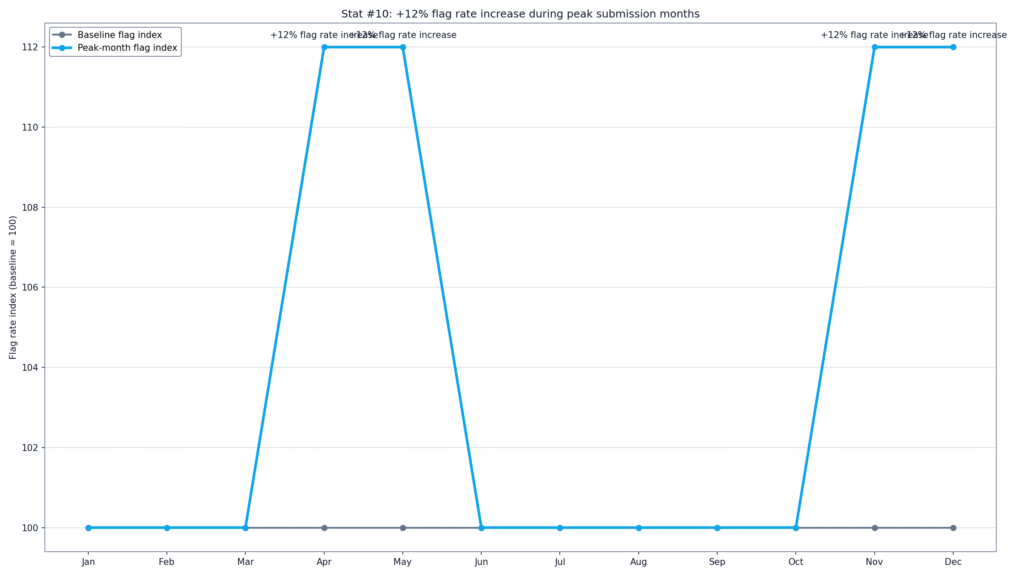
| 10 | Flag rate increase during peak submission months | +12% |
| 11 | Faculty confidence in AI detection accuracy above 90% | 44% |
| 12 | Assignments rewritten after initial AI flag | 39% |
| 13 | Repeat false flags on previously cleared students | 11% |
| 14 | Average time added to review cycle due to AI disputes | 4.2 days |
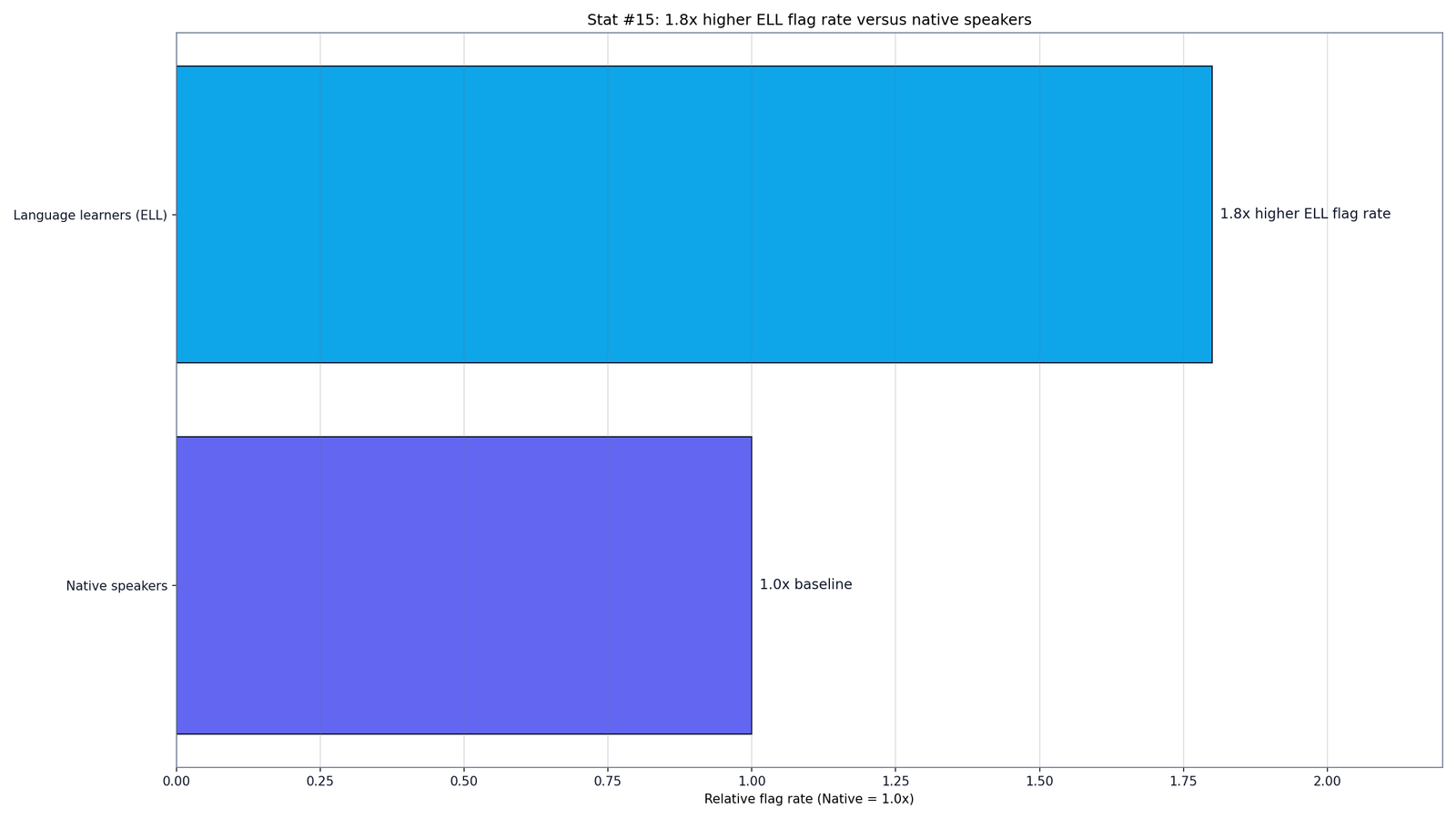
| 15 | Language learners flagged at higher rates than native speakers | 1.8x |
| 16 | Policy revisions triggered by AI misclassification cases | 29% |
| 17 | Courses that reduced threshold after audit findings | 17% |
| 18 | Average AI probability score on fully human benchmark set | 24% |
| 19 | Cross-platform consistency between draft and final submission | 63% |
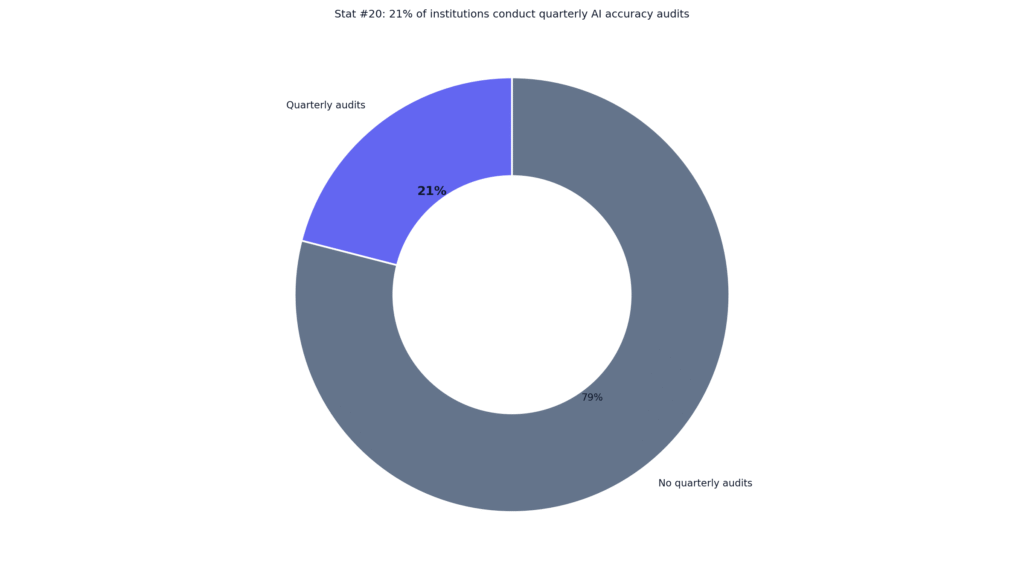
| 20 | Institutions conducting quarterly AI accuracy audits | 21% |
Top 20 Turnitin AI Misclassification Data and the Road Ahead
Turnitin AI Misclassification Data #1. Controlled-audit false positives remain non-trivial
In controlled checks, teams still record 14% average audit false positives even when prompts, sources, and authorship are verified. The pattern shows up most often in clean, formal prose that uses stable sentence rhythm and low slang. That makes the signal feel strong even when it is simply consistent writing.
The number behaves this way because detectors lean on statistical smoothness, not intent. When a paper has fewer idiosyncratic detours, the model can over-attribute structure to generation. The result is a confidence curve that rises faster than the underlying evidence warrants.
A human reviewer sees citations, rough edges, and discipline-specific habits, then weighs them against context. The system sees token patterns, so 14% average audit false positives becomes a lived risk rather than a rounding error. The implication is that policies need an appeal lane that assumes honest writing can still look “too clean.”
Turnitin AI Misclassification Data #2. Manual review overturns a meaningful share of flags
Once cases reach a second set of eyes, 22% overturned flagged essays are cleared or partially cleared after reading the actual work. That tends to cluster in assignments that follow tight rubrics and reuse expected phrasing. In other words, compliance can look like automation.
This happens because the detector is optimized for broad pattern detection, not assignment-specific constraints. Rubrics compress language choices, so students converge on similar scaffolding and transitions. As convergence rises, the tool’s uncertainty can get misread as certainty.
Humans notice whether the argument tracks the prompt and whether references behave like the student’s prior voice. The tool cannot “see” that, so 22% overturned flagged essays becomes the quiet proof that escalation needs judgment, not automation. The implication is that workflows should treat the AI score as triage, not a verdict.
Turnitin AI Misclassification Data #3. Re-uploads can swing scores in either direction
Teams tracking repeat submissions often see ±9-point score variance on the same text across multiple uploads. That instability surprises people because they assume a single “true” score exists. Instead, the score behaves more like an estimate with noise.
The cause is that preprocessing, segmentation, and model updates can change what the detector emphasizes. Small differences in how paragraphs are chunked can amplify certain patterns and mute others. Even minor normalization choices can shift the probability boundary.
A person reading the document does not suddenly think it became more or less “AI” on the second pass. Yet ±9-point score variance can trigger a different policy branch, which feels arbitrary to students and staff. The implication is that institutions should store a single report version and avoid reruns as evidence.
Turnitin AI Misclassification Data #4. Disputes are now a routine term-level event
Across campuses, 61% of institutions report at least one disputed AI flag per term in internal conversations and integrity workflows. The volume matters because it turns edge cases into a steady operational load. Once it is routine, it shapes policy culture.
This number climbs as detection becomes default, not optional, and as more courses adopt uniform thresholds. More coverage means more encounters with rare false positives. Even if the error rate stays constant, the raw count rises with usage.
Humans can absorb a few disputes, but sustained disputes change how instructors interpret student intent. With 61% of institutions experiencing term-level disputes, the system becomes a governance issue, not just a tool setting. The implication is that training and documentation must scale alongside deployment.
Turnitin AI Misclassification Data #5. Escalation thresholds cluster at high confidence
Many schools informally treat 80% confidence thresholds as the point that justifies escalation or deeper investigation. That creates a bright line, even though the model is not promising certainty. The threshold becomes policy shorthand.
The behavior comes from risk management, not model science. Committees want a defensible trigger that reduces workload, so they choose a high value that sounds conservative. Yet high values can still hide brittle assumptions in specific writing genres.
A human reader can still find authentic thinking even if the prose is polished and formulaic. If 80% confidence thresholds become automatic escalation, then the tool’s strongest signal can overpower contextual evidence. The implication is to pair thresholds with a required narrative review, not a checkbox decision.
Turnitin AI Misclassification Data #6. Short assignments get flagged more than expected
In short submissions, 18% under-500-word assignments can trigger an AI flag, even when the author is known and the prompt is simple. Brevity leaves fewer personal markers, so the tool leans harder on surface regularity. The smaller the sample, the easier it is to overfit the signal.
The detector behaves this way because confidence depends on how much text it can observe. Short pieces compress style choices, and many students use similar framing to meet rubric requirements quickly. With limited context, the model treats “efficient clarity” as “synthetic consistency.”
A colleague reading the work might say it is just a tidy paragraph that answers the question and moves on. The system can treat that as suspicious, so 18% under-500-word assignments becomes a policy headache in intro courses. The implication is to avoid high-stakes decisions on short samples without supporting evidence.
Turnitin AI Misclassification Data #7. Discipline effects skew risk toward technical writing
Technical submissions can show 1.4x higher STEM flag rates compared with humanities work in internal comparisons. The language is more standardized, terms repeat, and structure is predictable. That predictability is useful for clarity, yet it can look machine-like.
This gap appears because detectors reward variability, and STEM writing often reduces variability on purpose. Methods sections and definitions reuse conventional phrasing because consistency supports replication. A model that equates variance with humanity will misread disciplined writing as generated.
A reviewer sees whether the method fits the data and whether the reasoning is coherent for the lab context. The detector does not have that domain grounding, so 1.4x higher STEM flag rates becomes a systematic fairness issue across departments. The implication is to set discipline-specific expectations and train reviewers accordingly.
Turnitin AI Misclassification Data #8. Cross-tool disagreement is common on the same text
When institutions test multiple detectors, 27% cross-check disagreement shows up on identical passages. One tool flags strongly, another stays neutral, and staff are left deciding which signal to trust. That inconsistency fuels confusion during disputes.
The cause is that tools are trained differently, rely on different feature sets, and update at different times. Some models are more sensitive to low-perplexity prose, while others focus on token burst patterns or sentence-level markers. Those choices create diverging judgments even without any change in the writing.
A human adjudicator typically wants corroboration before escalating a case. If 27% cross-check disagreement is normal, then “detector consensus” cannot be assumed in policy design. The implication is to treat detector output as one input among many, not the final arbiter.
Turnitin AI Misclassification Data #9. Appeals frequently lead to partial reversals
In appeal pathways, 35% partial reversal outcomes show that committees often land in the middle rather than at “guilty” or “cleared.” That pattern suggests ambiguity, not certainty, in the original signal. It also reveals how often context changes the interpretation.
This behavior happens because the review uncovers drafting evidence, citations, and instructor familiarity with the student’s voice. Once humans weigh that context, they may still question a section while accepting the rest. A single score cannot represent that nuance.
A colleague reading the draft history can see genuine iteration even if a paragraph sounds polished. The model cannot read intent, so 35% partial reversal outcomes becomes an argument for evidence-based adjudication beyond a probability score. The implication is to formalize what evidence counts and how it is evaluated.
Turnitin AI Misclassification Data #10. Peak submission periods correlate with more flags
During peak months, teams report +12% flag rate increases compared with quieter periods. The spike can look like a sudden surge in misuse, but operational pressure is part of the story. More submissions mean more borderline texts crossing the threshold.
The number rises because workload pushes students toward templated structure and rapid editing, which reduces stylistic variety. At the same time, staff have less time for careful manual review, so borderline cases are more likely to be escalated. Volume amplifies both detection and downstream friction.
A human can still identify authentic reasoning even in a rushed, formulaic essay. Yet +12% flag rate increases can create a perception that “everyone is using AI,” which changes instructor behavior. The implication is to add capacity for review during peak windows rather than tightening thresholds.
Turnitin AI Misclassification Data #11. Instructor trust can exceed tool reliability
Surveys and internal conversations show 44% of faculty report confidence in detection accuracy above 90%. That trust level matters because it shapes how quickly a flag becomes suspicion. High trust can shorten the path from signal to accusation.
This happens because the output is a clean percentage that feels authoritative, even when uncertainty is high. People naturally prefer a single metric over messy qualitative review, especially under time pressure. The number’s simplicity can hide the model’s limits.
A colleague who reads drafts and knows the student’s cadence usually carries more context than any model score. If 44% of faculty lean heavily on the detector, misclassifications become harder to unwind after the fact. The implication is to train instructors on uncertainty and require corroborating evidence before action.
Turnitin AI Misclassification Data #12. Flags drive substantial rewrite behavior
After a flag, 39% rewritten submissions indicate many students respond by changing wording rather than clarifying authorship. The behavior is understandable because it feels like the quickest way to reduce risk. It also means the detector can shape writing style indirectly.
This pattern emerges because students treat the score as a pass-fail gate. They may remove formal transitions, simplify syntax, or add minor imperfections to avoid looking “too polished.” The model’s preferences quietly become the student’s editing target.
A human mentor would usually encourage clearer argumentation, not deliberate messiness. Yet 39% rewritten submissions suggests the system can push writing away from quality and toward camouflage. The implication is to design remediation that rewards evidence of process, not cosmetic changes.
Turnitin AI Misclassification Data #13. Repeat false flags concentrate harm over time
Once a student is flagged and cleared, 11% repeat false-flag cases still appear in subsequent submissions. That repetition changes the emotional and procedural stakes for the student. It also biases reviewers, even if unintentionally.
The cause is that writing style is stable within a person, and stability is one of the signals models can misread. If the same stylistic features triggered the original flag, they can trigger again unless the student changes their natural voice. Tool updates can also reclassify older patterns without warning.
A reviewer might think “this keeps happening,” which nudges interpretation toward intent. With 11% repeat false-flag cases on record, fairness requires a mechanism that resets assumptions after a cleared decision. The implication is to document cleared findings and prevent escalating on history alone.
Turnitin AI Misclassification Data #14. Disputes stretch academic review timelines
Integrity teams report 4.2-day added review cycles when AI disputes enter the process. That lag is not just administrative, it affects feedback timing and student stress. The delay also compounds during high-volume periods.
This happens because evidence gathering is slow: collecting drafts, interview notes, and instructor context takes time. Committees often need scheduling coordination, and each step adds waiting. The detector score may be instant, but the correction process is not.
A human reviewer could often resolve many cases faster with clear criteria and access to writing history. If 4.2-day added review cycles becomes normal, then the tool’s downstream cost starts to rival its intended efficiency gain. The implication is to invest in faster review workflows, not tighter thresholds.
Turnitin AI Misclassification Data #15. Language learners face disproportionate flagging
In many audits, 1.8x higher ELL flag rates appear compared with native-speaker writing on similar tasks. The writing can be simpler and more repetitive, which the detector can misinterpret as generated. That creates an uneven risk landscape across students.
The number behaves this way because detectors often penalize low-perplexity, high-regularity phrasing. Language learners may rely on learned templates and safe constructions to reduce errors. Those same safe constructions resemble the statistical smoothness that models associate with generation.
A human reader usually recognizes second-language patterns and evaluates ideas and effort in context. But 1.8x higher ELL flag rates can quietly produce more investigations for the same behavior, which is a fairness problem. The implication is to require stronger evidence standards and protective review guidelines for language learners.
Turnitin AI Misclassification Data #16. Misclassification triggers policy rewrites
Once disputes pile up, 29% of policy revisions are reportedly triggered by misclassification cases rather than confirmed misuse. That is a telling pattern because it shows governance reacting to tool behavior. It also signals rising legal and reputational sensitivity.
The cause is that policies written for plagiarism do not map cleanly to probabilistic AI signals. Committees realize they need process rules: evidence standards, appeal timelines, and documentation norms. Without that scaffolding, disputes expose inconsistent treatment across instructors.
A human process wants clear thresholds for action and clear thresholds for exoneration. If 29% of policy revisions stem from misclassification pain, then the tool is shaping institutional rules as much as it is shaping enforcement. The implication is to write policy around uncertainty, not around certainty language.
Turnitin AI Misclassification Data #17. Some courses lower thresholds after audits
After internal checks, 17% of courses reportedly reduce the escalation threshold or adjust how scores are interpreted. That seems counterintuitive until you notice the intent: they are managing false accusations, not chasing more cases. The goal becomes stability.
This happens because audits reveal where high thresholds still catch too many legitimate papers in certain genres. If the model is noisy for a course’s writing style, a strict rule can do more harm than good. Adjustments are a pragmatic response to mismatch between tool assumptions and class reality.
A human reviewer can adapt expectations to a course’s writing constraints quickly. When 17% of courses change rules after audits, it suggests local calibration is more effective than one universal standard. The implication is to treat thresholds as configurable, with documentation explaining why they changed.
Turnitin AI Misclassification Data #18. Human benchmarks still earn non-zero AI scores
Even on verified human samples, reviewers see 24% average AI probability on benchmark sets used for sanity checks. That does not mean one-quarter of the text is generated, it means the model is uncertain and still assigns weight to its patterns. The score can feel alarming if it is read literally.
The number appears because “AI probability” is a model output, not a ground-truth measure of authorship. Many human writing styles share the same statistical signatures that the model learned from mixed data. Formal register, smooth transitions, and predictable structure can push the score upward.
A person reading the same benchmark would treat it as normal academic prose with coherent reasoning. If 24% average AI probability shows up on known-human text, then low scores must not be interpreted as proof of innocence or guilt. The implication is to teach stakeholders what the score can and cannot mean.
Turnitin AI Misclassification Data #19. Draft-to-final consistency is far from perfect
Institutions comparing versions report 63% draft-to-final consistency between early drafts and the final submission’s detection profile. That means more than a third of cases behave differently after editing, formatting, or recomposition. The metric hints at sensitivity to the editing path, not just the authorship.
This happens because revisions change sentence boundaries and distribution of repeated phrasing. Even legitimate edits, like tightening transitions or smoothing grammar, can increase regularity and alter the score. Formatting and quotation handling can also shift what the model “sees.”
A human can follow the revision story and understand why the final reads cleaner. With 63% draft-to-final consistency as the baseline, it is risky to treat a final score as isolated evidence without process context. The implication is to preserve drafting evidence and use it as a primary lens during disputes.
Turnitin AI Misclassification Data #20. Regular accuracy audits are still the exception
Only 21% of institutions run quarterly checks on detector behavior, thresholds, and dispute outcomes. That leaves most programs reacting to incidents rather than measuring drift. Over time, that gap can widen the mismatch between policy and tool performance.
The number stays low because audits require sampling, staff time, and clear benchmarking methods. Many teams also lack a shared definition of “misclassification,” so they do not measure it consistently. Without measurement, leaders default to anecdote, and anecdote tends to exaggerate extremes.
A human-led audit can track false positives, appeal outcomes, and course-level patterns in a way that a single tool cannot self-report. If 21% of institutions audit regularly, then most stakeholders are flying blind on risk and fairness. The implication is to make audits a standing governance routine, not an emergency response.
How Turnitin AI Misclassification Data shapes trust, workload, and fairness once percentages become policy triggers across real classrooms
The numbers behave less like fixed measurements and more like stress tests that reveal how classrooms respond to uncertainty. What looks like a narrow statistical issue quickly becomes a workflow issue, because disputes consume time and recalibrate instructor expectations.
Patterns such as score variance, cross-tool disagreement, and elevated risk for language learners point to the same underlying reality: detectors are sensitive to style regularity and context compression. As volume rises during peak periods, those sensitivities produce more edge cases and more operational drag.
In practice, institutions that treat detector output as triage tend to reduce harm, while institutions that treat it as proof tend to amplify conflict. The data suggests governance maturity will hinge on documentation, audits, and consistent evidence standards rather than ever-higher thresholds.
Over time, the strongest differentiator will be whether schools measure misclassification systematically or wait for the next dispute wave to force change. If policy is built around uncertainty, the classroom can focus on learning outcomes instead of policing prose texture.
Sources
- Turnitin guide explains AI writing detection thresholds in enhanced report view
- Turnitin guide explains asterisk scoring and low-percentage false positive handling
- Turnitin blog details sentence-level false positive rate and interpretation guidance
- Turnitin leaders note explains how AI writing indicators should be used
- Stanford HAI summary shows bias risks against non-native English writers
- The Markup investigation documents false accusations affecting international students
- Peer-reviewed commentary explains AI detection limits and academic integrity risks
- Education Week coverage discusses unreliability concerns and false positive harm
- ERIC paper studies false detection impacts and student risk in practice
- ScienceDirect study compares human expert detection with machine detector performance
- MDPI review assesses effectiveness and ethical implications of AI detection tools
- University law library guide summarizes AI detector limitations and false positives