How to Edit Content Flagged by Turnitin AI: 15 Documentation-Ready Edits

In 2026, more students are revising flagged drafts with structured, documentation-ready edits that strengthen voice and clarity without compromising integrity. Research published in Computers and Education: Artificial Intelligence by Elsevier confirms AI detection tools can misclassify human writing, reinforcing the need for transparent, methodical revision.
How to Edit Content Flagged by Turnitin AI: 15 Documentation-Ready Edits
Seeing a high AI score after submission can feel frustrating, especially if you know the work reflects your thinking and research. If Turnitin says your essay is AI, you need a calm, structured way to revise without compromising your ideas.
Flagged content usually happens because of predictable phrasing, rigid sentence flow, or overly polished structure that reads machine-generated. Many students rush to random edits instead of using a method informed by tools like the best AI humanizer tools for Turnitin review.
The goal is not to disguise writing but to restore authentic voice, context, and reasoning while keeping academic integrity intact. Understanding how often Turnitin flags human writing helps you focus on documentation-ready changes that actually lower risk and strengthen clarity.
| # | Strategy focus | Practical takeaway |
|---|---|---|
| 1 | Sentence rhythm variation | Break predictable flow patterns so the writing sounds more human and less mechanically structured. |
| 2 | Specific detail layering | Add context, examples, and nuance that reflect original reasoning instead of generic summaries. |
| 3 | Thesis recalibration | Refine the central claim to sound argued rather than generated. |
| 4 | Transition rewrites | Replace formulaic connectors with natural logic between ideas. |
| 5 | Active voice restoration | Revise passive constructions that create an artificial tone. |
| 6 | Citation transparency | Clarify sourcing so research reads intentional and traceable. |
| 7 | Personal reasoning signals | Embed analytical cues that reflect human judgment and interpretation. |
| 8 | Paragraph structure breaks | Adjust uniform paragraph length to reduce patterned formatting. |
| 9 | Evidence expansion | Explain how sources connect to claims instead of listing information. |
| 10 | Concrete examples | Insert specific scenarios that demonstrate understanding beyond surface explanation. |
| 11 | Sentence-level paraphrasing | Rewrite flagged lines thoughtfully rather than swapping synonyms. |
| 12 | Tone softening | Reduce overly formal phrasing that signals automated drafting. |
| 13 | Claim qualification | Add nuance to broad statements so arguments sound measured. |
| 14 | Documentation notes | Keep track of revisions so you can explain your editing process if questioned. |
| 15 | Final integrity review | Run a structured final pass to confirm clarity, originality, and academic compliance. |
15 Documentation-Ready Edits to How to Edit Content Flagged by Turnitin AI
How to Edit Content Flagged by Turnitin AI – Strategy #1: Sentence rhythm variation
One of the most effective ways to approach How to Edit Content Flagged by Turnitin AI is to intentionally vary sentence rhythm so the structure no longer follows a predictable, machine-like cadence that detection systems often associate with automated drafting. This means blending longer analytical sentences with shorter clarifications, adjusting clause placement, and occasionally restructuring ideas so they unfold more naturally rather than in evenly spaced, formulaic patterns. When reviewing a flagged paragraph, read it aloud and listen for uniform pacing, because consistent sentence length and similar openings often create the mechanical tone that raises suspicion.
This technique works because human writers naturally shift tempo as they explain, clarify, and emphasize ideas, especially when thinking through complex material in real time. For example, if a paragraph contains five similarly sized sentences that each begin with abstract phrasing, rewriting two of them to include contextual qualifiers or embedded reasoning immediately softens the artificial feel. Be careful not to introduce unnecessary complexity, however, since the goal is not to confuse the reader but to restore organic flow that reflects authentic academic thinking.
How to Edit Content Flagged by Turnitin AI – Strategy #2: Specific detail layering
Another core principle in How to Edit Content Flagged by Turnitin AI involves layering in specific contextual details that demonstrate personal engagement with the material rather than relying on broad, polished summaries. Detection systems frequently identify generalized explanations that lack grounded examples, so adding concrete references to course discussions, lecture themes, or narrowly defined case elements helps anchor the writing in lived academic experience. Instead of stating that a theory is widely accepted, explain how it appears within the assigned text or how it directly connects to the prompt requirements.
This approach strengthens credibility because it transforms abstract language into situated analysis, which is far less likely to resemble generic AI output. Imagine revising a paragraph on economic policy by referencing a particular data point discussed in class, then explaining why that data complicates the main claim rather than simply repeating textbook phrasing. The added specificity not only lowers detection risk but also improves argumentative depth, which ultimately benefits both originality assessment and grading standards.
How to Edit Content Flagged by Turnitin AI – Strategy #3: Thesis recalibration
A carefully recalibrated thesis is central to mastering How to Edit Content Flagged by Turnitin AI because many flagged essays rely on overly balanced, symmetrical claims that feel algorithmically composed rather than personally argued. Revisit your opening statement and ensure that it reflects a clear position shaped by interpretation, tension, or limitation instead of a perfectly neutral summary of both sides. A thesis that acknowledges uncertainty, scope boundaries, or interpretive nuance often reads more convincingly human.
This works in practice because authentic academic writing typically reveals the writer’s reasoning process, including hesitation or deliberate qualification, rather than presenting a flawlessly optimized claim. For instance, instead of asserting that a policy is entirely beneficial, you might argue that it produces measurable improvements in one domain while introducing overlooked trade-offs in another, then signal how the essay will explore that tension. Such recalibration demonstrates intellectual ownership, which meaningfully reduces the appearance of automated construction.
How to Edit Content Flagged by Turnitin AI – Strategy #4: Transition rewrites
Refining transitions is a subtle but powerful step in How to Edit Content Flagged by Turnitin AI, especially because formulaic connectors such as “Furthermore” or “In conclusion” often appear repeatedly in AI-generated drafts. Replace rigid transition phrases with logic-driven movement that grows directly from the preceding sentence, allowing ideas to evolve rather than being mechanically linked. Instead of inserting stock connectors, expand the final clause of one sentence to naturally introduce the next concept.
This strategy succeeds because real academic reasoning rarely depends on interchangeable transition templates, and instead builds continuity through conceptual progression. For example, if you conclude a paragraph discussing limitations of a study, begin the next paragraph by explaining how those limitations influence interpretation rather than announcing a new section with a predictable cue. The resulting flow feels intentional and intellectually cohesive, which lowers detection patterns tied to standardized transitional language.
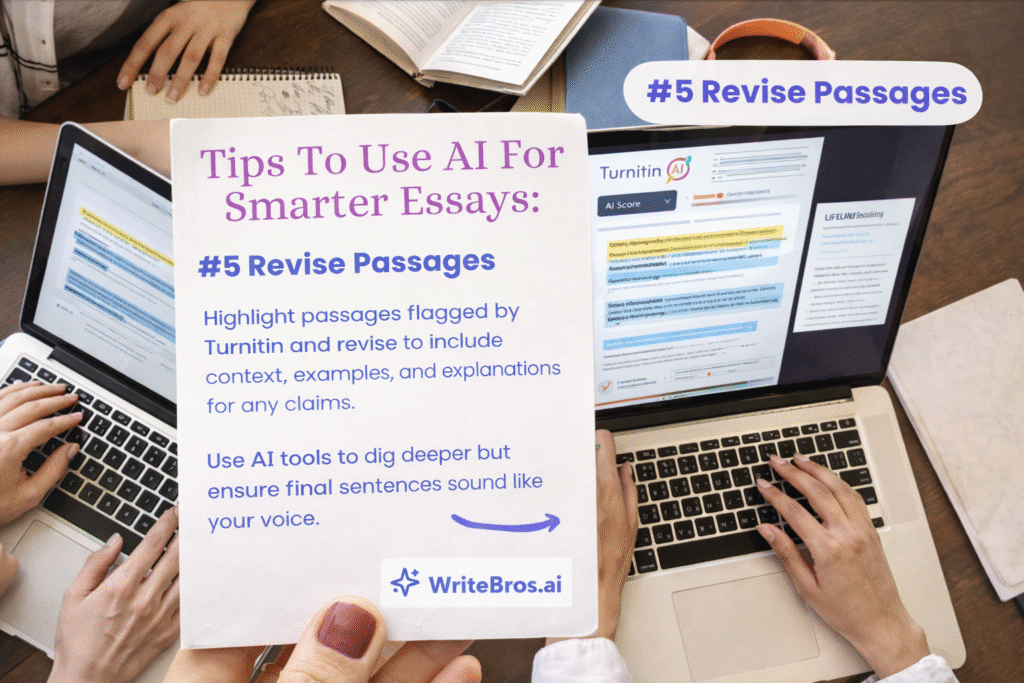
How to Edit Content Flagged by Turnitin AI – Strategy #5: Active voice restoration
Restoring active voice is an essential component of How to Edit Content Flagged by Turnitin AI, particularly when flagged sections contain extended passive constructions that distance the writer from their own analysis. While passive voice has legitimate academic uses, excessive reliance on it can create a detached and overly formal tone that resembles automated output. Identify sentences where the actor is hidden and revise them so the subject performs the action directly.
This revision method is effective because human writers naturally alternate voice depending on emphasis, whereas AI drafts often default to passive patterns for neutrality. Consider transforming “It is argued that social media influences behavior” into a more direct statement that specifies who argues and why that interpretation matters within your analysis. The change introduces accountability and interpretive ownership, strengthening both authenticity and clarity.
How to Edit Content Flagged by Turnitin AI – Strategy #6: Citation transparency
Improving citation transparency plays a critical role in How to Edit Content Flagged by Turnitin AI because vague or overly smooth integration of sources can resemble synthesized AI summaries rather than documented scholarship. Instead of embedding research in a seamless block of paraphrase, clearly distinguish between your interpretation and the original author’s contribution. Signal how each source informs, challenges, or reframes your argument so the intellectual path is visible.
This clarity reduces suspicion because detection systems and instructors alike look for traceable reasoning rather than blended informational output. For example, explicitly stating why a particular study is relevant to your thesis and acknowledging its limitations demonstrates evaluative thinking beyond surface-level summary. Transparent integration reinforces academic integrity and strengthens argumentative credibility at the same time.
How to Edit Content Flagged by Turnitin AI – Strategy #7: Personal reasoning signals
Embedding personal reasoning signals is another cornerstone of How to Edit Content Flagged by Turnitin AI, especially when flagged passages lack interpretive markers that show how conclusions were reached. Phrases that explain why evidence matters, how you weighed competing interpretations, or what implications follow from a claim introduce cognitive fingerprints typical of human writing. These signals reveal the thought process behind the prose rather than presenting conclusions as if they emerged automatically.
This works because authentic academic work reflects decision-making, prioritization, and analytical trade-offs that machines rarely articulate organically. For instance, explaining why you chose one theoretical framework over another adds depth that generic summaries usually omit. Such reasoning anchors the text in discernible intellectual judgment, which meaningfully reduces mechanical patterns.
How to Edit Content Flagged by Turnitin AI – Strategy #8: Paragraph structure breaks
Adjusting paragraph structure is an understated yet impactful element of How to Edit Content Flagged by Turnitin AI, particularly when drafts exhibit uniform paragraph length and symmetrical internal structure. Detection systems may notice repetitive formatting, so varying paragraph depth and repositioning supporting evidence can disrupt those visual and structural patterns. Consider combining shorter paragraphs or expanding underdeveloped ones to better reflect natural argumentative pacing.
This variation matters because human writers rarely produce perfectly balanced sections unless deliberately outlining, whereas automated drafts often default to evenly spaced blocks. If every paragraph contains exactly four sentences that follow claim, evidence, explanation, and summary, restructuring two of them into more exploratory sequences introduces authenticity. The result feels less templated and more reflective of evolving analysis.
How to Edit Content Flagged by Turnitin AI – Strategy #9: Evidence expansion
Expanding evidence is a central revision step in How to Edit Content Flagged by Turnitin AI, especially when flagged content summarizes research without explaining its argumentative relevance. Rather than listing findings, elaborate on how each piece of evidence strengthens or complicates your thesis. Clarify connections explicitly so readers see the reasoning chain unfold in detail.
This deeper engagement works because genuine scholarship typically interprets data rather than presenting it neutrally. For example, if citing a survey result, explain why that statistic alters the stakes of your argument or reveals an overlooked dimension of the topic. The expanded explanation adds intellectual texture that reduces generic summarization patterns.
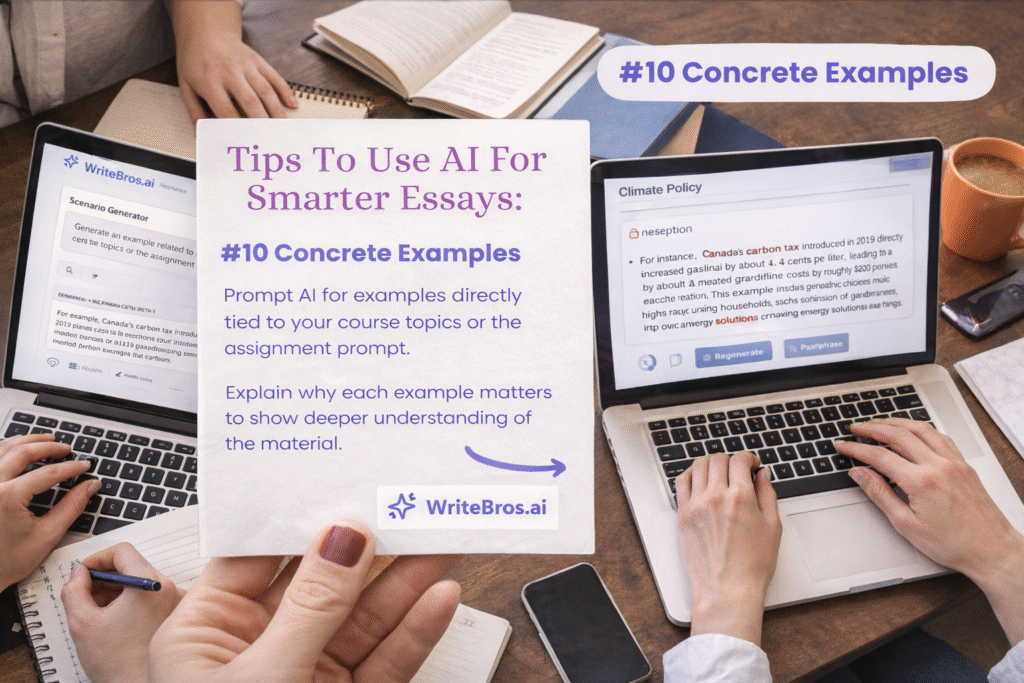
How to Edit Content Flagged by Turnitin AI – Strategy #10: Concrete examples
Incorporating concrete examples strengthens How to Edit Content Flagged by Turnitin AI because abstract writing without illustrative scenarios often resembles algorithmic generalization. Choose examples tied directly to your course material, case studies, or real-world events relevant to the assignment prompt. Ensure that each example is analyzed rather than merely inserted for decoration.
This strategy succeeds because specificity differentiates authentic engagement from automated exposition. For instance, referencing a particular historical event discussed in class and explaining its nuanced implications demonstrates contextual understanding. The presence of grounded illustration signals ownership of the material and reduces the impression of detached synthesis.
How to Edit Content Flagged by Turnitin AI – Strategy #11: Sentence-level paraphrasing
Thoughtful sentence-level paraphrasing is essential when applying How to Edit Content Flagged by Turnitin AI, particularly if certain lines were directly generated or closely mirror common phrasing patterns. Instead of swapping isolated synonyms, reconstruct the sentence from the ground up so the logic unfolds differently. Reordering clauses and reframing emphasis often produces a more authentic result than surface-level edits.
This method works because meaningful rewriting changes structure and reasoning flow rather than vocabulary alone. For example, shifting from a cause-and-effect structure to a problem-and-solution explanation alters the sentence’s cognitive shape. Such transformation reduces pattern recognition while preserving substantive meaning.
How to Edit Content Flagged by Turnitin AI – Strategy #12: Tone softening
Softening tone can significantly improve How to Edit Content Flagged by Turnitin AI, especially when the draft sounds excessively polished or uniformly formal. AI-generated prose often maintains an even, elevated register that lacks variation in confidence and emphasis. Introducing measured qualifiers and conversational academic phrasing can make the writing feel more grounded.
This adjustment matters because authentic writers fluctuate in certainty depending on evidence strength and argumentative context. For instance, replacing rigid declarations with carefully framed claims that acknowledge scope limitations demonstrates intellectual humility. Such tonal variation aligns more closely with human reasoning patterns.
How to Edit Content Flagged by Turnitin AI – Strategy #13: Claim qualification
Qualifying broad claims is a vital practice in How to Edit Content Flagged by Turnitin AI because sweeping statements often resemble optimized AI summaries rather than nuanced argumentation. Review each major assertion and consider whether it needs boundaries, conditions, or contextual limits. Adding these qualifications strengthens both originality and analytical credibility.
This approach works because real scholarship frequently resists absolute conclusions in favor of measured interpretation. For example, specifying that a finding applies within a particular demographic or timeframe demonstrates awareness of complexity. That precision reduces formulaic overgeneralization and reinforces authenticity.
How to Edit Content Flagged by Turnitin AI – Strategy #14: Documentation notes
Maintaining documentation notes is a practical safeguard in How to Edit Content Flagged by Turnitin AI, especially if you need to explain your revision process later. Keep track of major edits, structural changes, and added reasoning so you can demonstrate development over time. Saving drafts with timestamps provides tangible evidence of authorship progression.
This record-keeping works because transparency builds trust in academic settings. If questioned, you can show how initial ideas evolved into refined analysis through deliberate revision. Clear documentation reduces anxiety and reinforces integrity.
How to Edit Content Flagged by Turnitin AI – Strategy #15: Final integrity review
Conducting a final integrity review completes the How to Edit Content Flagged by Turnitin AI process by ensuring that revisions strengthened clarity without compromising academic standards. Read the essay holistically to confirm that voice, evidence, and reasoning feel cohesive and personally grounded. Verify that citations are accurate and formatting aligns with institutional guidelines.
This final pass works because it integrates all prior edits into a unified document rather than leaving changes fragmented. Imagine reviewing the essay as if you were the instructor, paying attention to coherence and intellectual ownership. The comprehensive review reduces residual detection patterns and reinforces confidence in submission readiness.
Common mistakes
- Making superficial synonym swaps without altering structure often fails because detection systems recognize underlying sentence patterns, and instructors can still see that the reasoning flow remains mechanically constructed rather than thoughtfully revised.
- Overediting to the point of awkward phrasing can backfire since forced complexity draws attention and may create inconsistencies in tone, which undermine both readability and credibility.
- Ignoring citation clarity leaves blended paraphrases that appear synthesized, increasing suspicion even if the ideas were genuinely researched.
- Deleting flagged sections entirely instead of rewriting them can weaken argument coherence and signal abrupt structural gaps.
- Relying exclusively on automated rewriting tools without manual refinement often produces repetitive patterns that remain detectable.
- Failing to preserve drafts eliminates the ability to demonstrate authentic development if questions arise later.
Edge cases
In some situations, legitimately human writing may still trigger detection due to formal tone, dense research integration, or repeated technical phrasing required by the discipline. When this occurs, focus on documentation, revision history, and clear citation practices rather than drastic stylistic changes that distort meaning.
Additionally, highly technical subjects sometimes require consistent terminology that cannot be varied extensively without compromising accuracy. In these cases, emphasize explanatory depth and contextual reasoning to distinguish authentic scholarship from automated summarization.
Supporting tools
- Version history features in word processors allow you to preserve drafts and demonstrate the progression of ideas over time, which is valuable if authorship questions arise.
- Citation management software helps organize references and reduces unintentional blending of paraphrased material.
- Read-aloud tools assist in identifying mechanical rhythm and repetitive sentence flow during revision.
- Outline comparison methods allow you to evaluate structural uniformity that might resemble templated drafting.
- Peer review exchanges provide external perspective on tone and authenticity before submission.
- WriteBros.ai can support structured refinement while keeping revision control in your hands rather than replacing analytical ownership.
Ready to Transform Your AI Content?
Try WriteBros.ai and make your AI-generated content truly human.
Conclusion
Learning How to Edit Content Flagged by Turnitin AI requires patience, structured revision, and a commitment to authentic reasoning rather than cosmetic rewriting. When edits focus on clarity, specificity, and intellectual ownership, the final document reflects genuine scholarship and reduces unnecessary detection risk.
Perfection is not the objective, because academic writing naturally includes variation and development over time. Intentional, transparent revision grounded in thoughtful analysis remains the most reliable way to submit work with confidence.
Did You Know?
If you are applying How to Edit Content Flagged by Turnitin AI, surface-level synonym swaps rarely shift outcomes when paragraph symmetry, repeated structural scaffolding, and evenly distributed analytical expansion remain consistent throughout the draft, because detection systems evaluate cumulative formatting and rhythm across the full document rather than focusing on isolated vocabulary adjustments.
Introducing variation in how evidence unfolds, adjusting the density of explanation between sections, and allowing reasoning to expand unevenly where complexity demands it can meaningfully influence the overall detection profile, since natural structural irregularity tends to mirror authentic cognitive development more closely than perfectly balanced paragraph architecture repeated from introduction to conclusion.
Ready to Transform Your AI Content?