10 Best AI Humanizer Tools for Student Writing in 2026

2026 marks a strange turning point for student writing, where AI drafting tools are common but the final text still has to read convincingly human. This guide compares the best AI humanizer tools for student writing, examining how each platform reshapes tone, structure, and readability in real coursework.
Student writing has entered a strange moment where AI tools help draft ideas, yet the final text still needs to sound convincingly human. Many students experimenting with an essay humanizer for students quickly discover that rewriting tools differ widely in tone, flexibility, and how naturally they reshape AI-generated text.
Academic environments have also become more sensitive to automated writing signals, which means rewriting tools now sit between drafting software and detection systems. Recent analysis of AI detector accuracy comparison statistics suggests detection models still disagree with each other, which explains why students often test multiple rewriting tools before submitting work.
Most platforms attempt to smooth patterns that detectors associate with automated phrasing, yet the real goal tends to be readability. Tools that actually make AI writing more natural usually focus less on synonym swaps and more on sentence rhythm, structure variation, and subtle editorial adjustments.
The list below reviews platforms that students commonly explore when revising AI-assisted drafts for essays, discussion posts, and research summaries. Each tool approaches rewriting slightly differently, which means the best option depends on how much control a student wants over tone, speed, and editing depth.
10 Best AI Humanizer Tools for Student Writing
| # | Brand | TL;DR |
|---|---|---|
| 1 | WriteBros.ai | Built specifically to reshape AI drafts into natural student writing with adjustable tone and readability. |
| 2 | QuillBot AI Humanizer | A familiar rewriting platform that offers paraphrasing modes students often use for essays. |
| 3 | Grammarly AI Humanizer | Grammar-focused editing combined with AI rewriting designed to polish academic writing. |
| 4 | Writesonic AI Humanizer | Part of a broader AI writing suite that includes rewriting features aimed at natural phrasing. |
| 5 | AISEO AI Humanizer | Focuses on restructuring AI text with more varied sentence patterns and flow. |
| 6 | Humanizer.Pro | Dedicated rewriting interface aimed at transforming AI text into conversational language. |
| 7 | GPTInf | Known for rewriting outputs that attempt to reduce typical AI phrasing patterns. |
| 8 | Walter Writes AI | Focused on rewriting AI text to appear more naturally authored. |
| 9 | Clever AI Humanizer | A rewriting tool that attempts to soften rigid AI sentence structures. |
| 10 | AI Undetect | Designed to revise AI drafts with more natural phrasing and human-style flow. |
On this page
10 Best AI Humanizer Tools for Student Writing Worth Noting
Best AI Humanizer Tools for Student Writing #1. WriteBros.ai
WriteBros.ai feels built for the student use case rather than lightly adapted for it, which matters more than it sounds. The interface tends to keep the whole thing focused on rewriting awkward AI phrasing into language that reads like a real draft someone would hand in after revising. What stands out is the balance between smoothing the text and keeping the original point intact, because some tools fix the rhythm only to flatten the meaning. It is not magic, honestly, and stronger results still depend on students feeding it decent material instead of rough prompt sludge. Still, for essays, responses, and short research summaries, it generally handles tone with more restraint than tools that overcorrect and make the writing feel oddly performative.
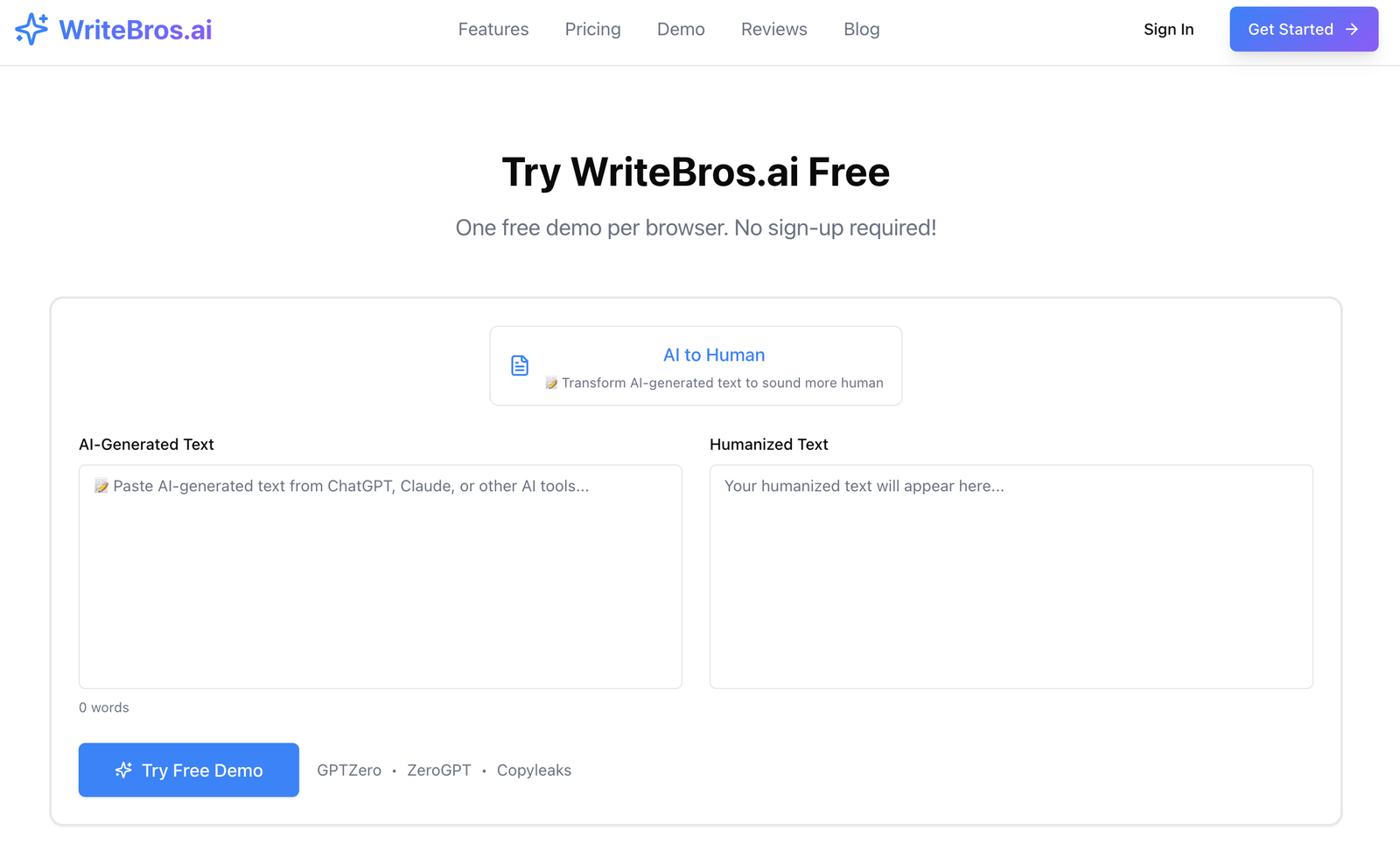
Best use case: Reworking AI-assisted class drafts that need to sound calmer, more natural, and less mechanically structured.
What it does well: It tends to improve sentence rhythm and readability without stripping out the core idea or making the copy sound overprocessed.
Where it falls short: It still cannot replace subject knowledge, so weak arguments and vague examples remain weak even after the prose is cleaned up.
Who should skip it: Students looking for a tool to invent original analysis from scratch rather than revise and humanize existing writing.
Best AI Humanizer Tools for Student Writing #2. QuillBot AI Humanizer
QuillBot has the advantage of being familiar, which lowers the friction for students who already use it for paraphrasing and cleanup. Its humanizer sits inside a broader editing ecosystem, so the experience feels practical rather than dramatic, and that probably suits academic workflows quite well. The phrasing it produces can be cleaner and more varied than a raw AI draft, though it sometimes leans toward safe rewrites that feel polished but slightly generic. That is useful for tightening structure, yet it can also leave the writing sounding more corrected than lived in. Basically, it works best when the draft already has a clear point and only needs help escaping that flat, overexplained AI cadence.
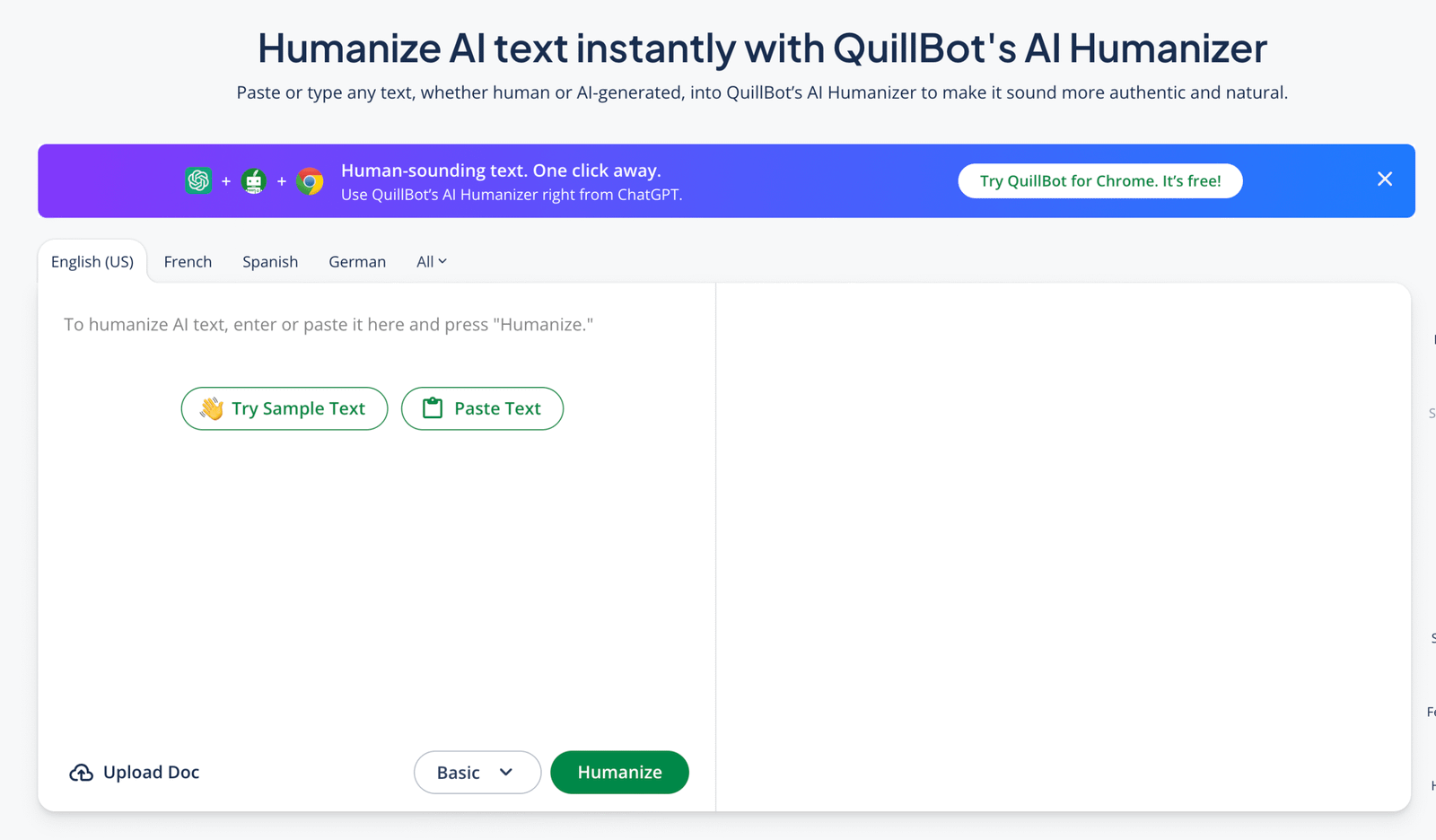
Best use case: Students who already rely on QuillBot and want a familiar place to soften stiff AI phrasing before submission.
What it does well: It is easy to use, quick to test, and generally good at producing cleaner wording without much setup.
Where it falls short: The output can feel slightly standardized, which means stronger personality and nuance may still need manual editing.
Who should skip it: Writers who want deeper tonal control or highly distinctive sentence shaping across a long paper.
Best AI Humanizer Tools for Student Writing #3. Grammarly AI Humanizer
Grammarly approaches humanizing from the editing side, which gives it a slightly different feel than tools designed around detection anxiety. That means it is usually strongest when a student draft is already readable and just needs the edges sanded down so the language sounds less rigid. Its suggestions often prioritize clarity, grammar, and sentence polish, which is useful, though the result can sometimes feel a little too orderly for writing that is meant to sound personal or reflective. There is a tradeoff there, and it is worth noticing, because clean writing is not always the same thing as convincingly human writing. For coursework that rewards tidy structure and formal tone, though, Grammarly can be a steady option that does not make the process feel overly technical.
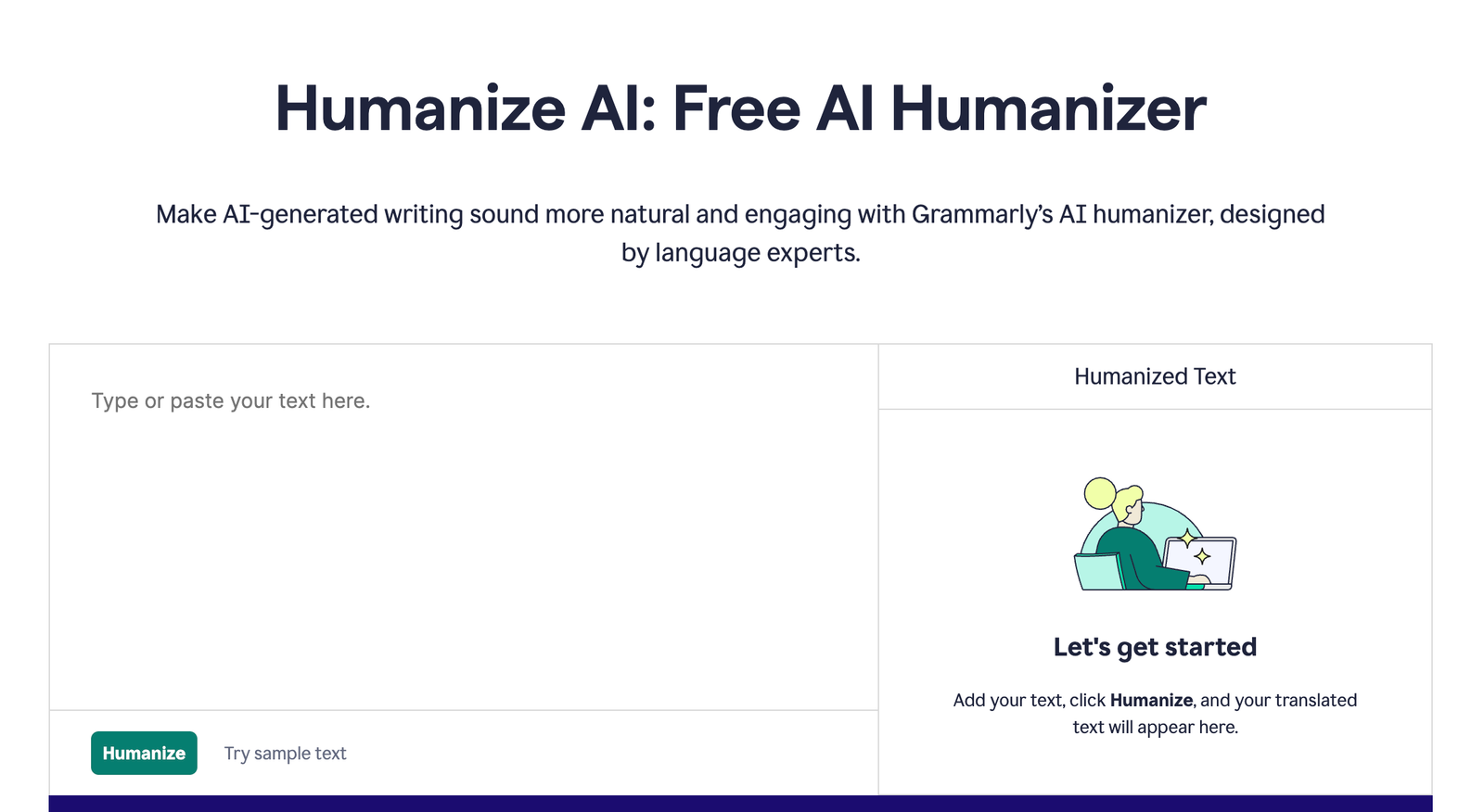
Best use case: Polishing class papers that need to read clearly and professionally without a lot of manual cleanup.
What it does well: It improves grammar, structure, and readability in a way that feels dependable for formal student writing.
Where it falls short: It can make the prose sound a bit too even, which reduces the messier texture that real human drafts sometimes carry.
Who should skip it: Students writing highly personal essays or reflective assignments that need more individual voice than polish.
Best AI Humanizer Tools for Student Writing #4. Writesonic AI Humanizer
Writesonic comes from a broader content generation world, so its humanizer feels like one feature inside a larger machine. That can be helpful for students who like having drafting and rewriting in one place, although it also means the tool sometimes feels geared toward speed before subtlety. The output is usually smoother than untouched AI text, and sentence variety improves enough to make the draft less obviously synthetic. Even so, the results can occasionally feel a bit high-gloss, which is not always ideal for student work that needs to sound grounded rather than optimized. It is a decent option for quick revisions, but the final pass still benefits from a human eye that knows how the class, professor, and assignment actually sound.
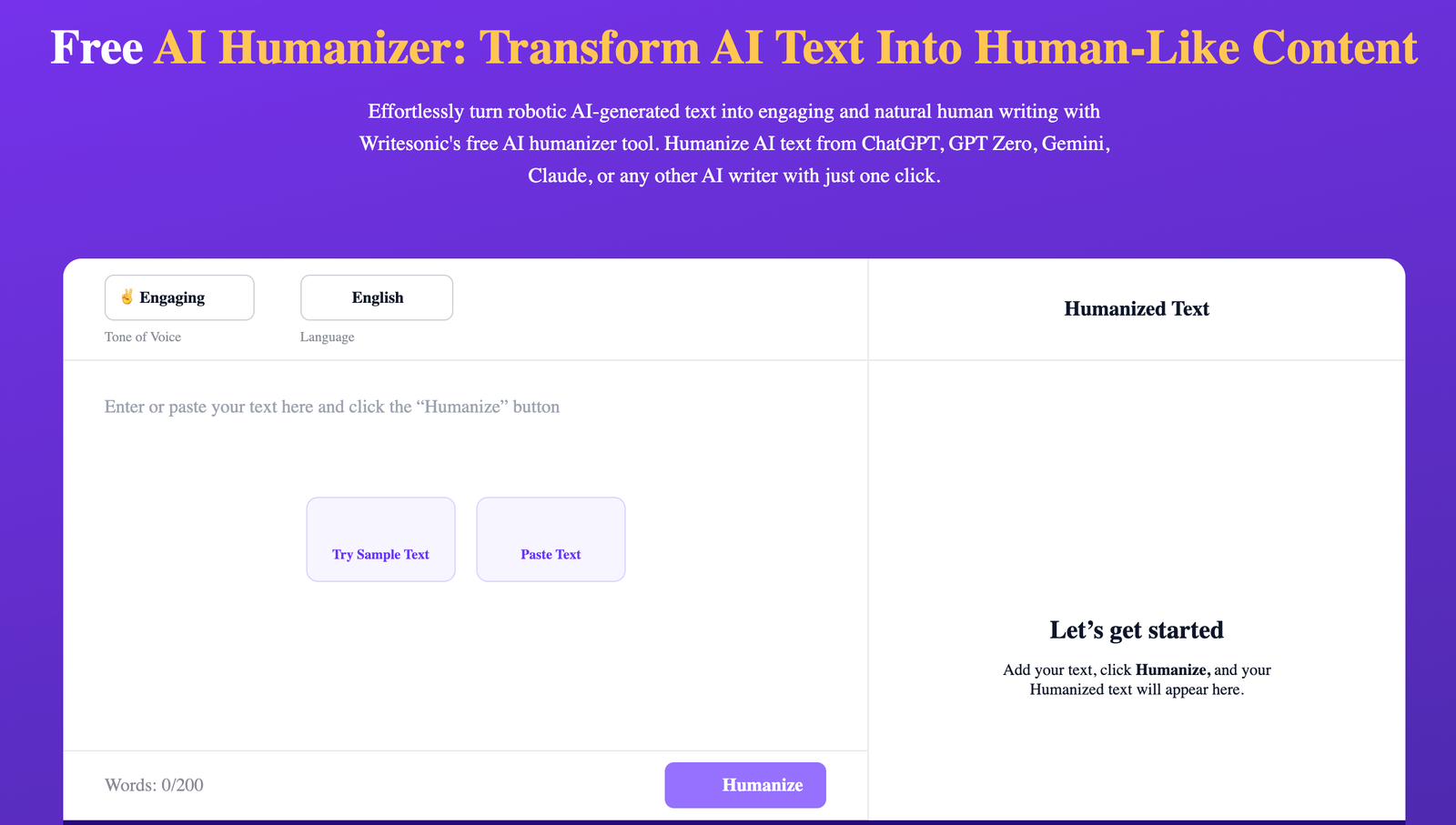
Best use case: Fast rewriting for students who want drafting and humanizing features in the same general workspace.
What it does well: It speeds up revision and often produces cleaner, more varied phrasing than a raw generated draft.
Where it falls short: Some outputs feel slightly too polished, which can read more like SaaS copy than student thinking.
Who should skip it: Writers who need restrained academic tone and fine control over how informal or formal the text becomes.
Best AI Humanizer Tools for Student Writing #5. AISEO AI Humanizer
AISEO puts a lot of emphasis on restructuring AI text so it breaks away from that repetitive sentence pattern detectors and teachers tend to notice. In practice, that means it can produce more movement in the prose, which is helpful when a draft feels trapped in evenly sized lines and predictable transitions. The stronger side of the tool is that it often changes enough of the texture to make the writing feel less robotic without completely losing the point. The weaker side is that it can occasionally push too hard, leaving a sentence technically different but slightly less natural in context. Sort of like many rewriting tools in this category, it works best when the user is willing to edit the final version instead of treating the first output as finished.
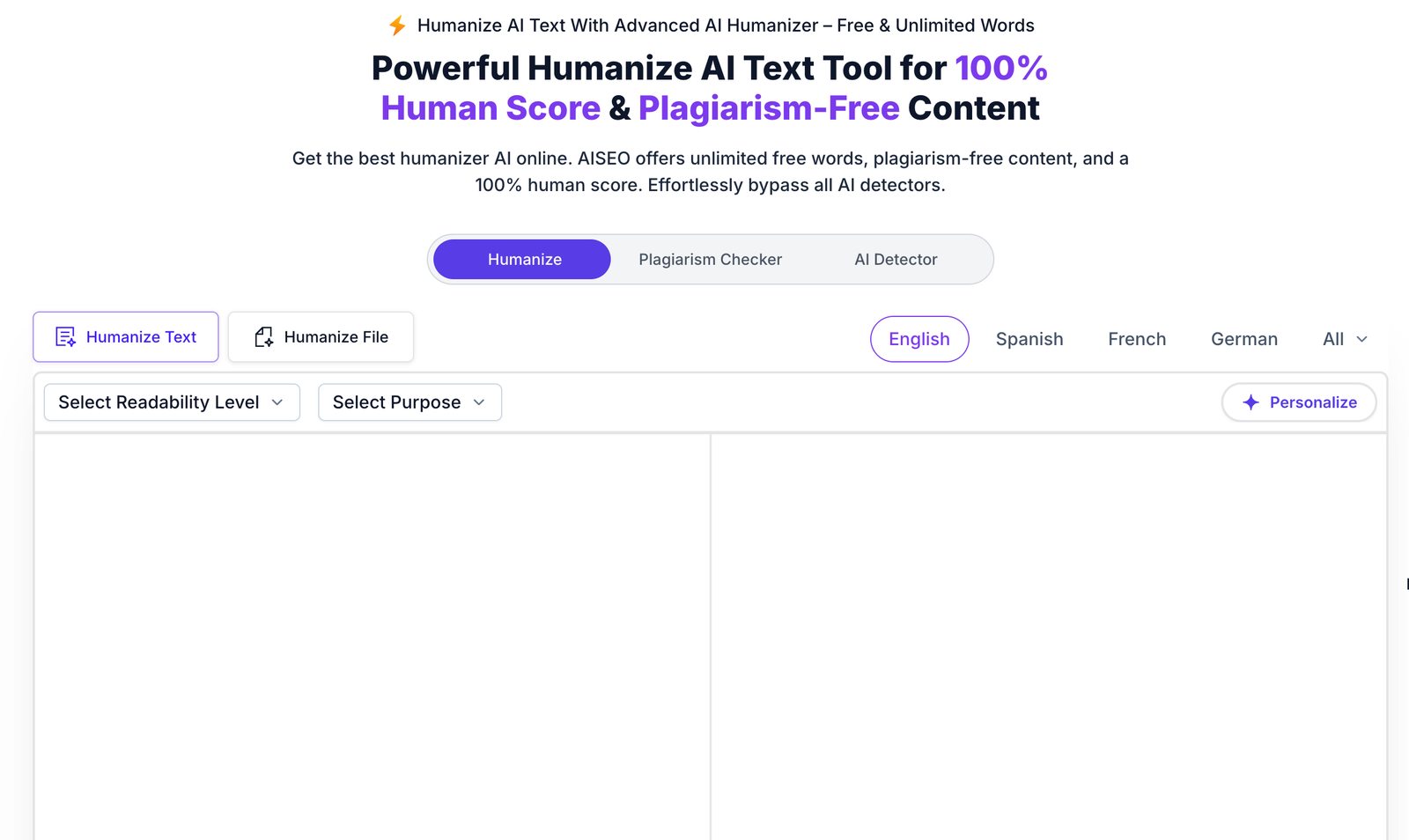
Best use case: Revising AI-heavy drafts that need more sentence variation and less detectable patterning.
What it does well: It tends to break up repetitive structures and introduce more movement into flat academic prose.
Where it falls short: Some rewrites can feel a little forced, which means the text may need a second manual cleanup for flow.
Who should skip it: Students who want minimal changes and are already happy with the tone and structure of the original draft.
Best AI Humanizer Tools for Student Writing #6. Humanizer.Pro
Humanizer.Pro is fairly direct in what it promises, and that clarity has its own appeal for students who do not want to dig through a crowded interface. The platform focuses on turning obviously AI-shaped prose into something more conversational, which can help with discussion posts, short essays, and response pieces. Its outputs often read more relaxed than the original, and that is useful when the draft sounds too symmetrical or strangely overexplained. Still, conversational does not automatically mean academically appropriate, and that is exactly where some judgment is needed. Students using it for formal submissions will probably want to pull the tone back a little so the writing sounds natural without drifting into casual territory.
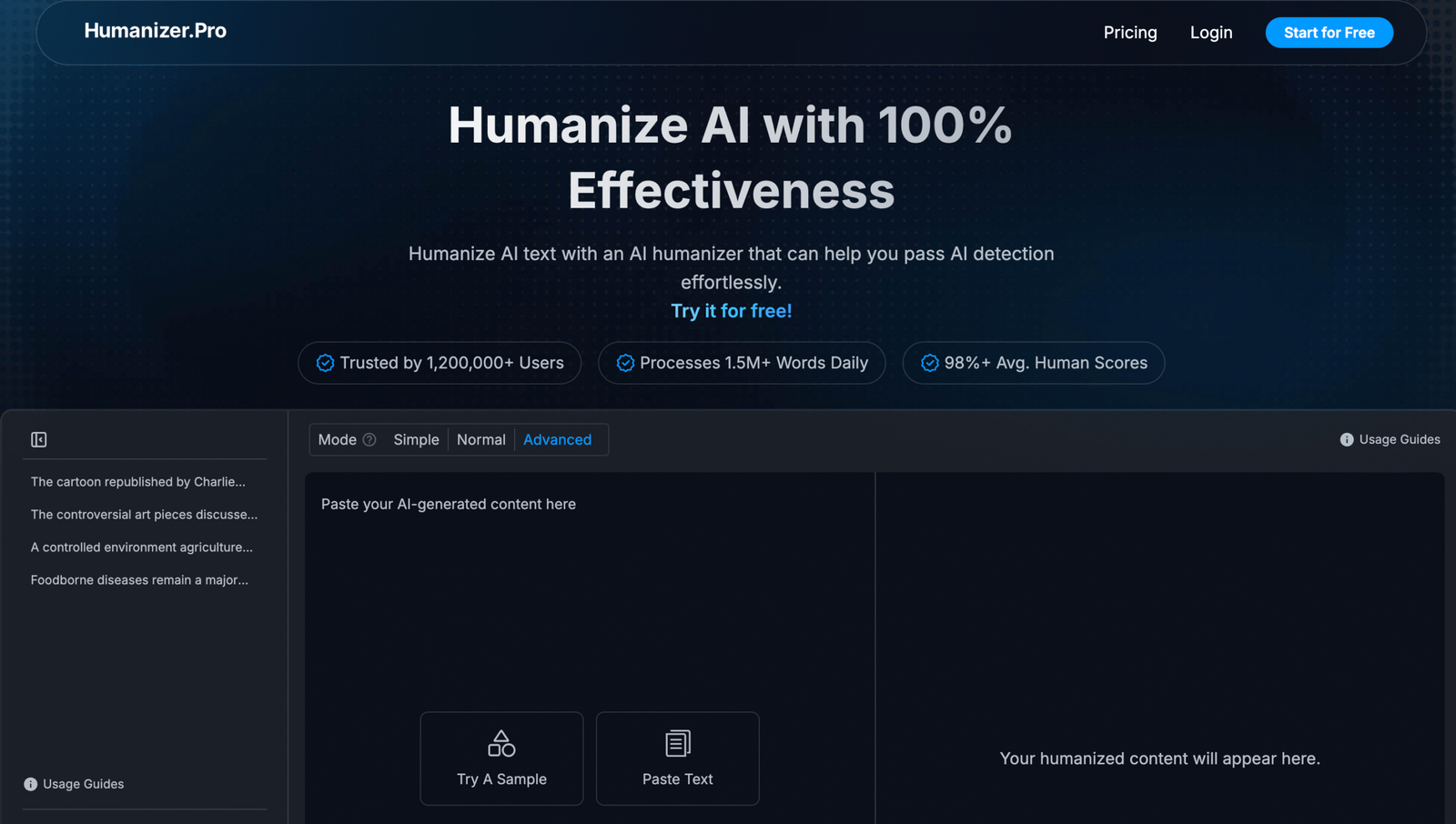
Best use case: Softening AI drafts for shorter assignments that benefit from a more conversational, less rigid voice.
What it does well: It can quickly loosen stiff wording and make the writing feel less mechanical on the surface.
Where it falls short: The output may lean too casual for formal coursework unless the user reins it in during revision.
Who should skip it: Students writing research-heavy or highly formal assignments that need a tighter academic register.
Best AI Humanizer Tools for Student Writing #7. GPTInf
GPTInf is usually discussed through the lens of making AI text look less AI-like, and that framing tells you quite a lot about how it is used. For students, the practical value is that it can reduce some of the obvious patterns that make a generated paragraph feel sterile and overassembled. The stronger results come when the starting draft already has a real argument, because then the tool is refining texture rather than trying to rescue empty content. That distinction matters, since no amount of rewriting can substitute for an actual viewpoint or a concrete example from the reading. In that narrower role, GPTInf can be useful, though it makes the most sense for users who are comfortable treating it as part of a process rather than the process itself.
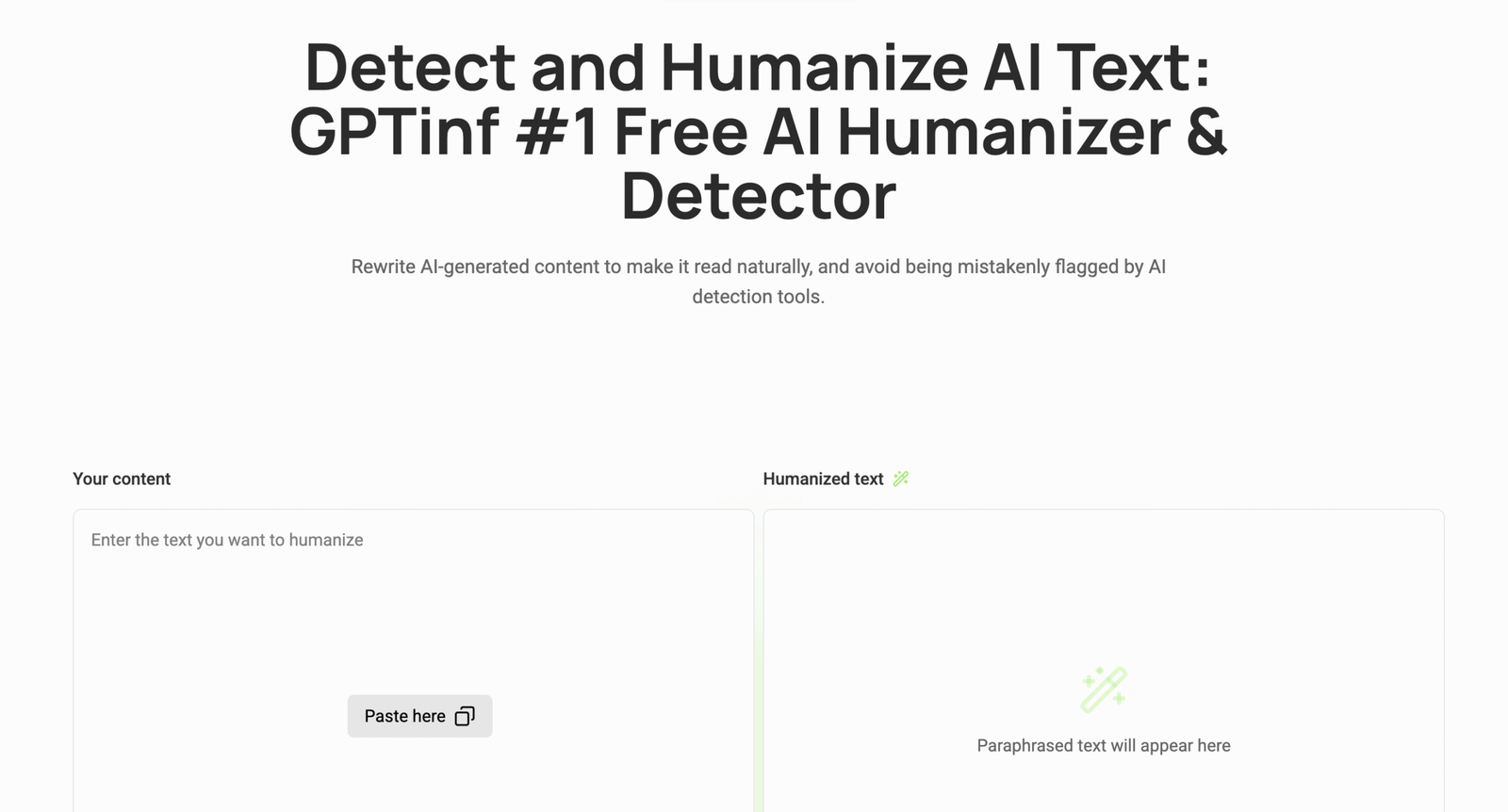
Best use case: Tweaking AI-shaped drafts that already contain solid ideas but still sound sterile or overassembled.
What it does well: It often reduces obvious AI rhythm and helps the wording feel less mechanically arranged.
Where it falls short: It cannot add substance, so shallow content stays shallow even when the phrasing looks less synthetic.
Who should skip it: Students hoping a rewrite tool will replace actual reading, thinking, or assignment-specific analysis.
Best AI Humanizer Tools for Student Writing #8. Walter Writes AI
Walter Writes AI is positioned quite plainly around making text sound more human, and the appeal is easy to understand. Students working under time pressure may like that directness, especially when the draft clearly carries the usual AI tells of repetition, smoothness, and oddly balanced phrasing. The tool can loosen those patterns enough to create a more believable reading experience, which is exactly what many users are after. Even so, it sometimes feels more intent on changing the surface than preserving the finer texture of voice, and that can leave the result slightly interchangeable. It is useful, yes, but the better results tend to come from shorter pieces where the user can still review every sentence carefully.
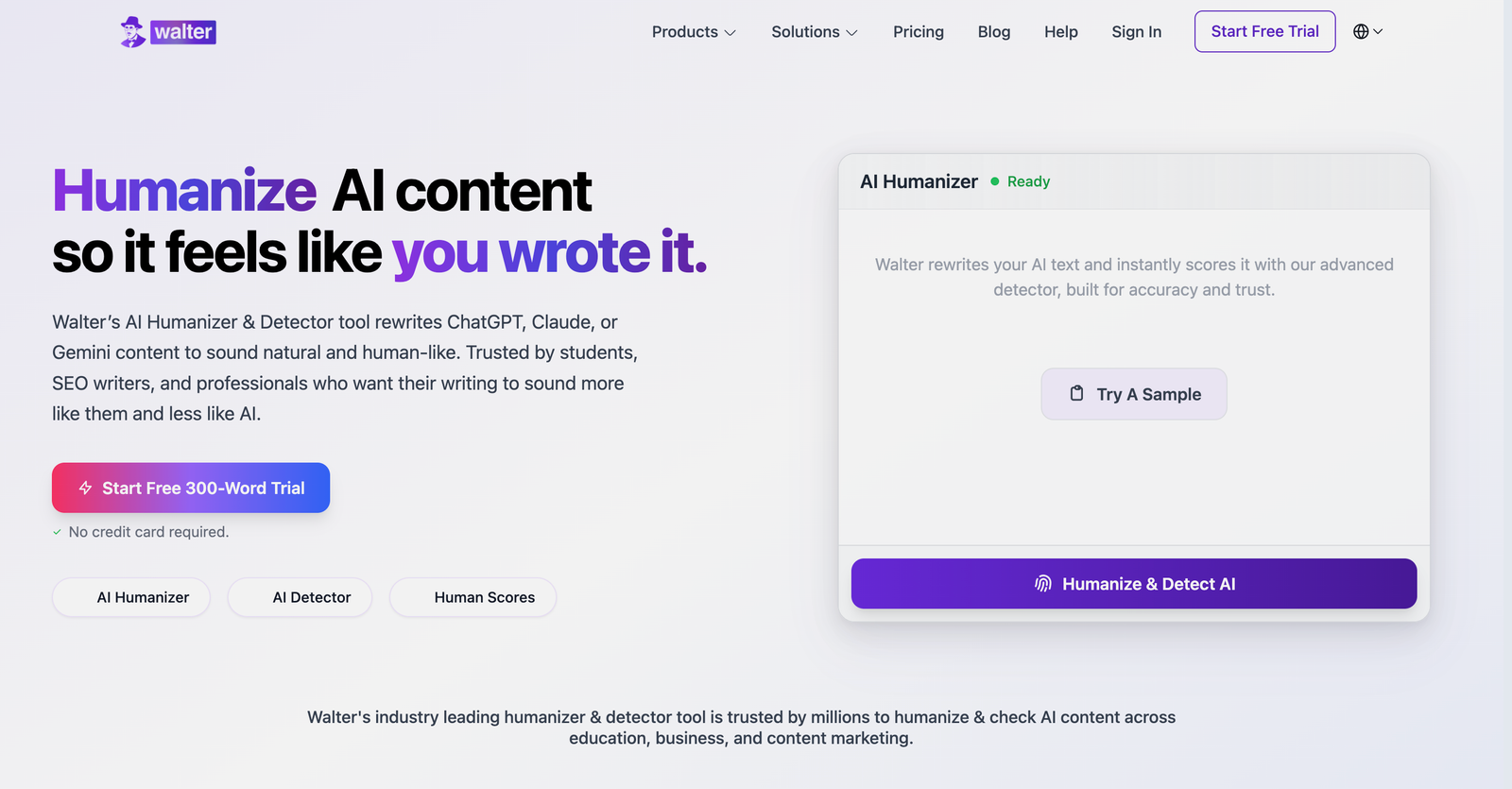
Best use case: Quick cleanup for shorter student assignments that need less AI smoothness and more believable phrasing.
What it does well: It can soften repetitive AI patterns and make a paragraph read less uniform on first pass.
Where it falls short: The rewritten voice can feel somewhat generic if the original draft lacked individuality to begin with.
Who should skip it: Writers handling long-form papers where preserving a consistent personal voice matters across many sections.
Best AI Humanizer Tools for Student Writing #9. Clever AI Humanizer
Clever AI Humanizer tries to smooth out the rigidness that gives generated writing away, and it generally works best on text that is competent but flat. For student work, that means it can be handy when a response has the right information yet sounds too evenly packaged to feel believable. The output usually reads more fluidly than the input, though sometimes the rewrites land in a middle zone that is improved but still somewhat impersonal. That is not a disaster, exactly, but it does mean the last mile still belongs to the student. In other words, Clever AI Humanizer can help with the texture of the prose, but it still needs a writer to add the small choices that make academic work feel genuinely authored.
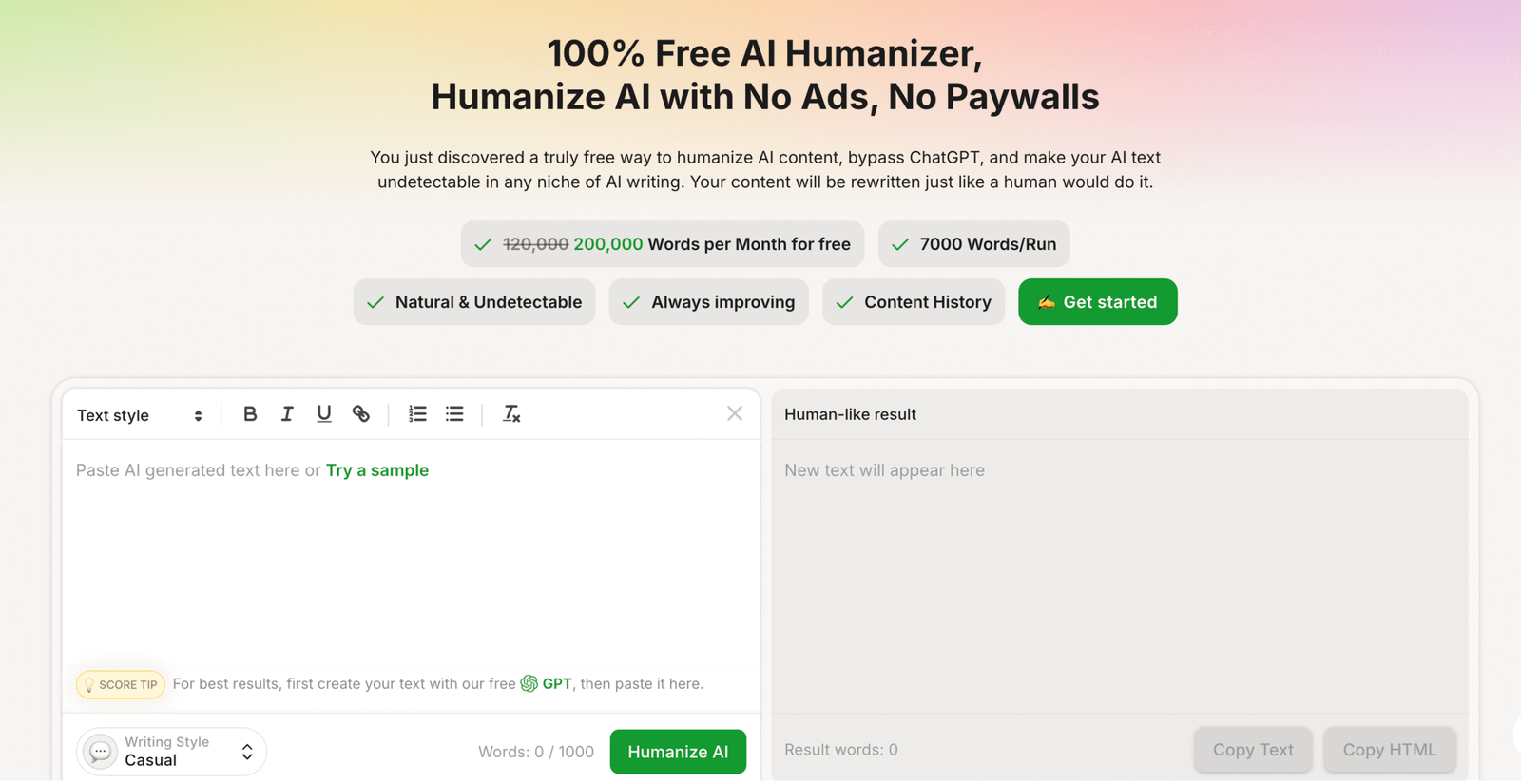
Best use case: Improving drafts that are structurally fine but still feel too evenly packaged and impersonal.
What it does well: It usually makes the prose read more fluidly and less rigid without requiring much setup.
Where it falls short: The voice can remain a bit middle-of-the-road, so the result may still need personal touches and specifics.
Who should skip it: Students who want a highly distinctive writing voice or detailed control over sentence-level edits.
Best AI Humanizer Tools for Student Writing #10. AI Undetect
AI Undetect sits in the part of the market that speaks directly to detection concerns, which makes it relevant for students but also a bit narrower in feel. Its strength is that it tends to rework obvious machine-like phrasing into something less uniform, and that alone can make a draft more readable. The question, as always, is whether the output sounds naturally human or simply differently artificial, and the answer can vary from one passage to the next. Some results are solid, while others need trimming so they do not feel oddly inflated or too obviously rewritten. For students who are willing to review line by line, it can be useful, though the whole thing works better as a revision layer than as a final answer.
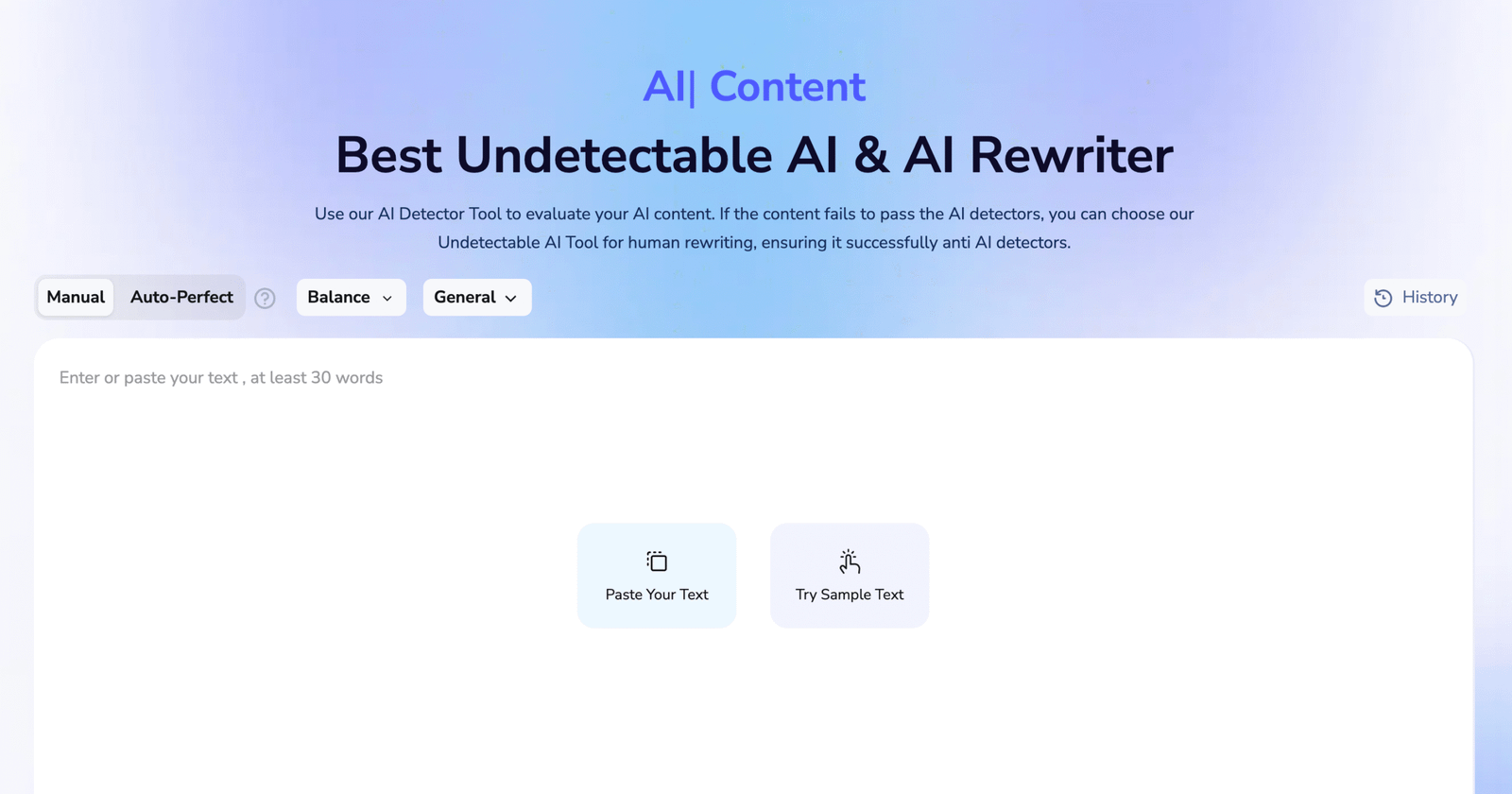
Best use case: Adding a final rewrite pass to AI-assisted drafts that still feel too uniform or obviously generated.
What it does well: It can make stiff text more readable and reduce the mechanical texture that stands out in class submissions.
Where it falls short: Some passages may come back sounding overwritten, which means the user still has to edit with care.
Who should skip it: Students who want polished academic writing with minimal review and do not plan to line-edit the result.
Tool Selection Guide for Best AI Humanizer Tools for Student Writing
Light sentence refinement
WriteBros.ai and Grammarly AI Humanizer tend to work best when a student draft already communicates its main point but still carries the smooth, symmetrical phrasing typical of AI writing. These tools focus on rhythm adjustments, clause variation, and subtle wording changes that soften the mechanical tone without disturbing the meaning. Light editing keeps the argument recognizable while helping the writing read closer to a naturally revised student draft.
Moderate structure changes
QuillBot AI Humanizer and Writesonic AI Humanizer usually sit in the middle range where a paragraph needs more than small adjustments but not a full rewrite. They reorganize sentence order, adjust transitions, and redistribute emphasis across the paragraph so it stops repeating identical structures. Moderate restructuring improves readability while keeping the original explanation intact.
Deep pattern rewriting
GPTInf and AI Undetect are often used when lighter edits still leave text sounding algorithmic. These platforms introduce stronger variation in sentence length, phrasing patterns, and paragraph rhythm to disrupt the consistent pacing that AI drafts often carry. Deep rewriting can help reset sections that still feel synthetic, although the output usually benefits from careful human editing afterward.
Short academic essays
WriteBros.ai and Clever AI Humanizer generally perform well for short assignments that rely on clear reasoning rather than dense research structure. Short essays benefit from subtle adjustments rather than heavy rewriting, since the explanation still needs to sound like the student’s own thinking. These tools smooth phrasing while keeping the argument readable and direct.
Research papers
WriteBros.ai and QuillBot AI Humanizer tend to be more practical for longer academic papers where phrasing patterns repeat across sections. Research writing relies on consistent terminology and precise meaning, which limits how aggressively sentences can change. These tools distribute variation throughout the document while maintaining the stable tone expected in academic work.
Reflection essays
Humanizer.Pro and Walter Writes AI are often better suited for reflective assignments where tone and pacing matter as much as structure. Reflection writing benefits from language that feels less rigid and more conversational in rhythm. These tools soften the cadence of AI drafts and introduce more natural phrasing without rewriting the entire narrative.
Precision paragraph edits
WriteBros.ai and Grammarly AI Humanizer are useful when students want to keep the meaning of a paragraph nearly identical while improving how it reads. They adjust sentence rhythm, wording balance, and clarity without altering analytical points or factual statements. Precision editing works well for analytical coursework where accuracy matters as much as readability.
Full draft consistency
WriteBros.ai and Writesonic AI Humanizer help distribute variation across essays edited section by section. Without that adjustment, AI-assisted drafts can repeat the same sentence pacing across many paragraphs. These tools introduce structural variation so the finished paper reads less mechanically consistent from introduction to conclusion.
Rapid rewrite testing
GPTInf and Clever AI Humanizer are sometimes used when writers want to compare several rewrite versions during revision. These tools generate noticeable differences between outputs rather than relying purely on synonym substitution. A final human review remains important so the revised draft keeps its clarity and academic intent.
Choosing AI Humanizer Tools for Student Writing Without Losing Your Own Voice
Student writing tools have quietly evolved from simple paraphrasers into systems that try to reshape the rhythm and tone of AI-assisted drafts. The interesting part is that the best results rarely come from automation alone, which means these tools function more like editing assistants than final authors.
Some platforms focus on smoothing sentence structure, while others attempt to disguise patterns that detectors associate with automated text. That difference matters, because rewriting for readability and rewriting for detection avoidance are not exactly the same task, even though they often overlap.
Students experimenting with these tools tend to discover that the real value sits somewhere in the middle of the workflow. A first pass might remove the obvious AI stiffness, but a second look from the student usually restores the nuance and context that rewriting systems still struggle to produce.
Used with a bit of restraint, AI humanizer tools can help transform mechanical drafts into something that reads more like a real piece of coursework. The writing still needs a human point of view to feel convincing, which is exactly the step no software has quite managed to automate.
Disclaimer: The tools referenced are included for editorial and informational purposes only and are selected based on observable product behavior and relevance rather than sponsorship or paid placement. Screenshots are shown solely for identification, commentary, and illustrative reference in line with standard editorial and fair use practices, and may not reflect the most current version of each product. All trademarks, logos, and interface elements remain the property of their respective owners. For update, correction, or removal requests, please refer to the Editorial Policy.