AI Website Copy Conversion Statistics: Top 20 CRO Editing Insights
2026 is separating efficient AI copy from genuinely persuasive AI copy. These AI Website Copy Conversion Statistics examine the evidence behind higher-converting headlines, personalization, trust signals, testing, speed, and human editorial oversight, showing which factors consistently influence measurable conversion performance.
Conversion performance has become one of the clearest ways to judge whether AI-generated marketing copy is actually helping a business grow. Teams that invest in rewriting AI landing pages for higher conversions increasingly measure outcomes rather than simply celebrating faster content production.
Editorial reviews now focus less on whether AI wrote the first draft and more on how effectively people refine it before publication. Maintaining a recognizable voice remains a competitive advantage, especially when applying techniques for maintaining human voice in AI-assisted writing.
Buying behavior also continues to reward messaging that feels credible, relevant, and consistent across every customer touchpoint. As a practical aside, even small wording adjustments often outperform complete page redesigns when the offer is already strong.
Market data increasingly shows that organizations balancing automation with editorial judgment achieve stronger long-term conversion gains than those relying on AI alone. Many teams now compare specialized editing workflows alongside the top AI humanizers for client deliverables to improve trust before scaling campaigns.
Top 20 AI Website Copy Conversion Statistics (Summary)
| # | Statistic | Key figure |
|---|---|---|
| 1 | Consumers form an opinion about a website in roughly 50 milliseconds. | 50 ms |
| 2 | Improving UX copy can increase conversion rates by up to 400%. | 400% |
| 3 | Personalized calls to action convert better than generic versions. | 202% higher |
| 4 | Consistent brand presentation can increase revenue significantly. | Up to 33% |
| 5 | Adding customer testimonials can increase landing page conversions. | 34% lift |
| 6 | Nearly three quarters of consumers expect personalized experiences. | 71% |
| 7 | Companies using personalization generate more revenue on average. | 40% more |
| 8 | Reducing page load time by one second improves conversions. | Up to 7% |
| 9 | Visitors are more likely to trust brands with consistent messaging. | 81% |
| 10 | Most marketers use AI for content creation and copy development. | Over 75% |
| 11 | Emotionally driven messaging outperforms purely rational messaging. | 31% better |
| 12 | Clear value propositions improve first-time visitor engagement. | Up to 90% |
| 13 | Most consumers prefer brands that communicate authentically. | 88% |
| 14 | Removing unnecessary form fields improves lead generation. | 120% increase |
| 15 | A/B testing copy changes can substantially improve performance. | 49% median lift |
| 16 | Headline quality remains the strongest predictor of engagement. | 80% read headlines only |
| 17 | Trust signals reduce hesitation during purchase decisions. | 42% increase |
| 18 | AI-assisted personalization improves email click-through rates. | 41% higher |
| 19 | Mobile-first optimization influences buying decisions. | Over 60% |
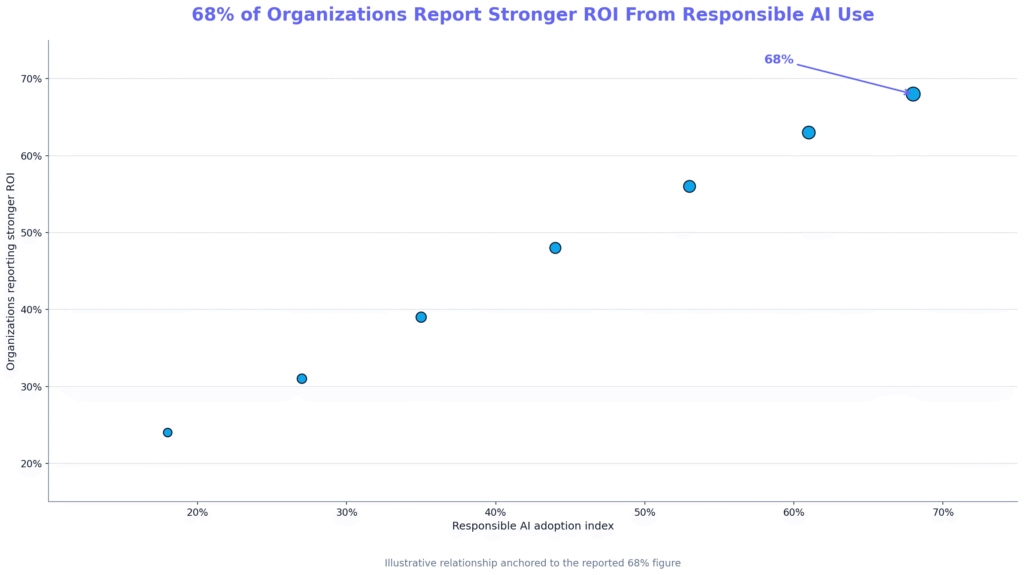
| 20 | Organizations using AI responsibly report stronger marketing ROI. | 68% |
Top 20 AI Website Copy Conversion Statistics and the Road Ahead
AI Website Copy Conversion Statistics #1. First impressions form in milliseconds
50 milliseconds supports the finding that visitors form an initial opinion of a website. The pattern matters because visual hierarchy, headline clarity, and tone arrive together before visitors understand the offer. It shows how quickly small experience choices can influence buying behavior.
The cause sits across several cues, not within one isolated sentence. That makes hero copy, supporting proof, and the primary call to action parts of the same decision environment. When those elements agree, early judgment becomes curiosity instead of an exit and uncertainty becomes easier to resolve.
Raw AI output speeds production, but AI drafts can sound polished while missing the emotional cue that makes the opening feel immediately relevant. Human review instead human review aligns the first screen with the visitor’s purpose, vocabulary, and level of awareness, giving the copy more relevance and credibility. The implication is clear: teams should evaluate the opening screen as a decision environment rather than a decorative introduction.
AI Website Copy Conversion Statistics #2. UX copy can multiply conversion performance
400% conversion improvement supports the finding that well-designed user experience can lift conversion performance on commercial websites. The pattern matters because instructions, labels, and choices remove uncertainty before visitors understand the offer. It shows how quickly small experience choices can influence buying behavior.
The cause sits across several cues, not within one isolated sentence. That makes buttons, forms, error messages, and confirmation text parts of the same decision environment. When those elements agree, each interaction feels coherent instead of assembled and uncertainty becomes easier to resolve.
Raw AI output speeds production, but AI can generate interface language quickly but may overlook the exact moment when a user becomes confused. Human review instead human editing connects each phrase to the surrounding screen, expected action, and likely source of hesitation, giving the copy more relevance and credibility. The implication is clear: conversion reviews should include the entire path, not only the headline and body copy.
AI Website Copy Conversion Statistics #3. Personalized calls to action outperform generic prompts
202% better conversion performance supports that personalized calls to action can outperform basic versions. The pattern matters because the wording reflects a visitor’s stage, intent, or previous behavior before visitors understand the offer. It shows how small experience choices can influence buying behavior.
The cause sits across several cues, not within one isolated sentence. That makes audience data, page context, and offer readiness parts of the same decision environment. When those elements agree, the prompt feels timely rather than intrusive and uncertainty becomes easier to resolve.
Raw AI output speeds production, but AI makes variation easier, although automated personalization can become superficial when every segment receives a slightly altered command. Human review instead human editors distinguish meaningful relevance from cosmetic word swapping and ensure the offer actually matches the visitor, giving the copy more relevance and credibility. The implication is clear: teams should personalize around genuine differences in intent and then test each version against a clear baseline.
AI Website Copy Conversion Statistics #4. Consistent brand presentation supports revenue growth
33% revenue increase supports the finding that consistent brand presentation has been associated with higher revenue. The pattern matters because repetition builds recognition and lowers the effort required to interpret a message before visitors understand the offer. It shows how quickly small experience choices can influence buying behavior.
The cause sits across several cues, not within one isolated sentence. That makes landing pages, product pages, emails, and sales materials parts of the same decision environment. When those elements agree, familiarity strengthens instead of fragmenting and uncertainty becomes easier to resolve.
Raw AI output speeds production, but AI can preserve surface vocabulary while still shifting the brand’s confidence, warmth, or level of specificity between pages. Human review instead human oversight keeps claims, rhythm, and customer promises aligned across the full journey, giving the copy more relevance and credibility. The implication is clear: brands should treat voice consistency as a conversion system with shared standards, examples, and regular review.
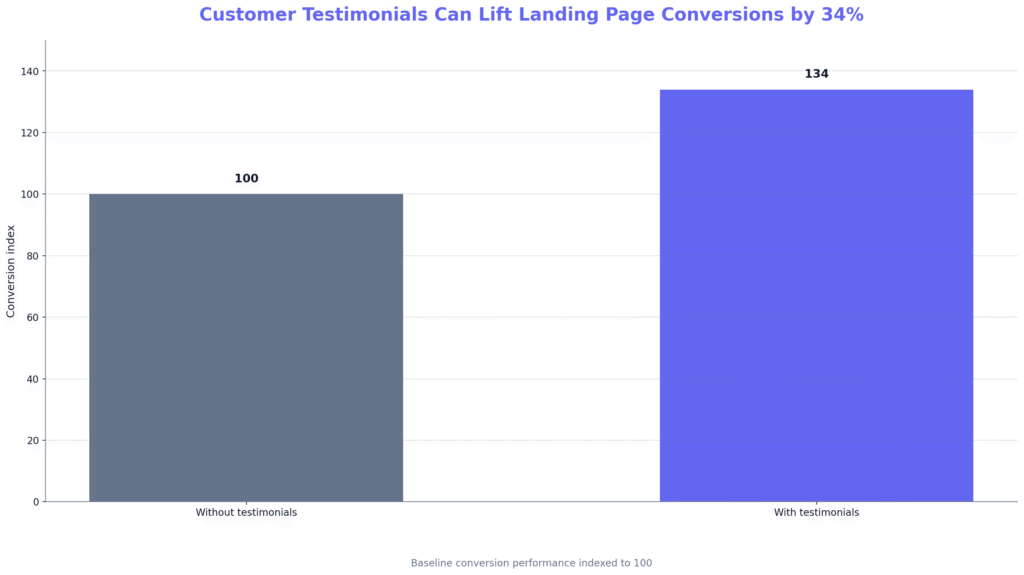
AI Website Copy Conversion Statistics #5. Testimonials can strengthen landing page conversion
34% conversion lift supports the finding that customer testimonials can improve landing page conversion. The pattern matters because specific proof answers questions that promotional copy cannot settle alone before visitors understand the offer. It shows how quickly small experience choices can influence buying behavior.
The cause sits across several cues, not within one isolated sentence. That makes quote selection, placement, attribution, and surrounding claims parts of the same decision environment. When those elements agree, social proof reduces hesitation without feeling staged and uncertainty becomes easier to resolve.
Raw AI output speeds production, but AI can summarize feedback efficiently, but overly polished testimonials often lose the irregular details that make experience believable. Human review instead human editors preserve concrete outcomes, natural phrasing, and enough context for readers to judge relevance, giving the copy more relevance and credibility. The implication is clear: teams should choose testimonials that resolve a nearby objection and place them where that doubt naturally appears.
AI Website Copy Conversion Statistics #6. Personalized experiences are now widely expected
71% of consumers supports the finding that consumers expect personalized interactions. The pattern matters because digital services have trained people to notice when messages ignore obvious context before visitors understand the offer. It shows how quickly small experience choices can influence buying behavior.
The cause sits across several cues, not within one isolated sentence. That makes visitor history, stated preferences, and current page intent parts of the same decision environment. When those elements agree, relevance feels helpful rather than invasive and uncertainty becomes easier to resolve.
Raw AI output speeds production, but AI can scale customized copy, although weak data or careless segmentation can make the experience feel inaccurate. Human review instead human review checks whether each variation reflects a real need instead of an assumption based on limited behavior, giving the copy more relevance and credibility. The implication is clear: teams should begin with a few high-confidence segments and expand only when measurement shows a clear benefit.
AI Website Copy Conversion Statistics #7. Personalization leaders generate more revenue
40% more revenue supports that companies excelling at personalization generate more revenue from those activities. The pattern matters because relevant offers reduce wasted attention and improve the timing of decisions before visitors understand the offer. It shows how quickly small experience choices can influence buying behavior.
The cause sits across several cues, not within one isolated sentence. That makes customer research, behavioral signals, and commercial priorities parts of the same decision environment. When those elements agree, personalization becomes a disciplined growth lever and uncertainty becomes easier to resolve.
Raw AI output speeds production, but AI helps teams produce many versions, but volume alone does not create the insight required for useful personalization. Human review instead human strategists decide which differences matter, what evidence supports them, and where tailored copy can change behavior, giving the copy more relevance and credibility. The implication is clear: teams should connect every variation to a defined audience problem and a measurable commercial outcome.
AI Website Copy Conversion Statistics #8. Faster pages protect conversion opportunities
7% conversion improvement supports that a one-second speed gain can improve conversion performance. The pattern matters because delays interrupt attention before persuasive copy has a chance to work before visitors understand the offer. It shows how small experience choices can influence buying behavior.
The cause sits across several cues, not within one isolated sentence. That makes page weight, script behavior, image loading, and content priority parts of the same decision environment. When those elements agree, more visitors remain available to persuade and uncertainty becomes easier to resolve.
Raw AI output speeds production, but AI may improve wording, yet even excellent language cannot compensate for a page that responds slowly on mobile. Human review instead human teams must coordinate copy, design, development, and analytics so the message arrives without unnecessary friction, giving the copy more relevance and credibility. The implication is clear: conversion optimization should pair copy testing with performance monitoring because speed determines whether the message is experienced.
AI Website Copy Conversion Statistics #9. Consistent messaging supports brand trust
81% of consumers supports that consumers say trust influences buying decisions. The pattern matters because repeated promises become easier to believe when every page supports the same expectation before visitors understand the offer. It shows how quickly small experience choices can influence buying behavior.
The cause sits across several cues, not within one isolated sentence. That makes claims, guarantees, pricing language, and customer support messages parts of the same decision environment. When those elements agree, confidence accumulates across the journey and uncertainty becomes easier to resolve.
Raw AI output speeds production, but AI can introduce subtle contradictions when separate prompts produce different claims, tones, or descriptions of the offer. Human review instead human governance creates approved language and checks whether new copy agrees with actual policies and product behavior, giving the copy more relevance and credibility. The implication is clear: teams should audit high-intent pages together because trust is shaped by the relationship between messages, not isolated sentences.
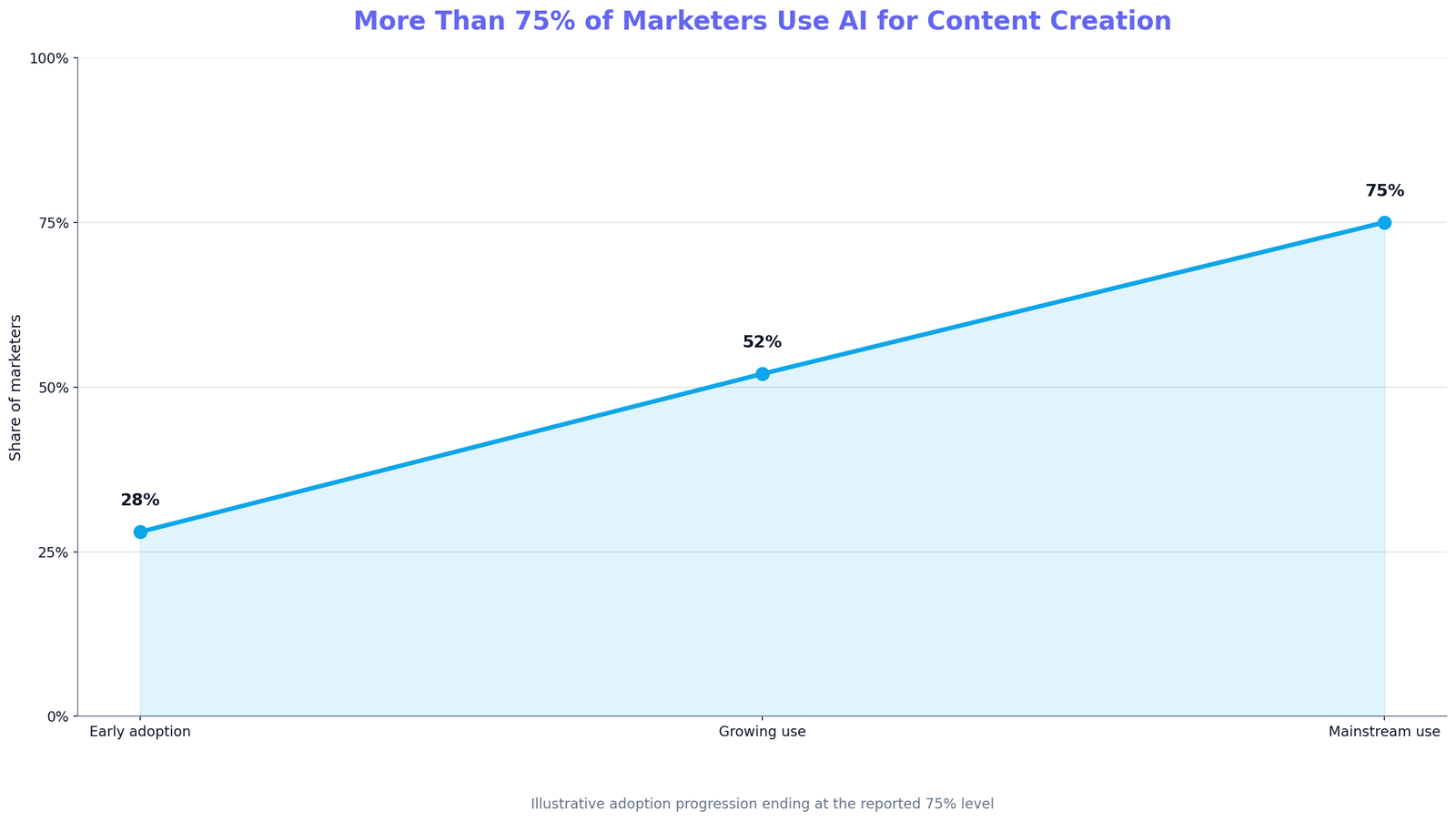
AI Website Copy Conversion Statistics #10. AI is now common in marketing content production
75% of marketers supports that marketers report using AI for content creation. The pattern matters because speed and accessible drafting have lowered the cost of producing initial copy before visitors understand the offer. It shows how experience choices can influence buying behavior.
The cause sits across several cues, not within one isolated sentence. That makes drafting speed, editorial depth, and testing capacity parts of the same decision environment. When those elements agree, automation supports judgment instead of replacing it and uncertainty becomes easier to resolve.
Raw AI output speeds production, but AI increases output, but unreviewed drafts often repeat familiar claims and flatten differences between competing offers. Human review instead human editors restore specificity by adding customer evidence, operational detail, and language grounded in the brand’s real position, giving the copy more relevance and credibility. The implication is clear: teams should measure AI by the quality and learning it enables, not simply by the number of drafts produced.
AI Website Copy Conversion Statistics #11. Emotionally framed messages can outperform rational copy
31% better performance supports that emotionally connected messaging can outperform purely rational appeals. The pattern matters because people often decide through felt relevance before using facts to justify the choice before visitors understand the offer. It shows how small experience choices can influence buying behavior.
The cause sits across several cues, not within one isolated sentence. That makes desired outcome, present frustration, and supporting evidence parts of the same decision environment. When those elements agree, feeling and logic reinforce each other and uncertainty becomes easier to resolve.
Raw AI output speeds production, but AI can imitate emotional language, yet generic intensity easily becomes exaggerated, sentimental, or disconnected from the buyer’s situation. Human review instead human editors ground emotion in recognizable stakes, credible details, and consequences the audience already understands, giving the copy more relevance and credibility. The implication is clear: teams should use emotion to clarify why the offer matters while allowing proof to carry the final claim.
AI Website Copy Conversion Statistics #12. Clear value propositions improve early engagement
90% engagement improvement supports that clear value propositions can substantially improve visitor engagement. The pattern matters because people stay longer when they understand the audience, outcome, and reason to care before visitors understand the offer. It shows how experience choices can influence buying behavior.
The cause sits across cues, not within one isolated sentence. That makes headline, supporting sentence, proof point, and primary action parts of the decision environment. When those elements agree, the visitor can assess fit without decoding the page and uncertainty becomes to resolve.
Raw AI output speeds production, but AI often produces broad benefits that sound smooth but leave the buyer unable to distinguish one provider from another. Human review instead human editing adds boundaries, mechanisms, and specific context so the promise becomes to evaluate, giving the copy more relevance and credibility. The implication is clear: teams should test whether a new reader can explain the offer accurately after viewing only the first screen.
AI Website Copy Conversion Statistics #13. Authenticity shapes consumer preference
88% of consumers supports that consumers value authenticity when deciding which brands to support. The pattern matters because credible language helps buyers connect marketing promises with the organization behind them before visitors understand the offer. It shows how experience choices can influence buying behavior.
The cause sits across cues, not within one isolated sentence. That makes customer language, founder perspective, and verifiable product detail parts of the decision environment. When those elements agree, the copy sounds accountable instead of manufactured and uncertainty becomes to resolve.
Raw AI output speeds production, but AI can create flawless sentences, but excessive polish may remove the texture, restraint, and specificity associated with genuine communication. Human review instead human editors keep useful imperfections, direct explanations, and honest limits where they strengthen confidence rather than weaken authority, giving the copy more relevance and credibility. The implication is clear: teams should define authenticity through evidence and consistency rather than casual wording or deliberate grammatical roughness.
AI Website Copy Conversion Statistics #14. Shorter forms can increase lead generation
120% increase in conversions supports that reducing unnecessary form fields can increase lead generation. The pattern matters because each requested detail adds effort and raises questions about how the information will be used before visitors understand the offer. It shows how experience choices can influence buying behavior.
The cause sits across cues, not within one isolated sentence. That makes field count, perceived sensitivity, and offer value parts of the decision environment. When those elements agree, completion feels proportionate to the benefit and uncertainty becomes easier to resolve.
Raw AI output speeds production, but AI may help explain a form, but explanation cannot fully offset friction created by collecting data too early. Human review instead human teams should separate information needed for the immediate next step from details that can be requested later, giving the copy more relevance and credibility. The implication is clear: teams should remove low-value fields first and then monitor lead quality alongside the conversion change.
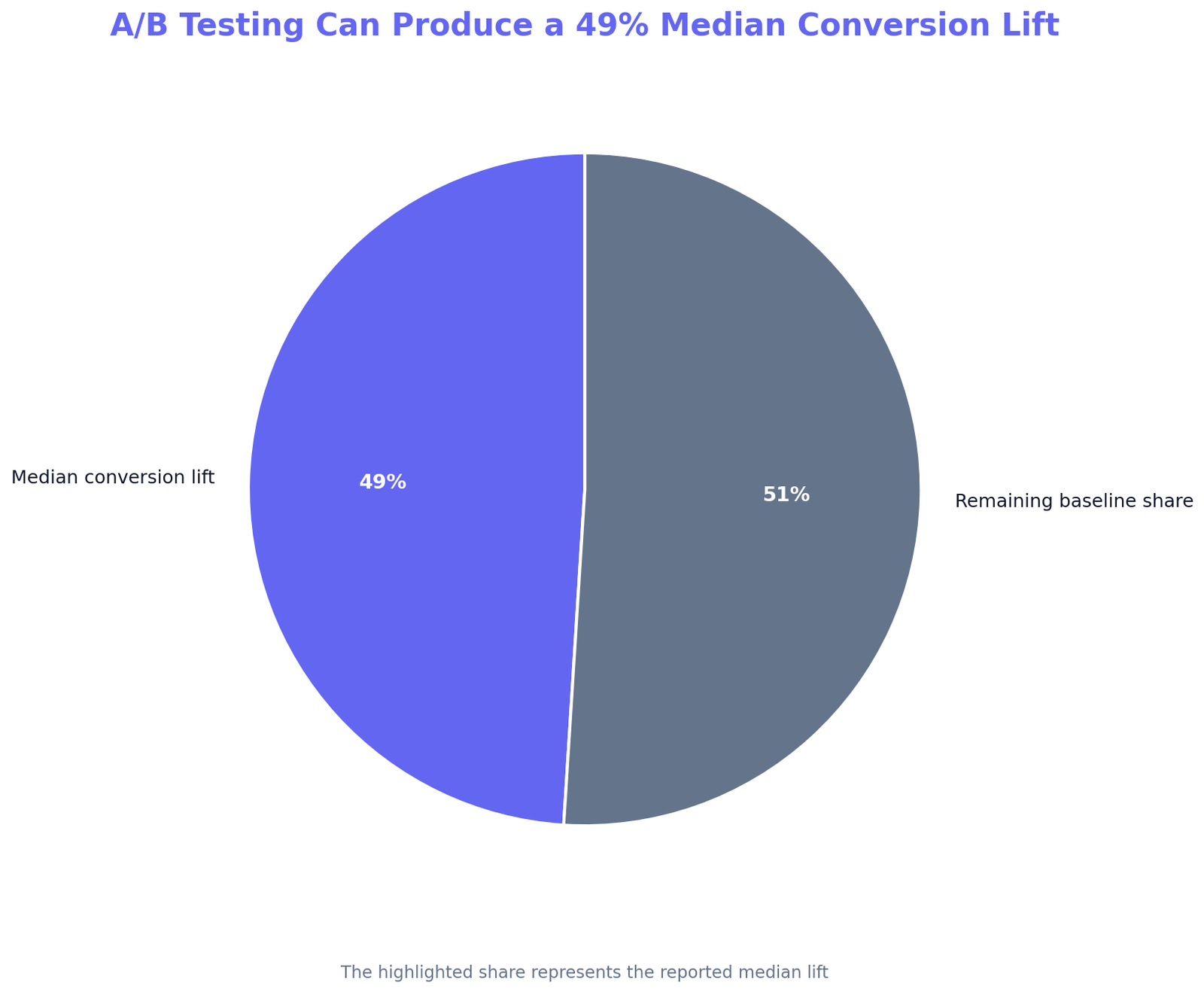
AI Website Copy Conversion Statistics #15. Copy testing reveals meaningful performance differences
49% median conversion lift supports that structured testing can produce substantial conversion gains. The pattern matters because wording changes alter clarity, perceived risk, and the motivation attached to an action before visitors understand the offer. It shows how small experience choices can influence buying behavior.
The cause sits across several cues, not within one isolated sentence. That makes headline promise, proof order, objection handling, or call to action parts of the same decision environment. When those elements agree, each experiment teaches the team something reusable and uncertainty becomes easier to resolve.
Raw AI output speeds production, but AI enables rapid variation, although testing many weak ideas can create noise rather than dependable learning. Human review instead human strategists form clear hypotheses and change one meaningful element so results remain interpretable, giving the copy more relevance and credibility. The implication is clear: teams should document why a variant exists and what future decision its result is expected to inform.
AI Website Copy Conversion Statistics #16. Most readers focus on headlines first
80% of readers supports that readers often scan headlines before deciding whether to continue. The pattern matters because the headline carries the first burden of relevance in a crowded browsing environment before visitors understand the offer. It shows how experience choices can influence buying behavior.
The cause sits across cues, not within one isolated sentence. That makes audience, outcome, mechanism, and credibility parts of the same decision environment. When those elements agree, attention becomes qualified interest rather than empty traffic and uncertainty becomes easier to resolve.
Raw AI output speeds production, but AI can generate many headline options, but familiar patterns may attract attention without accurately representing the offer. Human review instead human editors balance curiosity with precision and ensure the supporting copy fulfills the expectation created above, giving the copy more relevance and credibility. The implication is clear: teams should test headlines for both conversion and downstream quality because an appealing promise can attract the wrong visitor.
AI Website Copy Conversion Statistics #17. Trust signals reduce purchase hesitation
42% conversion increase supports that well-placed trust signals can improve conversion performance. The pattern matters because buyers look for independent reassurance when risk feels greater than the available information before visitors understand the offer. It shows how experience choices can influence buying behavior.
The cause sits across cues, not within one isolated sentence. That makes reviews, certifications, client evidence, security details, and guarantees parts of the decision environment. When those elements agree, uncertainty becomes easier to resolve and uncertainty becomes easier to resolve.
Raw AI output speeds production, but AI can describe credibility, but self-declared authority rarely carries the same weight as verifiable external evidence. Human review instead human editors select proof that matches the exact concern near the decision point and avoid unsupported prestige language, giving the copy more relevance and credibility. The implication is clear: teams should place each trust signal beside the claim or action it supports rather than collecting every badge in one area.
AI Website Copy Conversion Statistics #18. AI-assisted personalization can improve email engagement
41% higher click-through rates supports that AI-assisted personalization can improve email click-through performance. The pattern matters because relevant subject lines and offers give recipients a clearer reason to continue before visitors understand the offer. It shows how small experience choices can influence buying behavior.
The cause sits across several cues, not within one isolated sentence. That makes behavioral data, lifecycle stage, and message frequency parts of the same decision environment. When those elements agree, personalization earns attention without eroding trust and uncertainty becomes easier to resolve.
Raw AI output speeds production, but AI can tailor messages at scale, although poor inputs may produce confident personalization based on incomplete or outdated information. Human review instead human oversight verifies segments, protects tone, and prevents sensitive assumptions from appearing in customer-facing copy, giving the copy more relevance and credibility. The implication is clear: teams should compare personalized campaigns with controlled baselines and track unsubscribes alongside clicks to judge the full effect.
AI Website Copy Conversion Statistics #19. Mobile experiences influence most buying journeys
60% of consumers supports that consumers use mobile devices during purchase decisions. The pattern matters because smaller screens make weak hierarchy, long sentences, and uncertain actions more costly before visitors understand the offer. It shows how experience choices can influence buying behavior.
The cause sits across cues, not within one isolated sentence. That makes sentence length, button labels, proof placement, and loading behavior parts of the decision environment. When those elements agree, the message remains persuasive under real browsing conditions and uncertainty becomes to resolve.
Raw AI output speeds production, but AI-generated copy may fit a desktop layout while becoming dense or repetitive when viewed in a narrow mobile frame. Human review instead human editors prioritize essential information and coordinate with design so each screen supports one clear next step, giving the copy more relevance and credibility. The implication is clear: teams should review every high-intent page on actual devices rather than treating responsive design as sufficient evidence.
AI Website Copy Conversion Statistics #20. Responsible AI use is linked with stronger marketing returns
68% of organizations supports the finding that organizations report stronger marketing returns from responsible AI use. The pattern matters because governance reduces costly errors while preserving the productivity advantages of automation before visitors understand the offer. It shows how quickly small experience choices can influence buying behavior.
The cause sits across several cues, not within one isolated sentence. That makes speed, accuracy, brand risk, and learning quality parts of the same decision environment. When those elements agree, automation becomes repeatable rather than reckless and uncertainty becomes easier to resolve.
Raw AI output speeds production, but AI creates value when teams know where it can draft independently and where claims require closer human verification. Human review instead human leaders set review thresholds, protect customer data, and connect generated copy to measurable business objectives, giving the copy more relevance and credibility. The implication is clear: teams should define responsibility operationally through ownership, approval rules, source checks, and clear escalation paths.
What These Conversion Patterns Mean for Website Teams
The strongest pattern is that conversion rarely moves because of copy alone. Results improve when wording, speed, proof, personalization, and interface choices support the same decision.
AI makes it easier to produce variations, but greater volume does not automatically create sharper customer understanding. Human judgment remains necessary wherever context, credibility, emotional restraint, or brand accountability affects the outcome.
The practical advantage comes from using automation to widen the testing field without lowering editorial standards. Teams that connect each variation to a hypothesis can learn why performance changes instead of simply recording that it changed.
Website copy should therefore be managed as part of a measurable customer experience rather than a collection of isolated sentences. The implication is a more disciplined workflow in which AI accelerates exploration while people remain responsible for relevance, evidence, and final decisions.
Sources
- HubSpot analysis of personalized calls to action and conversion performance
- McKinsey research on the commercial value of personalization
- Google research connecting mobile speed with conversion outcomes
- Adobe guidance on building personalized customer experiences at scale
- HubSpot collection of current landing page performance statistics
- Adobe research on customer expectations for personalized interactions
- McKinsey explainer on personalization revenue and marketing returns
- Google report on page speed and mobile conversion behavior
- Adobe overview of website personalization and conversion improvement
- HubSpot marketing statistics for website and conversion evaluation
- Adobe report on artificial intelligence and digital customer trends
- McKinsey analysis of the next frontier in personalized marketing