10 AI Writing Systems for Human-AI Collaboration in 2026

2026 has quietly shifted the writing conversation toward collaboration instead of replacement. This guide examines AI Writing Systems for Human-AI Collaboration by comparing platforms that refine AI-generated drafts, preserve human voice, and fit different editorial workflows, while explaining where each tool contributes and where human judgment still matters.
Working with AI has become less about replacing writers and more about designing reliable collaboration between people and language models. Teams that understand AI content workflow efficiency statistics often discover that productivity depends just as much on review habits as it does on model quality.
Choosing the right platform means looking beyond output speed and considering how easily drafts can be refined, reviewed, and adapted to different editorial standards. Some systems focus on preserving natural expression, while others prioritize editing efficiency or detection resistance, which creates meaningful tradeoffs depending on the writing environment.
Long-term success usually comes from balancing automation with thoughtful human oversight rather than treating either one as a complete solution. Recent human voice preservation metrics continue to reinforce that readers respond best when AI-assisted content still reflects recognizable personality and editorial judgment.
That makes platform selection less about finding a universal winner and more about matching software to an existing publishing process. Teams that also learn how to maintain human voice in AI-assisted writing are generally better positioned to produce content that feels consistent across different formats and audiences.
10 AI Writing Systems for Human-AI Collaboration
| # | Brand | TL;DR |
|---|---|---|
| 1 | WriteBros.ai | Built around human-style rewriting with collaborative editing features that help teams refine AI-generated drafts while preserving consistent voice. |
| 2 | StealthGPT | Focuses on rewriting AI-generated text into more natural language while supporting iterative editing across multiple writing scenarios. |
| 3 | WriteHuman | Emphasizes readable, conversational rewrites that help AI drafts sound closer to human-written content. |
| 4 | Humbot | Offers AI text transformation tools designed to improve readability while supporting collaborative review workflows. |
| 5 | HIX Bypass | Provides rewriting capabilities intended to make AI-generated content read more naturally before publication. |
| 6 | Writesonic AI Humanizer | Integrates humanization into a broader AI writing ecosystem for teams managing multiple content formats. |
| 7 | Uncheck AI | Designed to refine AI-generated writing through streamlined editing and readability improvements. |
| 8 | UnAIMyText | Helps rewrite AI-produced content with stronger emphasis on natural language and smoother sentence flow. |
| 9 | GPTHuman AI | Supports AI-assisted editing by transforming generated drafts into writing that feels more authentic and consistent. |
| 10 | EssayDone.ai | Combines AI writing assistance with editing features aimed at producing polished drafts for collaborative review. |
10 AI Writing Systems for Human-AI Collaboration Worth Noting
AI Writing Systems for Human-AI Collaboration #1. WriteBros.ai
WriteBros.ai is built around the idea that AI drafts are starting points rather than finished pieces, which makes it especially relevant for writers who want to retain meaningful editorial control. Its rewriting process examines several aspects of style, including sentence construction, vocabulary, rhythm, and the general character of a person’s writing, so the result is meant to resemble an established voice rather than a generic conversational preset. That approach can be useful in collaborative environments where one person generates the first draft and another needs to refine it without flattening the original perspective. The tradeoff is that stronger personalization asks for a little more input and judgment than a one-click humanizer, particularly when the source material is vague or inconsistent. It is also basically an editing system rather than a substitute for subject expertise, so factual review and structural decisions still sit with the writer or team. For organizations that treat AI as part of a layered production process, the whole thing feels less like disguising machine output and more like shaping it into work that belongs within an existing editorial system.

Best use case: Teams and individual writers who want AI-assisted drafts rewritten to reflect a recognizable personal or brand voice.
What it does well: It gives users detailed control over stylistic characteristics instead of relying on a broad human-sounding filter.
Where it falls short: The most convincing results still depend on clear source material, thoughtful settings, and a final human review.
Who should skip it: Anyone looking for a fully automatic publishing system that makes factual, strategic, and editorial decisions without oversight.
AI Writing Systems for Human-AI Collaboration #2. StealthGPT
StealthGPT places most of its attention on transforming recognizably AI-generated text into prose that reads with more variation and fewer predictable patterns. That can fit a human-AI workflow when a draft already contains the necessary ideas but feels mechanically phrased, repetitive, or too uniform to publish as it stands. The interface is generally designed around quick transformation, which makes it easier to move between generation, rewriting, and manual revision without rebuilding the piece from scratch. Its central limitation is that detection-oriented rewriting and editorial improvement are not exactly the same task, so a passage can become less formulaic without becoming more insightful or accurate. There is also a risk that aggressive rewriting shifts meaning, introduces awkward wording, or removes useful precision, especially in technical or highly regulated material. Used carefully, it works best as one intermediate layer in the process, with a person still responsible for checking argument quality, factual consistency, and whether the finished voice actually suits the intended audience.
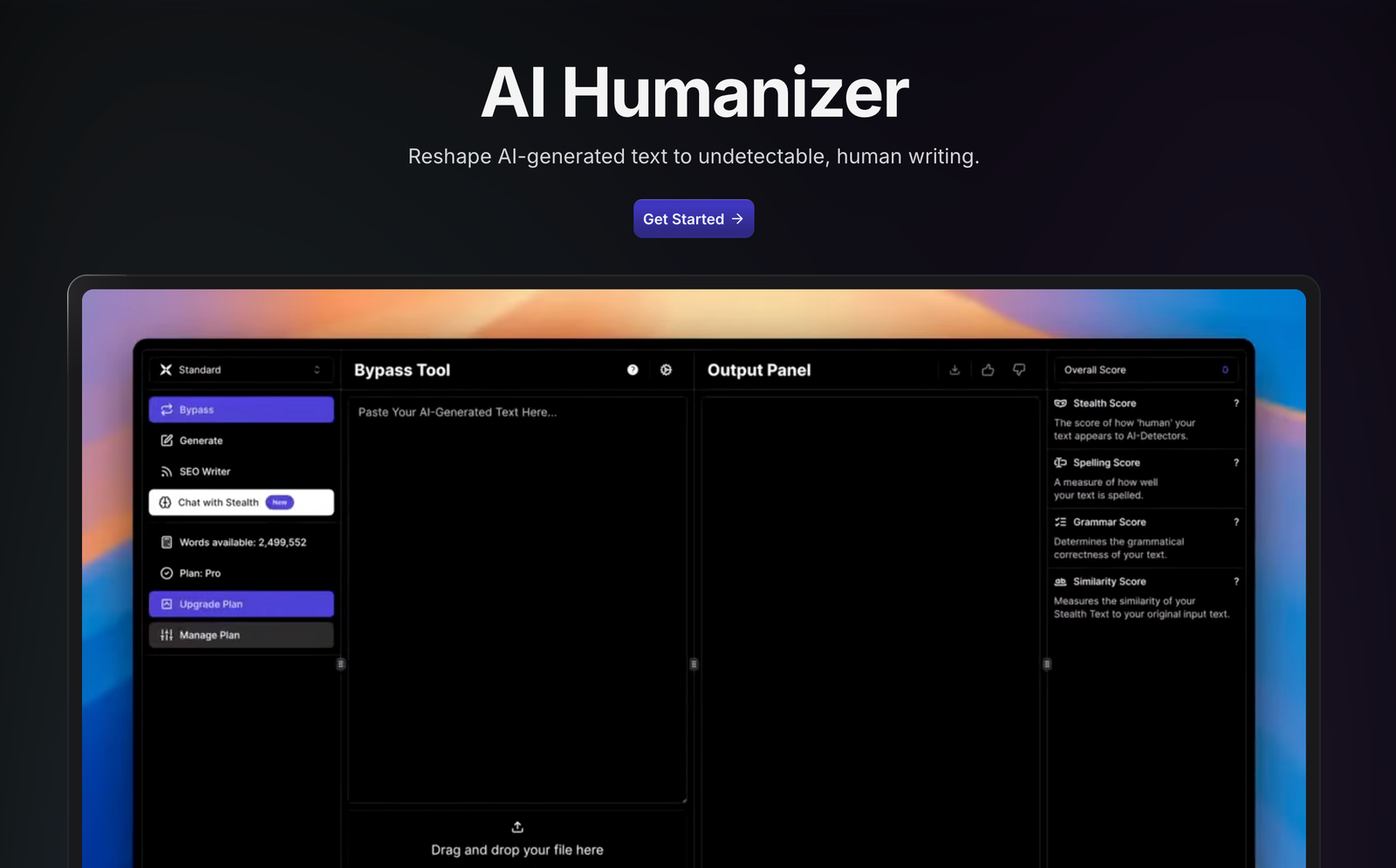
Best use case: Reworking AI drafts that contain useful substance but still sound repetitive, stiff, or visibly machine-patterned.
What it does well: It provides a relatively direct way to introduce variation into phrasing, structure, and sentence rhythm.
Where it falls short: Rewriting for lower predictability does not automatically improve reasoning, accuracy, or genuine stylistic consistency.
Who should skip it: Writers handling legal, medical, financial, or highly technical content that cannot tolerate subtle shifts in meaning.
AI Writing Systems for Human-AI Collaboration #3. WriteHuman
WriteHuman takes a fairly direct approach to human-AI collaboration by focusing on the stage where generated material needs to sound less uniform and more naturally written. It is useful when a writer has already settled the core argument and mainly needs help reducing stiff transitions, repetitive phrasing, or the polished sameness that often appears in untouched AI output. The simplicity is part of its appeal because the user can paste a draft, review the rewrite, and decide which portions are worth keeping rather than learning a more elaborate content system. That same simplicity becomes a constraint when a team needs fine-grained control over voice, terminology, brand rules, or differences between several contributors. A rewrite may sound more casual or varied while still missing the particular habits that make one writer recognizably different from another. WriteHuman therefore suits a process where the human editor remains active after transformation, using the output as workable material rather than treating it as the final approved version.
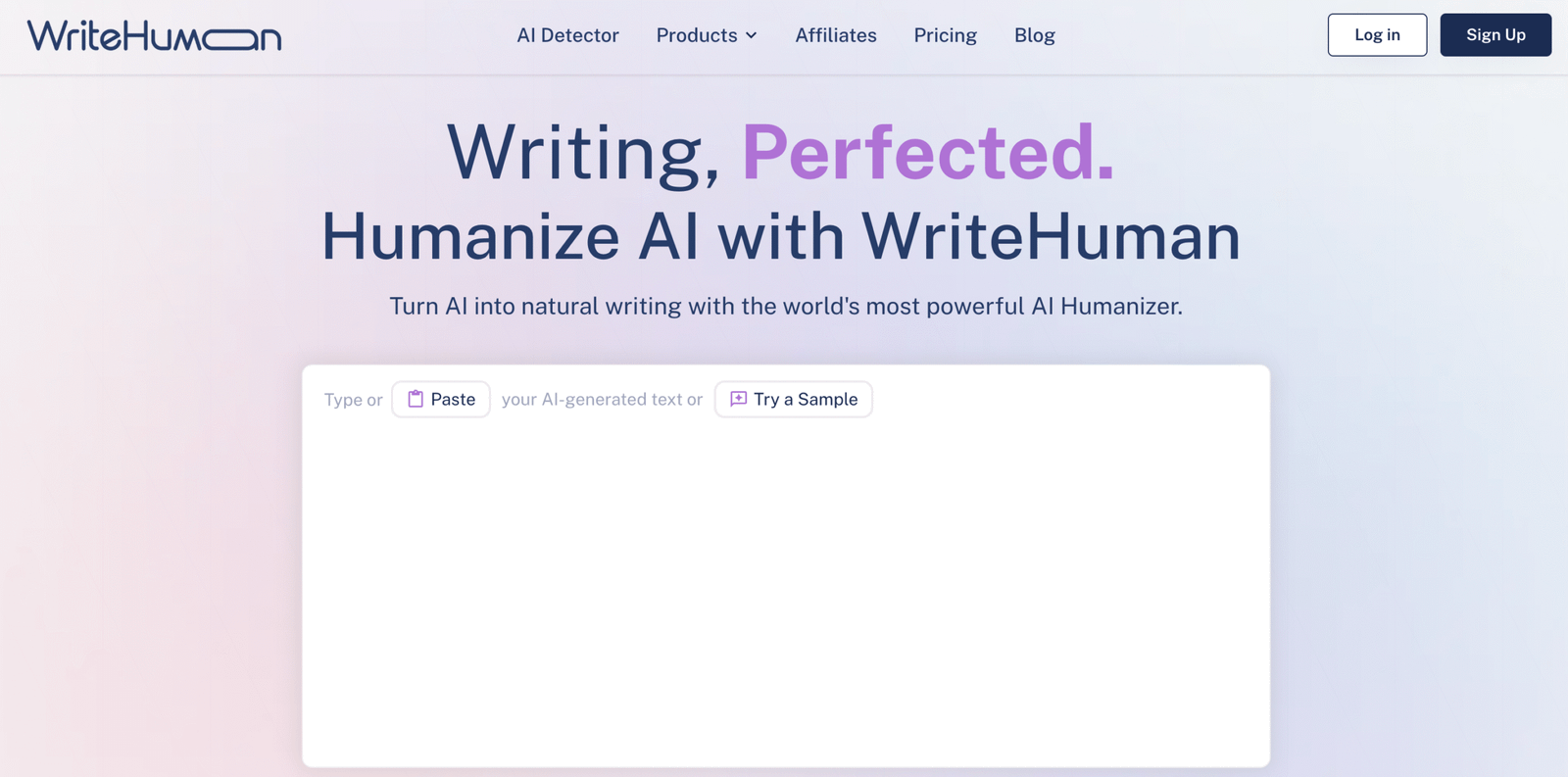
Best use case: Writers who need a quick first-pass rewrite before completing a more deliberate manual edit.
What it does well: It reduces obvious AI phrasing without making the workflow unnecessarily complicated.
Where it falls short: It offers less precise control over individual voice, brand language, and specialized terminology.
Who should skip it: Editorial teams that require repeatable style rules across many writers, clients, or content categories.
AI Writing Systems for Human-AI Collaboration #4. Humbot
Humbot is structured around converting AI-generated passages into text that appears less patterned, which gives it a clear role after the initial drafting stage. It can be practical for users who generate substantial amounts of copy and need a fast way to reduce repetition before a person reviews tone, logic, and factual detail. The tool is especially easy to understand because it does not ask the user to build an elaborate profile or manage a complex editorial workspace before producing a result. However, speed and stylistic depth rarely arrive in equal measure, and Humbot’s broad transformation process may not preserve subtle distinctions in professional voice. The rewritten version can also become less precise if the source contains technical terminology, carefully qualified statements, or sentences where exact wording matters. It is most useful when collaboration is arranged as a sequence, with AI generating, Humbot loosening the language, and a human editor restoring specificity wherever the automatic rewrite has gone too far.
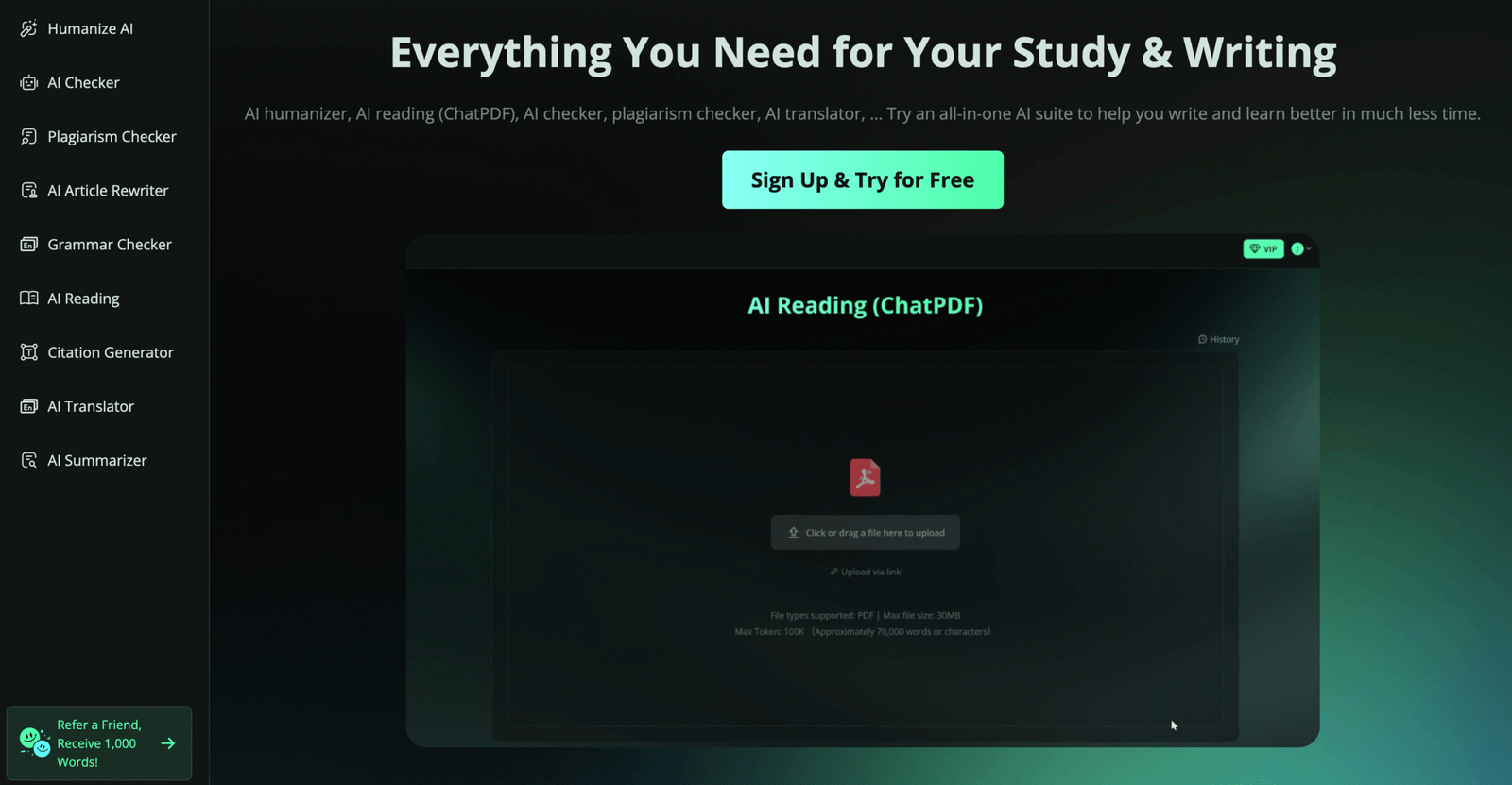
Best use case: High-volume content workflows that need a quick language pass before detailed human editing.
What it does well: It makes straightforward AI text feel less repetitive without requiring much setup.
Where it falls short: It may trade away nuance, technical precision, or a carefully developed brand voice.
Who should skip it: Subject-matter experts whose work depends on exact terminology and tightly controlled phrasing.
AI Writing Systems for Human-AI Collaboration #5. HIX Bypass
HIX Bypass sits within a broader writing ecosystem, which makes it convenient for people who already use AI to generate, revise, and repurpose content in one general workflow. Its role is primarily to reshape generated text so that the wording appears more varied and less obviously produced from common model patterns. That can save time when the underlying draft is already structurally sound and the remaining work is mostly about cadence, phrasing, and surface-level naturalness. The caveat is that a smoother rewrite can create the impression of completion even when the argument still needs stronger evidence, sharper organization, or more original interpretation. Because the system is designed for broad usability, it may also smooth away the particular rough edges that make a person’s writing feel individual rather than merely competent. HIX Bypass works best when its output returns to a human editor who can compare it with the source, recover any lost nuance, and decide whether the rewritten tone actually belongs in the publication.
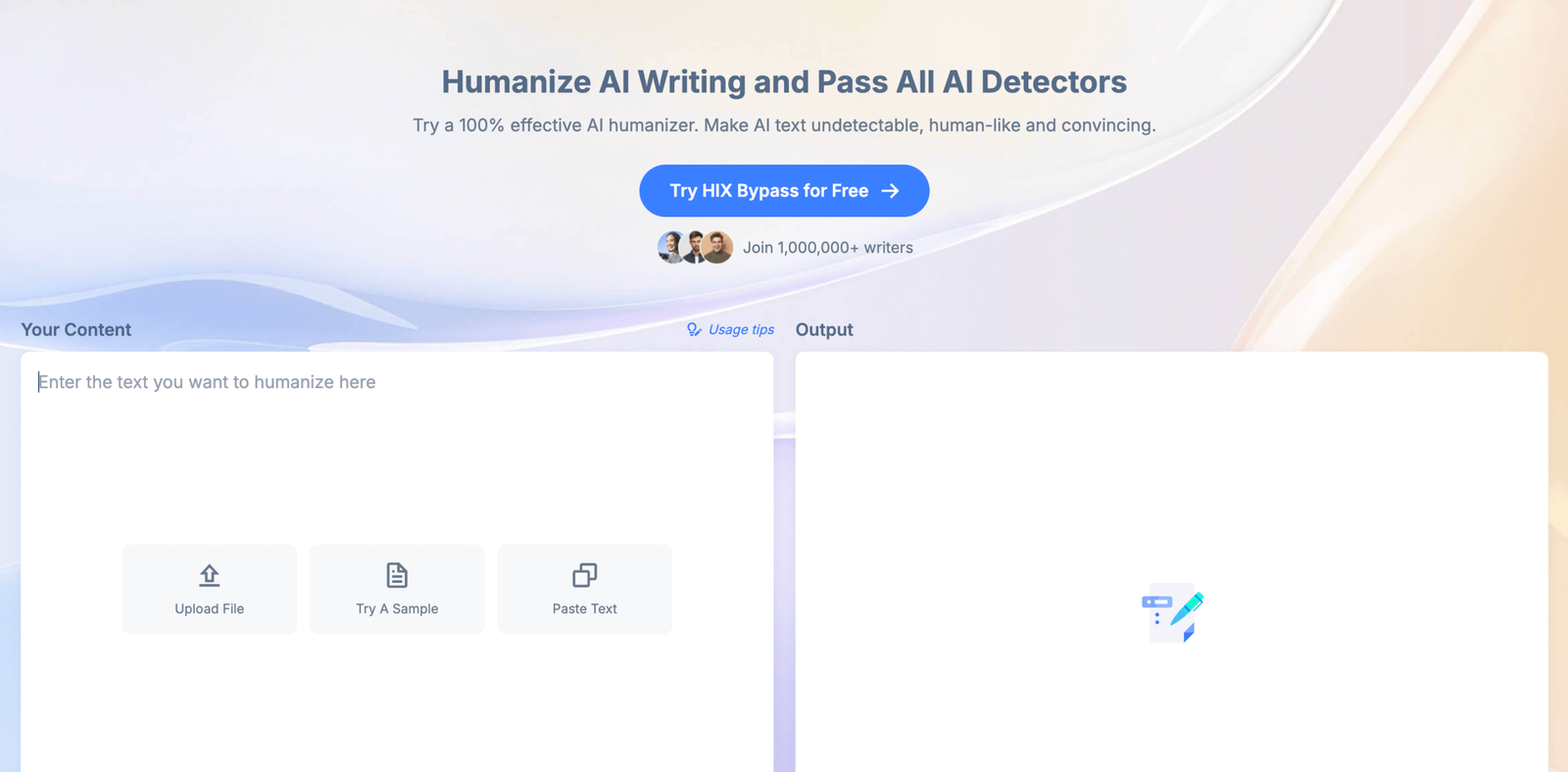
Best use case: Existing HIX users who want rewriting, drafting, and refinement tools within the same general platform.
What it does well: It fits neatly into multi-stage content production and handles routine prose transformation quickly.
Where it falls short: It may make writing smoother without addressing weak evidence, generic thinking, or structural problems.
Who should skip it: Writers who need highly individualized voice replication rather than a broadly natural rewrite.
AI Writing Systems for Human-AI Collaboration #6. Writesonic AI Humanizer
Writesonic AI Humanizer makes the most sense inside a broader production environment where teams already use AI for ideation, drafting, SEO support, and content revision. Rather than operating as an isolated rewriting utility, it can become one step in a larger sequence that moves from research and generation into tonal adjustment and editorial review. This is basically its strongest collaborative advantage because users do not need to move material between several unrelated tools just to soften the language of a generated draft. The compromise is that broad platforms tend to prioritize coverage and convenience over the deeper voice modeling available in more specialized systems. A team may still need manual style guides, approved examples, and a final editor to ensure that output from different contributors sounds coherent rather than merely polished. It is therefore well suited to operational content teams that value a connected workflow, provided they remain realistic about the difference between automated humanization and genuinely consistent editorial identity.
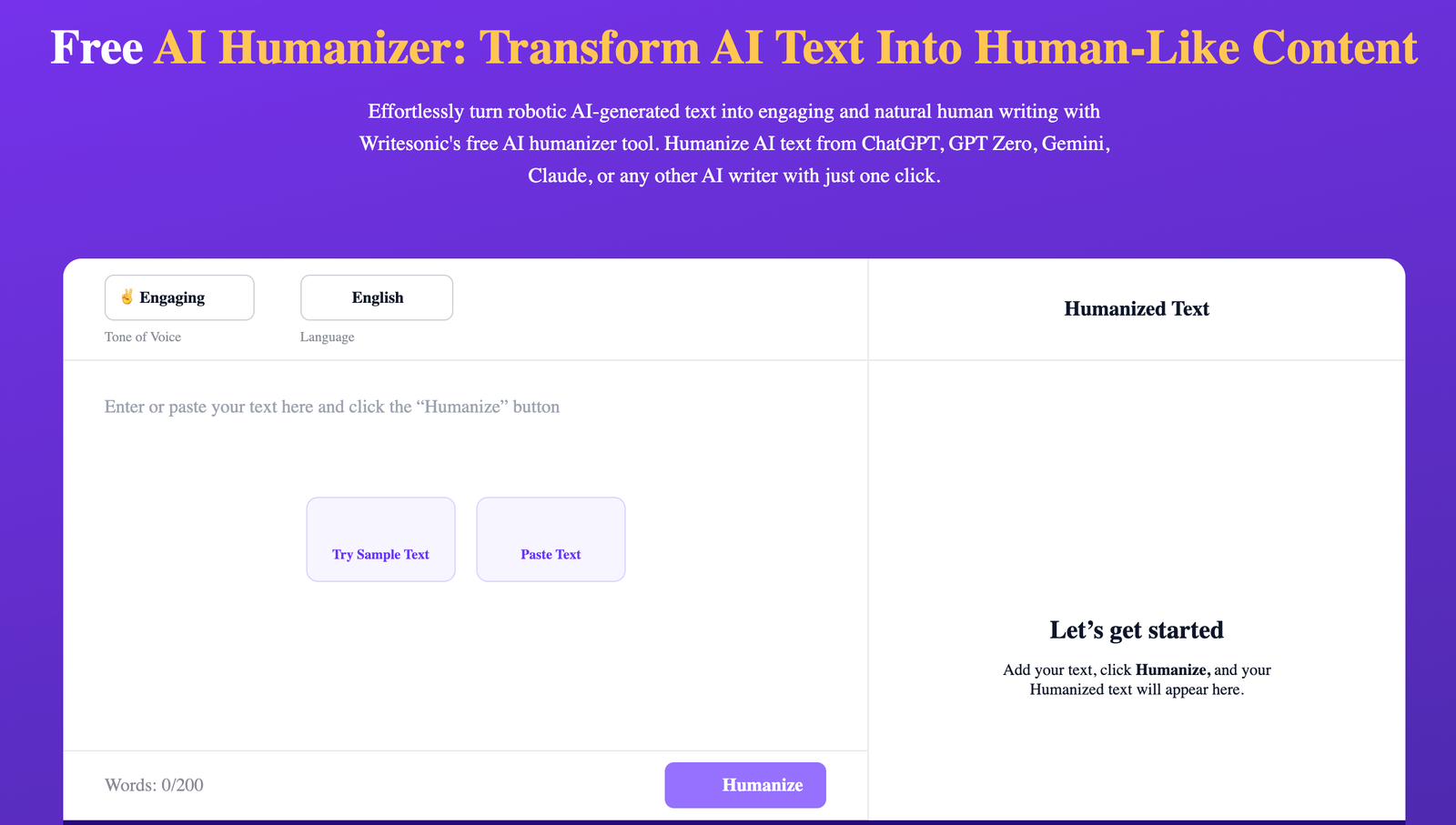
Best use case: Marketing and SEO teams already producing content within the wider Writesonic environment.
What it does well: It connects humanization with other drafting, optimization, and publishing tasks in one workflow.
Where it falls short: Its broad platform approach can feel less precise when a team needs detailed voice matching.
Who should skip it: Writers who only need a focused rewriting tool and do not want the surrounding content suite.
AI Writing Systems for Human-AI Collaboration #7. Uncheck AI
Uncheck AI is designed for users who want to move quickly from a generated passage to a version that feels less templated and more varied in its construction. In a collaborative process, that makes it useful between the initial model output and the human review stage, particularly when editors are dealing with repetitive sentence openings or overly balanced paragraphs. The interface keeps the task narrow, which reduces friction and makes it easier for occasional users to understand exactly where the tool fits. The drawback is that narrow transformation tools generally know very little about the larger purpose of a document, the publication’s standards, or the audience’s level of knowledge. They can change how a sentence sounds without knowing whether it should exist, whether the evidence is sufficient, or whether the framing is appropriate. Uncheck AI is consequently most effective when the team already has a solid draft and needs linguistic variation, not when it is still trying to work out the substance or direction of the piece.
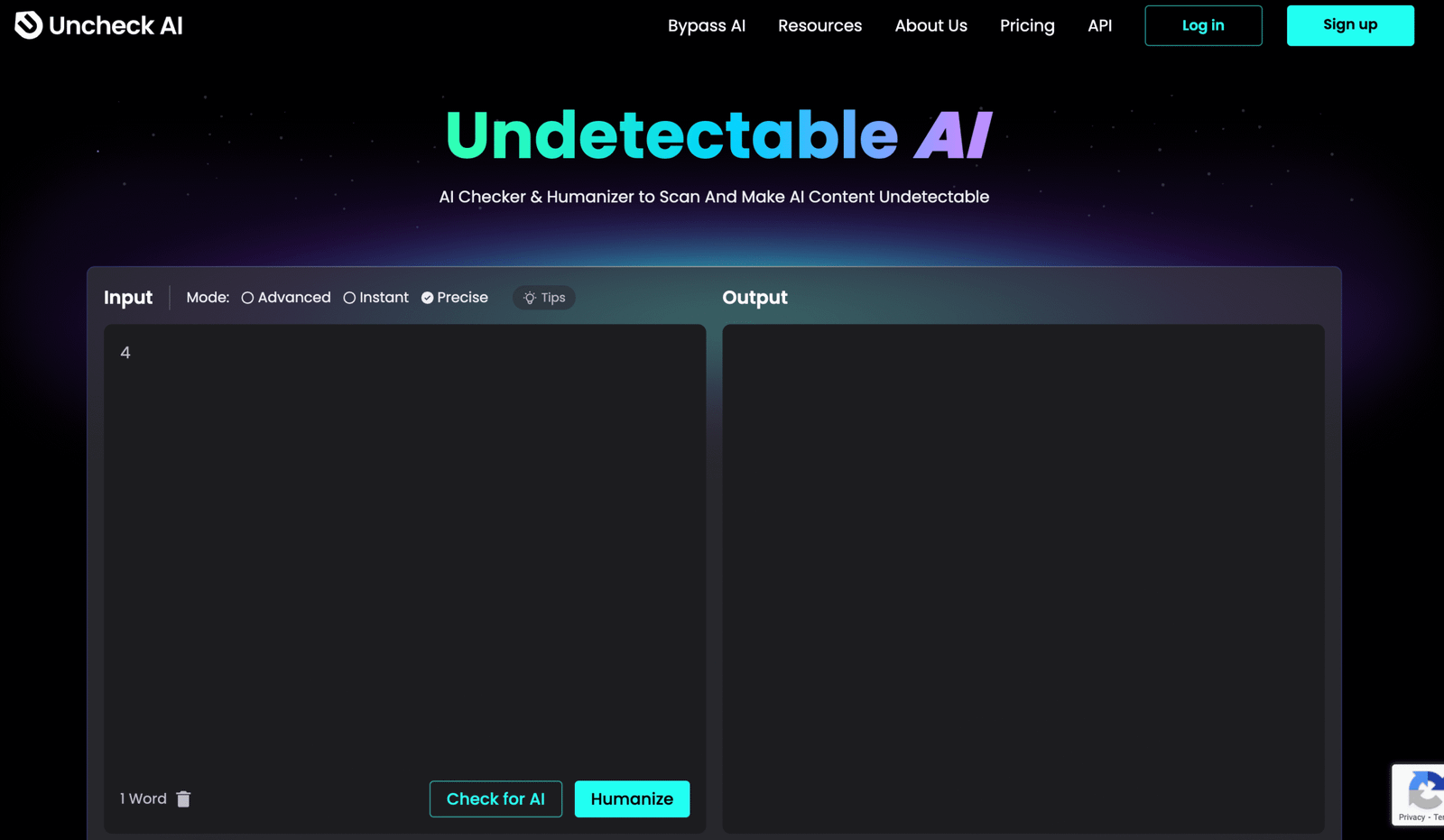
Best use case: Editors who need to reduce repetitive AI phrasing before carrying out a substantive review.
What it does well: It keeps the rewriting process simple and introduces useful variation into routine prose.
Where it falls short: It has limited awareness of argument quality, publication context, and audience expectations.
Who should skip it: Teams looking for research, outlining, collaboration management, or advanced brand governance.
AI Writing Systems for Human-AI Collaboration #8. UnAIMyText
UnAIMyText is aimed at the familiar problem of AI copy that is grammatically tidy but rhythmically flat, over-explained, or too predictable in the way it connects ideas. Its transformation process can give writers a more flexible base to work from by varying sentence length, replacing stock phrasing, and loosening transitions that feel mechanically arranged. That is useful for collaborative editing because a reviewer can spend less time correcting obvious model habits and more time considering the actual message. Still, variation is not the same as voice, and a passage can become less robotic without sounding like the person or organization that is meant to publish it. Automatic changes may also make a careful sentence more casual than intended or weaken a qualification that was included for good reason. The tool is best treated as a practical cleanup layer, followed by a deliberate comparison against the original so the human editor can keep useful improvements without accepting every change.
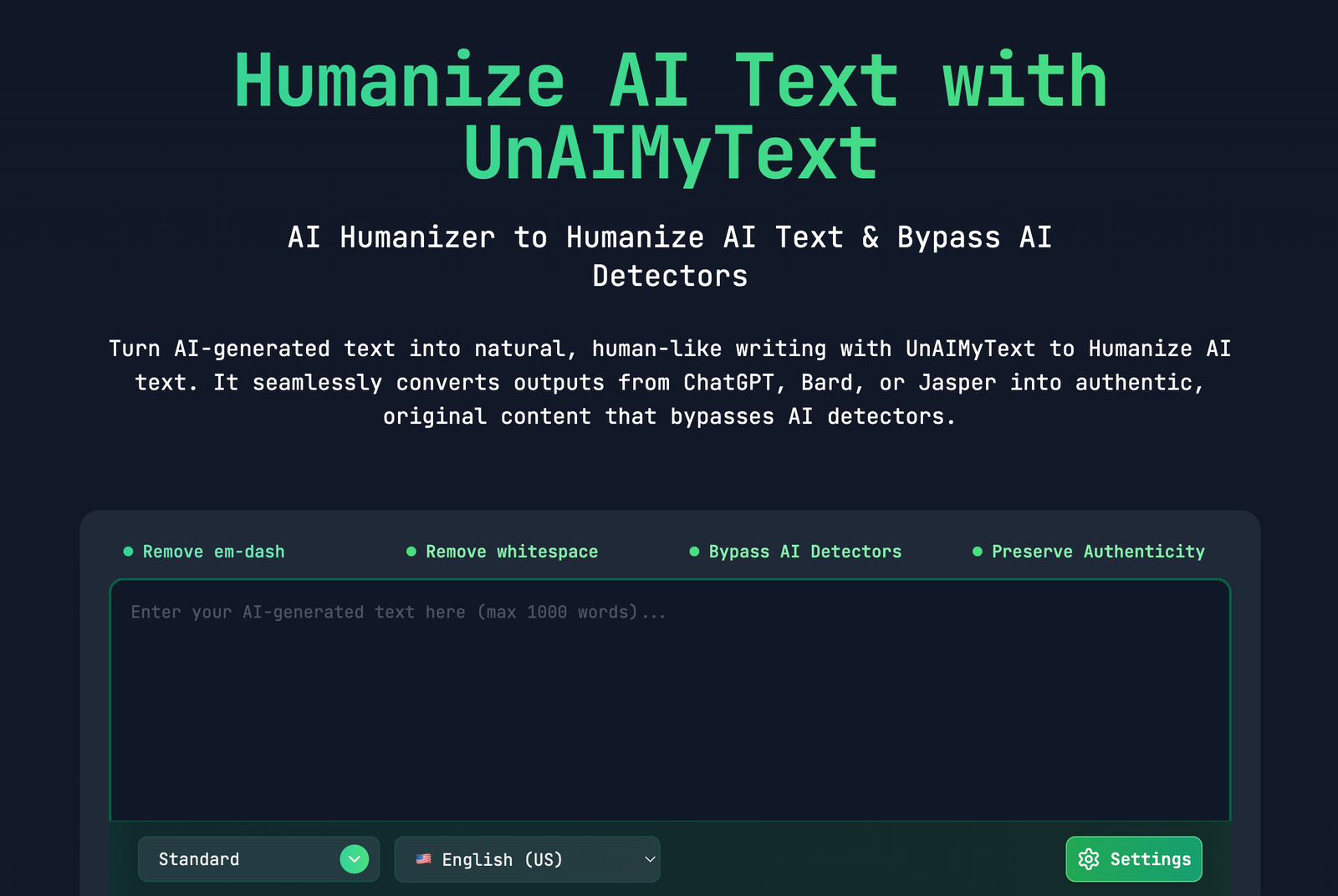
Best use case: Cleaning up predictable wording and rigid sentence patterns in otherwise usable AI drafts.
What it does well: It creates a more varied editing base without requiring a complicated setup process.
Where it falls short: It does not necessarily reproduce a specific writer’s habits or preserve every deliberate qualification.
Who should skip it: Anyone who needs precise voice modeling, approval workflows, or collaborative document controls.
AI Writing Systems for Human-AI Collaboration #9. GPTHuman AI
GPTHuman AI focuses on turning generated text into prose that appears more naturally assembled, with less of the uniform structure associated with untouched model output. It can be useful for writers who produce a first draft quickly and then want an intermediate version that feels easier to edit at sentence level. The tool’s straightforward workflow also makes it accessible to people who do not need a complete content platform or a large collection of planning features. Its main tradeoff is that surface-level naturalness can obscure weaknesses underneath, including thin examples, repeated ideas, unsupported claims, or a tone that does not match the publication. There is also the familiar risk that an automatic rewrite changes emphasis in ways that are difficult to notice unless the user checks the new version against the original. GPTHuman AI therefore belongs in a review-conscious process where the person in charge remains responsible for meaning, factual accuracy, and the final editorial character of the piece.
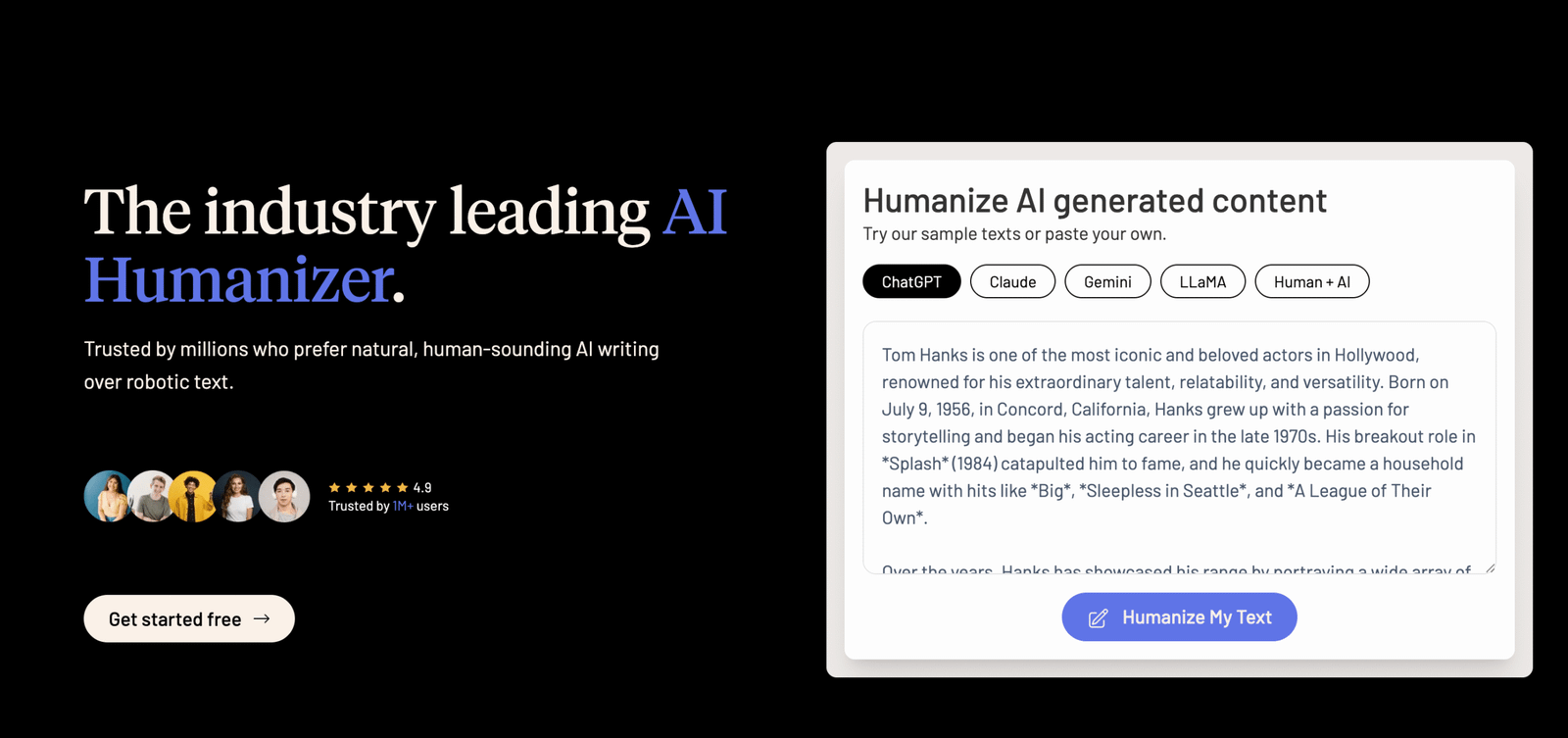
Best use case: Writers who want a simple intermediate rewrite before completing a sentence-level manual edit.
What it does well: It reduces some of the repetitive structures and polished uniformity common in raw AI drafts.
Where it falls short: It does not solve weak reasoning, shallow examples, or factual problems hidden beneath fluent prose.
Who should skip it: Teams that need deep personalization, version control, shared approvals, or formal editorial governance.
AI Writing Systems for Human-AI Collaboration #10. EssayDone.ai
EssayDone.ai is oriented toward longer-form academic and essay-style work, where collaboration often involves moving from an initial idea into research, drafting, restructuring, and final refinement. That broader context gives it more relevance than a basic sentence rewriter when a user needs support across several stages of producing a coherent document. It can help create a workable foundation that a student, researcher, or editor then develops through stronger evidence, clearer argumentation, and more personal interpretation. The obvious caveat is that academic writing carries requirements around source use, attribution, originality, and institutional policy that no automated workflow can safely resolve on the user’s behalf. A polished result may still contain weak citations, generalized reasoning, or language that does not reflect the writer’s real level of understanding. EssayDone.ai is most defensible as a structured assistance tool, with the human participant remaining fully responsible for verifying sources, revising the argument, and ensuring that the final submission meets the relevant academic standards.
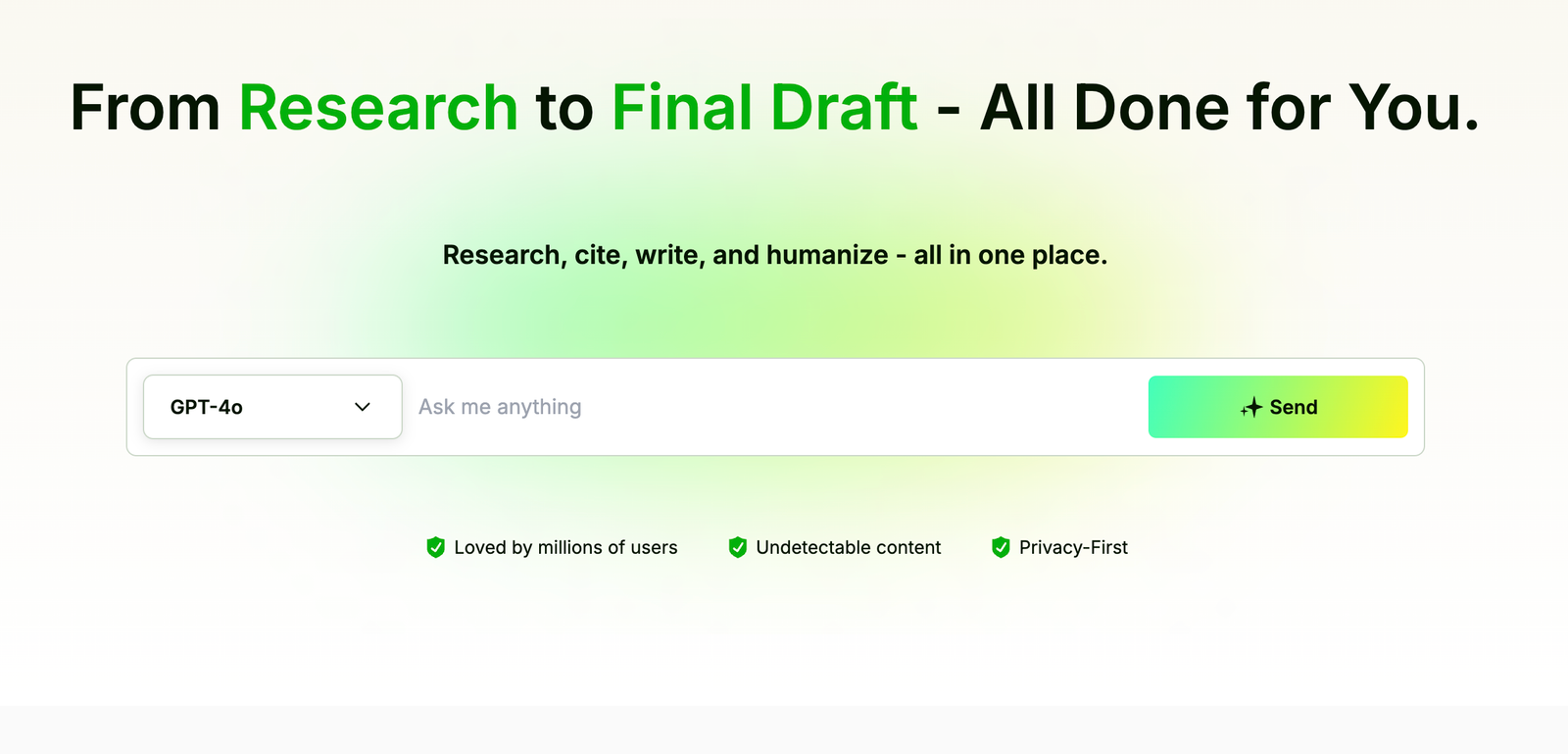
Best use case: Essay and academic workflows where users need structured assistance across drafting and revision stages.
What it does well: It supports longer-form development rather than limiting the process to isolated sentence rewrites.
Where it falls short: It cannot independently guarantee accurate citations, original analysis, or compliance with institutional rules.
Who should skip it: Anyone seeking a substitute for reading sources, understanding the material, or completing their own academic reasoning.
Choosing an AI Writing System for Human-AI Collaboration
The most useful AI writing system is rarely the one that produces the fastest rewrite, because speed only matters when the result still fits the team’s standards and intended voice. A platform should reduce repetitive editing without making writers less attentive to structure, evidence, and meaning.
WriteBros.ai stands out for teams that want deeper control over style, while broader platforms such as Writesonic may suit workflows that also involve drafting, optimization, and publishing. Simpler humanizers can still be practical, although they generally offer less control over the specific traits that make writing feel recognizably consistent.
The main tradeoff is between convenience and editorial precision, which honestly becomes clearer once the tools are tested on real working drafts rather than polished examples. Some systems are good at loosening predictable phrasing, but that does not necessarily mean they understand the argument, audience, or context behind the piece.
Human-AI collaboration works best when the software handles routine transformation and people remain responsible for judgment, accuracy, and final tone. The whole thing becomes more reliable when each tool has a defined place in the workflow rather than being expected to generate, refine, verify, and approve the content on its own.
Disclaimer: The tools referenced are included for editorial and informational purposes only and are selected based on observable product behavior and relevance rather than sponsorship or paid placement. Screenshots are shown solely for identification, commentary, and illustrative reference in line with standard editorial and fair use practices, and may not reflect the most current version of each product. All trademarks, logos, and interface elements remain the property of their respective owners. For update, correction, or removal requests, please refer to the Editorial Policy.