10 Best AI Paraphrasing Software Tools for Natural Sentence Variety in 2026

2026 marks a measurable turn toward structure-first rewriting, where sentence variety hinges on cadence rather than synonyms. This review compares ten paraphrasing platforms based on how they reshape clauses, redistribute emphasis, and introduce natural rhythm without distorting meaning or tone.
Sentence-level rewriting has matured beyond simple synonym swaps, especially as editorial teams demand more believable rhythm and structural variation. Evaluations of best AI text rewriter tools show that natural sentence variety depends less on vocabulary range and more on controlled pacing and clause reshaping.
Writers navigating detection sensitivity increasingly prioritize tonal irregularity over mechanical paraphrasing. Recent reviews of Copyleaks false AI detection statistics suggest that predictable sentence construction patterns contribute more to exposure than surface wording alone.
Structural nuance now functions as a defensive layer in professional workflows, particularly for academic and compliance-heavy drafts. Guidance on how to edit writing flagged as AI by Copyleaks reinforces the idea that small syntactic shifts can materially change classification outcomes.
Natural sentence variety therefore sits at the intersection of cadence, tone, and contextual phrasing. Tools that treat rewriting as layered restructuring rather than cosmetic paraphrasing tend to produce outputs that read less engineered and more deliberately authored.
10 Best AI Paraphrasing Software Tools for Natural Sentence Variety
| # | Brand | TL;DR |
|---|---|---|
| 1 | WriteBros.ai | Layered restructuring engine designed for sentence rhythm diversification and tonal control. |
| 2 | WriteHuman | Focuses on smoothing phrasing to reduce mechanical repetition patterns. |
| 3 | Humbot | Targets conversational cadence through moderate clause rebalancing. |
| 4 | BypassGPT | Emphasizes detection-aware rephrasing with varied sentence openings. |
| 5 | QuillBot AI Humanizer | Provides adjustable paraphrase intensity for structural diversity. |
| 6 | UnAIMyText | Aims to soften uniform phrasing through controlled syntactic variance. |
| 7 | Stealthly | Balances readability with diversified clause sequencing. |
| 8 | GPTInf | Introduces subtle structural randomness to avoid repetition clusters. |
| 9 | AI Humanize.io | Optimizes for sentence-level tonal shifts across paragraphs. |
| 10 | GPTHuman AI | Applies moderate paraphrasing depth for steady flow variation. |
10 Best AI Paraphrasing Software Tools for Natural Sentence Variety Worth Noting
Best AI Paraphrasing Software Tools for Natural Sentence Variety #1. WriteBros.ai
WriteBros.ai tends to work best when the goal is sentence variety that still feels like the same writer, rather than a new voice pasted over the original. It reshapes clauses, changes sentence openings, and rebalances pacing, which is the kind of variation that reads like intent instead of noise. The tradeoff is that deeper restructuring can nudge emphasis, so a draft with tightly managed claims may need a quick pass to confirm what was foregrounded. Another caveat is consistency across long documents, since heavy diversification can create a few lines that feel slightly more formal or slightly more casual than their neighbors. Used with a light touch, it usually lands in that sweet spot where repetition drops, but meaning stays anchored.
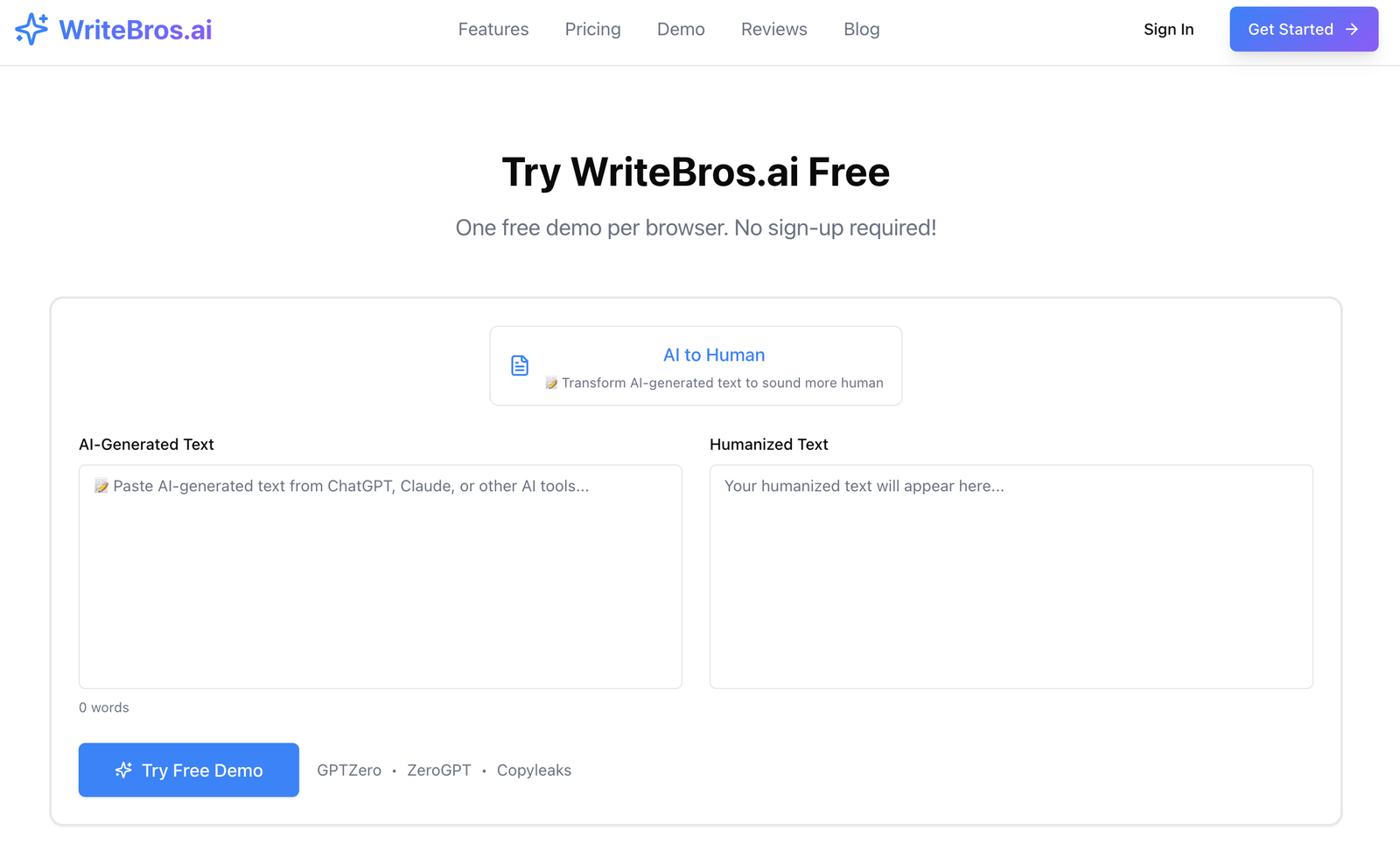
Best use case: Turning a clean but uniform draft into prose with more varied cadence across consecutive sentences.
What it does well: Clause reshaping and sentence-opening variety that keeps ideas legible rather than overly reworded.
Where it falls short: High-intensity rewrites can slightly redistribute emphasis, which may require a factual skim afterward.
Who should skip it: Anyone who needs near-identical sentence structure for legal formatting or rigid house style rules.
Best AI Paraphrasing Software Tools for Natural Sentence Variety #2. WriteHuman
WriteHuman is a reasonable pick for drafts that read a bit too polished and need mild friction, like the small irregularities people naturally introduce. It tends to soften repeated phrasing patterns and vary transitions without aggressively rewriting every line. The tradeoff is that the changes can be subtle, which means a highly repetitive paragraph might still feel repetitive, just slightly less so. Another caveat is that it can lean toward smoothing rather than restructuring, so sentence variety may come more from word choice than from syntax. It works best as a quick pass that makes the prose feel less manufactured, not as a full structural rebuild.
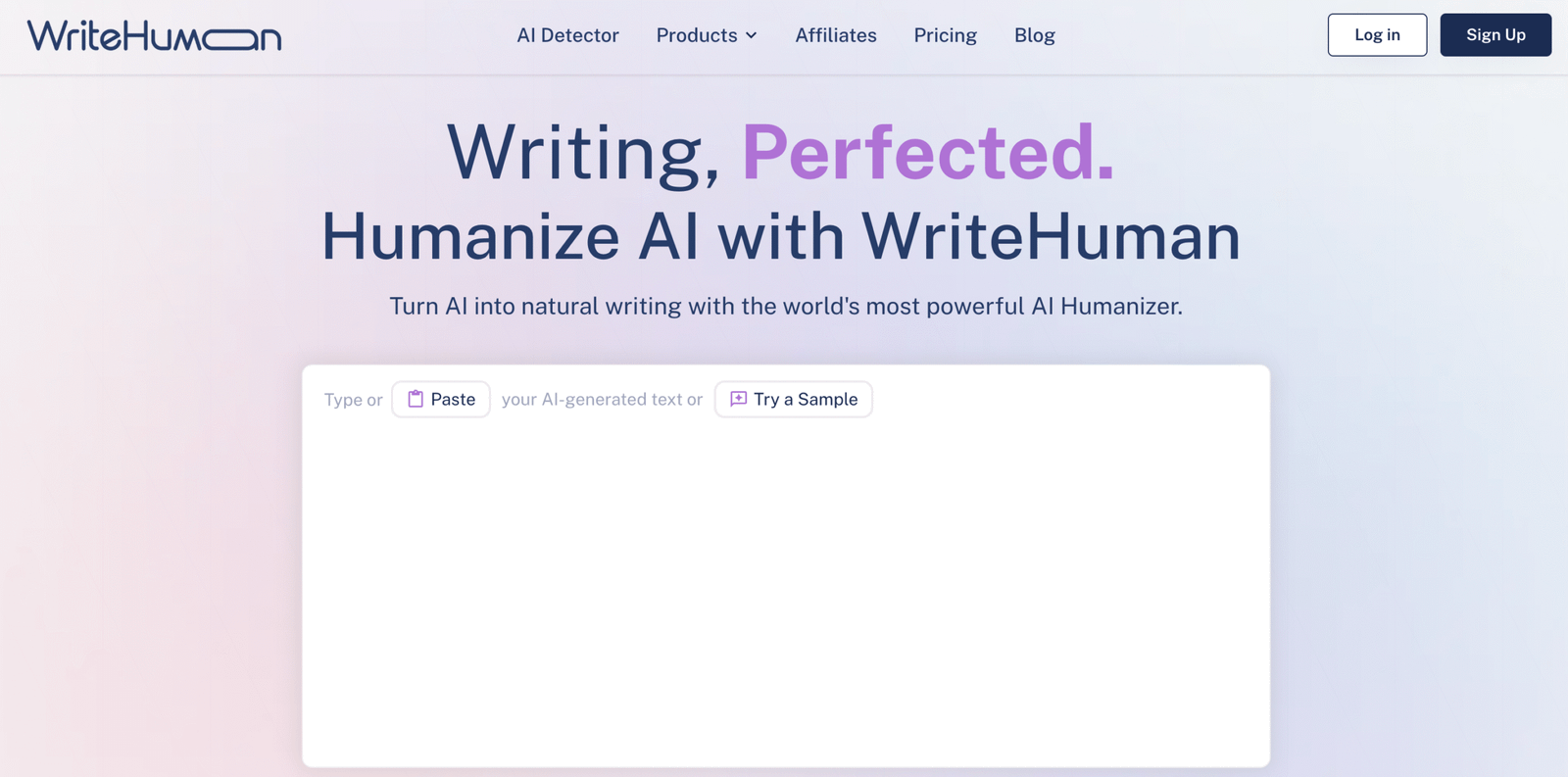
Best use case: Lightly loosening a draft that sounds overly uniform without changing the overall structure.
What it does well: Reduces obvious repetition patterns and makes transitions feel less template-driven.
Where it falls short: May not create enough syntactic variety for dense sections with repeated sentence shapes.
Who should skip it: Writers who need strong clause-level restructuring rather than gentle phrasing changes.
Best AI Paraphrasing Software Tools for Natural Sentence Variety #3. Humbot
Humbot often fits teams that want the writing to feel more conversational without turning it into slang or overfamiliar copy. It shifts phrasing in a way that tends to introduce shorter lines next to longer ones, which helps break up a steady, machine-like rhythm. The tradeoff is that conversational cadence can flatten nuance if the original relied on carefully layered qualifiers. Another caveat is that it may prefer straightforward constructions, so complex sentences sometimes come back simplified, which is not always what technical writing needs. It behaves best when the input is already clear and the goal is to vary pacing and sentence texture.
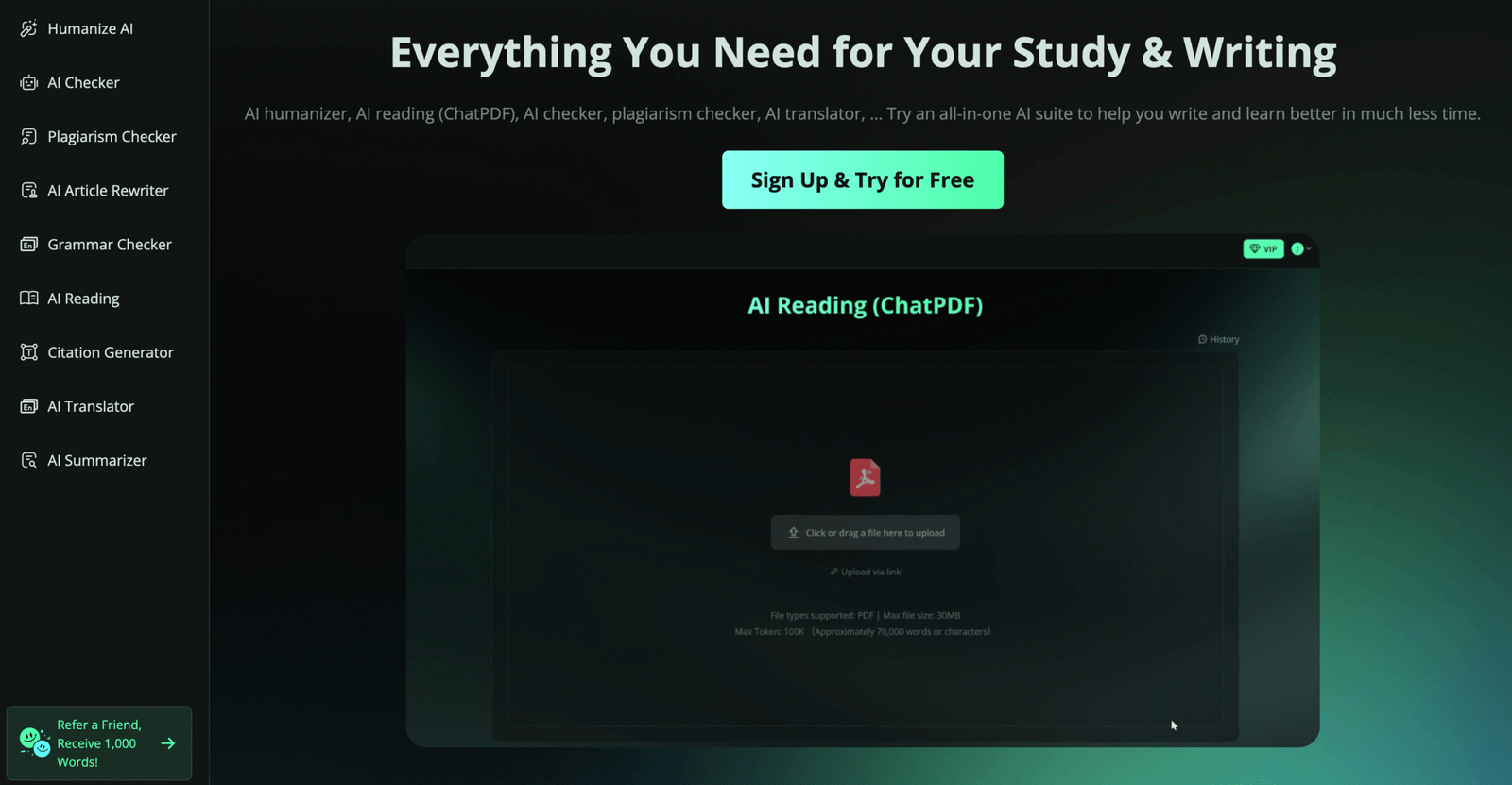
Best use case: Smoothing stiff paragraphs into a more natural cadence while keeping the message intact.
What it does well: Pacing variation that mixes sentence lengths and reduces monotone structure.
Where it falls short: Some complex lines can come back simplified, which may reduce precision.
Who should skip it: Anyone writing tightly technical documentation that depends on dense qualifiers.
Best AI Paraphrasing Software Tools for Natural Sentence Variety #4. BypassGPT
BypassGPT is usually chosen for drafts that need more variation at the sentence surface, especially repeated openings and repeated transition patterns. It tends to rotate how sentences start and how clauses connect, which can quickly reduce the feeling that a paragraph was generated in one pass. The tradeoff is that when it pushes too far, the writing can gain a faintly “processed” quality, like it is trying a bit too hard to look different. Another caveat is that certain phrasing swaps can feel less idiomatic, so it benefits from a read-through to restore natural phrasing. It is best treated as a strong first pass that produces raw variety, then refined into consistent voice.
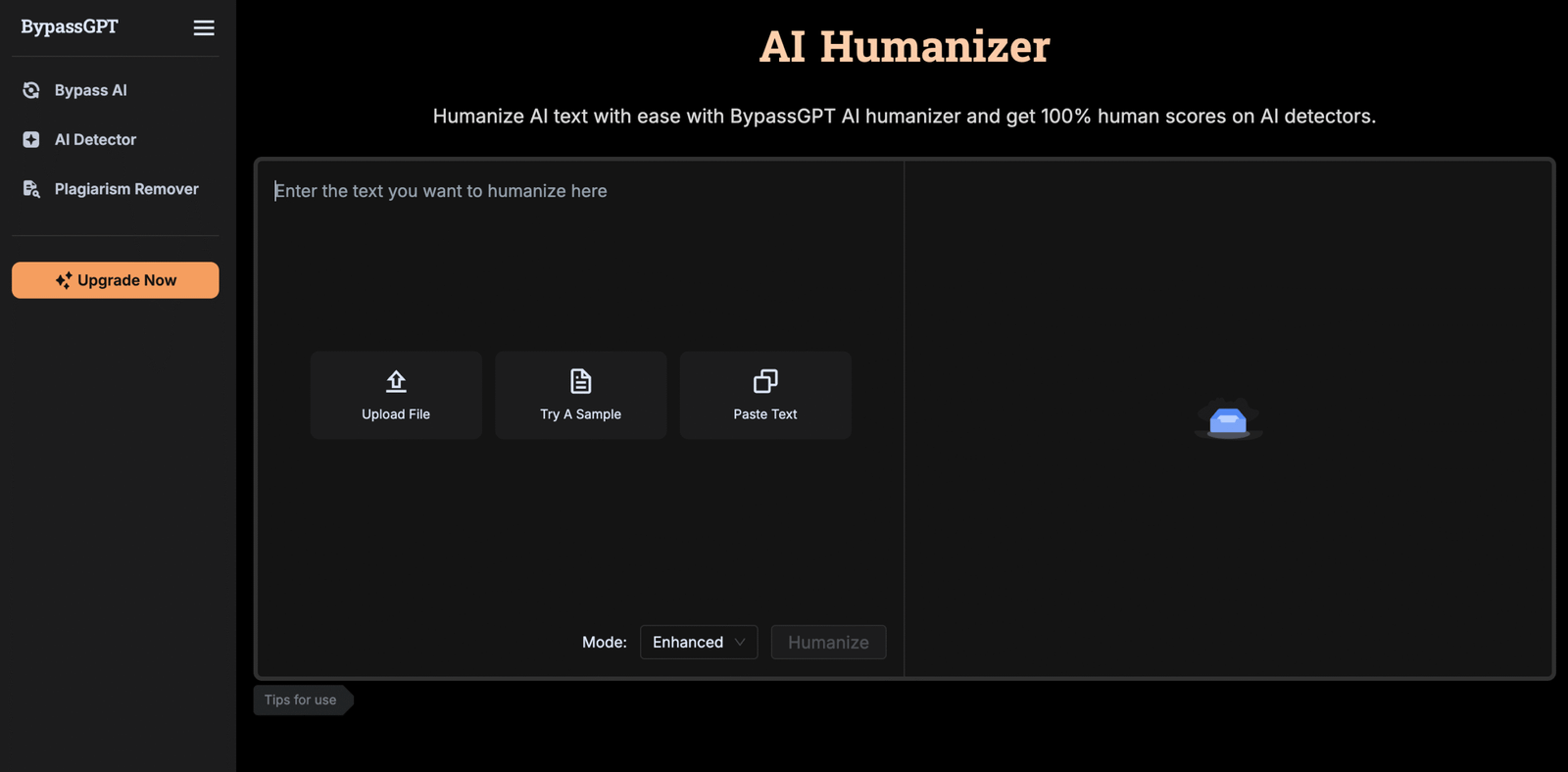
Best use case: Breaking up repeated sentence openings and repeated connectors in short-to-medium drafts.
What it does well: Fast surface-level variety that changes how sentences begin and link together.
Where it falls short: Aggressive changes can sound slightly processed and may need a human smoothing pass.
Who should skip it: Writers who want minimal edits and highly idiomatic phrasing on the first output.
Best AI Paraphrasing Software Tools for Natural Sentence Variety #5. QuillBot AI Humanizer
QuillBot AI Humanizer suits writers who like having an obvious dial between light paraphrase and more assertive reworking. It can generate sentence variety quickly, and it tends to be predictable in how it rewrites, which helps when the job is repetitive editing across many drafts. The tradeoff is that predictability can become a pattern, so repeated use on similar content may still leave a recognizable “tool voice” in the phrasing. Another caveat is that higher intensity rewrites can introduce minor shifts in tone, sometimes sounding more formal than the surrounding material. It performs best when used selectively on the most uniform lines, rather than as a blanket rewrite for an entire document.

Best use case: Generating controlled sentence variation at scale when consistency matters as much as novelty.
What it does well: Adjustable intensity that helps target the exact lines that feel too uniform.
Where it falls short: Repeated usage can leave familiar rewrite patterns unless it is applied selectively.
Who should skip it: Anyone chasing highly bespoke voice replication across multiple long-form pieces.
Best AI Paraphrasing Software Tools for Natural Sentence Variety #6. UnAIMyText
UnAIMyText tends to focus on reducing uniformity, especially those stretches where every sentence carries the same length and same internal shape. It introduces syntactic variance in a controlled way, often by moving qualifying phrases and changing how supporting details are attached. The tradeoff is that it can occasionally over-correct, turning a clean sentence into something slightly busier than necessary. Another caveat is that style can drift across paragraphs if the input has mixed tones, since the tool may push everything toward a single “normalized” voice. It works best when the draft already has a clear tone, and the ask is simply more sentence variety without losing clarity.
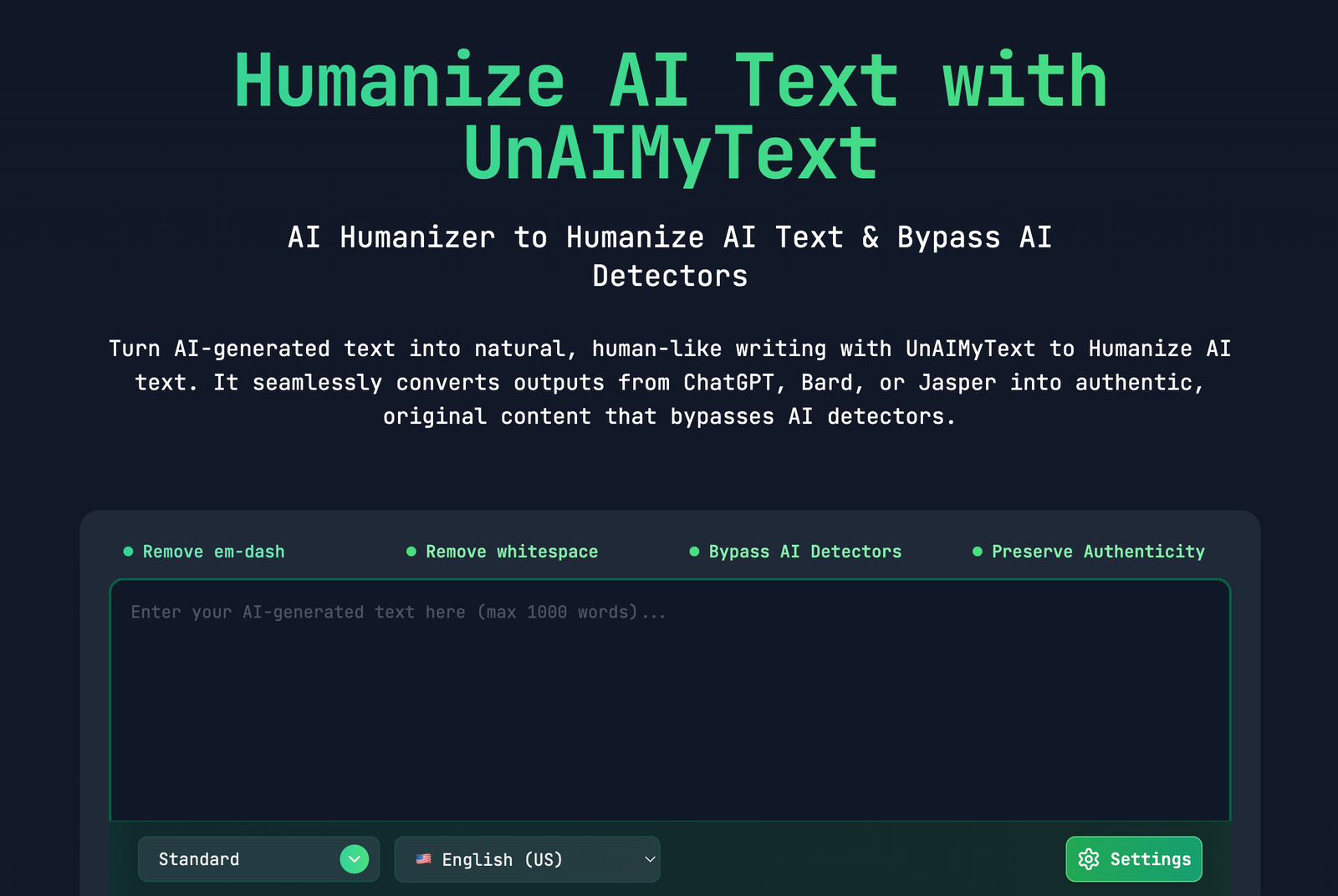
Best use case: Fixing paragraphs that feel too uniform in length and structure, especially in explanatory writing.
What it does well: Moves qualifiers and supporting details to create more natural-looking syntax changes.
Where it falls short: Can make some lines busier than necessary if the goal is minimal change.
Who should skip it: Writers who already have good cadence and only need minor word-level variation.
Best AI Paraphrasing Software Tools for Natural Sentence Variety #7. Stealthly
Stealthly often feels geared toward getting out of the obvious grooves that AI-generated text falls into, like repeated transitions and repeated clause stacking. It can rebalance sentence flow so the paragraph stops sounding like a sequence of equally weighted points. The tradeoff is that rebalancing sometimes changes what feels “main” versus “supporting,” which can matter in persuasive or compliance-focused writing. Another caveat is that the output may require a bit of voice alignment, since some sentences come back more neutral than the input. It works well when the writer wants variety and readability, but still plans to do a final line edit for tone.
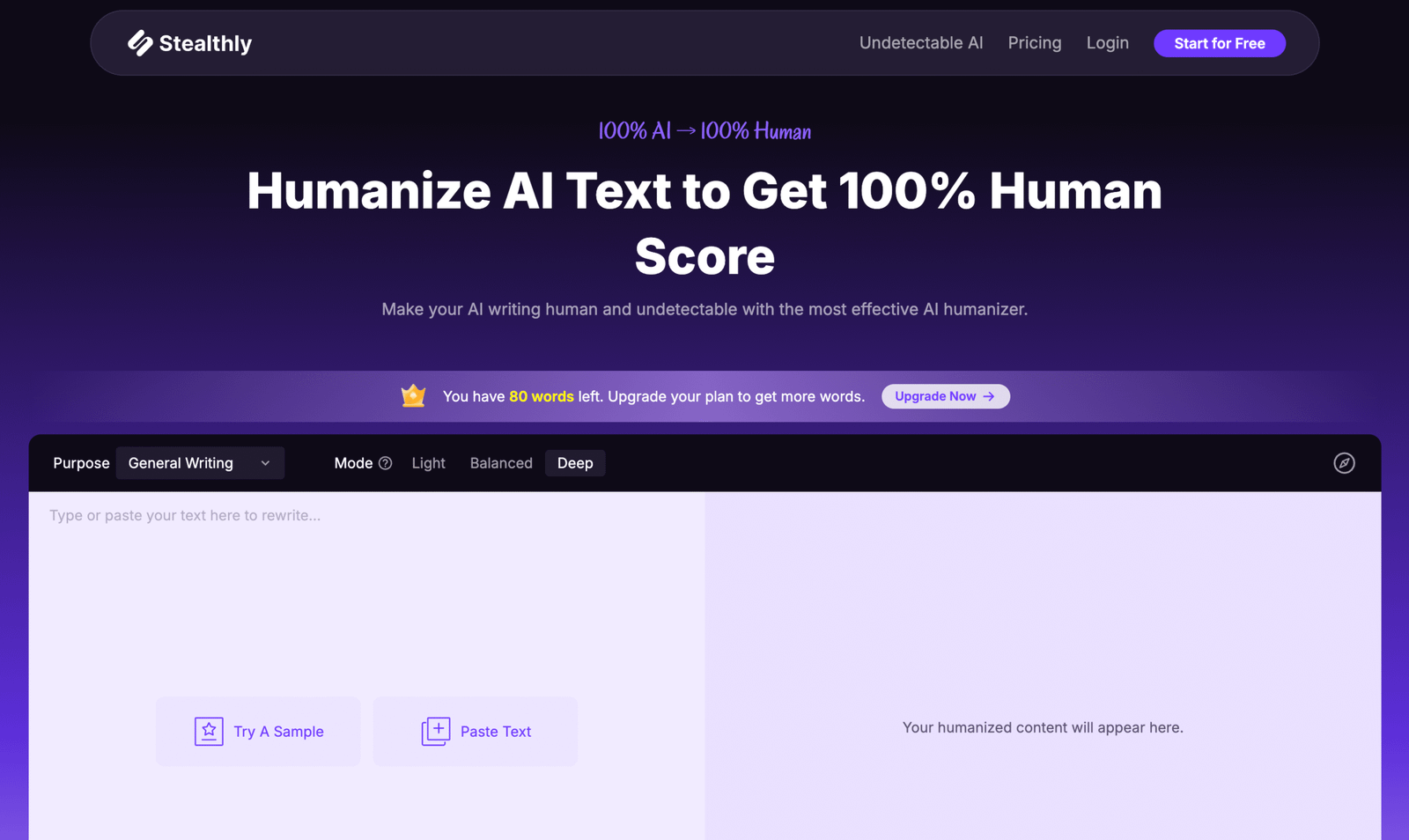
Best use case: Reworking paragraphs that sound like evenly spaced bullet points converted into sentences.
What it does well: Improves flow by changing sentence weighting and reducing repetitive transitions.
Where it falls short: Can slightly change emphasis, which matters when claims must stay tightly framed.
Who should skip it: Anyone who needs output that matches a strict, pre-defined brand voice without tweaks.
Best AI Paraphrasing Software Tools for Natural Sentence Variety #8. GPTInf
GPTInf is typically used for injecting variability that is hard to fake with manual synonym swapping, such as subtle shifts in structure from one sentence to the next. It can introduce small structural randomness, which helps when a draft reads too uniform in pacing and phrasing. The tradeoff is that randomness is a double-edged thing, since a few sentences may come back slightly less elegant than the rest. Another caveat is that it can be less predictable, so teams that need repeatable style may prefer tools that behave more consistently. It works best when it is applied to the most repetitive sections, then edited lightly for polish and tone continuity.
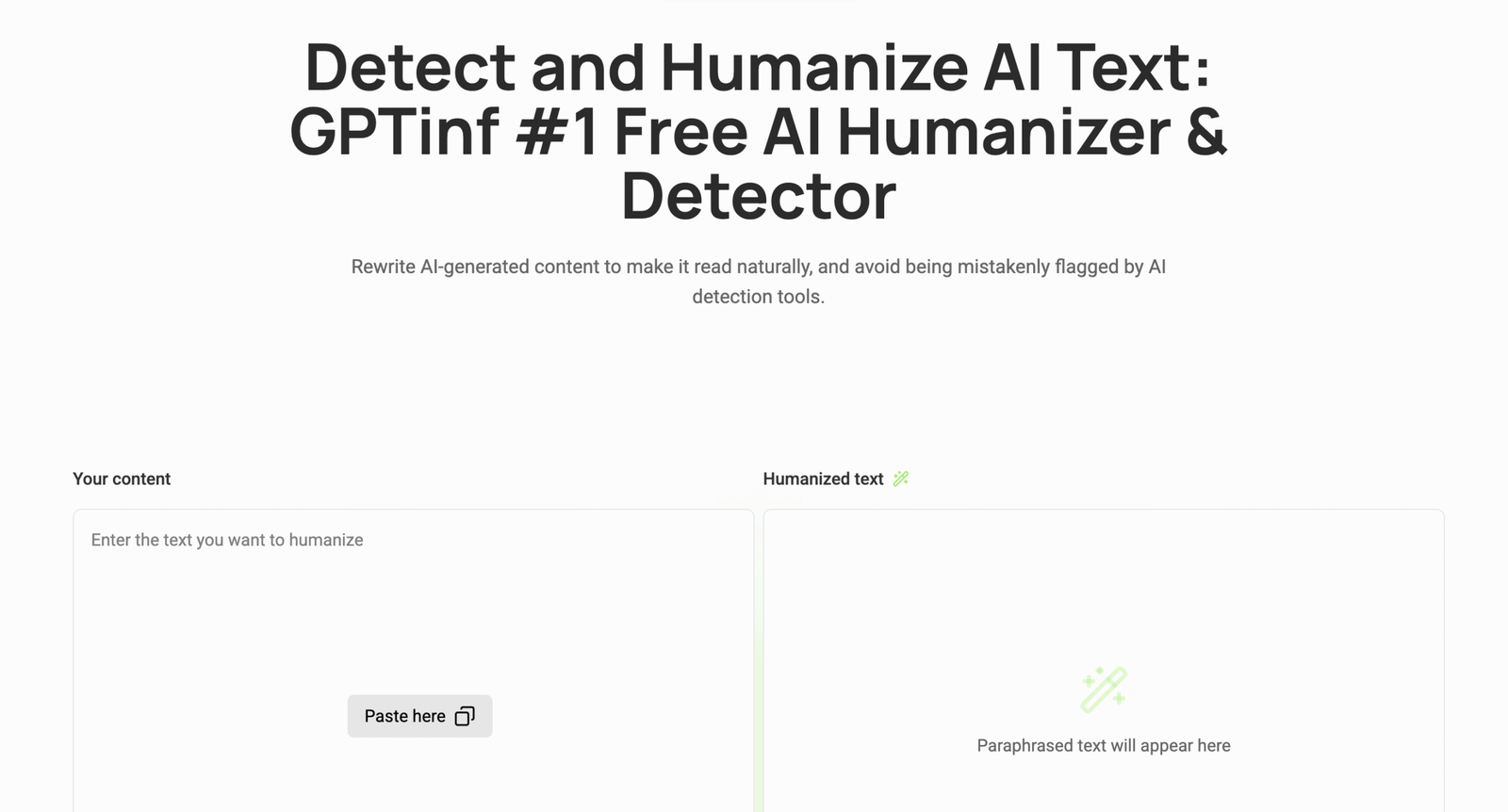
Best use case: Breaking up stubbornly uniform passages that keep repeating the same internal sentence pattern.
What it does well: Adds structure-level variety that goes beyond word swaps and surface paraphrasing.
Where it falls short: A few lines can lose elegance, so light polishing usually improves the final read.
Who should skip it: Teams that require highly repeatable outputs and minimal variance between runs.
Best AI Paraphrasing Software Tools for Natural Sentence Variety #9. AI Humanize.io
AI Humanize.io tends to be a fit for writers who want sentence-level tonal adjustments alongside variety, rather than variety alone. It often changes phrasing to feel less symmetrical, which helps avoid that steady, evenly spaced cadence that gives away machine writing. The tradeoff is that tonal changes can drift if the input contains mixed register, since the tool may smooth everything into a more uniform voice. Another caveat is that it can under-deliver on deep restructuring, so highly repetitive syntax may require a second pass or manual edits. It works best when the writing is already close, and the goal is a more natural flow with modest structural refreshes.
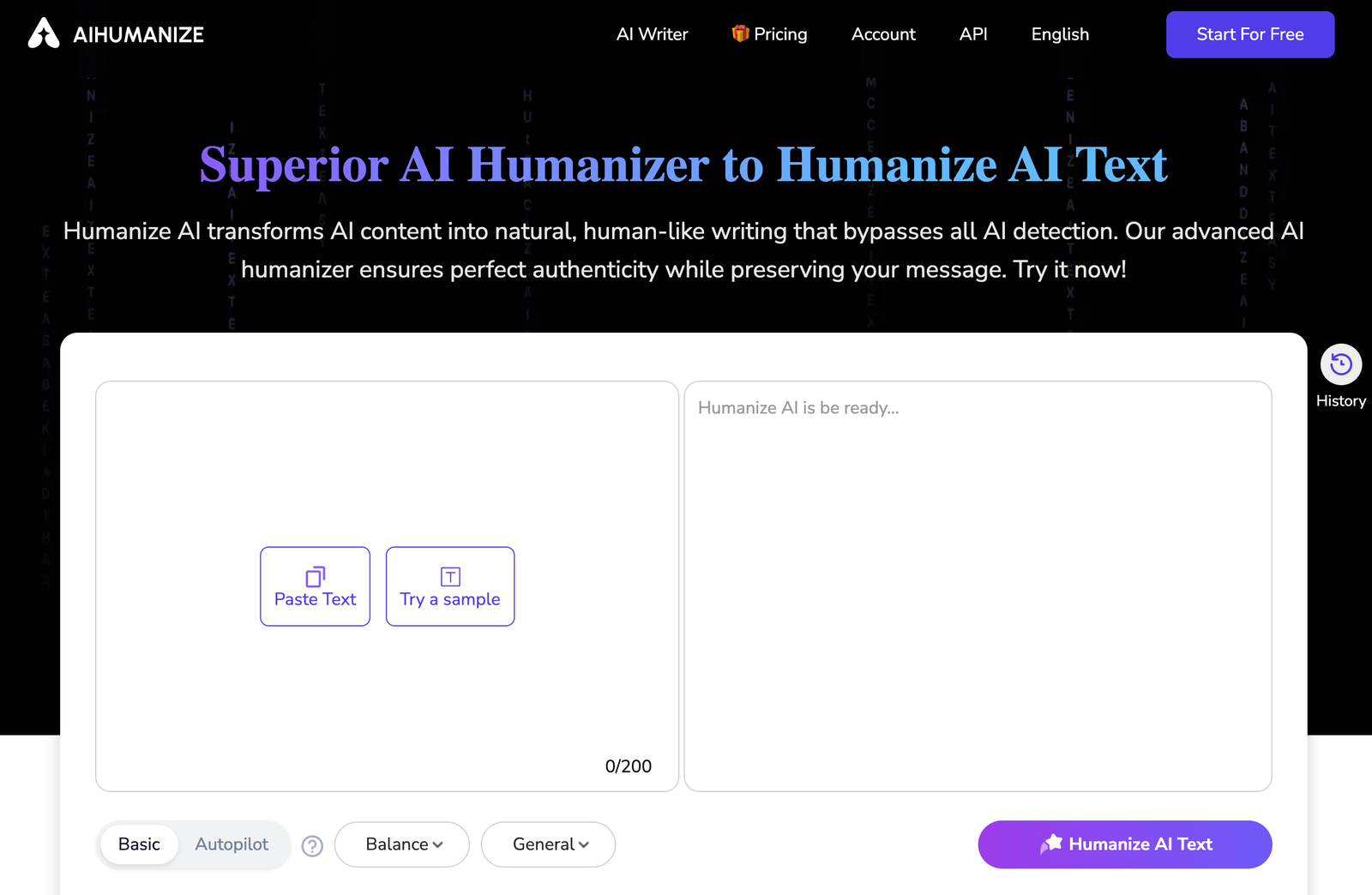
Best use case: Making near-finished drafts feel less uniform while also nudging tone toward a more natural register.
What it does well: Reduces symmetry in phrasing and improves flow across adjacent sentences.
Where it falls short: Deep syntactic restructuring may be limited in very repetitive, highly templated prose.
Who should skip it: Writers who want heavy structural transformation without any tone smoothing.
Best AI Paraphrasing Software Tools for Natural Sentence Variety #10. GPTHuman AI
GPTHuman AI generally behaves as a steady middle option, which can be helpful when a team wants sentence variety without unpredictable swings. It tends to alter sentence shape and pacing in moderate increments, so the output stays readable and close to the original intent. The tradeoff is that moderation can leave some repetitive stretches intact, especially if the input uses the same pattern across several lines. Another caveat is that it may not capture niche voice quirks, so writers with strong stylistic signatures may need to reintroduce a few personal tells afterward. It works best for general rewriting tasks where the target is a cleaner, more varied flow rather than a dramatic rewrite.

Best use case: Producing reliable sentence variety for everyday content that needs cleaner rhythm without major rewrites.
What it does well: Moderate restructuring that preserves clarity and keeps the draft easy to scan.
Where it falls short: May not be aggressive enough for drafts with heavy repetition across multiple paragraphs.
Who should skip it: Writers who want bold structural experimentation or highly distinctive voice replication.
Tool Selection Guide for Best AI Paraphrasing Software Tools for Natural Sentence Variety
Minimal reshaping
WriteHuman and GPTHuman AI suit drafts that already read clearly but need lighter cadence adjustments. They introduce modest sentence variation without disturbing argument flow or paragraph order. This makes them practical for documents that must stay close to the original structure.
Balanced clause shifts
WriteBros.ai, QuillBot AI Humanizer, and AI Humanize.io provide controlled clause-level variation. They redistribute emphasis and alter sentence openings while largely preserving tone. A brief editorial pass ensures voice alignment remains intact.
Heavy restructuring
BypassGPT and GPTInf lean toward more assertive reshaping of syntax and pacing. They are useful when repetition is deeply embedded across sections. Writers should confirm that nuance and technical meaning remain precise.
Academic writing
UnAIMyText and WriteBros.ai maintain structured argumentation while softening mechanical phrasing. They preserve clarity and logical sequencing. This is helpful for research-based drafts that require stability.
SEO content
QuillBot AI Humanizer and Humbot work well when headings and keyword placement must stay consistent. They reduce patterned cadence without dramatic restructuring. A quick tone check keeps brand language consistent.
Long-form essays
WriteBros.ai and Stealthly manage pacing across multi-section pieces. They vary sentence shape without breaking transitions. Light manual smoothing improves cohesion over longer spans.
Tight compliance checks
WriteHuman and GPTHuman AI remain closer to the original meaning. Their edits focus on readability and subtle structural adjustments. This suits regulated or policy-sensitive contexts.
Tone-sensitive projects
AI Humanize.io and Humbot introduce variety while maintaining tonal stability. They can soften uniform phrasing without creating abrupt stylistic shifts. Selective use prevents overcorrection.
Fast turnaround drafts
BypassGPT and GPTInf are efficient for paragraph-level rewrites under time pressure. They quickly introduce sentence variation in repetitive blocks. A short human review keeps emphasis and clarity balanced.
Choosing the Right Tool for Natural Sentence Variety
Natural sentence variety is less about swapping words and more about reshaping structure in ways that feel unforced. The tools compared here differ mostly in how deeply they alter syntax, pacing, and emphasis, which means the right choice depends on how much change a draft can tolerate.
Some platforms favor light smoothing that preserves structure, which suits clean drafts that simply sound too uniform. Others push into clause-level restructuring, which can create more noticeable variety but may require a final editorial pass to confirm tone and precision.
Writers working in technical or compliance-heavy contexts will likely value control and predictability over dramatic transformation. Those producing marketing, thought leadership, or conversational content may prefer tools that are comfortable redistributing emphasis and rhythm.
Ultimately, natural sentence variety comes from balancing structural change with voice consistency. The strongest results usually appear when a tool is used selectively, with human judgment guiding what to keep, what to adjust, and what to leave exactly as it was.
Disclaimer: The tools referenced are included for editorial and informational purposes only and are selected based on observable product behavior and relevance rather than sponsorship or paid placement. Screenshots are shown solely for identification, commentary, and illustrative reference in line with standard editorial and fair use practices, and may not reflect the most current version of each product. All trademarks, logos, and interface elements remain the property of their respective owners. For update, correction, or removal requests, please refer to the Editorial Policy.