10 Tools for Scaling Blog Content Across Teams in 2026

2026 has quietly turned blog scaling into an editorial systems problem rather than a production one. This piece looks at how teams use rewriting tools to keep tone aligned, manage volume without drift, and maintain coherence as multiple contributors move through the same content pipeline.
Scaling blog content across teams tends to break down once volume rises past a certain threshold. Teams begin to rely on structured workflows, shared rewriting systems, and consistent tone controls, which is where tools listed in guides like best ai text rewriter tools quietly become part of daily operations.
The pressure is not just output but alignment, especially when multiple writers and editors contribute to the same pipeline. Data from ai content editing vs generation statistics shows that editing workflows now carry as much weight as generation, which changes how teams evaluate tools.
Consistency across pages becomes harder to maintain when scaling quickly, especially with different contributors interpreting briefs differently. That is why frameworks tied to how to rewrite ai landing pages for higher conversions are increasingly used as a baseline for tone and structure.
The tools below reflect how teams are actually solving these problems in practice rather than in theory. Each one handles rewriting, humanization, or editorial control in slightly different ways, which shapes how content scales without losing coherence.
10 Tools for Scaling Blog Content Across Teams
| # | Brand | TL;DR |
|---|---|---|
| 1 | WriteBros.ai | Built for team-scale rewriting with consistent tone control. |
| 2 | Grammarly AI Humanizer | Strong editing layer with readability and clarity focus. |
| 3 | Writesonic AI Humanizer | Content rewriting integrated into broader AI content workflows. |
| 4 | QuillBot AI Humanizer | Flexible paraphrasing with adjustable tone modes. |
| 5 | AISEO AI Humanizer | Focused on SEO-friendly rewriting and content scaling. |
| 6 | Scribbr’s AI Humanizer | Academic-style clarity applied to AI rewriting workflows. |
| 7 | HumanizeAI.pro | Simple interface for quick humanization at scale. |
| 8 | Walter Writes AI | Tone-focused rewriting with structured output control. |
| 9 | Clever AI Humanizer | Lightweight rewriting for fast team workflows. |
| 10 | AI Undetect | Focused on making AI content less detectable at scale. |
10 Tools for Scaling Blog Content Across Teams Worth Noting
On this page
Tools for Scaling Blog Content Across Teams #1. WriteBros.ai
WriteBros.ai makes the most sense for teams that need one rewriting layer to keep many writers sounding broadly aligned, which becomes more useful as briefs, outlines, and drafts start moving between people. It is built around the idea that scaling content is less a generation problem than an editing and consistency problem, and that distinction matters once output starts to climb. The whole thing feels more deliberate than flashy, which is helpful for editorial teams that care more about repeatability than novelty. That said, teams still need a real process around briefs and final review, because no humanizer fixes weak source material or vague positioning on its own. It is also less suited to people who want an all-purpose marketing suite, since the value sits in refinement and tone control rather than an everything app promise.

Best use case: Teams standardising voice across a growing blog workflow without turning every draft into the same rigid template.
What it does well: It keeps rewriting focused on tone, clarity, and editorial consistency rather than distracting the team with too many adjacent features.
Where it falls short: It still depends on solid inputs and a clear editorial process, so it is not a substitute for judgment.
Who should skip it: Solo users hunting for a broad content suite with keyword research, publishing, and analytics in one place.
Tools for Scaling Blog Content Across Teams #2. Grammarly AI Humanizer
Grammarly AI Humanizer sits comfortably inside workflows that already rely on Grammarly for editing, approvals, and general cleanup, which gives it a kind of familiarity that larger teams usually appreciate. Its strength is not that it transforms content into something radically original, but that it removes stiffness and makes copy read more smoothly under deadline pressure. That can be enough for blog teams dealing with rough internal drafts, especially when clarity matters more than voice nuance. The limitation is that it can feel slightly conservative, and conservative tools do not always help when a brand voice needs a sharper edge or more personality. Basically, it works best as an extension of an editing stack, not as the central system that defines how a content team writes.

Best use case: Content teams already using Grammarly that want lighter humanization without changing the rest of the workflow.
What it does well: It improves readability and polish quickly, which helps busy editors move drafts along without excessive back and forth.
Where it falls short: It can smooth copy into something a bit too safe when the brand needs stronger character or tonal contrast.
Who should skip it: Teams that need a deeper rewriting engine built for strong brand differentiation rather than surface-level cleanup.
Tools for Scaling Blog Content Across Teams #3. Writesonic AI Humanizer
Writesonic AI Humanizer is more attractive to teams that want rewriting to sit inside a wider content operation, especially where research, drafting, and repurposing already happen in the same environment. There is practical value in that, because fewer handoffs usually mean fewer moments where tone drifts or context gets lost. It also gives teams a faster route from raw idea to publishable draft, which is exactly what some blog operations need when cadence becomes demanding. The tradeoff is that depth can get diluted when a platform tries to serve many content jobs at once, and rewriting quality may not always feel like the only priority. For editorial teams with a very specific voice, that broadness can be useful up to a point and then slightly frustrating after that point.

Best use case: Teams that prefer one platform for drafting, rewriting, and moving content through a faster production cycle.
What it does well: It reduces workflow friction by keeping rewriting close to the rest of the content stack.
Where it falls short: Its broader product scope can make the humanization layer feel less specialised than teams with strict editorial standards may want.
Who should skip it: Editors who only want a focused rewriting tool and do not need the rest of a larger AI content suite.
Tools for Scaling Blog Content Across Teams #4. QuillBot AI Humanizer
QuillBot has always appealed to users who like direct control over phrasing, and that still feels true here, especially for teams that need to soften repetition across large volumes of articles. Its usefulness lies in how quickly it can loosen rigid copy and produce alternatives without asking the team to rethink the entire workflow. That makes it handy in environments where writers need help varying expression but editors still want the last word. The caveat is that variation alone does not create a reliable editorial voice, and larger teams usually discover that pretty quickly once multiple contributors are involved. Honestly, it is better at helping with sentence-level movement than acting as the strategic backbone of a mature content operation.

Best use case: Teams that need quick paraphrasing support for drafts that feel repetitive or mechanically phrased.
What it does well: It gives writers fast alternatives at the sentence level, which can ease revision work across large content batches.
Where it falls short: It does not automatically create consistent brand voice across many contributors and many articles.
Who should skip it: Teams looking for a more opinionated editorial layer that shapes tone across the whole workflow.
Tools for Scaling Blog Content Across Teams #5. AISEO AI Humanizer
AISEO AI Humanizer is the kind of tool that draws in teams where search performance and publishing velocity sit very close together, which is a common reality for scaled blog programs. It tends to make sense when the team wants content that reads less mechanically without losing its structural usefulness for SEO work. There is something practical in that balance, because blog operations do not benefit from sounding polished if the workflow around optimisation becomes messy. Still, SEO-minded tools can sometimes encourage a slightly formulaic rhythm, and that is where editors may need to intervene more than expected. The result is useful, but it works best when a team knows the difference between search discipline and sounding like every other site in the category.
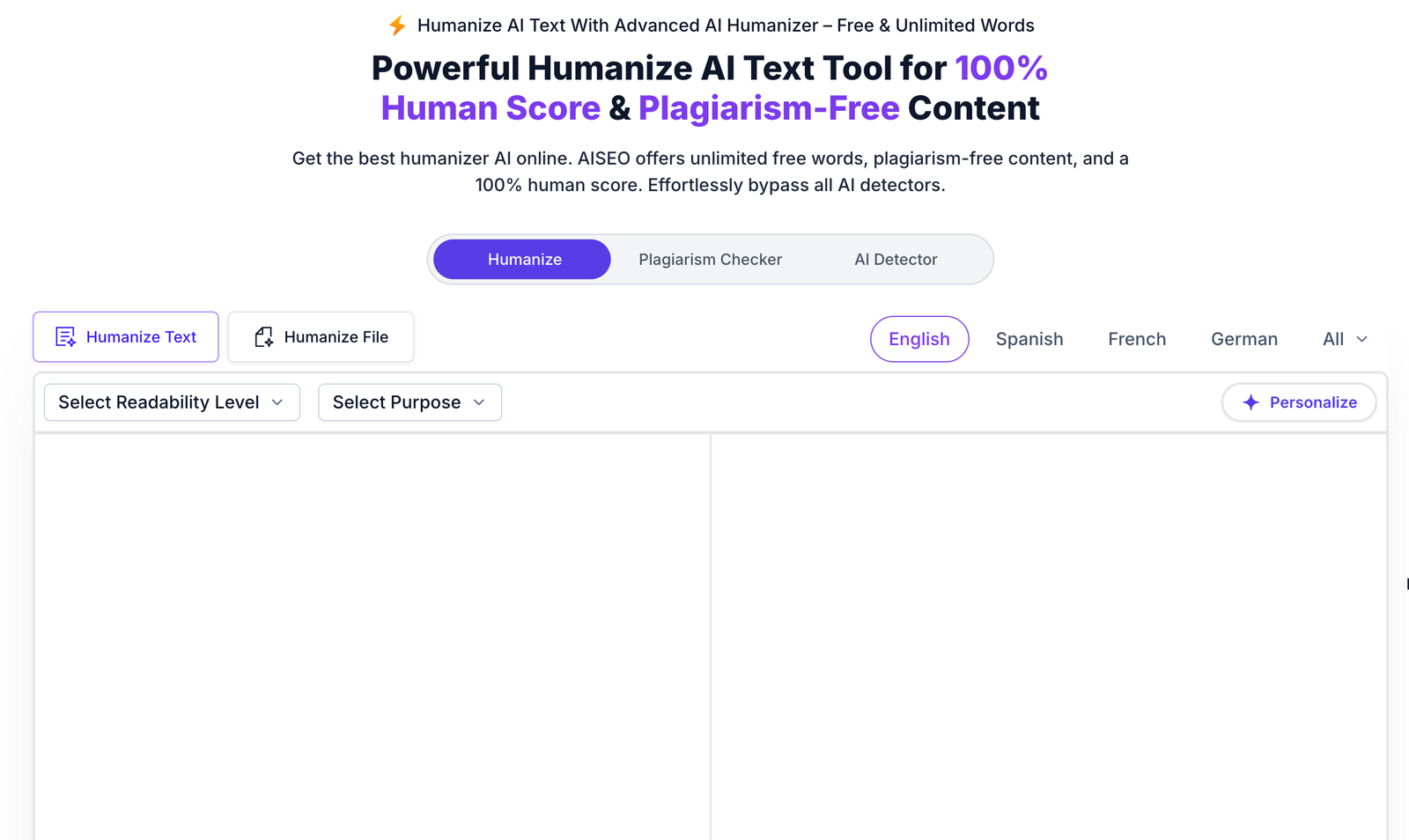
Best use case: SEO-driven blog teams that want to soften AI patterns without losing structure or production speed.
What it does well: It sits naturally in search-focused workflows where clarity, optimisation, and throughput all need to coexist.
Where it falls short: It can still produce copy that needs editorial work to avoid a polished but somewhat formulaic feel.
Who should skip it: Brands whose main priority is distinctive voice and editorial character rather than scale through SEO systems.
Tools for Scaling Blog Content Across Teams #6. Scribbr’s AI Humanizer
Scribbr’s AI Humanizer carries a more careful, clarity-first feel, which can be useful for teams producing informational or educational blog content that cannot afford muddiness. It seems less interested in stylistic flourish and more interested in making text read naturally and cleanly, which is exactly what some editorial environments need. That restraint can be reassuring when several people touch the same draft and no one wants the language to become too embellished. The compromise is that highly branded or personality-heavy content may come out a little flatter than intended, because neutrality is doing a lot of the work. Sort of by design, it feels strongest where trust and readability matter more than tonal boldness.
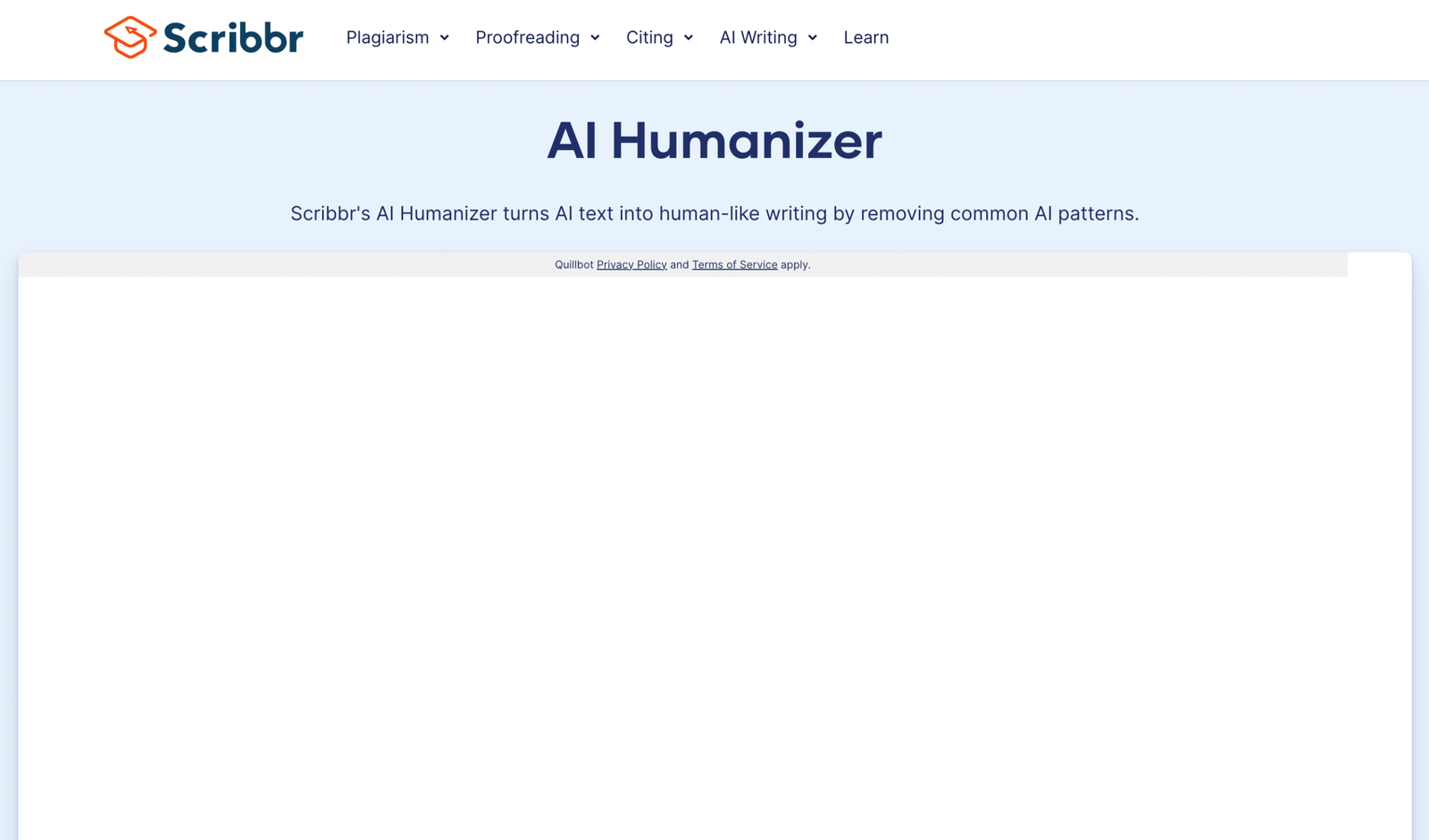
Best use case: Teams producing educational, research-led, or explanatory blog content that needs a steady, readable tone.
What it does well: It prioritises clean language and natural flow, which helps when multiple editors need predictable output quality.
Where it falls short: It can feel a little restrained for brands that rely on strong voice or sharper stylistic signatures.
Who should skip it: Teams wanting more expressive rewriting for commercial or personality-led content.
Tools for Scaling Blog Content Across Teams #7. HumanizeAI.pro
HumanizeAI.pro feels designed for speed, which is not a small thing once a team is pushing through large content queues and does not want every revision to become a project in itself. It is straightforward enough that teams can use it without much onboarding, and that simplicity has genuine value in high-volume environments. The problem, which tends to surface later rather than earlier, is that fast tools do not always provide the nuance needed for more layered editorial standards. When content categories vary widely or the brand voice is tightly managed, the simplicity can start to look a bit thin. Exactly for that reason, it works better as a utility inside a process than as the process itself.
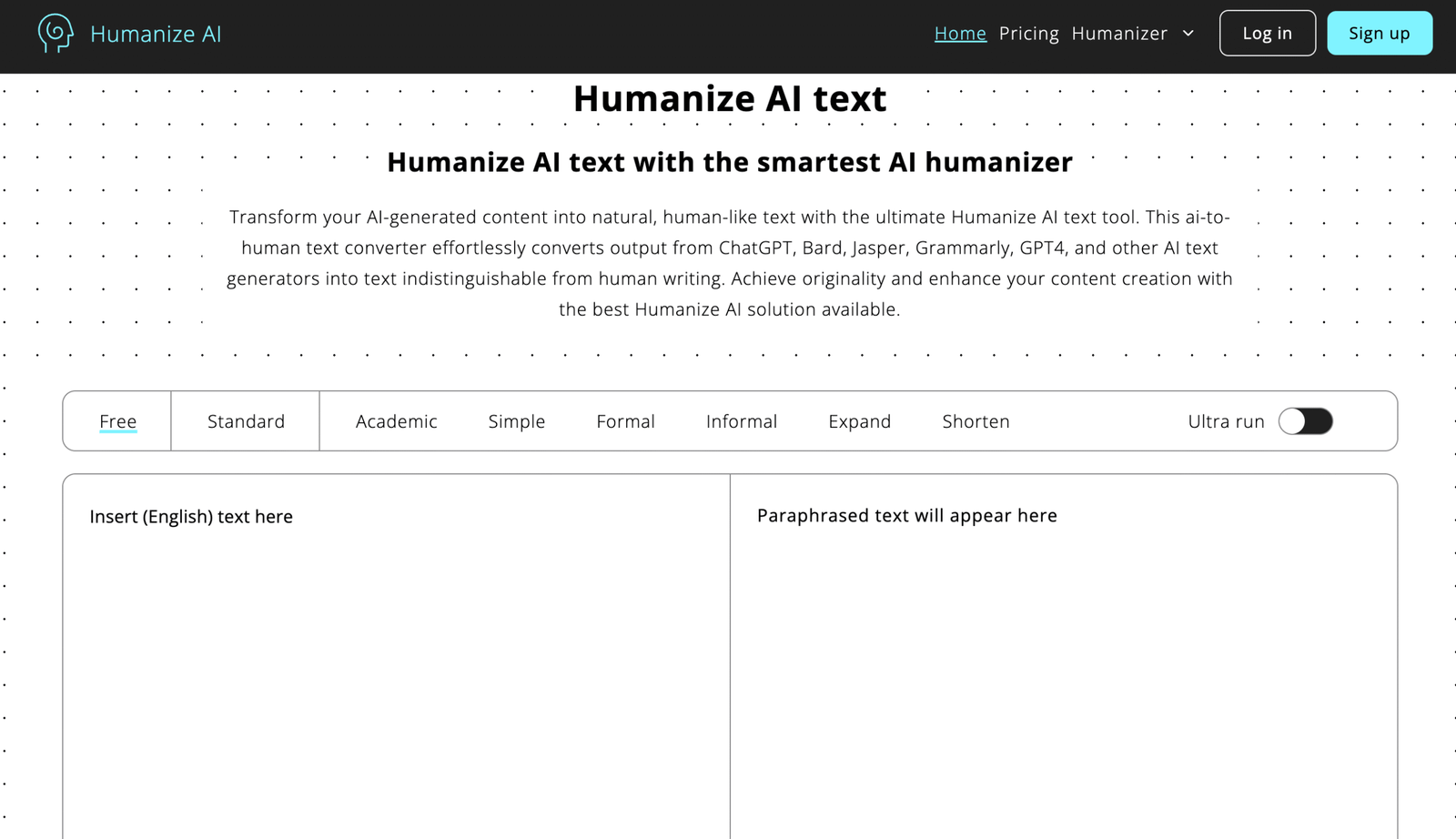
Best use case: Teams that need quick humanization passes on high-volume blog drafts with minimal setup.
What it does well: It keeps the process simple and fast, which is useful when turnaround matters more than deep tonal tailoring.
Where it falls short: It may not offer enough nuance for brands with stricter editorial guidelines or more varied content types.
Who should skip it: Content operations that need a more strategic rewriting layer with stronger voice control.
Tools for Scaling Blog Content Across Teams #8. Walter Writes AI
Walter Writes AI leans into the idea of making AI-assisted writing feel more personal, and that can be useful for teams whose drafts risk sounding too uniformly synthetic once production speeds up. There is a certain appeal in tools that promise stronger tonal reshaping, because scaled blog programs often flatten out without noticing it. It seems well suited to teams that want the rewritten result to feel more like a person touched it, not just like software cleaned it. The caution is that stronger transformation can sometimes move copy further from the original than editors expect, which introduces more review work on sensitive topics or tightly positioned pages. So the value is real, but it depends on whether the team wants heavier rewriting or just a steadier editorial polish. :contentReference[oaicite:0]{index=0}

Best use case: Teams wanting more assertive rewriting to make AI-assisted drafts feel less flat and more individually written.
What it does well: It pushes harder on tone and human feel than lighter editing tools tend to do.
Where it falls short: Stronger rewriting can create extra review needs when precision and message control are non-negotiable.
Who should skip it: Teams that only want a gentle cleanup layer and prefer to preserve original phrasing closely.
Tools for Scaling Blog Content Across Teams #9. Clever AI Humanizer
Clever AI Humanizer looks useful for teams that want a direct, low-friction way to make drafts read more naturally, especially when the problem is obvious AI stiffness rather than deeper structural weakness. It does not feel burdened by too much ceremony, which can actually be a strength in busy editorial pipelines. The immediate benefit is speed, because writers can move text through it without a lot of setup or explanation. The drawback is that quick convenience rarely equals deeper editorial intelligence, and teams with stricter brand systems may notice those limits sooner than smaller teams do. In other words, it solves the visible problem quite efficiently, but it does not necessarily solve the whole content operation. :contentReference[oaicite:1]{index=1}

Best use case: Teams wanting a fast, uncomplicated pass to reduce obvious AI patterns in blog drafts.
What it does well: It is easy to use and moves quickly, which helps when large content queues need practical support rather than ceremony.
Where it falls short: It may not provide the deeper voice management that mature editorial teams usually need.
Who should skip it: Brands with detailed style systems that expect a rewriting tool to mirror nuanced editorial judgment.
Tools for Scaling Blog Content Across Teams #10. AI Undetect
AI Undetect is clearly pitched toward users who care a great deal about whether AI-assisted text appears natural enough to avoid obvious detection patterns, and that focus gives it a specific place in some workflows. For blog teams working at scale, that can matter when content is being repurposed across channels and no one wants the final copy to feel overly machine-shaped. The tool is more specialised than broad, which can be useful because it stays close to one problem instead of pretending to solve every content problem at once. The limitation is that a narrow brief also means teams still need separate systems for planning, governance, and editorial judgment, which are the parts that usually create real scale. Basically, it is a tactical layer rather than a full operational answer, and teams should treat it that way. :contentReference[oaicite:2]{index=2}
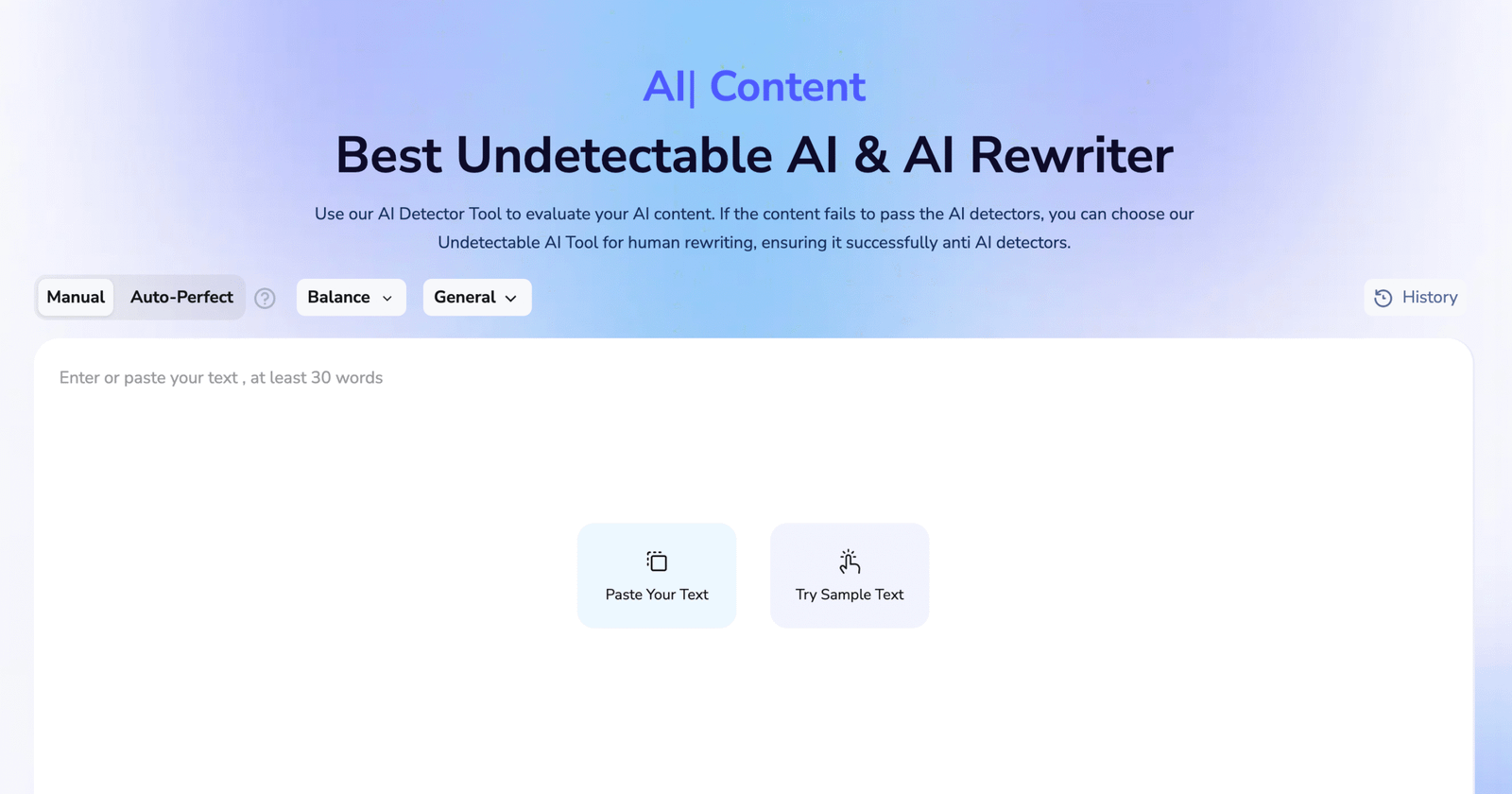
Best use case: Teams that want a specialised humanization layer for drafts that still read too much like AI output.
What it does well: It stays focused on rewriting and humanization rather than diluting attention across a huge feature set.
Where it falls short: It does not replace editorial management, planning, or brand governance for scaled content teams.
Who should skip it: Teams looking for an all-in-one platform to run the full blog operation from idea to distribution.
Tool Selection Guide for Tools for Scaling Blog Content Across Teams
Consistency vs flexibility
WriteBros.ai and Grammarly AI Humanizer are more reliable when consistency across contributors matters more than stylistic variation. More flexible tools introduce variety, although that can create subtle inconsistencies when multiple writers contribute to the same content system.
Speed vs editorial control
HumanizeAI.pro and Clever AI Humanizer prioritise speed, which helps when content volume is high and timelines are tight. Tools like WriteBros.ai and AISEO AI Humanizer lean more toward controlled rewriting, where maintaining structure and tone is given more weight than rapid output.
Tone precision
Walter Writes AI and WriteBros.ai are better suited for teams that care about how tone carries across long-form content. Lighter rewriting tools can soften language effectively, though they may not consistently preserve a distinct brand voice.
Multi-writer teams
WriteBros.ai and AISEO AI Humanizer are more useful when several writers contribute to the same publishing pipeline. They help reduce variation between contributors, which becomes more noticeable as output increases.
Editor-heavy workflows
Grammarly AI Humanizer and Scribbr’s AI Humanizer fit workflows where editors refine rather than rebuild drafts. They support clarity and readability without significantly altering structure, which suits review-driven environments.
Lean content teams
Writesonic AI Humanizer and HumanizeAI.pro work better for smaller teams that need fewer steps between drafting and publishing. They reduce friction, although they rely more on individual judgment to maintain consistency.
Final editorial pass
WriteBros.ai and Grammarly AI Humanizer are more dependable for final-stage refinement where tone and clarity need to remain stable. They help polish drafts without introducing unnecessary structural changes.
Mid-stage refinement
AI Undetect and Walter Writes AI fit drafts that are structurally sound but uneven in tone. They smooth out inconsistencies before the final editorial layer is applied.
Early draft cleanup
QuillBot AI Humanizer and Clever AI Humanizer are more useful when early drafts feel repetitive or overly mechanical. They introduce variation quickly, though they are not designed to manage full editorial consistency.
What scaling blog content across teams actually comes down to
Scaling blog content across teams tends to look like a tooling problem at first, although it rarely stays that simple for long. Most teams eventually realise that consistency, not output, is the part that quietly breaks once volume increases.
The tools listed here handle rewriting in different ways, which means they influence how tone, structure, and clarity move across contributors. Some lean toward speed, others toward control, and the balance between those two usually determines whether a system holds together or starts to drift.
There is also a limit to what any tool can standardise, especially when briefs, positioning, or editorial expectations are not clearly defined. Even the most capable platforms still depend on human judgment to decide what should stay, what should change, and what actually sounds right.
So the real decision is less about picking the most capable tool and more about choosing the one that fits the way a team already works. That tends to be the difference between scaling smoothly and constantly correcting small inconsistencies that never quite disappear.
Disclaimer: The tools referenced are included for editorial and informational purposes only and are selected based on observable product behavior and relevance rather than sponsorship or paid placement. Screenshots are shown solely for identification, commentary, and illustrative reference in line with standard editorial and fair use practices, and may not reflect the most current version of each product. All trademarks, logos, and interface elements remain the property of their respective owners. For update, correction, or removal requests, please refer to the Editorial Policy.