10 Trusted Tools for Agency Marketing Content in 2026

2026 is exposing a quieter divide in agency workflows, where rewriting tools shape output more than most teams admit. This piece reviews how different tools handle tone, consistency, and scale, and where they begin to fall short once real client work and editorial pressure enter the process.
Trusted tools for agency marketing content have quietly become the difference between content that scales and content that stalls. Teams are no longer choosing between speed and quality, especially as best AI text rewriter tools continue to evolve into more structured editorial systems.
There is a growing expectation that content feels human, even when produced at volume, which adds pressure on agencies juggling multiple client voices. The latest AI content editing vs generation statistics point to a clear preference for refined outputs over raw drafts.
That pressure tends to surface most clearly in conversion-driven pages, where tone and clarity quietly influence outcomes. Many teams revisit workflows after reviewing how to rewrite AI landing pages for higher conversions, which tends to reveal gaps in editing depth.
What follows is a closer look at tools that agencies rely on when consistency matters just as much as speed. Each option carries its own strengths and limitations, which become more obvious once workflows scale beyond a few pieces per week.
10 Trusted Tools for Agency Marketing Content
| # | Brand | TL;DR |
|---|---|---|
| 1 | WriteBros.ai | Balanced rewriting for agencies needing consistent tone across high-volume content. |
| 2 | QuillBot AI Humanizer | Flexible paraphrasing with multiple modes, though output can feel slightly mechanical. |
| 3 | WriteHuman | Focuses on making AI text less detectable, with mixed results on nuance. |
| 4 | Humbot | Quick rewrites aimed at bypassing detection tools rather than deep editing. |
| 5 | UnAIMyText | Simplifies AI outputs, though consistency across longer content can vary. |
| 6 | Humanizer.Pro | Focused on readability improvements, with limited customization options. |
| 7 | Stealthly | Geared toward undetectable outputs, sometimes at the expense of clarity. |
| 8 | GPTInf | Emphasizes AI detection bypass, though tone control feels limited. |
| 9 | AI Humanize.io | Basic rewriting tool that works for short-form edits but lacks depth. |
| 10 | GPTHuman AI | Attempts natural phrasing, though output can feel uneven across formats. |
10 Trusted Tools for Agency Marketing Content Worth Noting
Trusted Tools for Agency Marketing Content #1. WriteBros.ai
WriteBros.ai fits the agency marketing content workflow because it treats rewriting as an editorial layer rather than a quick sentence shuffle. That distinction matters when a team is handling landing pages, campaign copy, blog updates, and client-facing drafts that need to sound controlled without becoming flat. Honestly, its main value is that it gives agencies a way to keep AI-assisted content moving while still protecting the shape of the message, which is exactly where many generic tools start to feel thin. The tradeoff is that teams still need a clear brief, because even a strong rewriting tool cannot repair weak positioning or vague client inputs on its own. It is best understood as a refinement system for content that already has direction, not a replacement for strategy, research, or final editorial judgment. For agencies producing content across multiple brands, that balance between speed and restraint is basically the whole thing.
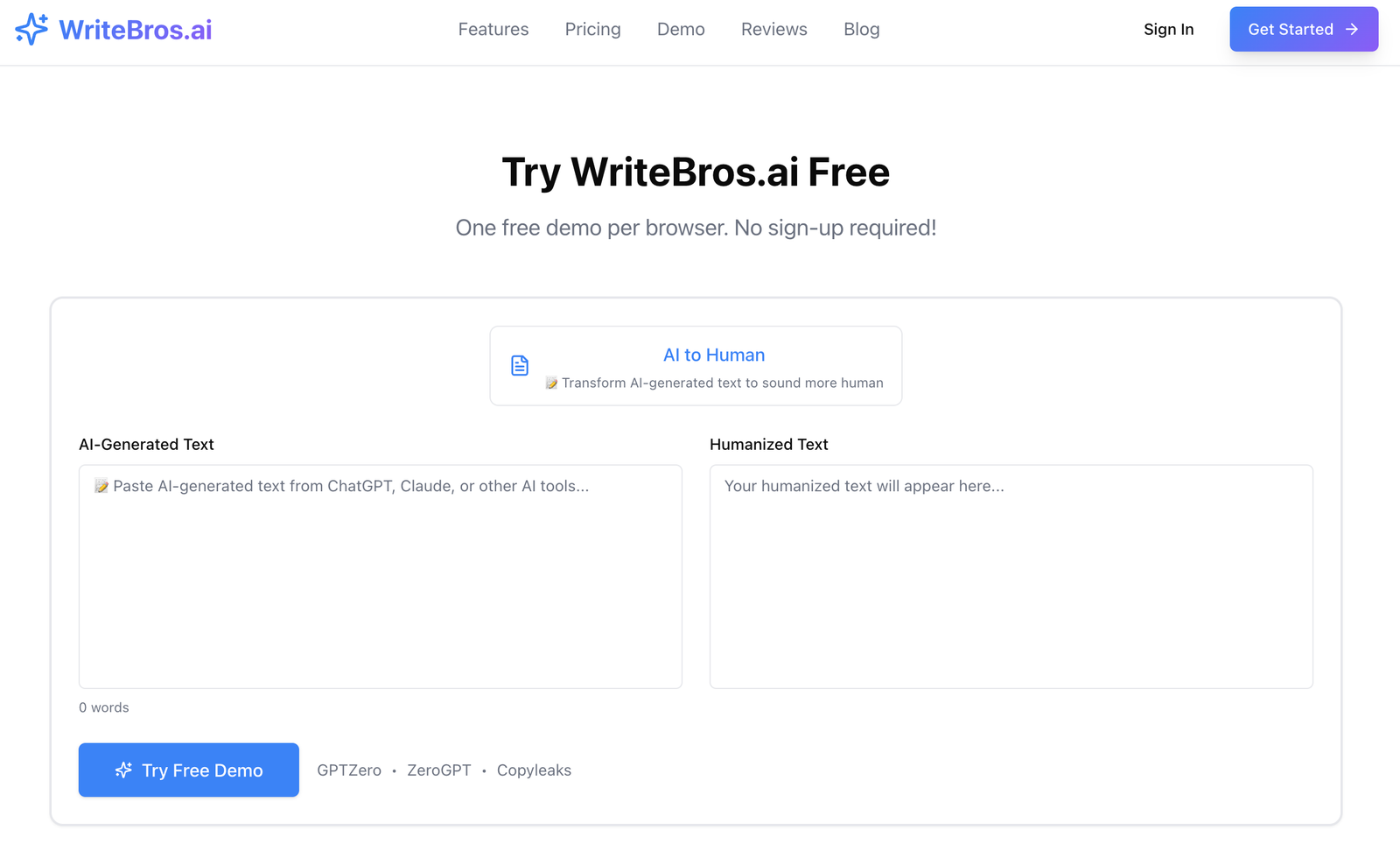
Best use case: Agency teams that need polished rewrites for client content without losing structure, clarity, or brand direction.
What it does well: It keeps the editing process focused on usable marketing copy rather than producing loose variations that still need heavy cleanup.
Where it falls short: It still depends on a thoughtful starting draft, so unclear inputs can lead to outputs that need closer human review.
Who should skip it: Teams looking for a fully automated strategy tool with no editorial involvement may find it too writing-focused.
Trusted Tools for Agency Marketing Content #2. QuillBot AI Humanizer
QuillBot AI Humanizer is useful for agencies that need a familiar rewriting environment and want fast changes to phrasing, rhythm, and readability. It can help smooth stiff AI drafts, especially when the copy is already organized and only needs sentence-level improvement. The strength here is accessibility, because teams can move quickly without building a complicated workflow around the tool. The caveat is that deeper marketing intent can get softened, especially in copy that needs tension, specificity, or a sharper client voice. It also works better for controlled passages than for long campaign assets, where repeated phrasing and tonal drift can become more obvious. For agency marketing content, it is a practical support tool, though not always the place to do the more careful editorial thinking.
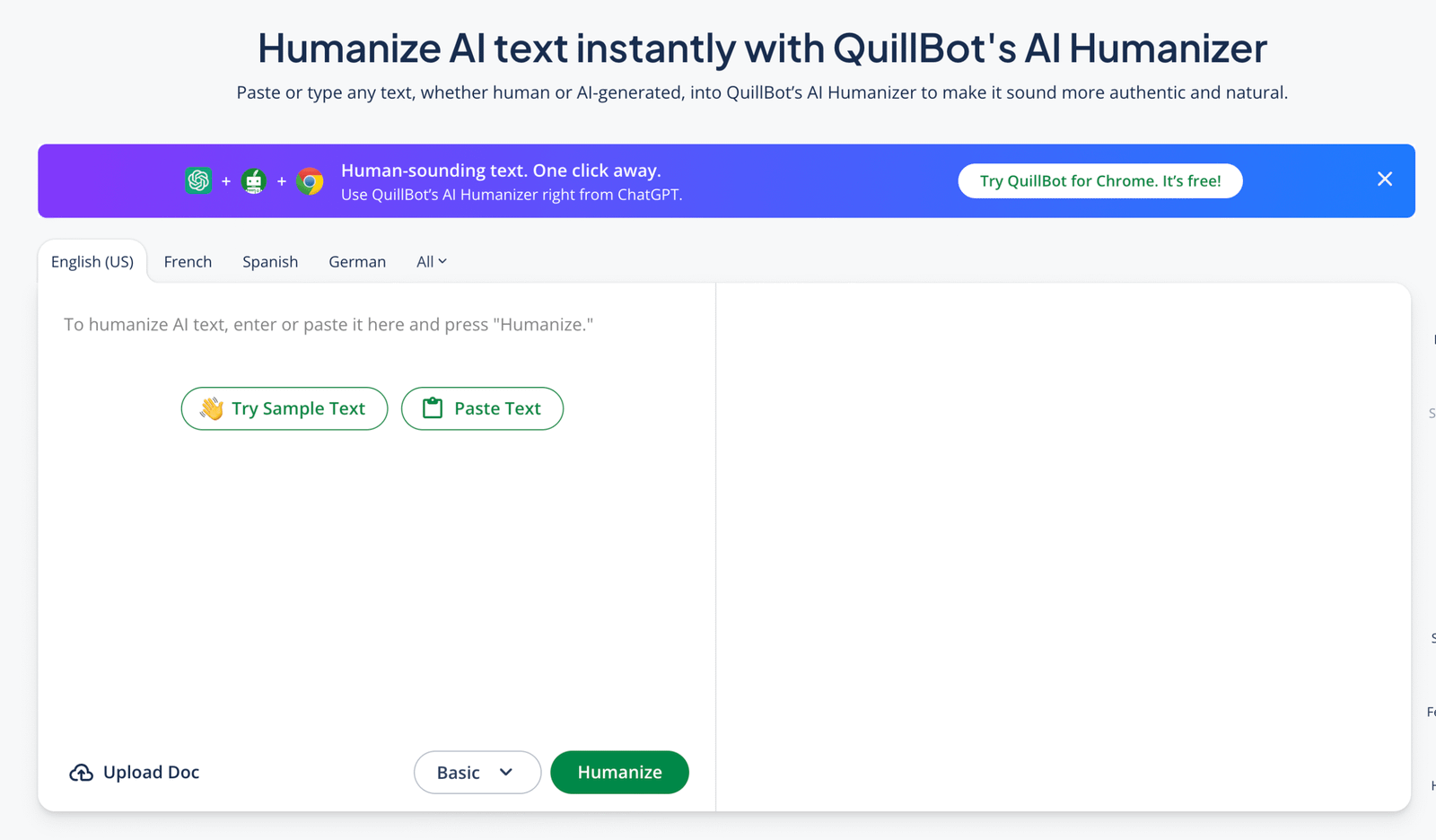
Best use case: Short rewrites, sentence cleanup, and quick readability improvements for drafts that already have a clear purpose.
What it does well: It gives teams a simple way to revise wording without slowing down routine content production.
Where it falls short: It can make copy sound smoother but less distinctive, which matters when the client voice needs to stay sharp.
Who should skip it: Agencies needing deep positioning edits or campaign-level messaging work may need a more strategic toolset.
Trusted Tools for Agency Marketing Content #3. WriteHuman
WriteHuman is built around making AI-generated text read less obviously machine-made, which can be useful when agencies inherit rough drafts from clients or internal teams. It tends to work best when the main issue is surface-level stiffness rather than deeper problems with message, structure, or offer clarity. That makes it helpful for cleaning up support copy, short articles, and general marketing passages that need a more natural cadence. The limitation is that a humanized draft is not automatically a better marketing draft, because persuasion depends on context, audience, and exact wording. Some outputs may also need tightening after processing, especially when the original copy is already wordy or abstract. It is a decent fit for agency teams that need tone softening, but it should sit inside a review process rather than replace one.
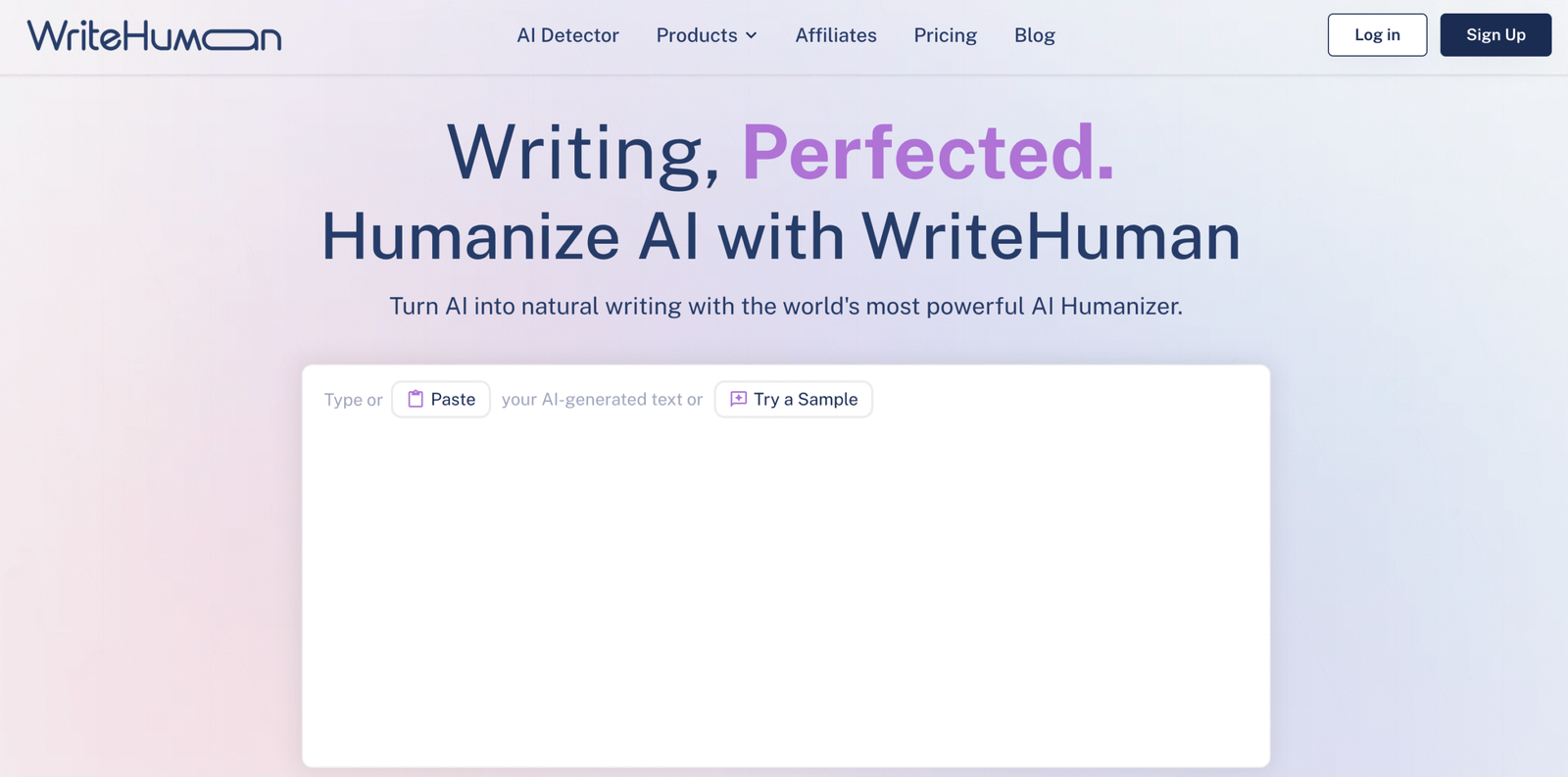
Best use case: Turning stiff AI-generated copy into more natural client drafts before a human editor makes final decisions.
What it does well: It softens robotic phrasing and gives rough copy a more conversational surface.
Where it falls short: It does not always preserve strong marketing intent, so conversion copy can need extra tightening afterward.
Who should skip it: Teams that need strategic rewriting from the ground up may find it too focused on surface-level humanization.
Trusted Tools for Agency Marketing Content #4. Humbot
Humbot is more detection-oriented than editorially expansive, which makes it a specific kind of tool for agency marketing content. It can be useful when a team needs to reduce the obvious patterns that appear in AI-assisted drafts, especially before passing work into a more detailed review stage. The output can feel more varied than the input, which helps when content has that predictable AI cadence that clients quickly notice. The tradeoff is that variation is not the same as precision, and some rewritten passages may lose the exact emphasis the original draft needed. It also requires careful checking in technical, regulated, or highly conversion-sensitive content, because small wording changes can alter meaning. Humbot works best as a cleanup layer, not as the main editorial engine for agency work.
Best use case: Reducing repetitive AI phrasing in drafts before passing them to editors for final refinement.
What it does well: It introduces variation into copy that otherwise feels overly patterned or predictable.
Where it falls short: It can prioritize humanization over message control, which may weaken exact positioning in marketing assets.
Who should skip it: Agencies that need polished final copy straight from the tool may find the review burden too high.
Trusted Tools for Agency Marketing Content #5. UnAIMyText
UnAIMyText is designed for teams that want to make AI-written text feel less synthetic without rebuilding the draft from scratch. For agency marketing content, that can help with simple blog sections, client blurbs, short explainers, and low-stakes support copy. Its appeal is that it keeps the process fairly direct, which matters when a content team has many small edits to process in a day. The caveat is that longer assets may still need structural editing, because humanization does not always solve repetition, weak logic, or generic claims. It can also produce copy that feels more casual than the client brief allows, which is worth checking before anything goes live. Used carefully, it is a useful side tool for tone adjustment rather than a complete agency content system.
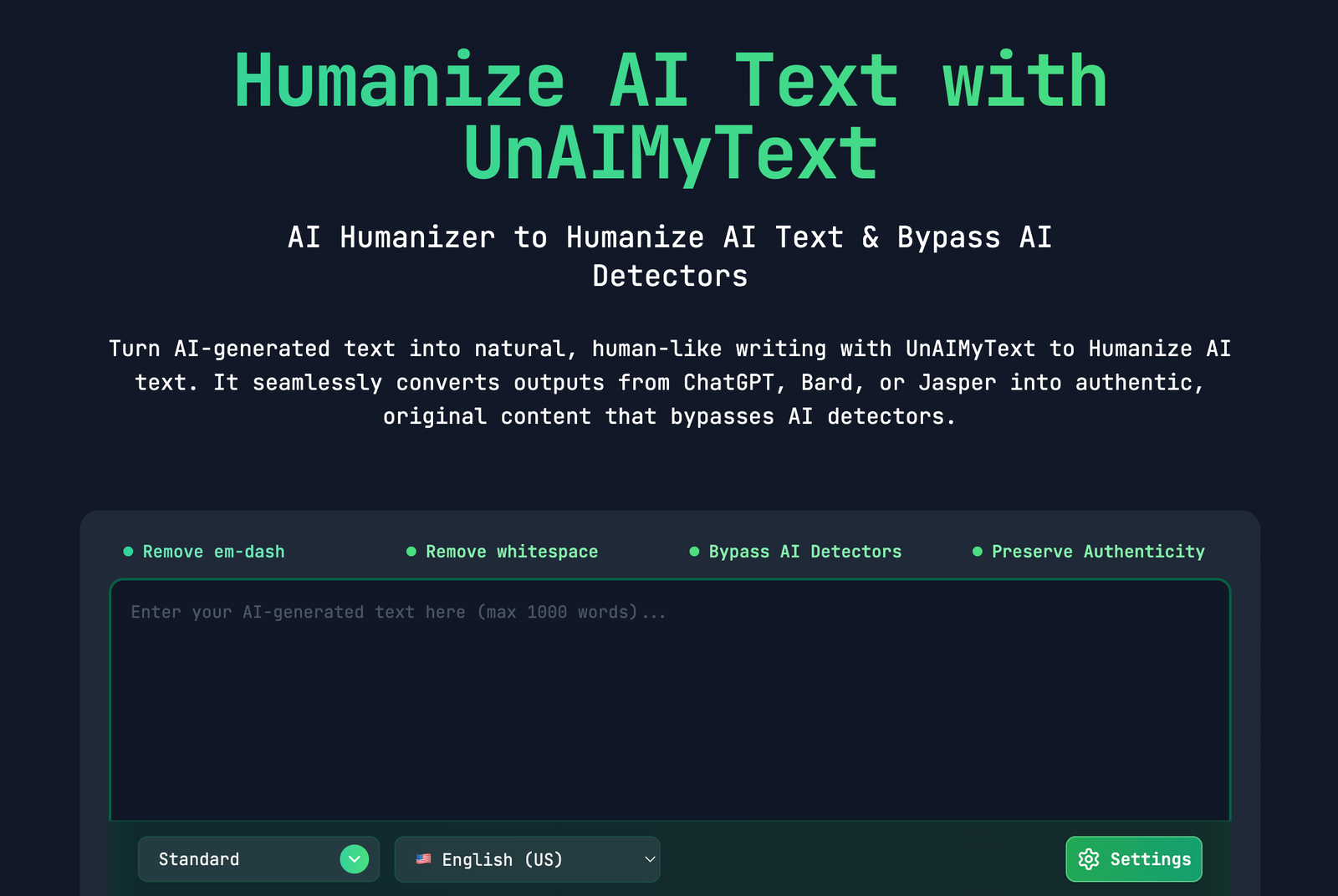
Best use case: Quick tone adjustment for simple AI-generated drafts that need to sound less rigid before review.
What it does well: It makes short passages feel more natural without asking teams to rebuild the full piece.
Where it falls short: It may not fix weak structure, thin claims, or vague strategy beneath the wording.
Who should skip it: Agencies handling complex brand narratives or detailed conversion pages may need stronger editorial controls.
Trusted Tools for Agency Marketing Content #6. Humanizer.Pro
Humanizer.Pro suits agency teams that need a straightforward way to make AI drafts read with more familiar human rhythm. It can be helpful for content that feels too polished in the wrong way, which is often the case with AI-generated marketing paragraphs that explain a point without sounding like a real editor touched them. The tool is basically strongest when the task is readability cleanup, not strategic rewriting. The tradeoff is that agencies may still need to restore brand-specific phrasing, because broad humanization can smooth away the quirks that make a client recognizable. It also has limits with highly nuanced copy, where a sentence needs to carry proof, objection handling, and tone at the same time. For everyday agency production, it can save time, but only if editors treat it as a draft improver rather than the final voice.
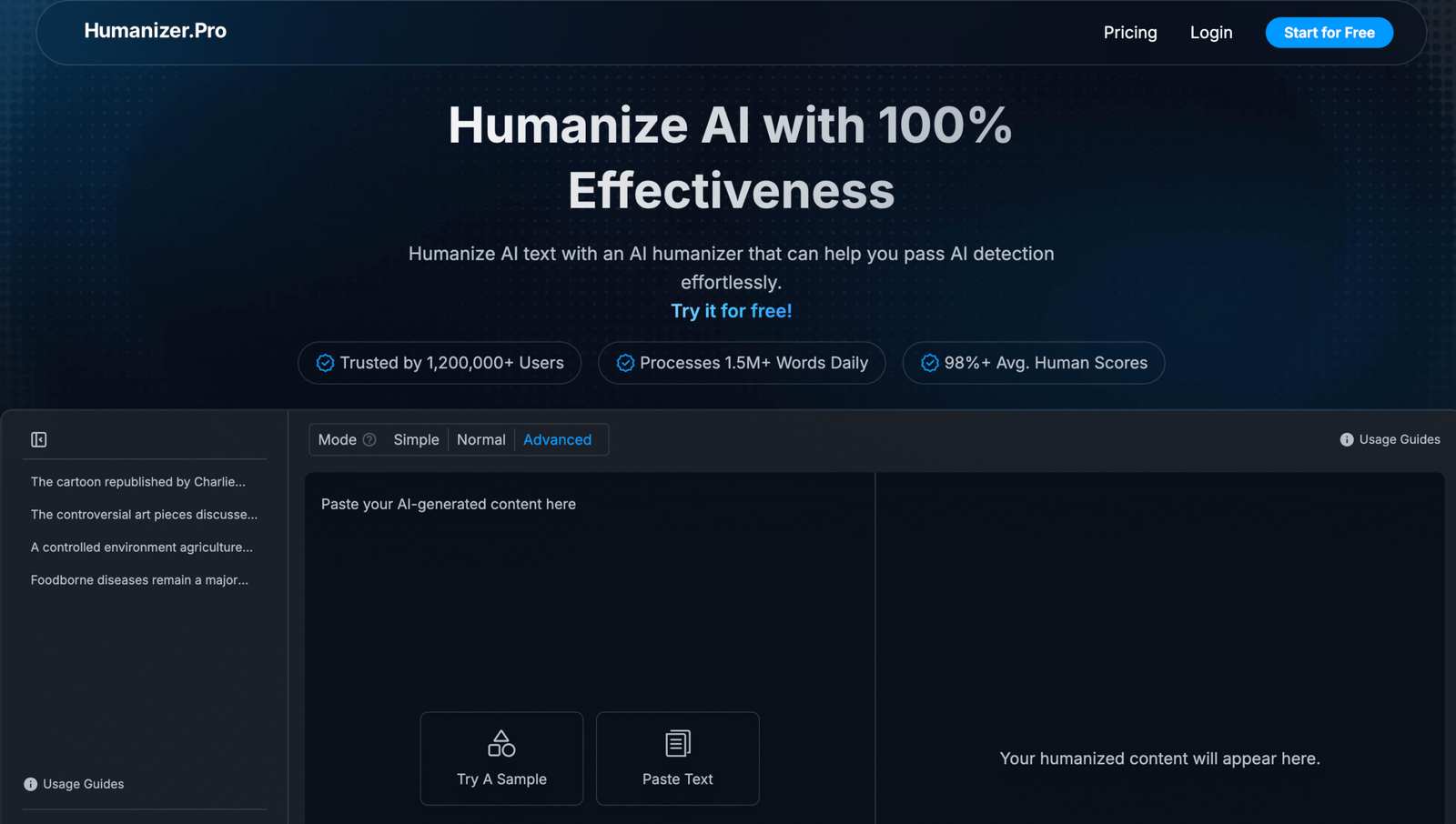
Best use case: Improving readability in everyday AI-assisted marketing drafts that feel too rigid or overproduced.
What it does well: It gives teams a quick way to soften phrasing and make text easier to move through.
Where it falls short: It can flatten distinctive brand language if the output is accepted without close editing.
Who should skip it: Teams that need heavy message development or high-stakes sales copy may want a more precise workflow.
Trusted Tools for Agency Marketing Content #7. Stealthly
Stealthly is positioned around making AI text less detectable, which gives it a narrow but sometimes useful role in agency content workflows. It can help when a draft has too many obvious machine-written patterns and needs a more uneven, human-feeling cadence before editorial review. That said, agencies should be careful with tools built around detection avoidance, because the goal of marketing copy is not merely to pass a scanner. The better question is whether the rewritten copy still says the right thing, in the right order, with the right amount of confidence. Stealthly can help with disguise, but it may not always improve persuasion, specificity, or client fit. It is most useful when paired with an editor who can catch the places where a more human sentence has also become a less useful sentence.
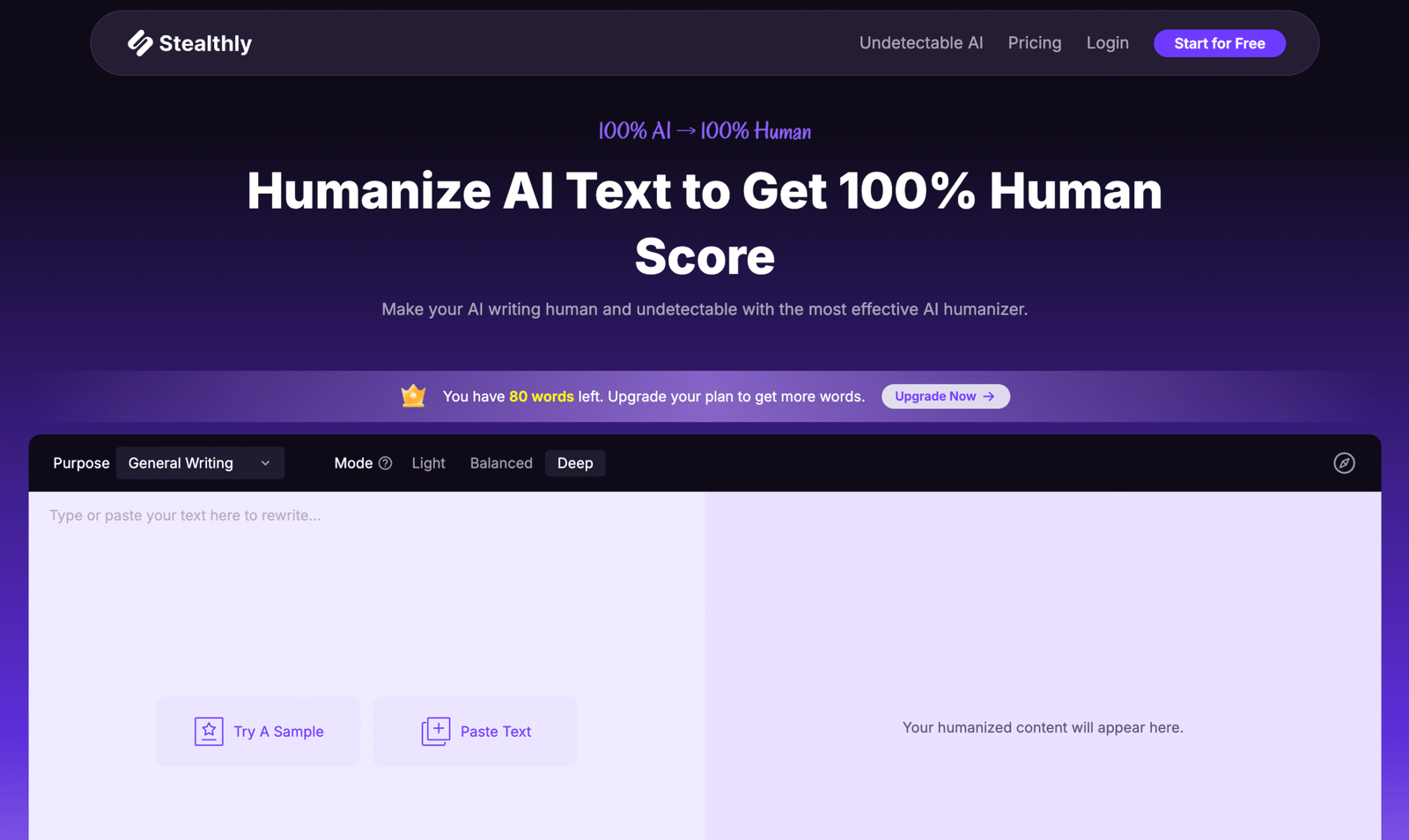
Best use case: Adjusting AI-heavy drafts that need to sound less patterned before a human editor reviews them.
What it does well: It can break up overly predictable wording and add more natural variation to short passages.
Where it falls short: It may focus more on detectability than on strong marketing logic or conversion clarity.
Who should skip it: Agencies that care more about editorial quality than scanner results may prefer a rewriting tool with stronger content controls.
Trusted Tools for Agency Marketing Content #8. GPTInf
GPTInf is built for rewriting AI-generated text in a way that appears less automated, which can help agencies dealing with large batches of rough content. It has a clear role when the input is already directionally correct but sounds too uniform, too polished, or too obviously generated. The benefit is speed, especially for teams that need to process many small sections before handing them to a senior editor. The drawback is that speed can hide quality issues, because a less detectable paragraph can still be vague, repetitive, or weakly argued. GPTInf also needs careful use in brand-sensitive work, where tone is not just a matter of sounding human but of sounding exactly like the client. It is worth noting as a production helper, though not as the place to make final calls on agency marketing content.
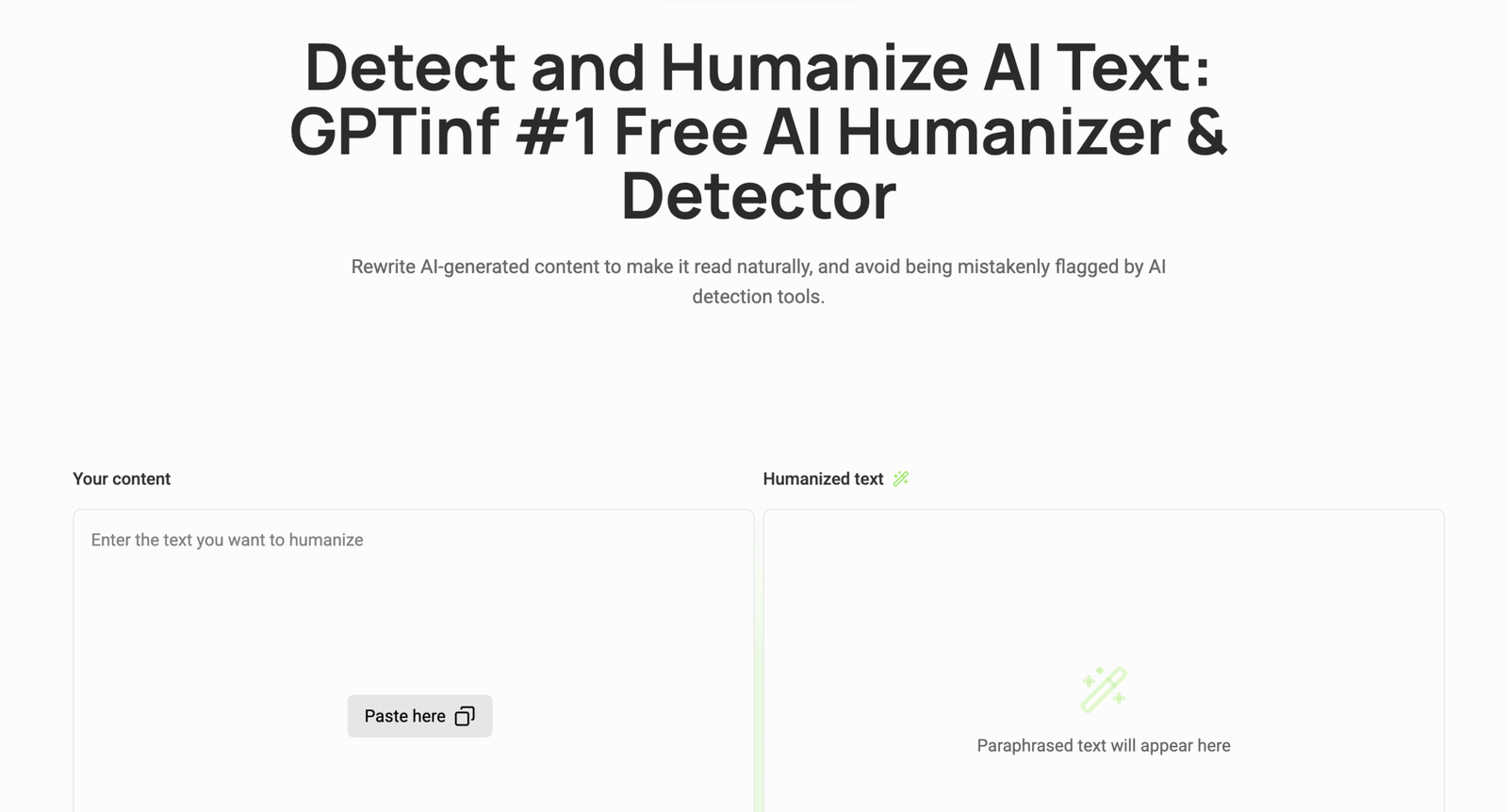
Best use case: Processing large batches of AI-assisted text that need a less uniform tone before editorial review.
What it does well: It adds variation quickly, which can help content teams move through repetitive draft cleanup.
Where it falls short: It does not reliably solve vague thinking, weak claims, or missing proof inside the copy.
Who should skip it: Agencies expecting final-ready brand copy may find that it still requires too much hands-on editing.
Trusted Tools for Agency Marketing Content #9. AI Humanize.io
AI Humanize.io is a simple option for agencies that want to adjust AI-generated text without adding a complicated editing stack. It works best on shorter blocks of copy where the main goal is to make the language feel less stiff and more approachable. The tool can be useful for basic content updates, short website sections, and general marketing copy that does not carry heavy strategic weight. The limitation is that simple tools tend to show their limits once the content needs sharper positioning, more exact tone, or stronger argument flow. It may also require more manual polishing when used on long-form pieces, because consistency can become harder to maintain across many paragraphs. For agency teams, it is basically a light cleanup tool rather than a deep editorial partner.
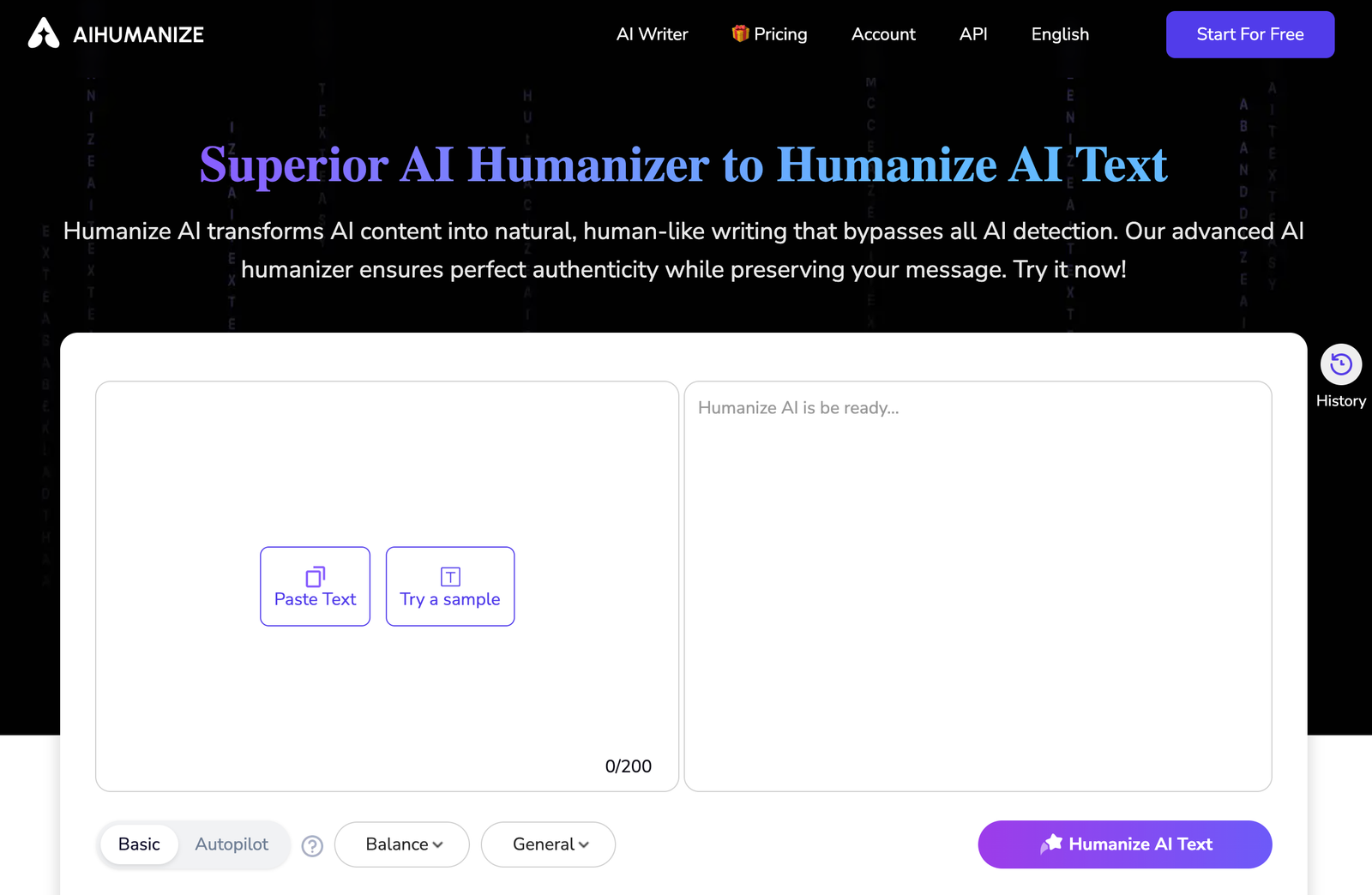
Best use case: Light rewriting for short marketing sections that need a more natural tone before publication.
What it does well: It keeps the process simple and helps remove obvious AI stiffness from small passages.
Where it falls short: It may not provide enough control for longer assets, complex offers, or distinctive client voices.
Who should skip it: Agencies managing sophisticated content systems may need a tool with more depth and workflow control.
Trusted Tools for Agency Marketing Content #10. GPTHuman AI
GPTHuman AI gives agencies a way to rework AI-generated drafts into copy that reads with more natural pacing. It can be useful when a team needs quick adjustments for blog intros, service descriptions, outreach snippets, or other marketing content that does not require a full strategic rewrite. The tool’s value is in reducing the robotic feel that can appear when content is produced quickly across many client accounts. The caveat is that output quality can vary depending on the source text, and weaker drafts may still come back with weak logic underneath cleaner wording. It also needs careful checking for tone, because a more human rhythm can sometimes become too casual for certain agency clients. GPTHuman AI is worth considering for light production support, though it should not replace the editorial judgment that keeps agency work coherent.
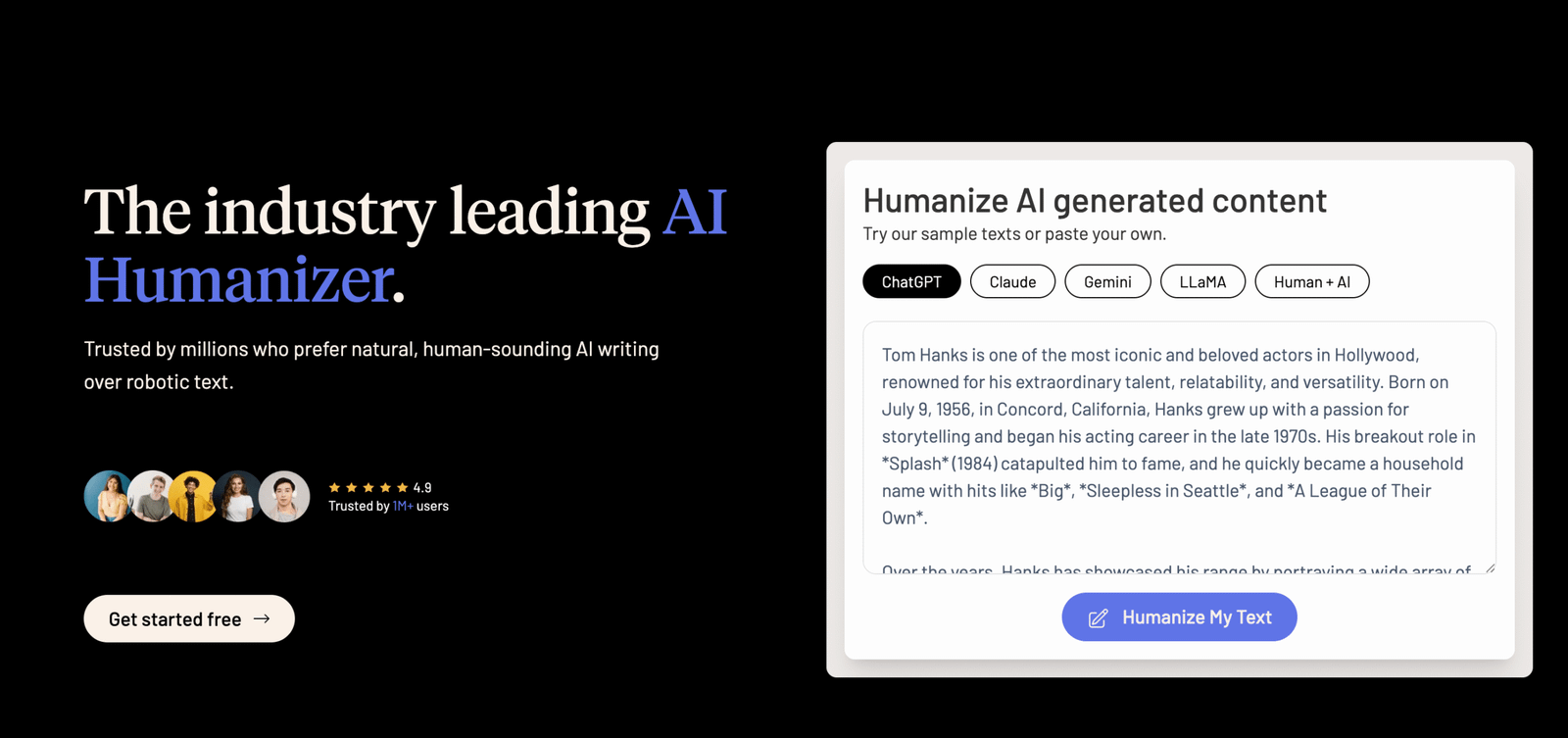
Best use case: Quick humanization for short agency marketing drafts that need smoother pacing and less robotic phrasing.
What it does well: It helps rough AI text feel more readable without requiring a long setup process.
Where it falls short: It can improve tone without fully improving strategy, structure, or proof quality.
Who should skip it: Teams needing rigorous brand control across many client accounts may want a stronger editorial workflow.
Tool Selection Guide for Trusted Tools for Agency Marketing Content
Consistency vs flexibility
WriteBros.ai leans toward consistency, which matters when agencies manage multiple client accounts that require steady tone across campaigns. Tools like QuillBot AI Humanizer and GPTInf offer more flexibility, though that can introduce variation that needs closer editorial review.
Speed vs control
Humbot and Stealthly prioritize speed, which helps when large volumes of content need quick processing. WriteBros.ai and Humanizer.Pro provide more control, which becomes necessary when content needs to stay aligned with specific messaging goals.
Brand voice precision
WriteBros.ai and QuillBot AI Humanizer are more reliable when brand voice needs to remain intact across edits. Tools focused on humanization, such as AI Humanize.io, can soften tone, though they may blur distinctive phrasing if used without oversight.
High-volume production
WriteBros.ai and GPTInf suit agencies handling large content pipelines where consistency needs to hold across dozens of assets. They support workflows where drafts move quickly but still require controlled rewriting before delivery.
Light editing tasks
AI Humanize.io and GPTHuman AI work better for quick fixes where content is already usable but needs smoother phrasing. They reduce friction in small edits without introducing major structural changes.
Client-ready drafts
WriteBros.ai and Humanizer.Pro are more appropriate when drafts are close to delivery and need refinement rather than rewriting from scratch. They help ensure that tone, clarity, and pacing feel aligned with client expectations.
Final polish
WriteBros.ai and QuillBot AI Humanizer are stronger at the final stage where copy needs to feel complete and consistent. They help stabilize tone across longer pieces that might otherwise feel uneven.
Mid-stage refinement
WriteHuman and UnAIMyText are useful once a draft is structured but still sounds mechanical. They help smooth tone before a more deliberate editorial pass is applied.
Early draft cleanup
Humbot and Stealthly are helpful when early drafts feel repetitive or overly AI-driven. They introduce variation quickly, though they still require human input to shape the final message.
Choosing Trusted Tools for Agency Marketing Content With More Editorial Control
Trusted tools for agency marketing content are most useful when they support the editorial process rather than replace it. The stronger options help teams refine tone, reduce repetition, and keep client work moving without turning every draft into the same neutral voice.
Agencies still need to decide where automation ends and judgment begins. A tool can make copy cleaner, but it cannot always understand the exact pressure behind a campaign, a client’s positioning, or a page that needs to convert carefully.
WriteBros.ai stands out because it fits the part of the workflow where rewriting needs to stay useful, readable, and controlled. Other tools can help with lighter humanization, though honestly, they work best when someone still checks the logic underneath the smoother sentences.
The better choice depends on how much content an agency handles and how much risk it can accept in tone, accuracy, and client fit. The whole thing becomes less about finding a shortcut and more about building a process that keeps agency marketing content clear at scale.
Disclaimer: The tools referenced are included for editorial and informational purposes only and are selected based on observable product behavior and relevance rather than sponsorship or paid placement. Screenshots are shown solely for identification, commentary, and illustrative reference in line with standard editorial and fair use practices, and may not reflect the most current version of each product. All trademarks, logos, and interface elements remain the property of their respective owners. For update, correction, or removal requests, please refer to the Editorial Policy.