10 AI Content Editors for Natural Marketing Copy in 2026

In 2026, the giveaway is no longer bad grammar but overly perfect rhythm. This guide compares ten AI content editors for natural marketing copy by voice control, rewrite depth, brand fit, workflow, and the editorial tradeoffs that decide whether cleaner copy still sounds recognizably human at scale.
The strongest marketing copy rarely needs more polish for its own sake, but it often benefits from editing that loosens rigid phrasing and restores a more believable rhythm. These tools approach that work differently, which means some prioritize voice control while others focus more heavily on broad sentence restructuring.
Recent content structure trends also make natural writing harder to separate from organization, since even warm language can feel mechanical when every section follows the same pattern. A useful editor should therefore improve cadence without quietly weakening the hierarchy, factual detail, or commercial point of the original draft.
Writers who structure content for AI Overviews face a similar balance between extractable information and prose that still sounds written for actual readers. Honestly, the whole thing works better when the editor preserves useful specificity rather than replacing every precise phrase with conversational filler.
Each option below can soften common AI habits such as symmetrical sentences, repetitive transitions, and overly tidy explanations. The practical differences sit in how much control each tool offers, how aggressively it rewrites, and how much manual checking the finished marketing copy still requires.
10 AI Content Editors for Natural Marketing Copy
| # | Brand | TL;DR |
|---|---|---|
| 1 | WriteBros.ai | Adjusts tone, rhythm, and stylistic patterns for marketing drafts that need a more personal and less standardized voice. |
| 2 | Undetectable AI | Provides broad rewriting and detection tools for teams that want substantial changes to visibly AI-shaped copy. |
| 3 | StealthWriter | Reworks sentence construction aggressively, which can help repetitive drafts but may require careful brand-voice review. |
| 4 | Grammarly AI Humanizer | Offers familiar editing support for smoothing robotic language without moving too far from the source draft. |
| 5 | Writesonic AI Humanizer | Fits broader marketing workflows where humanization sits beside content creation, optimization, and document editing. |
| 6 | AISEO AI Humanizer | Combines natural-language rewriting with SEO-oriented tools, though heavier transformations still need factual checking. |
| 7 | HumanizeAI.pro | Uses a straightforward paste-and-rewrite process for quickly softening stiff wording and predictable sentence patterns. |
| 8 | Walter Writes AI | Pairs rewriting with detection features for users who prefer to assess and revise content within one platform. |
| 9 | GPTHuman AI | Restructures AI-generated passages across multiple languages, with stronger changes that can sometimes flatten nuance. |
| 10 | AI Undetect | Provides humanization and multi-detector checking for marketers who want a simple rewriting and review workflow. |
On this page
WriteBros.ai Undetectable AI StealthWriter Grammarly AI Humanizer Writesonic AI Humanizer AISEO AI Humanizer HumanizeAI.pro Walter Writes AI GPTHuman AI AI Undetect10 AI Content Editors for Natural Marketing Copy Worth Noting
AI Content Editors for Natural Marketing Copy #1. WriteBros.ai
WriteBros.ai is built around the less obvious part of editing AI copy, which is not simply replacing formal words but identifying the recurring stylistic habits that make a draft feel manufactured. It gives marketers room to adjust qualities such as rhythm, sentence variation, emotional restraint, and directness, so the output can move closer to an established voice rather than a generic conversational tone. The useful difference is that a team can treat naturalness as a set of editable writing characteristics instead of asking for a broadly human rewrite and accepting whatever comes back. That level of control asks for a little more judgment, since marketers still need to know which aspects of their voice actually matter and which ones are accidental habits. It can also feel more involved than a one-click humanizer when the only requirement is to soften a short paragraph before publishing. For recurring campaigns, landing pages, and branded articles, though, the extra control makes it easier to keep the marketing argument intact while changing how the language moves.
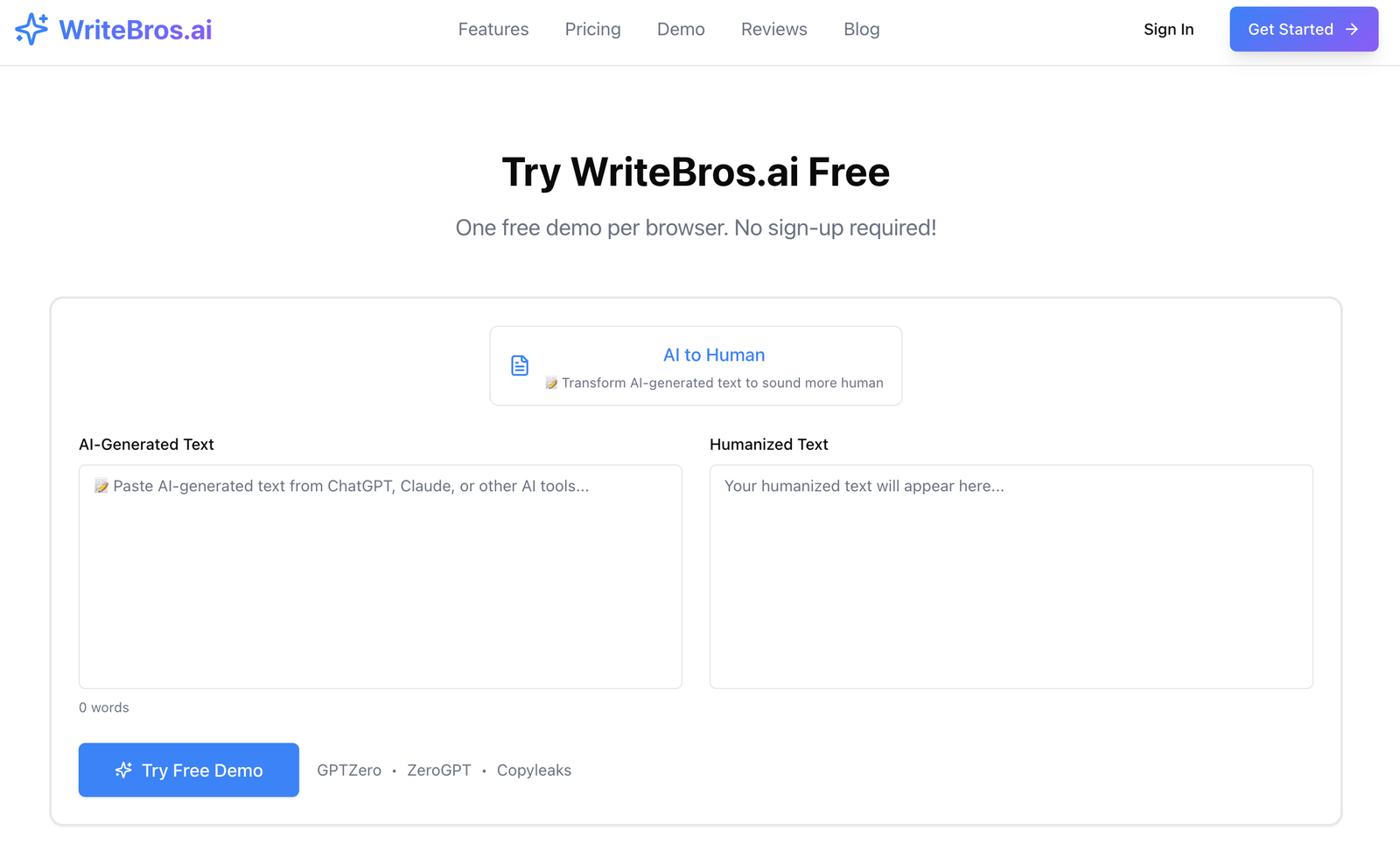
Best use case: Editing recurring marketing content that needs to sound recognizably consistent across campaigns, pages, and writers.
What it does well: It separates voice into practical stylistic choices, which gives editors more control over cadence, tone, and sentence behavior.
Where it falls short: The added control can be more than a user needs when the task is a quick, low-stakes rewrite.
Who should skip it: Teams that do not have a defined voice and only want a single automatic version with minimal review.
AI Content Editors for Natural Marketing Copy #2. Undetectable AI
Undetectable AI takes a broader rewriting approach, which suits marketers working with drafts that still carry obvious signs of machine-generated structure. It can change enough of the original wording and sentence construction to make a stiff article feel less uniform, particularly when the source repeats transitions or explains every point with the same level of emphasis. The process is basically designed for speed, so users can move from an AI draft to a noticeably different version without building a detailed editing workflow around it. The tradeoff is that substantial rewriting can disturb precise product language, factual qualifiers, or carefully chosen conversion points that were doing useful work in the original. Brand-specific phrasing can also become more general, which means the finished copy may sound less robotic while also sounding less recognizably like the company behind it. It makes the most sense as an early revision layer that removes visible patterns before a marketer restores the details, claims, and tonal decisions that should remain deliberate.
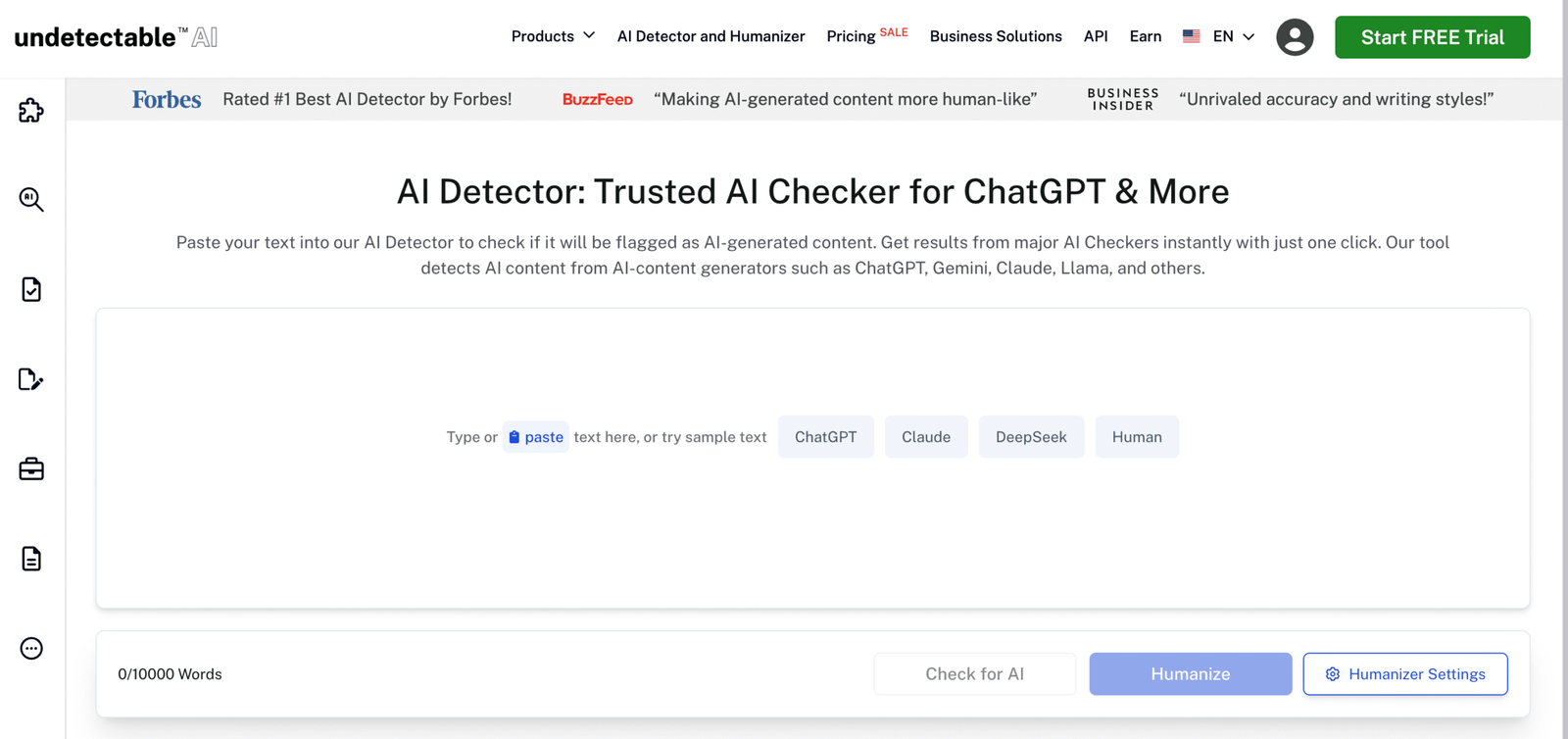
Best use case: Reworking visibly AI-shaped drafts before a marketer carries out a more careful brand and accuracy edit.
What it does well: It makes broad structural changes quickly and can break up repetitive transitions, phrasing, and sentence patterns.
Where it falls short: Aggressive changes can weaken precise claims, product terminology, or the original hierarchy of the argument.
Who should skip it: Marketers handling regulated, technical, or tightly approved copy where wording changes need close control.
AI Content Editors for Natural Marketing Copy #3. StealthWriter
StealthWriter is more comfortable making conspicuous changes, which can be useful when the original draft has the polished but strangely repetitive quality common to lightly edited AI content. It tends to alter sentence length, vocabulary, and progression rather than merely swapping a few phrases, so the result can feel less bound to the source structure. That makes it practical for marketers who receive rough AI drafts from multiple contributors and need to create some distance from the original generation pattern. The same distance can become a problem when the source contains a careful sequence of benefits, objections, and supporting details, since a heavier rewrite may rearrange relationships that were intentional. It can also introduce a tone that feels more casual or emphatic than the brand requires, particularly when the original copy was restrained for a reason. StealthWriter therefore works better when someone is prepared to compare both versions and keep the stronger human variation without assuming every alteration is an improvement.
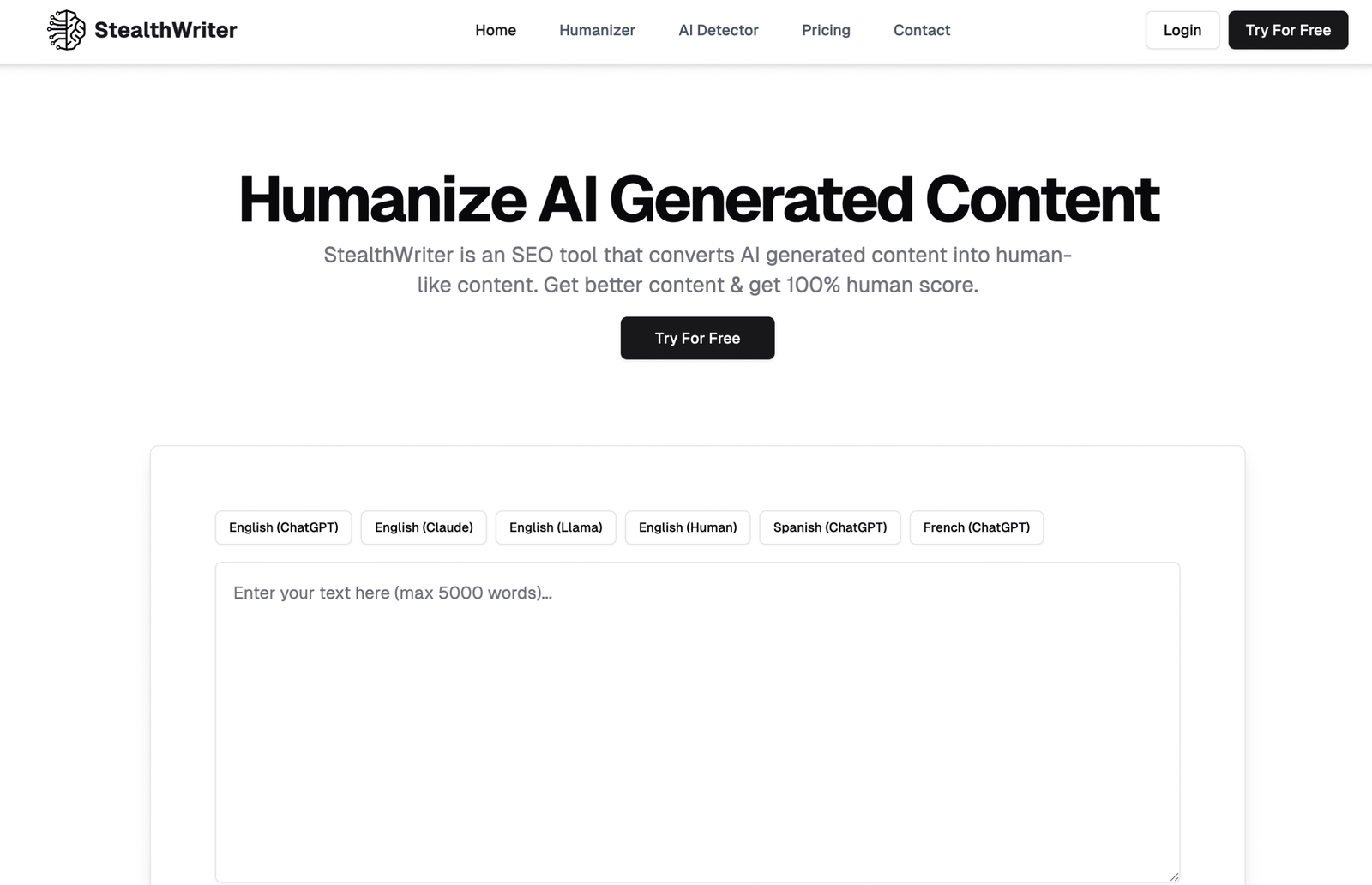
Best use case: Creating meaningful distance from repetitive AI drafts that need more than surface-level word replacement.
What it does well: It changes sentence construction and pacing enough to reduce the uniform quality of machine-written copy.
Where it falls short: Strong transformations may disrupt argument order, brand restraint, or carefully staged conversion language.
Who should skip it: Editors who need the revised version to remain very close to approved source wording.
AI Content Editors for Natural Marketing Copy #4. Grammarly AI Humanizer
Grammarly AI Humanizer is easiest to understand as an extension of a familiar editing environment, which makes it less disruptive for teams already reviewing grammar, clarity, and tone in the same place. It tends to smooth stiff expressions and improve readability without turning every paragraph into an entirely different piece of writing. This restraint is useful for marketing copy that is already structurally sound but needs fewer corporate phrases, less repetition, and a more relaxed relationship with the reader. The same restraint can be a limitation when the draft has deeper problems, since cleaner wording does not necessarily correct predictable argument patterns or a voice that feels generic from beginning to end. It also works less well as a substitute for brand editing, because grammatical fluency can still produce copy that belongs to no particular company. It is basically a sensible final-pass option for improving awkward passages, provided someone has already dealt with positioning, specificity, and the larger shape of the message.
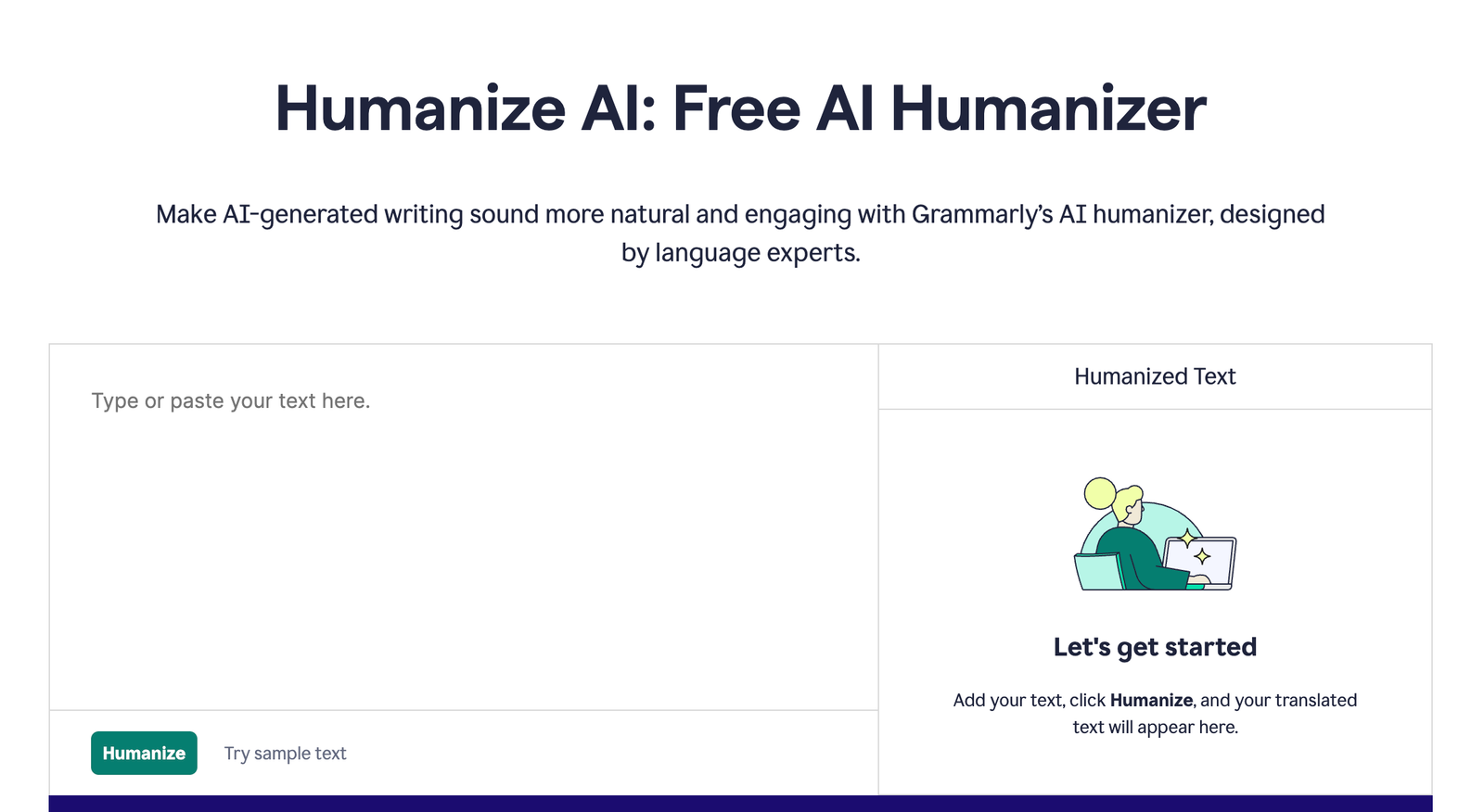
Best use case: Polishing structurally complete marketing copy inside an editing environment that a team already uses.
What it does well: It improves clarity and softens rigid phrasing without automatically replacing the entire draft.
Where it falls short: It may leave deeper problems with argument structure, originality, or brand distinctiveness untouched.
Who should skip it: Teams looking for substantial voice reconstruction rather than careful sentence-level refinement.
AI Content Editors for Natural Marketing Copy #5. Writesonic AI Humanizer
Writesonic AI Humanizer sits inside a wider content-production environment, which makes it convenient for marketers who already move between drafting, optimization, and revision in one workflow. It can take a clean but impersonal passage and give it a looser rhythm, more varied phrasing, and a slightly less procedural relationship with the reader. The broader platform context is useful when humanization is only one stage in a campaign rather than a separate specialist task. The tradeoff is that convenience can encourage teams to treat the rewrite as finished simply because every stage happened in the same interface. Its changes may also lean toward broadly readable marketing language, which is useful for accessibility but less useful when a brand depends on unusual phrasing, restraint, or a deliberately narrow tone. Writesonic works best when the humanizer handles the first layer of stiffness and an editor then restores the specific observations, proof, and small irregularities that make the copy feel owned.
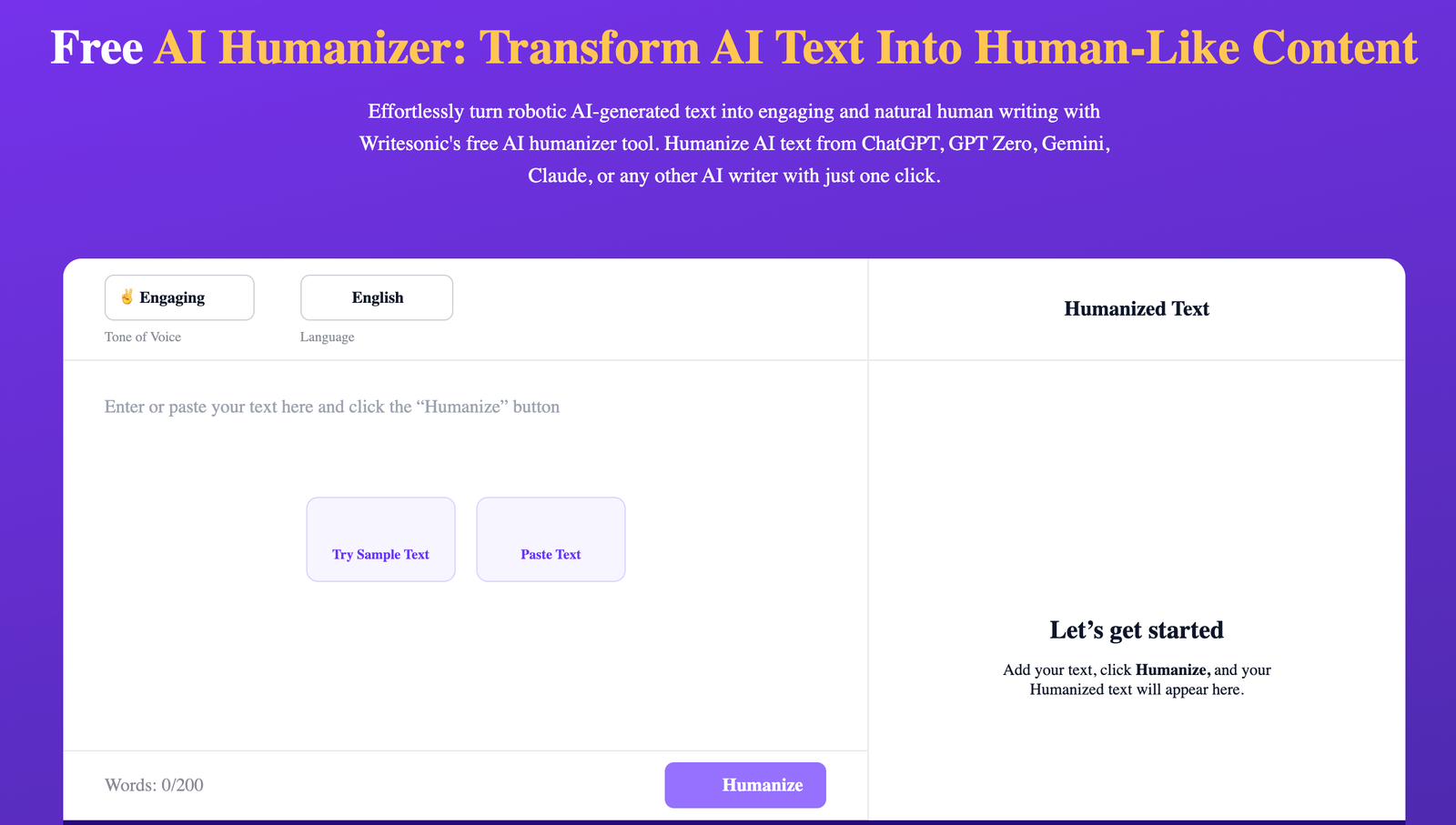
Best use case: Marketing teams that want humanization to sit inside a broader drafting and content-optimization workflow.
What it does well: It reduces stiffness quickly while keeping revision close to the rest of the content-production process.
Where it falls short: The output can settle into broadly competent marketing language without preserving unusual brand characteristics.
Who should skip it: Brands that require highly controlled editorial voice work rather than platform-based convenience.
AI Content Editors for Natural Marketing Copy #6. AISEO AI Humanizer
AISEO AI Humanizer is shaped by the practical overlap between search content and natural writing, which makes it relevant for marketers who cannot separate readability from keyword and topic requirements. It can soften rigid explanatory passages while retaining enough of the source structure to keep an article recognizable after revision. That balance is useful for long-form marketing pages where headings, semantic coverage, and supporting terms already have a reason to be present. The difficulty is that search-oriented drafts often contain repetition for structural reasons, so removing every repeated idea can make the prose cleaner while quietly reducing clarity or topical completeness. Heavier humanization can also change the emphasis of claims and examples, which matters when a section was written to answer a particular search question rather than merely sound conversational. AISEO is most useful when the editor knows which repetitions are mechanical and which ones are helping readers understand the page without having to infer the connection themselves.
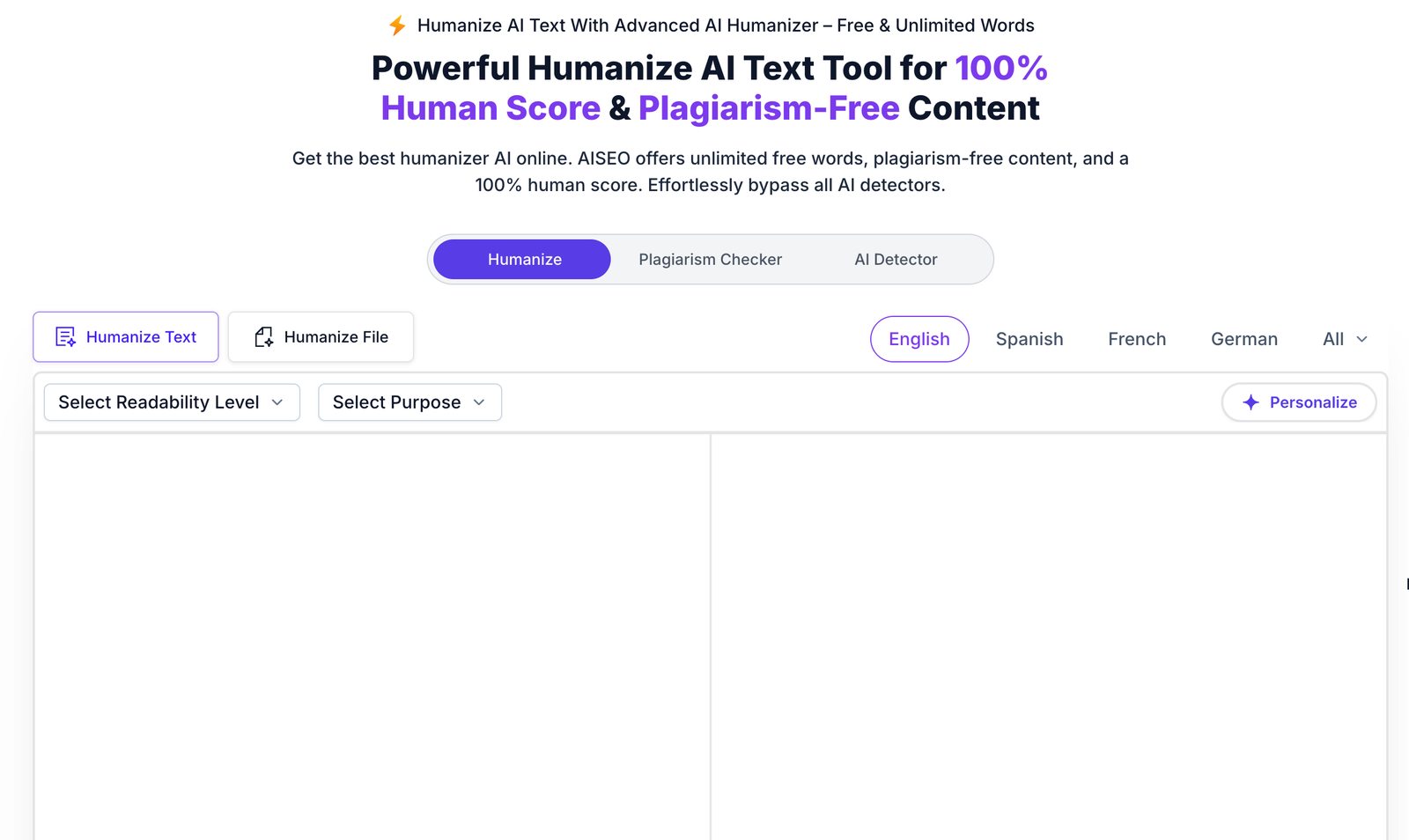
Best use case: Revising SEO-focused marketing articles that need smoother language without losing their planned topic coverage.
What it does well: It connects humanization with the structural needs of search content rather than treating prose in isolation.
Where it falls short: Rewriting can blur the distinction between unnecessary repetition and repetition that supports comprehension or relevance.
Who should skip it: Teams without the editorial capacity to recheck keywords, factual emphasis, and search intent after revision.
AI Content Editors for Natural Marketing Copy #7. HumanizeAI.pro
HumanizeAI.pro keeps the process fairly direct, which suits marketers who want to paste in a draft, receive a less formal version, and continue editing elsewhere. It can break up stiff phrasing and replace some of the overly balanced sentence structures that make AI-generated marketing content sound rehearsed. The lack of a complicated workflow is honestly part of the appeal, particularly for occasional users who do not need a full writing platform around the rewrite. A simpler process, however, gives the editor fewer visible controls over how much the tone, meaning, or structure should change. The output can also become generically conversational, which is not the same thing as sounding natural for a premium, technical, understated, or highly opinionated brand. HumanizeAI.pro is therefore better for creating a workable second draft than for making the final editorial decisions that determine whether the copy feels specific and credible.
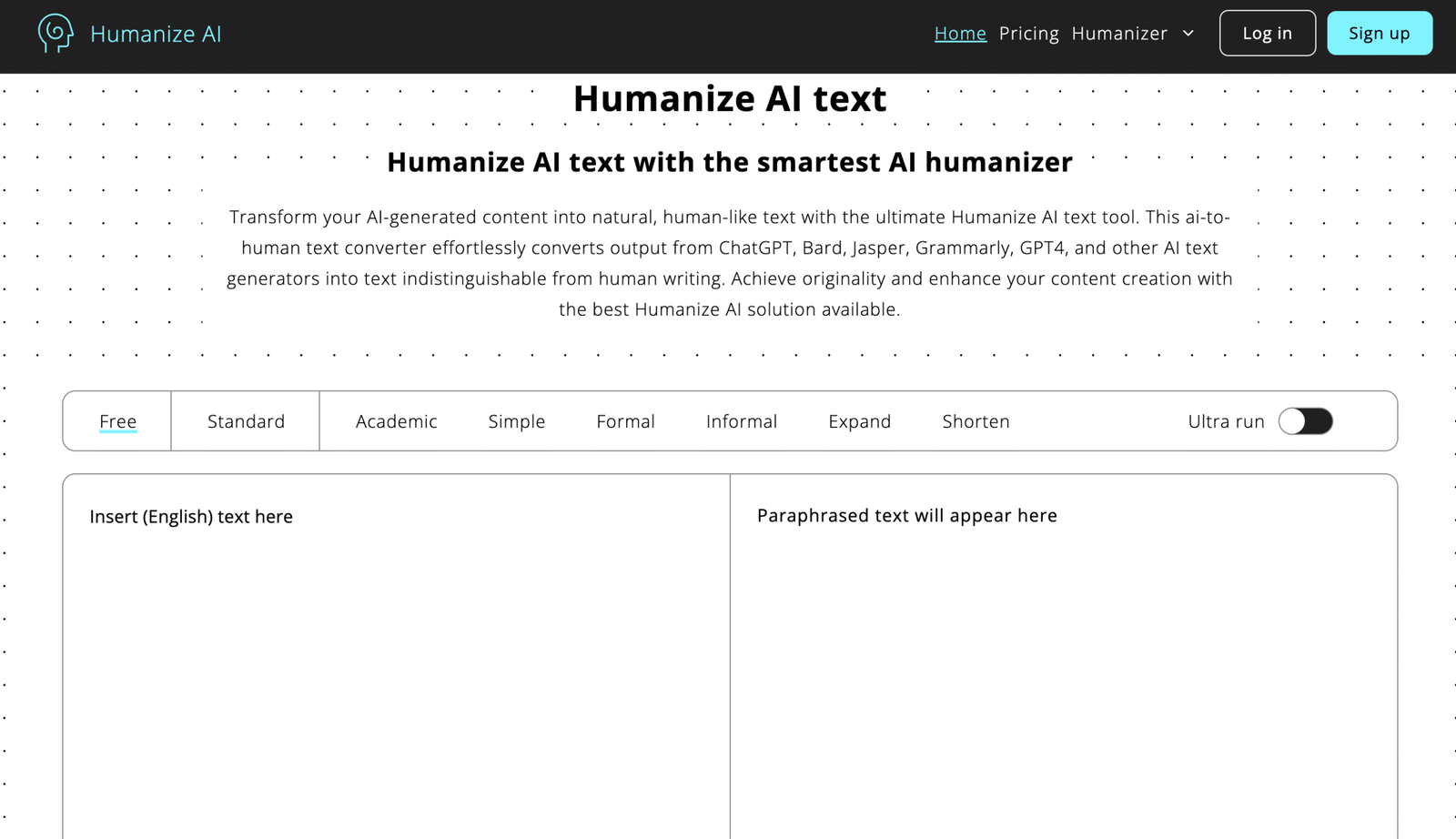
Best use case: Producing a quick second draft from stiff AI copy before continuing the edit in another workspace.
What it does well: It offers a straightforward rewriting process and removes some obvious formal and repetitive patterns.
Where it falls short: Limited control can make the output sound conversational in a general way rather than natural for a specific brand.
Who should skip it: Editors who need detailed control over tone, intensity, vocabulary, and structural preservation.
AI Content Editors for Natural Marketing Copy #8. Walter Writes AI
Walter Writes AI combines rewriting with evaluation tools, which can appeal to marketers who prefer to examine the draft and revise it without moving between several separate services. It is particularly useful for identifying passages that still feel unusually uniform and then producing an alternative with more varied wording and sentence movement. That combined workflow can make the editing process feel more concrete, since the user is not relying entirely on instinct to decide where the draft appears mechanical. The limitation is that any score or detection result can become a distraction from the more important question of whether the copy is accurate, persuasive, and appropriate for the audience. Rewriting toward a better score may also encourage unnecessary changes to passages that were already clear and useful. Walter Writes AI makes more sense when detection is treated as one diagnostic signal, while the final decision still depends on voice, meaning, and the role each paragraph plays in the campaign.
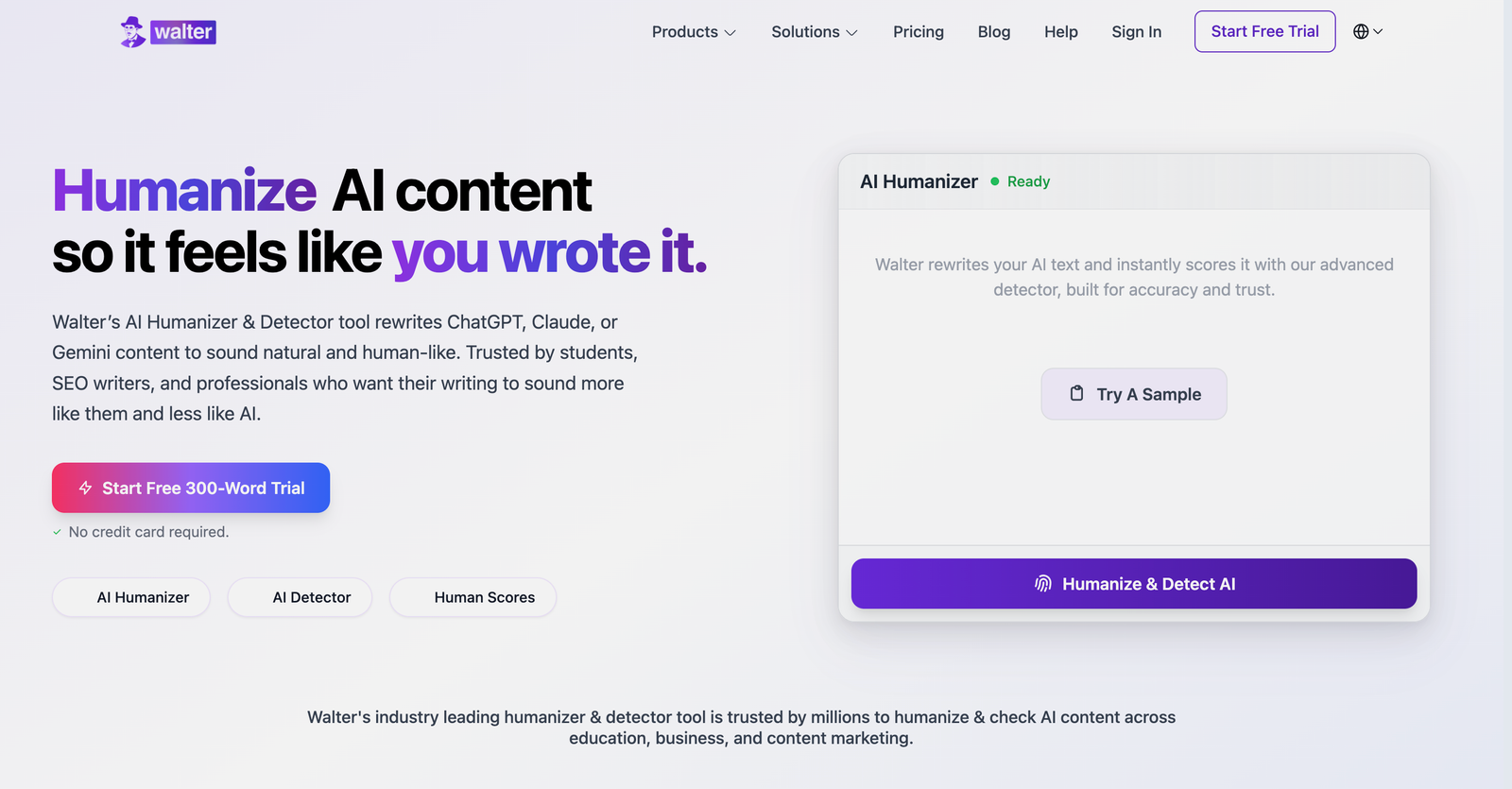
Best use case: Reviewing and rewriting marketing drafts in one place when detection feedback is useful as a secondary diagnostic.
What it does well: It connects evaluation with revision and helps users locate passages that still feel mechanically consistent.
Where it falls short: Scores can pull attention away from factual quality, audience fit, and the actual commercial purpose of the copy.
Who should skip it: Marketers likely to optimize for detector results instead of editorial quality and message accuracy.
AI Content Editors for Natural Marketing Copy #9. GPTHuman AI
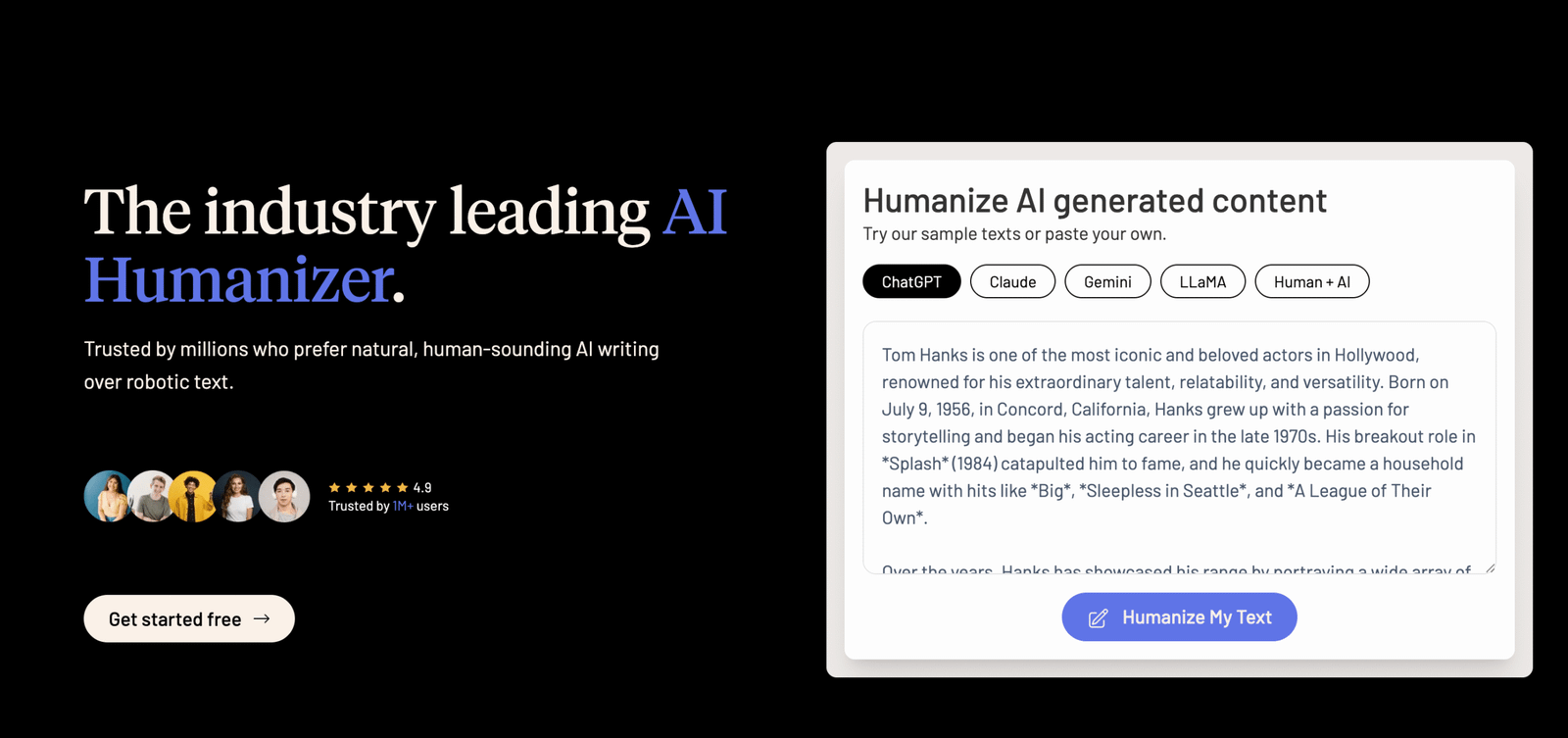
GPTHuman AI is positioned around changing the recognizable texture of AI-generated writing, which can help when a marketing draft feels too even, too explanatory, or too careful in every sentence. It can produce noticeable variation across phrasing and sentence length, making the revised version feel less like a sequence of equally weighted statements. This is useful for teams editing larger amounts of content where manually rebuilding every paragraph would take more time than the piece justifies. The tradeoff is that a stronger rewrite can flatten technical distinctions, alter examples, or replace precise terms with language that merely sounds more casual. Multilingual or translated material needs particular care, since natural rhythm in one language does not guarantee that the commercial nuance remains intact in another. GPTHuman AI is best treated as a structural rewrite assistant whose output still needs comparison against the source, especially when meaning matters more than visible variation.
Best use case: Reworking high-volume AI drafts that need clearer variation in sentence rhythm and paragraph texture.
What it does well: It creates noticeable distance from evenly paced and excessively explanatory source material.
Where it falls short: Strong changes can weaken technical distinctions, translated nuance, or carefully selected terminology.
Who should skip it: Marketers who cannot compare the rewrite closely against the original for factual and tonal drift.
AI Content Editors for Natural Marketing Copy #10. AI Undetect
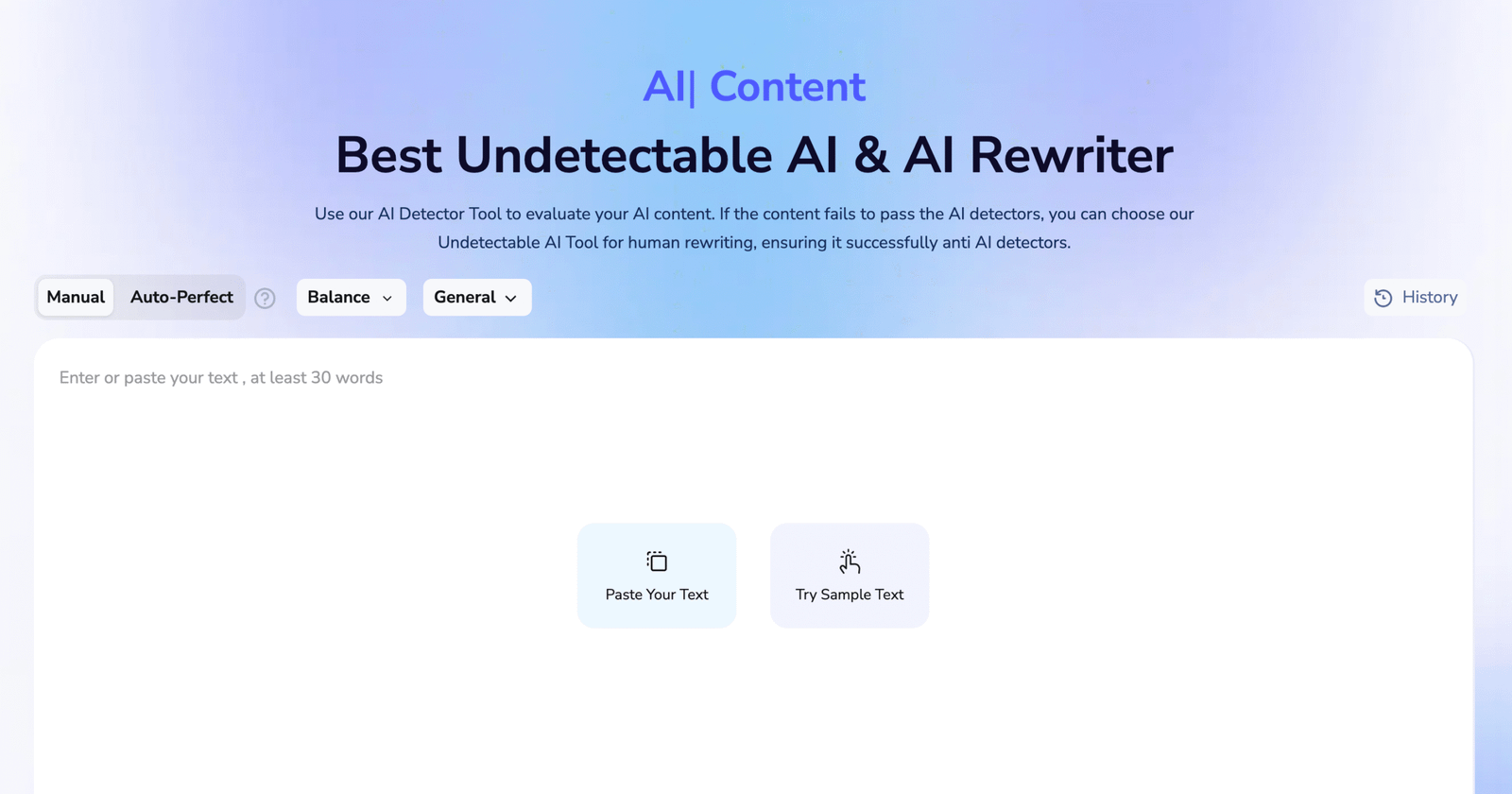
AI Undetect brings rewriting and detector checking into a relatively simple workflow, which can be practical for marketers who want an immediate sense of how a revised draft differs from the source. It can soften predictable phrasing, alter sentence construction, and create enough surface variation to make rigid marketing copy feel less automated. The whole thing is most useful when a team needs a quick review layer rather than a complicated editorial system. Detector feedback is still an imperfect stand-in for reader response, so a lower score does not necessarily mean the message sounds more credible, specific, or persuasive. The rewrite may also introduce extra informality or vocabulary changes that do not suit tightly controlled brand language. AI Undetect works better as a checkpoint during revision than as the final authority on whether a piece of marketing copy is ready to publish.
Best use case: Running a quick rewrite and diagnostic check before a final human review of short marketing content.
What it does well: It keeps rewriting and detector feedback together in a process that is easy to understand.
Where it falls short: Detector performance does not reliably measure brand fit, credibility, specificity, or reader trust.
Who should skip it: Teams that need careful voice development rather than a fast rewrite-and-check workflow.
Choosing AI Content Editors for Natural Marketing Copy
Natural marketing copy is not simply less polished or more casual, because the strongest version still carries a clear argument, deliberate structure, and enough specificity to feel owned. The better editors help remove repetitive AI habits without sanding down the details that make a brand recognizable.
Some tools are better at broad restructuring, while others stay closer to the source and focus on rhythm, tone, or sentence-level clarity. That distinction matters, since a heavy rewrite can solve visible stiffness while quietly weakening product language, factual nuance, or conversion logic.
Honestly, the most useful option depends less on how dramatic the output looks and more on how much control the editor needs after the first pass. A quick humanizer may suit short campaign copy, whereas recurring brand content usually benefits from tools that allow more deliberate choices around voice and pacing.
The whole thing works best when AI editing remains one part of the editorial process rather than the final judgment. Natural copy still needs human decisions about what to keep, what to question, and exactly where a little unevenness makes the writing feel more believable.
Disclaimer: The tools referenced are included for editorial and informational purposes only and are selected based on observable product behavior and relevance rather than sponsorship or paid placement. Screenshots are shown solely for identification, commentary, and illustrative reference in line with standard editorial and fair use practices, and may not reflect the most current version of each product. All trademarks, logos, and interface elements remain the property of their respective owners. For update, correction, or removal requests, please refer to the Editorial Policy.