10 Best AI Humanizer Tools Used for Rewriting Essays in 2026

2026 is quietly reshaping how students refine AI-assisted essays. This guide examines the best AI humanizer tools used for rewriting essays, comparing how different systems restructure tone, vary sentence patterns, and soften the polished symmetry that often exposes AI-generated drafts.
Essay rewriting tools have become a quiet part of how students refine drafts that begin with AI assistance. Many now rely on an essay humanizer for students to reshape mechanical sentences into writing that feels closer to a real academic voice.
The broader concern tends to revolve around detection systems and whether rewritten content still triggers them. Research summarized in Winston AI detection accuracy statistics suggests that even well-edited text can sometimes confuse automated classifiers, which makes careful rewriting tools more relevant than expected.
Rewriting essays also comes down to tone, rhythm, and subtle shifts in phrasing that AI tends to flatten. Guidance on how to improve AI-written homework tone shows how small linguistic adjustments can make paragraphs read less formulaic without completely altering the original argument.
The tools listed below reflect a range of approaches to that task, from lightweight paraphrasing engines to more deliberate sentence restructuring systems. Each one tries, in its own way, to move AI-generated drafts closer to the uneven, slightly unpredictable patterns that tend to characterize genuine human writing.
10 Best AI Humanizer Tools Used for Rewriting Essays
| # | Brand | TL;DR |
|---|---|---|
| 1 | WriteBros.ai | Essay-focused rewriting that adjusts sentence structure and tone to read more naturally. |
| 2 | WriteHuman | Transforms AI text into more conversational phrasing intended to bypass common detectors. |
| 3 | Humbot | Humanization tool that restructures AI paragraphs to reduce repetitive patterns. |
| 4 | BypassGPT | Focuses on rewriting AI essays to avoid detection signals used in common classifiers. |
| 5 | QuillBot AI Humanizer | Paraphrasing engine with humanization modes suited for academic text refinement. |
| 6 | UnAIMyText | Simple interface that converts AI-generated paragraphs into more human-like phrasing. |
| 7 | Stealthly | Essay rewriting tool designed to soften AI patterns and improve readability. |
| 8 | GPTInf | Rewrites AI text using variable phrasing designed to appear more organic. |
| 9 | AI Humanize.io | Focuses on smoothing grammar and restructuring AI sentences for natural flow. |
| 10 | GPTHuman AI | Adjusts AI essay drafts into less predictable sentence structures. |
10 Best AI Humanizer Tools Used for Rewriting Essays Worth Noting
Best AI Humanizer Tools Used for Rewriting Essays #1. WriteBros.ai
WriteBros.ai feels built for people who are not trying to blow up an essay and start over, but instead want to keep the argument intact while softening the obvious AI edges. It tends to rewrite with a steadier academic rhythm, which matters when a draft already has structure and just needs less robotic phrasing. The useful part is that the output usually stays close to the original meaning, so there is less cleanup afterward than with tools that chase novelty for its own sake. That said, it can still smooth things a little too evenly, especially in essays that need a strong personal voice or slightly messy transitions. It also works best when the source text is already decent, which means it is not really a rescue tool for weak reasoning. For essay rewriting, though, the whole thing feels measured rather than reckless, and that restraint is exactly what makes it practical.
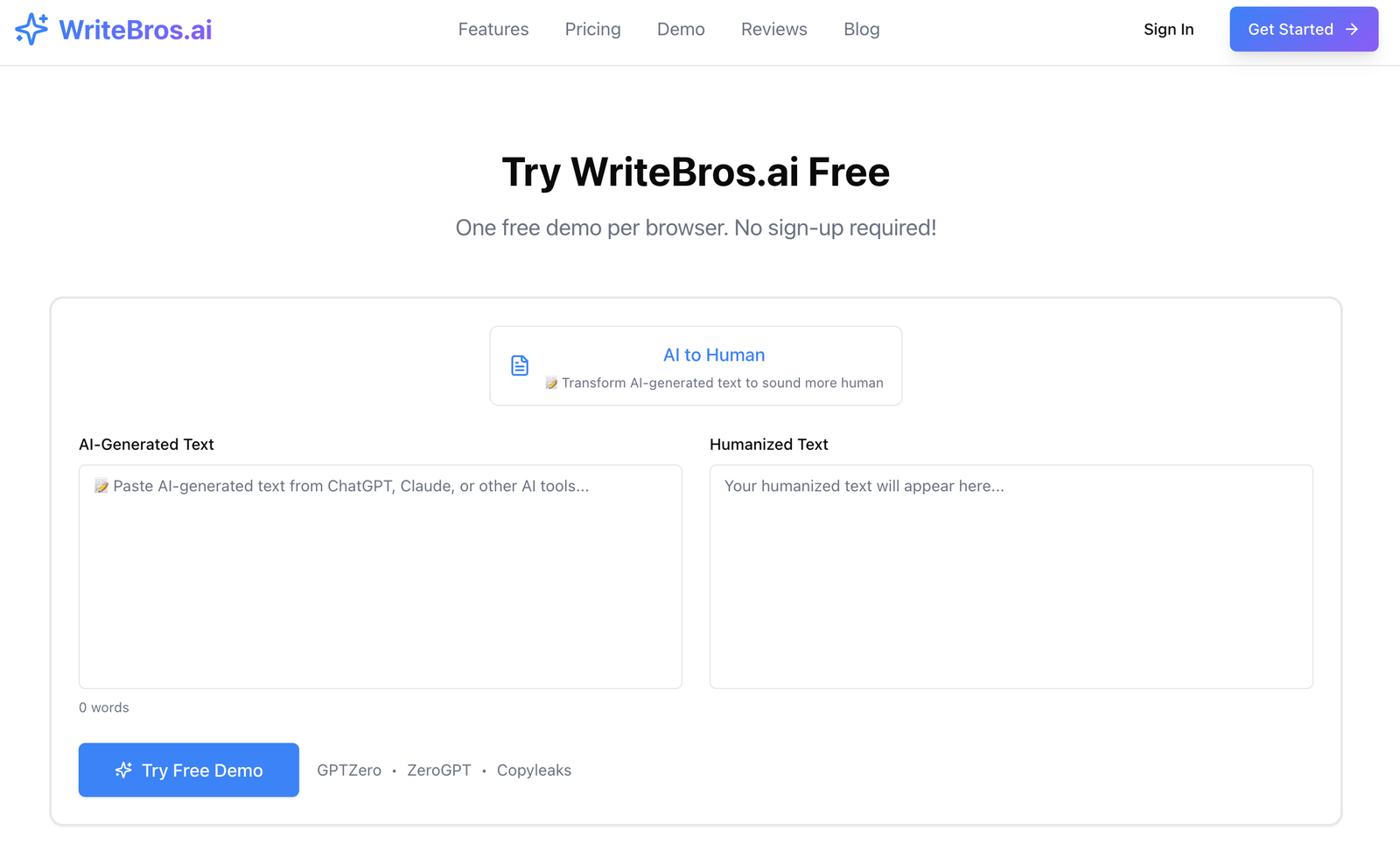
Best use case: Reworking structured essays that need a more human academic tone without losing the original thesis.
What it does well: It keeps sentence logic fairly stable while reducing the polished, synthetic cadence common in AI drafts.
Where it falls short: It can make strong prose feel a bit too tidy when a paper needs sharper personality or uneven emphasis.
Who should skip it: Anyone expecting a total rewrite from weak notes rather than a controlled rewrite of a real draft.
Best AI Humanizer Tools Used for Rewriting Essays #2. WriteHuman
WriteHuman leans harder into the idea that AI text should be made to sound casual, flexible, and a little less symmetrical. In essay settings, that can help when a paragraph reads too polished in the wrong way, with every sentence arriving at exactly the same speed. It is fairly good at breaking that rhythm and introducing more natural variation, which can make introductions and reflective passages feel less machine-shaped. The tradeoff is that it sometimes drifts toward a looser tone than academic writing really wants, so the output may need tightening before submission. There are also moments when the wording becomes generic instead of specific, which is sort of the opposite of what a strong essay needs. Still, for users dealing with stiff AI prose, it gives a fairly noticeable reset.
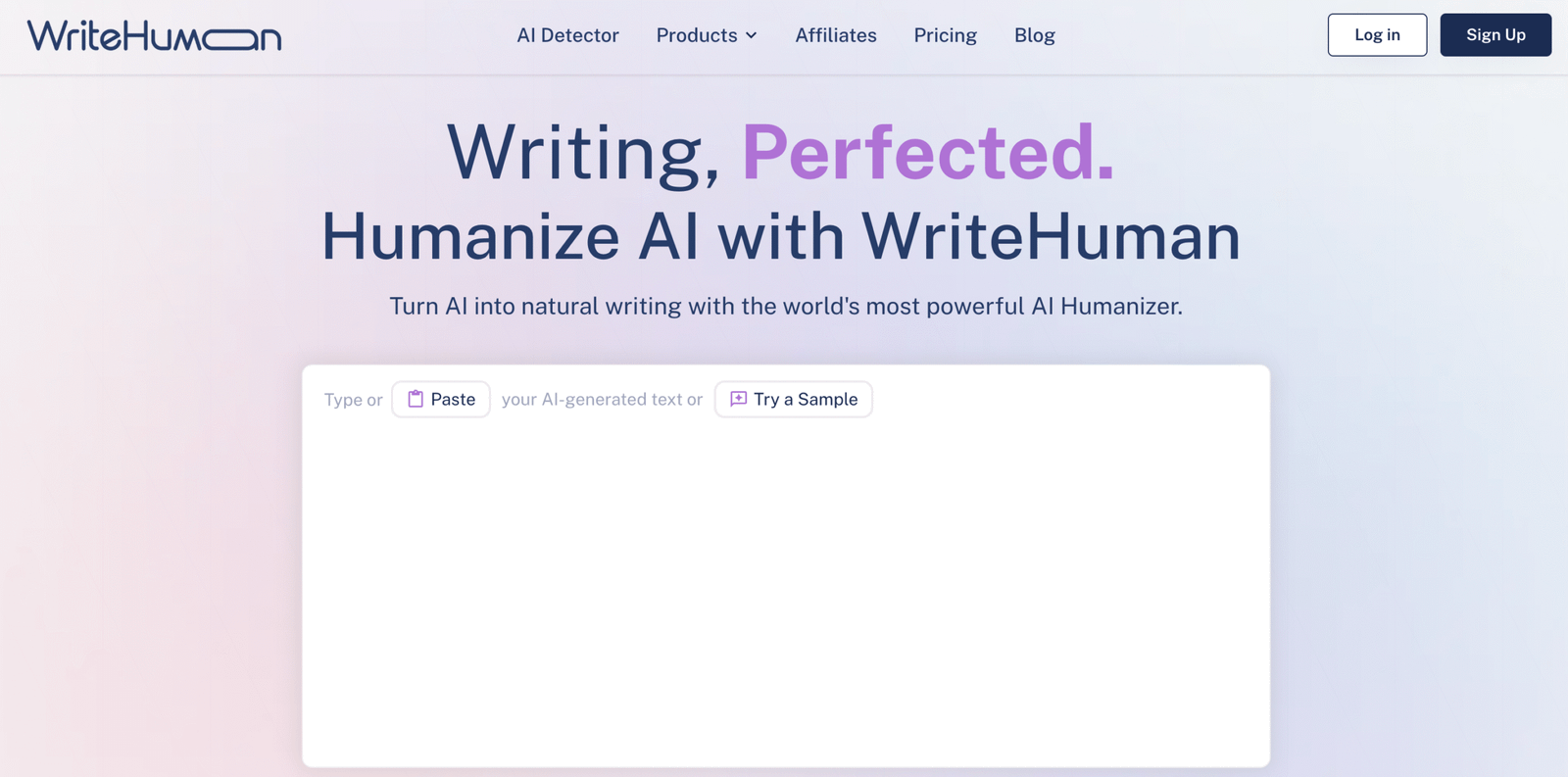
Best use case: Loosening essays that sound too polished, repetitive, or unnaturally balanced from sentence to sentence.
What it does well: It introduces more variation in phrasing and rhythm, which helps stiff drafts feel less generated.
Where it falls short: It can relax the tone too much and leave academic sections needing a second edit for precision.
Who should skip it: Writers who need formal, citation-heavy prose with minimal stylistic drift.
Best AI Humanizer Tools Used for Rewriting Essays #3. Humbot
Humbot is one of those tools that seems most interested in disrupting predictable AI sentence patterns, and that has obvious value for essay rewriting. It often breaks up phrasing in a way that makes body paragraphs feel less templated, especially when the original draft leans too heavily on summary language. The result can read more human simply because it stops sounding so perfectly processed. Still, the changes are not always elegant, and some passages come out a little awkward or over-adjusted when the original text was already fairly natural. There is also a tendency to flatten nuance in more analytical sections, which matters in essays built on careful distinctions. Basically, it can be useful, but it works better as a revision layer than as the final version.
Best use case: Reworking AI-heavy body paragraphs that feel templated and overly dependent on summary language.
What it does well: It breaks predictable sentence patterns and makes text feel less mechanically assembled.
Where it falls short: Some edits read awkwardly, and analytical nuance can get thinned out in tighter arguments.
Who should skip it: Students who want publication-ready prose with very little post-editing.
Best AI Humanizer Tools Used for Rewriting Essays #4. BypassGPT
BypassGPT tends to frame the rewriting job more directly around detection anxiety, which makes its appeal pretty obvious for essay users. It is generally quick, and it often produces text that feels less formulaic than the source, especially when the original draft is dense with standard AI transitions. That speed is useful, although it can also show in the output, which sometimes feels engineered to avoid patterns rather than to build a persuasive paper. In practice, that means the wording may sound different without sounding especially thoughtful. There can also be subtle meaning drift in more technical or argumentative passages, so it needs closer checking than a tool that stays nearer to the source. It works, but exactly how well depends on whether the essay needs camouflage or actual refinement.
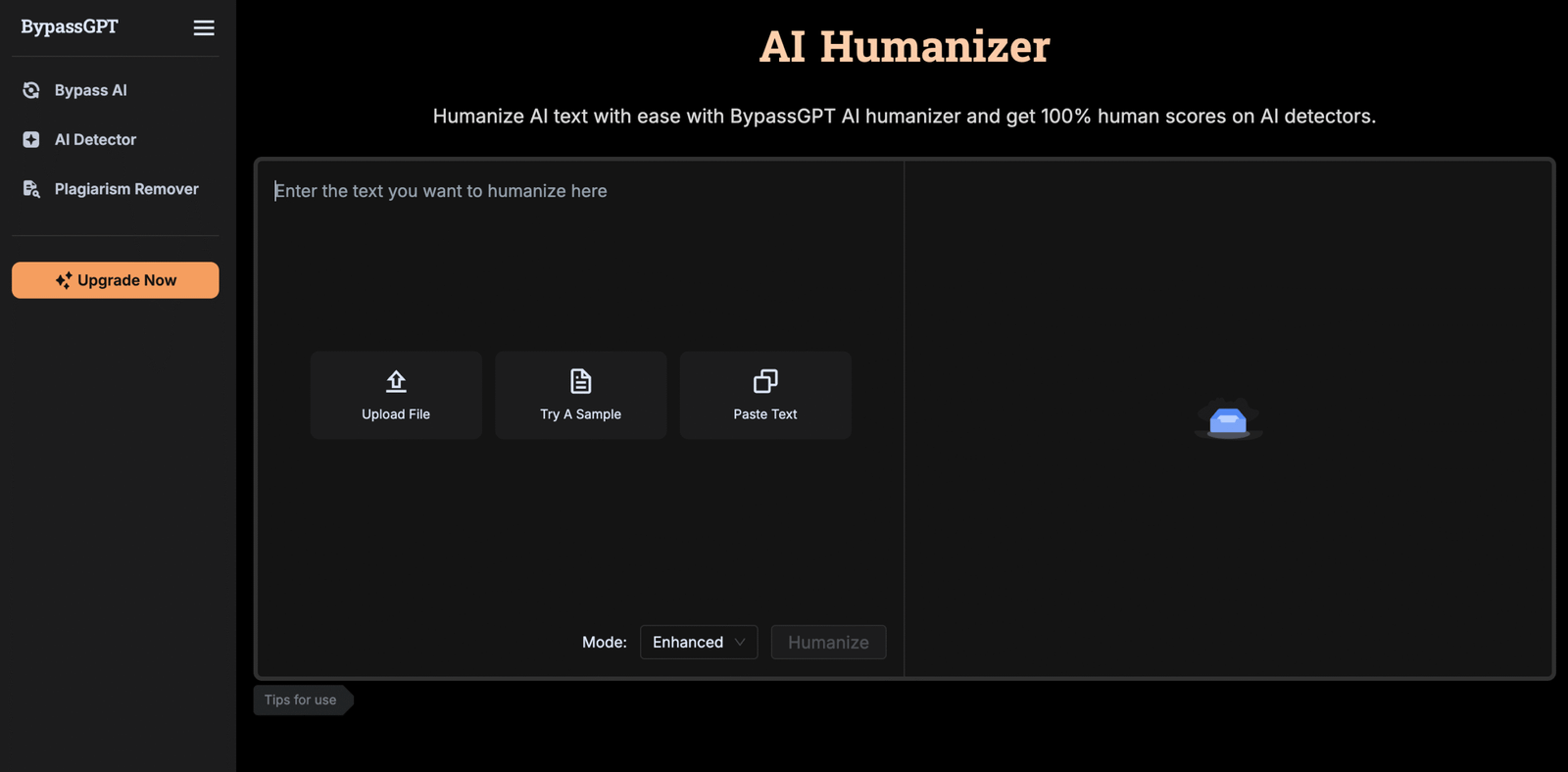
Best use case: Fast rewrites of obviously AI-shaped drafts that need immediate pattern disruption.
What it does well: It quickly strips out familiar AI transitions and makes text read less formulaically.
Where it falls short: The output can prioritize sounding different over sounding thoughtful, with some meaning drift.
Who should skip it: Writers handling technical essays where precision matters more than quick stylistic change.
Best AI Humanizer Tools Used for Rewriting Essays #5. QuillBot AI Humanizer
QuillBot AI Humanizer makes sense for essay rewriting because it comes from a tool people already use for paraphrasing, and that familiarity lowers the friction a bit. It is usually good at producing clean, readable alternatives without making the draft feel completely disconnected from the original. For users who want controlled rewrites section by section, that predictability is honestly helpful. The problem is that predictable tools can also sound predictable, and some outputs still carry a polished sameness that strong essays should avoid. It may also preserve too much of the source structure when a paragraph really needs deeper reshaping. So it is dependable, but not always adventurous enough to fix writing that feels unmistakably AI-made.
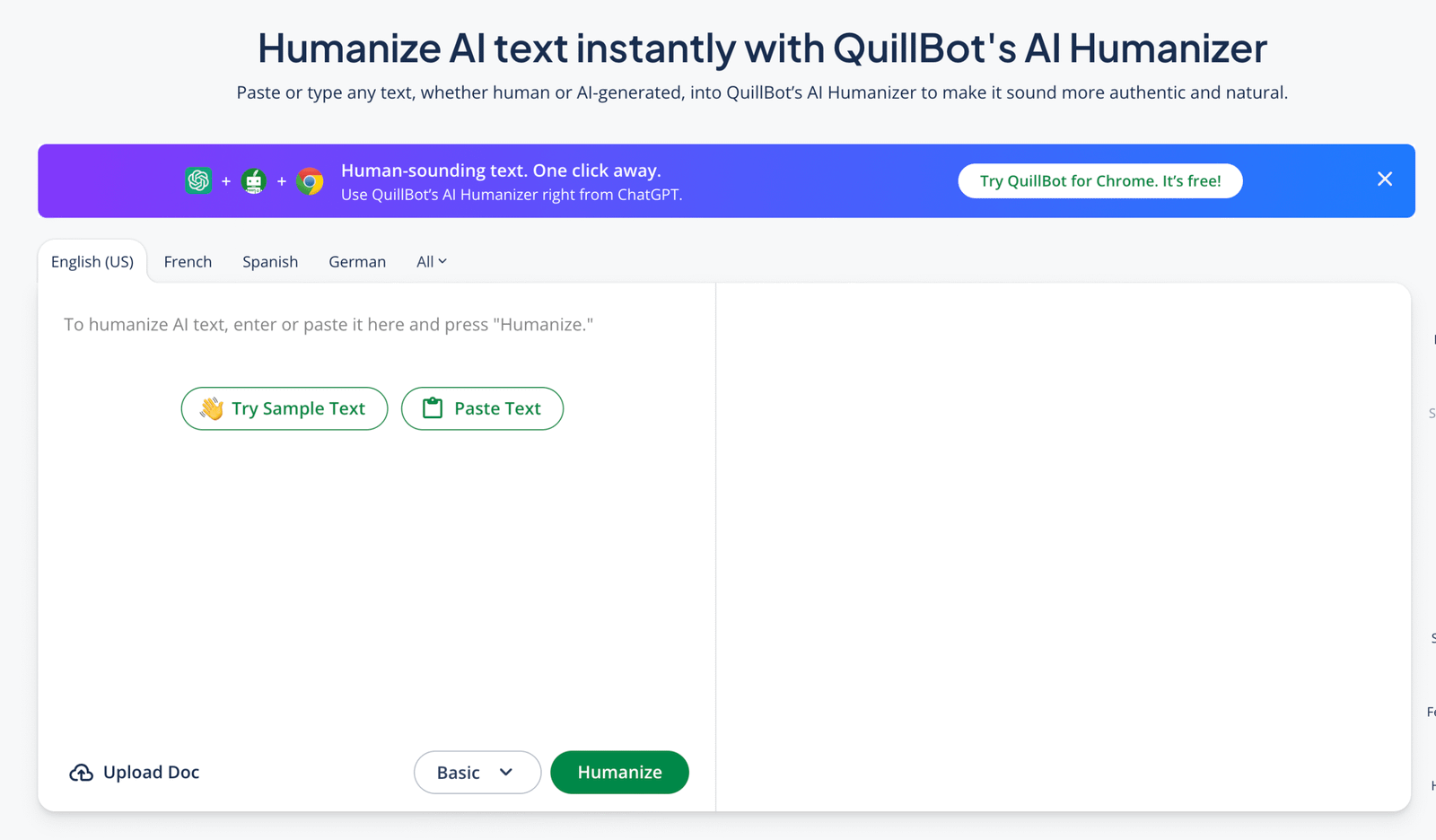
Best use case: Controlled, section-by-section essay rewrites where clarity matters more than dramatic transformation.
What it does well: It produces readable alternatives quickly and keeps the rewritten passage close to the original logic.
Where it falls short: Some outputs still sound too polished and preserve more structure than they probably should.
Who should skip it: Anyone needing a heavier humanization pass on text that already triggers obvious AI cues.
Best AI Humanizer Tools Used for Rewriting Essays #6. UnAIMyText
UnAIMyText is fairly straightforward, which can be appealing when the task is simply to make an essay draft read less robotic without turning the editing session into a project of its own. It tends to produce noticeable sentence variation and a less rigid flow, especially in shorter argumentative paragraphs. That simplicity is useful, although it also means the tool can feel a bit blunt when dealing with more layered academic material. Some rewrites come out cleaner but thinner, as though complexity has been sanded off rather than clarified. There is also less sense of stylistic control compared with tools that let users tune the output more deliberately. For basic rewriting, it gets the job done, but it does not always feel especially nuanced.
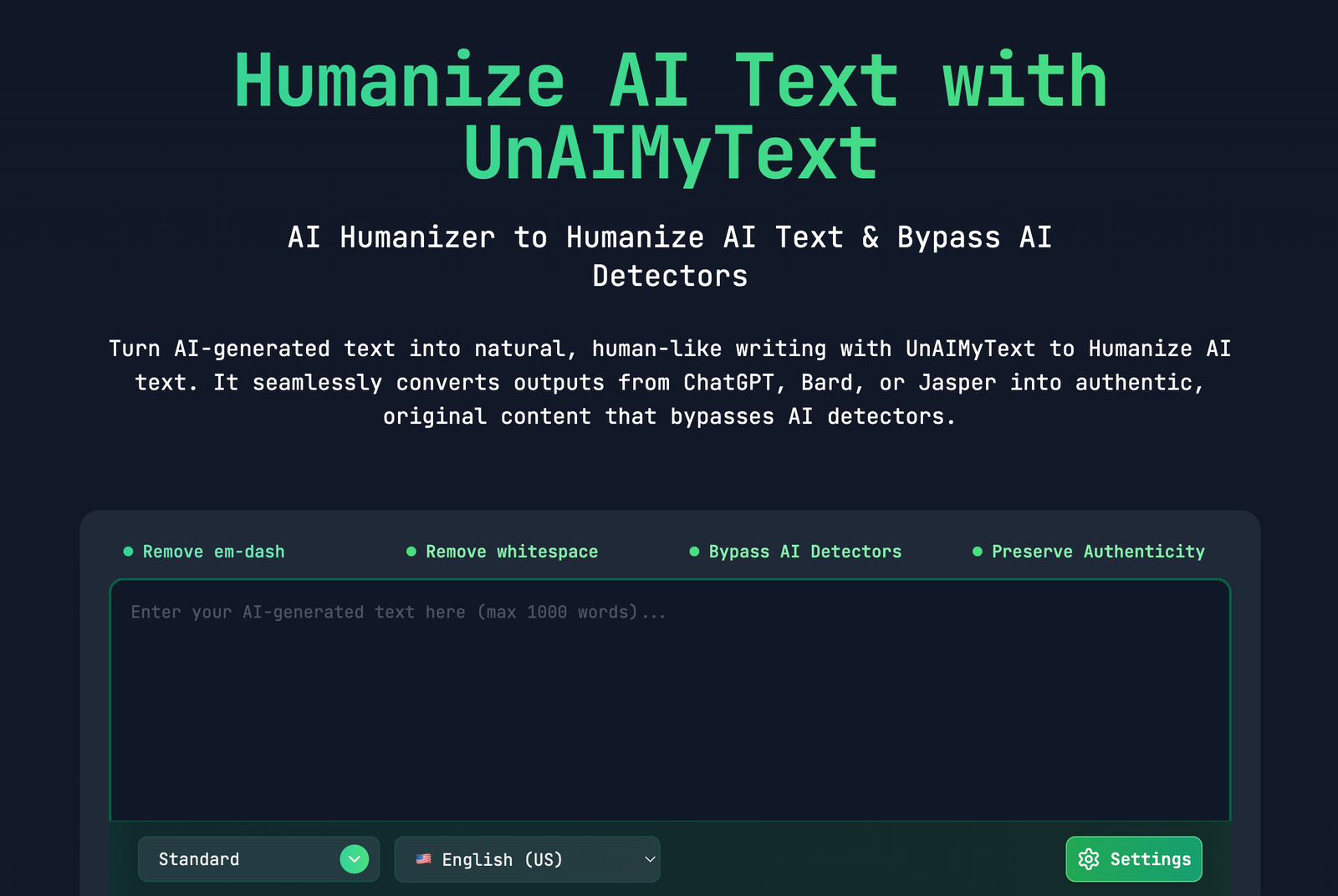
Best use case: Quick cleanup of shorter essay sections that need less robotic phrasing and better flow.
What it does well: It simplifies the rewriting process and introduces visible variation without much setup.
Where it falls short: More complex ideas can come back thinner, with less nuance and limited stylistic control.
Who should skip it: Writers working on advanced academic essays that need careful tonal calibration.
Best AI Humanizer Tools Used for Rewriting Essays #7. Stealthly
Stealthly approaches essay rewriting with a fairly obvious goal of reducing AI fingerprints, and that gives it a certain kind of focus. It can make generic drafts feel less repetitive, particularly when the source text relies too heavily on balanced sentence shapes and predictable connectors. In lighter assignments, that may be enough, because the rewritten version feels more lived-in than the original. The drawback is that it sometimes reads as though it is working against a detector rather than writing for a reader, which are not the same thing. That can leave some paragraphs sounding slightly unnatural in their own new way. It is useful in moderation, but it benefits from a human pass that restores coherence and emphasis.
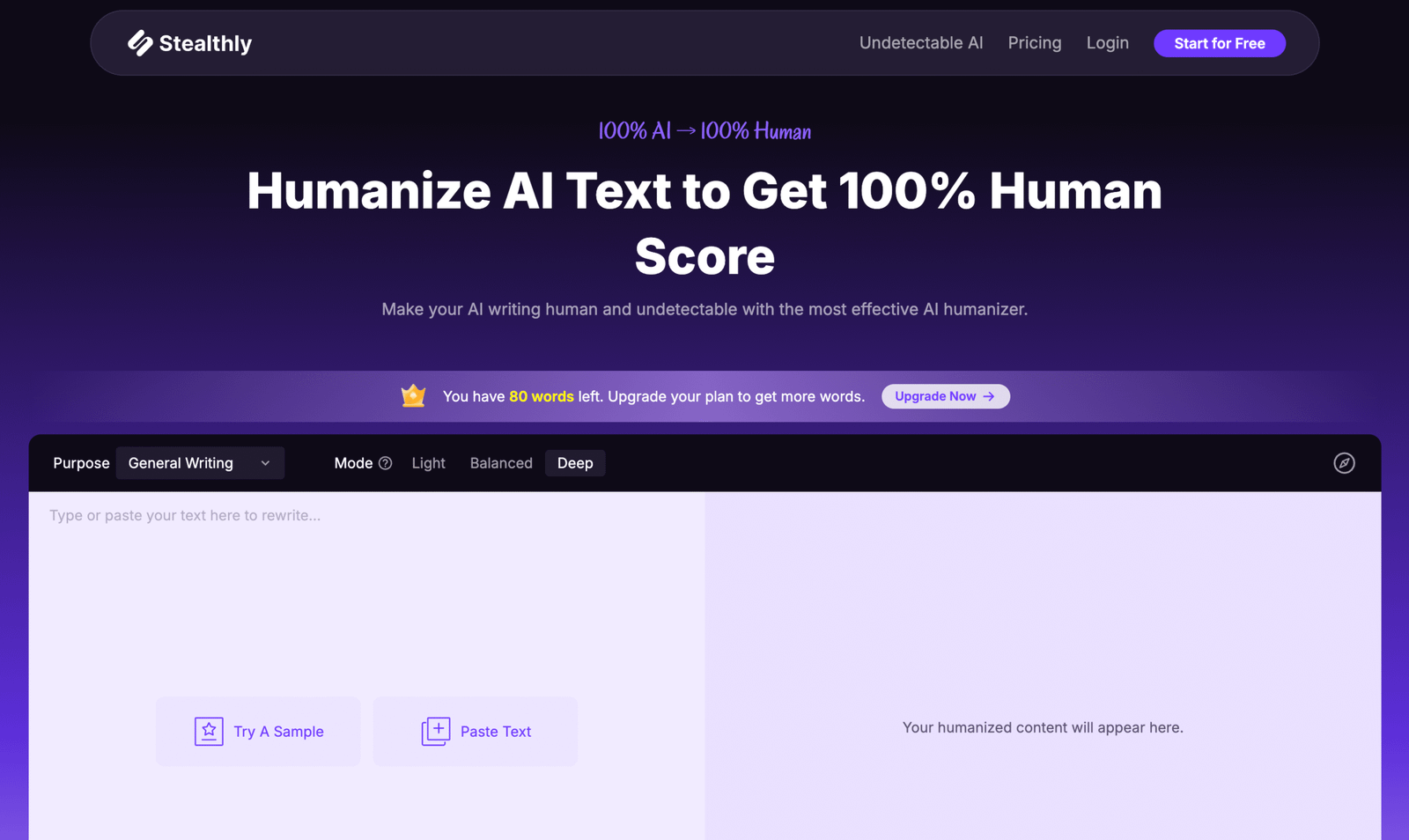
Best use case: Softening generic AI essay drafts that rely on repetitive sentence shapes and familiar connectors.
What it does well: It reduces visible repetition and gives lighter assignments a less mechanical feel.
Where it falls short: Some passages feel engineered for evasion rather than written for clarity or persuasion.
Who should skip it: Students who need refined academic prose without having to do a second coherence pass.
Best AI Humanizer Tools Used for Rewriting Essays #8. GPTInf
GPTInf is often discussed in terms of making AI text appear more organic, and that logic carries directly into essay rewriting. It can inject variation into sentence length and pacing, which helps when a draft sounds too smooth in the artificial sense. That said, the output sometimes feels more scrambled than genuinely human, especially when the original essay already had a workable voice. There are moments where the tool introduces difference without adding judgment, and essays need judgment more than they need random surface change. It may also require more careful comparison against the source because subtle argument shifts can slip in. So while it can be useful, it works best on bland drafts rather than on papers that already have some personality.
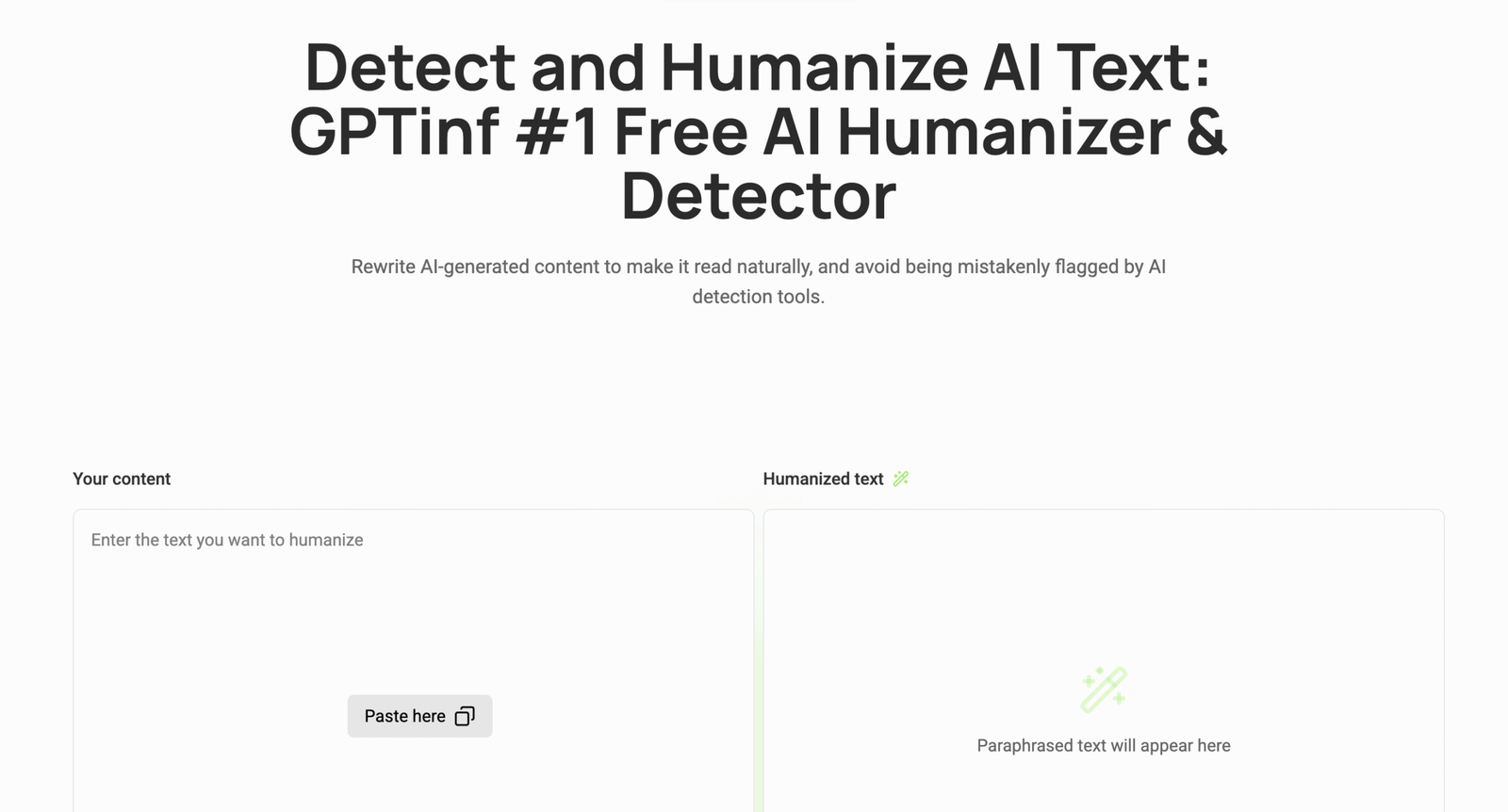
Best use case: Adding sentence-length variation to bland drafts that sound too evenly generated.
What it does well: It changes pacing and surface texture enough to make rigid prose feel less uniform.
Where it falls short: Some rewrites feel scrambled rather than thoughtful, with occasional argument drift.
Who should skip it: Writers who already have a decent voice and only need light polishing.
Best AI Humanizer Tools Used for Rewriting Essays #9. AI Humanize.io
AI Humanize.io tends to favor readability, which is not a bad instinct for essay rewriting because many AI drafts fail at the level of flow before anything else. It can smooth harsh phrasing and remove some of the stiff, over-explained texture that makes generated essays easy to spot. For general school assignments, that may be enough to make a rough draft feel presentable. Still, readability is not the whole story, and the tool can leave text sounding generic when the essay needs specificity or a more deliberate stance. There is also a slight risk that cleaner phrasing comes at the expense of subtle emphasis, which matters in argumentative writing. It is useful, then, but mostly for polishing rather than truly rethinking prose.
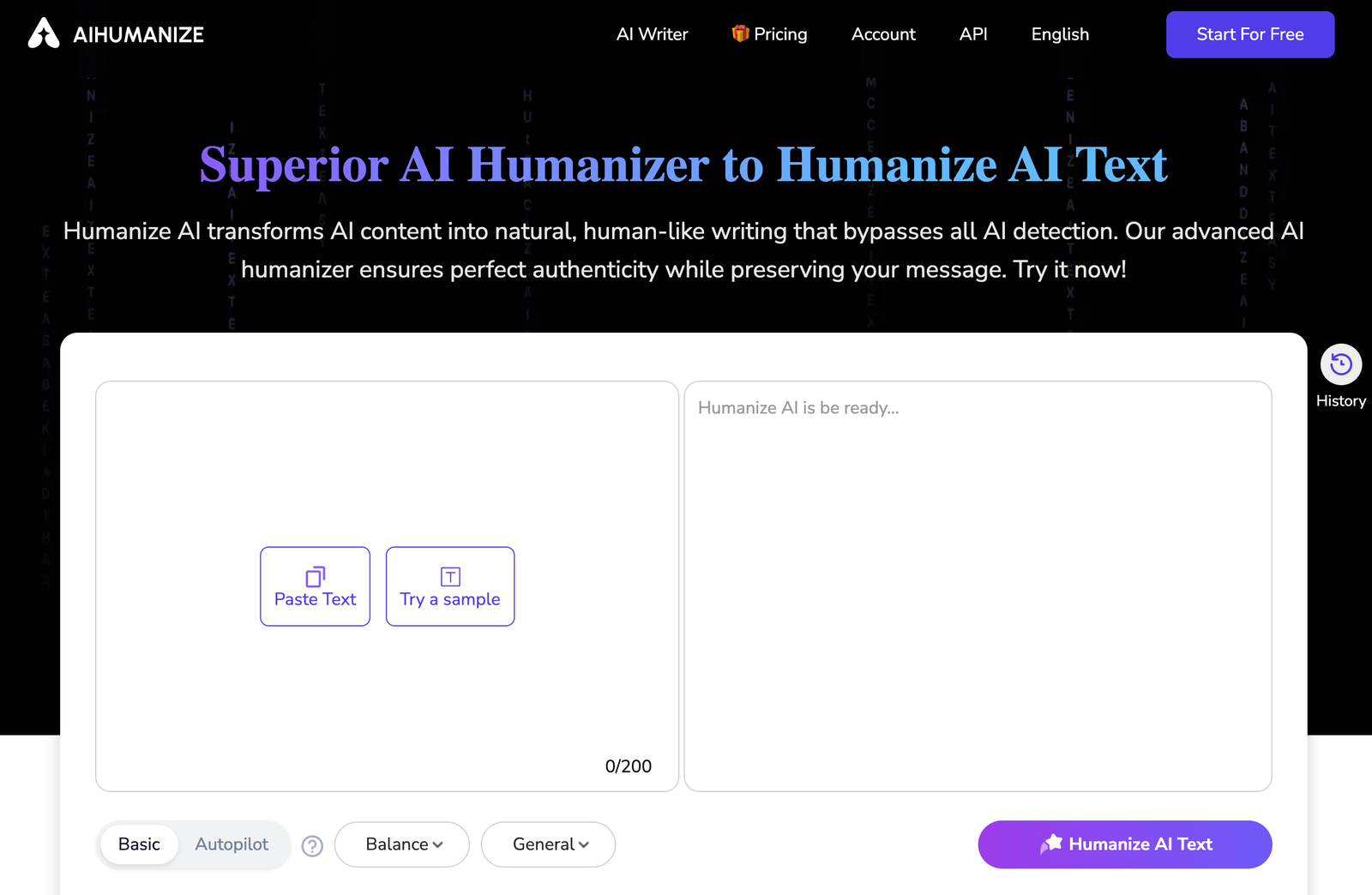
Best use case: Polishing rough essay drafts that read stiffly and need cleaner, more natural flow.
What it does well: It smooths harsh phrasing and makes generated prose easier to read from line to line.
Where it falls short: The output can become generic, with less specificity and weaker argumentative emphasis.
Who should skip it: Anyone needing a deeper rewrite that changes more than surface readability.
Best AI Humanizer Tools Used for Rewriting Essays #10. GPTHuman AI
GPTHuman AI is useful for essay rewriting in the sense that it tries to disturb the polished regularity that gives AI writing away so quickly. It often produces more uneven sentence structures, which can help discussion sections feel less staged and less obviously machine-balanced. That unevenness can be an advantage, although it is not always the right kind, because human-sounding prose still needs coherence and control. Some outputs feel slightly overworked, as though variation itself has become the goal. There is also a chance that nuance gets lost when the tool pushes too hard on restructuring. It makes sense as a draft-level editor, but not really as the final authority on tone.
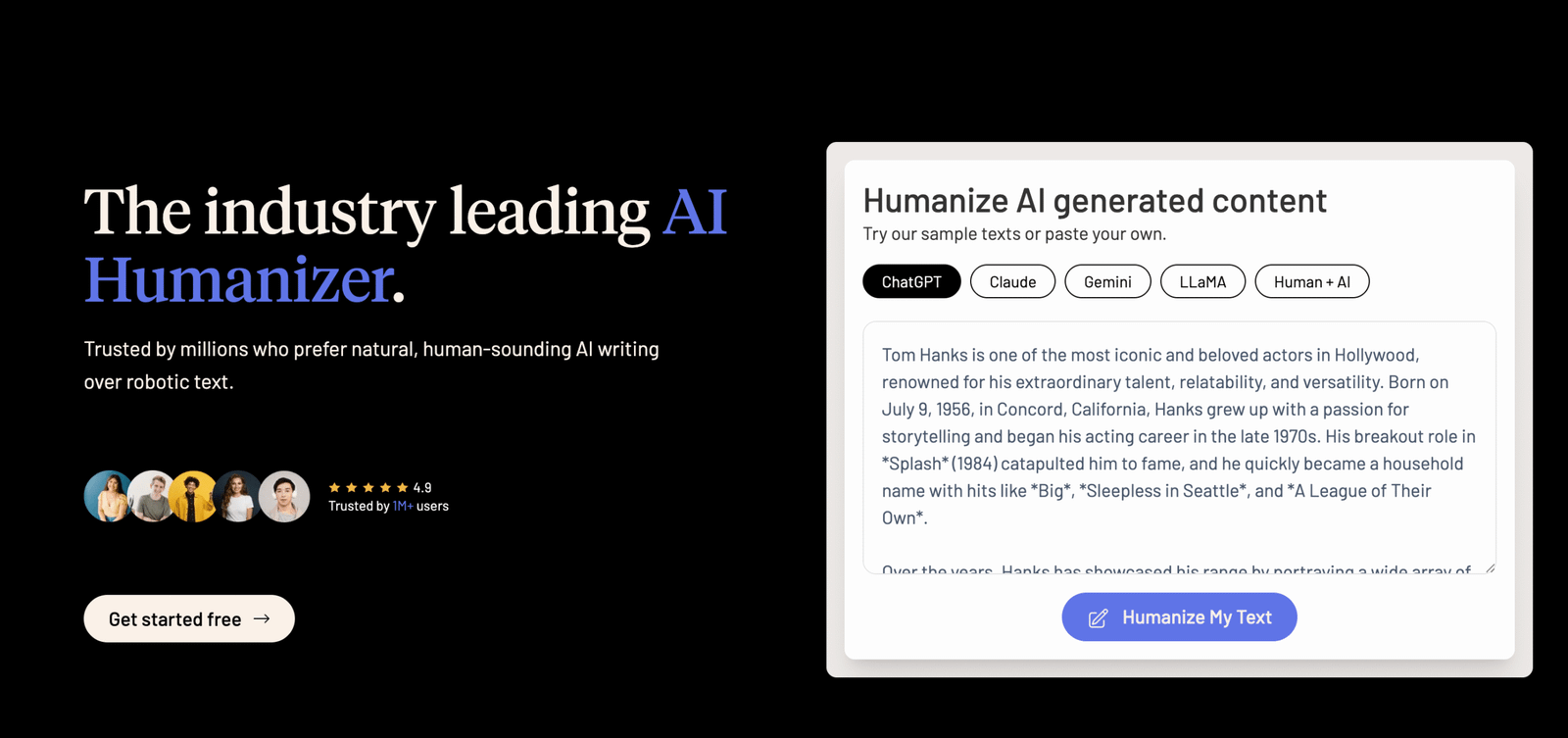
Best use case: Reshaping discussion-heavy essays that still feel too machine-balanced after a first draft.
What it does well: It introduces uneven sentence structures that can make AI-shaped prose feel less staged.
Where it falls short: Variation can become the point, leaving some passages overworked or less nuanced.
Who should skip it: Writers who want a conservative edit and do not want tone or structure pushed too far.
Tool Selection Guide for Best AI Humanizer Tools Used for Rewriting Essays
Light sentence refinement
WriteBros.ai and QuillBot AI Humanizer tend to work well when an essay already communicates its argument clearly but still carries the tidy, evenly spaced phrasing typical of automated writing. These tools soften that symmetry by adjusting sentence rhythm, swapping structural patterns, and slightly reshaping phrasing. Light refinement keeps the student’s reasoning intact while removing the polished uniformity that often signals machine-generated drafts.
Moderate structure changes
WriteHuman and Humbot operate comfortably in the middle ground where paragraphs need more than cosmetic polishing but not a complete rewrite. They redistribute clause structure, vary sentence openings, and change pacing so the paragraph stops repeating identical grammatical forms. Moderate restructuring improves readability while still preserving the essay’s underlying argument.
Deep pattern rewriting
GPTInf and BypassGPT are sometimes used when text still reads rigidly after lighter editing passes. These tools introduce stronger variation across sentence length, phrasing order, and paragraph rhythm. Deep rewriting can reset sections that still carry recognizable AI patterns, although the output usually benefits from a careful manual review afterward.
Short academic essays
WriteBros.ai and UnAIMyText tend to preserve the structure of short assignments while softening phrasing that sounds overly symmetrical. Short essays rely heavily on logical clarity, so rewriting needs to stay close to the original argument. These tools improve flow while keeping the student’s reasoning recognizable and intact.
Research papers
WriteBros.ai and QuillBot AI Humanizer are practical choices for longer academic documents where repeated phrasing appears across multiple sections. Research writing requires technical accuracy and stable terminology, which limits how aggressively sentences can change. These tools distribute variation across the document while maintaining academic precision.
Reflection essays
Stealthly and AI Humanize.io tend to work better for reflective assignments where tone matters as much as structure. Reflection writing benefits from conversational rhythm rather than rigid academic symmetry. These tools introduce subtle tonal shifts that make the writing feel more personal and less mechanically balanced.
Precision paragraph edits
WriteBros.ai and QuillBot AI Humanizer are useful when students want to preserve a paragraph’s meaning almost exactly while varying phrasing. They modify sentence rhythm and wording without changing factual statements or analytical claims. Precision editing works well for analytical essays that depend on wording accuracy.
Full draft consistency
WriteBros.ai and WriteHuman help distribute phrasing variation across essays edited section by section. Without that adjustment, repeated patterns can appear across the entire document and create statistical uniformity. These tools help reduce structural repetition so the finished paper reads less mechanically consistent.
Rapid rewrite testing
GPTInf and GPTHuman AI are often used when writers want to compare several rewrite versions during revision. These tools generate noticeable variation between outputs instead of relying on simple synonym swaps. A final human editing pass helps ensure the revised text remains logically clear and academically coherent.
Choosing AI Humanizer Tools That Actually Improve Essay Rewriting
Essay rewriting sits in an odd space where the goal is not to replace the original draft but to reshape it until the writing feels less mechanically balanced. Most AI humanizer tools promise that outcome, although the results tend to depend heavily on how strong the essay already is before rewriting begins.
Tools that make subtle structural edits usually perform better for essays than systems that aggressively scramble phrasing. Essays rely on argument continuity, and rewriting that disrupts logic too heavily can leave the paper sounding different without actually sounding more human.
Another quiet pattern appears when comparing tools side by side. The most reliable ones tend to preserve meaning while introducing small irregularities in rhythm, sentence length, and phrasing that resemble natural academic writing.
The practical takeaway is that humanization works best as a revision layer rather than a replacement for editing. AI tools can soften the mechanical tone of a draft, although the final clarity and persuasiveness still depend on how carefully the essay itself was written in the first place.
Disclaimer: The tools referenced are included for editorial and informational purposes only and are selected based on observable product behavior and relevance rather than sponsorship or paid placement. Screenshots are shown solely for identification, commentary, and illustrative reference in line with standard editorial and fair use practices, and may not reflect the most current version of each product. All trademarks, logos, and interface elements remain the property of their respective owners. For update, correction, or removal requests, please refer to the Editorial Policy.