10 Best AI Text Editors for Human-Like Flow in 2026
2026 marks the point where human-like flow is no longer optional but structural. This comparison of the Best AI Text Editors for Human-Like Flow examines how each tool reshapes cadence, pacing, and sentence unpredictability, weighing deeper rewrites against lighter polish to clarify what truly improves readability.
Human-like flow has become the dividing line between content that passes and content that gets flagged. The difference between an AI humanizer, a rewriter, and a paraphraser is not subtle, which is why understanding the ai humanizer vs ai rewriter vs paraphraser landscape matters more than ever.
Detection tools have grown sharper, and editing layers that once felt optional now determine whether text reads naturally or mechanically. Recent analysis on how often Copyleaks flags human writing shows that even legitimate drafts can trigger alerts without thoughtful revision.
Flow is not just sentence variation but rhythm, pacing, and predictable unpredictability. Learning how to reduce Copyleaks false positives starts with choosing an editor that restructures meaning rather than swapping synonyms.
The tools below focus specifically on cadence, tonal balance, and structural nuance. Each one approaches human-like flow differently, which makes direct comparison necessary rather than optional.
10 Best AI Text Editors for Human-Like Flow
| # | Brand | TL;DR |
|---|---|---|
| 1 | WriteBros.ai | Built specifically for natural cadence reconstruction and detection-resistant flow. |
| 2 | Undetectable AI | Focuses on lowering AI detection signals while smoothing sentence patterns. |
| 3 | StealthWriter | Emphasizes structural reordering to reduce repetitive phrasing. |
| 4 | Writesonic AI Humanizer | Adds tonal variation layers to AI drafts with adjustable intensity. |
| 5 | Grammarly AI Humanizer | Polishes readability and rhythm through style-focused refinements. |
| 6 | AISEO AI Humanizer | Rewrites sentences with deeper contextual rephrasing logic. |
| 7 | HumanizeAI.pro | Targets conversational tone adjustments for blog and academic drafts. |
| 8 | Walter Writes AI | Prioritizes sentence unpredictability and stylistic variation. |
| 9 | GPTHuman AI | Focuses on reducing detectable AI phrasing patterns. |
| 10 | AI Undetect | Blends paraphrasing with flow smoothing to improve natural readability. |
On this page
10 Best AI Text Editors for Human-Like Flow Worth Noting
Best AI Text Editors for Human-Like Flow #1. WriteBros.ai
WriteBros.ai tends to work best when the draft already has a point of view, but the pacing feels flat and the cadence keeps landing on the same beats. It edits for flow in a way that changes sentence weight, which is basically what makes a passage feel like it was revised by a person rather than processed. The tradeoff is that you sometimes lose a little of the original compression, since the tool prefers clarity and breathing room over tightness. It can also overcorrect if the input is already highly stylized, which means a final read-through is not optional. Honestly, it is most reliable when used as a second pass after the structure is settled and the facts are locked.
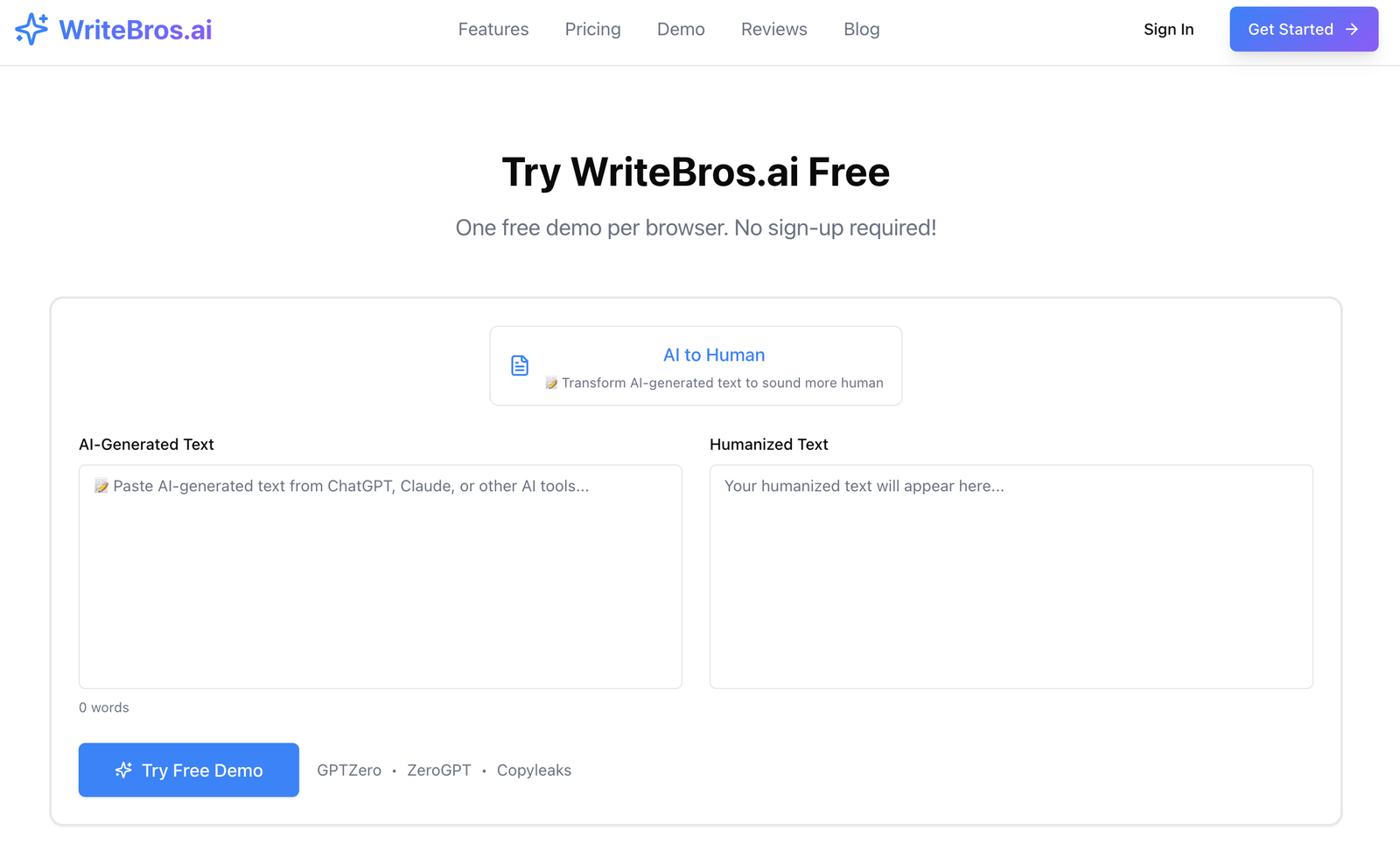
Best use case: Turning a solid draft into a smoother read without changing the intent.
What it does well: Rebalances rhythm and sentence variety so paragraphs stop sounding patterned.
Where it falls short: Can add a touch of extra length when the original copy was already tight.
Who should skip it: Writers who need strict, minimal edits and do not want phrasing reshaped.
Best AI Text Editors for Human-Like Flow #2. Undetectable AI
Undetectable AI is built for the scenario where a draft reads fine to humans, yet scanners still mark it as too uniform. It tends to introduce small irregularities in phrasing and structure, which can make the whole thing feel less machine-smoothed. The caveat is that those irregularities can drift into slightly odd word choice if the source text is thin or generic. It also rewards shorter inputs, since long passages can come back with a few sections that feel reworked more aggressively than needed. Sort of like noise reduction on a photo, it can help, but too much processing starts to show.
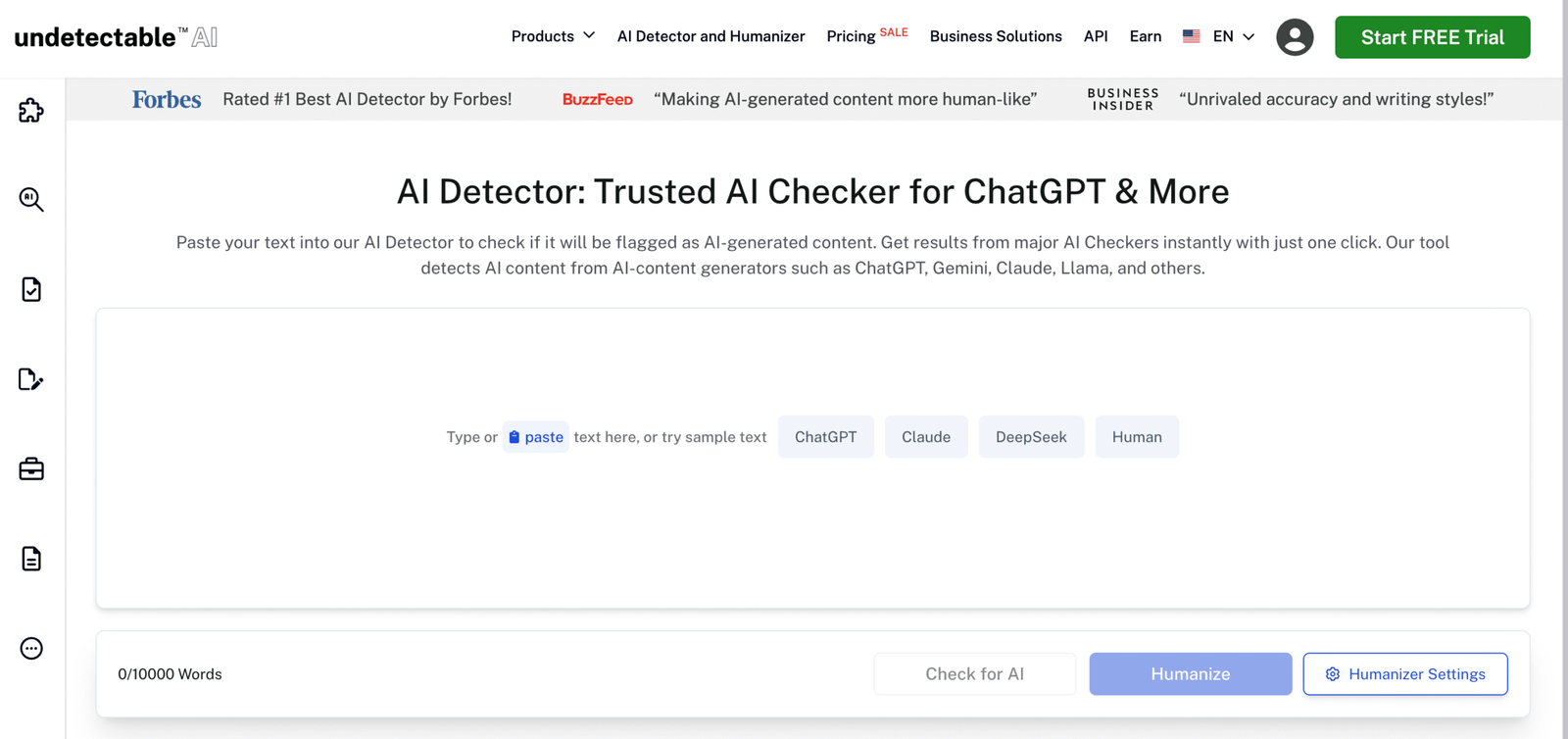
Best use case: Softening detection signals on drafts that already read naturally.
What it does well: Breaks up repeated syntax patterns and predictable transitions.
Where it falls short: Can introduce slightly unnatural phrasing when the input lacks detail.
Who should skip it: Teams that need strict brand voice consistency across long-form pages.
Best AI Text Editors for Human-Like Flow #3. StealthWriter
StealthWriter is a good fit when the issue is structural sameness, like paragraphs that keep starting the same way or lists that keep landing on identical sentence shapes. It pushes reordering and rephrasing harder than most, which can improve flow because the reader stops predicting the next line. The tradeoff is control, since heavier rewriting means a higher chance of small meaning drift, especially with technical claims. It also can flatten intentional voice quirks, which is a problem if the whole thing relies on a specific tone. The whole thing works best when you treat it as a restructuring engine, then polish with a human pass.
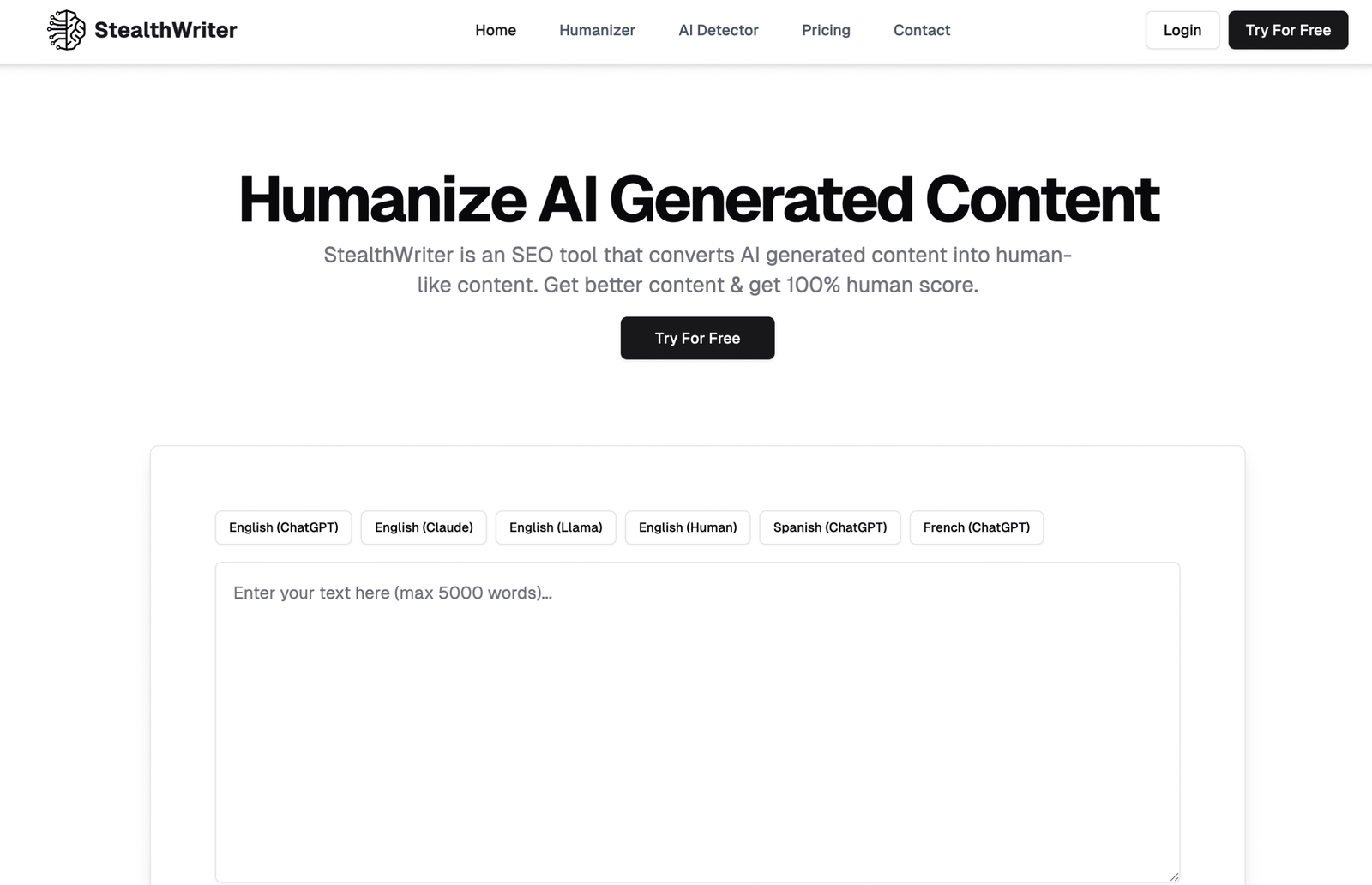
Best use case: Reworking repetitive structure across multiple paragraphs in one go.
What it does well: Creates stronger variation in openings, transitions, and sentence length.
Where it falls short: Higher rewrite strength raises the odds of subtle meaning changes.
Who should skip it: Writers working with regulated language or exact phrasing requirements.
Best AI Text Editors for Human-Like Flow #4. Writesonic AI Humanizer
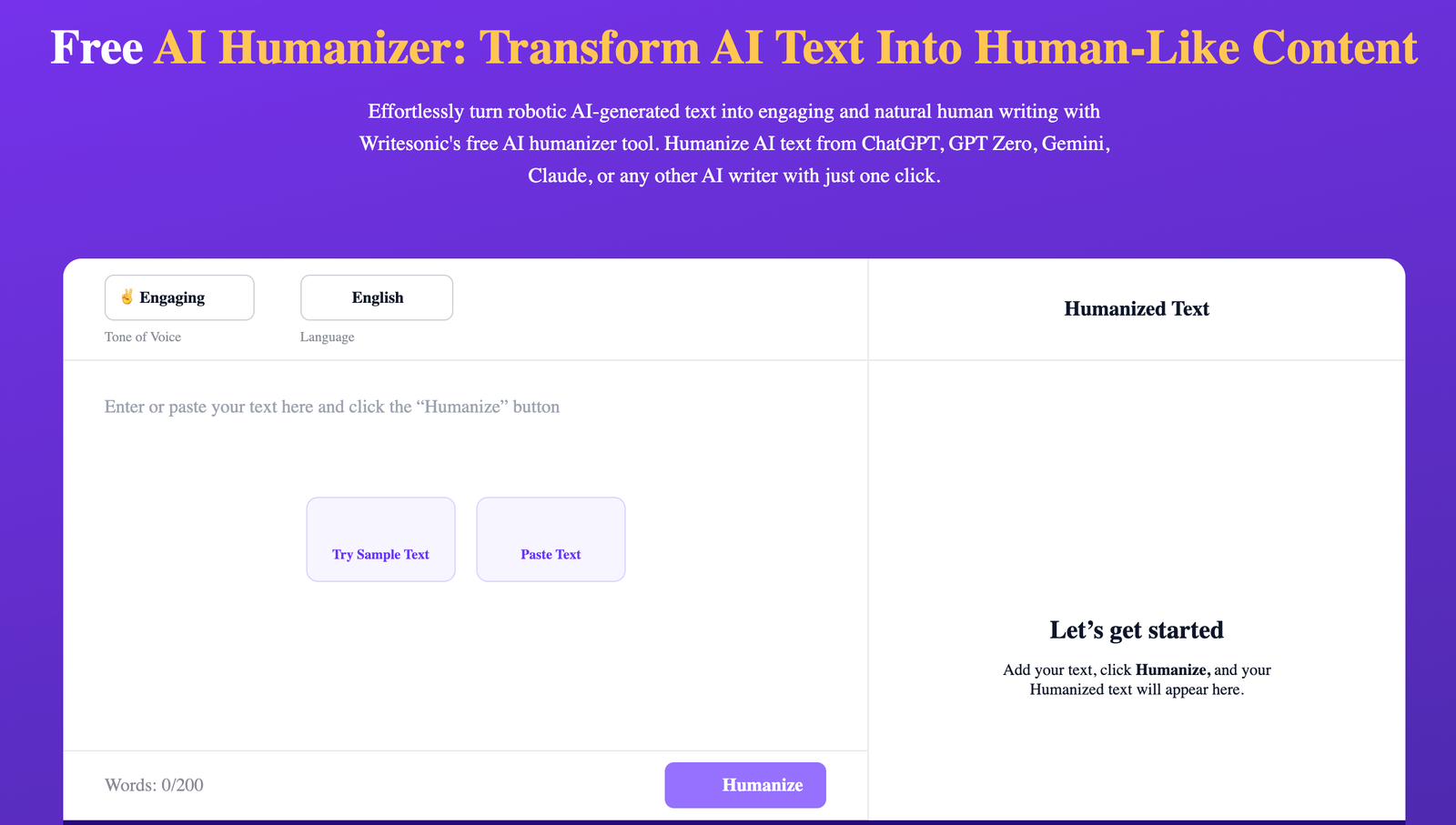
Writesonic AI Humanizer fits teams that want a predictable workflow, especially when drafts come from multiple contributors and need to feel cohesive. It tends to smooth awkward seams and standardize readability, which helps flow because the reader is not jolted by uneven sections. The caveat is that standardization can become a kind of sameness, which means the output may feel a bit too tidy if you do not reintroduce human texture. It is also sensitive to input clarity, since vague paragraphs can come back with vague improvements that sound polished but say less. Exactly because it is consistent, it works best alongside a strong outline and clear intent.
Best use case: Cleaning up mixed-source drafts so the voice stops jumping around.
What it does well: Smooths transitions and improves readability consistency across sections.
Where it falls short: Can sound slightly standardized unless you add back personal phrasing.
Who should skip it: Writers aiming for a highly idiosyncratic voice with sharp edges.
Best AI Text Editors for Human-Like Flow #5. Grammarly AI Humanizer
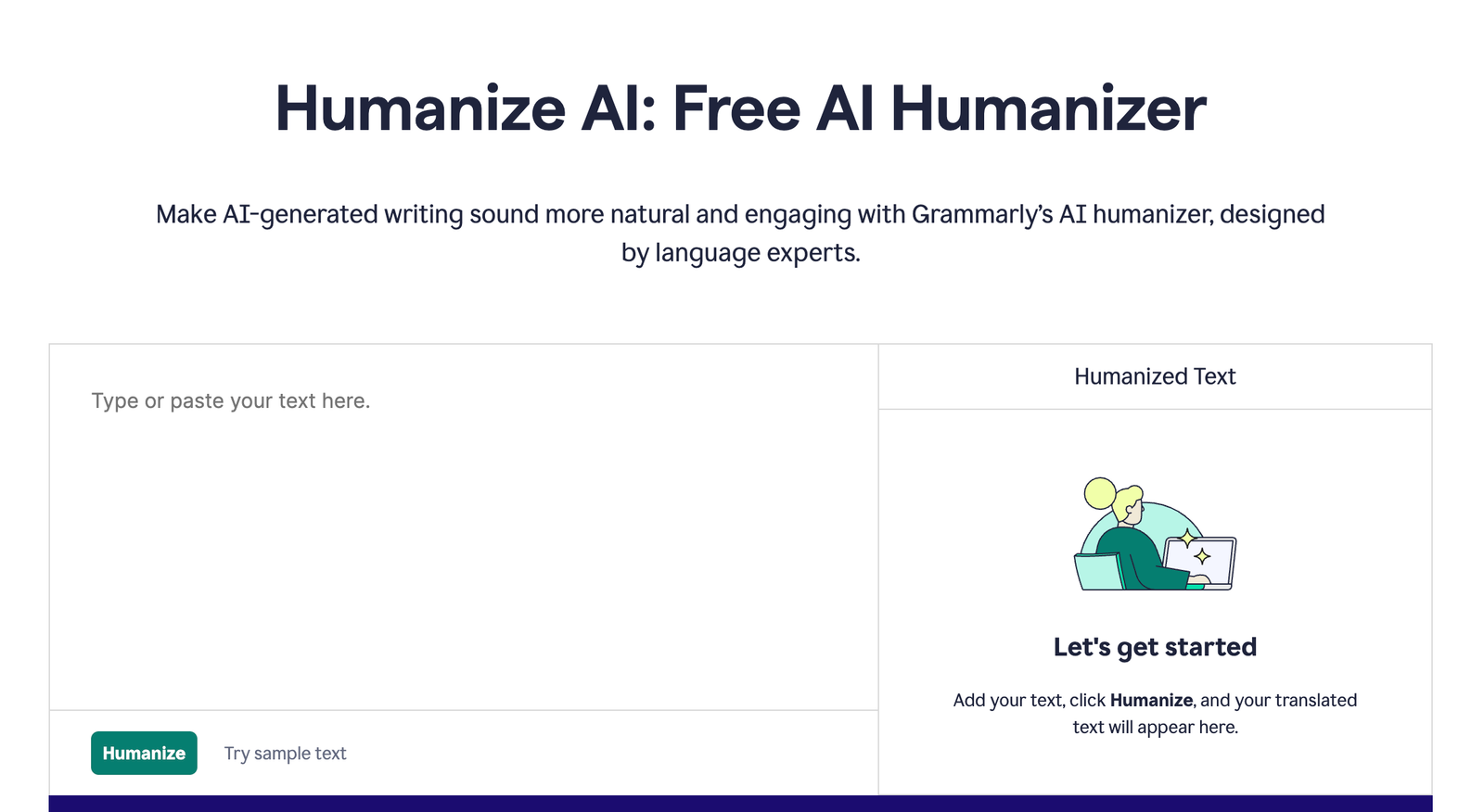
Grammarly AI Humanizer is most useful when the draft is close, but it needs smoother sentence-to-sentence movement and fewer clunky constructions. It does a solid job nudging phrasing toward clarity, which improves flow because the reader spends less time decoding the line. The tradeoff is that it leans conservative, so it may not introduce the kind of structural variation that reduces pattern detection. It also can keep certain repeated sentence rhythms intact, especially in longer sections, which means it is better as polish than as a full rewrite layer. Honestly, it works best when the content already feels human, just slightly stiff.
Best use case: Polishing near-final drafts that need cleaner rhythm and fewer rough edges.
What it does well: Improves clarity, fixes awkward phrasing, and refines sentence flow.
Where it falls short: Less effective for deep restructuring or breaking strong AI patterns.
Who should skip it: Anyone relying on heavy structural rewrites to change cadence fast.
Best AI Text Editors for Human-Like Flow #6. AISEO AI Humanizer
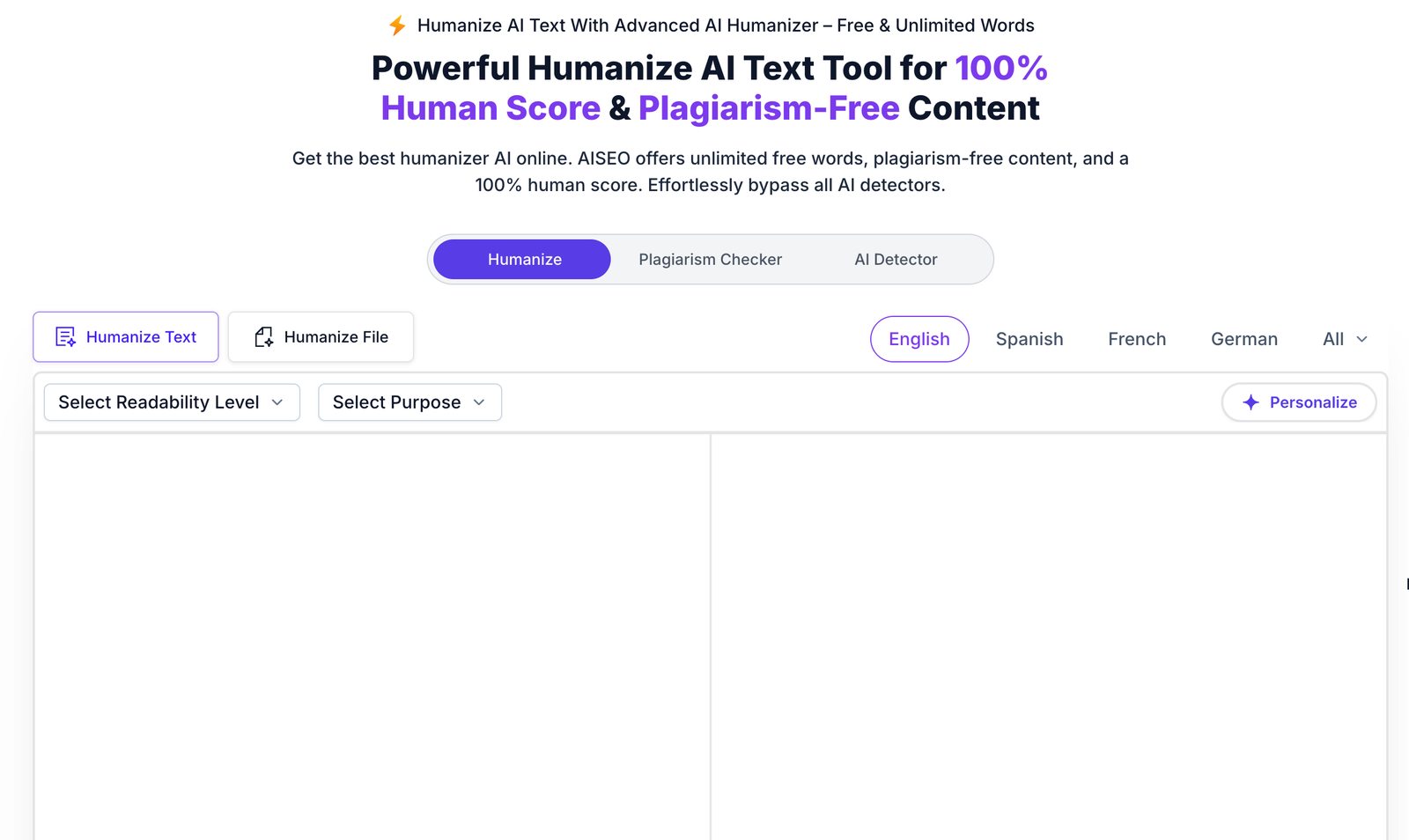
AISEO AI Humanizer is a practical pick when you need stronger rewrites that still keep the original meaning mostly intact. It tends to change sentence shapes more noticeably, which can help human-like flow because the rhythm stops sounding generated in batches. The caveat is that stronger changes raise the chance of small factual softening, especially with numbers, names, and exact qualifiers. It also can lean into familiar web-copy phrasing, which means the output might feel less personal unless you revise the voice after. Basically, it is useful for reworking structure, but it still needs a human eye for precision.
Best use case: Refreshing drafts that feel templated and need stronger variation in structure.
What it does well: Reworks sentence patterns and transitions without full meaning collapse.
Where it falls short: Can soften precise claims unless details are checked line by line.
Who should skip it: Writers handling technical copy that cannot tolerate any drift.
Best AI Text Editors for Human-Like Flow #7. HumanizeAI.pro
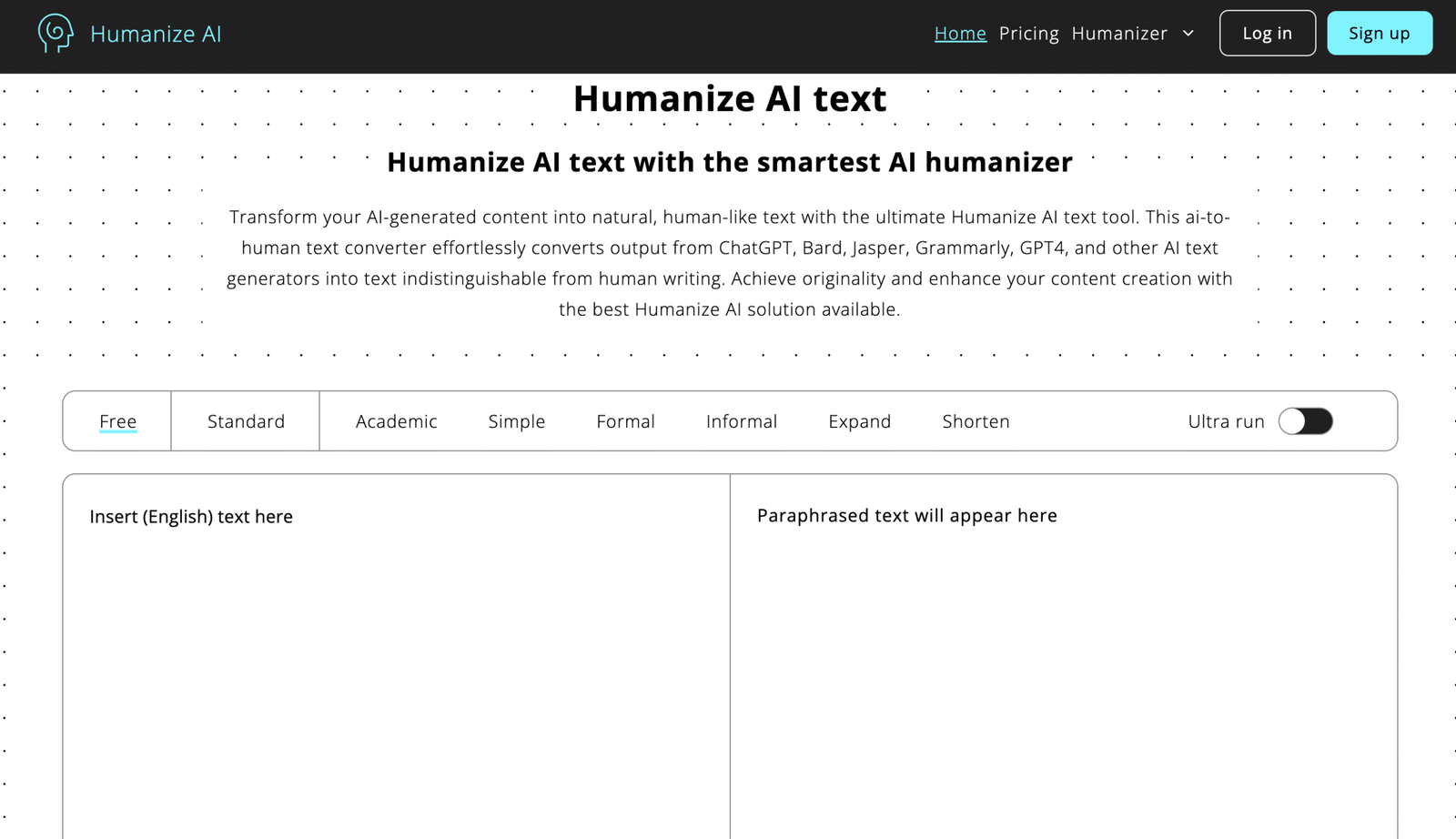
HumanizeAI.pro makes sense for straightforward drafts that need a more conversational cadence, especially when the original text sounds overly formal or evenly spaced. It tends to add small phrasing pivots that feel human, like slight re-angles and softer transitions, which can help the reader glide through. The tradeoff is that those pivots can feel generic if your brand voice is sharp or highly specific. It also performs best with concrete inputs, since vague copy can come back with vague polish that reads smooth but lacks texture. Sort of like editing a transcript, it can improve flow, but it will not invent real substance.
Best use case: Making plain drafts feel more conversational without heavy restructuring.
What it does well: Smooths transitions and introduces small human-like phrasing variation.
Where it falls short: Can sound generic if the voice needs strong personality markers.
Who should skip it: Teams that need bespoke voice rules and strict editorial constraints.
Best AI Text Editors for Human-Like Flow #8. Walter Writes AI
Walter Writes AI is useful when the priority is reducing that over-smoothed feel, especially in paragraphs with lots of evenly sized sentences. It tends to introduce more unpredictability in phrasing, which helps flow because the reader does not feel like each line was produced with the same template. The caveat is that unpredictability can veer into odd emphasis, which means a couple of sentences may feel slightly off-key until you adjust them. It also can move faster than the writer’s intent, so claims that needed careful hedging might come back a little too confident. Honestly, it is strongest as a de-patterning pass, then a careful edit for accuracy.

Best use case: Breaking uniform rhythm in AI drafts that feel too evenly polished.
What it does well: Adds variation in sentence shape and emphasis to reduce predictability.
Where it falls short: Can create occasional awkward emphasis that needs manual correction.
Who should skip it: Writers who need cautious, highly controlled language in every line.
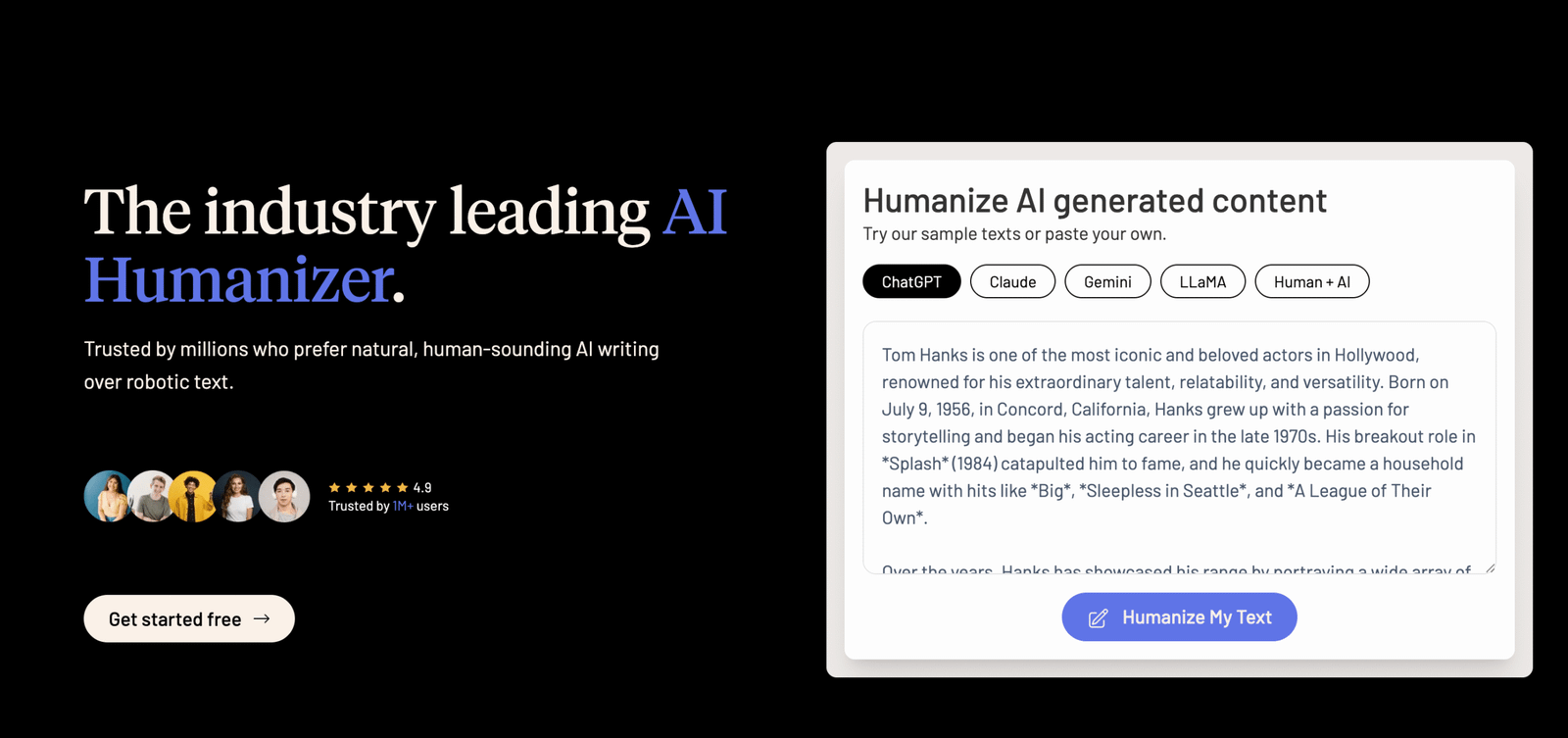
Best AI Text Editors for Human-Like Flow #9. GPTHuman AI
GPTHuman AI tends to be chosen for detection pressure, but it is more interesting when you look at how it changes flow markers like repeated cadence and predictable phrasing. It often makes small structural substitutions that keep readability intact, which is useful when you cannot afford to rewrite everything from scratch. The tradeoff is that small substitutions are not always enough for drafts that have deep repetition, so you may still see the same paragraph rhythm underneath. It also can leave a few lines feeling slightly patched rather than fully rewritten, which means it benefits from a final smoothing pass. Basically, it is a targeted tool, not a full editorial system.
Best use case: Quick de-patterning when you need minimal disruption to the original draft.
What it does well: Adjusts phrasing and structure in small, readable increments.
Where it falls short: Not strong enough for heavily repetitive long-form without extra edits.
Who should skip it: Writers wanting a deep rewrite that changes the full cadence profile.
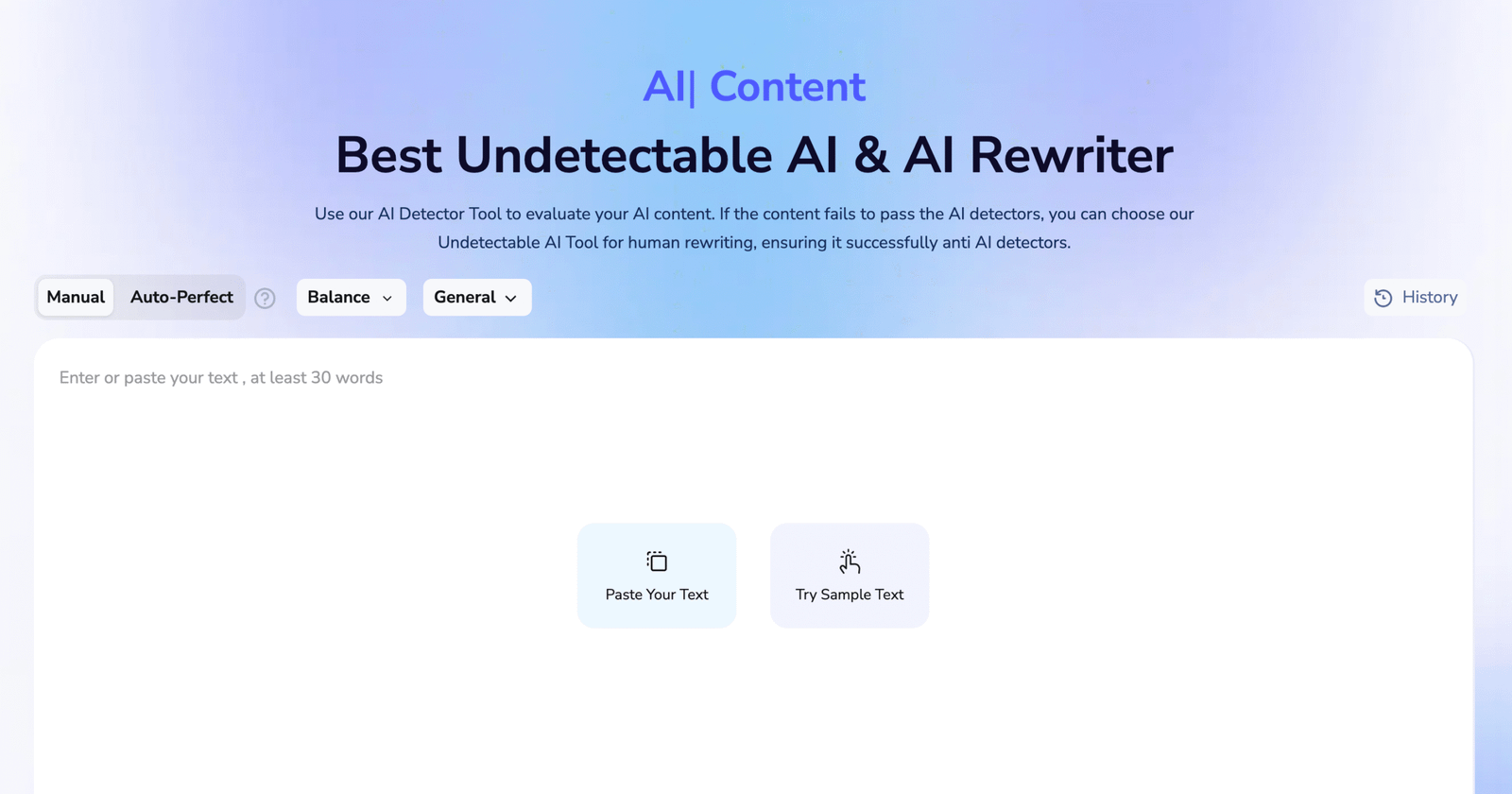
Best AI Text Editors for Human-Like Flow #10. AI Undetect
AI Undetect is a reasonable choice when you want paraphrasing plus some flow smoothing, especially for drafts that are readable but too uniform in sentence structure. It tends to swap sentence patterns and re-angle phrasing, which can create a more human cadence without fully rebuilding the paragraph. The caveat is that paraphrase-driven systems can keep the same underlying logic, so the writing may still feel slightly formulaic in longer stretches. It also can introduce small wording choices that are technically fine but stylistically off, which means brand voice can drift if you do not check line by line. The whole thing works best on smaller sections, then stitched together with a final read for continuity.
Best use case: Smoothing short sections that read too uniform without rewriting the full page.
What it does well: Adds variation in phrasing and sentence shape while staying readable.
Where it falls short: Longer drafts can keep a formulaic backbone under the new wording.
Who should skip it: Teams that need strict voice control and high precision in wording.
Tool Selection Guide for Best AI Text Editors for Human-Like Flow
Light rhythm polish
Grammarly AI Humanizer and WriteBros.ai are appropriate when the draft already reads clearly but feels slightly stiff. They smooth transitions and rebalance sentence length without dismantling structure. This approach works well for opinion pieces, essays, and near-final drafts that only need cadence refinement.
Moderate restructuring
AISEO AI Humanizer and Writesonic AI Humanizer introduce more visible changes in sentence construction. They are useful when repetition patterns are noticeable but the overall argument should remain intact. These tools improve flow by altering phrasing depth while largely preserving intent.
Heavy cadence reset
StealthWriter and Undetectable AI lean into stronger reordering and structural variation. They can reduce uniform rhythm across longer sections. Careful review is necessary to ensure that emphasis and precision remain accurate.
Full-length articles
WriteBros.ai and Walter Writes AI maintain cohesion across multi-section drafts. They are suited to long-form content that requires steady tonal balance from introduction to conclusion. This reduces abrupt voice changes in extended writing.
Section-level edits
GPTHuman AI and AISEO AI Humanizer work well when applied to contained passages rather than entire documents. They refresh rhythm and phrasing in focused segments. This supports a layered editing workflow.
Short-form cleanup
HumanizeAI.pro and Grammarly AI Humanizer are practical for shorter drafts or quick paragraph adjustments. They refine readability without introducing major structural shifts. This makes them suitable for time-sensitive edits.
Minimal meaning drift
Grammarly AI Humanizer and WriteBros.ai generally stay close to the original structure and framing. Their outputs limit unexpected tonal or factual changes. This is helpful in academic or regulated environments.
Detection-aware variation
Undetectable AI, StealthWriter, and GPTHuman AI focus on breaking predictable patterns that detection systems may identify. They introduce structural unpredictability. A final human review ensures coherence and nuance remain intact.
Fast turnaround work
HumanizeAI.pro and AI Undetect are suited for high-volume short content where speed matters. They improve flow quickly and reduce repetitive phrasing. A brief manual pass helps maintain voice consistency.
Choosing an AI Text Editor That Actually Improves Flow
Human-like flow is less about swapping words and more about adjusting rhythm, pacing, and structural variation in ways that feel unforced. The best AI text editors for human-like flow are the ones that understand that subtle distinction, even if they approach it from different angles.
Some tools lean into heavy restructuring, which can dramatically reduce detectable patterns but also introduce small shifts in meaning. Others prefer light smoothing, which protects intent but may leave deeper repetition untouched.
The real difference shows up in how a paragraph feels when read aloud. If the cadence still sounds evenly spaced and overly predictable, the editing layer probably focused on vocabulary rather than movement.
Ultimately, the choice depends on how much control you want to retain and how much reshaping the draft actually needs. Flow improves when the tool complements the writer’s judgment instead of replacing it.
Disclaimer: The tools referenced are included for editorial and informational purposes only and are selected based on observable product behavior and relevance rather than sponsorship or paid placement. Screenshots are shown solely for identification, commentary, and illustrative reference in line with standard editorial and fair use practices, and may not reflect the most current version of each product. All trademarks, logos, and interface elements remain the property of their respective owners. For update, correction, or removal requests, please refer to the Editorial Policy.