10 Leading AI Humanizers for Ecommerce Product Descriptions in 2026

2026 marks a noticeable shift in how ecommerce teams refine AI-generated catalog copy. This guide compares the leading AI humanizers for ecommerce product descriptions, examining where each tool fits, the tradeoffs behind different rewriting approaches, and which workflows better preserve brand voice, product accuracy, and readability.
Product pages have become noticeably more conversational in 2026, which means retailers are paying closer attention to how AI-generated copy actually sounds once it reaches shoppers. Many teams now rely on tools that soften repetitive wording while preserving product specifications and purchase intent, especially when reviewing the best AI humanizer tools for product descriptions.
Writing for ecommerce also extends beyond sounding natural because search systems increasingly evaluate clarity, context, and overall usefulness. That shift makes broader AI search optimization trends worth following alongside any humanization workflow.
Even the strongest drafts usually need another editing pass before publication, particularly when hundreds of listings must remain consistent across an entire catalog. Learning how to rewrite content for AI search visibility often helps balance readability with structured product information.
Every platform approaches that process differently, with some emphasizing voice consistency while others focus on reducing mechanical phrasing or simplifying revision workflows. The tools below reflect a range of approaches that suit different ecommerce teams, content volumes, and editorial preferences.
10 Leading AI Humanizers for Ecommerce Product Descriptions
| # | Brand | TL;DR |
|---|---|---|
| 1 | WriteBros.ai | Strong paragraph-level rewriting that keeps product descriptions natural while maintaining brand voice. |
| 2 | WriteHuman | Focuses on making AI-generated product copy read more like human-written text. |
| 3 | Humbot | Offers quick rewriting for ecommerce copy that benefits from smoother sentence flow. |
| 4 | BypassGPT | Designed to reduce robotic phrasing across AI-generated product listings. |
| 5 | QuillBot AI Humanizer | Combines familiar rewriting features with humanization for cleaner ecommerce descriptions. |
| 6 | UnAIMyText | Suitable for refining AI-generated listings while preserving essential product details. |
| 7 | Stealthly | Prioritizes more natural wording without requiring extensive manual editing. |
| 8 | GPTInf | Useful for adjusting AI-written product descriptions into smoother retail copy. |
| 9 | AI Humanize.io | Provides readable rewrites aimed at making ecommerce content feel less formulaic. |
| 10 | GPTHuman AI | Helps polish AI-generated descriptions with a stronger emphasis on natural language. |
10 Leading AI Humanizers for Ecommerce Product Descriptions Worth Noting
Leading AI Humanizers for Ecommerce Product Descriptions #1. WriteBros.ai
WriteBros.ai approaches humanization as a matter of voice, rhythm, and paragraph construction rather than simply replacing obvious AI vocabulary, which suits ecommerce descriptions that need to sound consistent without becoming strangely informal. Product teams can use it to reshape blocks of generated copy while keeping practical details such as dimensions, materials, compatibility notes, and care instructions in place, and that balance is basically more useful than a dramatic rewrite that changes what the item actually does. Its paragraph-level controls are particularly relevant when a listing contains several distinct jobs, including introducing the product, explaining benefits, and addressing common buyer concerns. The caveat is that descriptions still need a factual review because no humanizer can independently confirm whether a rewritten specification matches the source catalog. It can also feel more deliberate than necessary for sellers who only want to make a few words less repetitive, though that extra control becomes valuable once a store is managing many products under one recognizable brand voice.
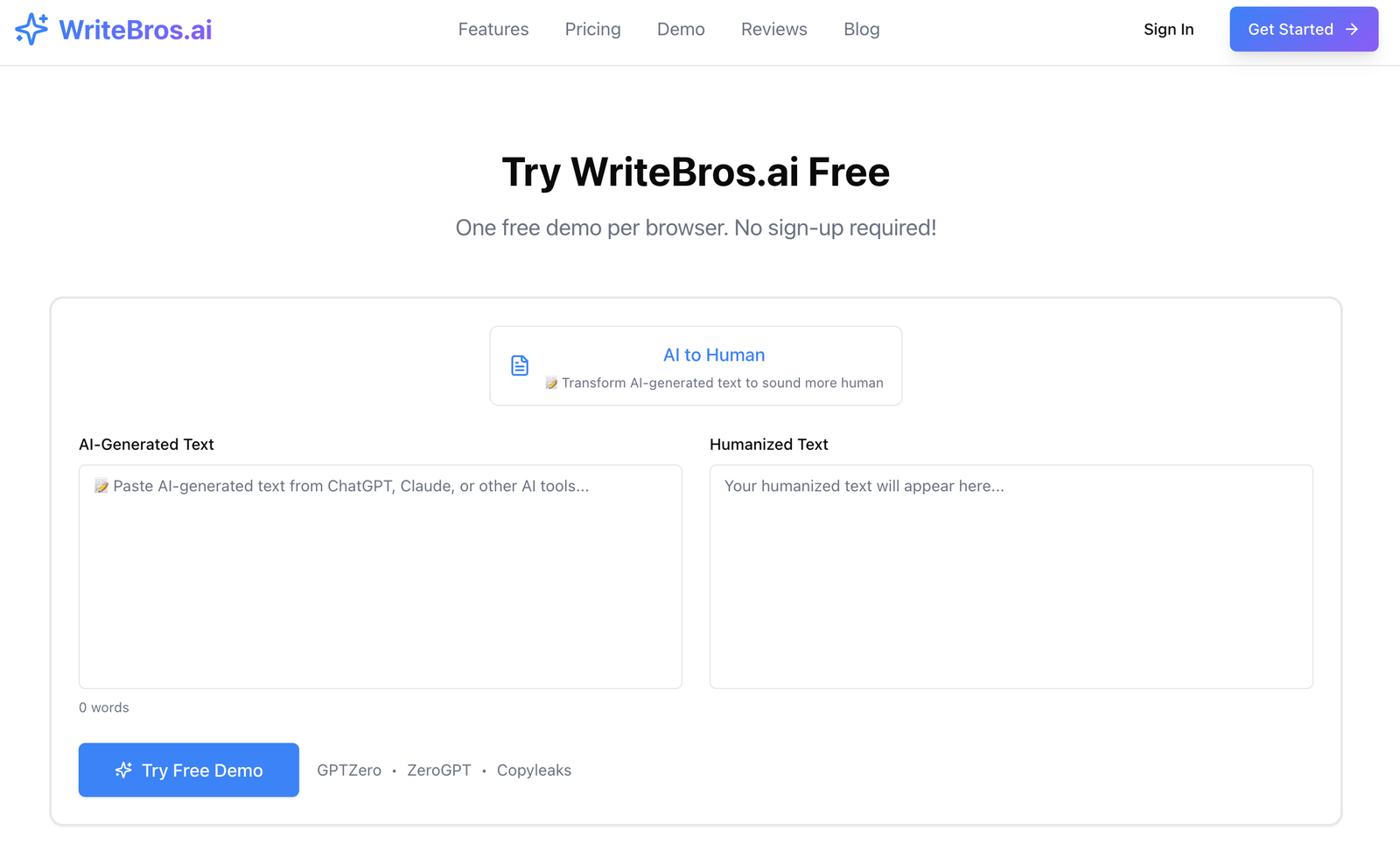
Best use case: Ecommerce teams that need to humanize substantial product descriptions while keeping tone, structure, and brand language consistent across a growing catalog.
What it does well: It gives editors meaningful control over paragraph-level rewriting, which makes it easier to preserve product facts while reducing stiff phrasing and repetitive sentence patterns.
Where it falls short: The output still requires a product-data check, and its more detailed rewriting approach may be unnecessary for extremely short listings or minor wording changes.
Who should skip it: Sellers looking only for a one-click synonym swap or those who do not have time to review rewritten claims against their original specifications.
Leading AI Humanizers for Ecommerce Product Descriptions #2. WriteHuman
WriteHuman is built around a relatively direct paste-and-rewrite process, which makes it practical for merchants who receive usable AI drafts but dislike their flat pacing or overly standardized phrasing. It supports multiple languages and offers variations on some plans, so a retailer can compare different versions rather than accepting the first result as final. That can help with product descriptions because a technically accurate draft may still need a warmer opening, a cleaner benefit statement, or a less predictable closing line. The tradeoff is that its broader emphasis on humanizing and detection scores does not automatically account for category conventions, marketplace rules, or a brand’s specific merchandising strategy. Output limits on lower plans may also make large catalog work less comfortable, especially when descriptions need to be processed repeatedly after legal, SEO, or product-team revisions.
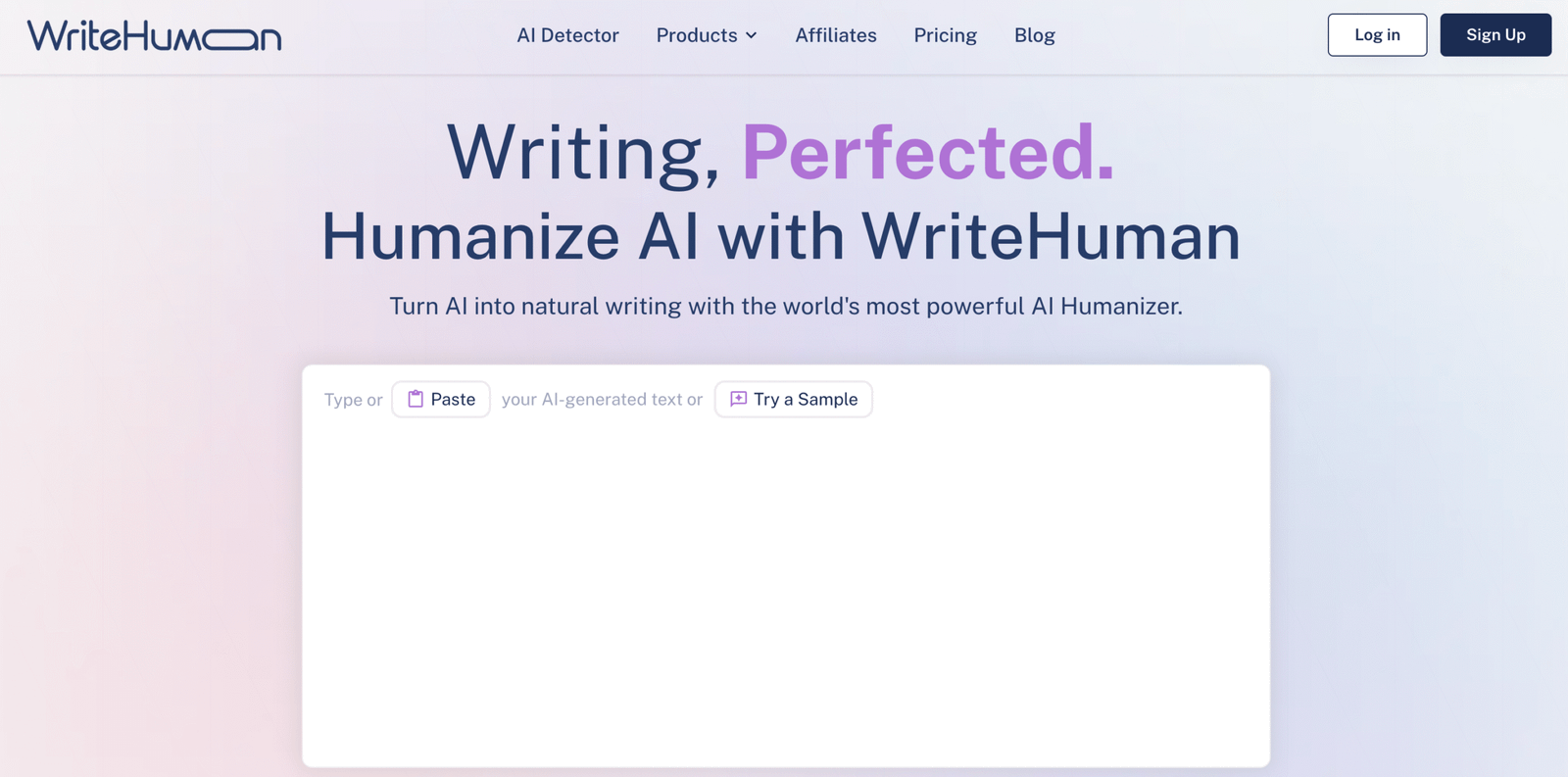
Best use case: Merchants who want a straightforward humanization workflow and prefer comparing several alternative rewrites before choosing a final product description.
What it does well: It smooths obvious AI patterns through an accessible interface and supports multilingual work, which is useful for stores publishing across several regional markets.
Where it falls short: It does not replace category-specific editing, and lower-tier request or word limits can become restrictive when a catalog requires repeated revision.
Who should skip it: Large ecommerce operations that need deep product-data governance, structured bulk workflows, or precise control over how individual paragraphs are transformed.
Leading AI Humanizers for Ecommerce Product Descriptions #3. Humbot
Humbot now sits within a wider collection of study and writing tools, though its humanizer remains useful for product copy that needs a quick change in cadence without a complicated setup. The whole thing is fairly approachable for small sellers who draft descriptions elsewhere and simply want an additional pass before uploading them to a storefront. Its surrounding grammar, rewriting, summarizing, translation, and checking tools may also reduce tab switching when one description needs several kinds of cleanup. Still, an all-in-one toolkit can feel less focused than a platform designed around brand-led commercial rewriting, particularly when every listing must follow a detailed voice guide. There is also a risk that rapid humanization smooths away useful distinctions between products, so merchants should compare the final version against the original rather than assuming that more natural language is automatically more persuasive.
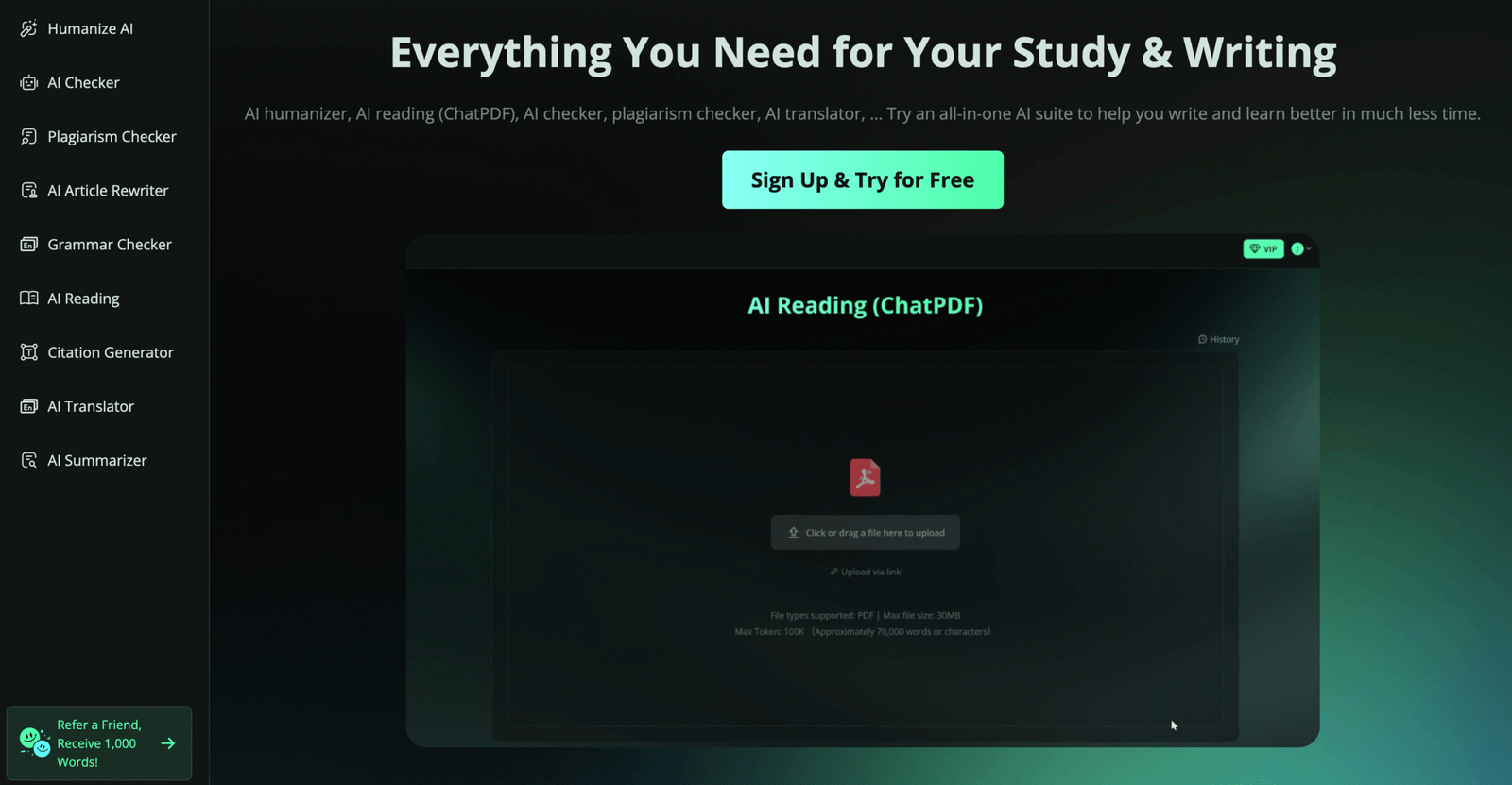
Best use case: Small sellers and generalist content teams that want humanization, grammar checking, translation, and other basic writing tools in one accessible workspace.
What it does well: It makes quick copy cleanup relatively simple and gives users several adjacent tools for polishing descriptions without building a complicated workflow.
Where it falls short: Its broad toolkit is not the same as deep ecommerce specialization, and rewritten descriptions may lose small distinctions unless the editor checks them carefully.
Who should skip it: Brands with tightly documented voices, regulated product claims, or complex approval processes that require more controlled and traceable editing.
Leading AI Humanizers for Ecommerce Product Descriptions #4. BypassGPT
BypassGPT places considerable emphasis on changing AI-generated text so it appears more human to detection systems, but ecommerce teams may find its broader rewriting function more relevant than the detector framing itself. A product description that repeats the same sentence length, benefit structure, and transition pattern can feel mass-produced even when every factual detail is correct, and the tool is designed to disturb those patterns. It also presents its output as suitable for SEO-oriented content, which may appeal to sellers working with keyword-informed category and product pages. The limitation is that detector-focused rewriting can pull attention away from the buyer’s actual needs, including clarity, specificity, scanning speed, and confidence in the product information. Its claims about detection performance should also be treated cautiously because detector behavior changes, while an awkward or inaccurate sentence remains a visible problem regardless of its score.
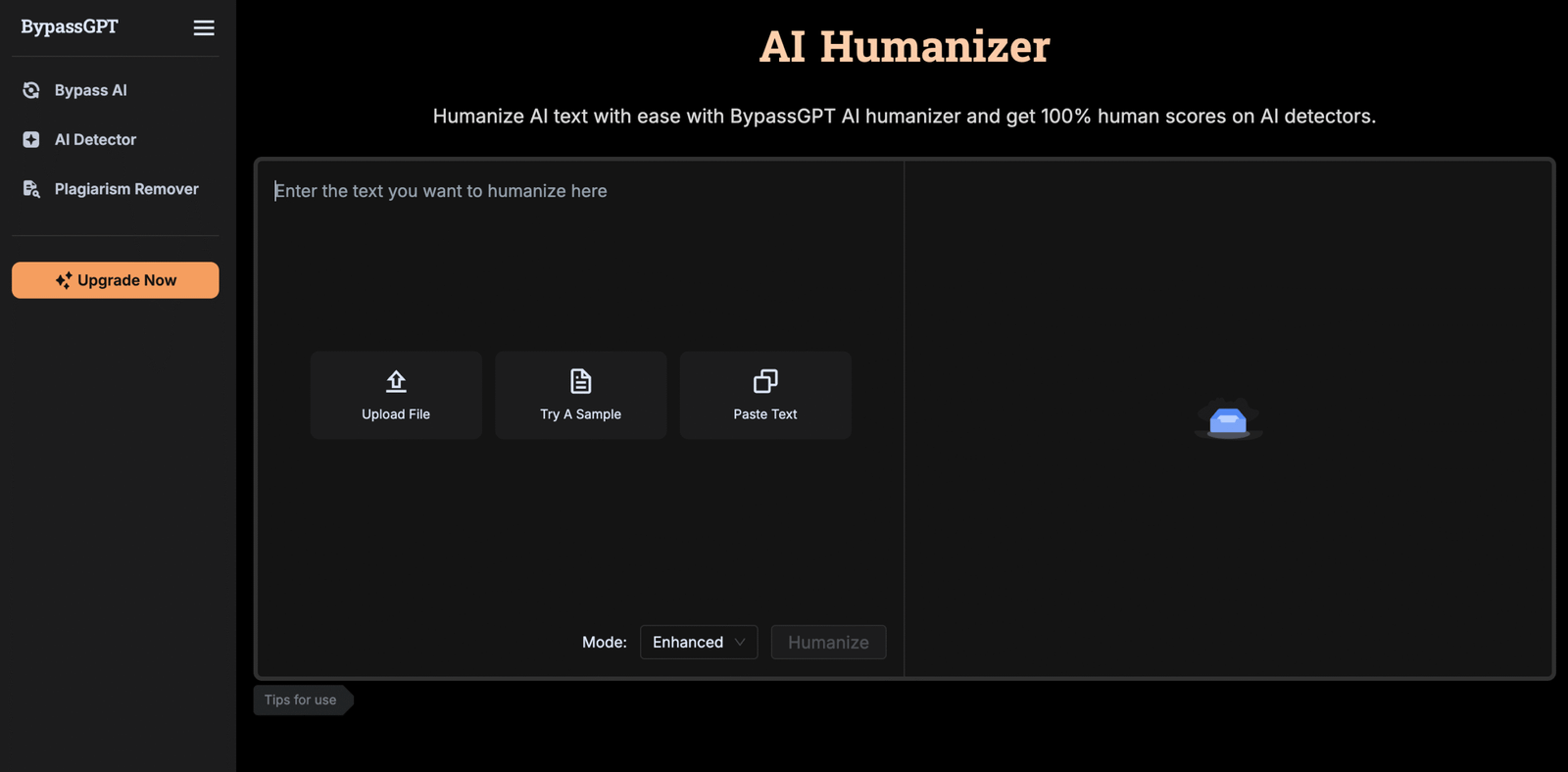
Best use case: Sellers who mainly need to break up repetitive AI sentence patterns in product descriptions before completing a separate factual and merchandising review.
What it does well: It can introduce more structural variation into formulaic drafts and offers a quick route from visibly automated copy to something less mechanically patterned.
Where it falls short: Its detector-led positioning does not guarantee stronger product communication, and aggressive rewriting may weaken clarity or alter important commercial details.
Who should skip it: Teams that care more about controlled brand voice, compliance, and conversion-focused editing than achieving a particular result from an AI detector.
Leading AI Humanizers for Ecommerce Product Descriptions #5. QuillBot AI Humanizer
QuillBot is familiar to many writers because humanization sits beside established paraphrasing, grammar, fluency, and tone tools, which makes it easy to slot into an existing editing routine. For ecommerce descriptions, that range is useful when the problem is not purely robotic language but a mixture of long sentences, uneven tone, repeated wording, and small grammatical distractions. Editors can basically move between broad humanization and more restrained sentence-level adjustments instead of forcing every draft through the same transformation. The compromise is that a general writing assistant may not recognize when an unusual phrase is an intentional product term, a protected brand expression, or a technical specification that should remain untouched. It can also encourage too much polishing when a direct, slightly plain description would serve shoppers better, so the strongest results usually come from selective use rather than rewriting every line.
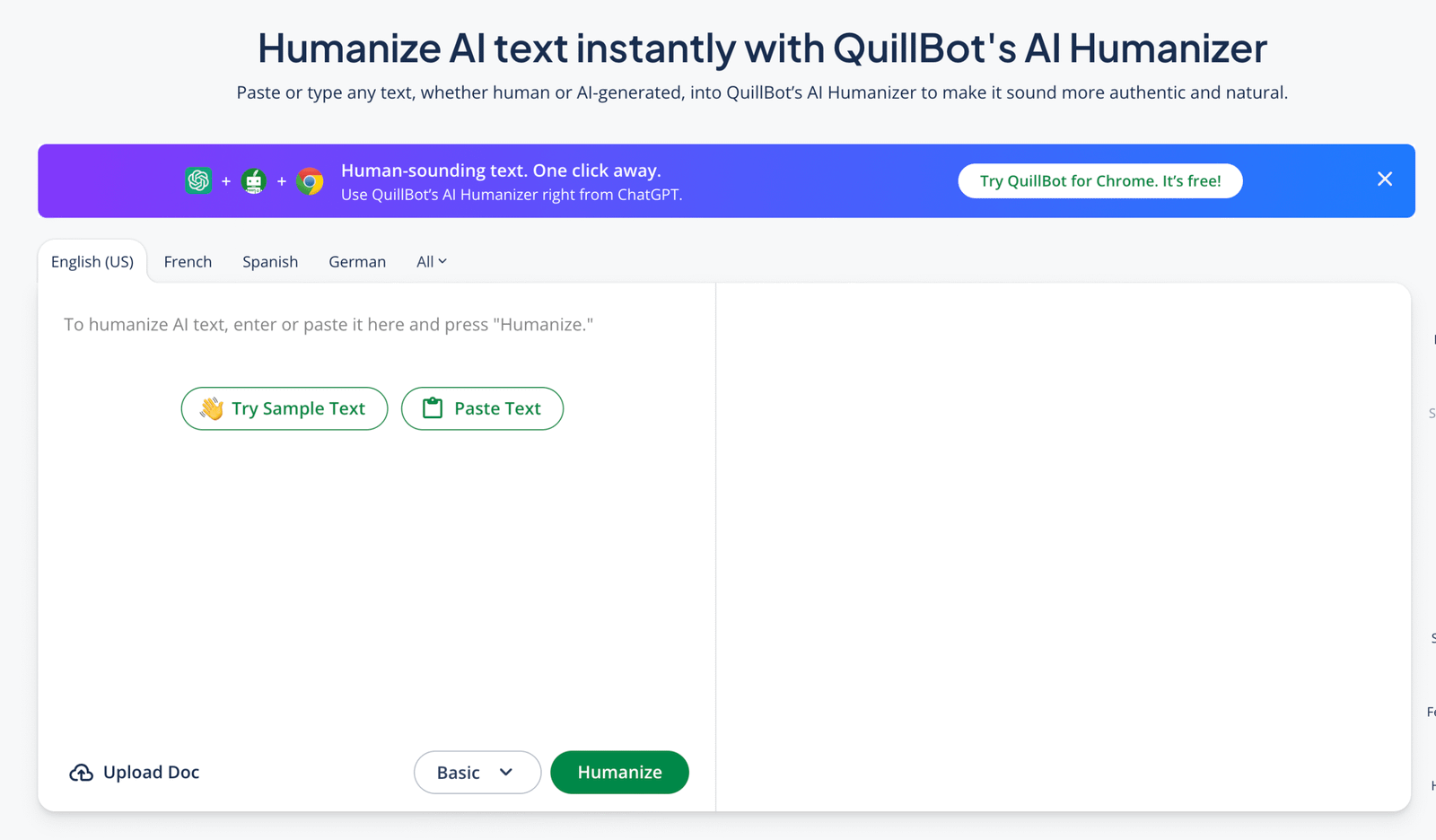
Best use case: Editors who already use QuillBot and want humanization, paraphrasing, grammar correction, tone analysis, and fluency adjustments inside one familiar workflow.
What it does well: It supports both broad rewriting and lighter sentence-level intervention, which helps when only certain parts of a product description feel mechanical.
Where it falls short: It may reinterpret technical or branded language as awkward prose, and its general-purpose suggestions are not always aligned with ecommerce merchandising priorities.
Who should skip it: Catalog teams that need strict terminology locks, repeatable brand-voice rules, or automated checks against structured product data.
Leading AI Humanizers for Ecommerce Product Descriptions #6. UnAIMyText
UnAIMyText offers a low-friction way to reshape generated text into wording that sounds more like something a person would naturally say, which can be enough for straightforward product listings. Its free, no-signup approach makes it practical for occasional sellers who do not want another subscription or account simply to revise a handful of descriptions. The service also states that it aims to preserve meaning, an important consideration when a product page contains details that cannot be casually improvised. Even so, lightweight access comes with fewer obvious controls for maintaining a detailed brand voice across hundreds of items, and that becomes noticeable once several people are editing the same catalog. The output may also lean toward general paraphrasing rather than deeper commercial restructuring, so it is less suited to descriptions that need a sharper value hierarchy or a more considered sequence of buyer information.
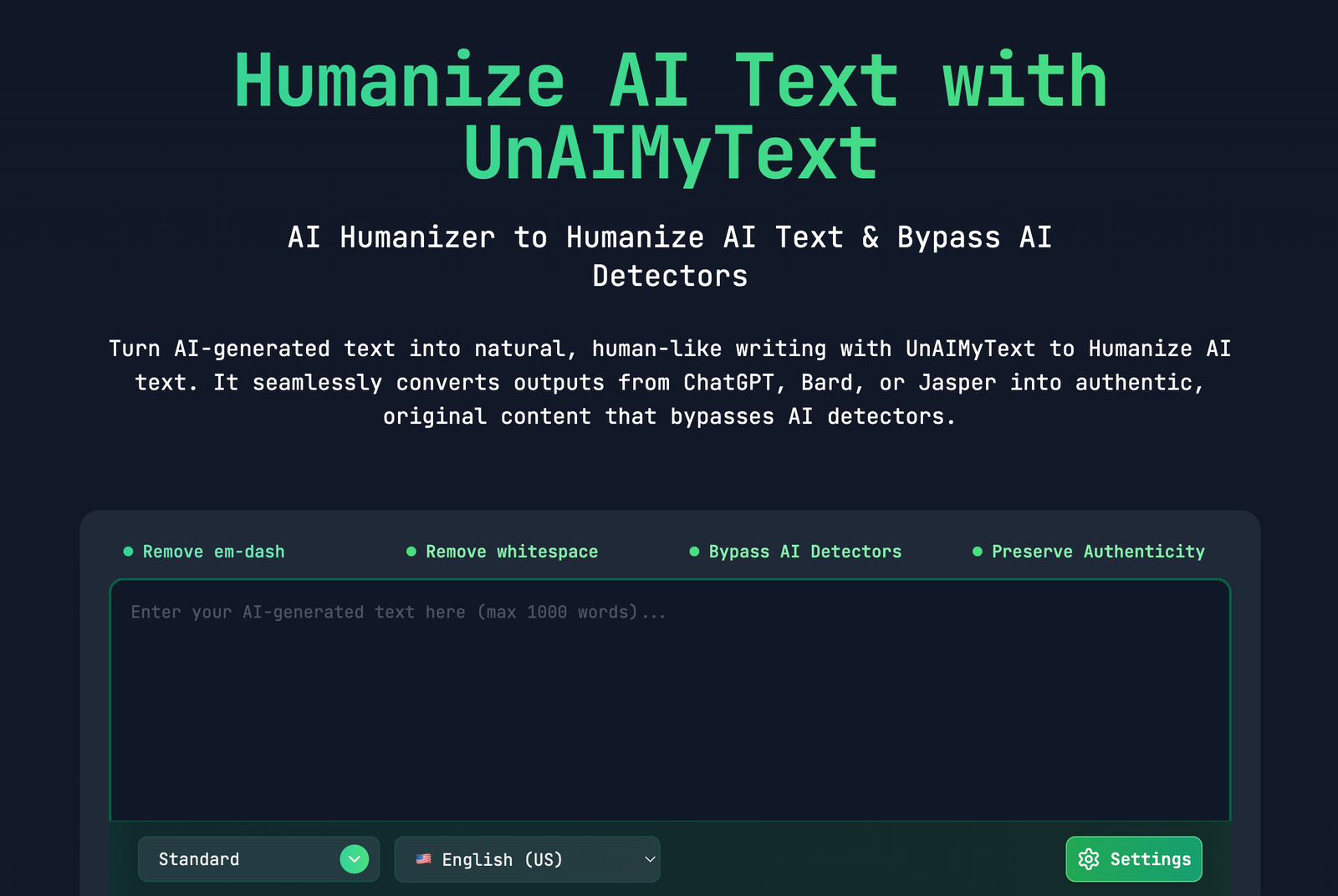
Best use case: Occasional sellers who need a free and uncomplicated way to make a small number of AI-generated product descriptions sound less stiff.
What it does well: It removes account friction, keeps the workflow simple, and can provide a useful final wording pass without introducing an elaborate editing system.
Where it falls short: It offers limited visible support for large-scale brand governance, and its rewrites may not substantially improve the commercial structure of weaker descriptions.
Who should skip it: Ecommerce teams that require bulk catalog consistency, collaborative controls, advanced tone settings, or carefully managed product-message hierarchies.
Leading AI Humanizers for Ecommerce Product Descriptions #7. Stealthly
Stealthly is positioned around rewriting AI-produced text into language that mirrors human writing patterns, which can help when catalog copy feels suspiciously uniform from one product to the next. In practical ecommerce work, its value lies in varying rhythm, phrasing, and sentence construction so descriptions do not read as though they came from the same template with a few nouns exchanged. This may be particularly useful for collections in which products share many features but still need individual identities. The caveat is that variation for its own sake can become counterproductive because repeated terminology is sometimes necessary for navigation, accessibility, compliance, and customer comparison. Its strong focus on detector outcomes also means merchants need to bring their own commercial judgment, since passing a text classifier does not show whether a shopper can quickly understand the difference between two similar products.
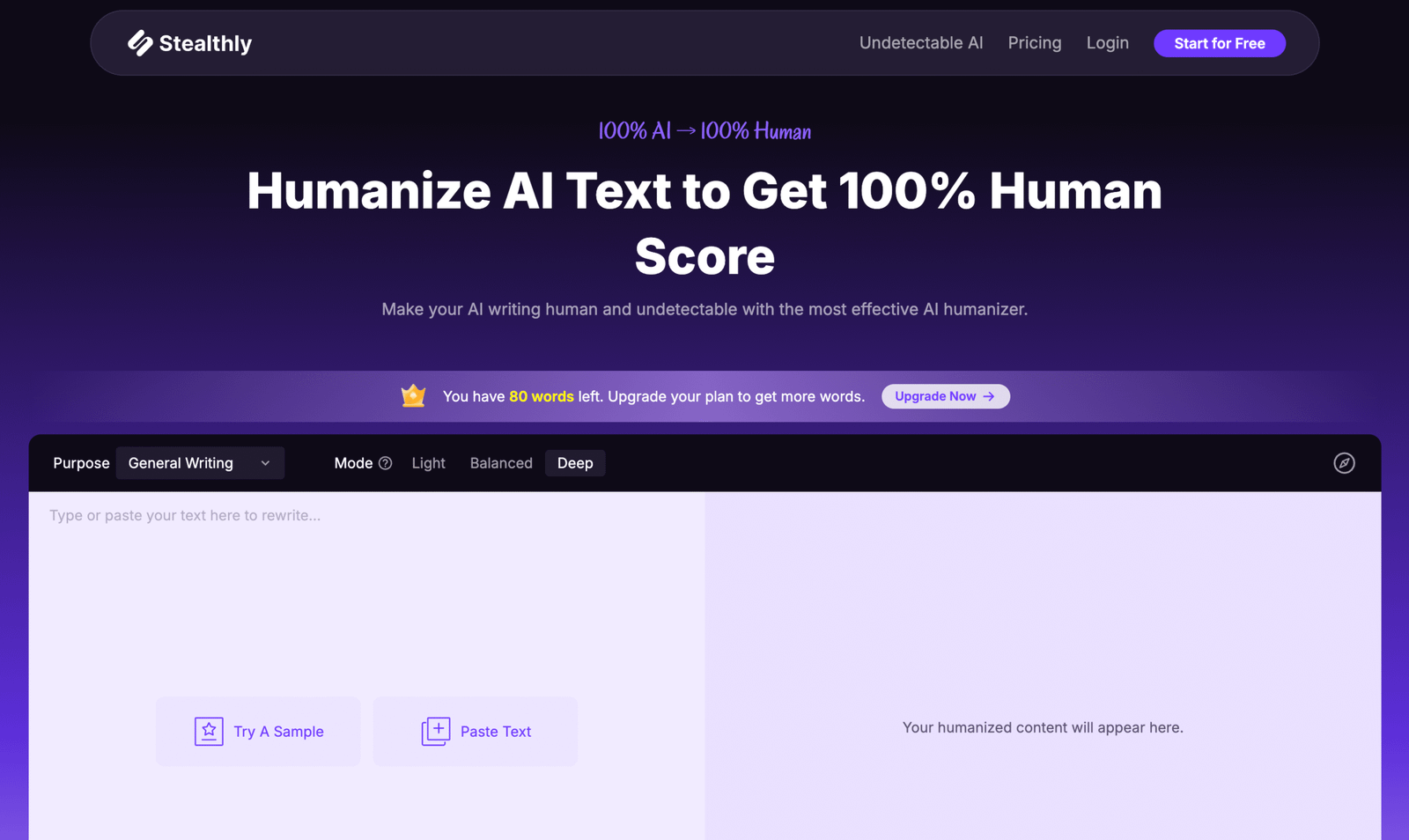
Best use case: Catalogs containing many similar products whose AI-generated descriptions repeat the same rhythms, transitions, and sentence structures too visibly.
What it does well: It introduces linguistic variation that can make closely related listings feel less templated while retaining the general subject of the original copy.
Where it falls short: Excess variation can undermine terminology consistency, and detector-oriented results say little about whether the description supports comparison or purchase decisions.
Who should skip it: Stores where standardized language is essential for regulated claims, accessibility, technical clarity, or consistent comparison across product variants.
Leading AI Humanizers for Ecommerce Product Descriptions #8. GPTInf
GPTInf combines an AI humanizer with a detector, essay writer, and plagiarism checker, though ecommerce users will probably care most about the speed and accessibility of its rewriting workflow. The free tier does not require registration, which makes it easy to test on a few descriptions before deciding whether it fits a regular publishing process. It can be useful for taking the obvious edge off generated copy, especially when the draft is already accurate and only needs more varied syntax or a less polished-by-algorithm feel. However, its wider toolkit has a strong general-writing orientation rather than a distinct focus on retail catalogs, so it does not inherently know which product attributes deserve prominence. It may also produce a rewrite that sounds different without becoming more useful, and that distinction matters because shoppers usually need precise answers before they need stylistic originality.
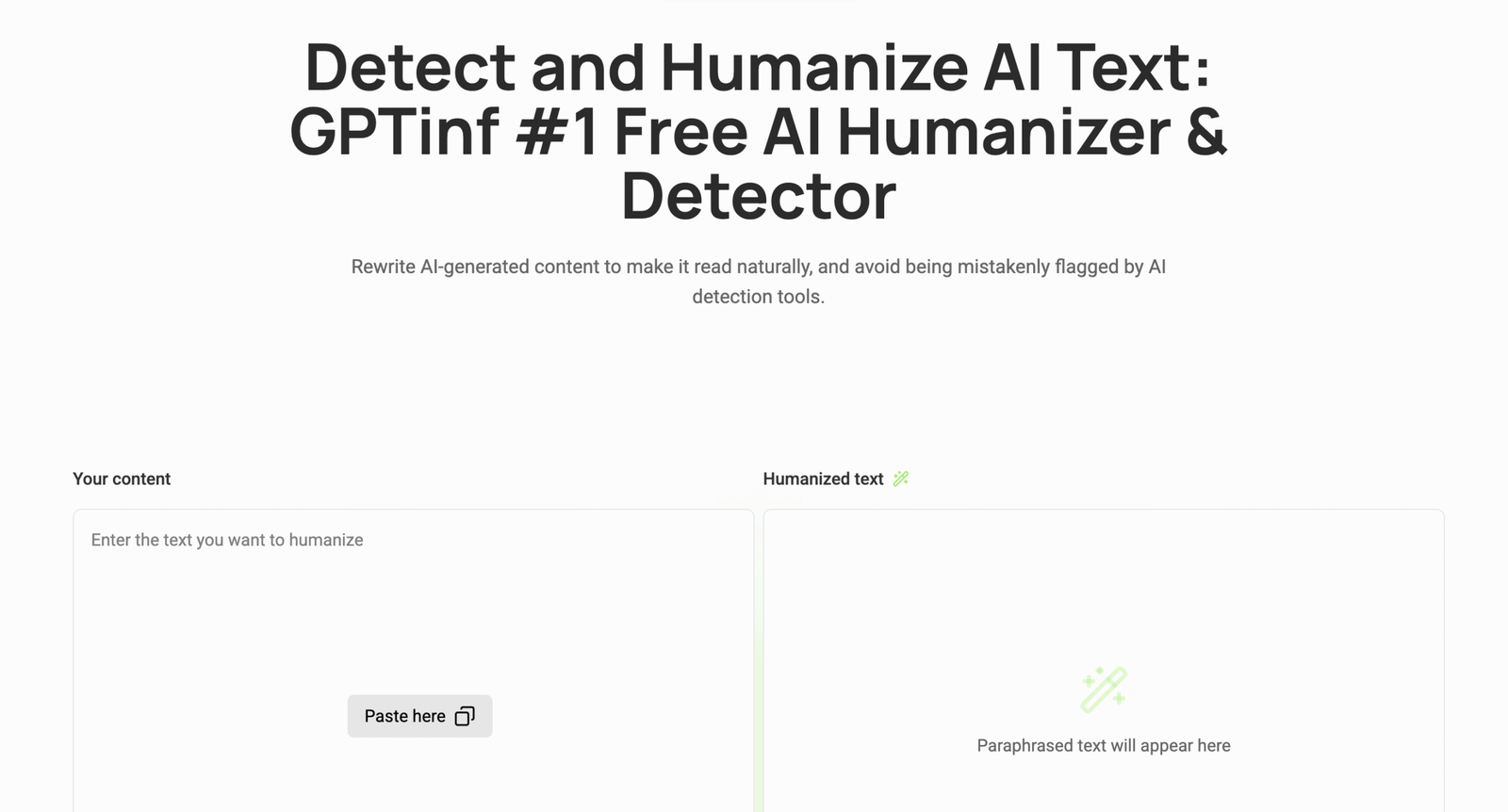
Best use case: Users who want to test humanization quickly, without registration, on product descriptions that are already factually sound and reasonably well structured.
What it does well: It provides an accessible toolkit and can vary predictable wording or syntax without requiring a substantial initial commitment.
Where it falls short: Its general-writing focus does not automatically prioritize product attributes, buyer objections, or ecommerce information hierarchy.
Who should skip it: Retail teams expecting the tool to repair weak positioning, missing specifications, poor benefit order, or other strategic problems in the original description.
Leading AI Humanizers for Ecommerce Product Descriptions #9. AI Humanize.io
AI Humanize.io provides a simple workspace for pasting or uploading generated material and returning a more natural-sounding version, which keeps the process understandable for users who do not need extensive controls. For short and medium-length product descriptions, that simplicity can be helpful because the editor can judge the new version against the source without navigating a larger content platform. It aims to preserve the original message while changing its linguistic patterns, a reasonable fit for listings whose core facts and order are already settled. The problem is that claims about perfect authenticity or universal detector bypass should not be confused with an independent measure of writing quality, particularly when detection tools themselves can disagree. It also offers less visible guidance for maintaining the same voice across categories, so descriptions processed individually may sound natural on their own but slightly disconnected when viewed across the wider storefront.
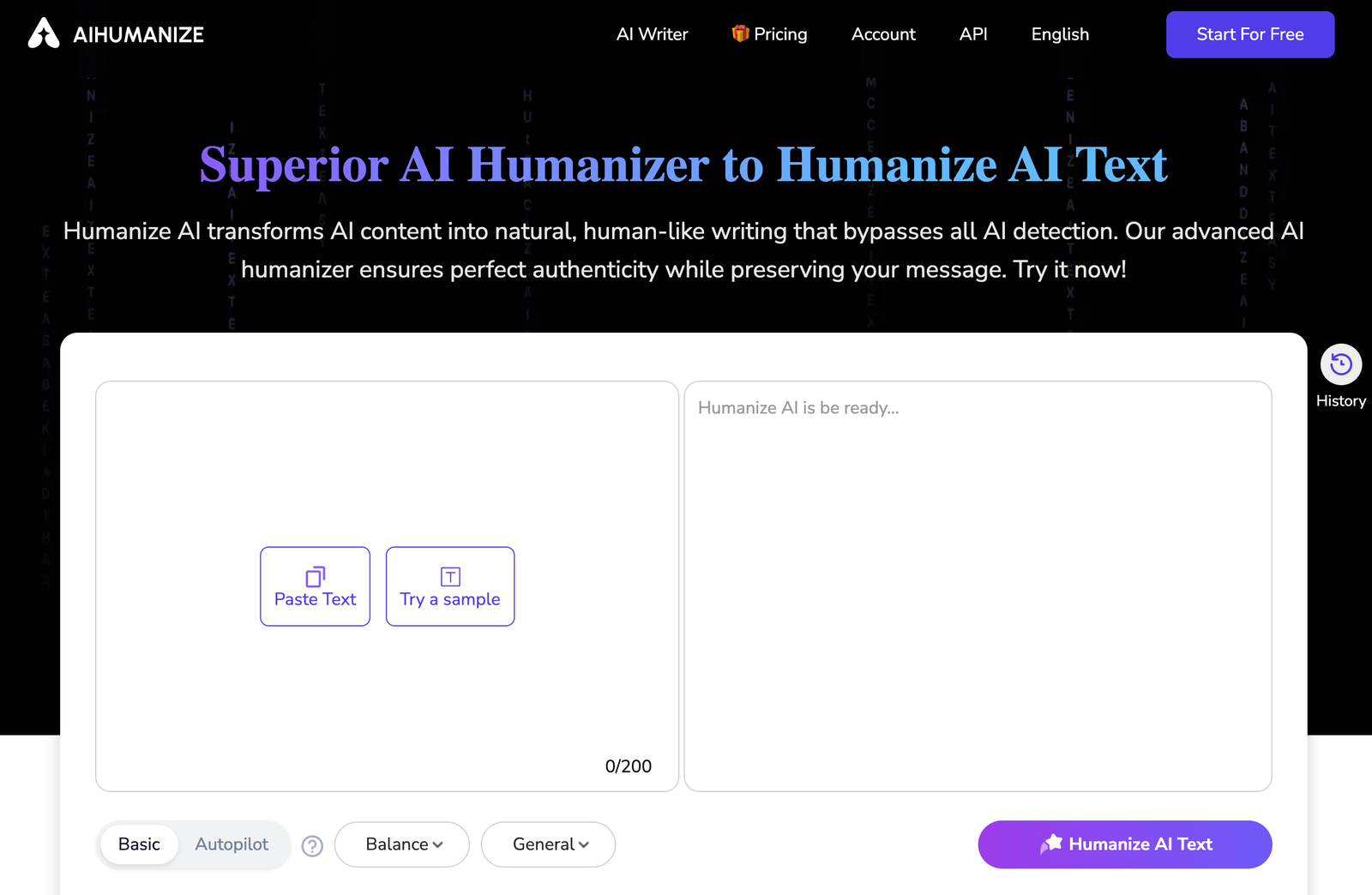
Best use case: Individual sellers who want a simple upload-or-paste workflow for humanizing descriptions whose facts, structure, and product positioning are already established.
What it does well: It keeps the rewriting process easy to understand and can reduce formulaic language without requiring users to learn a complex editing environment.
Where it falls short: Detector claims do not establish commercial quality, and separately rewritten listings can drift away from a consistent catalog-wide voice.
Who should skip it: Multi-editor ecommerce teams that need centralized voice rules, detailed approval stages, terminology controls, or systematic catalog governance.
Leading AI Humanizers for Ecommerce Product Descriptions #10. GPTHuman AI
GPTHuman AI is designed to turn machine-generated drafts into more natural writing across multiple languages, which may appeal to ecommerce sellers adapting descriptions for several markets. Its emphasis on meaning preservation is useful in principle because product copy cannot afford casual changes to sizes, materials, ingredients, warranties, or compatibility information. Writers and content creators are among its intended audiences, so the interface is reasonably aligned with users who want to revise existing material rather than build a full catalog from structured data. Still, much of its positioning revolves around avoiding detection, and that does not address the deeper work of deciding which product detail should lead or how much information a shopper needs before making a choice. Claims of extremely high bypass performance also deserve caution, while multilingual output needs an additional native or market-aware review because natural phrasing in one region may sound odd, vague, or overly literal in another.
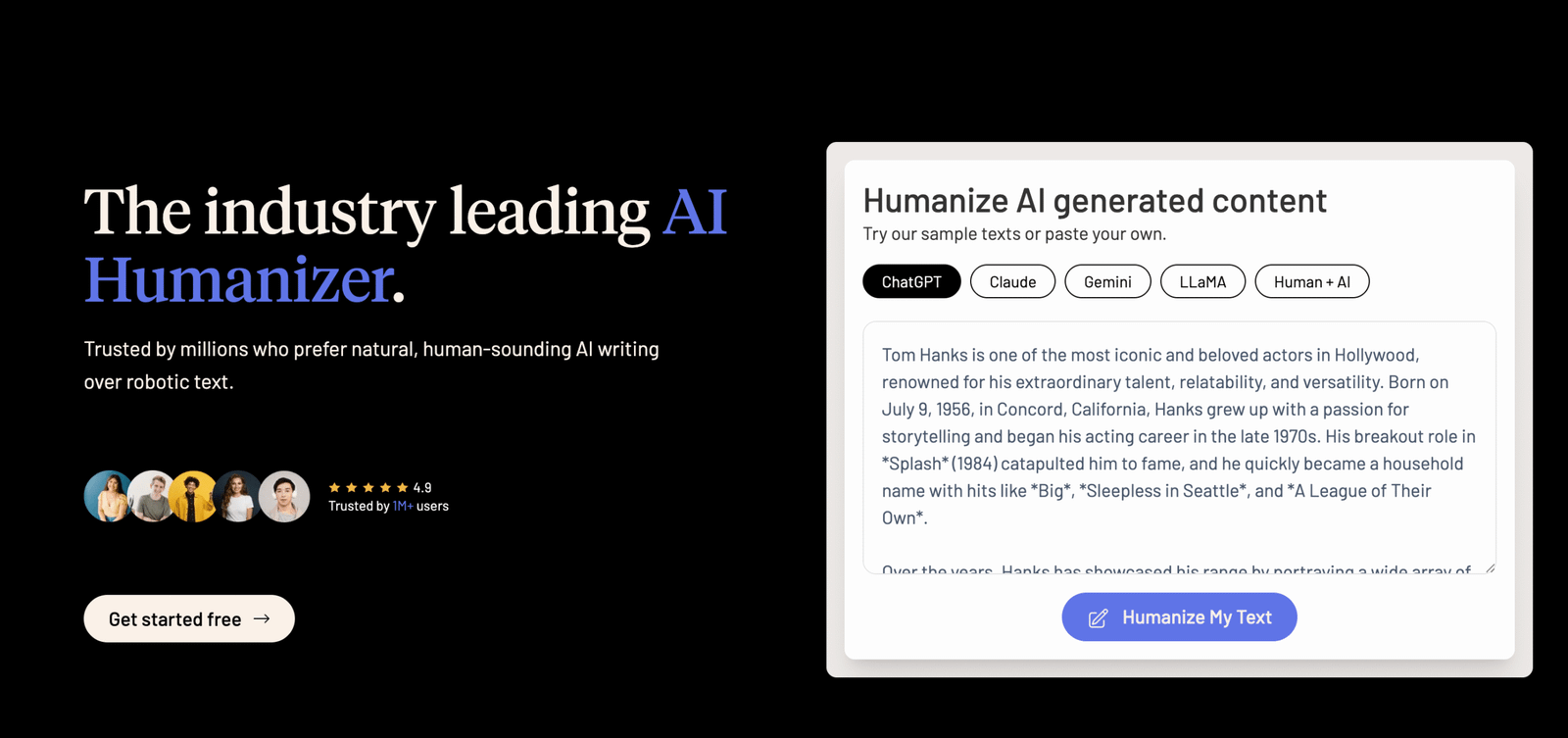
Best use case: Sellers adapting already complete product descriptions across multiple languages and looking for a final pass that reduces visibly machine-shaped wording.
What it does well: It supports multilingual humanization and aims to preserve the original message, which can help when core product information must remain stable.
Where it falls short: Its detector-focused positioning does not solve weak merchandising decisions, and translated or humanized output still needs a market-aware language review.
Who should skip it: Teams seeking structured localization management, native-market validation, compliance checks, or strategic product-description development from incomplete source data.
Choosing Among Leading AI Humanizers for Ecommerce Product Descriptions
The strongest option depends less on which platform rewrites most aggressively and more on how carefully it preserves product facts, brand language, and the hierarchy of information shoppers actually need. A smoother sentence is useful, but it does not compensate for vague specifications, flattened product differences, or benefits that appear in the wrong order.
WriteBros.ai suits teams that want more control over paragraph structure and voice consistency, while tools such as QuillBot and WriteHuman fit more familiar, general-purpose editing routines. Lighter platforms can still work well for occasional descriptions, though they sort of become harder to manage once several editors and hundreds of listings are involved.
Detector-focused tools may reduce obvious AI patterns, but that metric should remain secondary to clarity, accuracy, and commercial usefulness. Product copy can sound less automated and still fail if it introduces uncertainty, removes necessary repetition, or makes closely related items harder to compare.
A sensible workflow keeps the original product data beside every rewritten version and treats humanization as one editorial pass rather than the whole thing. The better result is usually the description that feels natural without drawing attention to its naturalness, which is exactly what good ecommerce copy has always needed to do.
Disclaimer: The tools referenced are included for editorial and informational purposes only and are selected based on observable product behavior and relevance rather than sponsorship or paid placement. Screenshots are shown solely for identification, commentary, and illustrative reference in line with standard editorial and fair use practices, and may not reflect the most current version of each product. All trademarks, logos, and interface elements remain the property of their respective owners. For update, correction, or removal requests, please refer to the Editorial Policy.