10 Top AI Writing Editors for Human-Like Content in 2026

Top AI Writing Editors for Human-Like Content, viewed through 2026’s sameness problem, compares ten tools by flow, tone control, meaning retention, and practical limits, showing where each editor fits when machine-heavy drafts need more human texture.
Human-like editing has become more specific than basic grammar cleanup, because AI drafts often need rhythm, restraint, and sentence-level judgment before they feel publishable. A useful starting point is understanding human-like flow, which is basically where many editing tools separate themselves from ordinary paraphrasers.
The better tools in this category usually work by changing pacing, reducing repetition, and softening the polished sameness that can make AI text feel too neat. That matters for teams watching tone preservation, because a cleaner draft is not always a more convincing one.
Some editors are stronger for quick rewrites, while others are better when the original meaning needs to stay close to the source. This is exactly why guidance on how to rewrite AI text without losing meaning sits close to the whole thing.
The tools below are useful to compare because they approach human-like content from slightly different angles, including rewriting, detection-aware editing, grammar refinement, and readability repair. Honestly, the right choice depends less on which editor sounds the most advanced and more on whether it helps the final draft sound intentional without becoming generic.
10 AI Writing Editors for Human-Like Content
| # | Brand | TL;DR |
|---|---|---|
| 1 | WriteBros.ai | Best fit for writers who want AI drafts reshaped with more natural pacing and voice control. |
| 2 | StealthWriter | Useful for rewriting AI-heavy passages into smoother, less mechanical prose. |
| 3 | Undetectable AI | A broad option for users who want detection-aware rewriting with simple controls. |
| 4 | Writesonic AI Humanizer | Works well for quick content smoothing inside a larger AI writing workflow. |
| 5 | Grammarly AI Humanizer | A practical choice for polishing tone, clarity, and readability in everyday drafts. |
| 6 | AISEO AI Humanizer | Helpful for SEO-oriented rewrites that need to sound less rigid and templated. |
| 7 | HumanizeAI.pro | Best suited for fast rewrites when the draft needs a lighter, more conversational surface. |
| 8 | Walter Writes AI | A focused editor for users who want AI-generated text made more natural and readable. |
| 9 | GPTHuman AI | A simple option for turning stiff AI passages into more casual, human-facing copy. |
| 10 | AI Undetect | A straightforward pick for quick humanization when speed matters more than deep editing control. |
10 AI Writing Editors for Human-Like Content Worth Noting
AI Writing Editors for Human-Like Content #1. WriteBros.ai
WriteBros.ai is strongest when the draft already has a point, but still carries the flattened rhythm that makes AI writing easy to recognize. It works best as an editorial pass rather than a quick synonym swap, because the value is in reshaping cadence, sentence pressure, and the way an argument moves from one thought to the next. That makes it useful for essays, thought-leadership drafts, landing page sections, and content that needs to sound written rather than assembled. The tradeoff is that writers still need to know what they want the piece to say, because no humanizer can fix a weak argument by only changing surface texture. It also suits users who care about preserving meaning, although that kind of restraint can feel slower than tools built for aggressive rewriting. Honestly, its better fit is the writer who wants control over the finished voice, not just text that looks different from the input.
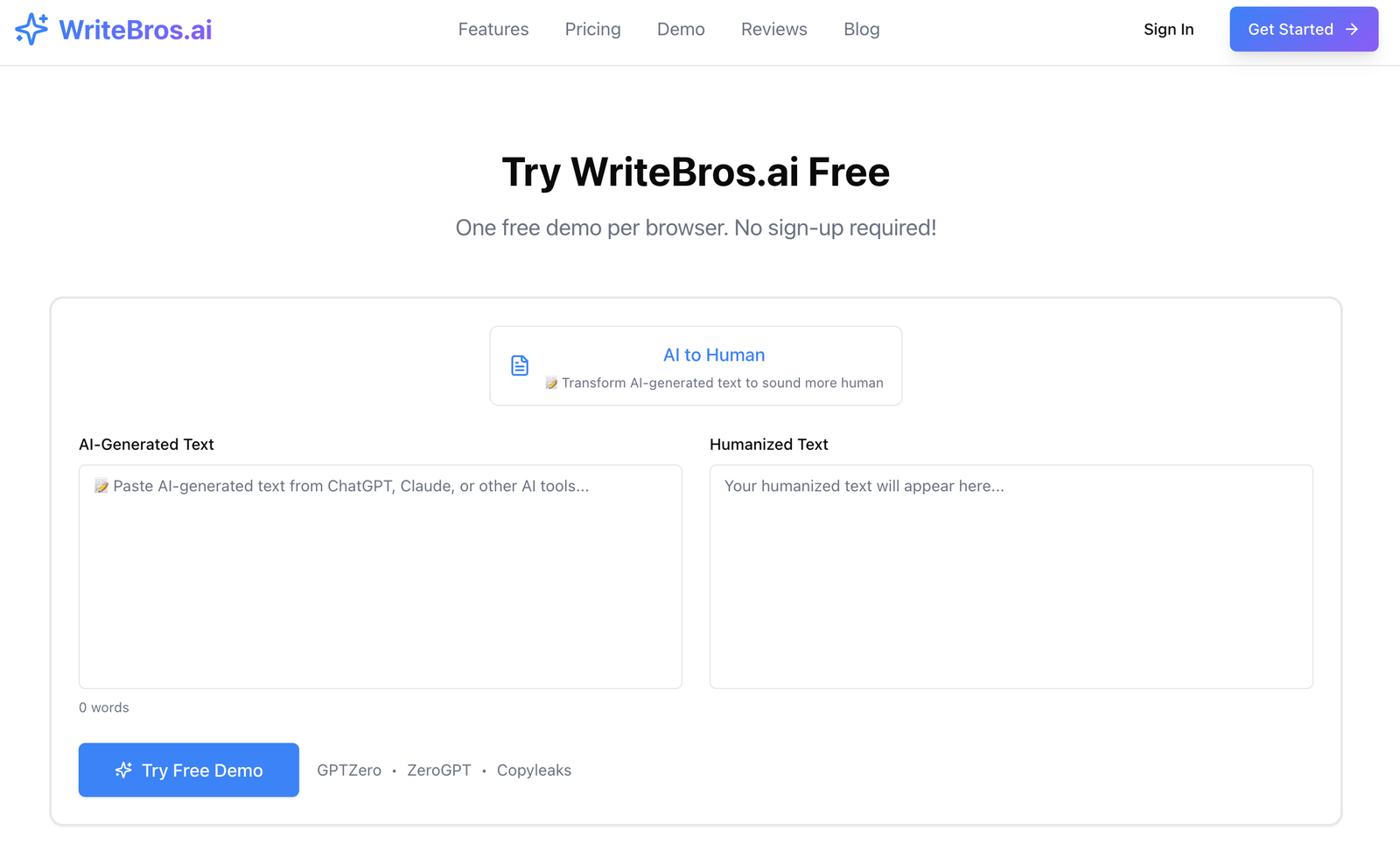
Best use case: Reworking AI drafts that need more natural pacing, cleaner transitions, and a voice that feels closer to intentional human editing.
What it does well: It treats human-like writing as rhythm and judgment, which is more useful than simply replacing words.
Where it falls short: It still depends on the quality of the source draft, especially when the original idea is vague or underdeveloped.
Who should skip it: Users who only need fast bulk rewriting and do not care much about tone, flow, or meaning retention.
AI Writing Editors for Human-Like Content #2. StealthWriter
StealthWriter is built around the practical problem of AI text sounding too direct, too symmetrical, or too predictable across a full paragraph. It tends to be useful when a writer wants a more casual surface without rebuilding the whole piece by hand. The tool can help loosen stiff phrasing, vary sentence movement, and make passages read less like they were generated from a prompt template. The caveat is that stronger rewriting can sometimes move the sentence away from the writer’s original emphasis, which means careful review still matters. It is also less ideal when a piece needs a very specific editorial voice, because detection-aware rewriting does not always equal brand-sensitive editing. Basically, it is a good fit for cleaning up obvious AI texture, but less complete as a final editorial decision-maker.
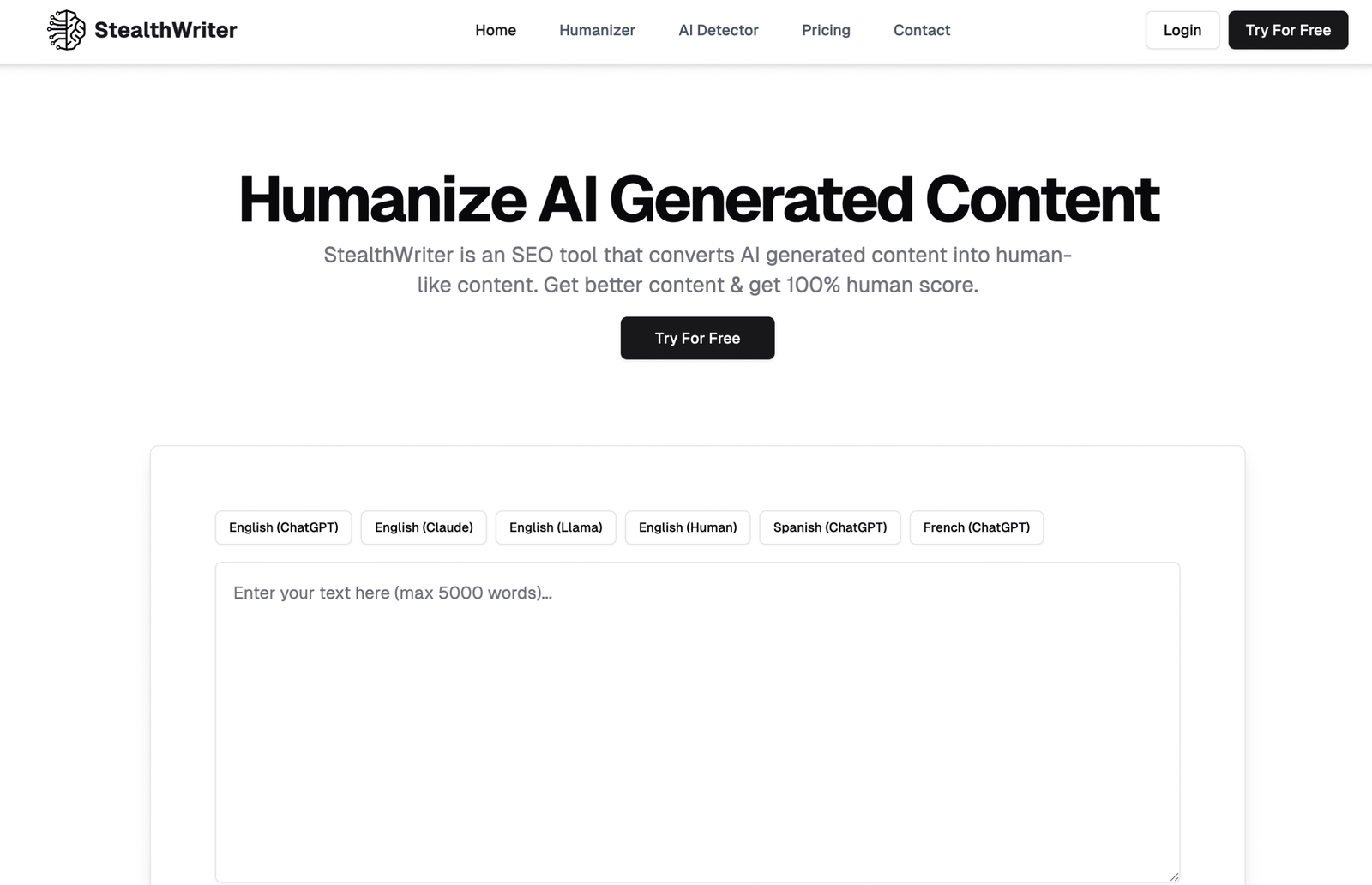
Best use case: Rewriting AI-heavy sections that sound too polished, repetitive, or mechanically structured.
What it does well: It can quickly loosen rigid phrasing and introduce more variation into paragraph-level prose.
Where it falls short: It may require extra review when the rewrite changes emphasis or softens a sentence too much.
Who should skip it: Writers who need deep editorial control over argument structure, brand voice, or exact meaning.
AI Writing Editors for Human-Like Content #3. Undetectable AI
Undetectable AI sits in the more familiar humanizer category, where the goal is to make generated text feel less obviously machine-written. It is useful for users who want a simple workflow, because the tool is not framed as a complex editing suite that requires many decisions before producing an output. The strength is convenience, especially for shorter assignments, quick articles, or passages that need a less rigid tone before a human edit. The tradeoff is that detection-oriented tools can encourage users to focus too much on whether a passage passes a system, rather than whether it reads with clarity and purpose. It can also flatten nuance when the source material has technical detail, because making something more conversational is not always the same as making it more accurate. The whole thing works best when it is treated as a first cleanup layer, followed by a careful read for meaning and flow.
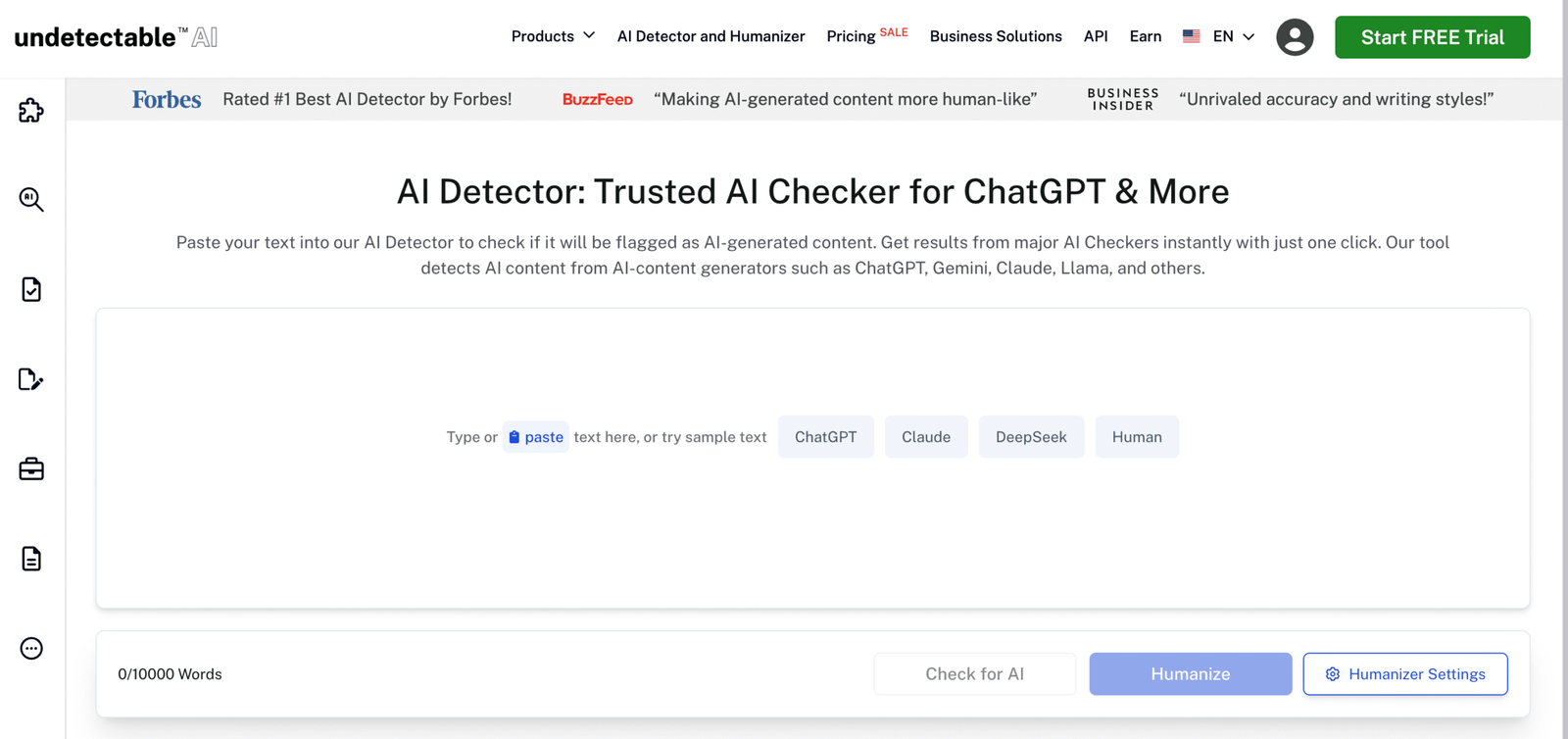
Best use case: Quick humanization for AI-generated passages that need to sound more natural before a final manual edit.
What it does well: It gives users a straightforward way to reduce obvious AI patterns without a complicated setup.
Where it falls short: It can make writers over-prioritize detection results instead of readability, accuracy, and editorial intent.
Who should skip it: Users working on sensitive, technical, or voice-specific content where every detail needs close control.
AI Writing Editors for Human-Like Content #4. Writesonic AI Humanizer
Writesonic AI Humanizer makes the most sense for people already thinking about AI writing as part of a broader content production system. It is less about slow literary editing and more about making draft copy more readable, more approachable, and less obviously synthetic. That can be helpful for marketing pages, blog sections, product explainers, and social copy that needs a cleaner human-facing tone. The limitation is that fast content workflows can sometimes reward surface smoothness over deeper revision, which means weak structure may still remain beneath the polished wording. It may also feel too general for writers who want highly specific sentence-level control or a distinctive authorial voice. Still, for teams moving between ideation, drafting, and content polishing, it has a practical place in the middle of the workflow.
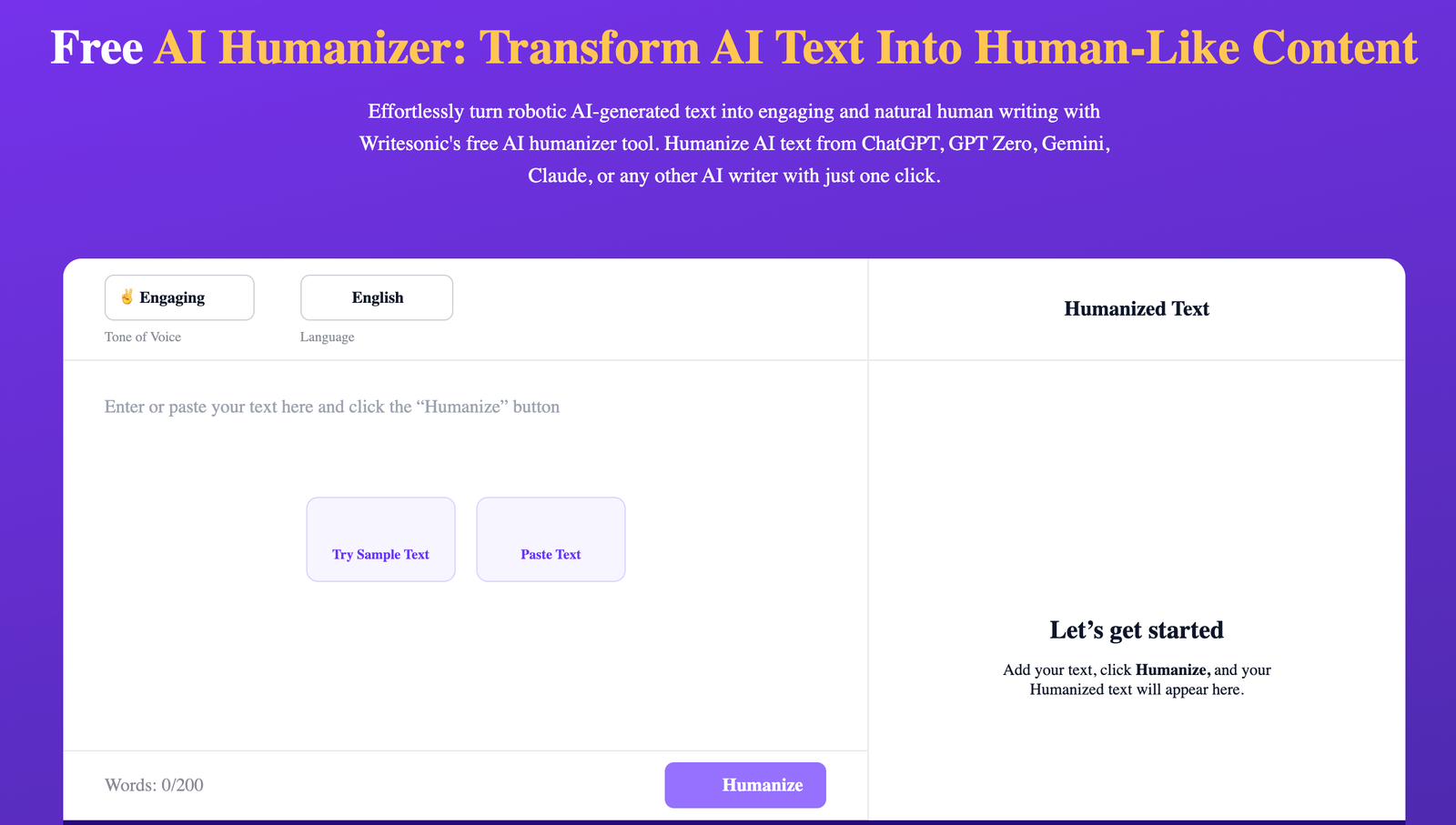
Best use case: Polishing marketing and blog drafts inside a larger AI-assisted content workflow.
What it does well: It helps make generated copy easier to read without requiring a heavy editorial process.
Where it falls short: It may smooth the surface while leaving deeper structure, originality, or argument quality unchanged.
Who should skip it: Writers who need close stylistic control rather than broad readability improvements.
AI Writing Editors for Human-Like Content #5. Grammarly AI Humanizer
Grammarly AI Humanizer benefits from sitting close to a tool many writers already use for grammar, clarity, and tone adjustments. That makes it approachable for everyday editing, especially when a draft needs to sound cleaner without sending it through a separate rewriting environment. It is useful for emails, articles, reports, and workplace copy where the main issue is stiffness rather than a broken idea. The caveat is that Grammarly’s strength in polish can sometimes make writing feel more standardized, which is not always the same as making it more human. Another tradeoff is that its suggestions may favor correctness and clarity over texture, hesitation, or personal rhythm. Exactly because of that, it is best used when the goal is professional readability, not when the draft needs a more idiosyncratic voice.
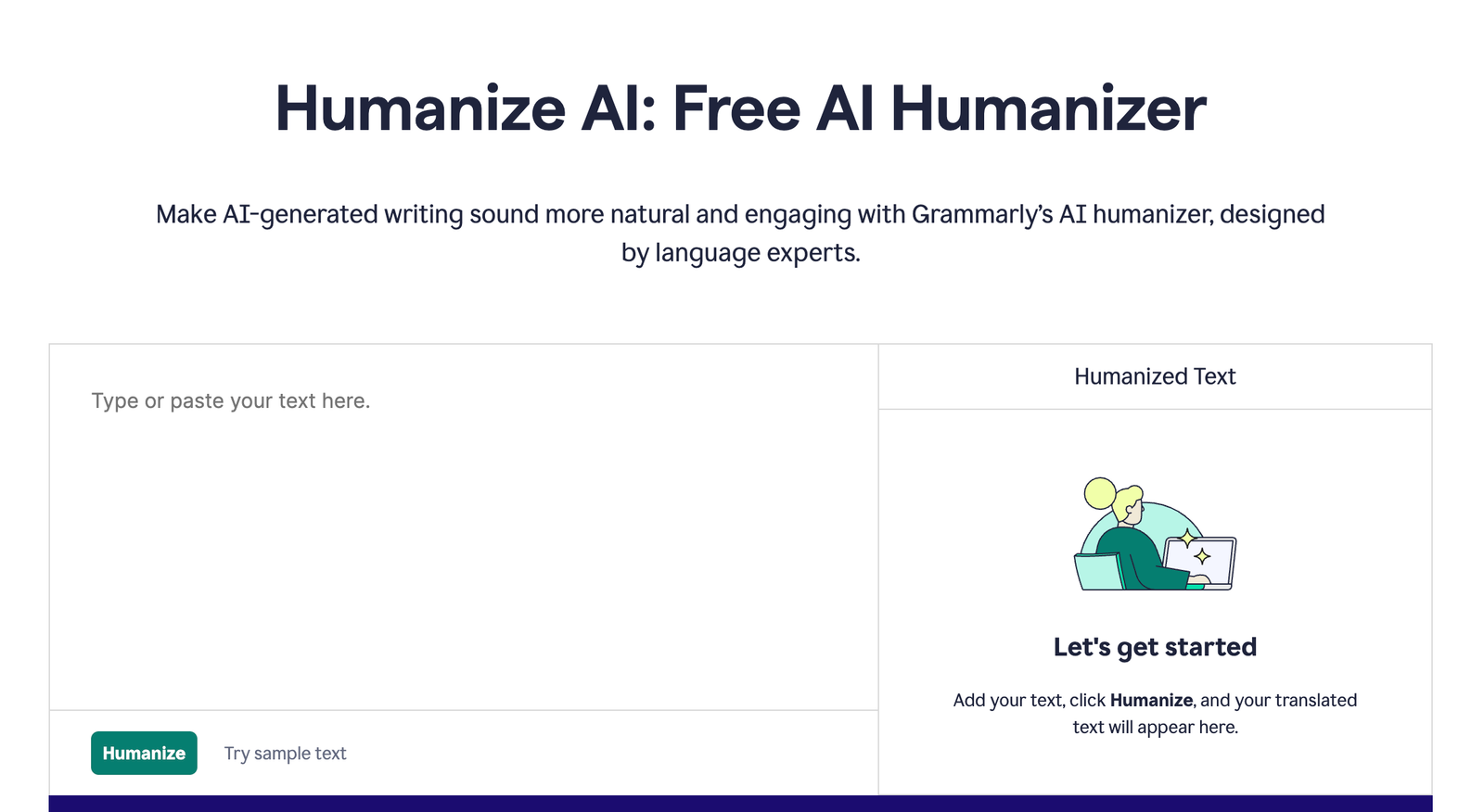
Best use case: Everyday workplace and publishing drafts that need cleaner tone, clearer phrasing, and less stiffness.
What it does well: It makes humanization feel familiar by connecting it with grammar, clarity, and tone refinement.
Where it falls short: It can make prose feel too standardized when the writing needs a more distinct personality.
Who should skip it: Writers who want bold stylistic rewriting rather than measured polish and readability improvements.
AI Writing Editors for Human-Like Content #6. AISEO AI Humanizer
AISEO AI Humanizer is a natural fit for users who are already working with search-focused content and want AI drafts to feel less formulaic. It can help with blog intros, supporting sections, and SEO articles that sound too much like they were produced from the same outline style. The tool’s value is mostly practical, because many search-oriented drafts need readability repair before they can hold attention beyond the first few paragraphs. The tradeoff is that SEO content often has structural problems that a humanizer cannot solve by itself, especially when the piece repeats obvious points or lacks original examples. It can also create a smoother paragraph without adding the lived-in judgment that makes an article genuinely useful. Sort of the right way to use it is as a cleanup pass after the content strategy and section logic are already sound.
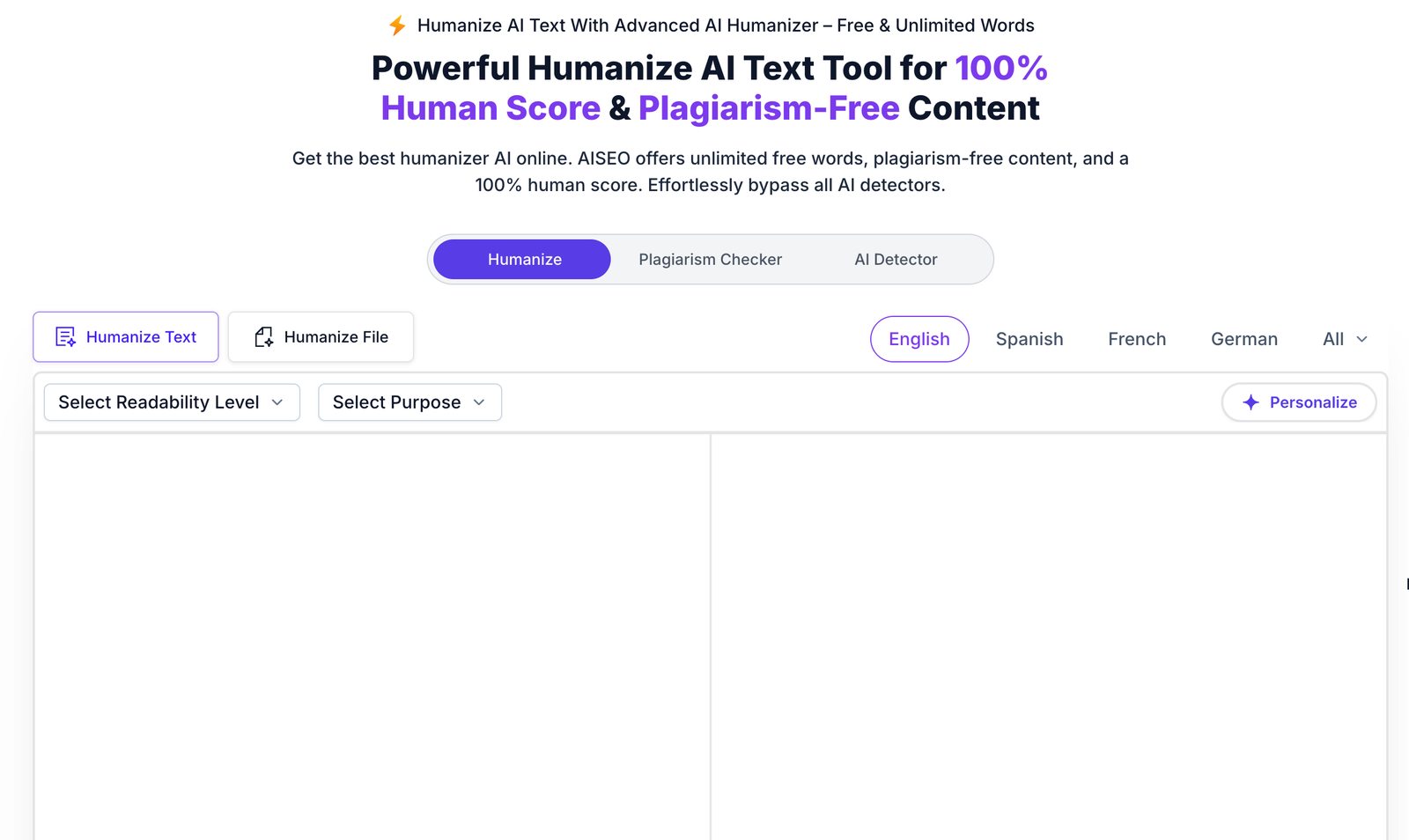
Best use case: Improving SEO-oriented drafts that read too stiffly or repeat the same generated phrasing patterns.
What it does well: It helps search-focused content become more readable without abandoning the practical purpose of the draft.
Where it falls short: It cannot replace original examples, sharper positioning, or stronger section logic.
Who should skip it: Writers who are not working with SEO content and need deeper narrative or editorial development.
AI Writing Editors for Human-Like Content #7. HumanizeAI.pro
HumanizeAI.pro is a straightforward option for people who want to take AI-generated text and make it sound less formal, less repetitive, and easier to read. Its appeal is simplicity, especially for users who do not want a complicated editor with many settings or a full writing environment. It can be useful for short-form content, student drafts, quick explanations, and basic web copy that only needs a more natural surface. The caveat is that simple tools often work best on simple inputs, because more layered writing needs more judgment than a single rewrite pass can usually provide. It may also produce output that feels more casual but not necessarily more precise, which matters when the topic requires careful wording. Basically, it is a practical choice for light humanization, but not a substitute for serious editing.
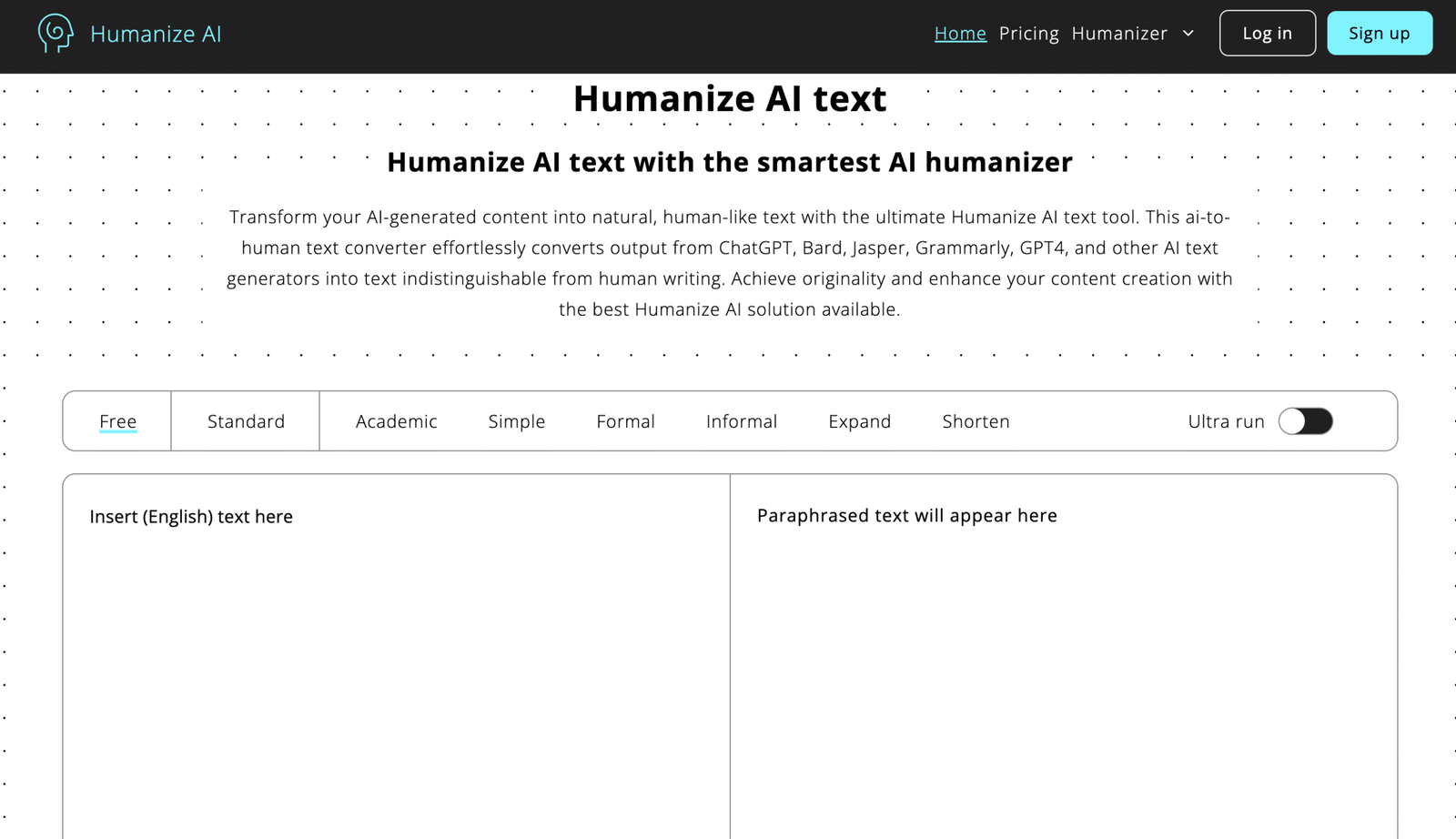
Best use case: Fast humanization for short drafts that only need a more conversational and less rigid surface.
What it does well: It keeps the process simple for users who want quick rewriting without many editorial choices.
Where it falls short: It may not provide enough control for complex arguments, technical material, or brand-sensitive writing.
Who should skip it: Editors who need detailed revision logic rather than a quick text transformation.
AI Writing Editors for Human-Like Content #8. Walter Writes AI
Walter Writes AI is positioned for users who want generated writing to sound more natural, especially when the original draft feels stiff or overproduced. It can help soften robotic phrasing and introduce a more readable flow, which matters when paragraphs feel technically clear but emotionally flat. The tool is likely most useful for essays, general articles, and explanatory writing that needs a warmer surface before review. The limitation is that a warmer surface can sometimes hide weak development, so the writer still has to check whether the paragraph actually says anything substantial. It may also be less suited to highly polished editorial brands where every sentence needs to carry a specific tone. Honestly, it works best when the user treats it as a revision assistant rather than a final publishing authority.

Best use case: Softening AI-generated essays, explainers, and general content that reads too mechanical.
What it does well: It helps create a warmer, more readable surface without making the workflow feel too heavy.
Where it falls short: It can improve tone while leaving underdeveloped ideas or thin reasoning untouched.
Who should skip it: Teams that need exact brand voice controls or a more rigorous editorial review process.
AI Writing Editors for Human-Like Content #9. GPTHuman AI
GPTHuman AI is useful for people who want a direct way to turn AI-generated paragraphs into something more relaxed and readable. It fits the kind of workflow where a user has already produced a draft elsewhere and now wants to reduce the obvious signs of machine phrasing. That can be helpful for short blog sections, descriptions, discussion posts, and simple explanatory copy. The caveat is that relaxed writing can become vague if the tool removes too much structure or specificity from the original. It also may not be the strongest choice for long-form pieces that need sustained pacing across multiple sections. The whole thing is better understood as a quick humanization layer, not a full editor that can carry the intellectual shape of a piece.

Best use case: Making short AI-generated passages sound more relaxed, casual, and reader-facing.
What it does well: It gives users a simple way to reduce mechanical phrasing without rebuilding the draft from scratch.
Where it falls short: It may loosen the writing too much when the original passage needs precision and structure.
Who should skip it: Writers working on long-form, technical, or argument-heavy pieces that need sustained editorial control.
AI Writing Editors for Human-Like Content #10. AI Undetect
AI Undetect is another simple option for users who want fast humanization without moving through a dense editing interface. It is most useful when the draft has obvious AI patterns, such as repeated sentence openings, overly balanced phrasing, or generic transitions that make the writing feel processed. For lightweight content, that kind of speed can be enough to make the text easier to work with. The tradeoff is that quick rewriting can miss the deeper reasons a piece feels artificial, especially when the argument lacks specificity or the examples feel invented. It may also be too limited for writers who need to preserve a precise voice across many pieces of content. Still, as a fast pass for reducing mechanical texture, it has a clear place for users who value speed over editorial depth.
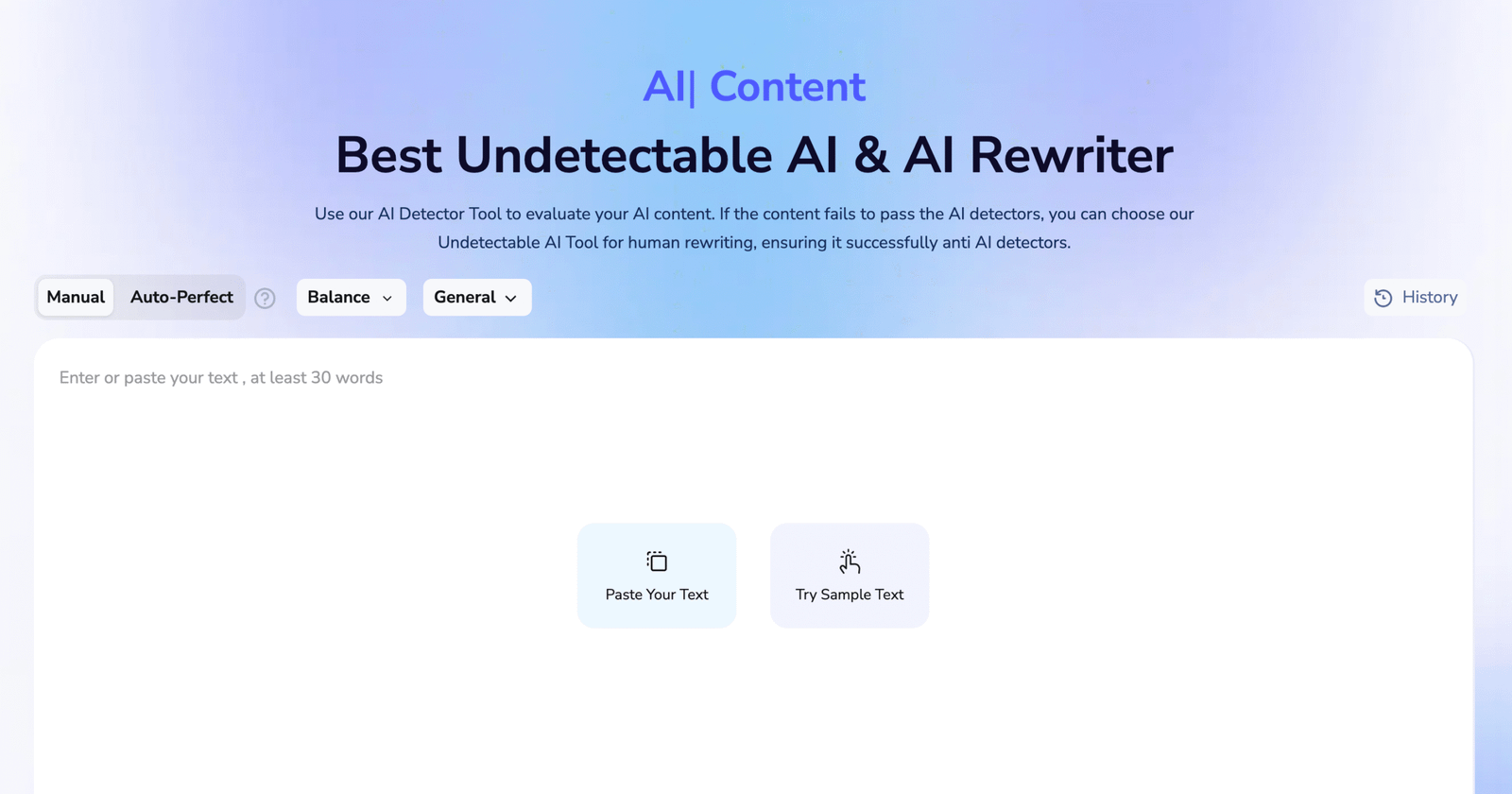
Best use case: Quick rewriting when AI-generated text needs to feel less mechanical before further editing.
What it does well: It gives users a fast way to reduce obvious generated patterns in simple drafts.
Where it falls short: It is less useful when the content needs deeper structure, clearer examples, or careful voice preservation.
Who should skip it: Writers who want a full editorial system rather than a quick humanization tool.
Final Thoughts on AI Writing Editors for Human-Like Content
AI writing editors are most useful when they are treated as part of a revision process, not as a replacement for judgment. The better tools help with rhythm, clarity, and texture, while still leaving room for a writer to decide what the draft is really trying to say.
WriteBros.ai sits well at the front of this list because it focuses on human-like flow rather than simple word replacement. That matters because the most convincing edits usually come from pacing, sentence shape, and meaning control working together.
Other tools in the category can still be useful, especially when speed, basic readability, or detection-aware rewriting is the main concern. The tradeoff is that faster tools often fix the surface before they fix the thinking, which can leave a piece sounding smoother but not necessarily stronger.
The strongest choice depends on how much control the writer needs over the final voice. For simple cleanup, a lightweight humanizer can be enough, but for publishable content, the editor that preserves meaning while improving flow is usually the more reliable option.
Disclaimer: The tools referenced are included for editorial and informational purposes only and are selected based on observable product behavior and relevance rather than sponsorship or paid placement. Screenshots are shown solely for identification, commentary, and illustrative reference in line with standard editorial and fair use practices, and may not reflect the most current version of each product. All trademarks, logos, and interface elements remain the property of their respective owners. For update, correction, or removal requests, please refer to the Editorial Policy.