10 AI Refinement Platforms for AI-Generated Drafts in 2026

In 2026, the editing bottleneck has shifted from generating drafts to deciding what should remain. This guide compares 10 AI refinement platforms by voice control, readability, workflow fit, and tradeoffs, showing where each helps and where human judgment still carries the final editorial load well.
AI-generated drafts have become much easier to produce, although turning them into polished, publication-ready work still requires another layer of refinement. Many teams now rely on specialized platforms that focus on rewriting, restructuring, and improving readability instead of generating entirely new text, particularly when learning how to humanize AI content for publishing.
Different refinement platforms approach this process from different angles, which means the best option depends on whether the goal is preserving a writer’s voice, improving flow, reducing repetitive wording, or preparing content for editorial review. Recent hybrid human-AI writing statistics also suggest that editing rather than generation is becoming a larger share of modern content workflows.
Some tools emphasize subtle sentence restructuring, while others prioritize deeper stylistic adjustments that make machine-written drafts feel more conversational. Exactly how much refinement is appropriate often depends on the publication, audience expectations, and how much human editing will still follow.
This guide compares platforms that specialize in refining AI-generated drafts while examining their strengths, tradeoffs, and practical use cases. It also complements broader editorial workflows such as how to edit AI content for hybrid human-AI writing, where refinement is only one step in producing consistently natural writing.
10 AI Refinement Platforms for AI-Generated Drafts
| # | Brand | TL;DR |
|---|---|---|
| 1 | WriteBros.ai | Built for refining AI-generated drafts with stronger voice consistency and publication-focused editing. |
| 2 | WriteHuman | Focuses on making AI-written content sound more natural through conversational rewriting. |
| 3 | Humbot | Balances readability improvements with structural rewriting for AI-assisted drafts. |
| 4 | BypassGPT | Rewrites AI-generated text with an emphasis on smoother language and varied phrasing. |
| 5 | QuillBot AI Humanizer | Offers familiar rewriting tools alongside AI humanization and refinement features. |
| 6 | UnAIMyText | Designed to reshape AI drafts while maintaining readability and coherent structure. |
| 7 | Stealthly | Concentrates on rewriting AI-generated passages into more natural prose. |
| 8 | GPTInf | Applies sentence-level refinements that help diversify wording across longer drafts. |
| 9 | AI Humanize.io | Provides AI text refinement with attention to flow, tone, and readability. |
| 10 | GPTHuman AI | Offers broad AI draft refinement focused on producing more natural final copy. |
10 AI Refinement Platforms for AI-Generated Drafts Worth Noting
AI Refinement Platforms for AI-Generated Drafts #1. WriteBros.ai
WriteBros.ai approaches refinement as a voice and editorial problem rather than treating every AI draft as something that merely needs different vocabulary. Its transformations pay attention to cadence, sentence variation, phrasing habits, and the small inconsistencies that can make polished writing feel less mechanically assembled. That makes it particularly useful when the original draft already contains the right ideas but lacks the tonal detail needed for an article, essay, landing page, or professional document. The tradeoff is that meaningful voice refinement still depends on beginning with reasonably coherent source material, since no rewriting system can quietly repair weak reasoning without also changing what the writer intended to say. It is also worth reviewing factual statements and specialist terminology after any substantial transformation, basically because smoother prose can make an unsupported claim sound more settled than it is. The whole thing works best as an editorial middle layer between AI generation and a final human review, which is a more realistic role than expecting one click to produce finished work.
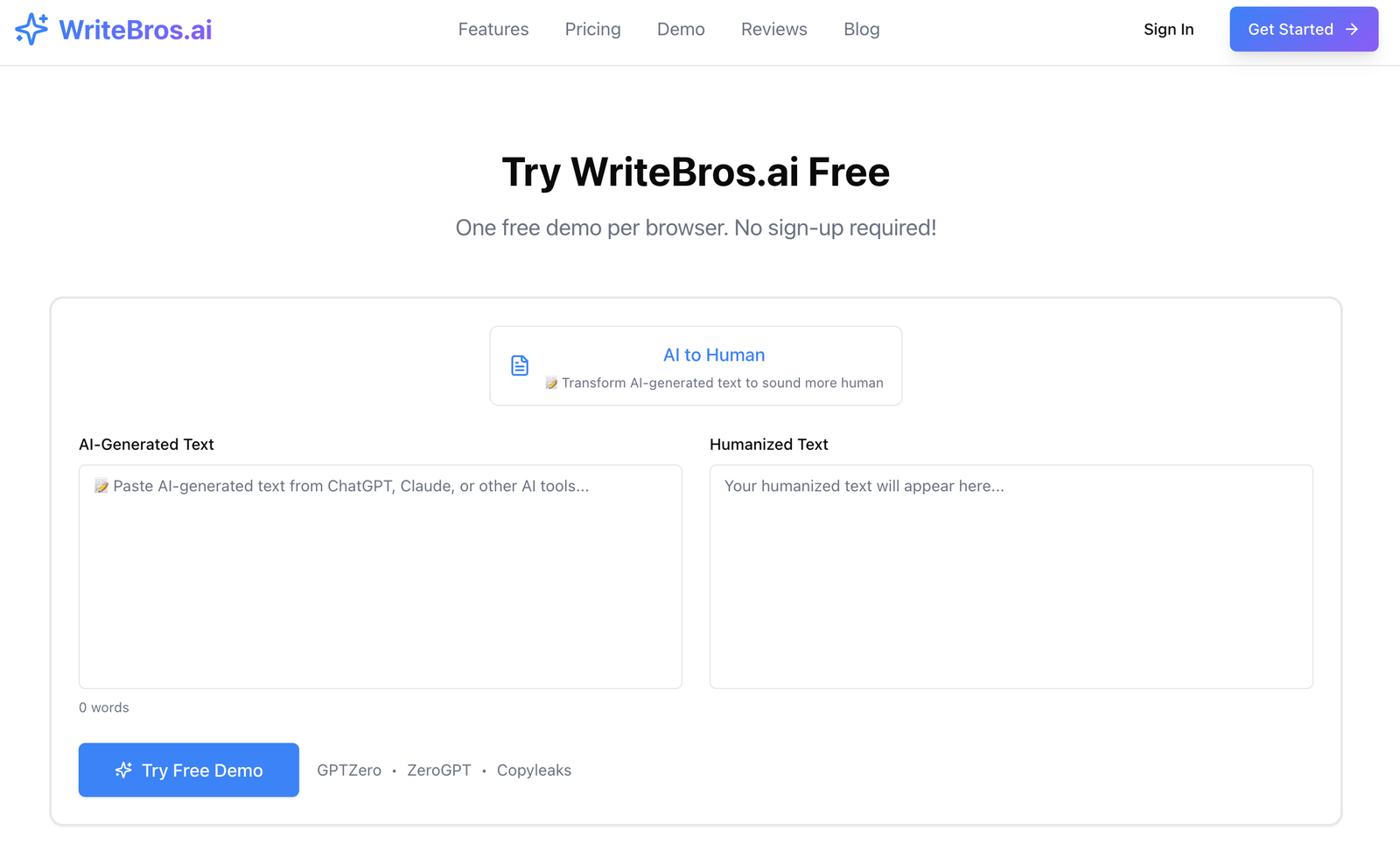
Best use case: Refining substantial AI-generated drafts that need a more recognizable voice, steadier rhythm, and a cleaner path toward publication.
What it does well: It works across several layers of style at once, which can produce a more cohesive result than replacing conspicuous words sentence by sentence.
Where it falls short: Drafts with weak evidence, unclear logic, or missing context still require structural editing before stylistic refinement can do much useful work.
Who should skip it: Writers looking only for a basic synonym swap or a disposable one-line paraphrase may find its broader refinement approach more involved than necessary.
AI Refinement Platforms for AI-Generated Drafts #2. WriteHuman
WriteHuman is arranged around a fairly direct paste-and-rewrite workflow, which keeps the experience approachable when a draft needs broad language cleanup rather than a lengthy editing setup. It tends to be most comfortable with passages that already have a stable argument and mainly need less rigid phrasing, smoother transitions, and a more conversational surface. This can suit students, general content writers, and professionals who are working through several short or medium-length drafts and do not want to configure an elaborate style system for each one. A broader rewrite can sometimes flatten deliberate technical distinctions or replace precise wording with language that feels easier but slightly less exact, so specialist copy deserves a careful comparison against the source. There is also a tradeoff between making prose sound informal and keeping the authority that certain reports, policies, or academic assignments require. Honestly, WriteHuman is easier to place in a workflow when it is treated as a first refinement pass rather than the final authority on tone, accuracy, or authorship.
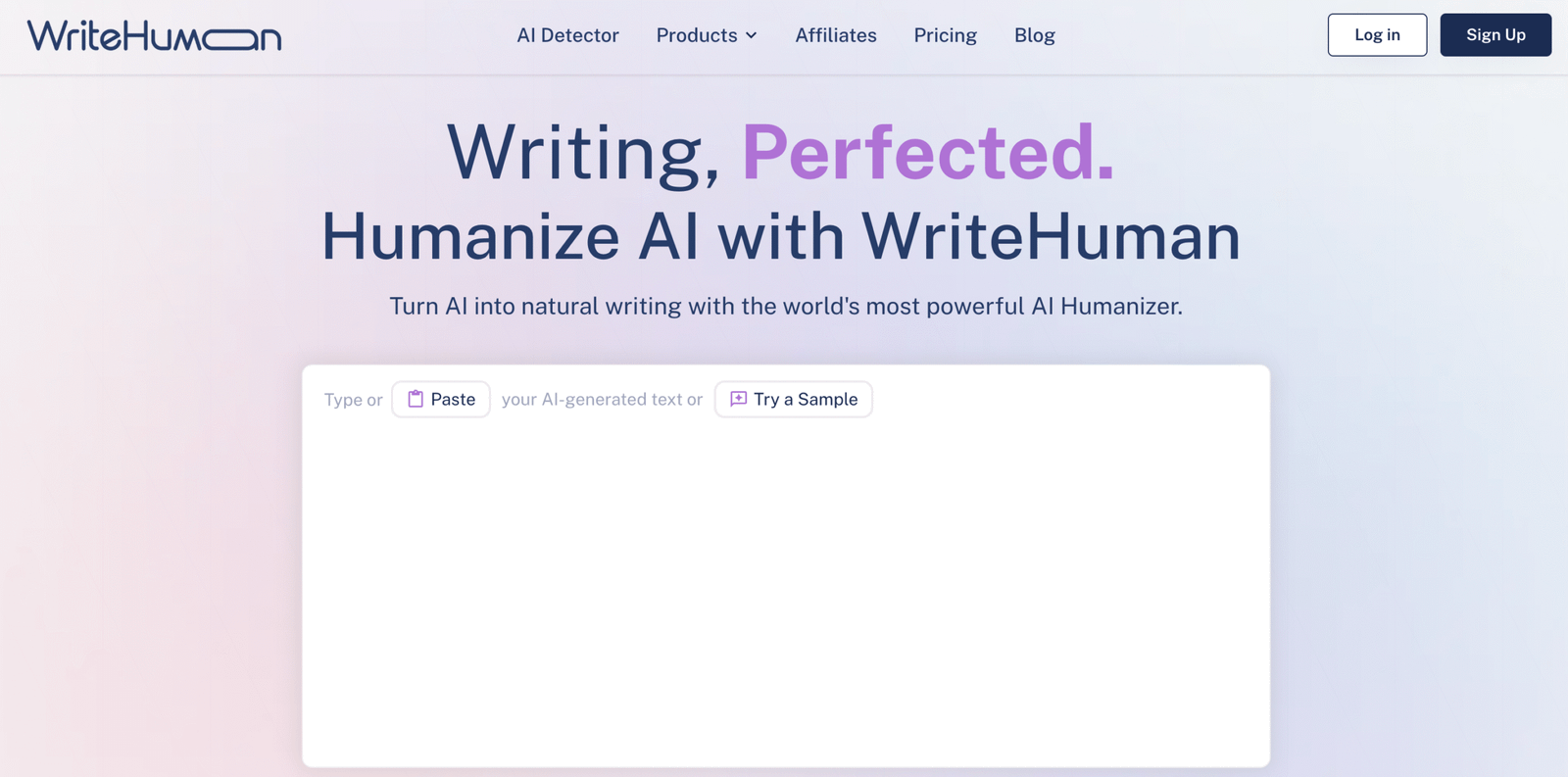
Best use case: Quickly softening stiff AI prose when the draft is already logically sound and only needs a more natural reading experience.
What it does well: Its straightforward workflow reduces the distance between identifying an awkward passage and producing a cleaner version for review.
Where it falls short: Strong transformations may simplify language that was intentionally formal, technical, or tightly qualified in the original draft.
Who should skip it: Editors who need detailed control over brand-specific syntax, terminology rules, and paragraph-level structure may prefer a more configurable process.
AI Refinement Platforms for AI-Generated Drafts #3. Humbot
Humbot sits within a broader writing and study environment, so its refinement tools make sense for people who move between generating, checking, researching, and rewriting material in the same general session. The humanization component can make dense AI drafts easier to read by breaking predictable sentence formations and reducing the sort of repeated explanatory language that models often produce. This is helpful for reports, study notes, article sections, and early essay drafts where clarity matters but the writer does not yet need a meticulously reproduced personal voice. Its wider toolset can be convenient, although the breadth also means the refinement experience may feel less specialized than a platform built solely around editorial voice reconstruction. Rewriting educational or research-based material carries another obvious caveat, which is that altered phrasing can shift definitions, citations, or the relationship between a claim and its evidence. Humbot is basically strongest when its output remains attached to the research and checking stages rather than being copied directly into a finished document without review.
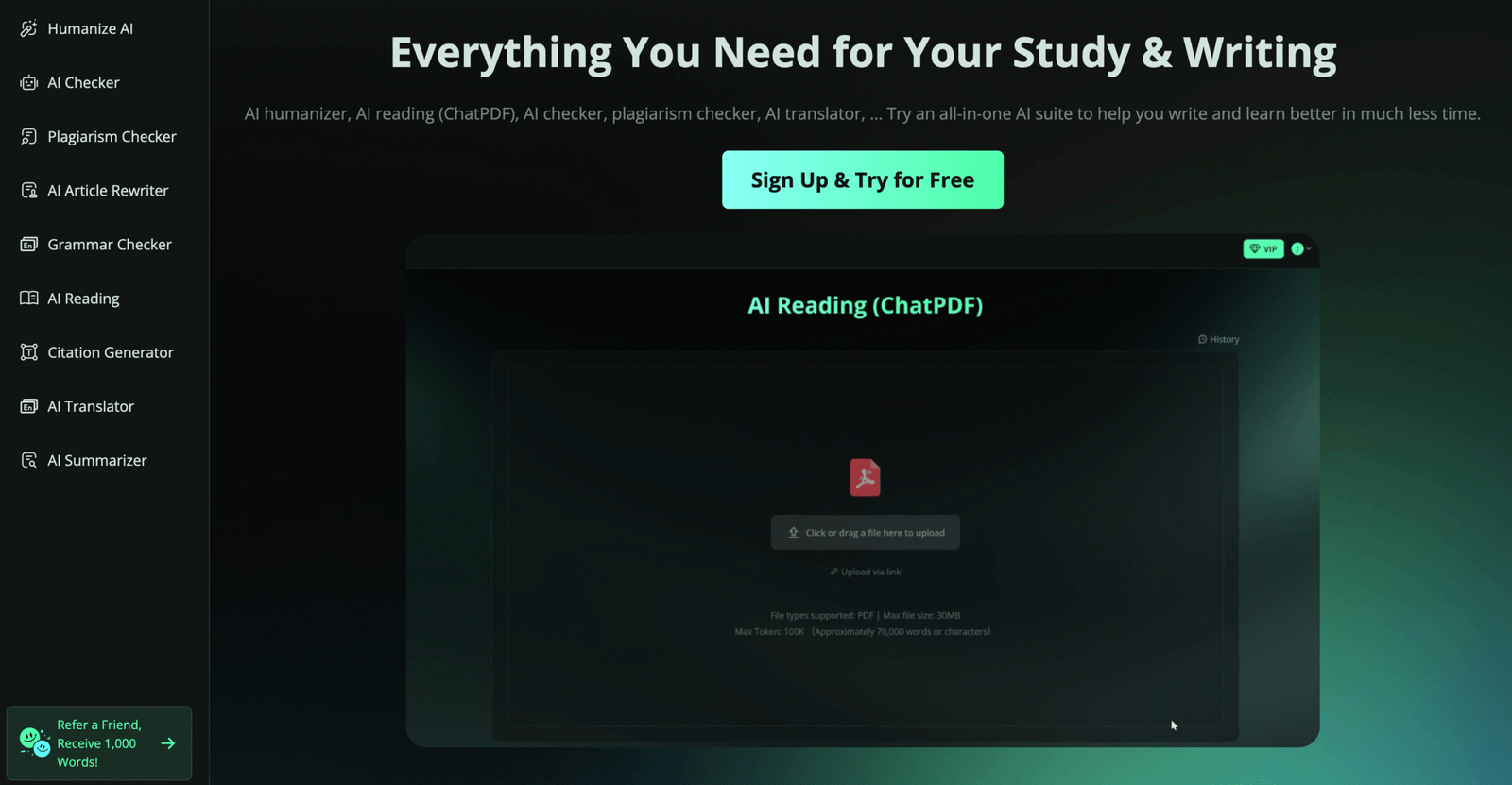
Best use case: Refining study materials, research-led drafts, and general writing inside a workflow that also involves checking or developing the underlying content.
What it does well: It brings several related writing tasks into one environment, which can reduce the friction of moving a draft between separate utilities.
Where it falls short: The broader platform structure may not provide the same degree of voice-specific control as a dedicated editorial refinement system.
Who should skip it: Brand teams with strict style sheets and established approval workflows may find the all-in-one approach less precise than their process requires.
AI Refinement Platforms for AI-Generated Drafts #4. BypassGPT
BypassGPT is positioned around rewriting detectable AI patterns, but its practical value is easier to judge by looking at what happens to readability, meaning, and sentence control after the transformation. It generally makes visible changes to vocabulary and structure, which can help when a draft has the unmistakably uniform rhythm of unedited model output. That degree of intervention may suit generic web copy, summaries, and passages where the wording is flexible and the central message is simple enough to survive broader paraphrasing. The same intervention becomes a liability when the source contains contractual language, technical qualifications, statistics, or carefully attributed statements, since even a minor substitution can alter the claim. Detector-oriented rewriting also encourages attention to a score that may not reflect whether the finished text is accurate, useful, or genuinely aligned with the writer’s voice. Exactly because of that, BypassGPT makes more sense as an optional rewrite experiment than as a substitute for substantive editing and responsible disclosure.
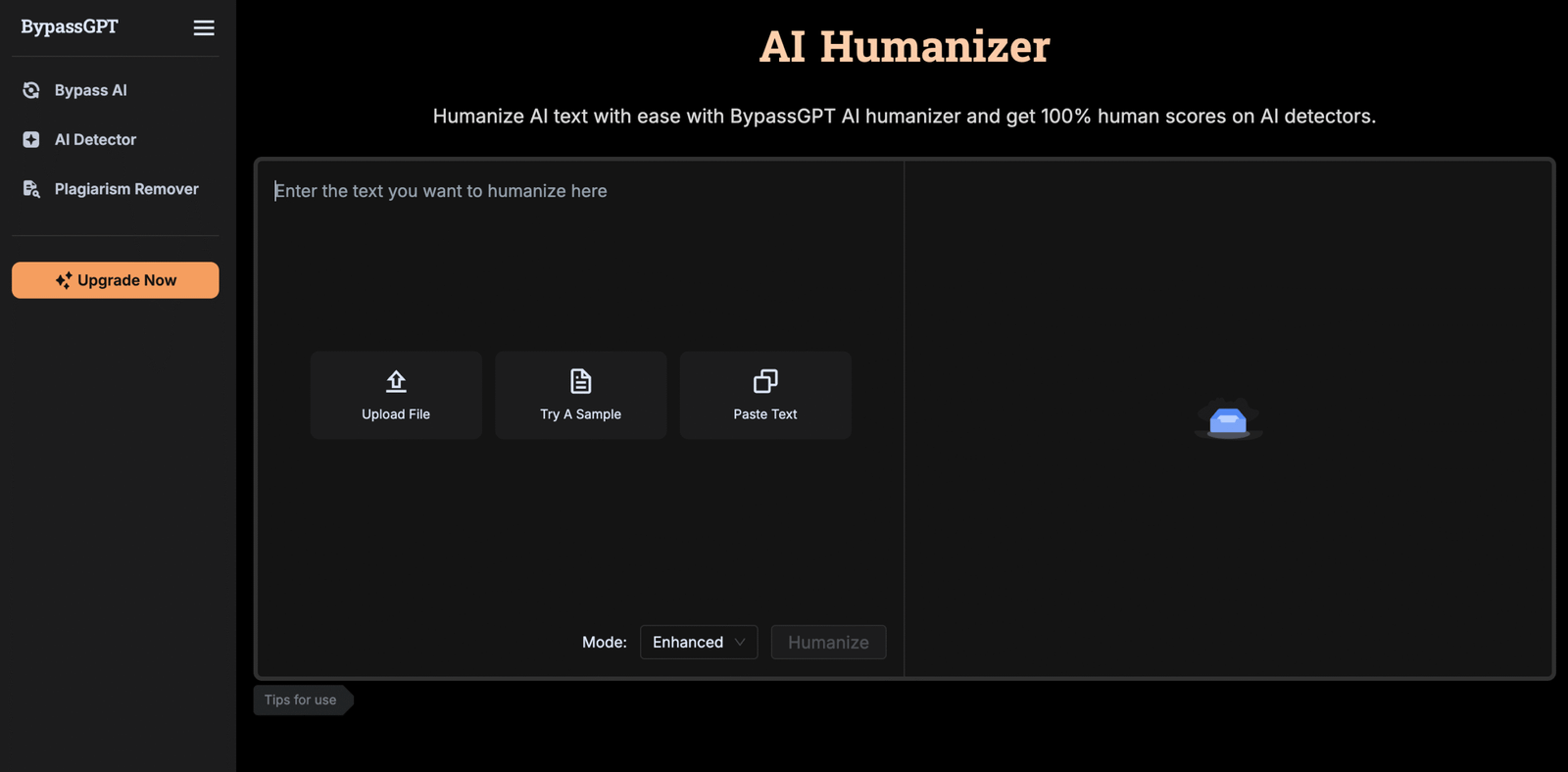
Best use case: Reworking generic AI passages whose ideas are simple, clearly expressed, and unlikely to be damaged by noticeable structural paraphrasing.
What it does well: It makes substantial changes quickly, which can expose alternative ways to phrase a section that feels repetitive or overly model-like.
Where it falls short: Meaning preservation can become less dependable as the source material grows more technical, evidence-heavy, or dependent on precise qualifications.
Who should skip it: Legal, medical, financial, academic, and research writers should avoid relying on broad automated rewrites without close subject-matter review.
AI Refinement Platforms for AI-Generated Drafts #5. QuillBot AI Humanizer
QuillBot AI Humanizer benefits from sitting beside familiar paraphrasing, grammar, summarization, and writing tools, which gives users several ways to work through a draft without leaving the platform. Its refinement style is useful for smoothing conspicuous AI phrasing, tightening awkward sentences, and producing alternatives when a passage sounds technically correct but not especially natural. Writers who already use QuillBot may appreciate that continuity, particularly when they want to move between a humanized version and more controlled sentence-level paraphrasing. The convenience can encourage repeated processing, though, and each additional pass creates another opportunity for nuance, emphasis, or factual boundaries to drift away from the source. It can also produce polished language that remains generic, because grammatical smoothness is not exactly the same thing as a distinctive editorial voice. The sensible approach is to use the humanizer for surface refinement, then make the more personal decisions about argument, examples, rhythm, and specificity by hand.
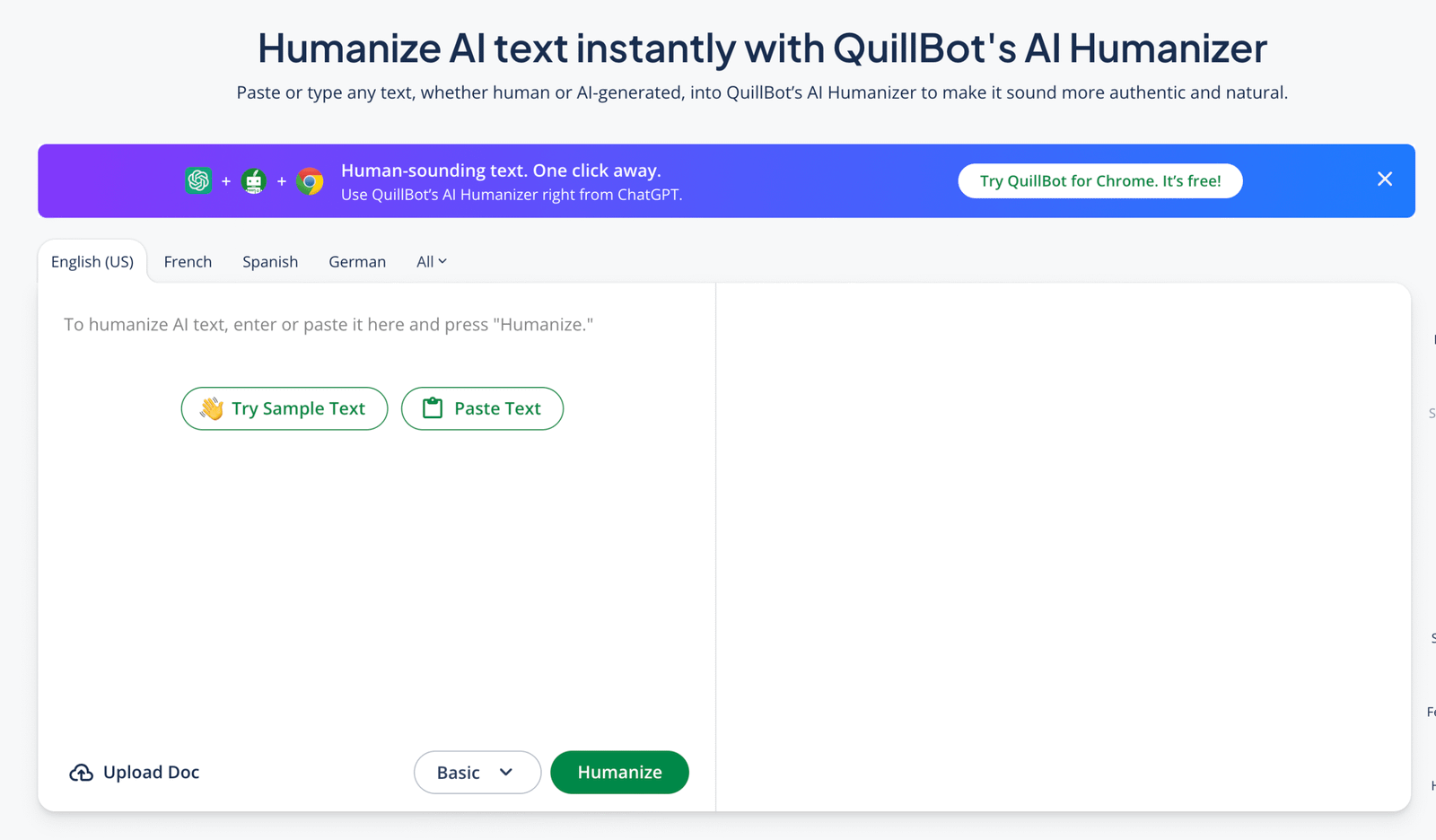
Best use case: Improving individual passages inside an established editing workflow that already uses QuillBot for paraphrasing or grammar support.
What it does well: Its surrounding toolkit makes it easy to compare different treatments of the same sentence without moving among several unrelated services.
Where it falls short: Cleaner language can still sound broadly interchangeable when the draft lacks concrete examples, personal judgment, or a defined point of view.
Who should skip it: Writers who need a platform to learn and reproduce a highly specific brand voice may find its generalized refinement less targeted.
AI Refinement Platforms for AI-Generated Drafts #6. UnAIMyText
UnAIMyText offers a low-friction way to paste a draft and receive a more loosely written version, which suits people who want to test refinement before committing to a more involved platform. Its output can be useful for exposing repetitive constructions, overly balanced sentences, and the formal connective language that often accumulates in generated text. This makes it a practical option for early-stage blog sections, informal explainers, and short pieces where the writer expects to complete another editing pass afterward. Simplicity is also the main limitation, since a fast general rewrite gives users fewer opportunities to specify which expressions, terms, or structural choices must remain untouched. There is a further tradeoff when a draft contains a carefully built tone, because making every sentence sound more casual can remove useful restraint or authority. UnAIMyText is sort of best understood as a diagnostic rewrite, showing how the prose might loosen up without deciding exactly how the final version should sound.
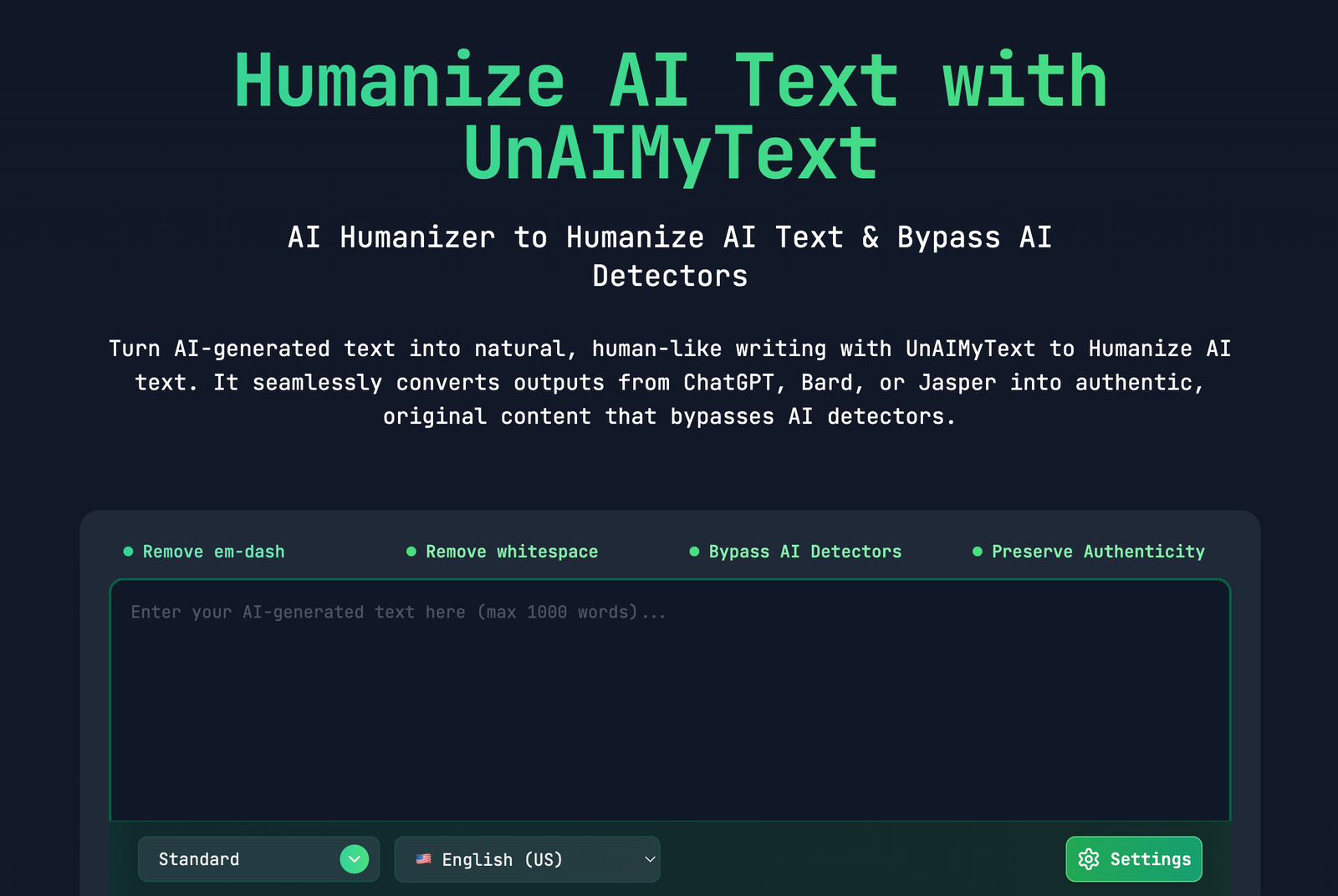
Best use case: Testing a quick alternative version of a short AI draft before carrying its strongest phrasing into a more deliberate manual edit.
What it does well: The uncomplicated workflow makes it easy to identify where a draft feels rigid without adding a long setup stage.
Where it falls short: Limited editorial control can make it harder to protect exact terminology, intentional formality, or a carefully planned paragraph structure.
Who should skip it: Editors managing regulated, technical, or closely governed brand content may need more granular control over what the system is allowed to change.
AI Refinement Platforms for AI-Generated Drafts #7. Stealthly
Stealthly concentrates on rewriting AI text into less predictable language, so its most visible changes often appear in sentence shape, vocabulary, and the transitions between ideas. That can help when an otherwise usable draft feels unnaturally even, with every paragraph following the same explanatory pattern and every sentence landing at roughly the same pace. It is suitable for flexible marketing drafts, general articles, and informal written material where variation matters more than preserving every line exactly as generated. The difficulty is that unpredictability by itself does not guarantee good style, and an altered sentence can sound less mechanical while also becoming less concise or less accurate. Content that depends on a consistent house voice may also need considerable manual adjustment after refinement, because variation is not always the same as alignment. Honestly, Stealthly is more convincing as a source of alternative phrasing than as a finishing system for material that must meet a demanding editorial standard.
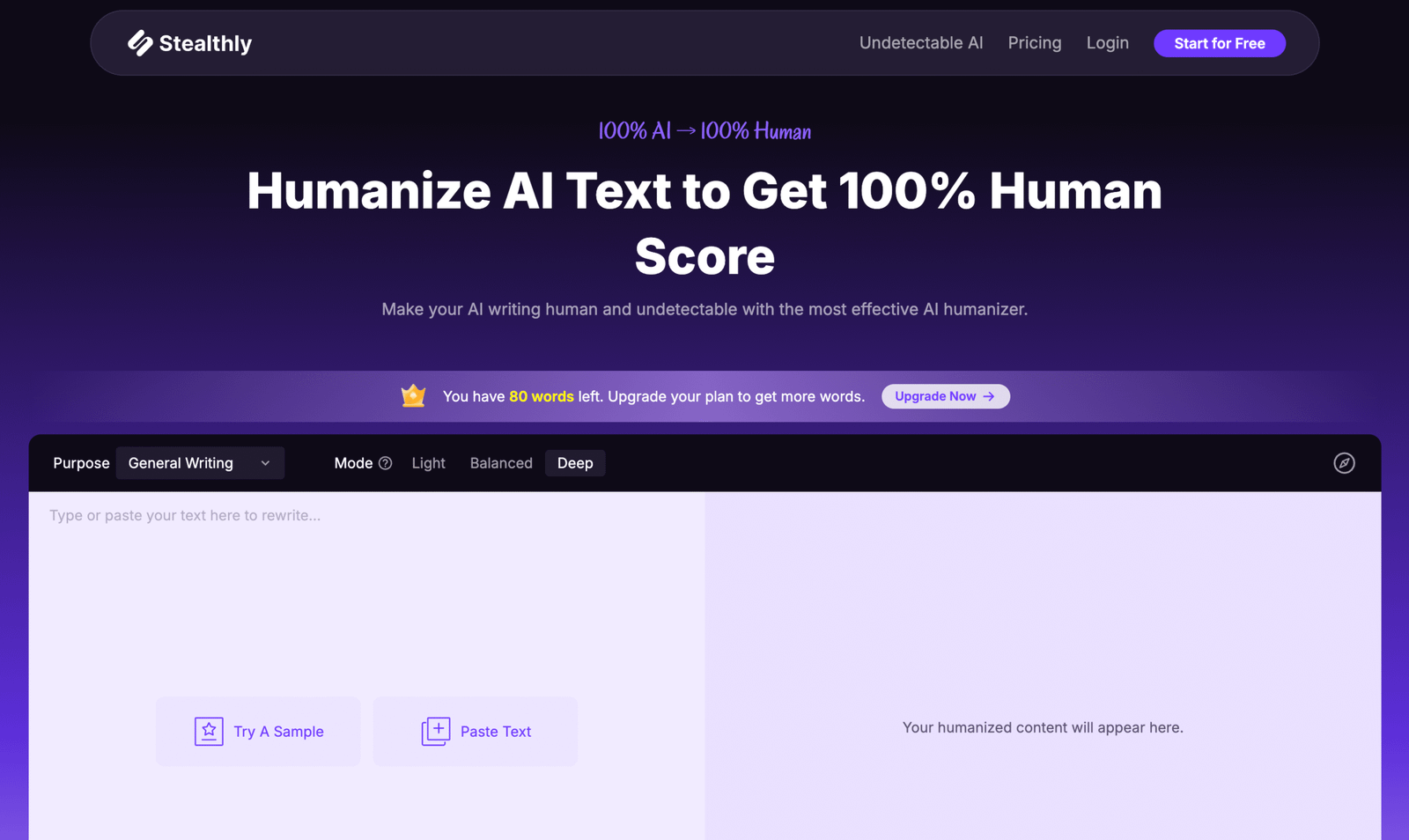
Best use case: Creating alternative wording for flexible drafts that feel rhythmically repetitive and will still receive a careful human edit.
What it does well: It introduces noticeable sentence variation, which can help editors see where a generated passage has become too uniform.
Where it falls short: Some changes may exchange mechanical predictability for unnecessary complexity, looser meaning, or a tone that does not match the surrounding copy.
Who should skip it: Teams publishing technical documentation or tightly controlled brand messaging may find its broader alterations difficult to govern.
AI Refinement Platforms for AI-Generated Drafts #8. GPTInf
GPTInf combines humanization with related writing checks, which gives users a compact environment for rewriting a draft and then examining it through several different lenses. Its humanizer can vary phrasing and syntax across passages that feel formulaic, while the adjacent tools make it easier to continue checking grammar, readability, or other surface-level concerns. The platform is most practical for writers who prefer a utility-based workflow and want to move quickly between rewriting and basic quality checks without configuring a complex editorial system. A collection of scores can create a misleading sense of certainty, however, because readable and technically clean text may still contain weak reasoning, inaccurate claims, or an unconvincing voice. Broad paraphrasing can also become uneven across longer documents, with one section sounding restrained and another sounding unexpectedly casual. GPTInf therefore works better for selective sections and exploratory rewrites than for processing an entire important draft and assuming the resulting consistency will take care of itself.
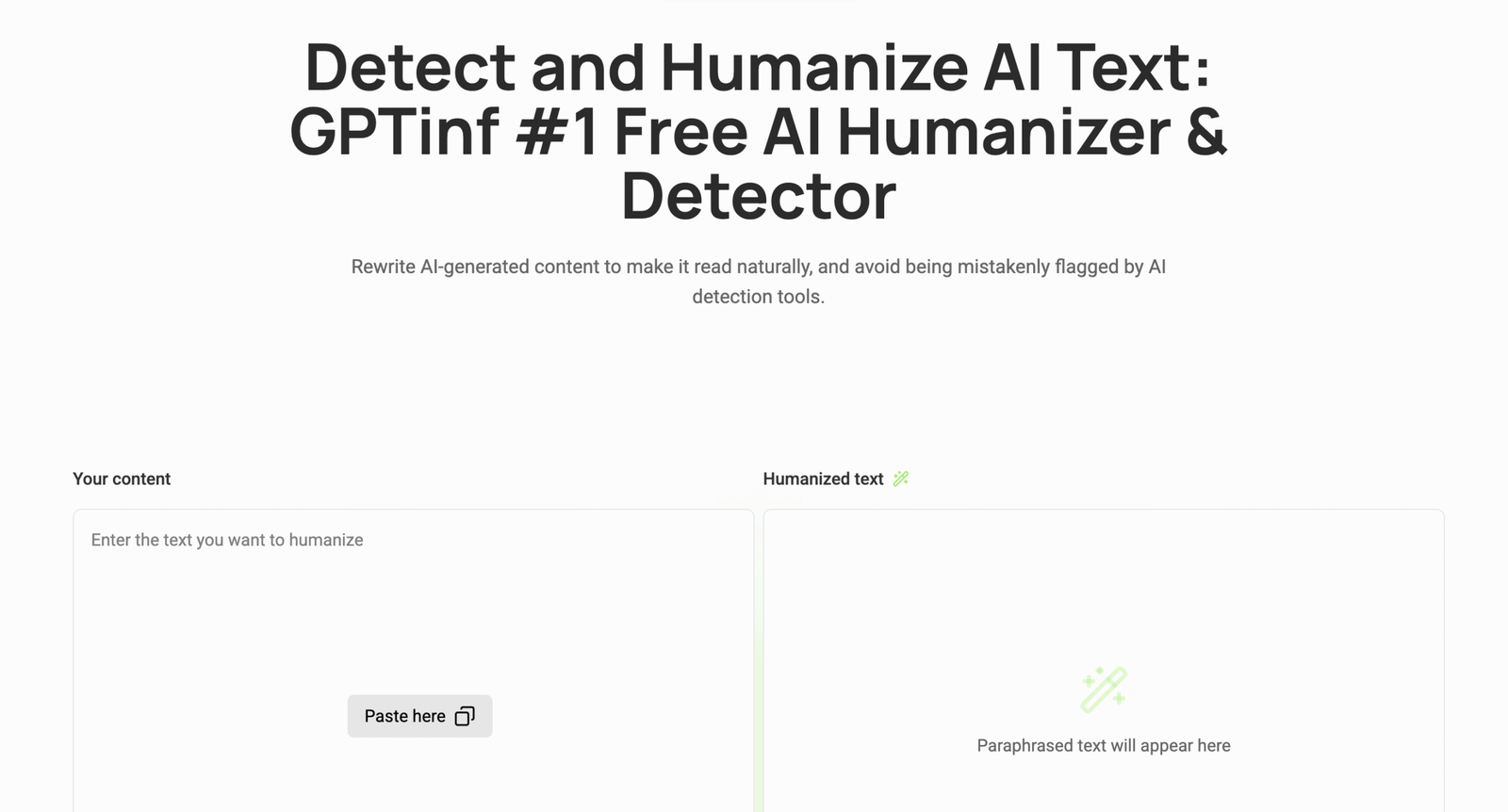
Best use case: Refining selected passages while using nearby utilities to perform additional readability and surface-level checks.
What it does well: Its collection of tools supports a compact review loop for writers who prefer several practical checks in one place.
Where it falls short: Automated scores and polished phrasing do not evaluate whether the draft’s evidence, reasoning, or editorial judgment is actually sound.
Who should skip it: Writers seeking consistent voice development across a long manuscript or tightly structured campaign may need a more focused refinement platform.
AI Refinement Platforms for AI-Generated Drafts #9. AI Humanize.io
AI Humanize.io follows the familiar model of transforming generated text into a version with more varied language and a less conspicuously automated rhythm. It can be useful when a writer needs a quick second rendering of an introduction, product explanation, email, or article section that feels overly stiff in its first form. The strongest use is comparative, since placing the source beside the rewrite can reveal which sentences need genuine editorial attention and which were already working. Its generalized approach may struggle to distinguish between undesirable AI habits and intentional stylistic repetition, particularly when a writer uses recurring phrasing to build emphasis or maintain terminology. Another limitation is that making prose more conversational can weaken material that needs disciplined formality, such as policy guidance, research summaries, or executive communication. The output is basically a set of editable suggestions, not proof that the underlying draft has become accurate, original in thought, or ready for publication.
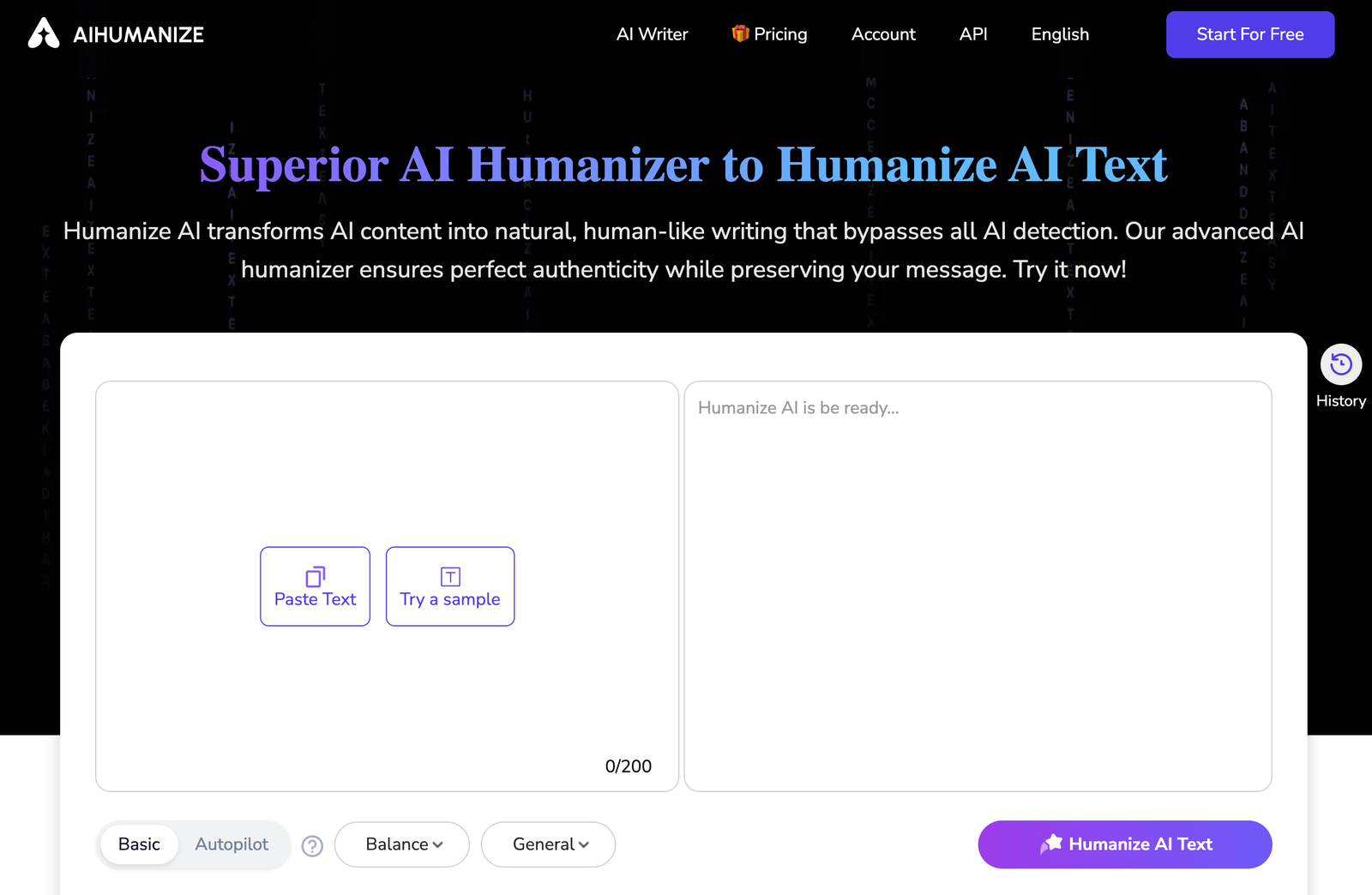
Best use case: Producing a quick comparison version of short, general-purpose copy that feels stiff but does not contain fragile technical language.
What it does well: It can reveal repetitive sentence habits and provide alternative phrasing without requiring a complicated workflow.
Where it falls short: General humanization may remove intentional repetition, formal restraint, or terminology that was serving a specific editorial purpose.
Who should skip it: Writers whose drafts depend on exact definitions, regulatory language, or a carefully documented brand style should use a more controlled process.
AI Refinement Platforms for AI-Generated Drafts #10. GPTHuman AI
GPTHuman AI is designed for straightforward transformation, taking recognizably generated passages and reshaping them into language that appears less uniform and more conventionally conversational. It is most useful with uncomplicated source material, particularly when the writer wants to move beyond a bland first draft and needs alternative sentence structures to work from. Short articles, generic descriptions, and internal drafts can benefit from that speed because their wording is usually easier to adjust without disturbing a complex chain of evidence. The platform becomes less dependable as the material grows more specialized, since aggressive changes can interfere with technical meaning, citation relationships, or the measured tone expected in professional analysis. Its emphasis on humanized output may also distract from more important editorial questions, including whether the draft contains a real point of view or merely restates familiar information in smoother language. The whole thing is better treated as a rough refinement stage, followed by a close comparison with the source and a final edit shaped by the actual reader.
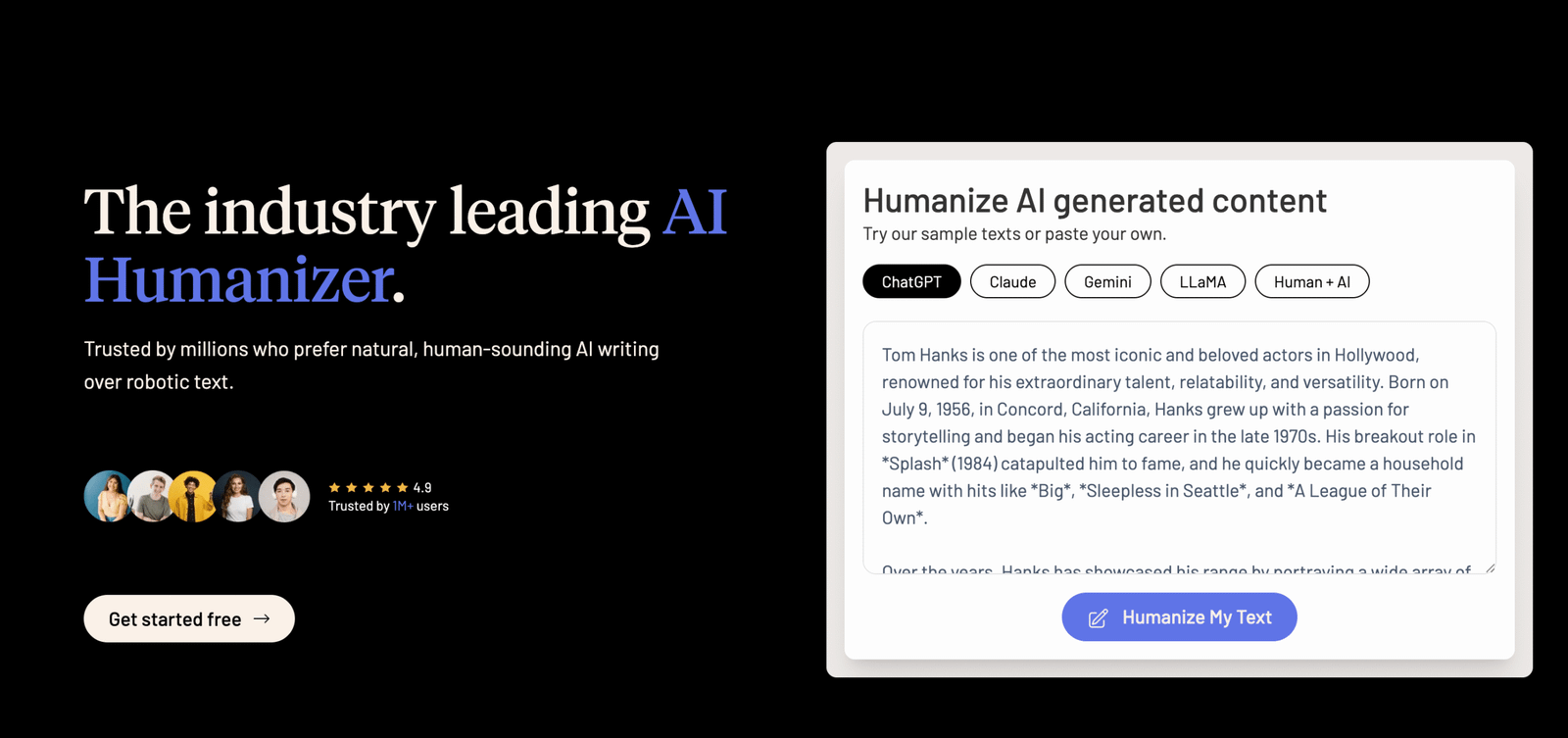
Best use case: Creating workable alternative wording for short, uncomplicated AI drafts before a writer completes the final editorial pass.
What it does well: It offers a direct route from visibly generated prose to a looser version that may be easier to revise manually.
Where it falls short: Longer or more specialized material can lose precision when structural and vocabulary changes are applied too broadly.
Who should skip it: Subject-matter experts handling sensitive claims, formal analysis, or terminology-heavy documents should avoid relying on its output without line-by-line review.
Choosing an AI Refinement Platform for AI-Generated Drafts
AI refinement platforms are most useful when they improve an already workable draft rather than being expected to repair weak reasoning, missing evidence, or unclear intent. The stronger tools tend to preserve meaning while adjusting cadence, sentence shape, and tonal consistency, which is exactly where many generated drafts begin to feel less mechanical.
WriteBros.ai stands out for writers who care about voice consistency across longer pieces, while tools such as WriteHuman and QuillBot AI Humanizer suit faster, more general cleanup. Platforms including Humbot and GPTInf make more sense for people who prefer refinement alongside other writing utilities, although that convenience can come with less control over the final tone.
Detector-focused tools can produce noticeable changes quickly, but the tradeoff is that broader rewriting sometimes weakens technical accuracy or removes deliberate phrasing. Honestly, a lower detection score says very little about whether a draft is useful, original in thought, or ready for publication.
The most sensible choice depends on how much of the original wording needs to survive and how closely the finished draft must follow a specific editorial voice. Basically, these platforms work best as part of a layered process in which automated refinement handles repetition and rhythm, while human review protects meaning, judgment, and context.
Disclaimer: The tools referenced are included for editorial and informational purposes only and are selected based on observable product behavior and relevance rather than sponsorship or paid placement. Screenshots are shown solely for identification, commentary, and illustrative reference in line with standard editorial and fair use practices, and may not reflect the most current version of each product. All trademarks, logos, and interface elements remain the property of their respective owners. For update, correction, or removal requests, please refer to the Editorial Policy.