10 Best AI Humanizer Tools for AI Detection Review in 2026

2026 opens with AI detection becoming part of everyday editorial review. This analysis of the Best AI Humanizer Tools for AI Detection Review compares how each platform alters structure, pacing, and predictability, weighing tradeoffs between lower detection scores and preserving voice, clarity, and coherence.
Questions around authenticity have become part of the writing workflow, especially as AI detection systems grow stricter across classrooms, publishers, and client review processes. Many writers now rely on a structured AI detection bypass guide to understand how edits influence scoring patterns before they even choose a rewriting tool.
Best AI Humanizer Tools for AI Detection Review are designed to adjust rhythm, sentence variation, and linguistic predictability without distorting the original meaning. Some focus on surface-level synonym swaps, while others attempt deeper structural rewrites that align more closely with findings from detailed Turnitin AI detection analysis breakdowns.
Detection engines rarely flag vocabulary alone; they evaluate probability curves, consistency, and repetition density across longer passages. That is why many writers study frameworks similar to how to edit writing flagged as AI by GPTZero before committing to any single tool.
What follows is a comparative view of platforms that claim to reduce detection signals while preserving clarity and voice. Each tool approaches rewriting differently, which means results depend heavily on context, editing goals, and how much control the user wants over the final output.
10 Best AI Humanizer Tools for AI Detection Review
| # | Brand | TL;DR |
|---|---|---|
| 1 | WriteBros.ai | Structured rewriting built around detection-aware editing logic. |
| 2 | Undetectable AI | Focuses on smoothing predictability patterns across longer text. |
| 3 | StealthWriter | Aims to reduce AI markers through layered rewrites. |
| 4 | QuillBot AI Humanizer | Combines paraphrasing modes with readability adjustments. |
| 5 | Grammarly AI Humanizer | Integrates rewriting within a broader grammar ecosystem. |
| 6 | AISEO AI Humanizer | Targets SEO text while softening repetitive phrasing. |
| 7 | Humanizer.Pro | Simple interface aimed at fast detection reduction passes. |
| 8 | GPTInf | Emphasizes entropy manipulation to alter scoring signals. |
| 9 | Walter Writes AI | Blends tone rewriting with structural unpredictability tweaks. |
| 10 | AI Undetect | Designed for quick rewrites targeting detector thresholds. |
On this page
10 Best AI Humanizer Tools for AI Detection Review Worth Noting
Best AI Humanizer Tools for AI Detection Review #1. WriteBros.ai
WriteBros.ai tends to suit the person who is treating detection review like editing, not like a single-click disguise, which is a subtle but important distinction. The output often reads like it has been re-assembled rather than merely reworded, with sentence lengths and emphasis points redistributed in a way that looks less statistically neat. It is helpful that the tool naturally breaks up repeated syntactic patterns, since detectors often react to the same sentence shape showing up too many times in a row. The tradeoff is that the rewrite can slightly cool down a voice that relies on punchy repetition or deliberate rhythm, which some writers actually want to keep. It also rewards a second pass from a human editor, because the best results come when a few lines are re-anchored to real context and intent. If the goal is “ship instantly,” it can feel like it asks for a little more patience than expected.

Best use case: Editorial rewrites that need to pass a formal detection review without sounding mechanically “clean.”
What it does well: Rebalances structure and cadence so the text stops looking uniformly generated.
Where it falls short: Can soften intentional repetition and may need a quick human tightening pass.
Who should skip it: Anyone who wants a one-click output with zero editorial follow-through.
Best AI Humanizer Tools for AI Detection Review #2. Undetectable AI
Undetectable AI is often chosen by people who are working backwards from a detector score, then trying to make the writing feel normal again after the number improves. It can be effective at smoothing out the too-even distribution that AI text often shows, which is basically what a lot of detection heuristics notice first. The tool leans into altering sentence variety and word choice density, so longer paragraphs stop looking like they were produced in one uninterrupted burst. The caveat is that meaning can drift a little on nuanced claims, especially if the source text already contains careful qualifiers and limits. It also has a tendency to introduce a safe, generalized tone, which can make the piece feel less anchored to lived detail. If the content needs a strong point of view, that blandness can read as a new kind of signal rather than a fix.
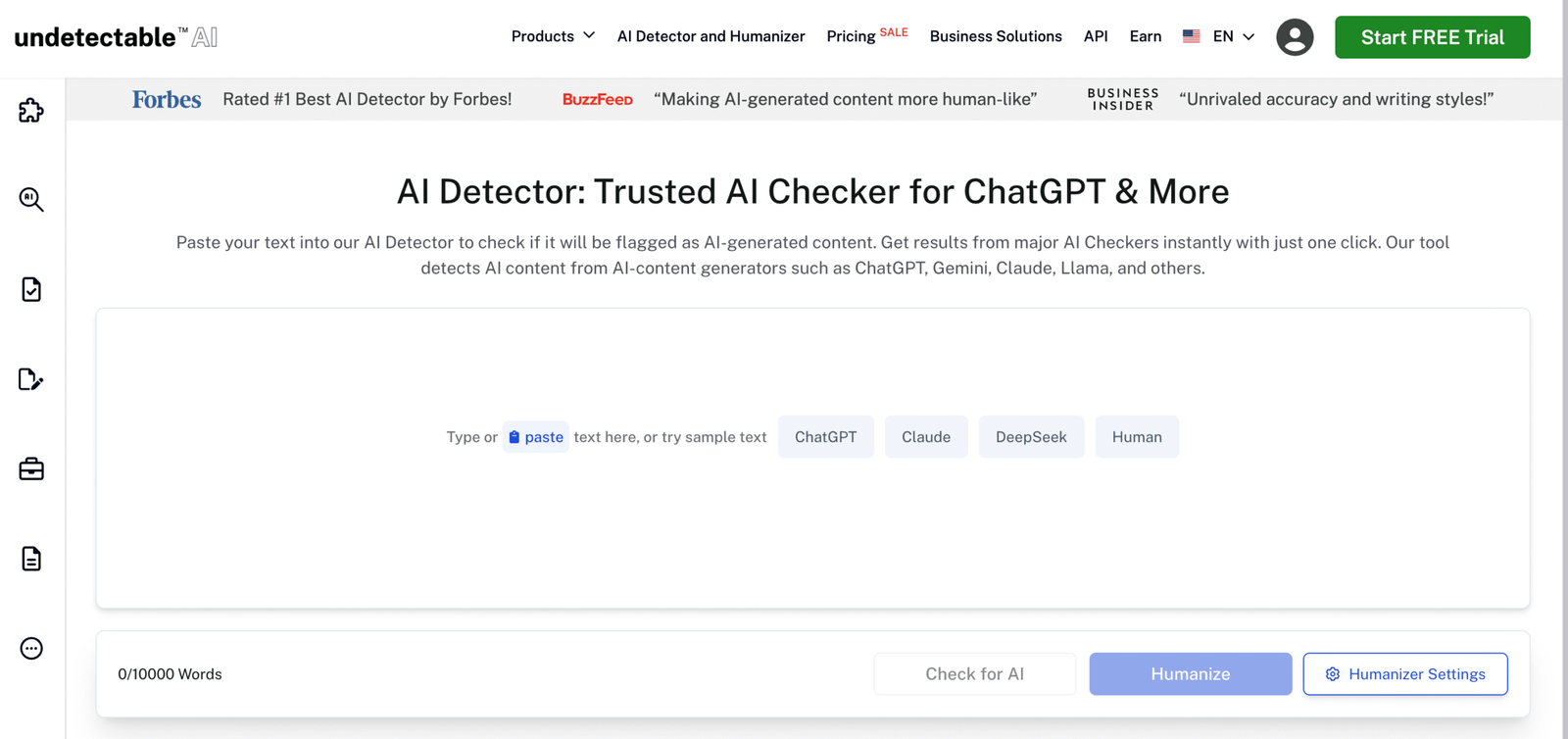
Best use case: Long-form drafts that trigger detectors because the pacing is too uniform end to end.
What it does well: Breaks up predictable phrasing and evens out “model-smooth” paragraph flow.
Where it falls short: Can blur precise claims and flatten a voice that needs sharp personality.
Who should skip it: Writers who need tight factual phrasing or legal-grade wording to stay intact.
Best AI Humanizer Tools for AI Detection Review #3. StealthWriter
StealthWriter is the kind of tool people reach for when they suspect the detector is reacting to repeated scaffolding, not just repeated words. It often produces more visible restructuring, which can help if the original draft has that familiar “explain, qualify, summarize” loop that AI loves to repeat. The rewrite can feel less linear, with sentences that step sideways and then come back, which is exactly the sort of human messiness detectors are meant to struggle with. The tradeoff is that this same nonlinearity can make the piece harder to scan, especially for readers who want crisp transitions and predictable signposting. It can also introduce slightly odd micro-phrases that read fine in isolation but feel off across a full article. That means it works best when someone is willing to edit for coherence after the detector problem is solved.
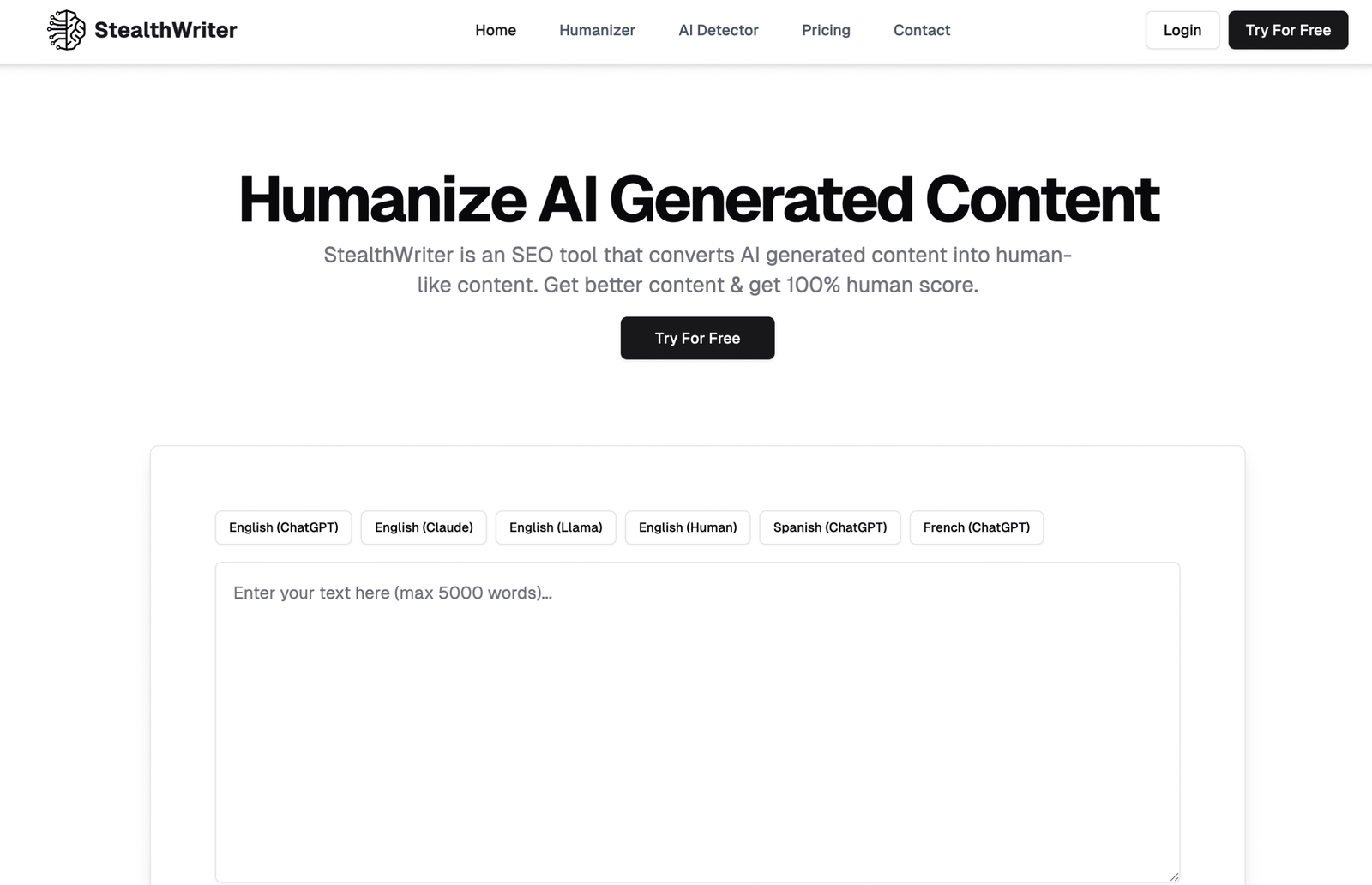
Best use case: Drafts that feel structurally repetitive and keep failing detection checks for “pattern sameness.”
What it does well: Rebuilds sentence order and transitions so the text stops marching in a straight line.
Where it falls short: Can reduce scannability and add small phrasing quirks that need smoothing.
Who should skip it: Teams publishing strict style-guide copy that must stay clean and uniform.
Best AI Humanizer Tools for AI Detection Review #4. QuillBot AI Humanizer
QuillBot’s humanizing workflow feels familiar to anyone who has used classic paraphrasers, which is both its strength and its limitation. It can quickly introduce lexical variety and rephrase common AI-sounding constructions, especially those template sentences that show up across countless drafts. The tool is useful when the original writing is basically fine, but just too smooth, too symmetrical, and too consistent in its grammar choices. The caveat is that surface-level paraphrasing does not always address deeper signals like repeated argument structure or overly uniform sentence length. It can also overdo substitutions, turning clear language into something slightly inflated or oddly formal. If the piece needs a distinct voice, it can feel like the tool keeps nudging the tone toward neutral “school writing.”
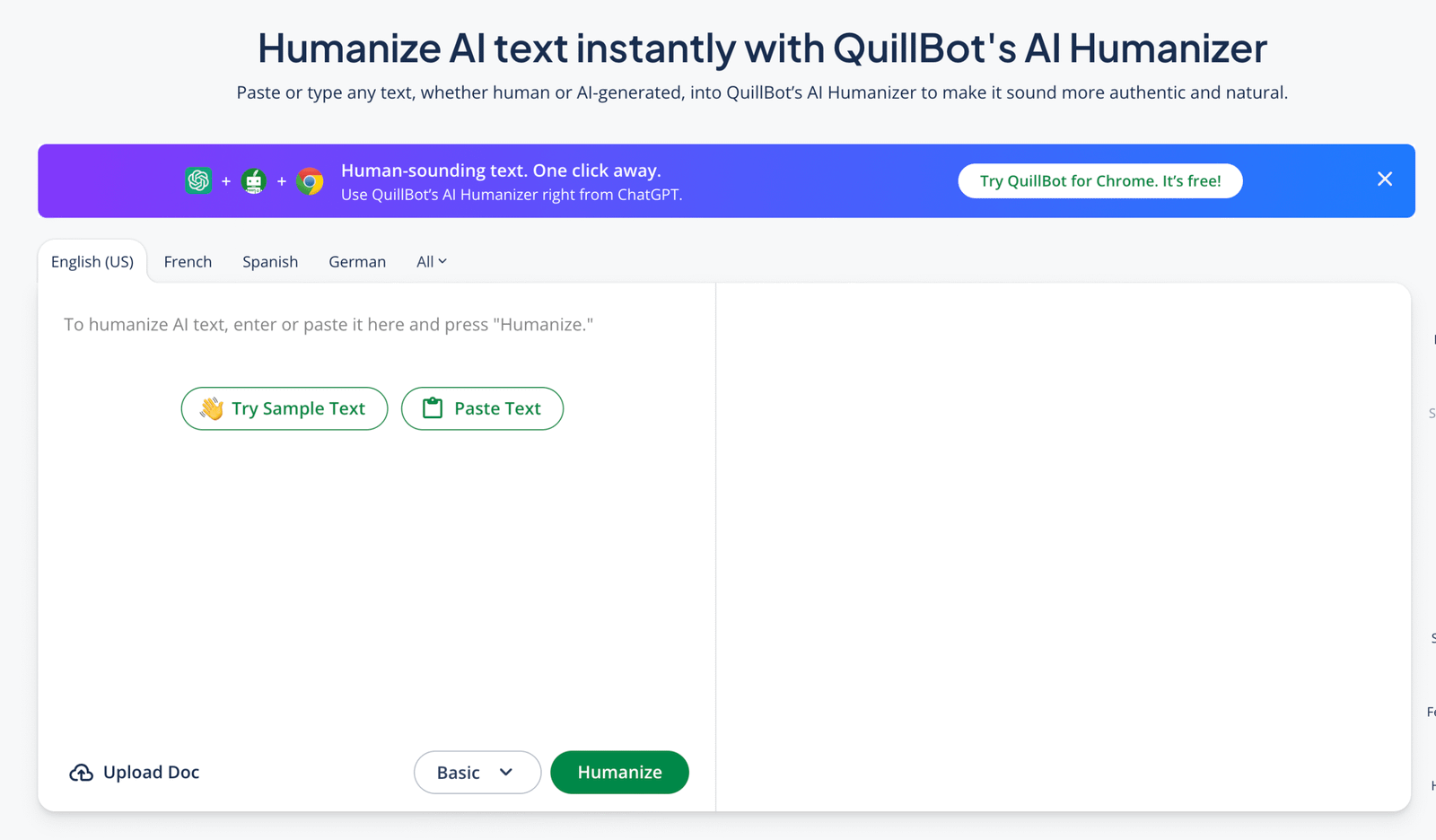
Best use case: Quick cleanup of passages that sound templated, with light humanizing needed.
What it does well: Adds phrase variety fast and helps remove overly polished AI sentence forms.
Where it falls short: May not fix structural repetition and can introduce awkward synonym swaps.
Who should skip it: Writers who need deeper restructuring rather than paraphrase-style changes.
Best AI Humanizer Tools for AI Detection Review #5. Grammarly AI Humanizer
Grammarly’s “humanizer” angle sits inside a broader editing product, so it tends to feel like a refinement tool rather than a full rewrite engine. That can be useful in detection review contexts, because the writing often stays closer to the author’s original intent and structure. The changes usually show up as toned-down phrasing, adjusted clarity, and fewer moments of robotic symmetry, which can genuinely help if the text is only lightly flagged. The tradeoff is that it may not push hard enough when a detector is strongly confident, since the edits can remain conservative and style-forward. It also can standardize voice toward Grammarly’s preferred clarity norms, which makes diverse writing styles feel a bit more alike. If the goal is to look messy in a human way, this tool can feel too tidy.
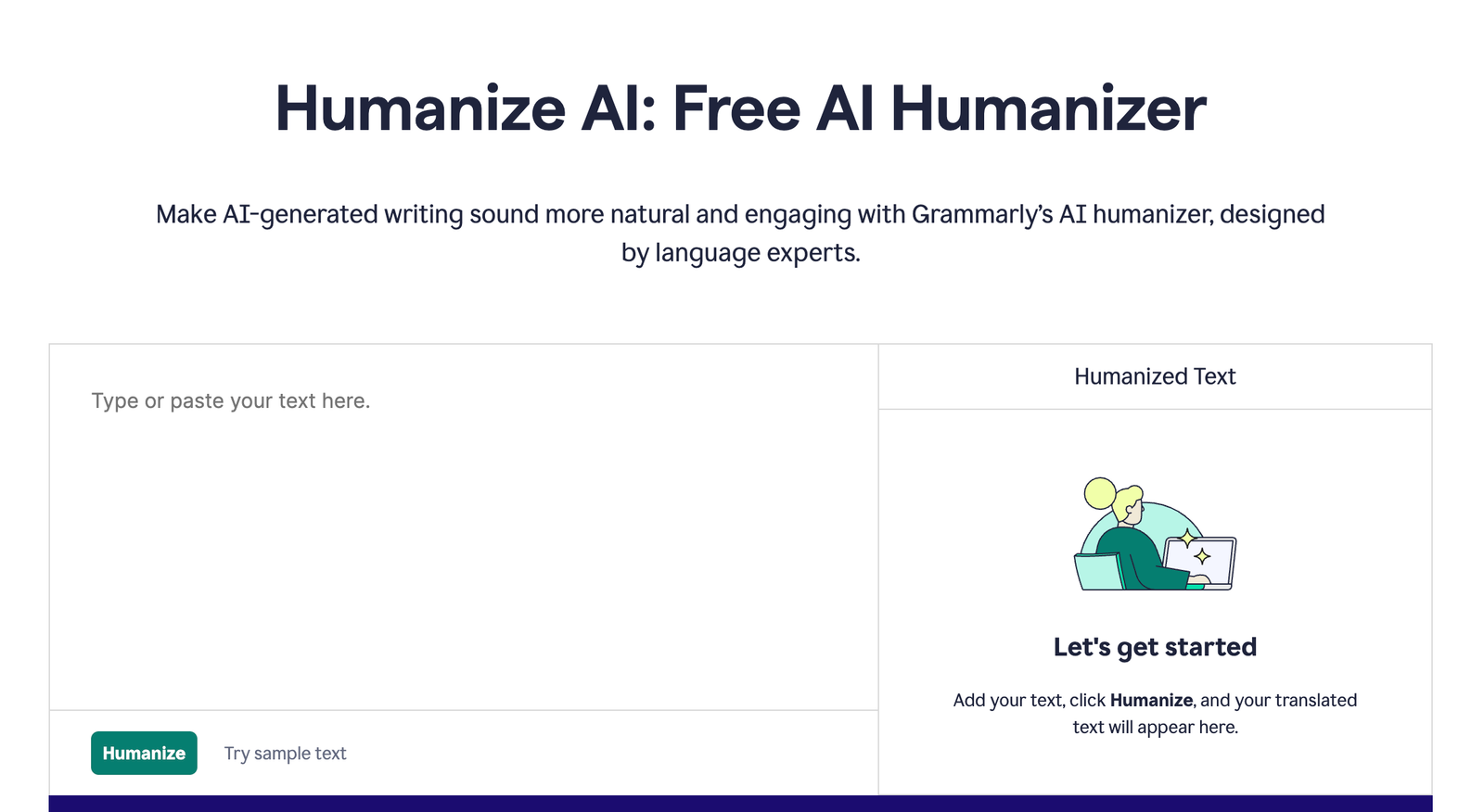
Best use case: Light-to-moderate detector flags where clarity edits can move the needle.
What it does well: Keeps meaning stable while smoothing “too-perfect” phrasing and cadence.
Where it falls short: Often too conservative for heavy flags and can standardize voice.
Who should skip it: Anyone needing an aggressive rewrite that changes structure significantly.
Best AI Humanizer Tools for AI Detection Review #6. AISEO AI Humanizer
AISEO’s humanizer sits close to the SEO publishing world, which means it often rewrites with “web readability” in mind. That can help with detection review because the output tends to introduce more varied sentence openers, more uneven pacing, and fewer repeated clauses that feel model-generated. It also does a decent job of breaking up blocky paragraphs into something that reads like a human drafted it under time pressure, which is honestly how a lot of online writing gets made. The caveat is that SEO-aligned rewriting can unintentionally sand down specificity, turning concrete details into broader phrasing that reads safe. It may also nudge writing into a generic “helpful explainer” voice, which can become its own pattern over a long article. If the original piece relies on a sharp editorial point of view, a follow-up edit to restore edge is usually needed.
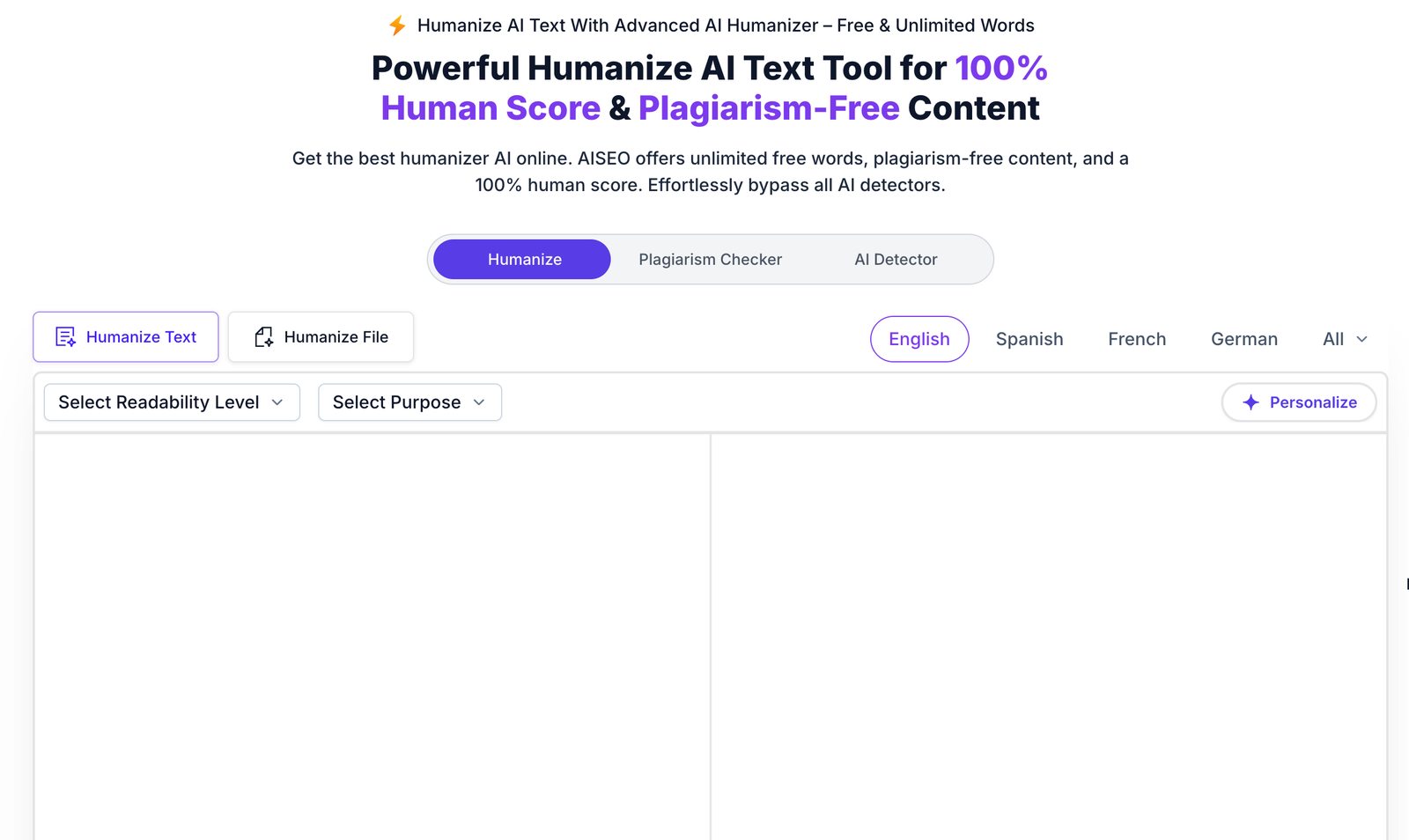
Best use case: Web articles that need a more human pacing pattern without rewriting from scratch.
What it does well: Reduces repetitive phrasing and makes paragraphs feel less uniform.
Where it falls short: Can blur specificity and drift into a generic “SEO explainer” tone.
Who should skip it: Writers protecting a distinctive editorial voice that must stay sharp.
Best AI Humanizer Tools for AI Detection Review #7. Humanizer.Pro
Humanizer.Pro feels built for speed, which is appealing in detection review moments that happen right before a deadline. It typically applies a broad rewrite pass that changes enough surface texture to look different to many detectors, especially on shorter segments. The output can come out readable, with fewer repeated transitions and less of that polished “model voice,” which is often the immediate goal. The tradeoff is control, since quick tools tend to make decisions that are fine for general text but not fine for a very specific voice or domain. It can also create slightly inconsistent terminology, which matters if the piece relies on repeated key terms for clarity. If the content needs careful nuance, it can feel like the tool is deciding tone and precision on the user’s behalf.
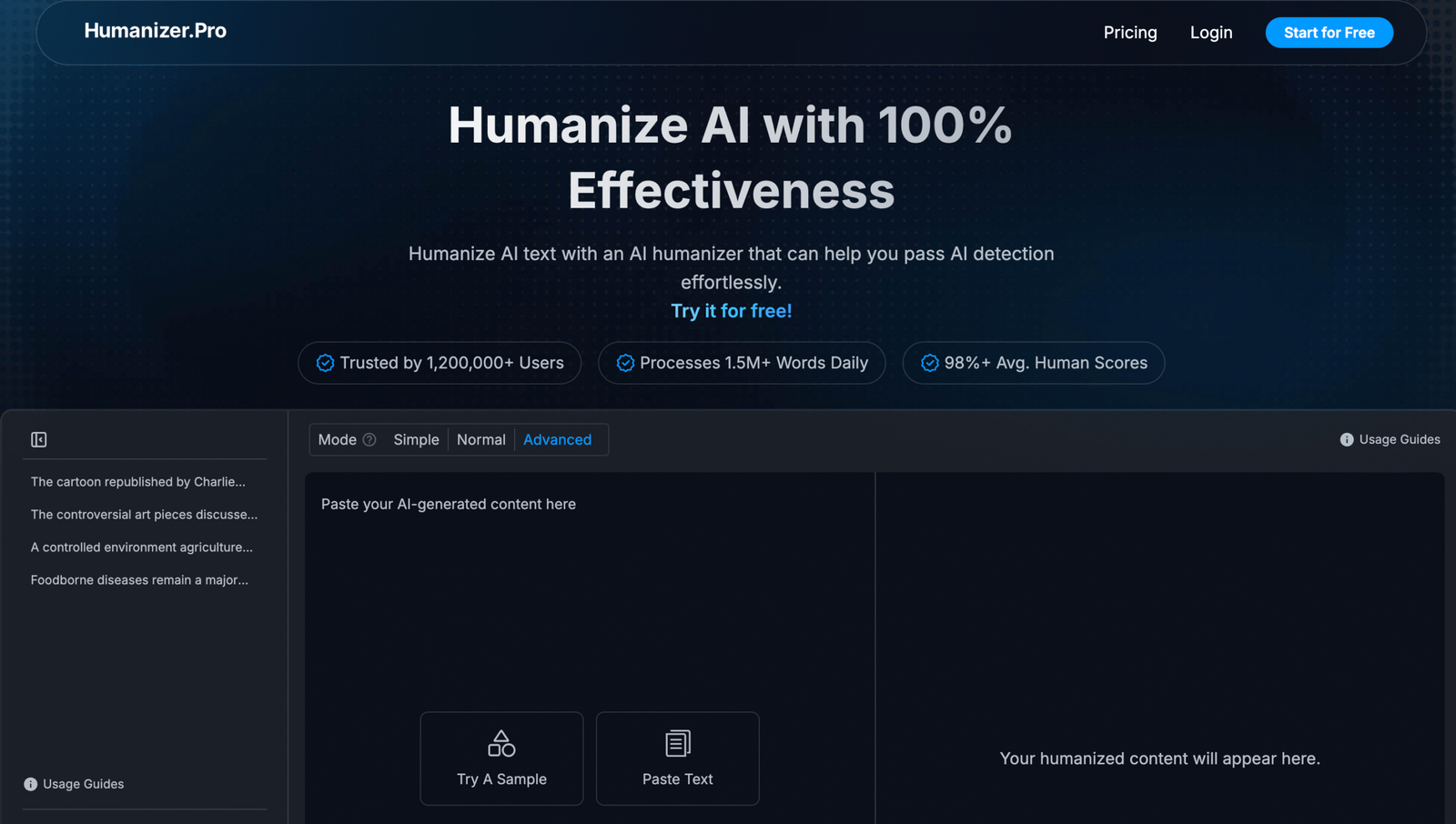
Best use case: Fast rewrites of short sections that are being checked right before submission.
What it does well: Delivers quick texture changes that often reduce obvious AI smoothness.
Where it falls short: Limited control, occasional terminology drift, and uneven voice consistency.
Who should skip it: Anyone writing technical, sensitive, or strongly voice-led copy.
Best AI Humanizer Tools for AI Detection Review #8. GPTInf
GPTInf is usually discussed in terms of manipulating detectable patterns, which makes it feel more “mechanistic” than editor-friendly. It can be effective at changing statistical fingerprints, especially if the draft reads like it was generated in one stylistic register without interruption. The output often has more irregularity, more surprising wording, and fewer repeating structures, which can reduce a detector’s confidence. The caveat is that irregularity is not the same thing as good writing, and sometimes it reads like randomness was applied without taste. It can also shift meaning in small ways that add up across a long piece, which is easy to miss if only a score is being checked. If the reviewer is human and strict, the text can pass a detector but still raise eyebrows for coherence.
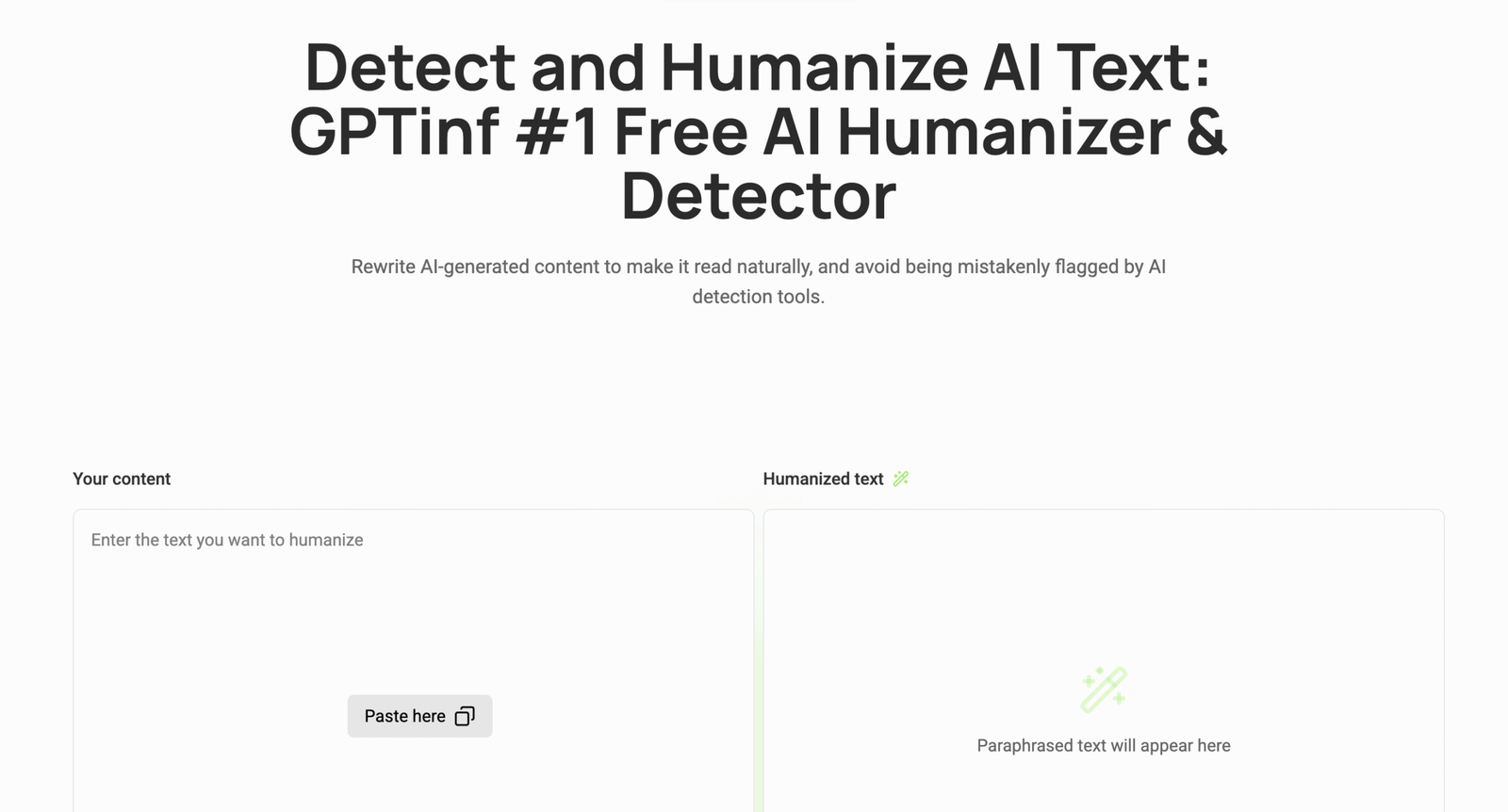
Best use case: Drafts failing detection due to uniformity, with time available for manual cleanup.
What it does well: Introduces statistical irregularity that can lower detector confidence.
Where it falls short: Can feel random, reduce coherence, and subtly alter meaning over long passages.
Who should skip it: Anyone needing polished editorial flow without spending time re-editing.
Best AI Humanizer Tools for AI Detection Review #9. Walter Writes AI
Walter Writes AI tends to aim for voice and tone adjustments alongside detection-oriented rewriting, which is appealing if the original text feels generic. It can add small human-like “choices” to the line, such as slightly uneven emphasis, more natural phrasing, and less perfectly balanced sentence construction. The tool is useful when the draft needs to sound like a person with a preference wrote it, not like a model trying to satisfy every reader. The caveat is that “voice” is easy to imitate badly, and sometimes the output reads like a performance of humanity rather than the real thing. It can also introduce a few stylistic tics that repeat, which detectors and editors both notice once they show up in multiple paragraphs. If consistency matters, it works best when the user trims those repeating tells after the rewrite.

Best use case: Drafts that feel bland and need more human preference and cadence to show up.
What it does well: Adds tonal variation and reduces overly balanced, model-like sentence structure.
Where it falls short: Can introduce repeating style tics and “performed” voice if left unedited.
Who should skip it: Anyone who needs a neutral, style-guide-safe tone across every section.
Best AI Humanizer Tools for AI Detection Review #10. AI Undetect
AI Undetect is usually picked for quick “detector threshold” work, which means it prioritizes noticeable change over elegant rewriting. It can do a decent job of making short passages look less like they were generated, especially if the original has repeated sentence stems and predictable transitions. The output often has more bumps and variations, which can be useful because detectors tend to trust polished uniformity more than rough edges. The tradeoff is that rough edges can also annoy readers, and the writing can feel slightly patched together if the tool is used across a whole article. It may also shift key terms into close substitutes, which can confuse meaning if the topic is technical or brand-sensitive. If the text needs to be persuasive and smooth, the tool can solve the score problem while creating a new readability problem.
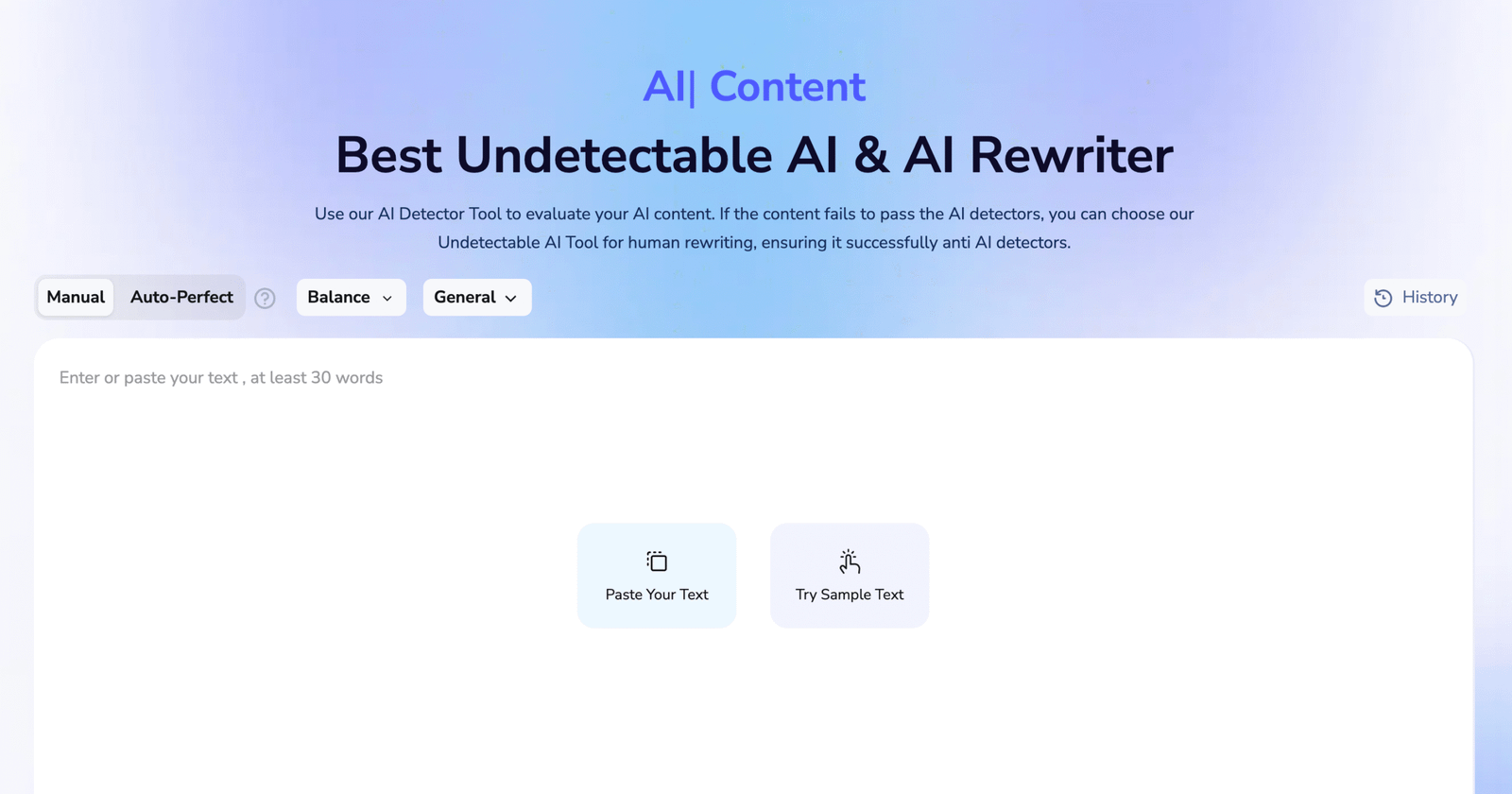
Best use case: Short-form rewrites that need a quick reduction in obvious AI smoothness.
What it does well: Creates fast texture variation that can help with borderline detector outcomes.
Where it falls short: Can harm readability, introduce patchy flow, and swap important terms.
Who should skip it: Anyone publishing long articles without time for a careful editorial pass.
Tool Selection Guide for Best AI Humanizer Tools for AI Detection Review
Light cadence shifts
Grammarly AI Humanizer and QuillBot AI Humanizer suit drafts that already communicate clearly but read a little too symmetrical. They introduce small phrasing and rhythm adjustments that reduce polished uniformity without dismantling structure. This category fits writers who need the edge softened rather than the whole draft rebuilt.
Moderate restructuring
Undetectable AI and AISEO AI Humanizer rebalance clause order and sentence length across paragraphs. They tend to interrupt repeated scaffolding while preserving overall argument flow. This approach works for essays and articles that require visible variation but must stay coherent from start to finish.
Deep structural disruption
WriteBros.ai and StealthWriter apply broader reconfiguration across pacing, emphasis, and paragraph rhythm. They are more likely to interrupt the kind of evenly distributed drafting patterns that detectors notice over longer texts. This level suits drafts that feel algorithmically consistent from introduction to conclusion.
Formal academic papers
WriteBros.ai and QuillBot AI Humanizer preserve logical sequencing while softening repeated construction. They avoid abrupt tonal drift, which matters in submissions evaluated under close detection scrutiny. These tools suit structured writing that must remain precise and analytically grounded.
Long-form essays
WriteBros.ai and GPTInf handle extended drafts with pacing adjustments across multiple sections. They reduce syntax accumulation that builds detection signals over time, though a manual coherence pass strengthens results. This supports multi-page work where evaluation sensitivity increases with length.
Brand voice content
Walter Writes AI and Humanizer.Pro introduce tonal shifts that soften mechanical marketing drafts. They adjust rhythm and emphasis in ways that reduce templated phrasing, though brand alignment still benefits from human oversight. This category works best for narrative, lifestyle, or personality-led writing.
Precision-first rewrites
WriteBros.ai and GPTInf are suited to edits that must remain close to original terminology and claims. They alter structural distribution while minimizing semantic drift, which matters in compliance-sensitive or data-driven contexts. This approach prioritizes controlled change over dramatic transformation.
Section-level consistency
WriteBros.ai and Undetectable AI maintain relatively stable stylistic control across multiple headings. They reduce abrupt tonal variation that can appear when tools are applied unevenly across chapters. Consistency across sections can influence detection review outcomes as much as sentence-level variance.
Rapid resubmission cycles
AI Undetect and Humanizer.Pro generate noticeable structural variance between versions, which can help during quick revision loops. They introduce broader syntactic shifts rather than incremental tweaks. A final human pass ensures clarity and coherence remain intact before resubmission.
What Actually Matters in an AI Detection Review Workflow
Best AI Humanizer Tools for AI Detection Review are less about tricking a system and more about understanding what the system reacts to in the first place. Once that becomes clear, the tools start to look less like magic fixes and more like structured editing assistants with very specific strengths.
Some platforms lean into surface variation, which can be enough if the draft only feels slightly too polished. Others attempt deeper restructuring, and that can help when the writing carries the same rhythm from start to finish, though it also introduces its own inconsistencies.
The uncomfortable truth is that detection review is rarely solved by software alone. A human pass that restores nuance, sharpens meaning, and removes accidental quirks is usually what turns a lower score into genuinely believable writing.
In that sense, the choice of tool matters, but the mindset matters more. When rewriting is treated as editing rather than disguise, the final result tends to read less like it was “fixed” and more like it was simply written with intention from the beginning.
Disclaimer: The tools referenced are included for editorial and informational purposes only and are selected based on observable product behavior and relevance rather than sponsorship or paid placement. Screenshots are shown solely for identification, commentary, and illustrative reference in line with standard editorial and fair use practices, and may not reflect the most current version of each product. All trademarks, logos, and interface elements remain the property of their respective owners. For update, correction, or removal requests, please refer to the Editorial Policy.